

Table of Contents
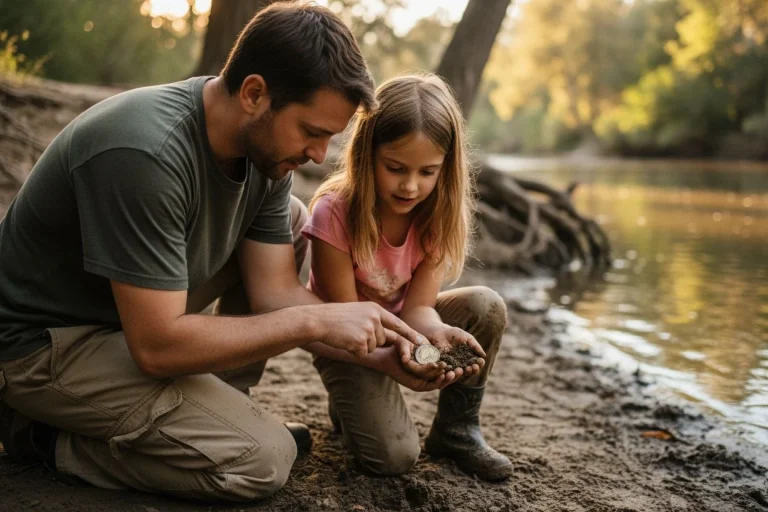
My six-year-old daughter found her first Mercury dime before she could read a map. We were at an old swimming hole outside Sacramento. It was one of the best metal detecting spots I’d researched. I chose it for its history and kid-friendly terrain. It was a popular spot in the 1940s. I’d just handed her my backup pinpointer. “Listen for the buzz, honey,” I said. Five minutes later, she was holding a 1944 dime, caked in mud. Lady Liberty’s winged cap was barely visible. “Who lost this, Dad?” she asked. Right there, knee-deep in river silt, we weren’t just metal detecting. We were time traveling. That question—“Who lost this?”—is the secret doorway. Metal detecting with kids isn’t about treasure. It’s about turning a family hobby into a living history lesson.
Most folks think taking kids detecting means letting them swing a beeping toy until they get bored. My buddy Mike used to just hand his boys his old detector. He’d point them at the park. “Find some coins!” he’d say. They’d dig five pull-tabs, complain, and ask for their tablets back. Mike thought they just didn’t have the patience. The truth was, he’d skipped the story. He missed the chance to frame the hunt as a mystery to be solved. It’s not a slot machine to be played. When you make it about the story—the who, why, and when—the beeps become clues. Every piece of trash or treasure is a chapter in your local area’s biography.
Here’s how I structure our family hunts. We make sure we come home with more than just dirty knees. We come home with stories.
Start Your Kids’ Metal Detecting Adventure with Research
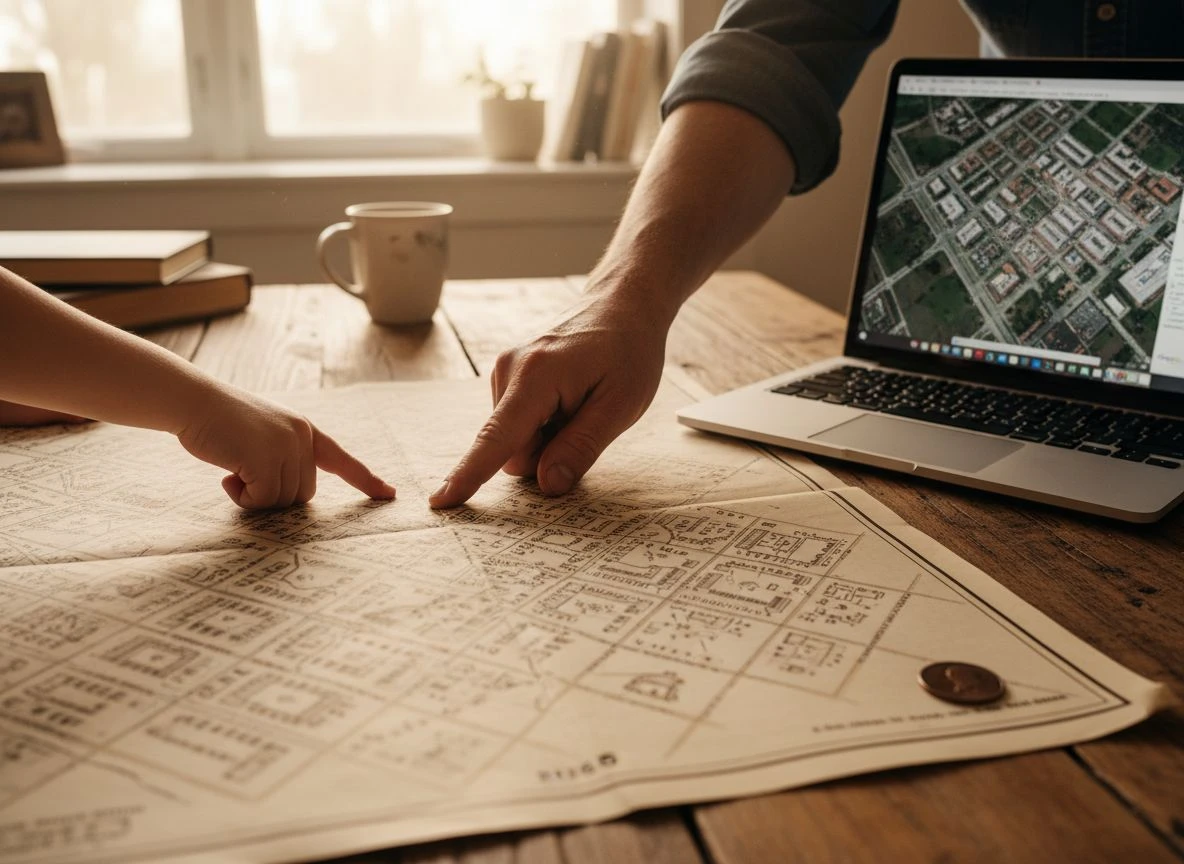
The history lesson starts at the kitchen table, not in the field. If you just show up at a random park, you’re hoping for luck. If you show up at a place you’ve researched, you’re conducting a field study. The best metal detecting spots are almost always found through research, not by chance.
I involve my kids from the very beginning. We pull up Google Earth and look at our town. “See this flat, empty field by the river?” I’ll say. “Now, let’s look at this old map from 1915.” We use the Library of Congress’s online Sanborn map collection. I’ll show them how the same spot was once labeled “Fairgrounds & Race Track.” Instantly, their eyes light up. Horses were here? People raced here? The connection forms. Researching the history of a location transforms the abstract past into a tangible setting for their adventure. The goal isn’t to give a college lecture. It’s to plant a seed of curiosity.
We make a simple “Clue Sheet.” It might have three items on it:
- Find something that held clothes together (a button or buckle).
- Find something people used to buy things (a coin).
- Find a piece of history that’s a mystery (anything odd!).
This isn’t a scavenger hunt for value. It’s a mission to collect evidence. A study highlighted that this approach helps structure the outing as an interactive learning session that blends science and history. The metal detector becomes their tool for gathering evidence. The beep is the starting pistol for their investigation.
How to Find and Use the Best Metal Detecting Spots for Family Fun
You can’t teach history if everyone is frustrated. The right gear and clear rules are the foundation. They turn a potential headache into a successful search at the best metal detecting spots.
Forget Your Fancy Machine. Do not hand your 8-year-old your $1,500 Minelab Equinox. It’s too heavy, too complicated, and you’ll have a heart attack when they drop it. Start simple. A lightweight, rugged detector like the Nokta Simplex Ultra or the Garrett ACE 200 is perfect. They’re waterproof and have simple controls. If they get scuffed, it’s not a tragedy. The goal is autonomy. Let them feel in control of the tool. This is the core philosophy behind our guide on how to get your first metal detector. For more on beginner setups, check out our complete metal detecting kit checklist.
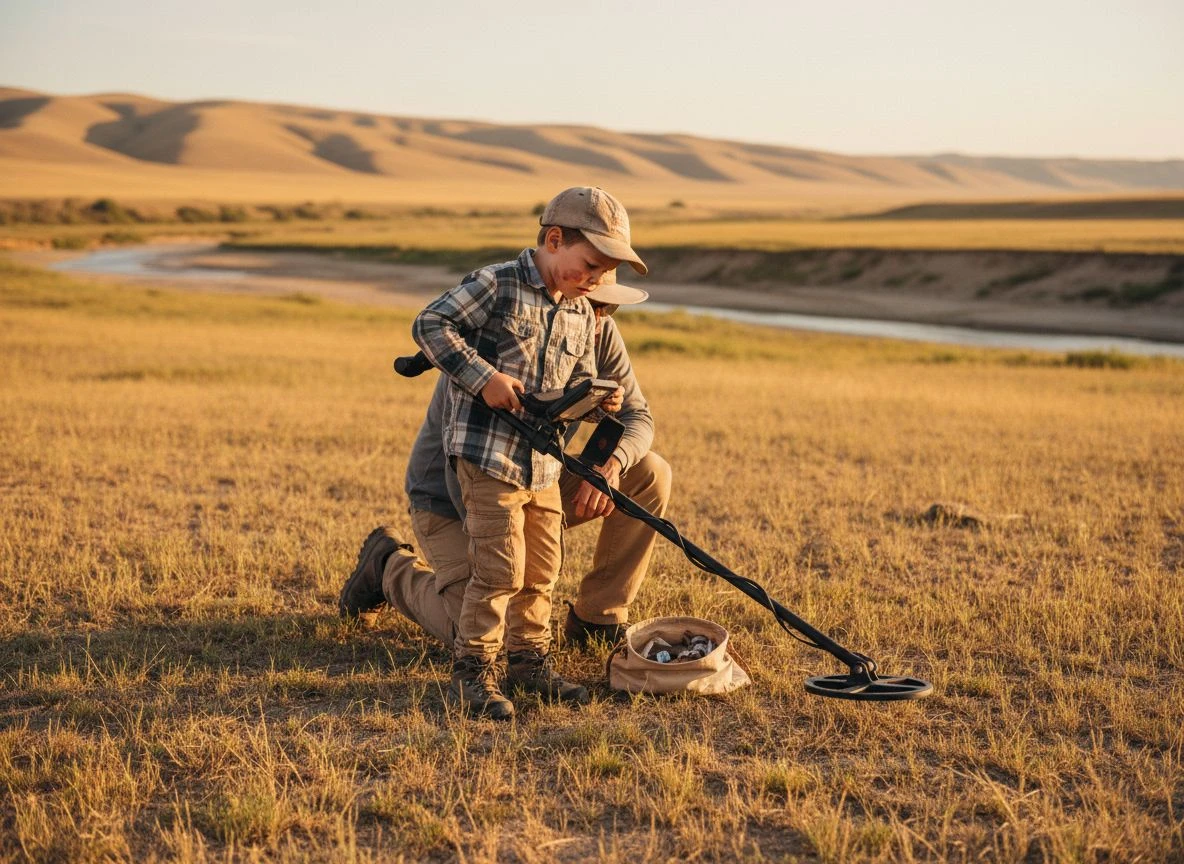
Session Length is Everything. An article from Garrett’s guides puts it perfectly. Keep sessions short, around 45 minutes to an hour for younger children. We often plan a “detecting picnic.” We hunt for 45 minutes, then break for lunch and examine our finds. This keeps energy high and frustration low.
Celebrate everything. A modern penny? “Great! That’s from 2022. What were you doing in 2022?” A rusty nail? “Awesome! This might have held together a barn 80 years ago.”
The Non-Negotiable Rules. This is where you embed lifelong ethics. Our family code has three parts:
- Permission is Law: We never detect anywhere without explicit, written permission. I explain it as respecting other people’s “story.”
- Leave It Better: Every plug of dirt is carefully cut and replaced. We bring a small bag and collect any trash we find. We’re not treasure hunters. We’re environmental stewards, leaving a site better than we found it.
- The Story is the Prize: We agree upfront that the coolest find might be worth zero dollars. The value is in the mystery.
How Do You Turn Every ‘Beep’ into a History Lesson?
This is where the magic happens. You’ve done the research. You have the gear. You’re on site. Now, turn every signal into a conversation.
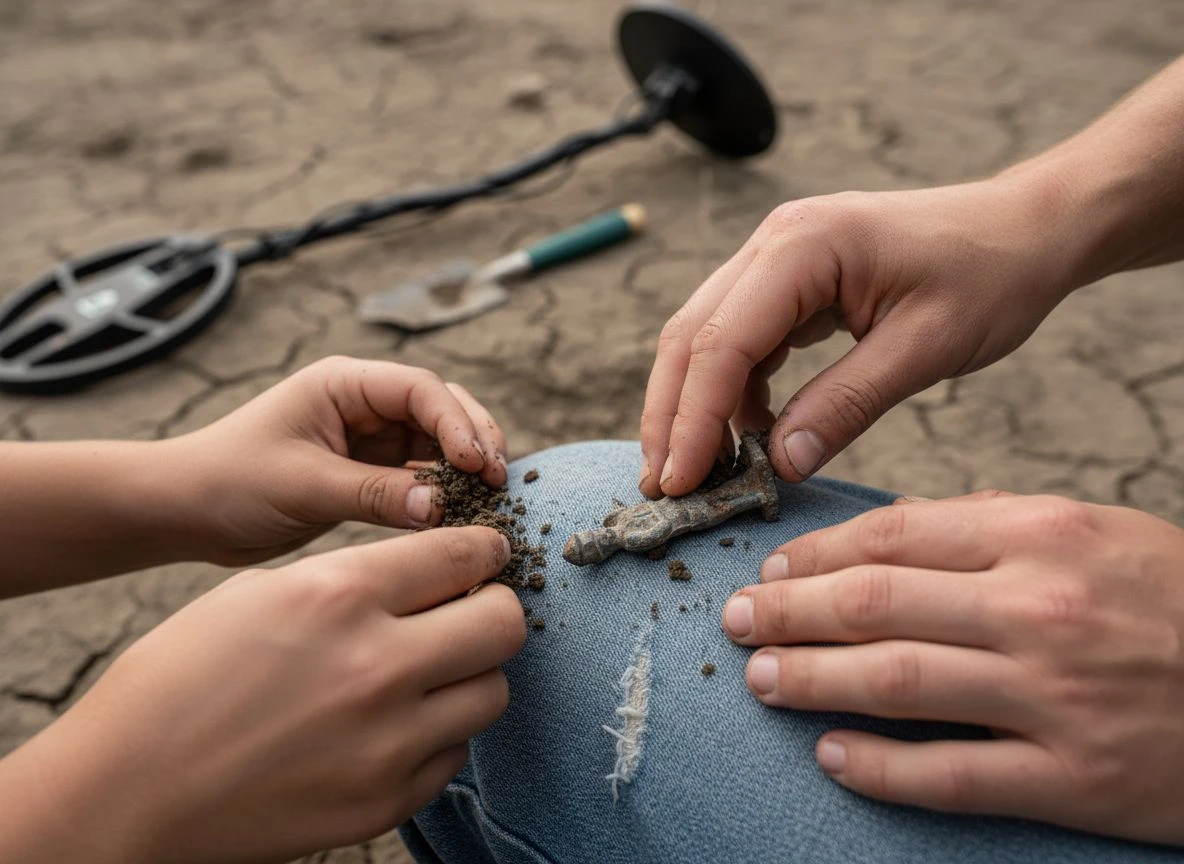
When the detector sings, we all gather. “What do you think it is?” I ask. “Is it a big, deep sound or a small, chirpy one?” Understanding what metal detector tones really mean can turn this moment into a mini science lesson. We use the pinpointer together. When the item comes out, we don’t just look at it. We interrogate it.
My son once dug a tiny, crudely made lead toy soldier. It was in terrible shape. “A piece of junk,” he mumbled. But then we talked. We were at the site of a 1920s schoolhouse. “What if a kid your age brought his favorite toy to school in 1925,” I asked. “He might have dropped it right here at recess. He might have been sad all day.” Suddenly, that corroded lump of lead had a heartbeat. He held it differently. As Minelab notes, this process of questioning transforms abstract historical concepts into a “living puzzle” that children can solve piece by piece.
We also assign roles to keep everyone engaged. One kid is the “Detector Operator.” Another is the “Head Digger.” A third is the “Find Identifier” who holds the clue sheet. This isn’t just busywork. Creating team roles helps build confidence and makes children feel they are contributing to a shared, meaningful goal. It turns a solo activity into a collaborative expedition.
Creating a Family ‘Treasure Log’ After the Hunt
The lesson isn’t over when you brush off the dirt. In fact, it’s just getting started. The post-hunt ritual is what cements the learning.
We have a “Find Station” set up in the garage. It’s a couple of old baking sheets, some soft brushes, and containers of water. We gently clean our finds together. (Important note: we never aggressively clean coins or relics. We just clean enough to see detail). As we clean, we guess. “This button has a loop on the back. That means it’s probably pretty old, maybe early 1900s.”
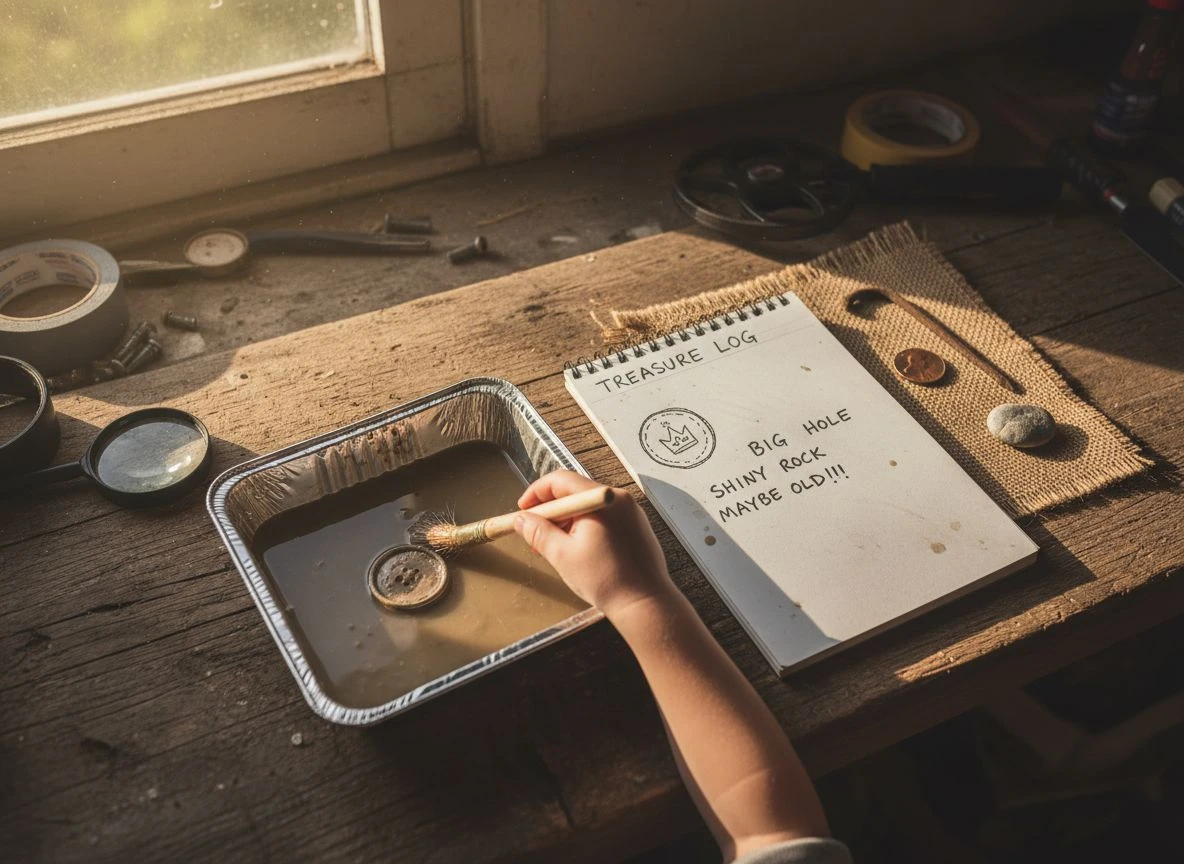
Then, we log it. We use a simple notebook we call the “Treasure Log.” For each find, we draw a small picture and note the date and location. We write down our theory about it. Garrett Metal Detectors recommends this exact practice. They suggest that starting a “treasure log” helps children track progress and research the stories behind discoveries.
Later, we might look online together. “What did toys look like in the 1920s?” This follow-up research is a goldmine.
Our best finds get a place of honor in a shadowbox on the wall. We add a little typed card telling the item’s story. It’s our family’s mini-museum. A modern Lincoln cent is displayed next to the theory that it fell from a hiker’s pocket in 2010. It’s not about monetary value. It’s about narrative value.
What If Your Metal Detecting Trip Finds Nothing?
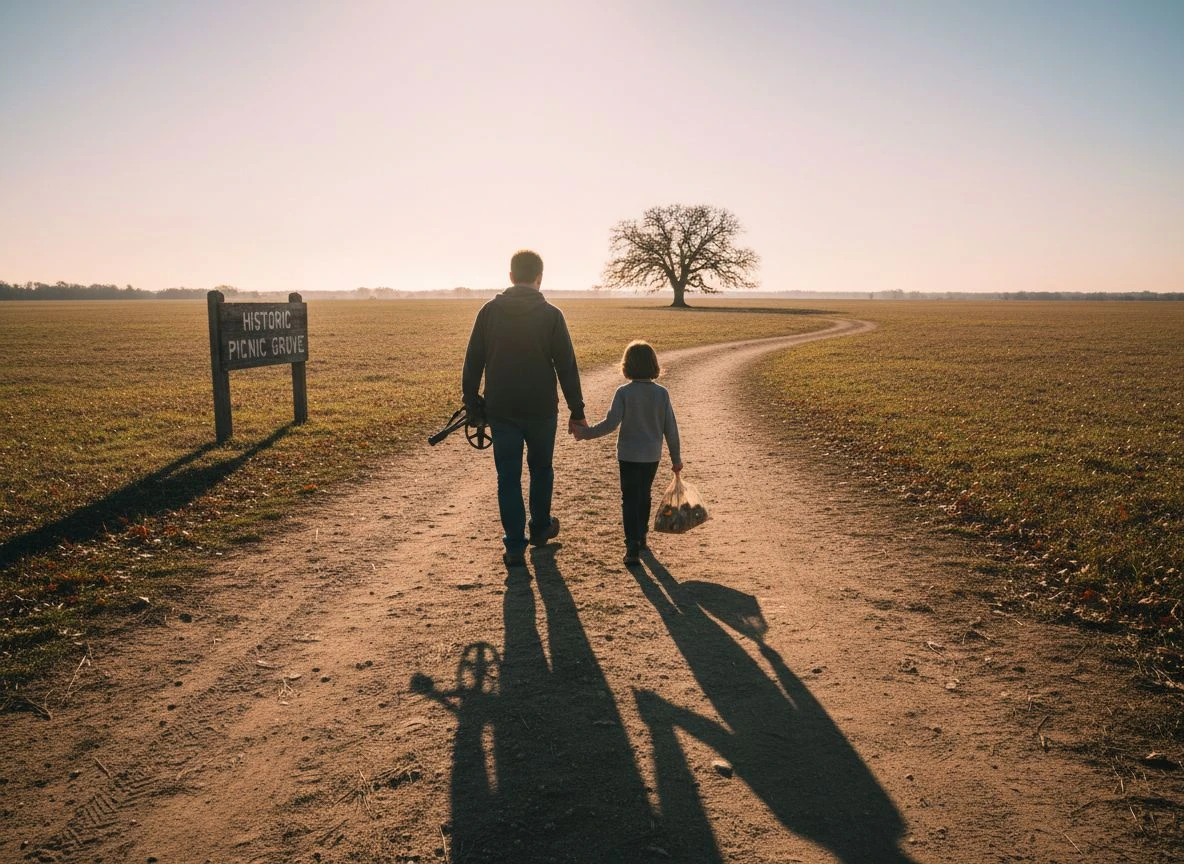
Let me be honest—this approach doesn’t always yield a perfect moment. Last summer, we spent two hours at a researched “historic picnic grove.” We found exactly seven bottle caps and a broken tent stake. My daughter looked at me, defeated. “This history is boring, Dad.”
It was a critical teaching moment. “You know what?” I said. “You’re right. Today, the history is that this place was really good at collecting litter. But because we looked, we collected it. Now it’s cleaner.” We threw the trash in our bag, got ice cream, and talked.
We discussed how archaeologists sometimes dig for weeks and find nothing. The process itself is the win. The asking of questions, the respect for the place—that’s it. The hobby teaches patience and resilience. It’s an antidote to the instant gratification of screen time. Finding the best metal detecting spots doesn’t guarantee finds. But it guarantees an adventure worth having. Understanding how to clean metal detecting finds properly is part of respecting that adventure.
That Mercury dime my daughter found? It’s in our shadowbox. The card next to it doesn’t list its silver value. It asks a question: “Who swam here in 1944 and lost their dime? Were they having as much fun as we are?”
That’s the transformation. You’re not just looking for the best metal detecting spots. You’re looking for the best storytelling spots. These could even include some of the best spots to metal detect on vacation. You’re not just finding metal. You’re finding connections.
By weaving research, ethics, and curiosity into the hunt, you give your kids more than a hobby. You give them a lens to see layers of history beneath their own feet. You give them the tools to uncover it, one respectful dig at a time. Start with your own backyard, a simple detector, and a single question: “I wonder what stories are waiting here?” To get started, explore our guide to the best places to metal detect.

My name is Paul and I am the founder of Detector For Metal, a dedicated resource for metal detecting enthusiasts seeking to uncover historical treasures and connect with the past using the latest technology. As a stay-at-home dad and family man, I’ve found metal detecting to be the perfect hobby that combines family adventure with historical learnings for the whole family.
As a father, I’m deeply committed to passing on this hobby to the next generation of detectorists, starting with my own children. I share advice on everything from metal detecting with kids to exploring the top 10 metal detecting sites you never thought about. My methodical approach to the hobby goes beyond the thrill of discovery—it’s about creating family traditions while preserving history and sharing the stories of those who came before us.