Table of Contents
I’ve collected more data from polite “no’s” than from a hundred “yes’s.” That sounds like the kind of backwards logic I’d use to justify a skunked weekend, but I mean it. My first serious permission came from a landowner who turned me down flat. Then, he spent twenty minutes on his porch telling me about three neighbors who might say yes instead. I walked away without swinging my coil, clutching a hand-drawn map on a napkin, and thinking: this is the real skill.
Here’s the thing most detectorists miss. In states like Montana, where roughly 70% of land is privately owned, access isn’t a right. It’s a privilege granted by someone who has every reason to say no. Farmers and ranchers live with broken gates, stolen equipment, and careless visitors. Your “no” isn’t personal. It’s protective. The way you handle it determines whether that landowner ever trusts you enough to say yes—or sends you to someone who will. The question isn’t how to avoid rejection. It’s how to turn a refusal into the most valuable lead you’ll ever get.
Why Do Landowners Refuse Metal Detecting?
When a landowner turns you down, they aren’t rejecting you. They are protecting their livelihood. Understanding the fears behind the “no” changes rejection from a blow to your ego into a blueprint for trust.
I’ll never forget the farmer who met me at his gate, listened to my pitch, then shook his head. “I used to let guys in,” he said. “Then one left a gate open and I lost three cows.” He wasn’t angry. He was telling me exactly what he needed to hear: “I won’t be that guy.” That conversation taught me more than a dozen “yes” responses ever did.
Most detectorists take a “no” personally. But as the North American Whitetail piece on asking permission points out, rejection is not a failure—it’s a natural part of the process. Separate your ego from the landowner’s reality.
That reality is often one of stress. According to the Department of Animal & Range Sciences guide, hunting and detecting season coincides with a farmer’s busiest time: spring planting and fall harvest. They’re already exhausted, and your knock is one of dozens they’ll field that month.
What they’re actually saying isn’t “no, never.” It’s “no, I’m too busy, too burned, and too wary.”
Here are the top five unspoken fears behind that “no”:
- Liability — They’re terrified you’ll get hurt on their land and sue. A simple liability waiver can neutralize this fear (I cover proper documentation in my guide to legal detecting).
- Property damage — Broken gates, rutted roads, or dead livestock from open gates.
- Time intrusion — They don’t have time to babysit you or answer endless questions.
- Privacy — They don’t want strangers knowing their land’s layout or schedule.
- Past bad experiences — Somebody before you left a mess, stole something, or disrespected the land.
When you name these fears out loud—”I understand you’re busy, and I’ll never leave a gate open”—you show the landowner you see them as a person. That’s when the wall starts to come down.
Essential Preparation Before Asking Permission
Here’s the trick that changed everything for me: by the time I knock on a door, I’ve already done more work than most detectorists do in a month. Preparation turns a cold call into a warm conversation. It’s the difference between being a stranger asking for a favor and a professional offering a partnership.
Create a One-Page Metal Detecting Proposal
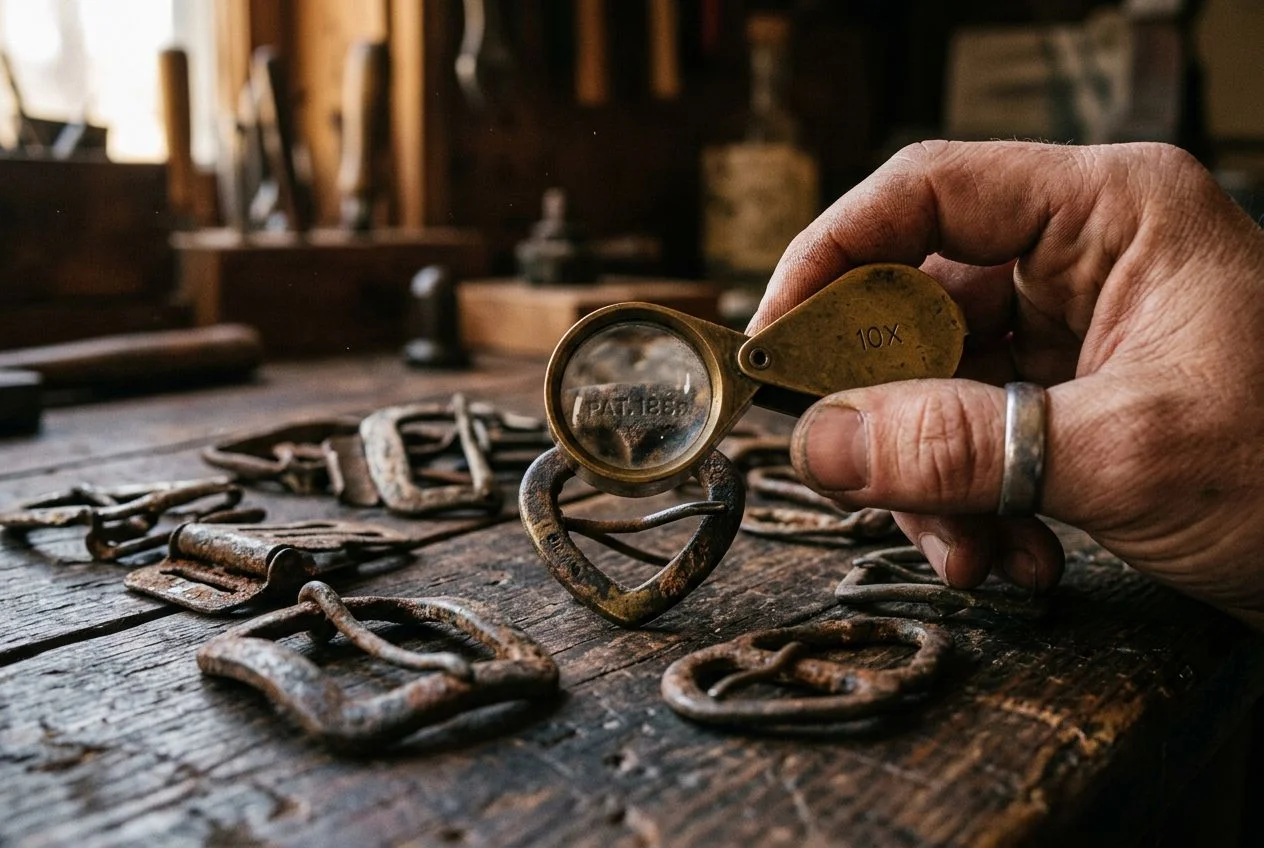
I carry a simple one-pager on nice cardstock. It has three things: two photos of my best finds, a quote from my local historical society about preservation, and a brief outline of my stewardship commitment (fill every hole, report significant finds, carry liability insurance). I hand it over before I even ask.
This is essentially what organizations like Sharing the Land call a “Conservation Resume.” They’ve used this model to open over 20,000 private acres for responsible recreation. It shifts the dynamic from “can I dig?” to “here’s who I am and what I’ll protect.” I’ve had landowners say yes just because I took the request seriously. It signals that you’re not the guy leaving gates open. You’re the curator who documents and preserves.
What to Research Before Asking for Permission
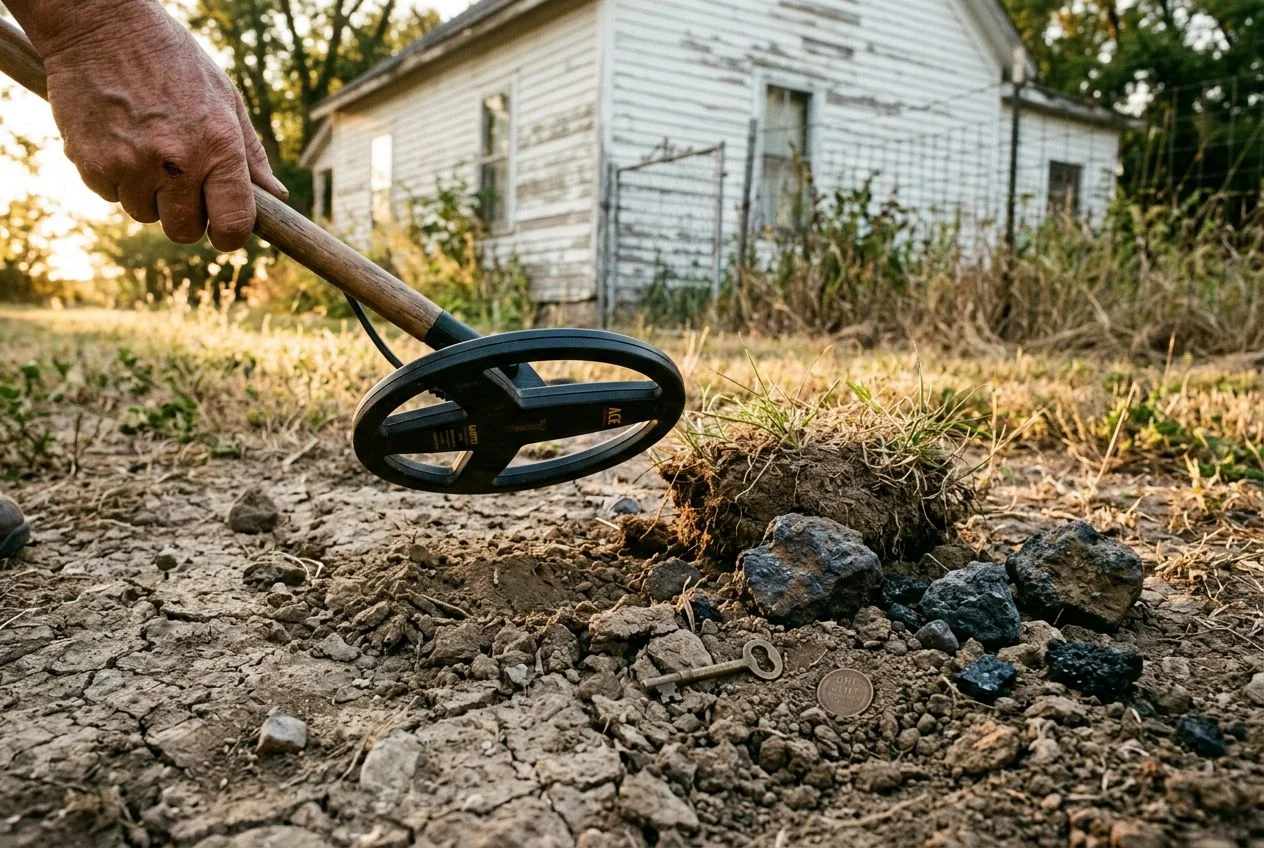
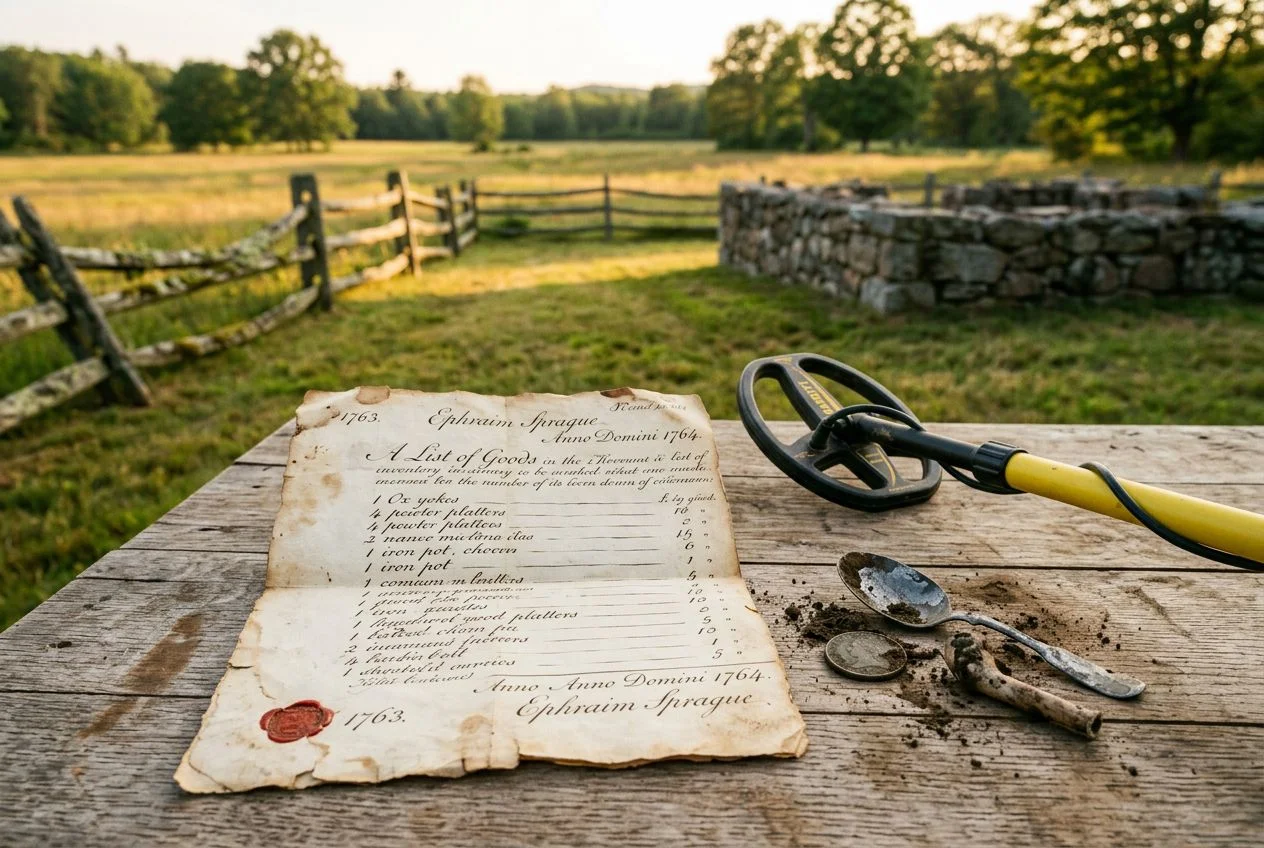
Before I knock, I know three things: the property’s history, the landowner’s likely busy seasons, and at least one local reference point—a shared neighbor or a business they frequent. I pulled the best lead I ever got because I’d read a Sacramento Daily Bee article about a 1908 church picnic on a property the owner didn’t know existed. He let me hunt the whole pasture. That conversation started warm because I brought history with me—not an ask.
How to Turn a No Into Permission to Metal Detect
The uncomfortable truth: a “no” is often just a poorly framed question. When you pivot from “can I detect?” to “can you help me find someone who might say yes?”, you turn rejection into a referral engine.
I stood at a vineyard gate near Placerville, watching the owner shake his head before I’d finished my pitch. “Sorry, son. I’ve had too many bad experiences with strangers.” Instead of walking away, I tried something different. “I totally understand. Is there anyone in the valley who might be open to this?”
He paused and scratched his chin. “Well… my uncle retired last year. Got a place up on the ridge. Old homestead from the 1900s. He might let you poke around.”
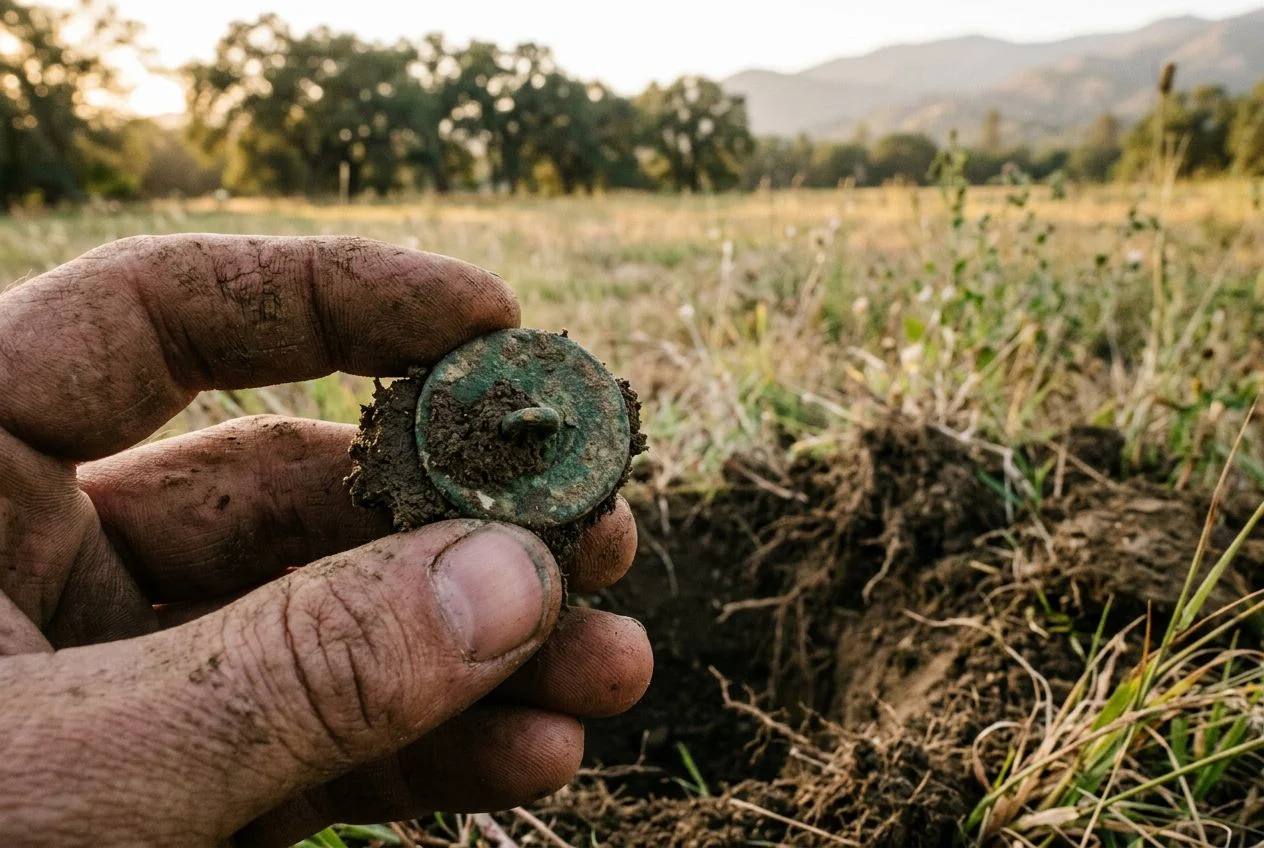
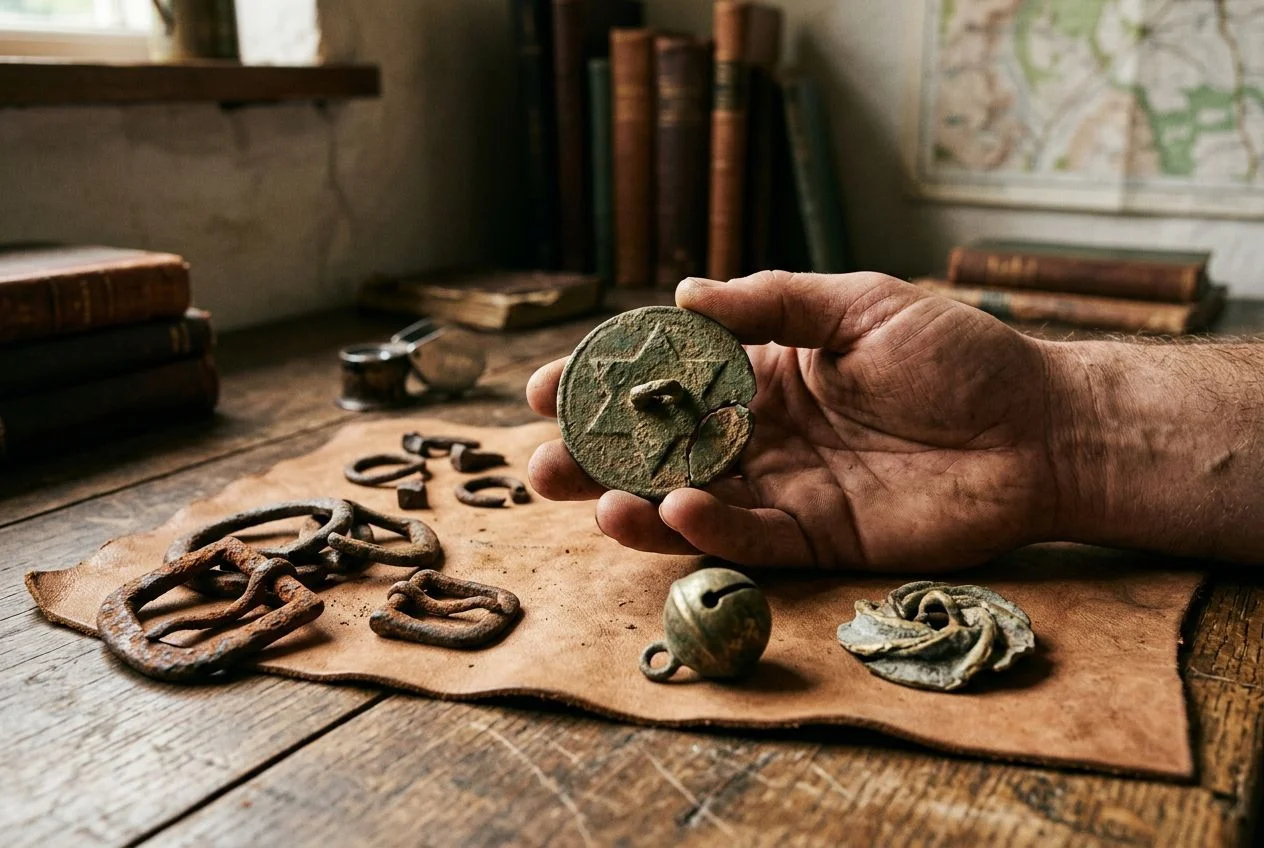
One hour later, I was shaking hands with that uncle. I pulled a 1916 Mercury dime and a brass saddle buckle from that homestead that afternoon. The “no” wasn’t a dead end—it was a sign. As MeatEater’s guide on hunting permission points out, referrals from trusted contacts are far more successful than cold calls. By pivoting, I turned a rejection into a warm introduction—and a lead that felt like finding a hidden detecting site from an old aerial photo.
Using Referrals to Secure Metal Detecting Permission
When you get a “too busy” refusal, use this frame:
“I completely understand, and I respect your time. Since you’re busy, could you think of any neighbor or relative who might have a property with some history? I’m happy to reach out to them directly and mention you suggested it.”
Window of Opportunity Permission Script
For the “had a bad experience” refusal, pivot to a limited request:
“I understand why you’d be cautious. How about we set up just one short hunt—say, two hours? If you’re not comfortable after that, I’ll never ask again. No hard feelings.”
What Do You Say When a Landowner Says No to Metal Detecting?
I’ve stood on countless porches watching that “no” form on someone’s face. My first instinct was to retreat. Over time, I developed a three-script system that turns rejections into leads. The key shift is from “ask” to “relationship.”
Polite Close Script for Permission Refusals
Use this for firm, clean rejections:
“I completely understand. Thank you for being honest with me. If anything ever changes, I’d love the chance to visit. In the meantime, do you know a neighbor who might be interested?”
Referral Close After a Permission Denial
For landowners who seem conflicted:
“I respect that completely. I’m not asking you to change your mind. But you’ve lived here longer than anyone—is there someone else in the area who might appreciate someone helping preserve the local history?”
Conditional Close to Get Future Permission
For the “maybe later” crowd:
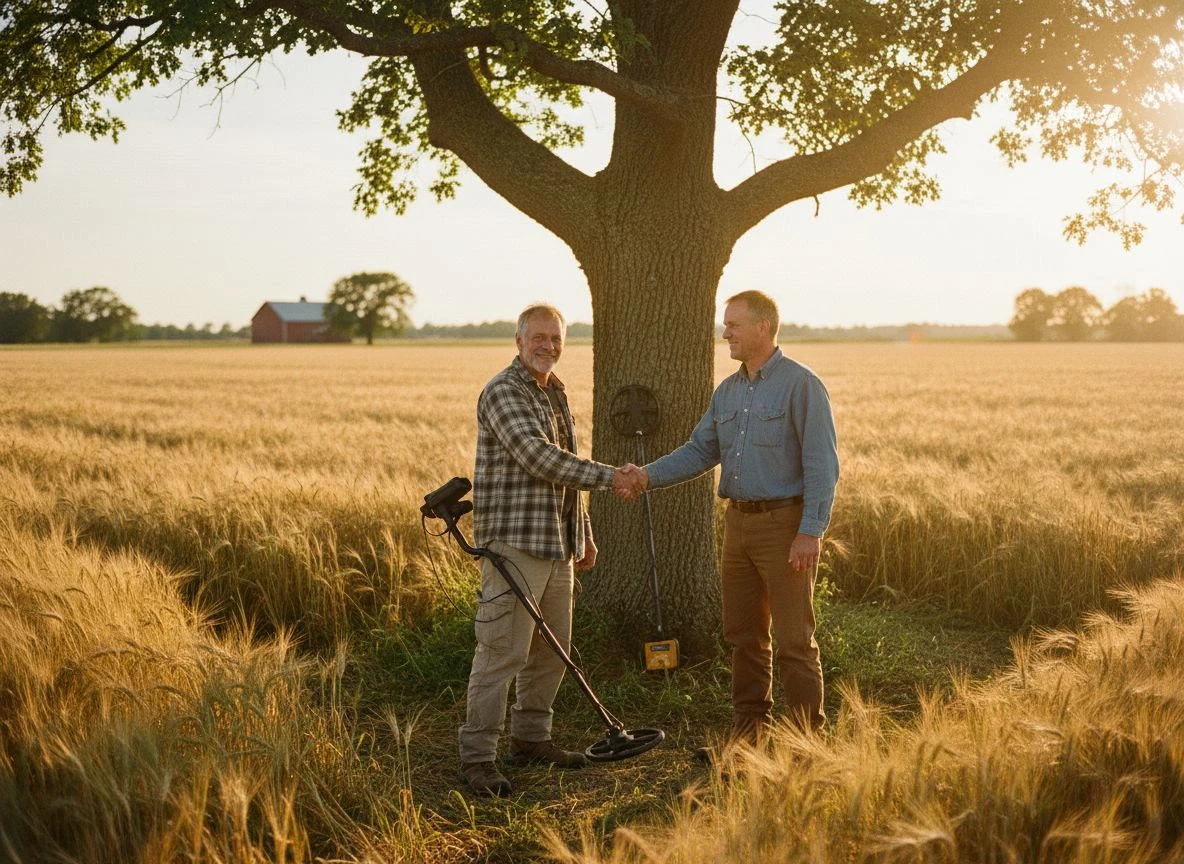
“I hear you. How about I check back after harvest season? I’ll leave my card, and no pressure whatsoever. Just wanted to plant the seed.”
Phrases to Avoid When Asking for Permission
The NH Fish and Game guide got it right: permission is a privilege. Never argue. Never ask “Are you sure?” Never push back. Nothing kills a relationship faster than making a landowner defend their “no.”
Nurturing Landowners Who Rejected Metal Detecting
A “not now” is a delayed yes that needs tending. I keep a list in my phone labeled “Not Now, Maybe Later.”
Three-Touch Cadence for Permission Follow-Ups
Touch one — The soft exit: “I completely understand. Mind if I circle back in a few months?”
Touch two — The 3-month check-in: Drop a Christmas card or a note. “Hope your winter was kind. I’m still out here researching old stage routes. If you ever want to talk history, I’d love to buy you a coffee.”
Touch three — The 6-month offer of value: I don’t ask again. I offer a framed photo of a find from their county or a small token of appreciation. Eight months after I handed my one-pager to a rancher, he called me. “You’re the only one who followed up politely,” he said. “Come on out.”
Graceful Exit When the Answer Is Still No
There’s a quiet power in leaving without burning the bridge. A landowner who remembers your respect will remember your name when things change.
Five years after a rancher turned me down three times, my phone rang. “You were the only one who thanked me for my time,” he said. “I’ve got a new piece of ground. Come take a look.”
The golden rule: the way you handle a refusal is your reputation. A landowner who feels respected today may become your biggest advocate tomorrow. My documentation philosophy helped build that trust.
Frequently Asked Questions About Metal Detecting Permission
Can I offer money?
Sometimes, but I’ve found it works best as a swap of services, like fence repair or pasture cleanup. It builds better trust than cash.
How do I find out who owns the land?
Start with your county assessor’s online map. I also ask at the local feed store or historical society.
What if they say yes but change their mind?
Thank them for the initial trust, and leave the door open. Note the date and follow the three-touch cadence.
How long should I wait before asking again?
I wait three months before any follow-up, and I never ask directly.
Should I bring my kids or partner?
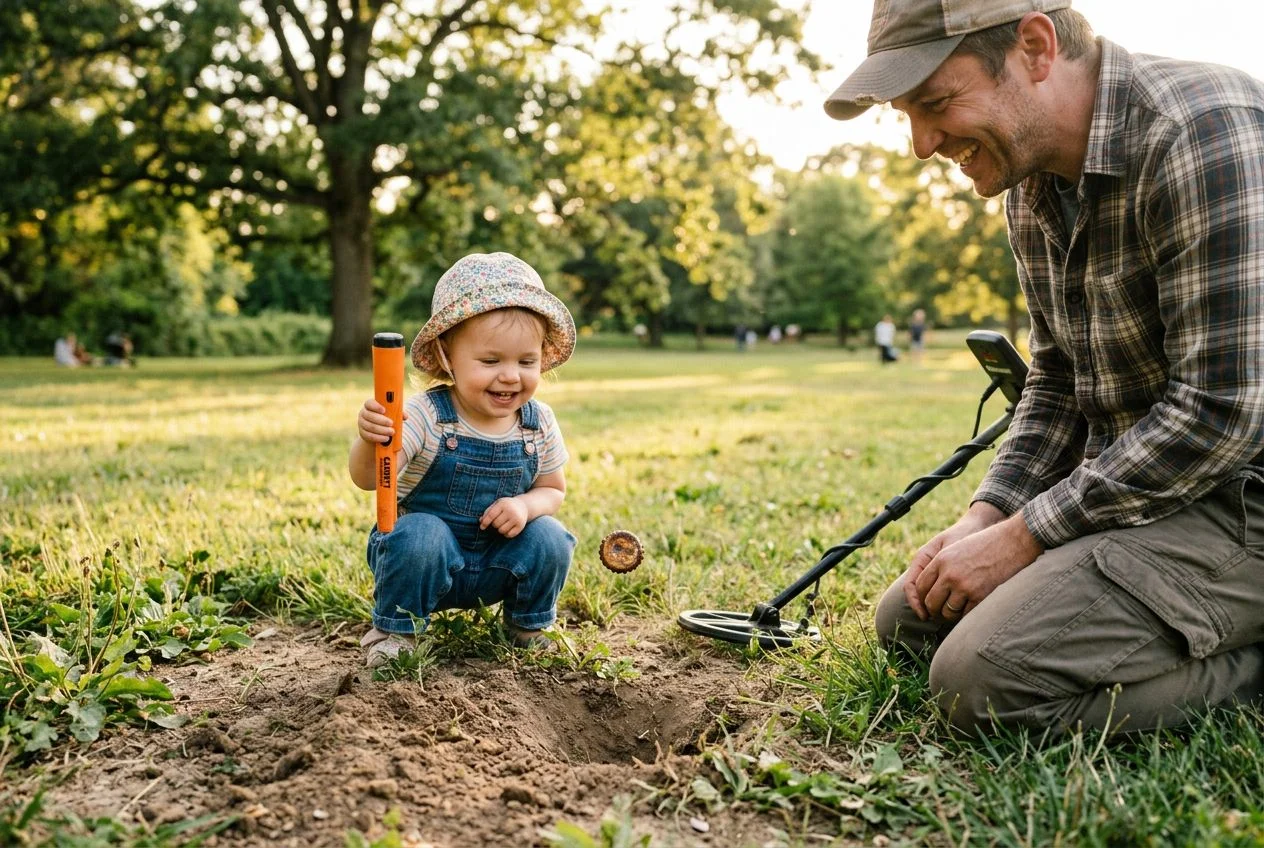
It can humanize the request. Just keep them close and quiet. Check out beach detecting with kids for tips on keeping outings low-impact.
Permission Seeking Mindset for Metal Detecting Success
Permission isn’t a transaction. It’s a relationship. When you frame your request as a service, you aren’t asking for something—you’re offering a partnership.
Next time you get a “no,” don’t walk away empty-handed. You just collected the most valuable data you’ll ever get. If private land keeps closing doors, there’s always public land to explore. Every “no” has taught me about people, land, and patience. That’s the real treasure.

My name is Paul and I am the founder of Detector For Metal, a dedicated resource for metal detecting enthusiasts seeking to uncover historical treasures and connect with the past using the latest technology. As a stay-at-home dad and family man, I’ve found metal detecting to be the perfect hobby that combines family adventure with historical learnings for the whole family.
As a father, I’m deeply committed to passing on this hobby to the next generation of detectorists, starting with my own children. I share advice on everything from metal detecting with kids to exploring the top 10 metal detecting sites you never thought about. My methodical approach to the hobby goes beyond the thrill of discovery—it’s about creating family traditions while preserving history and sharing the stories of those who came before us.