Table of Contents
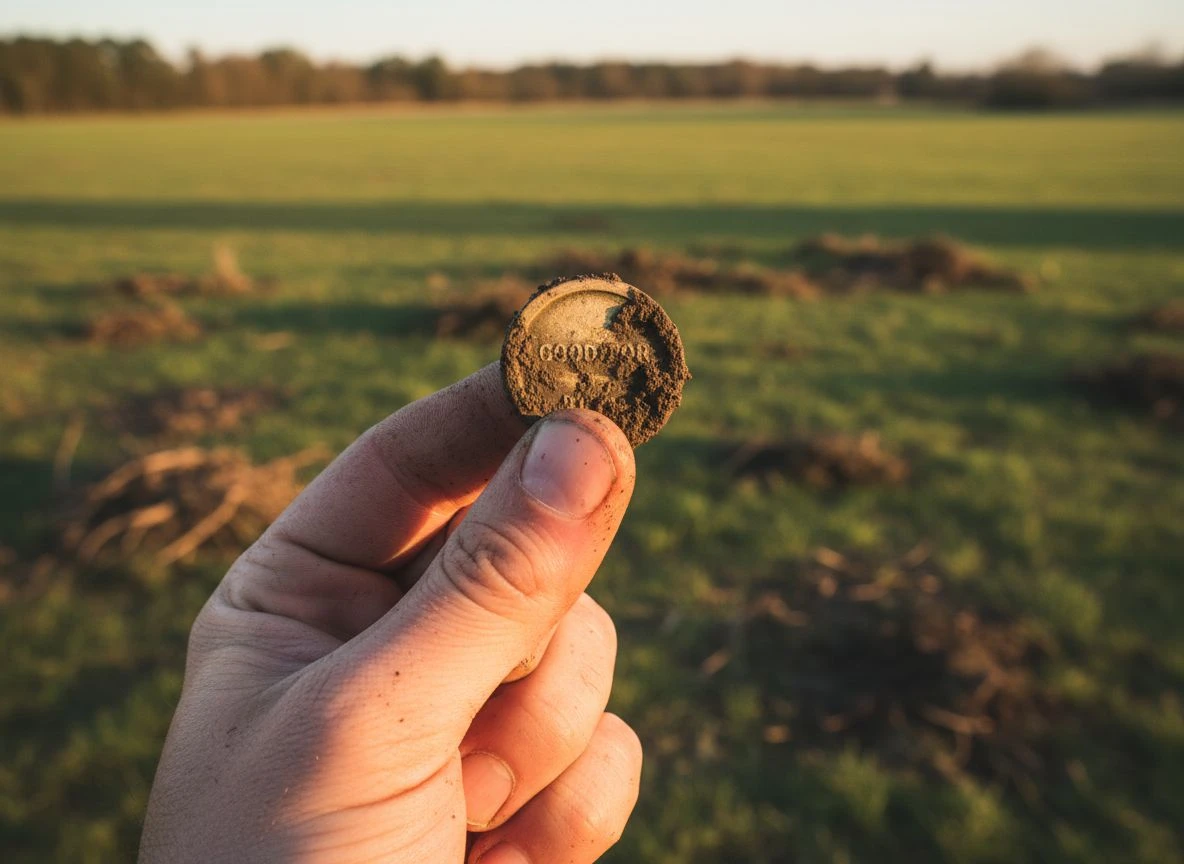
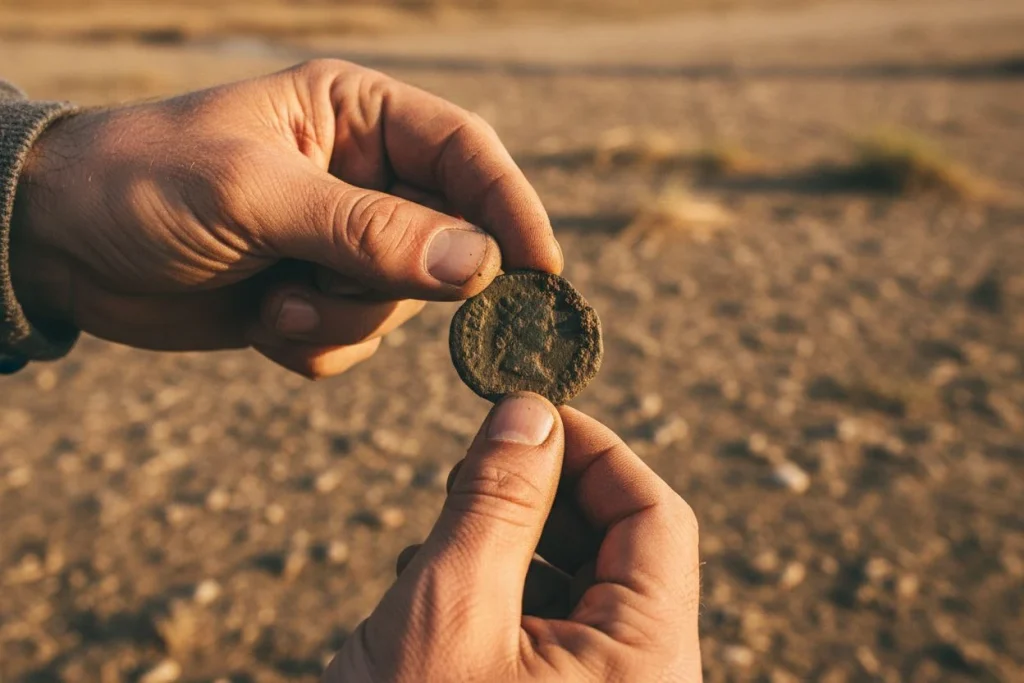
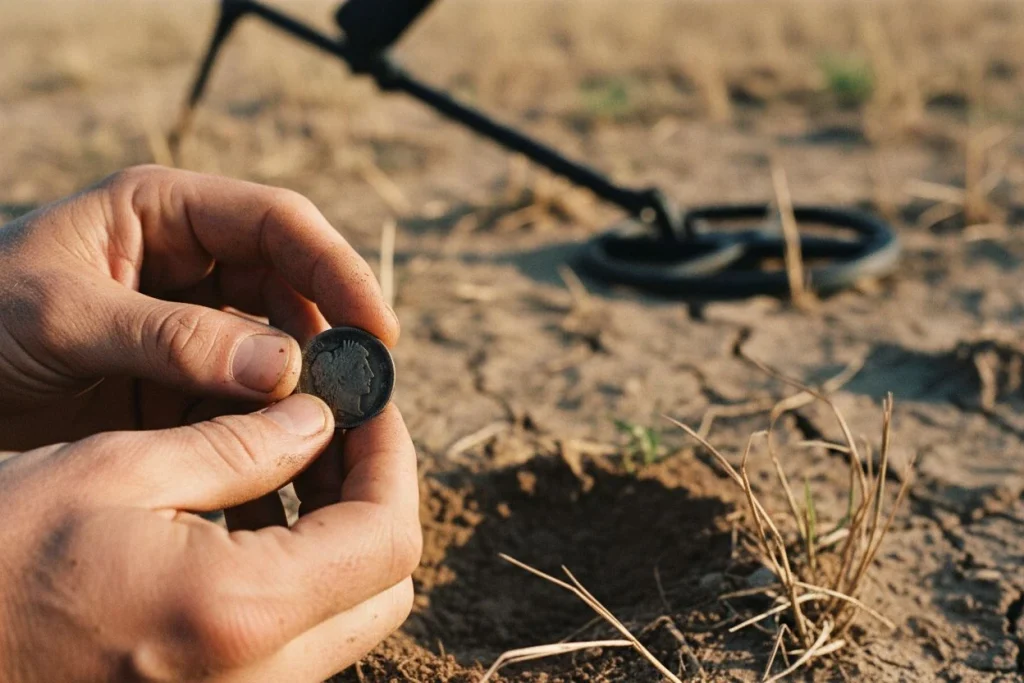
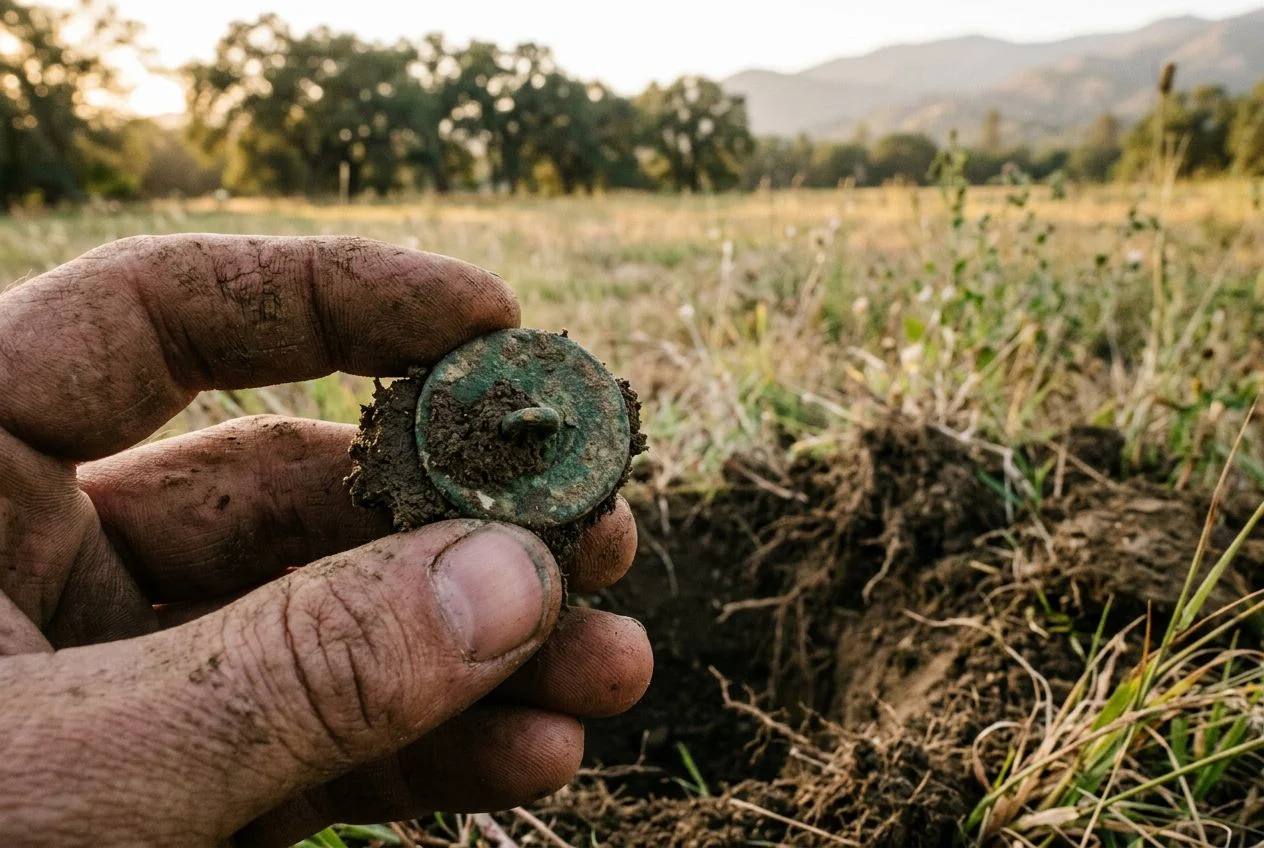
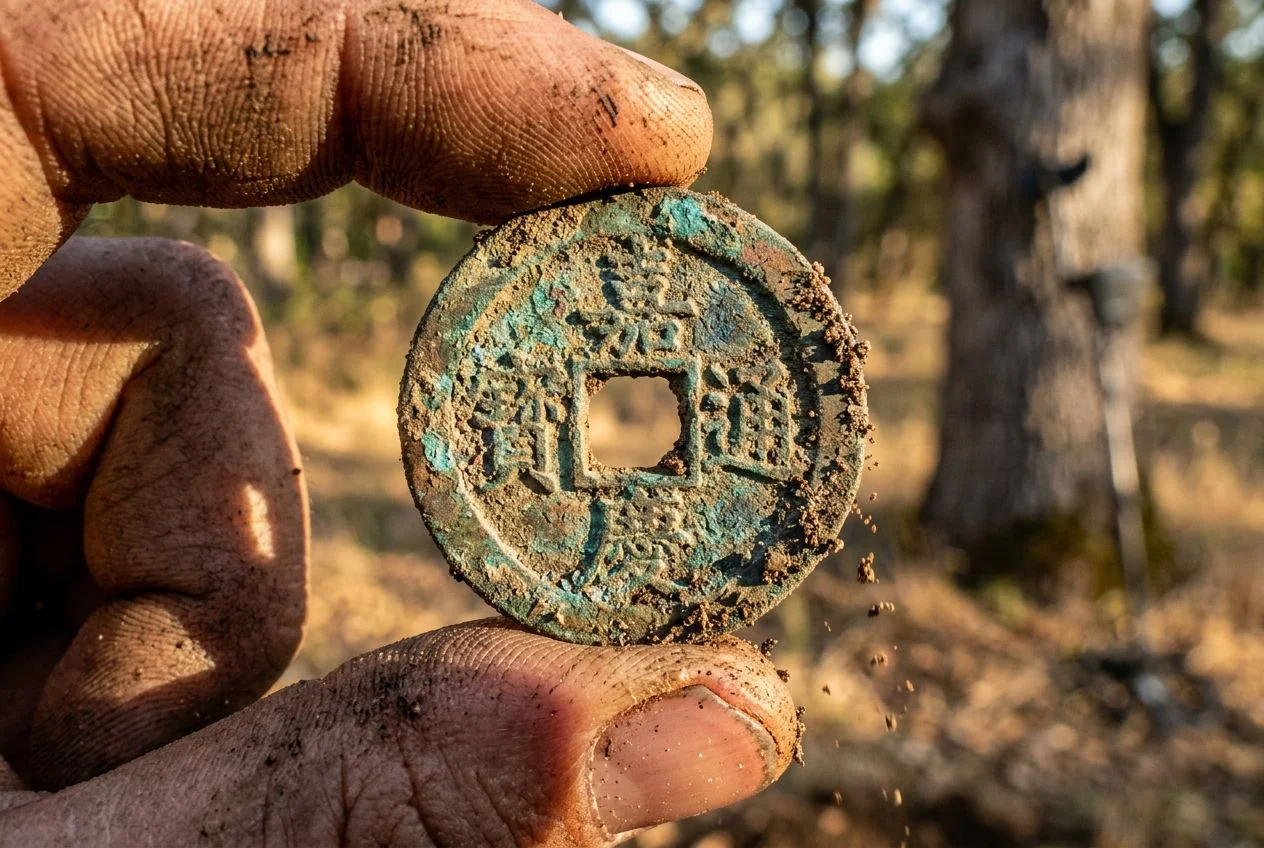
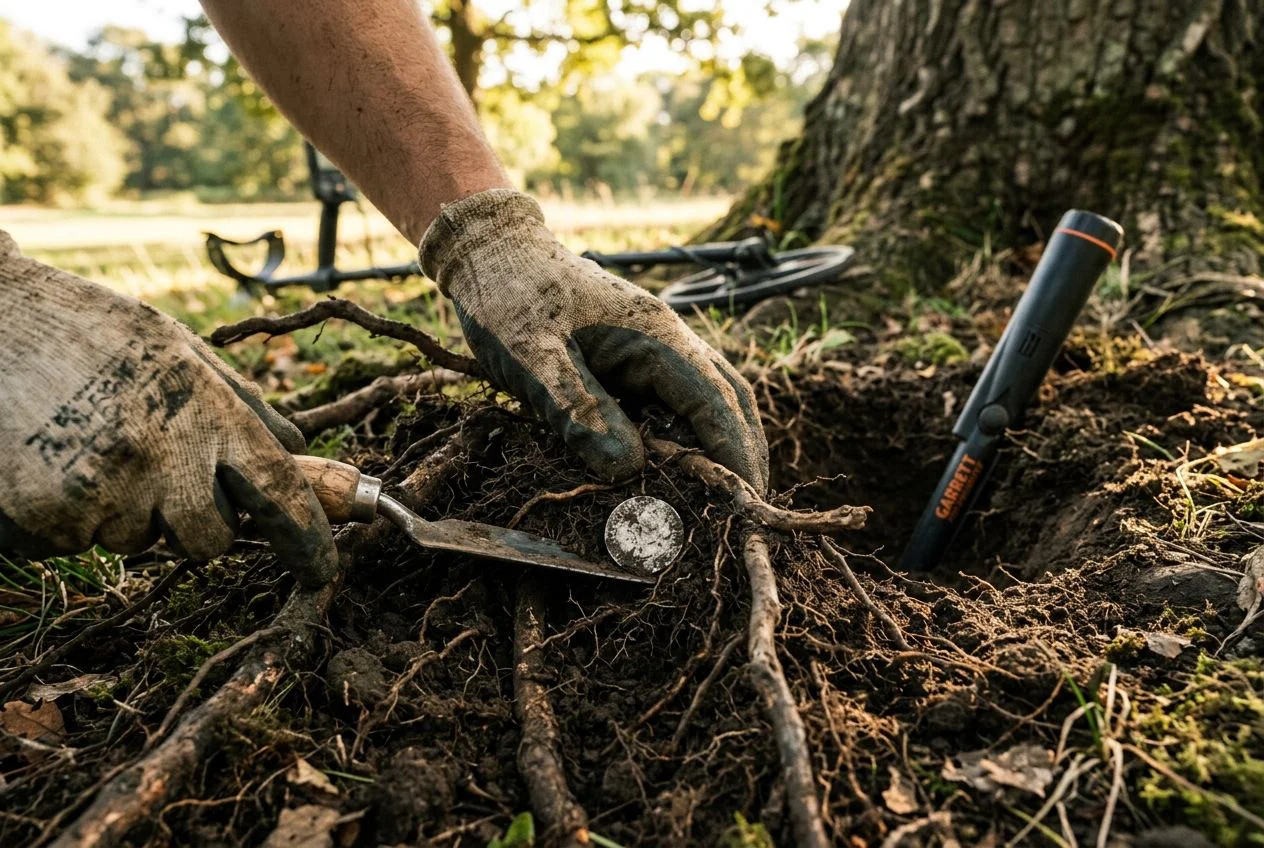
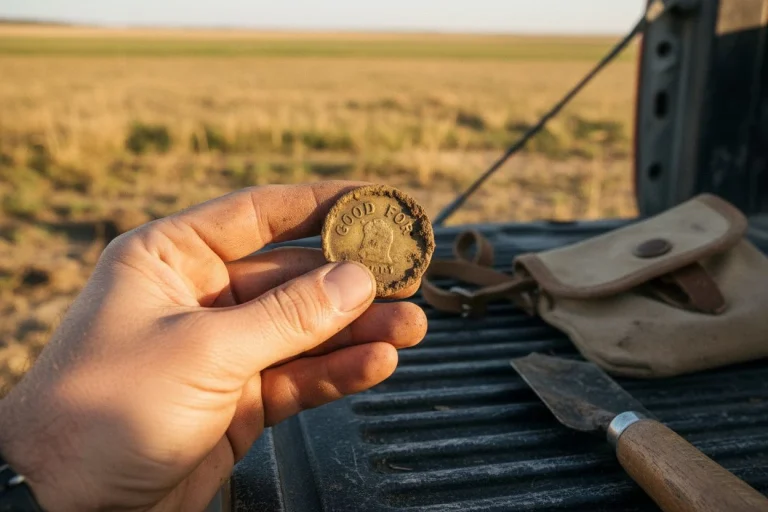
You’re standing over a hole with a mud-caked token in your hand. It’s not a coin. No date. No dollar sign. Just the words “GOOD FOR” followed by a name you’ve never heard. Where do you even start?
Every detectorist has pulled a token and felt that mix of excitement and confusion. Unlike government-minted coins, most tokens were privately issued between 1900 and 1930 as advertising or credit tools — which makes them much harder to pin down (Source: American Numismatic Association, Money Talks presentation). I’ve been there more times than I can count, staring at a piece of brass that could be worth $2 or $200 depending entirely on what I can learn about it.
I’ll show you the exact workflow I use to turn a rusty slug into a dated, documented piece of local history — reading the token’s anatomy, researching it through digital databases, digging into historical archives, and preserving it properly. By the time you’re done, that mysterious piece of scrap will have a story. And half the fun is the chase. (The Hidden Historian Mindset: Documenting Metal Detecting Finds)
What Does the Token Text Tell You?
Before you can research a token, you need to know what you’re actually looking at. Most early 20th-century tokens share a common anatomy. Once you learn to read it, you’ll narrow down the search in minutes instead of hours.
Last fall I dug a token in Auburn that just said “LUCKY STRIKE” with no location. I almost tossed it. Then I turned it over and found a tiny “S.F.” stamped into the rim. That single letter told me it was a San Francisco saloon token from 1912 — completely different from a Lucky Strike cigarette token. The difference was edge lettering I almost missed.
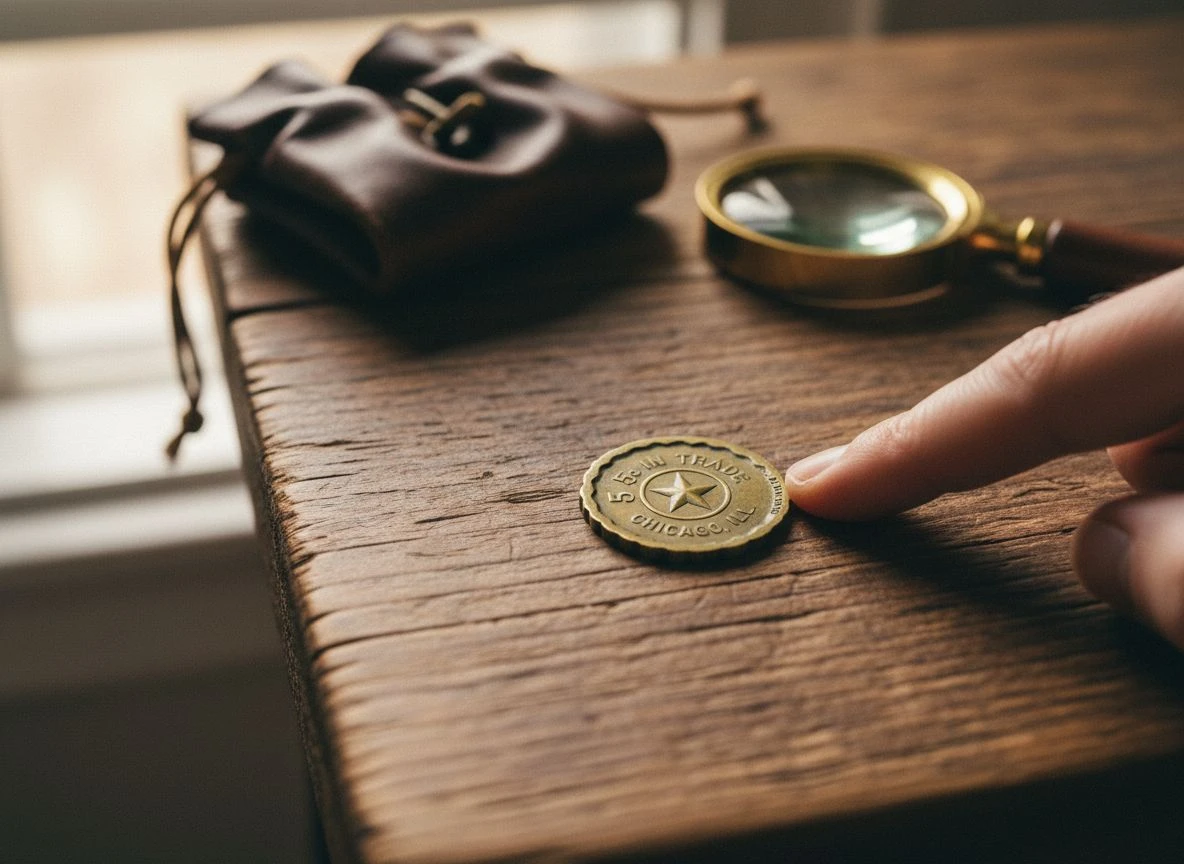
Here’s the order I work through with every token I pull:
- Start with shape and edges. Is it round? Scalloped? Eight-sided? Unusual shapes often point to specific regions or issuers. Run your finger along the rim — edge lettering or tiny stamped marks are easy to miss but can identify a token instantly.
- Check the obverse (front). Look for three things in order: issuer name, denomination, and purpose. Issuer names are usually most prominent. Denomination often reads “5¢ IN TRADE” or “10¢” — early 20th-century tokens rarely show a year, so don’t expect a date. Purpose words like “GOOD FOR,” “MERCHANDISE,” or “DRINK” tell you what the token redeemed.
- Flip to the reverse. Location is almost always here — city and state abbreviation. Sometimes just initials. That’s your key for the next research step.
- Finally, assess wear patterns. Heavy wear on one side suggests it circulated with constant friction against a specific surface — common in saloon tokens carried in pockets with change. Minimal wear means it was likely tucked away or never used.
Run these details through TokenCatalog.com, which lets you search by any field — issuer, city, denomination — and you’ll often find a match in seconds. (Source: tokenandmedal.org)
Using Online Databases to Identify Tokens

Once you’ve read your token’s anatomy, it’s time to put the internet to work. Three digital databases form my go-to research stack, and I use them in a specific order. Together, they’ve helped me identify everything from a 1912 saloon token to a 1920s feed store chit that I nearly tossed as junk.
Why Start with TokenCatalog.com
This is the largest user-contributed database of trade tokens online, and it’s the first place I go (tokenandmedal.org). Here’s the workflow I use for every new token: Enter the issuer name, city, and denomination into the search fields. If you found a token reading “GOOD FOR 5¢” with “CHICAGO, ILL” on the reverse, plug those three details in, filter by “Trade Token,” and scan the image results.
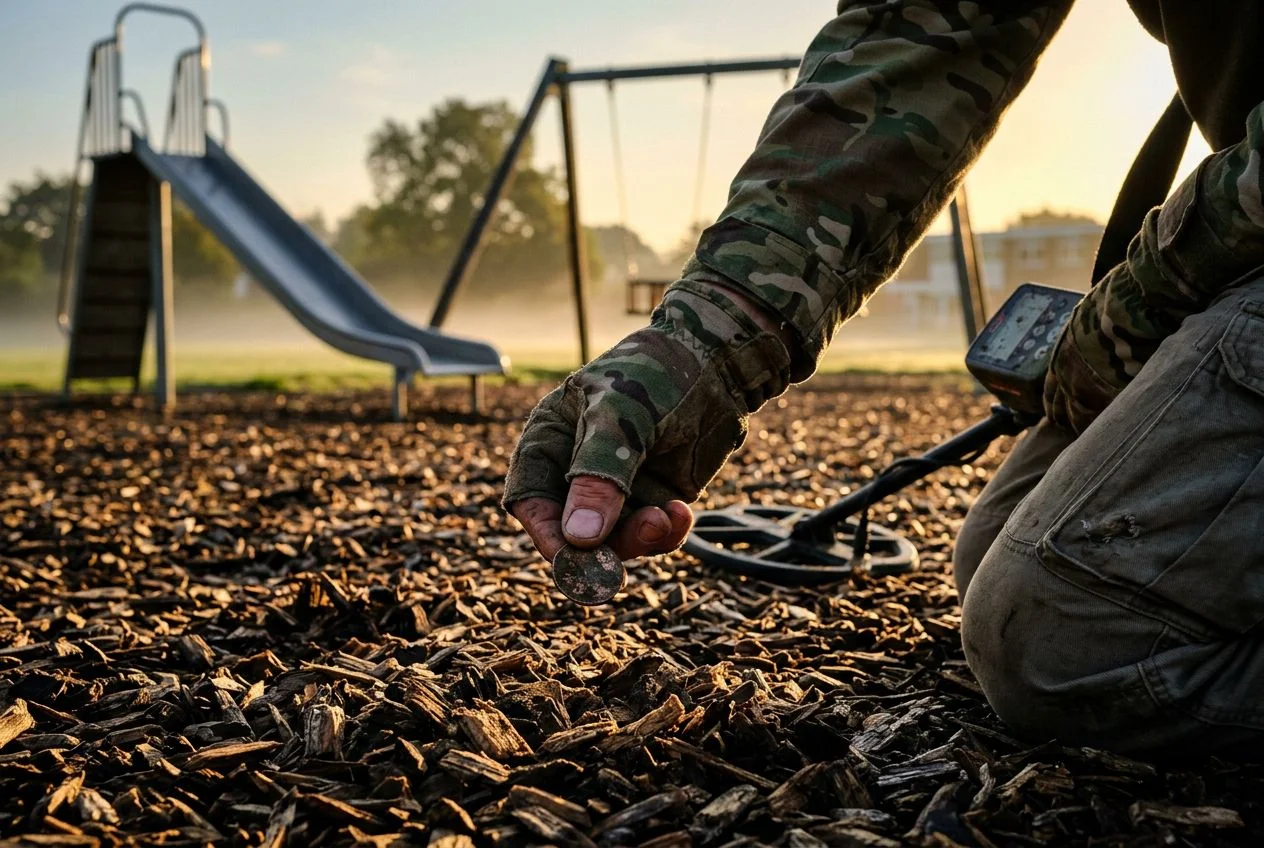
I pulled a scalloped brass token last spring from an old park — just “5¢” and “JOHNSON’S” visible. Thirty seconds on TokenCatalog.com matched it to a 1915 bakery token from a Johnson’s Bakery in Portland. The database covers all fifty states and multiple countries, and because it’s community-maintained, new entries appear regularly.
Exonumia Snap for Hard to Read Tokens
When a token is too corroded to read clearly, I pull out Exonumia Snap. This AI-powered mobile app identifies tokens from a single photo, matching your find against an extensive image database (Exonumia Snap). It provides the country of origin and an approximate issue year.
I tested it on a heavily worn aluminum token with almost no visible markings. The app returned a 95% match to a 1920s “GOOD FOR 1 LB OF COFFEE” store token from Ohio. Without it, I’d have given up entirely.
Token and Medal Society for Expert Help
When the databases come up empty, I turn to the Token and Medal Society (TAMS). They maintain a library of reference works like A Tune for a Token by Q. David Bowers, plus a network of experts who can identify obscure pieces. I’ve sent them photos of two unknown tokens over the years — one came back identified within a week.
Before you give up on that corroded token, run it through these three databases. I’ll bet you find a match.
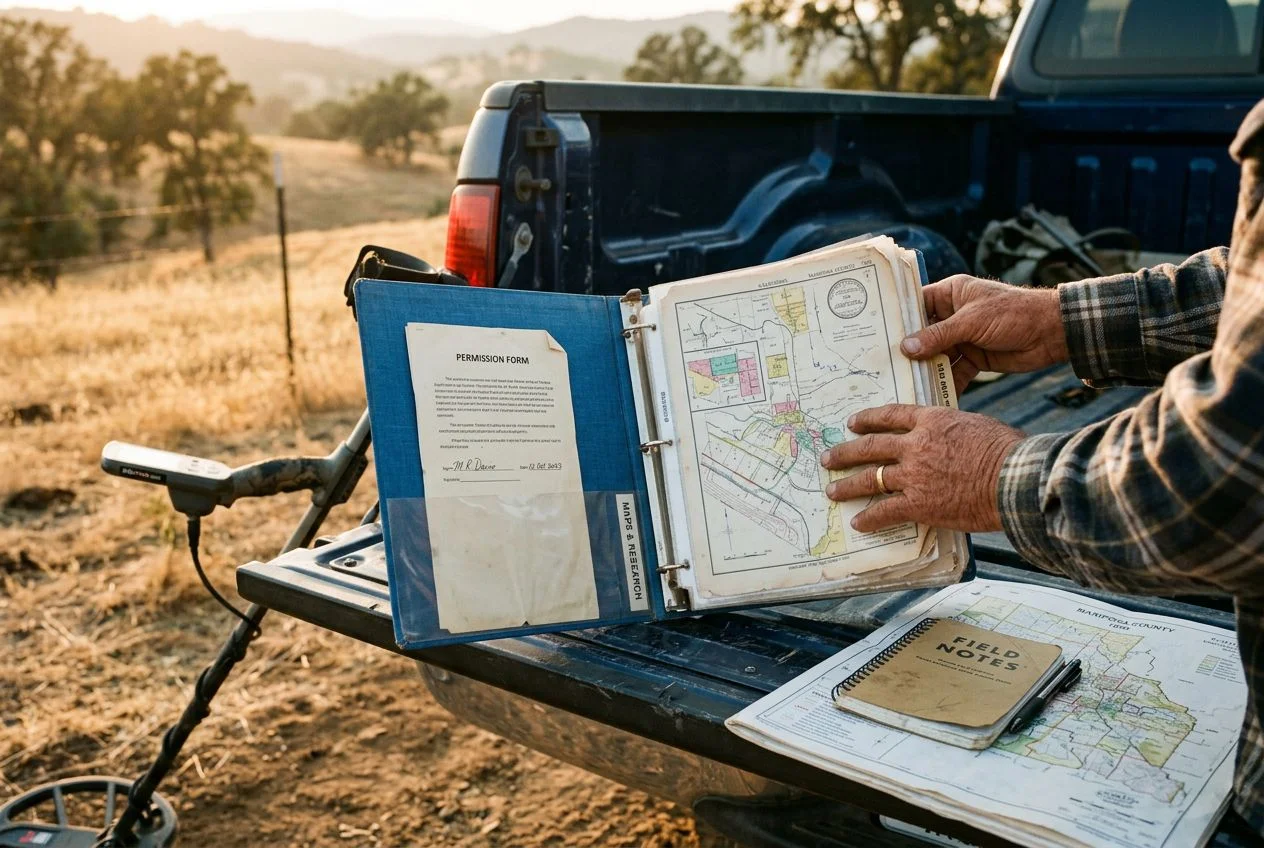
Dig into more research strategies: Using Sanborn Maps for Metal Detecting and Researching Sites in the Library.
Archival Research for Rare Token Identification
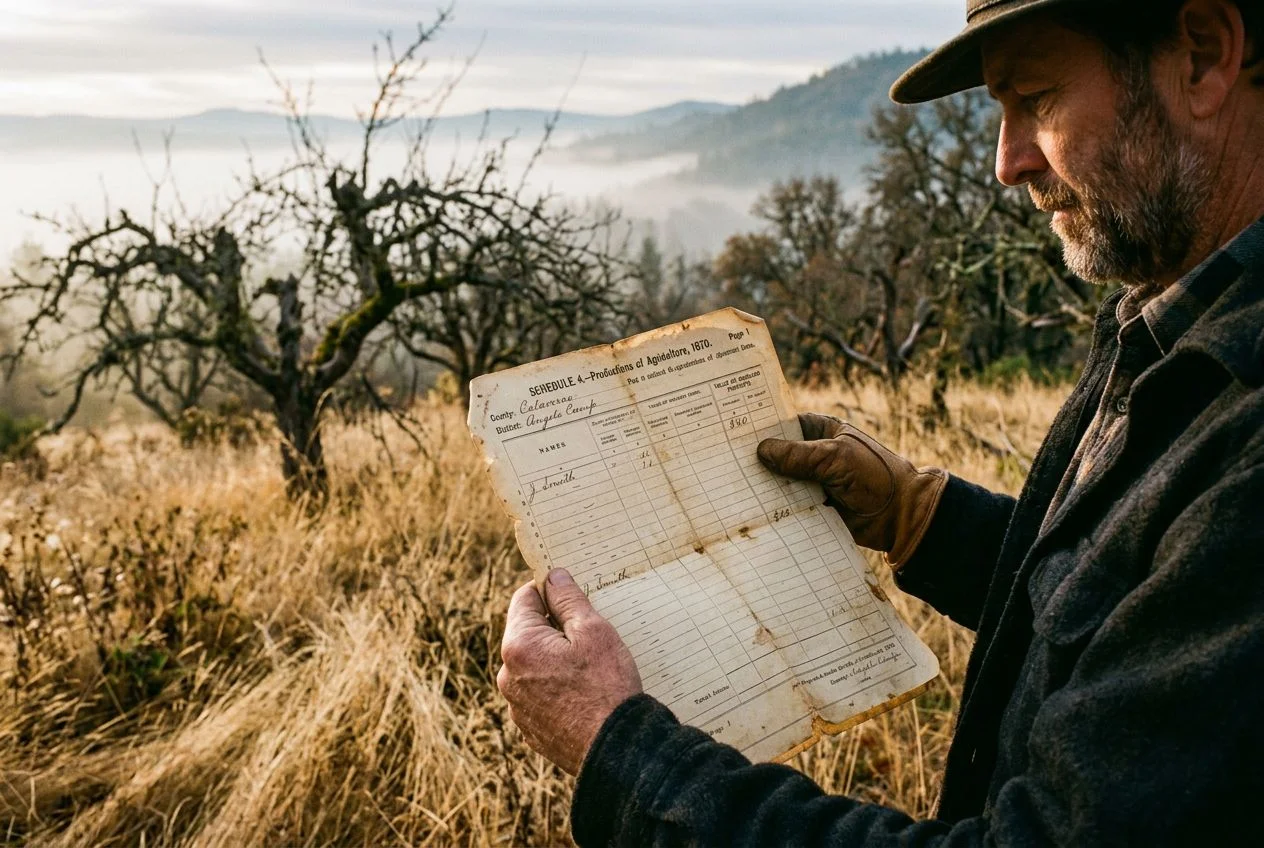
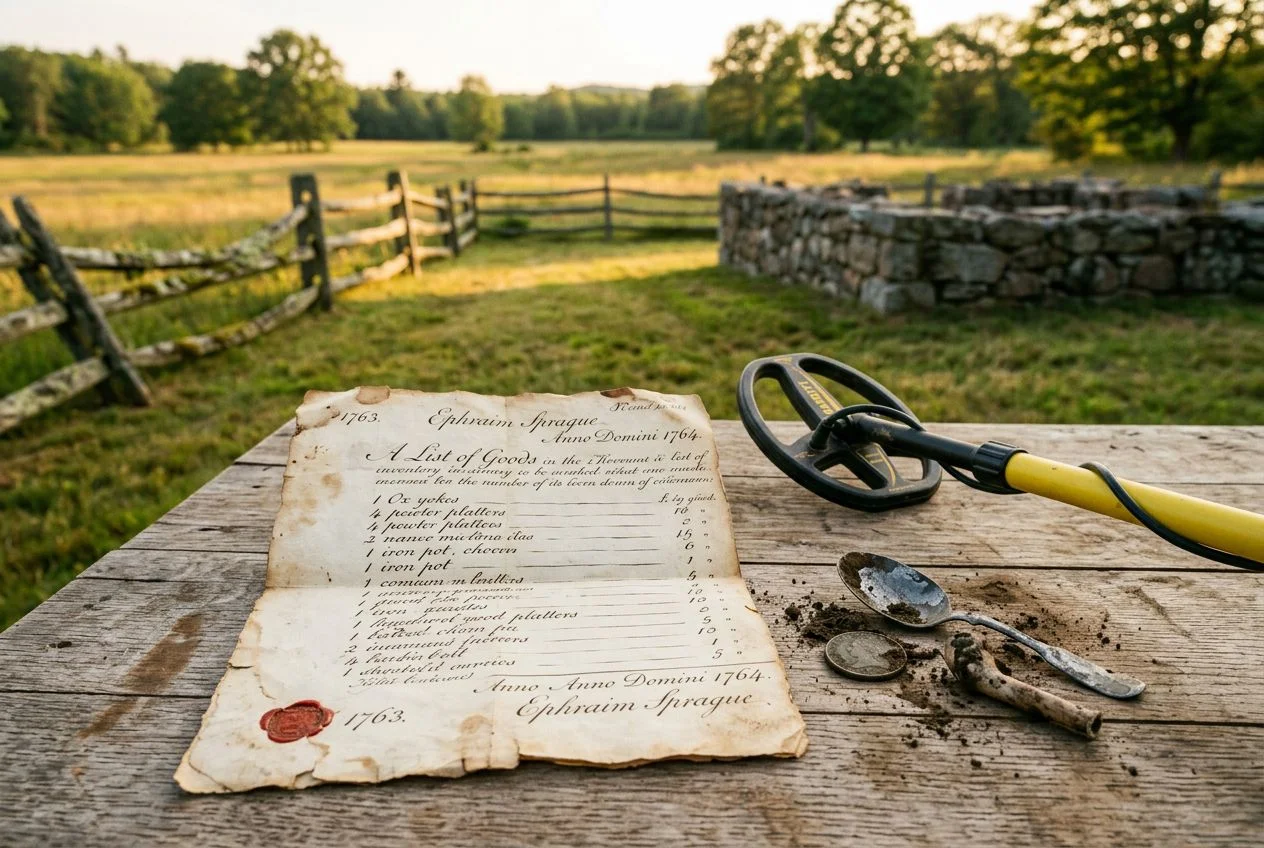
Even the best digital tools fail sometimes. When TokenCatalog.com and Exonumia Snap come up empty, that’s where the real detective work begins — and honestly, it’s my favorite part. If you’ve exhausted online databases, it’s time to pull the backup weapons: city directories, Sanborn maps, and Dun & Bradstreet reference books. These resources can date a token within a year or two when everything else gives you nothing.
My buddy Tom found a token from “P. H. McCarthy’s Saloon” in Sacramento. No location, no year. I spent an afternoon in the California State Library flipping through 1907 city directories. Turned out McCarthy was a barkeep on K Street for exactly three years before he moved to Portland. We dated that token to 1906–1907.

Here’s the workflow I recommend: start with the city directory for the year range you suspect. Most public libraries and state archives have digitized or microfilmed versions going back to the 1800s. Search by the issuer name on your token. If you find a match, note the business address and cross-reference it against Sanborn fire insurance maps — those maps will confirm the building footprint and often the business type.
For tokens with no obvious location, grab a Dun & Bradstreet volume. These massive reference books were published annually from the 1850s onward, listing businesses nationwide with credit ratings and addresses. I found a corroded aluminum token reading only “J. H. WRIGHT & CO.” with no city visible. Flipping through a 1915 Dun & Bradstreet volume, I found a J. H. Wright listed as a grocer in two different cities. A quick check of old newspaper ads for both locations confirmed the correct one.
The beauty of this approach? You’re not just dating the token — you’re reconstructing the business and the person behind it. That’s the difference between finding a piece of metal and recovering a story. Pair this archival method with topographic maps of historic sites to locate where those businesses actually stood, and you’ll turn an unidentifiable slug into a documented piece of local history.
Does the Metal Type Identify the Token?
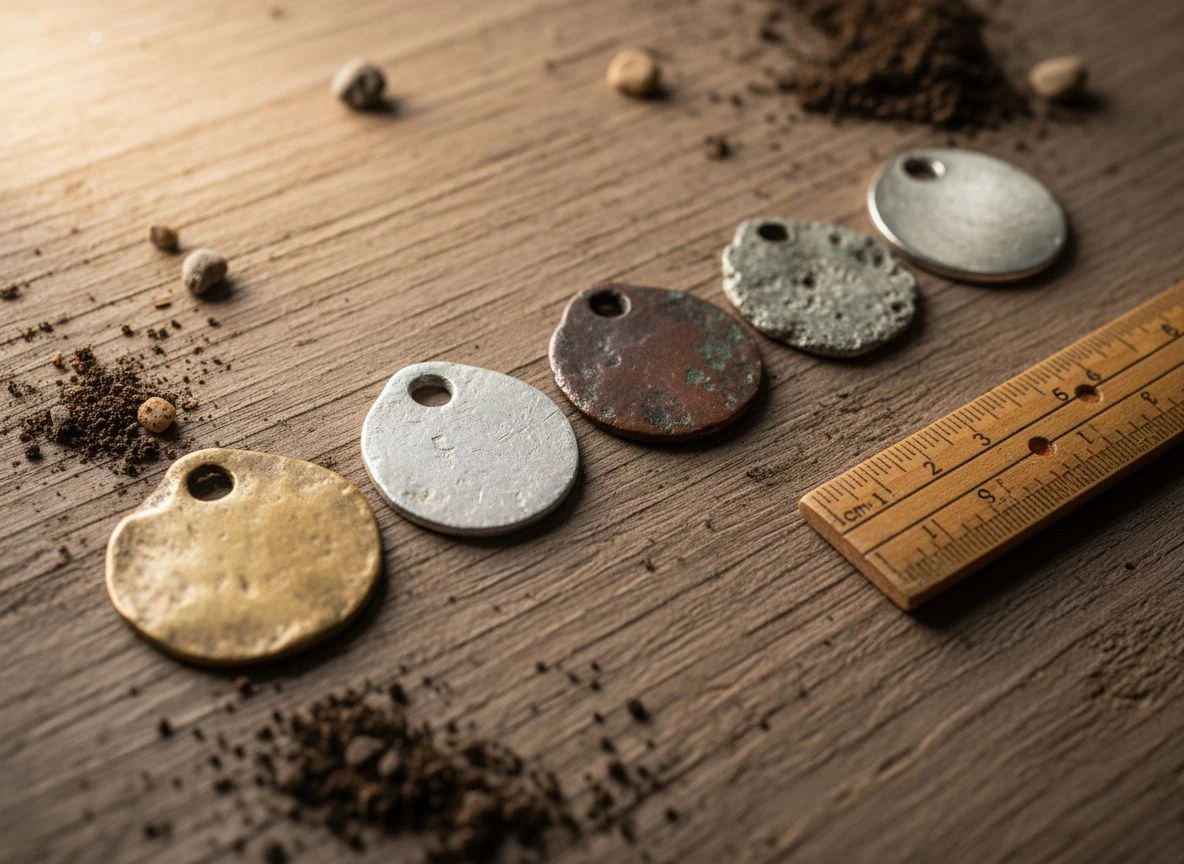
The metal your token is made from won’t give you an exact year, but it will narrow the date range dramatically. I’ve learned to let the material whisper its story before I ever touch a database.
I once found a paper-thin aluminum token at a ghost town site east of Modesto. Aluminum tokens were cheap to produce in the 1920s. That metal alone told me my site was active during the Depression, not the 1890s. Here’s what different metals reveal:
- Brass or copper (heavy, feels solid): Most common from 1890–1915. These were durable, respectable tokens from established businesses.
- Aluminum (featherweight, often warped): Peaked in the 1910s–1930s. Cheap production made them popular for small-town merchants during hard times.
- Zinc or pot metal (brittle, often pitted): Mostly 1920s–1940s. Economical but corrodes terribly — explains why many are unreadable.
- Nickel or silver (rare, valuable): Typically railroad or transit tokens, 1900–1920.
A quick caveat: material alone isn’t definitive. I’ve pulled a brass token from a 1929 site and an aluminum one from 1910. But combine the metal with your site’s history — if you’re digging at a location active in 1915, an aluminum token from a ghost town near Modesto points to Depression-era activity, while a brass token suggests earlier use. The halo effect in soil types can also corrode certain metals differently, offering clues about how long a token has been buried.
Your token’s metal is the first clue — not the final answer, but a powerful filter that tells you which decades to focus your research on.
How Site Finds Help Date Tokens
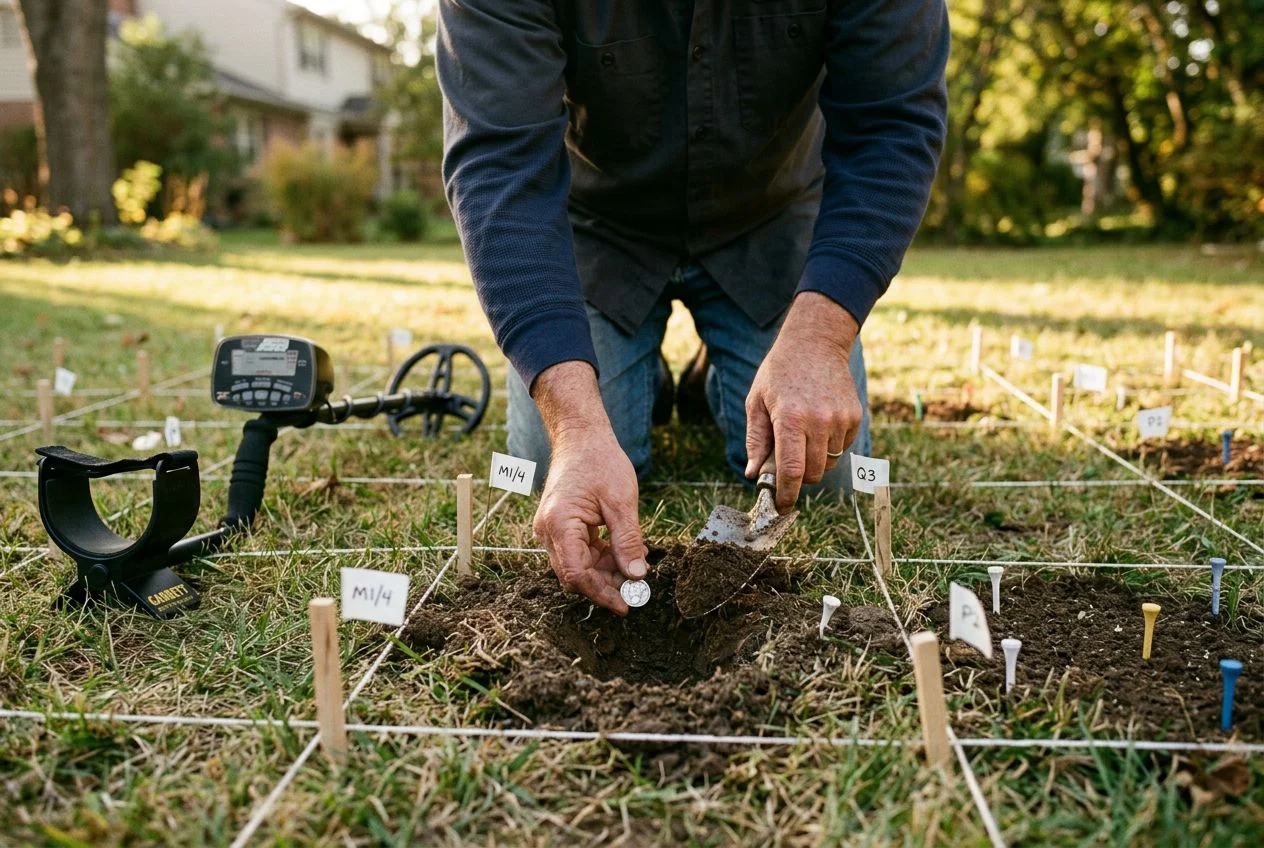
Digital databases and material clues give you ranges, but the site itself often holds the final key. By studying what else came out of the same hole — coins, relics, trash — you can triangulate a token’s age more precisely than any single method ever will.
Contextual dating is about combining multiples: the metal of the token, the coins found in the same grid, and the history of the site itself. None alone gives you a year, but together they paint a sharp decade‑window.
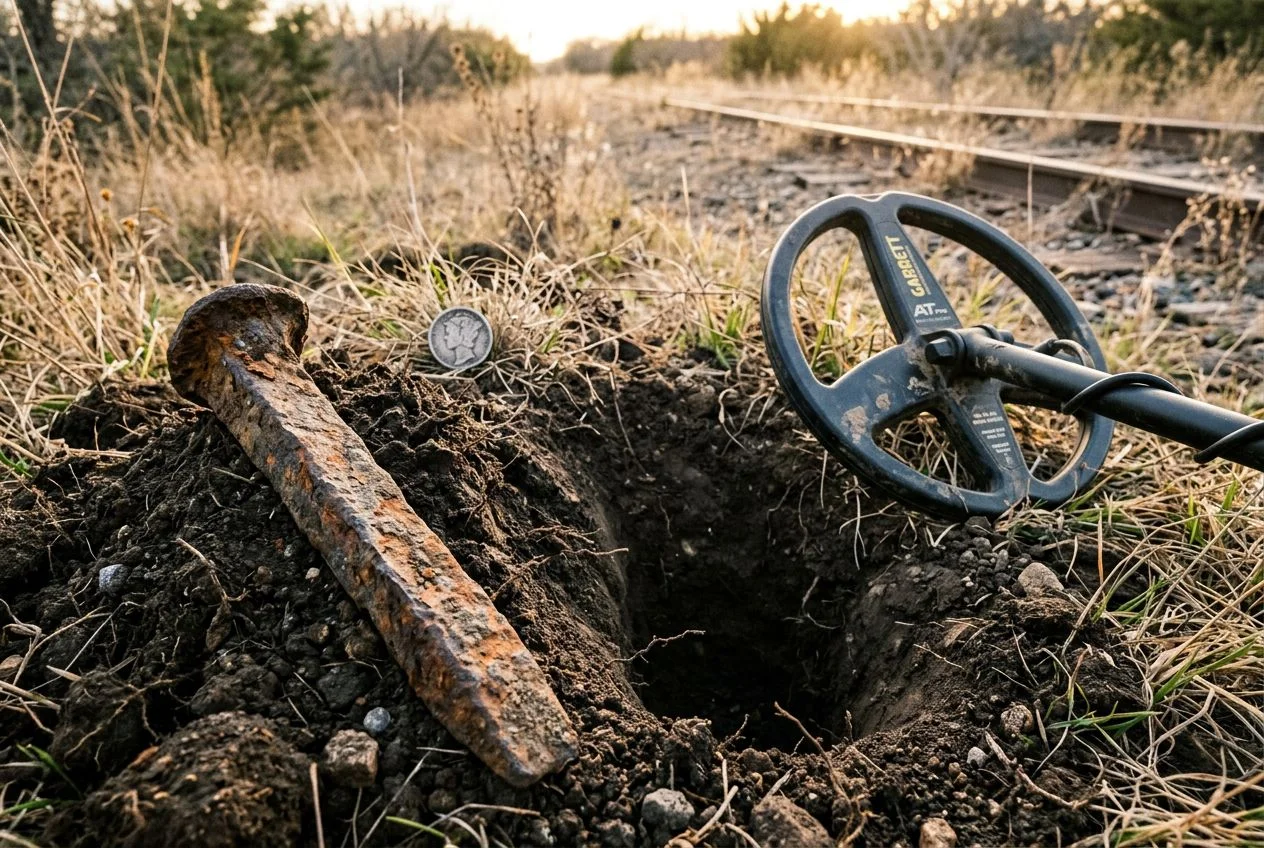
I once dug a rusted aluminum token in an old farm field south of Sacramento. The token was unreadable — just “GOOD FOR” and a hole through the center. But six inches away I pulled a 1917‑dated Mercury dime and a 1910‑era brass button. That told me two things: the site was active in the 1910s, and the token was probably dropped in that same period, not recycled decades later. Aluminum tokens were cheap and popular through the 1920s, so the dime gave me a terminus post quem — the earliest possible date the token could have been lost.
Your site’s own timeline is the frame. If you’re hunting a parcel that became a housing development in 1925, any token you find likely predates that change. That’s where Sanborn maps shine: they show you exactly when a building appeared or disappeared on a lot. I’ve used them to rule out tokens that should have matched a site’s history but didn’t — saving me hours of dead‑end research.
Don’t forget to look at the coin spills you’ve dug. A handful of 1900-1910 Indian Head pennies in the same field as your token pushes the activity window forward. A 1943 steel cent in the same grid pushes it way back — wait, that can’t be right. You get the point. Even trash helps: a 1920s soda bottle top or a 1910s shotgun shell base can anchor a token’s era.
Next time you dig a token, look at what else came out of that hole or that same grid. The answer is already in your pouch — you just have to read the whole story. For more on reading worn‑out coins that lack a date, see my Secret Tricks for Dating Worn‑Out Coins.
Safe Cleaning Methods for Token Preservation
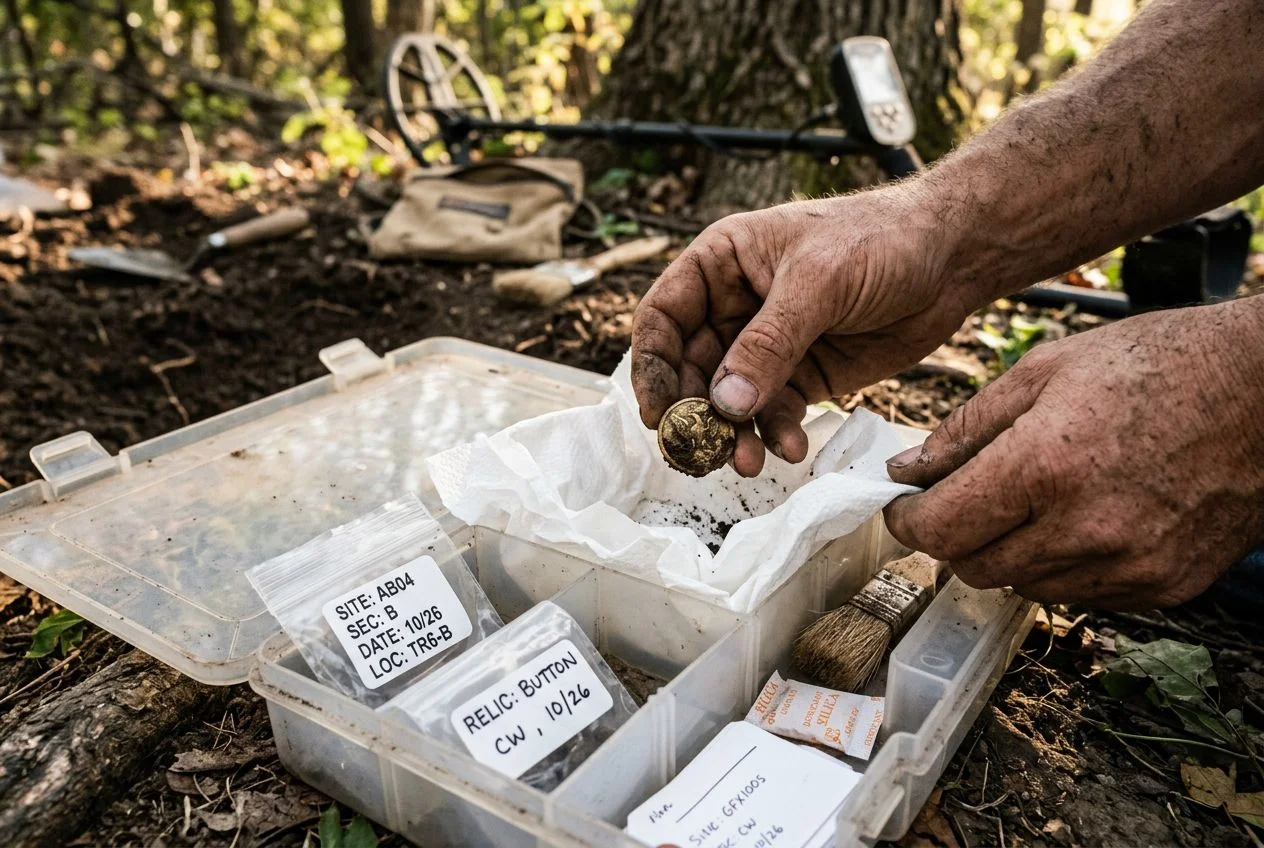
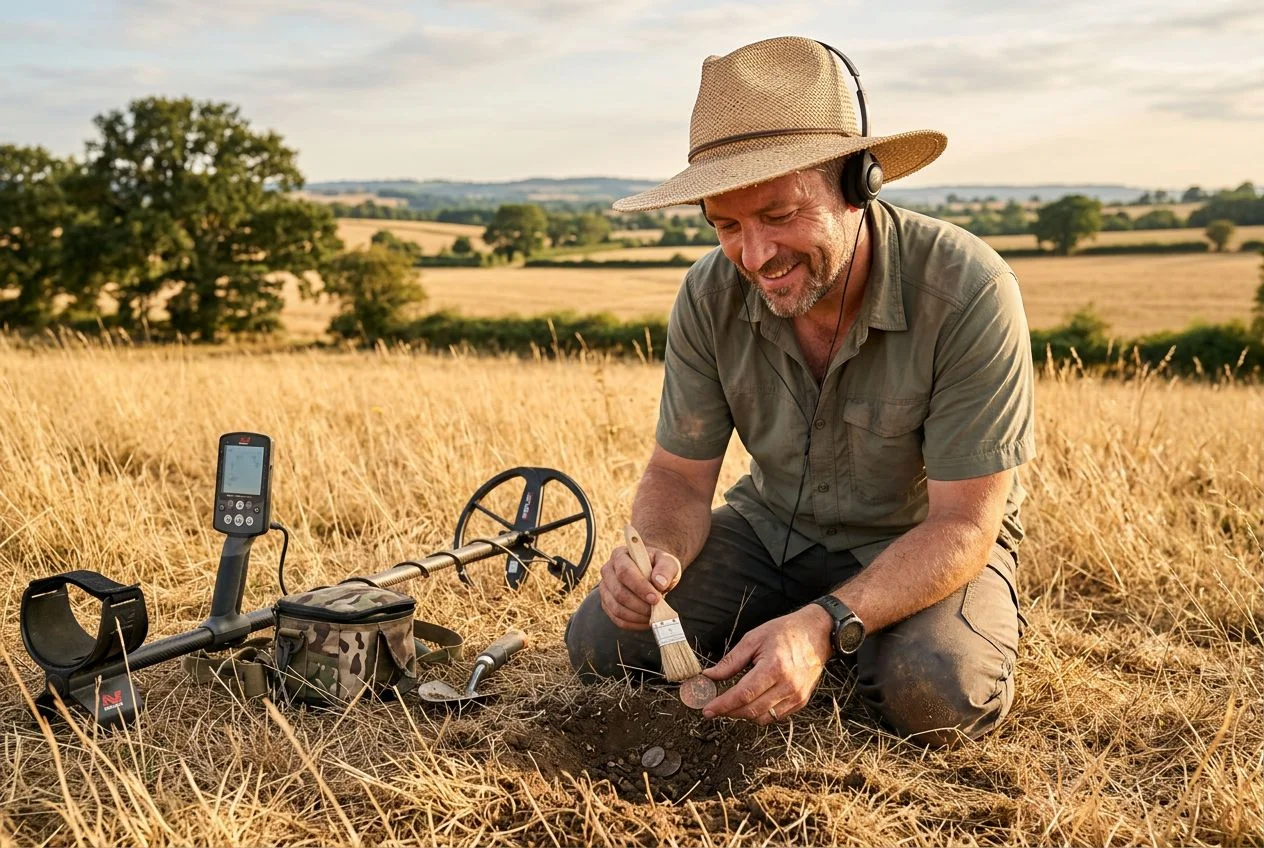
Before you do anything else with that token — before even thinking about water or a brush — take a photograph. Good light, both sides, maybe next to a ruler. That image is your insurance policy. Because the moment you start cleaning is the moment you risk losing the very details you’re trying to reveal.
I once scrubbed a lead token with a brass brush. Fifteen seconds. Wiped the detail clean off. I still have that smooth slug to remind me: some metals are fragile. Lead, aluminum, zinc — they don’t behave like silver coins. They’re soft, porous, and decades of ground chemistry have already done their work on the surface. Aggressive cleaning doesn’t restore; it destroys.
The principle is simple: less is more. Your goal isn’t a mirror polish — it’s identification-grade clarity. You want to read the lettering, not make the token look like it just came off a press. For most dug tokens, a gentle soak in distilled water (change it every few hours) and a soft toothbrush is all you need. No abrasives. No metal tools. No ultrasonic cleaners for fragile metals.
If the token is especially crusted, consider a conservation-grade approach — consulting resources like How to Clean Old Coins Found Metal Detecting: Proven Steps to Save Your Finds can offer safer techniques. And after cleaning, document everything: the before-and-after photos, your cleaning method, the final readable markings. That record matters as much as the token itself. I learned that lesson the hard way, holding that featureless lead disc — a piece of history I erased in fifteen seconds.
Online Communities for Token Identification Help
You’ve read the token, scoured the digital databases, checked your site’s history, and cleaned it gently. Still nothing. That’s when you stop working alone and start tapping the collective brain of the detecting and collecting community. Some of the smartest token identification happens in forum threads and Facebook groups, where someone halfway across the country recognizes a mark you’ve been staring at for months.
Last winter I posted a badly corroded brass token on the Token and Medal Society’s Facebook page — just a blurry “F. W. WOOLWORTH CO.” with no city. Within four hours, a collector from New York identified it as a 1910s New York City store token, matching it against a reference book I’d never heard of. I would have spent weeks chasing dead leads. The community solved it over coffee.
Post clear photos — both sides — with good lighting and a ruler in frame for scale. Include every detail you’ve already uncovered, even if it seems irrelevant. The more context you give, the easier it is for experts to help. TokenCatalog.com also has an active contributor network that can often fill in gaps if you submit an “unidentified” entry.
If you’re stuck, don’t let that token sit in a box for years. Post it. The community loves solving these puzzles. Before you share, make sure you’ve already documented the find properly — a good record makes it easier for others to help and preserves what you’ve learned.
Pro tip: Include a ruler or coin in your photo for scale. Forum experts need to see size to narrow down the token type.
Frequently Asked Token Identification Questions
I get these questions a lot — here are quick answers to the most common ones about identifying early 20th-century tokens.
How is a token different from a coin? Tokens were privately issued, not government-minted. They usually say “GOOD FOR” or display a merchant name and denomination. Coins have a country of issue and legal tender value. A token’s value was whatever the issuing business decided — typically 5¢ or 10¢ in trade.
What if the token has no date or location? You’re not alone — most early 20th-century tokens skip the year entirely. Focus on the issuer name first. Search TokenCatalog.com — it’s the best free database for matching partial markings. If you get nothing, try the issuer name plus your state in historical newspaper archives. I once dated a plain “J.W. SMITH” token to 1917 just by finding an ad mentioning his grocery.
Can the metal tell me anything about age? Yes. Aluminum tokens suggest 1890s–1920s (aluminum was novel then). Brass and copper were common throughout. Lead usually means very early or very crude issues. If the token is zinc or a white metal composite, it’s likely 1920s or later.
How do I know if my token is worth anything? Most trade tokens are worth $5–20 unless they’re rare or historically significant. Check completed eBay listings search under “token [issuer name]” — not active listings, which overprice. For serious valuation, submit to the Token and Medal Society community or consult reference works like Q. David Bowers’ A Tune for a Token.
Still stuck? Post clear photos on the Token and Medal Society’s Facebook page. Include both sides, a ruler, and everything you’ve discovered so far. The community loves solving these puzzles — and they’re fast.
The History Behind Your Token
You start with a mystery — a rusted disc with nothing but “GOOD FOR” and a name. By the time you’ve read the token, worked the databases, dug through archives, analyzed the metal, asked the community, preserved the find, and documented everything, you’ve turned a hunk of metal into a piece of history with a specific date, a person behind it, and a story that deserves telling. That documentation piece matters — because a well-documented token is one that future detectorists can learn from, too.
I keep a small box on my desk. Not the valuable stuff — the crusty tokens that took me weeks or months to identify. A saloon token from a Sacramento bar that burned down in 1917. A “CHAS. E. WILSON — SHOE REPAIR” slug that turned out to belong to a cobbler who ran for city council in 1922. They’re worth maybe five bucks each. The stories are priceless.
So next time you pull a token from the dirt, don’t just toss it in the crusty box. Give it the research it deserves. The business might be gone, the street renamed, the building razed — but that token is still whispering a story. All you have to do is listen.

My name is Paul and I am the founder of Detector For Metal, a dedicated resource for metal detecting enthusiasts seeking to uncover historical treasures and connect with the past using the latest technology. As a stay-at-home dad and family man, I’ve found metal detecting to be the perfect hobby that combines family adventure with historical learnings for the whole family.
As a father, I’m deeply committed to passing on this hobby to the next generation of detectorists, starting with my own children. I share advice on everything from metal detecting with kids to exploring the top 10 metal detecting sites you never thought about. My methodical approach to the hobby goes beyond the thrill of discovery—it’s about creating family traditions while preserving history and sharing the stories of those who came before us.