Table of Contents
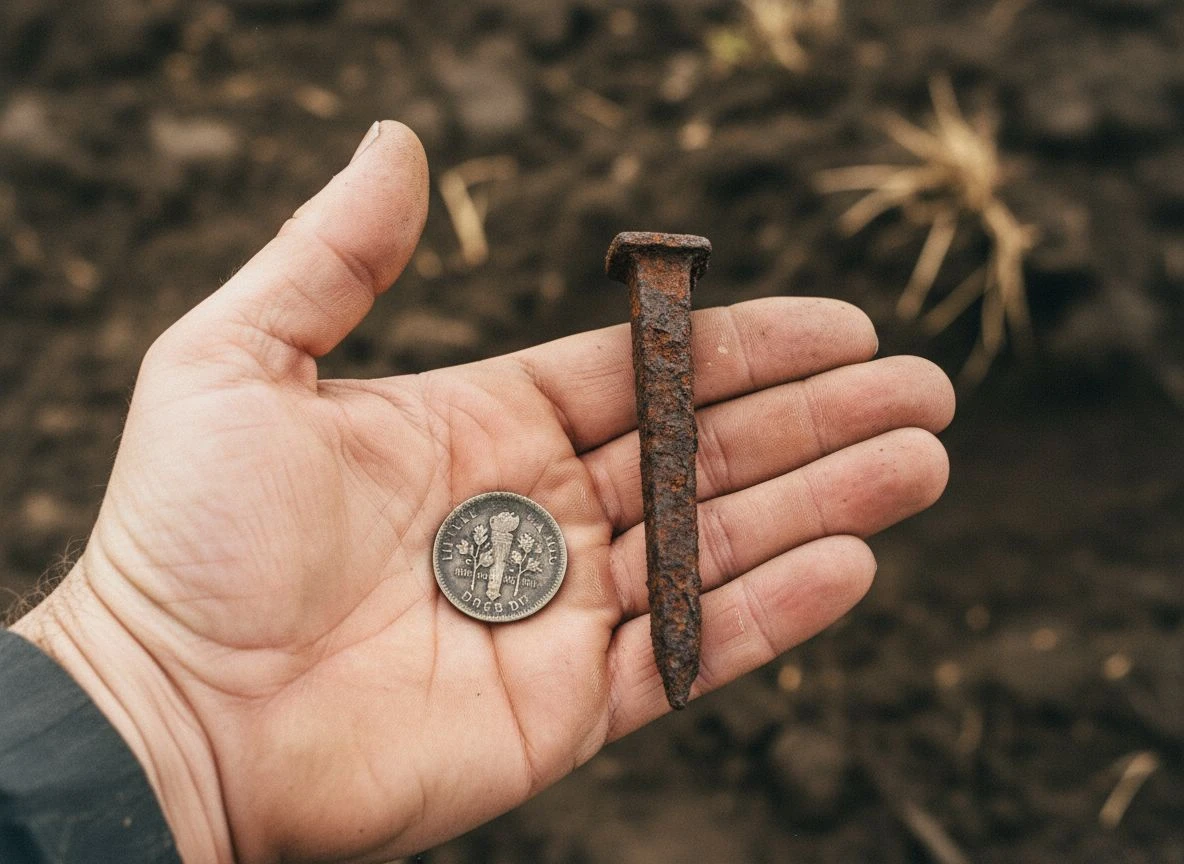
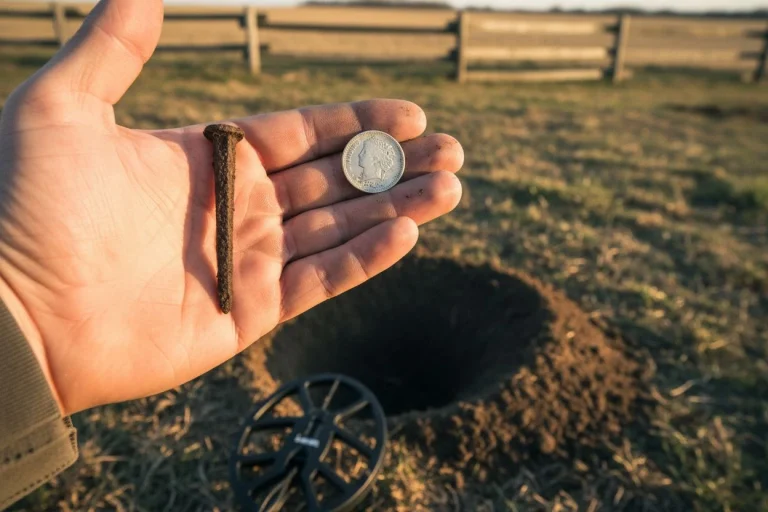
Here’s a frustrating truth. A beautiful, high-tone signal that screams “silver dime” can vanish the moment you dig your plug, leaving you staring at a rusty nail. But sometimes, the opposite happens. A broken, “iffy” signal can be a deep, valuable coin hiding in plain sight. The confusion comes from two real things: the helpful “halo” from old coins and the deceptive “ghost” from rotting iron.
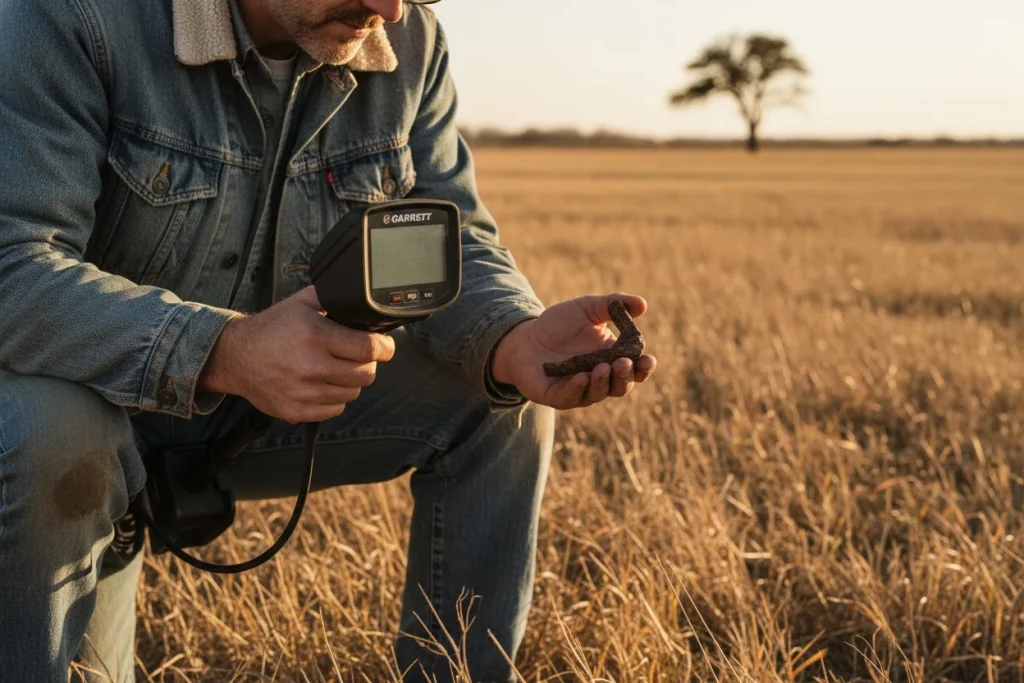
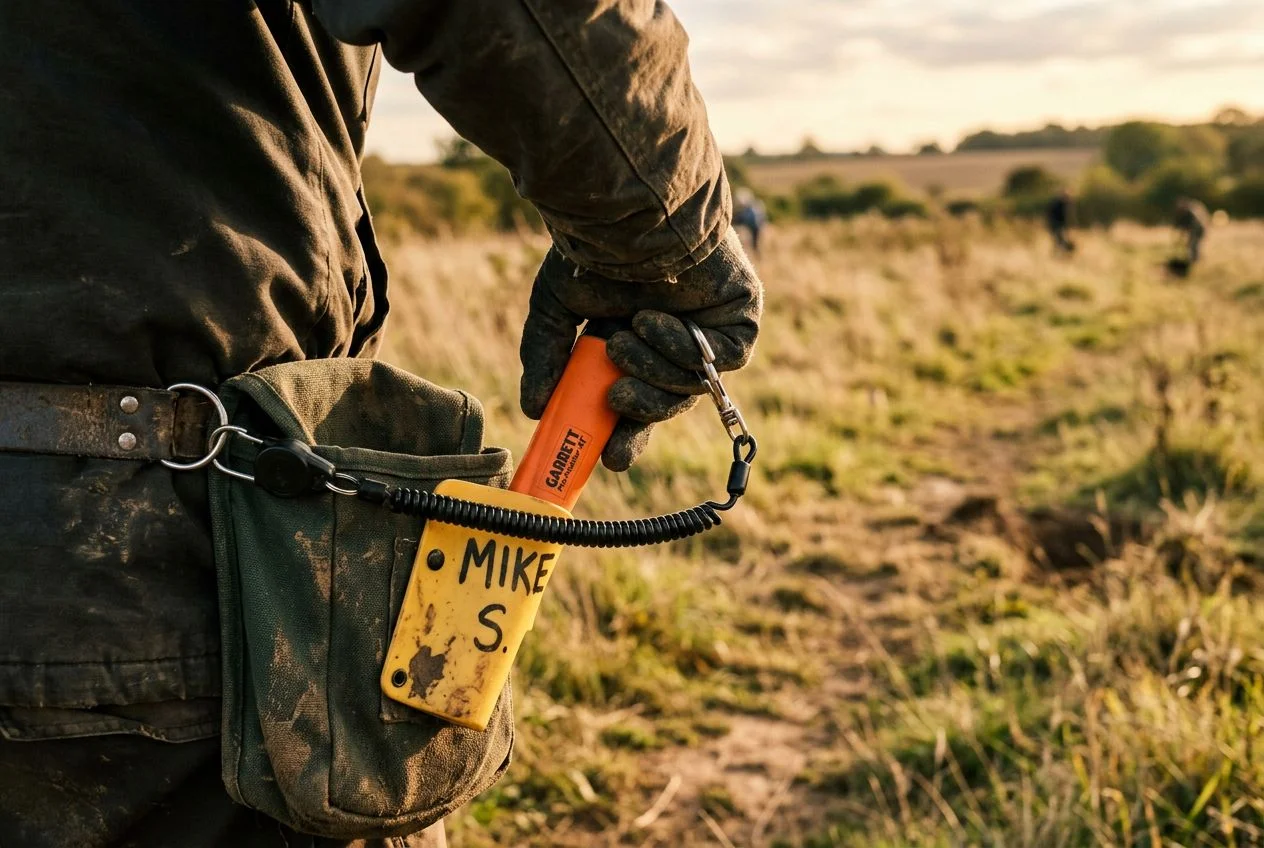
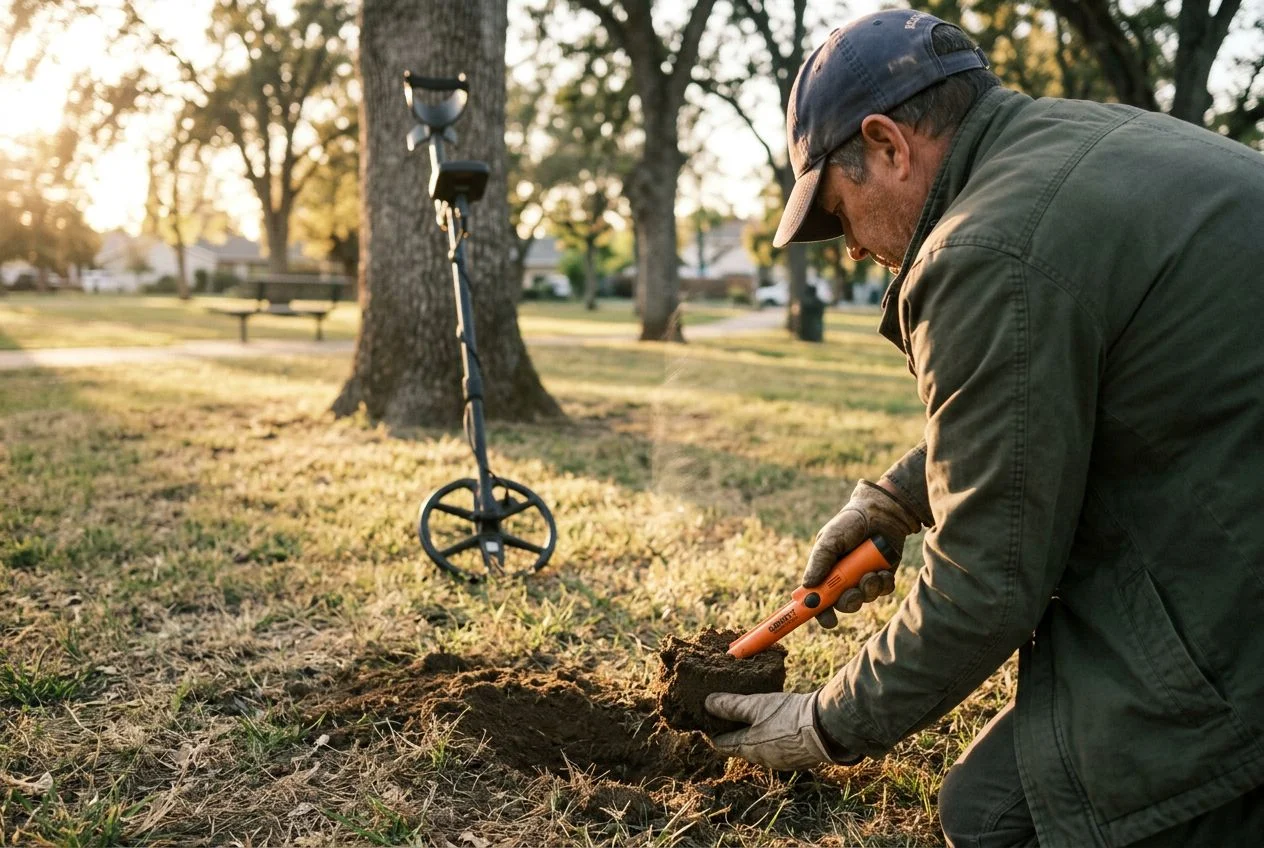
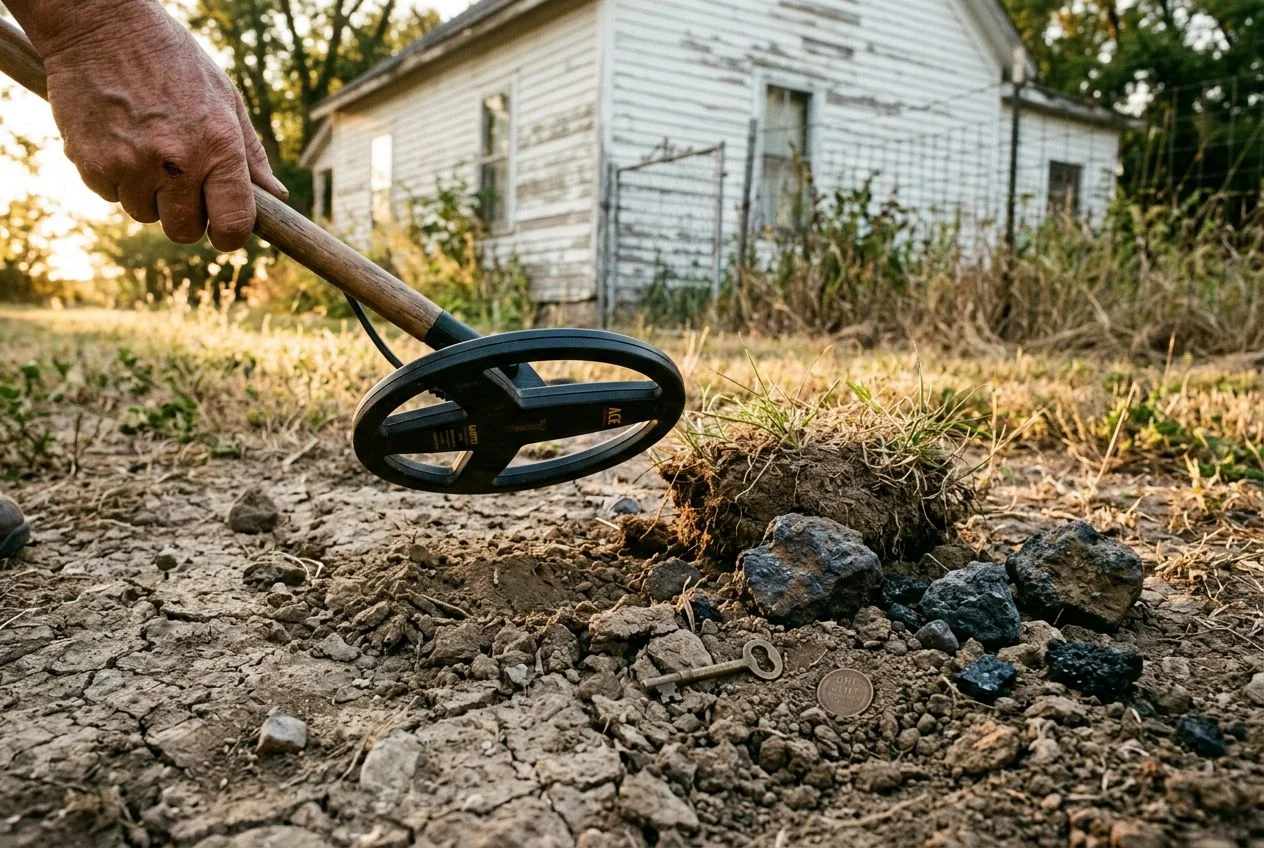
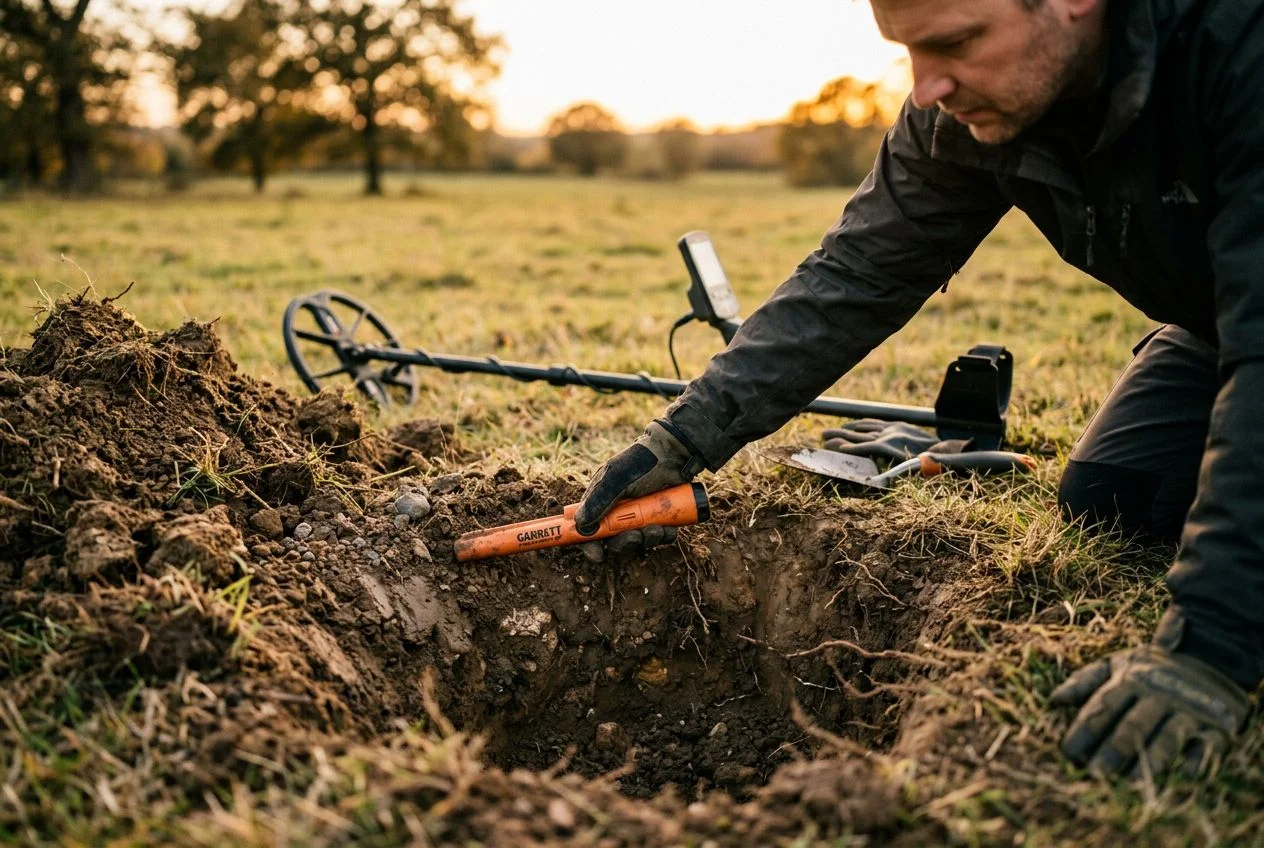
I’ll never forget the signal that taught me this. My Equinox sang a perfect, high tone in an old farm field. I was already mentally spending my seated Liberty dime. Six inches down, my pinpointer went crazy… over a massive, crusty square nail. Deflated, I tossed the nail in my trash pouch and re-scanned the hole on reflex. To my shock, the clean high-tone was still there. I sifted the dirt I’d just removed and found a 1902 Barber dime nestled right next to where the nail had been. The iron had masked the coin’s true signal until I moved it.
This maddening experience is a rite of passage. Digging a perfect high-tone only to find iron is the single most aggravating part of our hobby. But what if I told you that sometimes you should dig those signals? And that the old-timer wisdom about the “halo effect” is only half the story? As Dave Johnson from Fisher Labs has pointed out, what many call a “halo” is often a mix-up about how our detectors talk to disturbed soil and the weird magnetic properties of rust.
Let’s untangle the real science from the myths. We’ll break down the simple chemistry that creates both helpful halos and lying ghosts. I’ll explain the physics behind why your detector fibs to you, and I’ll give you my field-tested, step-by-step guide for deciding whether to dig. Grab your detector and a notepad—this is the stuff that changes your find count.
What is a Ghost Signal in Metal Detecting?
Let’s cut through the confusion. Two real processes—both involving rust—cause most of our signal headaches. One is a detectorist’s friend, making good targets easier to find. The other is a liar, making junk sound like treasure. They are not the same thing.
The “Good Halo” is what most old-timers talk about. When a copper or silver coin sits in damp ground for decades, its surface slowly rusts. Tiny particles of metal oxide seep into the dirt around it. According to a detailed community resource on DetectHistory, this creates a slightly more conductive “ring” or halo in the soil. Your detector sees this bigger, conductive zone. That makes a deep, thin coin signal a bit stronger and more stable than it should be. It’s a helpful enlargement of the target’s footprint.
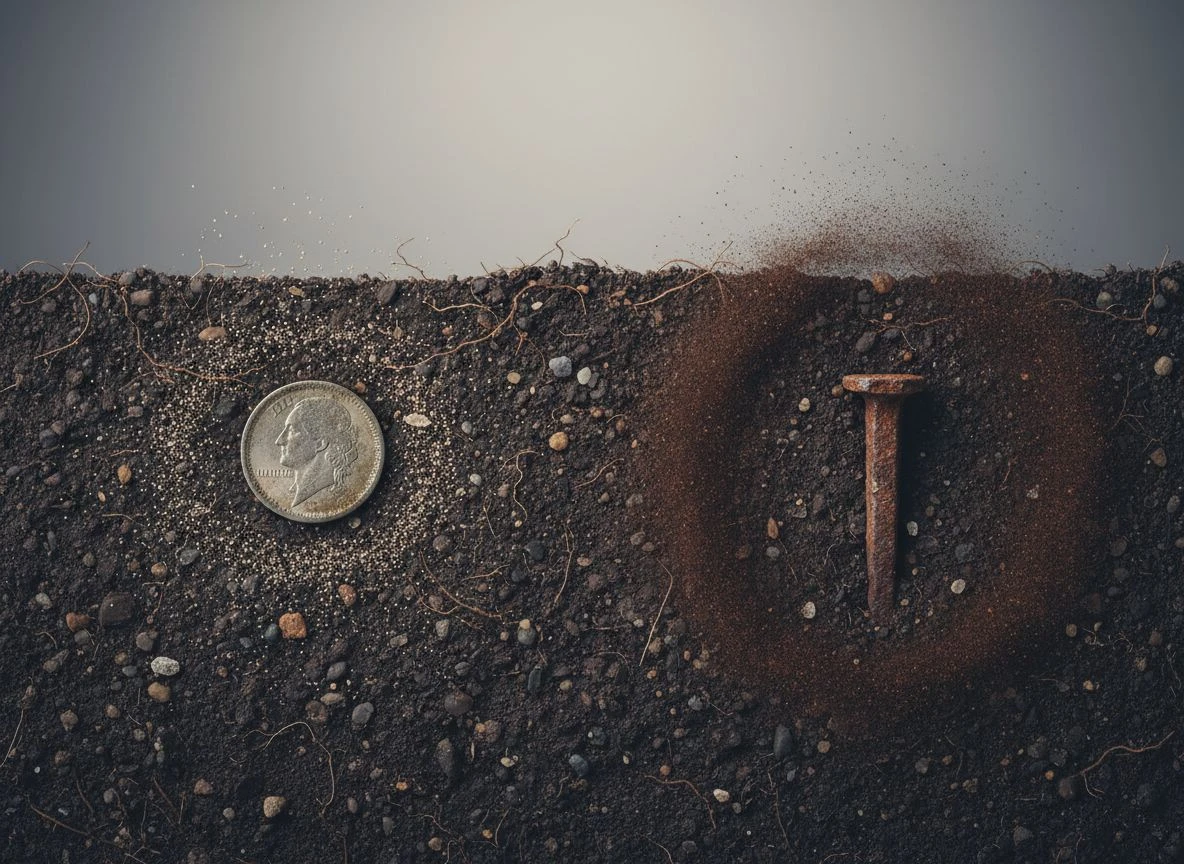
The “Bad Ghost” is a cruel trick of physics. It comes from ferrous iron—nails, hardware, can slaw—rotting in the ground. As it rusts, it creates a halo of iron oxides. But these particles have very different magnetic properties. As the Garrett Vortex manual explains regarding iron ghost signals, flat or ring-shaped iron can create a complex electromagnetic response. Your detector’s processor misreads it as a high-conductivity target. You get a beautiful, high-tone “coin” signal that vanishes when you dig up and move the rusty iron. You destroy the delicate magnetic field that created the illusion.
The core difference? A coin’s halo enhances the signal of a real non-ferrous target. An iron ghost creates a false signal mimicking a non-ferrous target. One helps you; the other wastes your time. Understanding this split is your first step to digging smarter.
How Rust and Soil Create False Signals
Quick Answer: The confusion comes down to basic chemistry in damp soil. A coin’s halo forms when its metal leaches conductive rust into the surrounding dirt, making the target seem larger. An iron ghost forms when rotting iron creates a cloud of magnetic rust that tricks your detector’s brain. Moist, mineralized soil acts like a battery, speeding up both reactions.
The Real Halo Effect Around Old Coins
Think of a buried coin as a tiny, slow-motion battery. In damp soil, the coin acts as the anode (the negative end). The surrounding soil is the cathode (the positive end). This causes electrolysis, where tiny particles of the coin’s metal—copper or silver ions—slowly dissolve and drift into the dirt over decades.
These particles rust, creating a ring of slightly more conductive soil. This ring is the “halo.” Your detector sees this bigger, conductive zone. That’s why a deep, thin coin can give a stronger, more stable signal than its actual size would suggest. It’s not magic; it’s just really slow chemistry working for you.
Why Iron Masquerades as a Good Target
Now, take that same chemical process and apply it to a rusty nail. As my buddy Mike and I looked at a crusty old nail from my garage, I pointed to the flaky orange rust. “This is the problem,” I told him. “That rust isn’t just on the nail.”
As a forum discussion on Friendly Metal Detecting Forum notes, moisture causes iron to rust, creating a cloud or halo of iron oxide particles in the soil. But here’s the kicker: these iron oxides have very different magnetic properties than the original metal.
Your detector’s brain isn’t perfect. When you sweep over this cloud of magnetic rust—especially from a flat or ring-shaped piece of iron—the complex electromagnetic response can be misread as a beautiful, high-conductivity “coin” signal. Dig up the iron, and you destroy the delicate magnetic field creating the illusion. The ghost vanishes.
How Your Local Soil Changes Everything
The final piece of the puzzle is what’s under your feet. Soil isn’t just dirt; it’s a chemical soup. Moisture is the catalyst. Electrolysis needs an electrolyte to work, and water with dissolved minerals (salts, acids) is a fantastic one.
This is exactly why, as I’ve written about in my guide to metal detecting after rain, a good soaking can make old sites come alive. The wet soil dramatically speeds up these chemical reactions. In highly mineralized or salty soils (like old farmlands or near coasts), the reactions happen faster and the effects are stronger. In dry, sandy soil, both halos and ghosts form much more slowly, if at all.
So, the next time you get a confusing signal, remember the three players: the metal (coin or iron), the rust (helpful oxides or magnetic ghosts), and the soil (the wet, chemical battery making it all happen).
How to Listen to and Test Deceptive Signals
Here’s the field method. To unmask an iron ghost, you must attack the signal from multiple angles—literally. A true deep coin’s signal stays coherent. A ghost will crack, shift, and ultimately lie. Your tools are your coil’s movement and careful listening.
Use the Wobble Test to Identify Iron
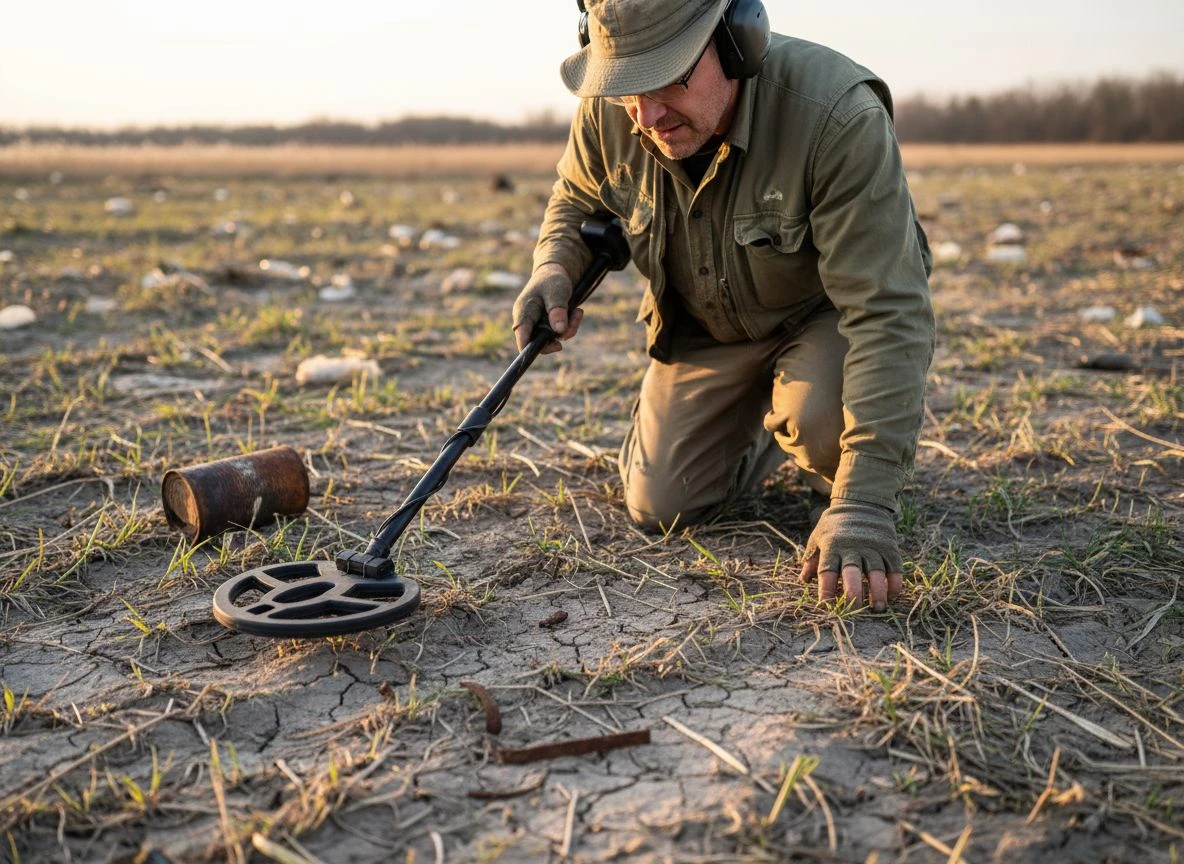
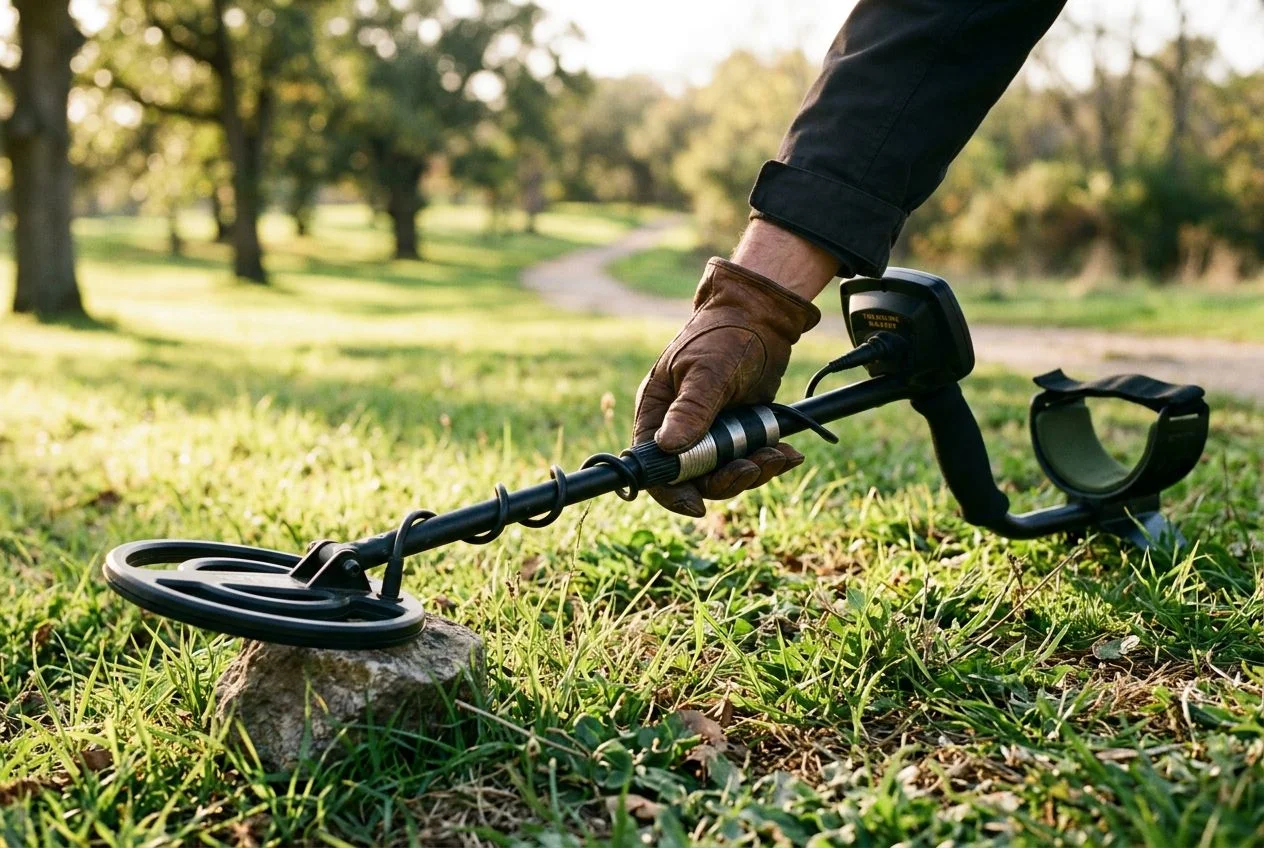
This is your first move on any perfect, high-tone signal. Don’t just sweep side-to-side. Slow to a crawl and, on your swing, gently wobble or rock the coil from heel to toe as you pass over the target. You’re changing the coil’s angle relative to the target.
What to listen for:
- A Good Sign: The high tone stays solid and consistent. The target ID might bounce a little, but the main signal holds.
- A Ghost Revealed: The high tone will “break up.” You’ll hear a crackle, a low-tone grunt mixed in, or the signal will momentarily disappear. This instability happens because you’re messing with the complex magnetic field of the rust halo. The ghost can’t keep its story straight from every angle.
Avoiding the Pinpointing Trap
This is where most people get fooled. In pinpoint mode, your detector uses a non-motion all-metal signal. Iron ghosts often pinpoint perfectly, with a tight, crisp center. This feels convincing! Don’t trust it. Exit pinpoint mode and go back to your discrimination pattern. Sweep directly over the spot you just pinpointed. If that beautiful high tone is now a faint, broken whisper or has vanished, you’ve almost certainly got iron.
Listening for Audio Changes After Digging
This is the final verdict, perfectly outlined in a guide from Ohio Metal Detecting. Dig your plug and remove it.
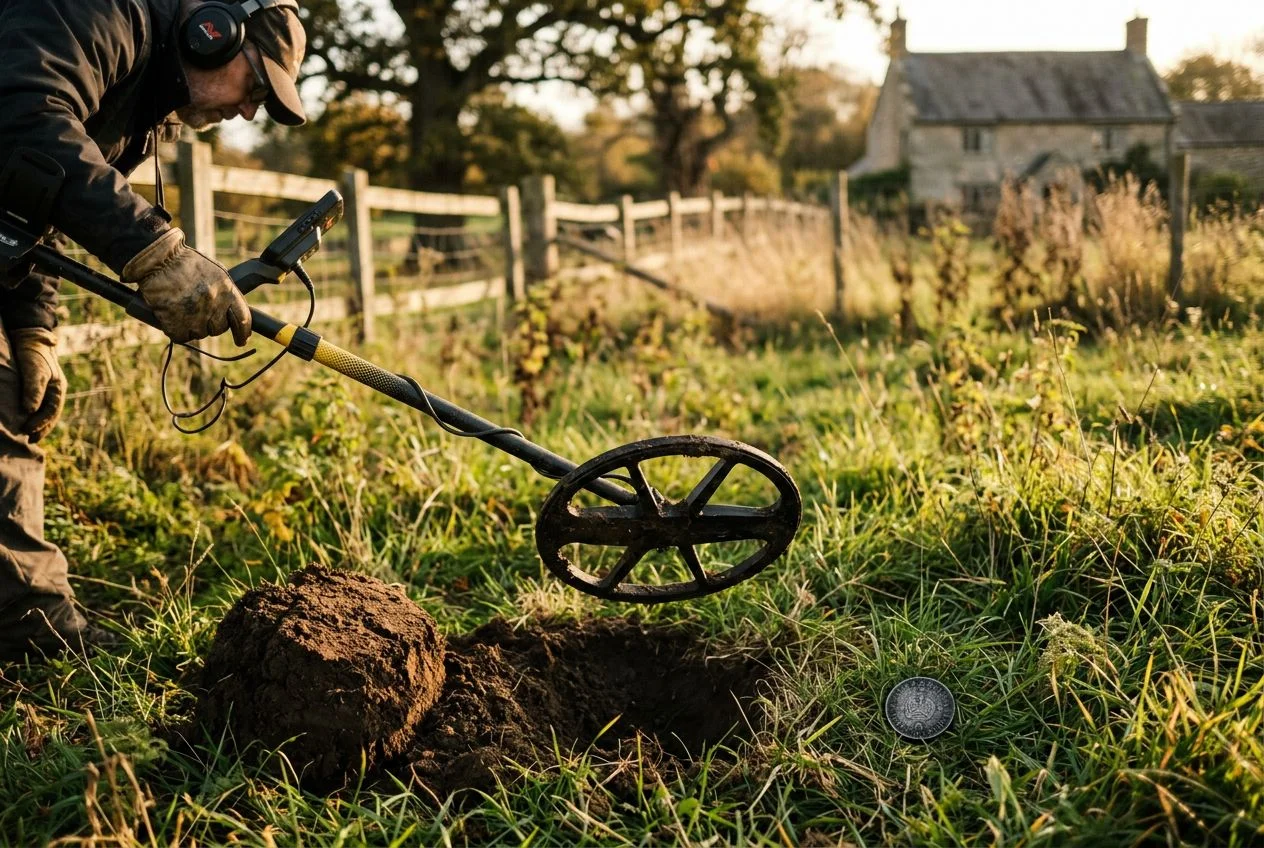
- Wave the coil over the hole. Is the high-tone signal still there, clean and strong? If yes, your target is likely still in the ground. Proceed carefully.
- Wave the coil over the plug. Is the signal now in the dirt you removed? Great.
- Here’s the critical check: Break the plug apart. If the high tone turns into a low iron grunt or disappears entirely once you disturb the soil halo around the target, you’ve caught the ghost. The rust cloud that was creating the false signal has been destroyed.
CTA: Honestly, the best way to learn this is to feel the lie. Pause here, grab your detector, and bury a large rusty nail or bolt 6-8 inches deep in your yard. Learn what its “perfect” false signal sounds like, then wobble the coil and watch it fall apart. That memory will save you hours in the field.
Best Detector Settings for Ghost Signals
Quick Answer: Your detector’s settings are the final filter between a deep coin and a clever ghost. Modern features like Iron Audio, Recovery Speed, and Iron Bias are built to help you hear and interpret these tricky signals. Learning to adjust them for your specific site—not just running factory defaults—is what separates a frustrating hunt from a productive one.
The real work happens in your machine’s brain. Think of Recovery Speed (sometimes called Reactivity) as its thinking speed. A faster speed helps separate good targets from nearby iron in trashy ground, but it can sacrifice a little depth and stability on those deep, faint whispers. In a clean field, slowing it down can help you hear them.
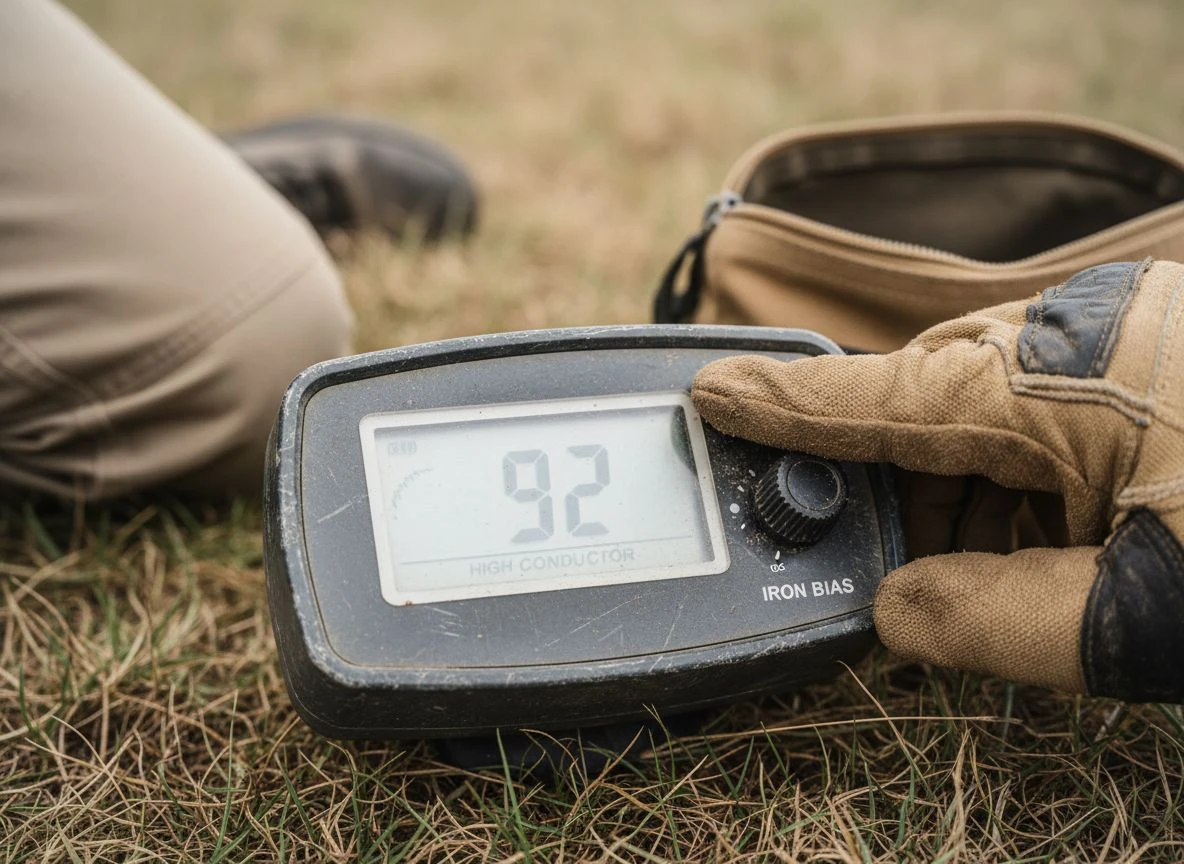
Then there’s Iron Bias or Fe Bias. I explain this to new club members as “how much your detector trusts its own iron guess.” A higher setting makes the machine more aggressive about calling a tricky signal “iron.” That’s great for avoiding bottle caps. But set it too high, and you risk “over-filtering” and chopping the tail off a deep, partially masked silver dime. It’s a guardrail, not a wall.
This is where features like Garrett’s Iron Audio become a powerful tutor. As their Vortex manual explains, this function lets you hear the low-tone iron grunt that’s being discriminated out. On a perfect high-tone signal, I’ll often toggle Iron Audio on. If I hear a low-tone underneath the high tone, it’s a huge red flag for a ghost. The high tone is the lie; the low grunt is the truth trying to get out.
Multi-frequency machines (Minelab’s Multi-IQ, Garrett’s Vortex, Nokta’s Simultaneous) add another layer. By sending multiple frequencies at once, they get a more complete “fingerprint” of the target. This generally makes them tougher against ground minerals and better at spotting iron, but no setting is ghost-proof. Pulse Induction (PI) detectors are a different beast entirely. They’re great in extreme mineralization but have no built-in iron discrimination—they’ll scream for a nail as loudly as a nugget.
The lesson is universal, whether you swing a Nokta, Minelab, or Garrett: don’t be a passive passenger. In iron-infested sites, bump up your Iron Bias and Recovery Speed. When searching for deep, isolated coins, lower them. Your machine gives you the tools to interrogate the signal; your job is to learn the questions.
Your Quick Guide to Dig or Skip a Signal
Quick answer: Stop guessing. When a perfect high-tone signal hits, run it through this simple field checklist. Mixing the classic “two-way repeatable” advice with halo theory gives you a clear plan. A deep coin’s halo creates a stable, if slightly jumpy, signal. An iron ghost’s fake halo is unstable and falls apart when you poke it.
Here’s your at-a-glance guide. Listen, then look for these patterns:
- IF the signal is a high-tone AND is repeatable swinging both north-south and east-west AND it doesn’t “wobble” or crackle when you rock the coil AND the VDI is high but bounces in a tight, positive range (e.g., 78-85)…
→ PROBABLE DEEP COIN WITH HALO. The conductive ring is giving you a solid, if slightly variable, signal. Dig. - IF the signal is a high-tone BUT it “crackles,” disappears on one swing direction, or the VDI jumps wildly from high-positive to negative iron range after you raise your coil a few inches…
→ PROBABLE IRON GHOST. The unstable rust halo is breaking up. Investigate further with Iron Audio or move on.
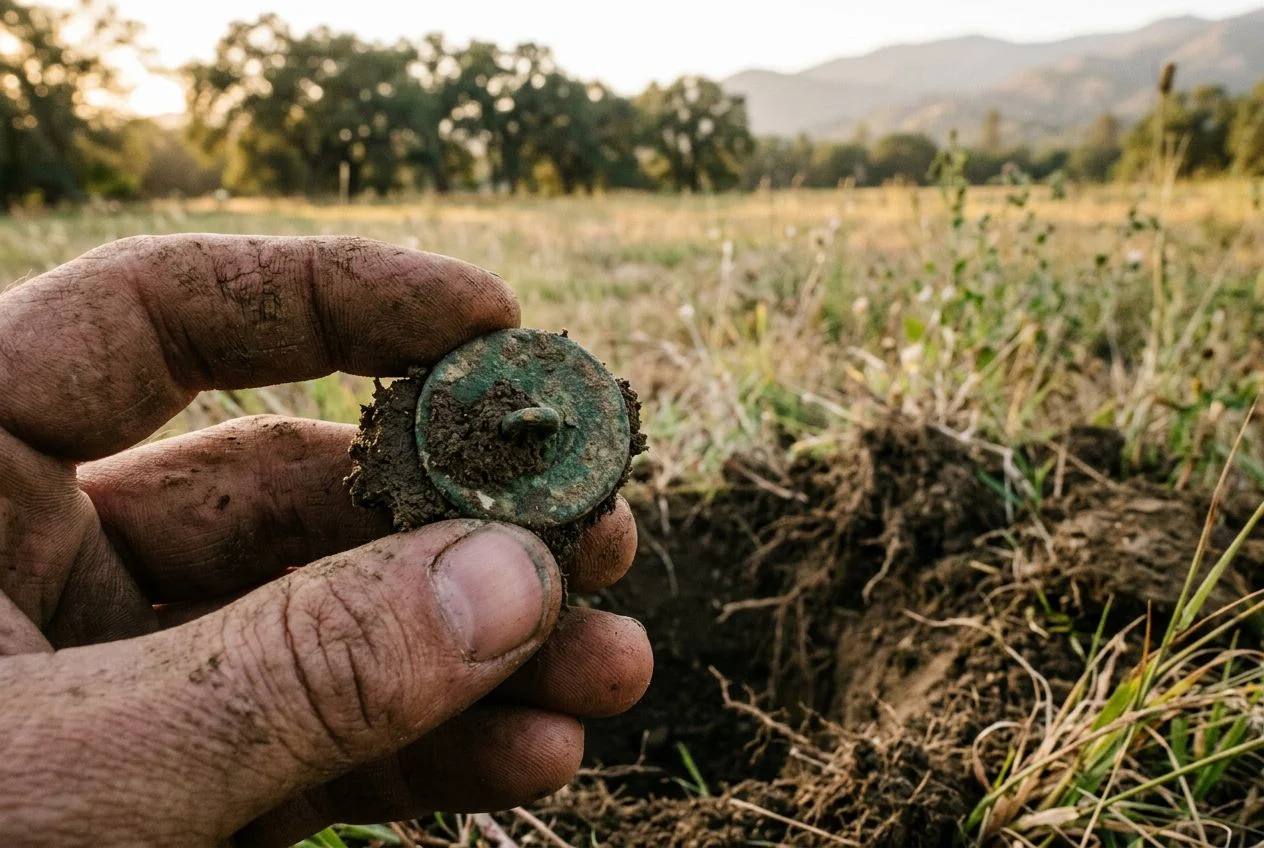
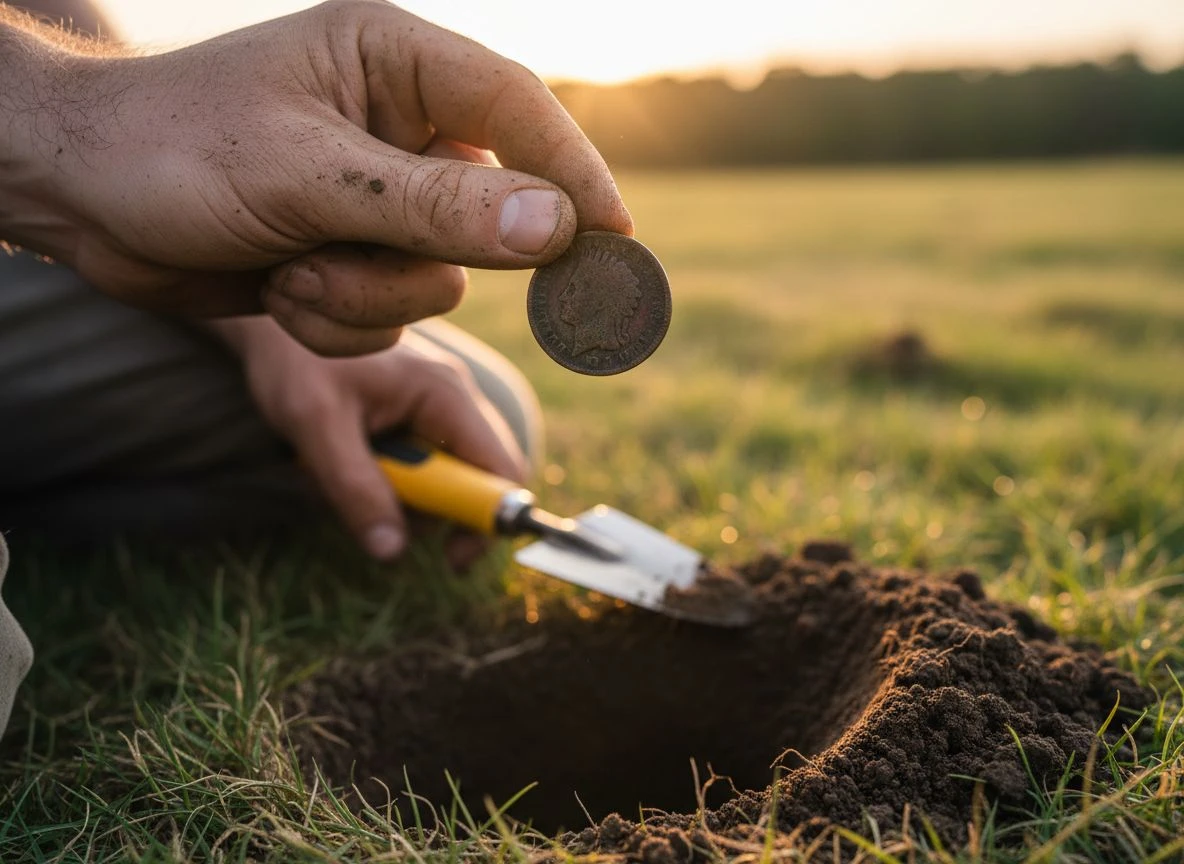
I used this exact logic at a “hunted-out” city park last fall. My Equinox hit a faint, 82-84 VDI that was repeatable but sounded slightly “thin.” It failed a sloppy, high-sensitivity wobbly test I was using, so I nearly walked. But it passed the clean, slow, heel-to-toe wobble check. Remembering the matrix, I dug. Eight inches down was a worn 1899 Indian Head cent. Its copper halo made it whisper where a fresh coin would shout. Everyone else had dismissed it as another deep, iffy false signal. The matrix turned a maybe into a keeper.
Using History to Find True Halo Signals
Quick Answer: Your detector’s display shows you the what and how deep. Historical research tells you the how likely. By understanding a site’s age and, crucially, its native soil type, you can strategically guess where halos (both helpful and deceptive) are most likely. This turns a frustrating guessing game into a targeted hunt.
This is where my core belief—that research beats gear—pays off. A detector can’t tell you if the ground is acidic clay or neutral sand, but a 1930s county soil survey map can. That knowledge is power.
Here’s the strategic breakdown: Acidic soils (common in old pine forests or near oak stands) are coin-eaters. They actively corrode copper and silver, but that corrosion can also create massive, deceptive halos around iron. A site like this might be littered with “iron ghost” signals from long-gone farm equipment. Neutral to alkaline soils (like many old farm fields) are preservers. They’re where coins can form those stable, conductive halos that make them sing clear and deep, even after a century.
I learned this the hard way detecting an 1880s homestead in the Sierra foothills. The clay-heavy soil was brutal on coins but produced screaming high-tones from every rusted square nail. Contrast that with a riverside picnic grove from the same era—the sandy, neutral soil yielded pristine Indian Heads with clean, repeatable signals. The history (1880s recreation site) told me what to look for; the soil map told me how it would likely sound.
Your move: Before you even swing your coil, check your local historical society or USDA archives for old soil maps. Knowing you’re hunting in “Yolo clay loam” versus “Merced sandy loam” gives you a huge edge in interpreting every iffy signal you hear.
Halo Effect and Ghost Signals FAQ
Quick Answer: Halos are a real, physical change in the soil (rusted particles or leached salts) that alter conductivity. Ghost signals are your detector misreading that changed soil or an iron object’s shape. The confusion happens in your headphones, not in the theory.
So, is the halo effect actually real, or just a myth?
It’s physically real, but its impact is often misunderstood. Skeptics on forums are right that a detector coil isn’t “seeing” magic. What it is detecting are the conductive rust particles or mineral salts that have spread from a target. This changes the local ground’s electromagnetic properties. My take: the halo isn’t making the target louder; it’s changing the size and character of the signal your machine gets.
Can a halo reform if I rebury a target?
Technically, yes, but you’re talking decades, not a weekend. The chemical process that created the halo—corrosion and electrolysis—needs long-term exposure to moisture and minerals. If you rebury a rusty nail to test it, your grandkids might get a better signal from it. For practical purposes, once you dig and scatter that rusty soil, the “halo” for that target is gone.
Does gold create a halo?
Differently. Gold is nobler and doesn’t rust like iron. However, in mineralized soils, salts and other conductive elements can still build up around a gold object over a very long time. This can create a detectable conductive zone. It’s partly why a deep, small gold target can give a surprisingly strong, if sometimes “scratchy,” signal.
If I dig a deep coin, why does it sound terrible when I air-test it?
You’ve just removed it from its conductive halo! That halo in the ground was part of the signal. Now you’re holding just the coin, which may be coated in a non-conductive crust. The clean metal underneath might ring clear, which is why proper cleaning is a careful art.
Why You Should Dig Those Iffy Signals
Quick Answer: Understanding the halo effect and ghost signals transforms every hunt. That iffy, confusing signal stops being a frustration to avoid and becomes a puzzle to solve. It means you’re listening to the ground’s history, not just your machine’s beeps. The day you stop digging some of those iffy signals is the day you start leaving deep history in the ground.
Getting the science—the chemistry of rust, the physics of conductivity, the role of soil—doesn’t just make you a better technician. It makes you a more thoughtful detectorist. You’re no longer just a button-pusher swinging for clear, perfect tones. You become an interpreter of whispers and lies, knowing that the ground itself is part of the story.
This is the edge that separates casual hunters from finders of history. It’s why I’ll always dig a repeatable high-tone, even if it’s a little “wobbly.” Because sometimes, the iron ghost is just a ghost. But sometimes, it’s a deep coin wearing a rusted halo, waiting to tell its century-old story.
I’d love to hear your story. What’s the most confusing “ghost-to-coin” or “coin-to-ghost” signal you’ve ever dug? Share your head-scratcher in the comments below.

My name is Paul and I am the founder of Detector For Metal, a dedicated resource for metal detecting enthusiasts seeking to uncover historical treasures and connect with the past using the latest technology. As a stay-at-home dad and family man, I’ve found metal detecting to be the perfect hobby that combines family adventure with historical learnings for the whole family.
As a father, I’m deeply committed to passing on this hobby to the next generation of detectorists, starting with my own children. I share advice on everything from metal detecting with kids to exploring the top 10 metal detecting sites you never thought about. My methodical approach to the hobby goes beyond the thrill of discovery—it’s about creating family traditions while preserving history and sharing the stories of those who came before us.