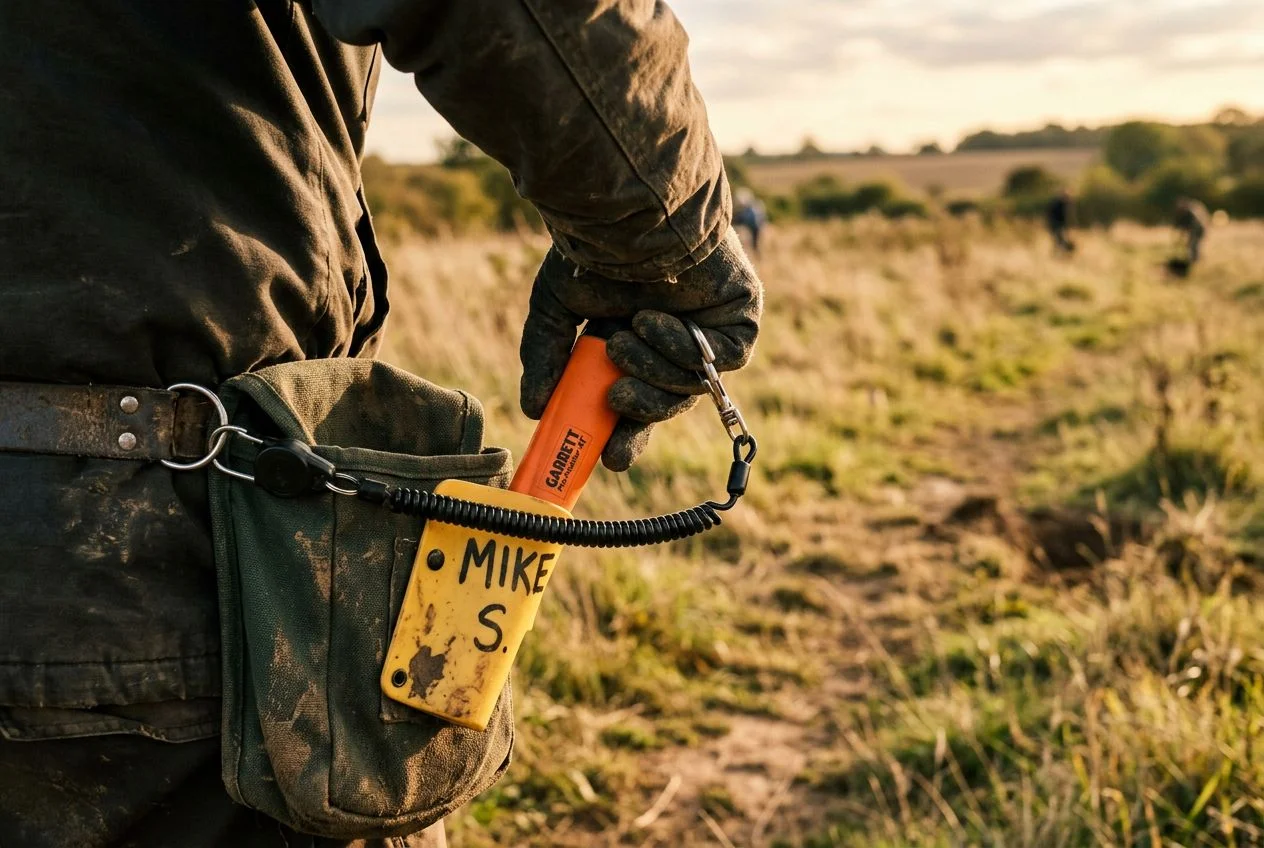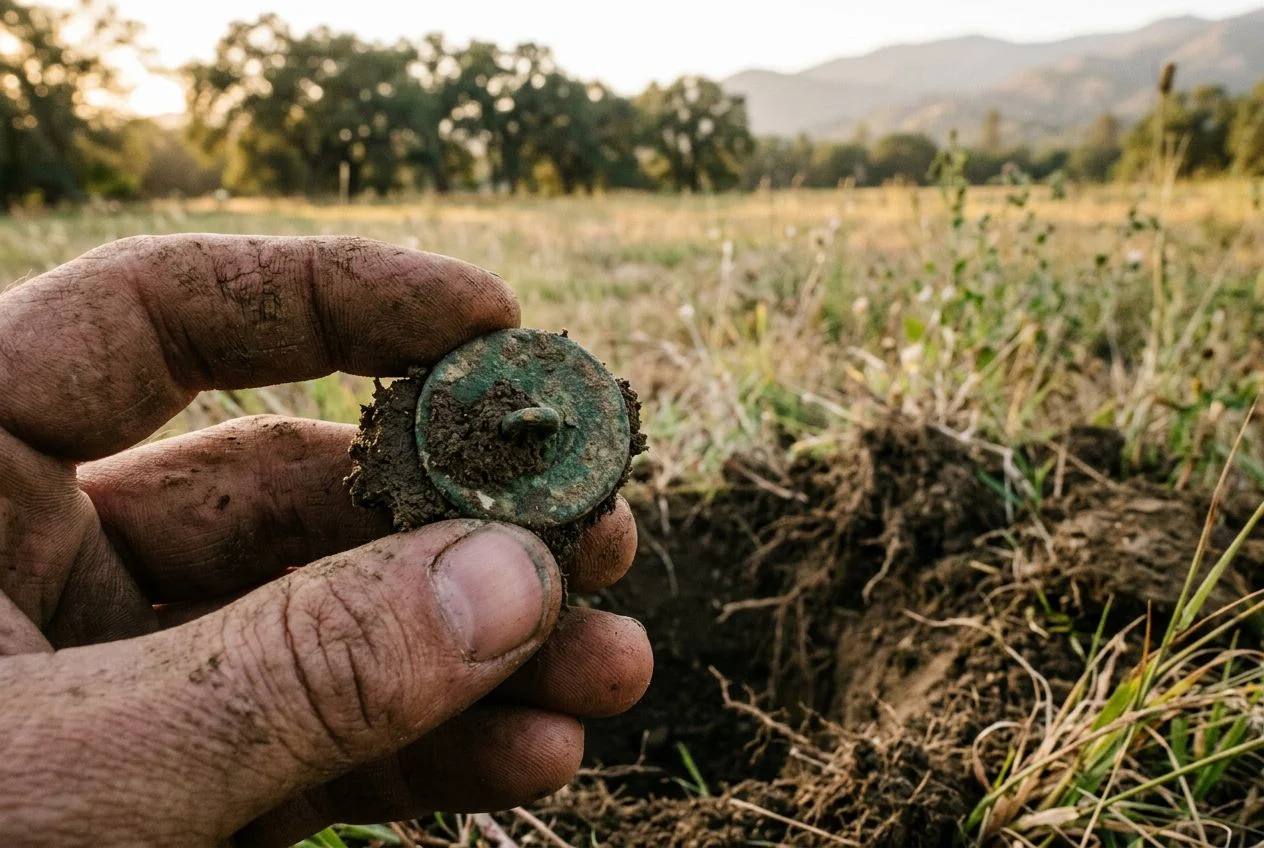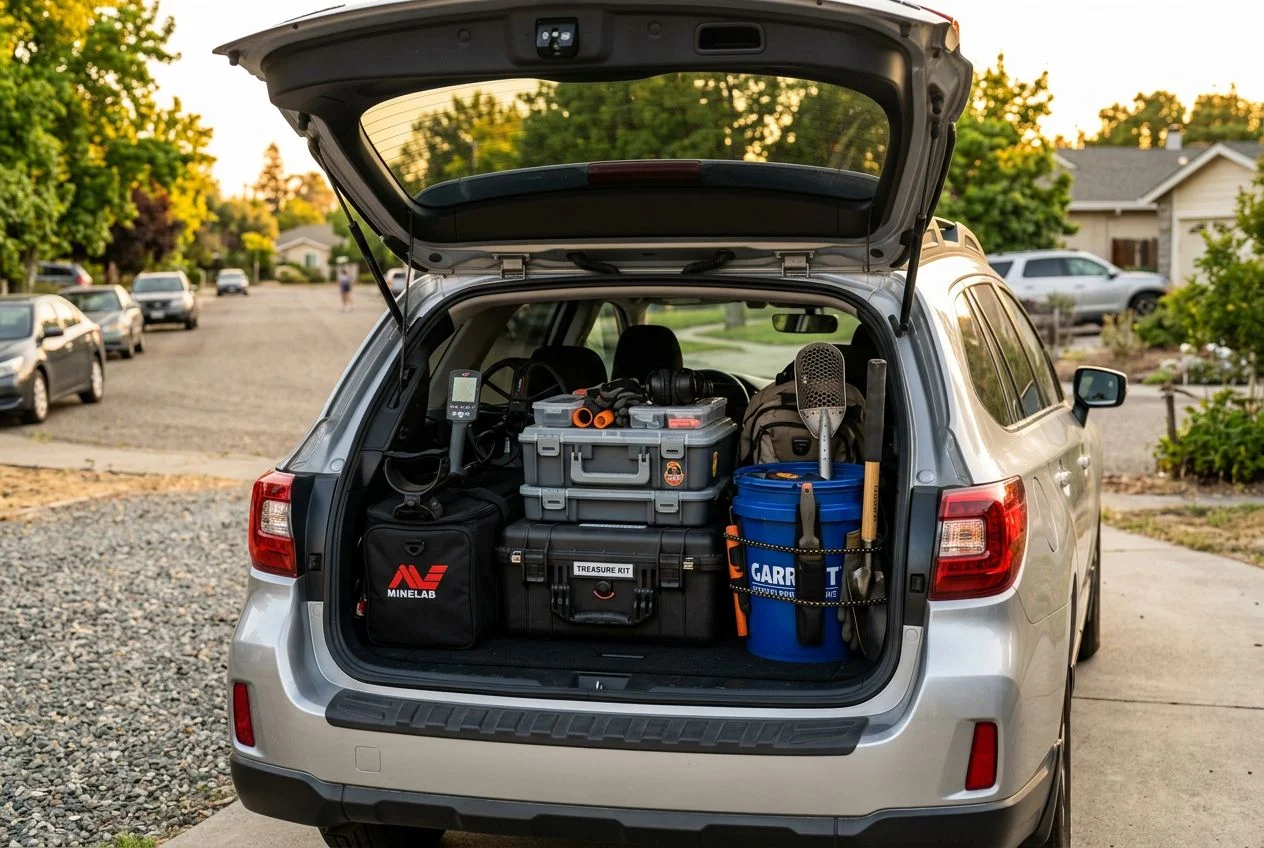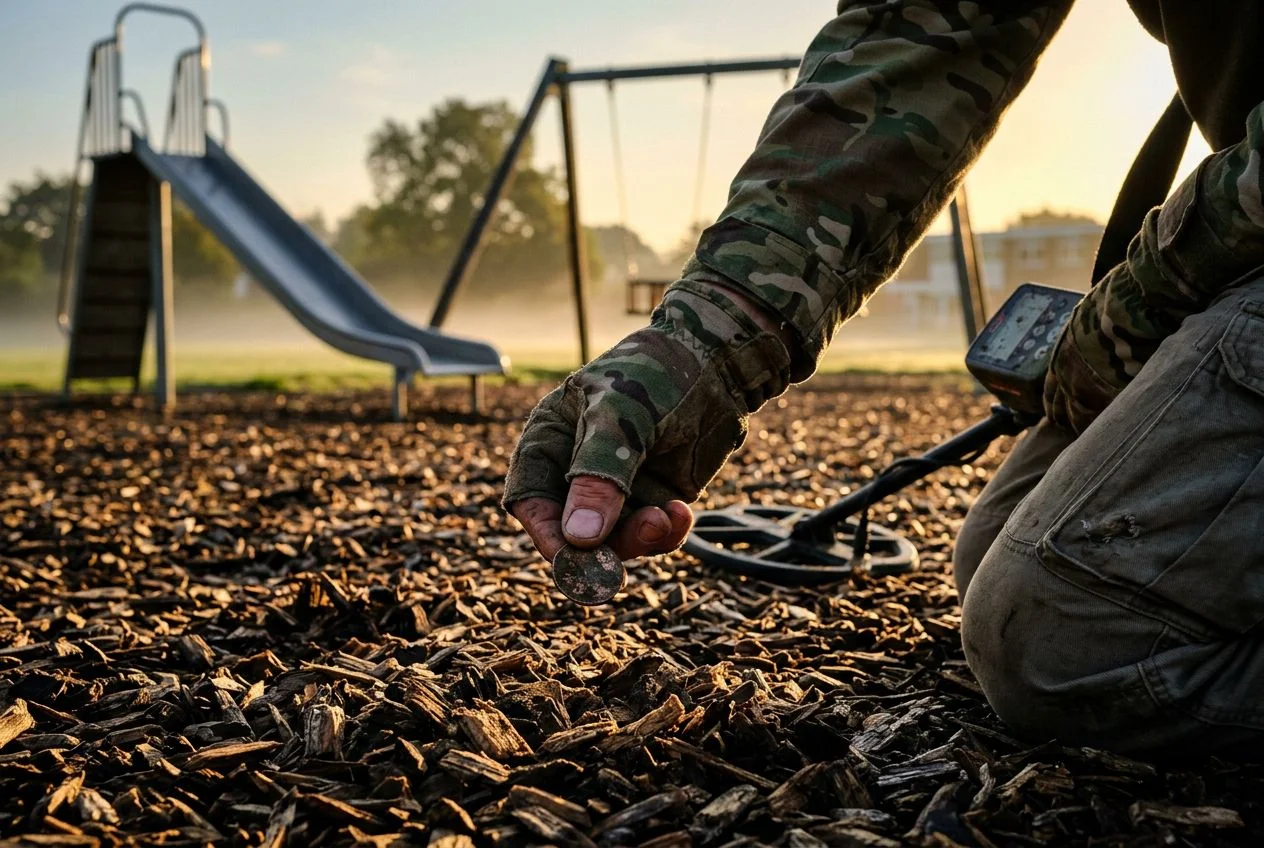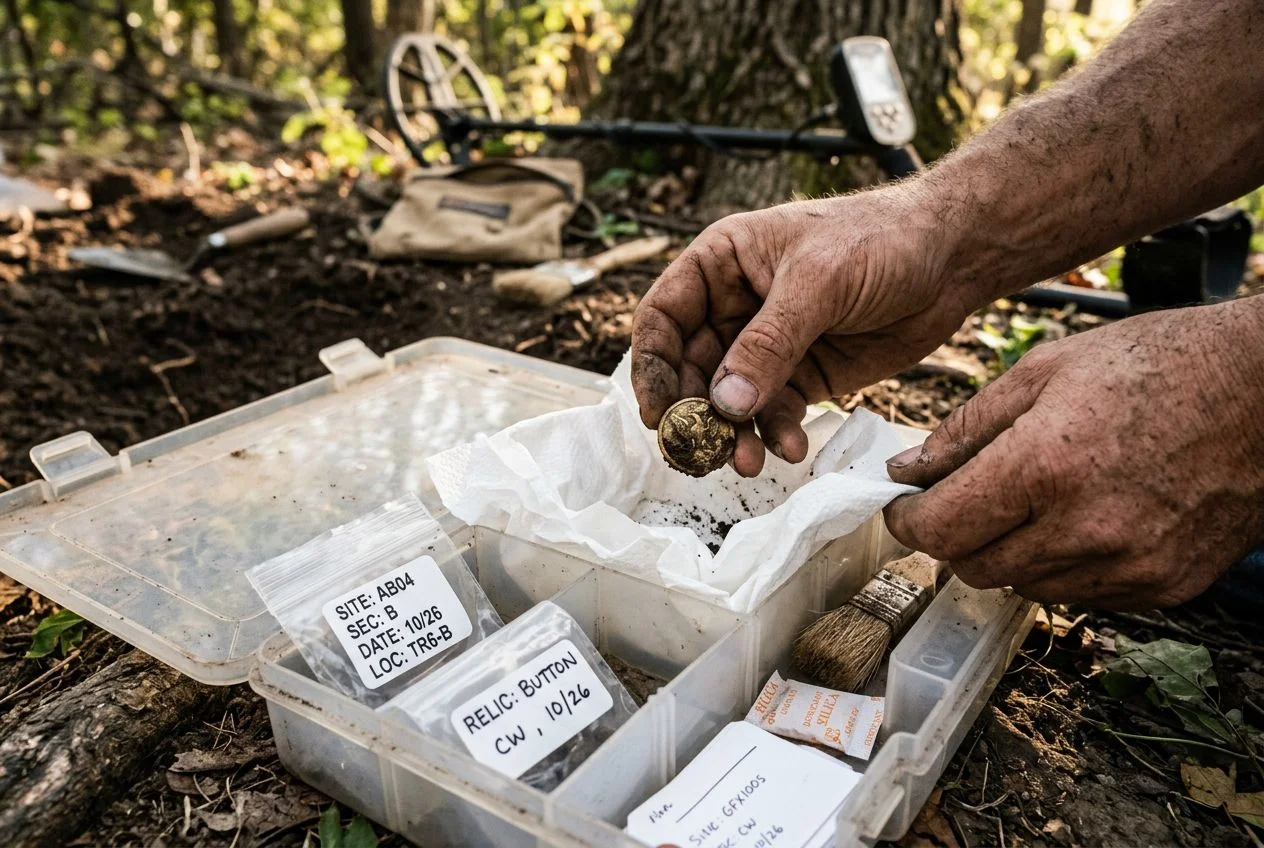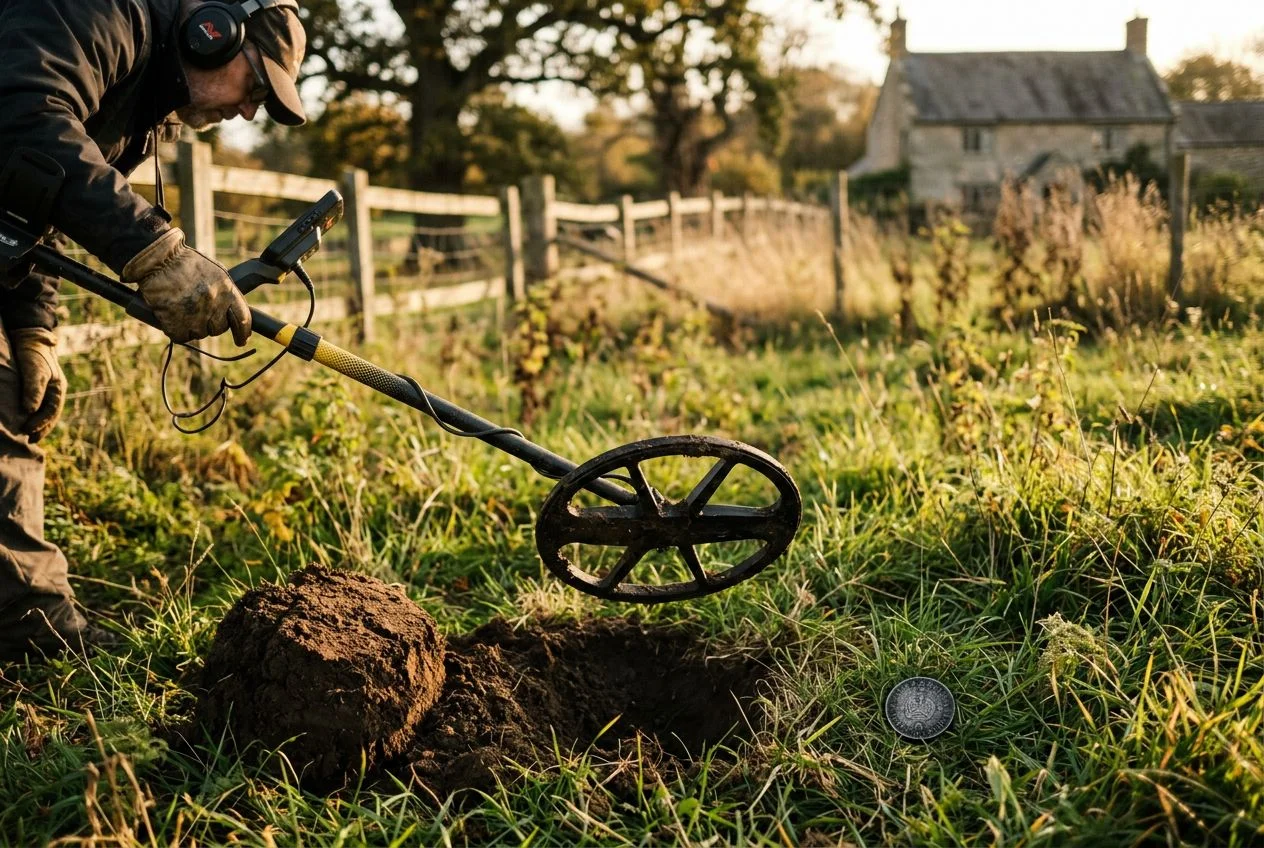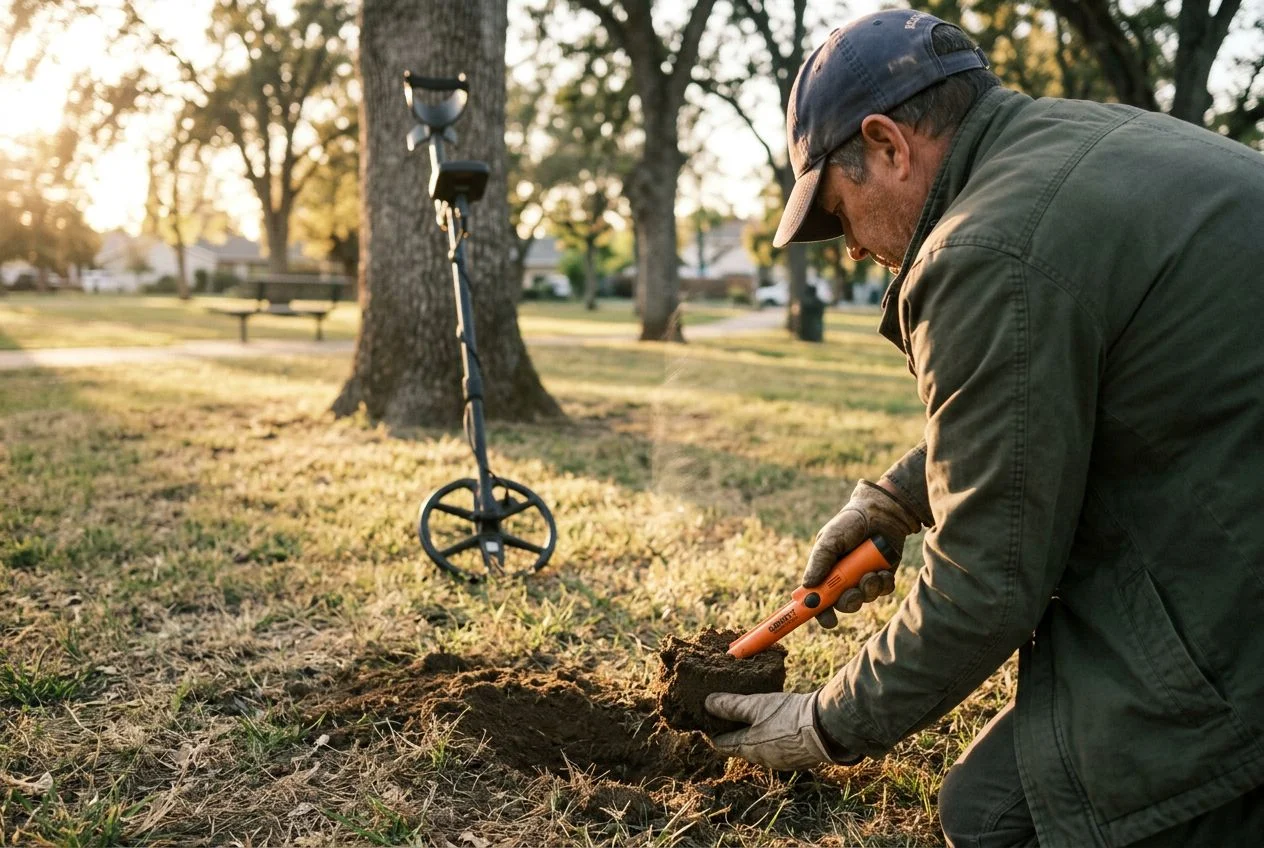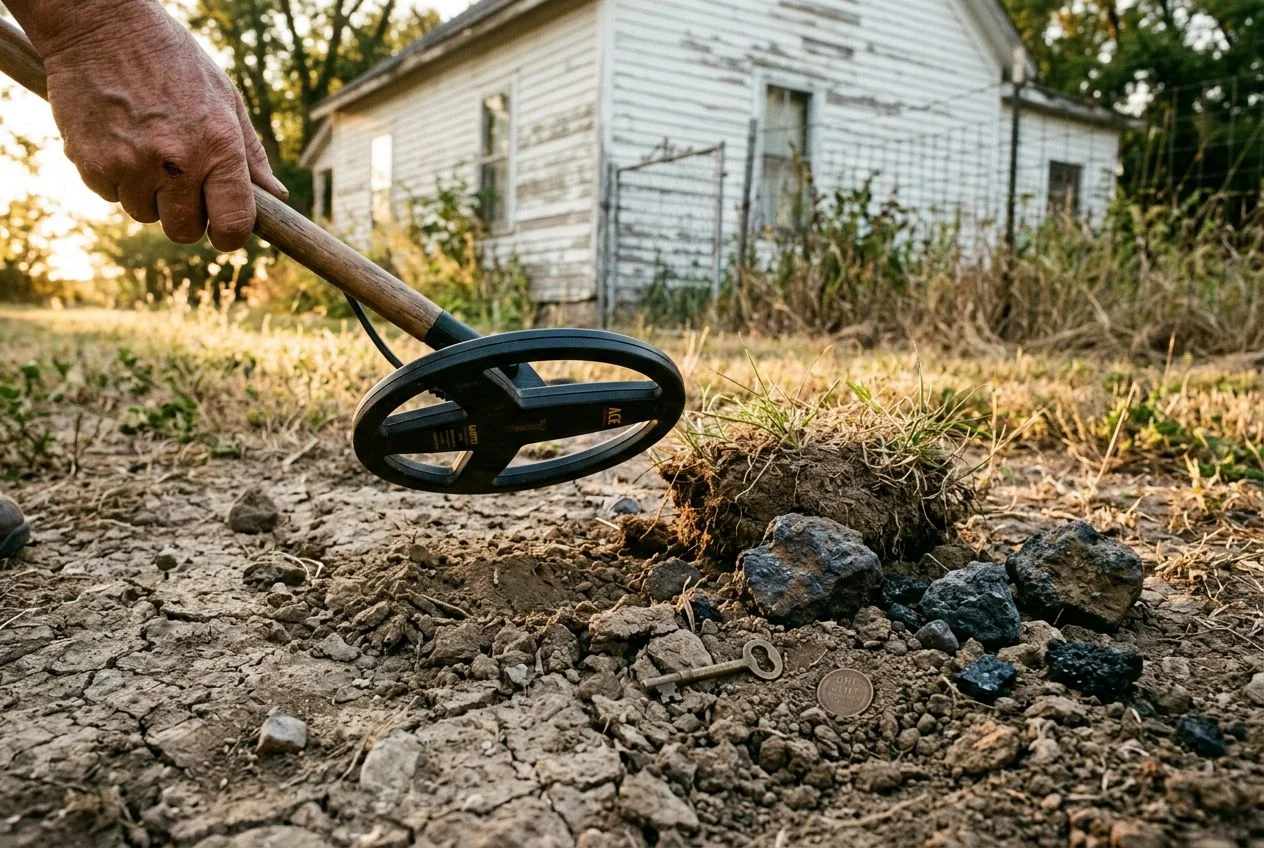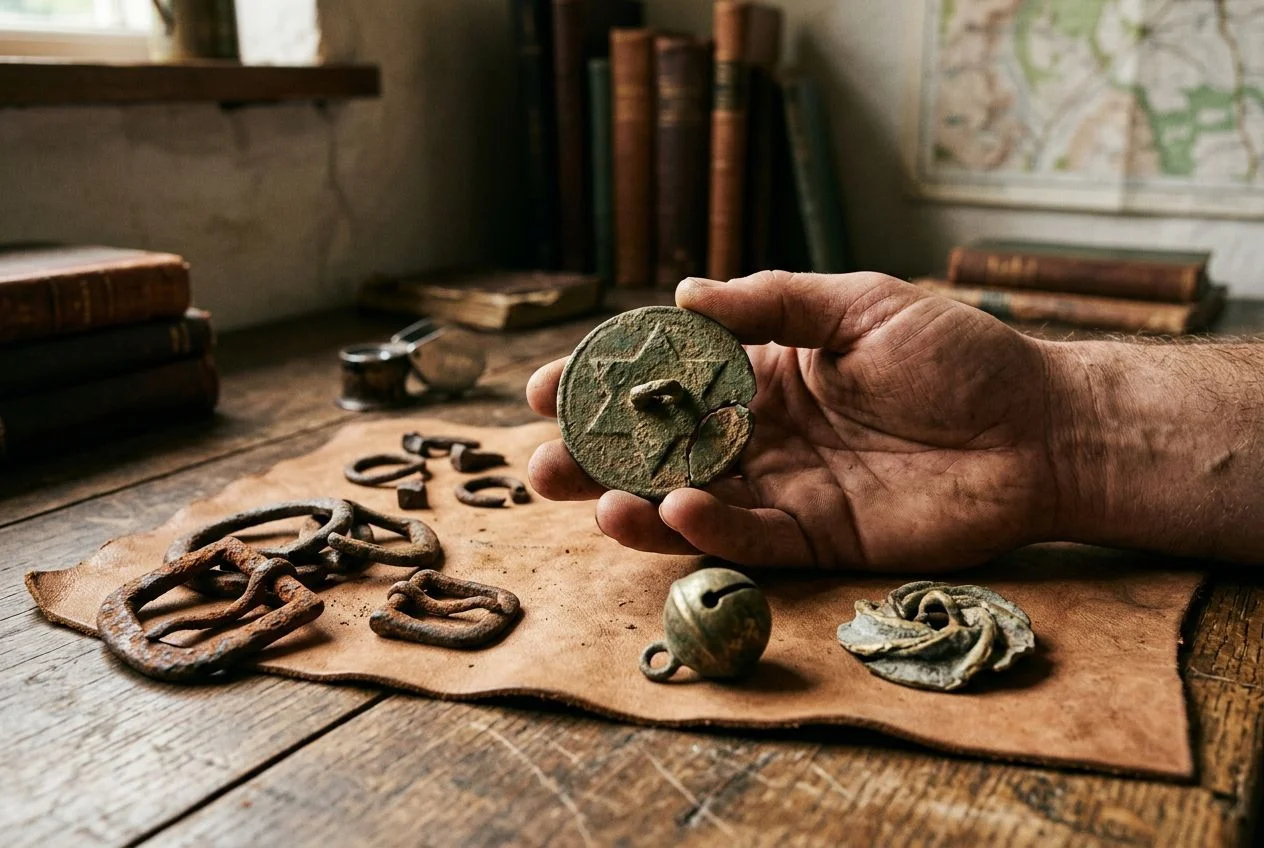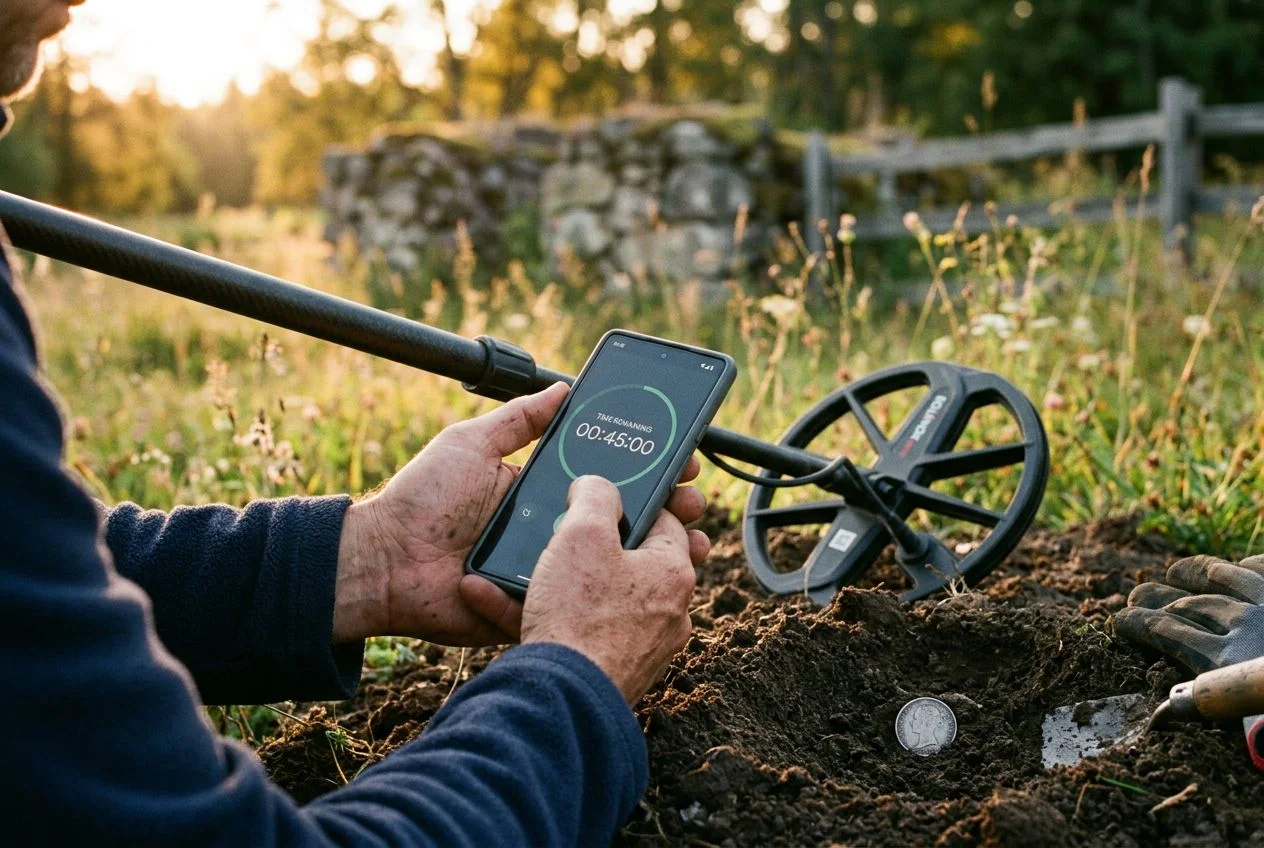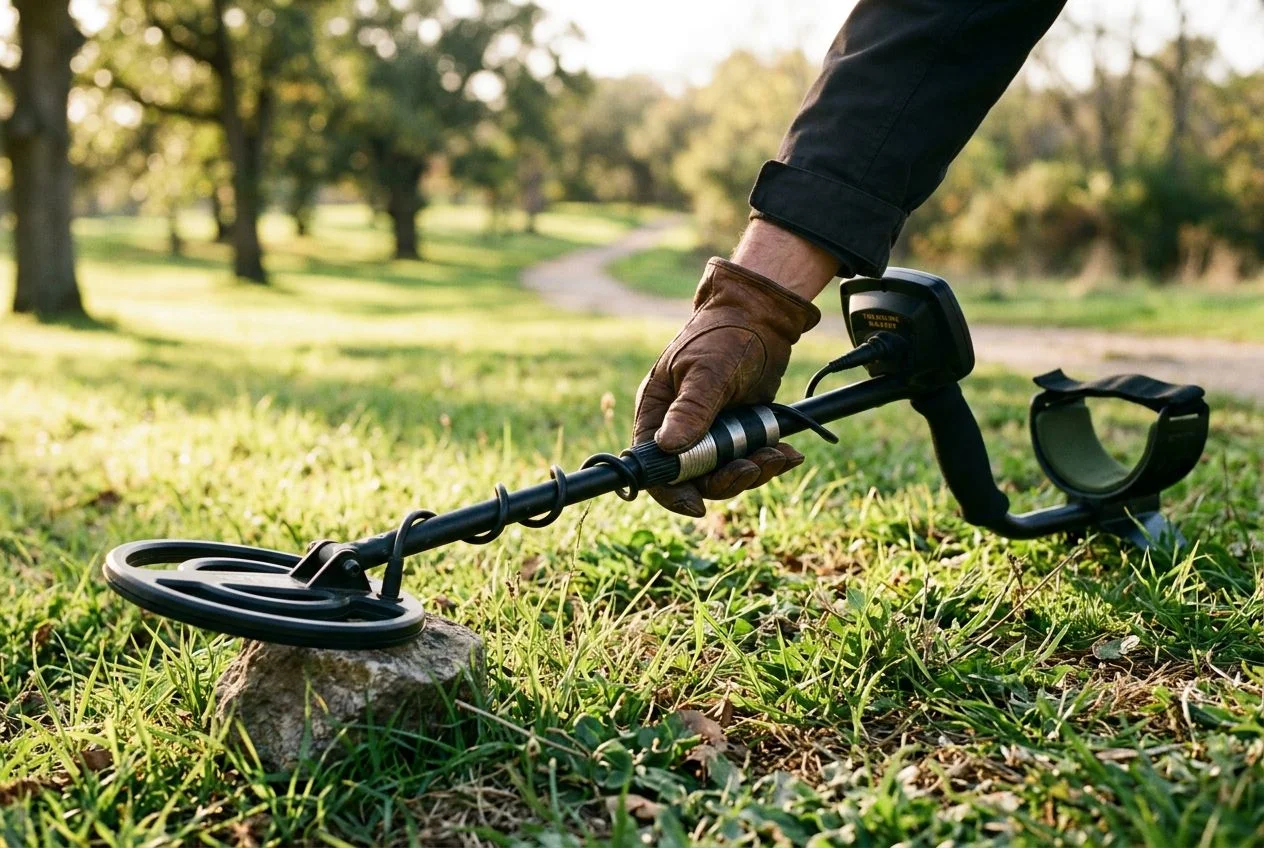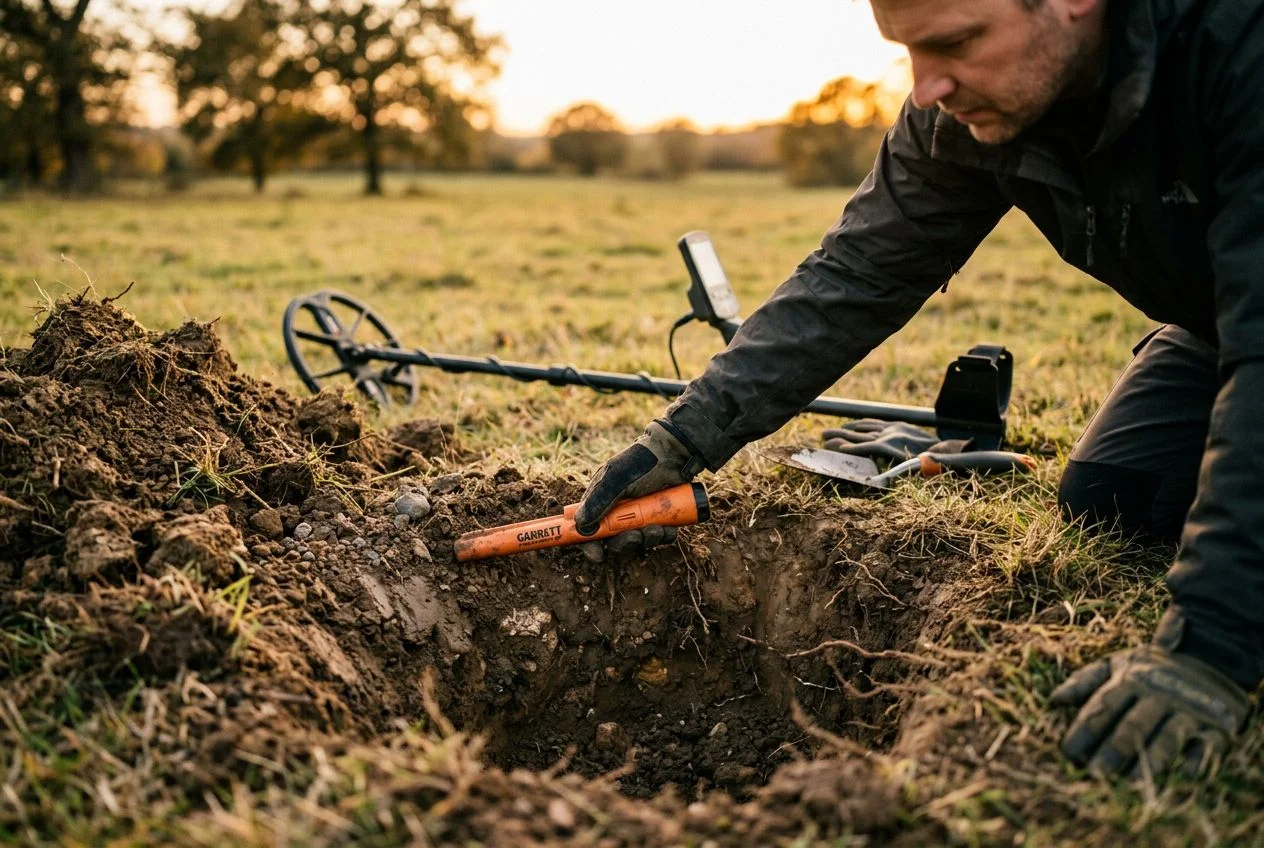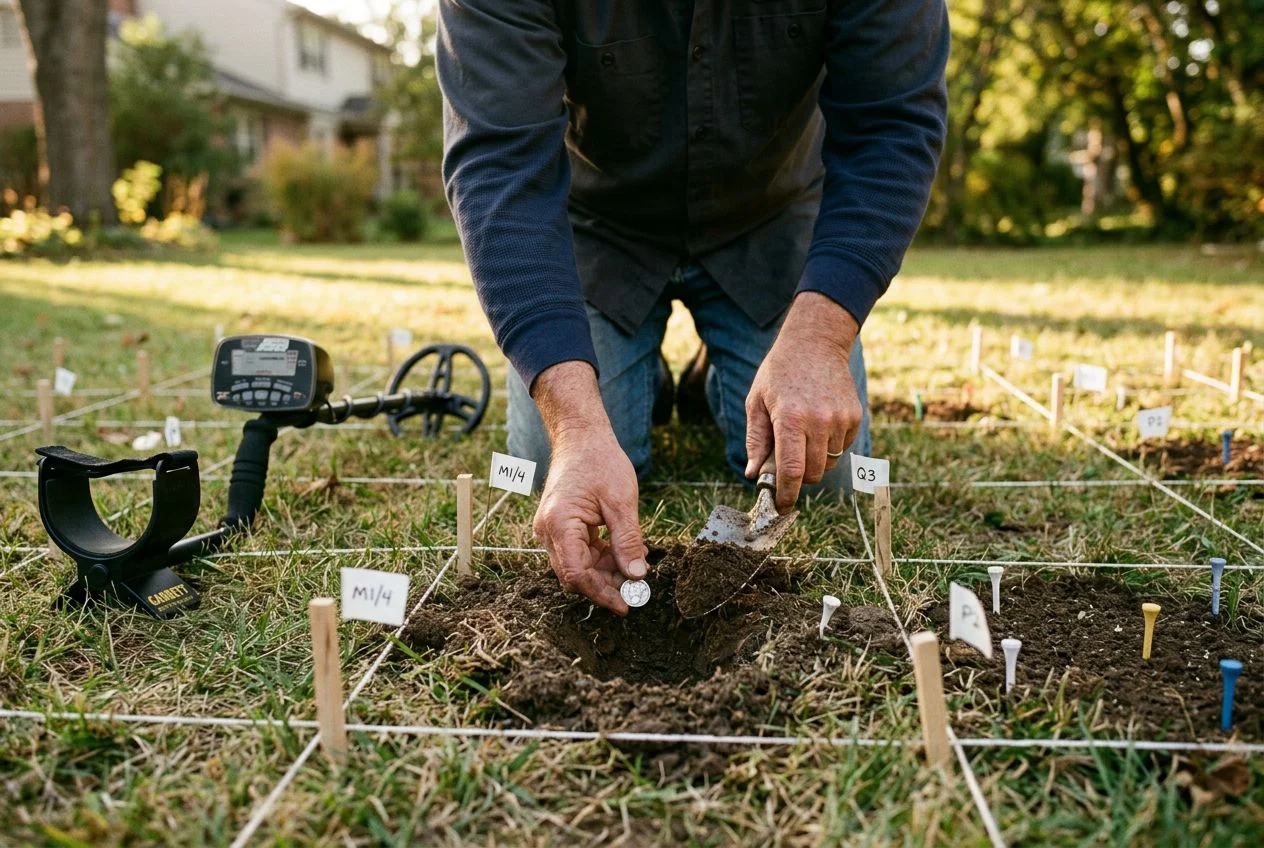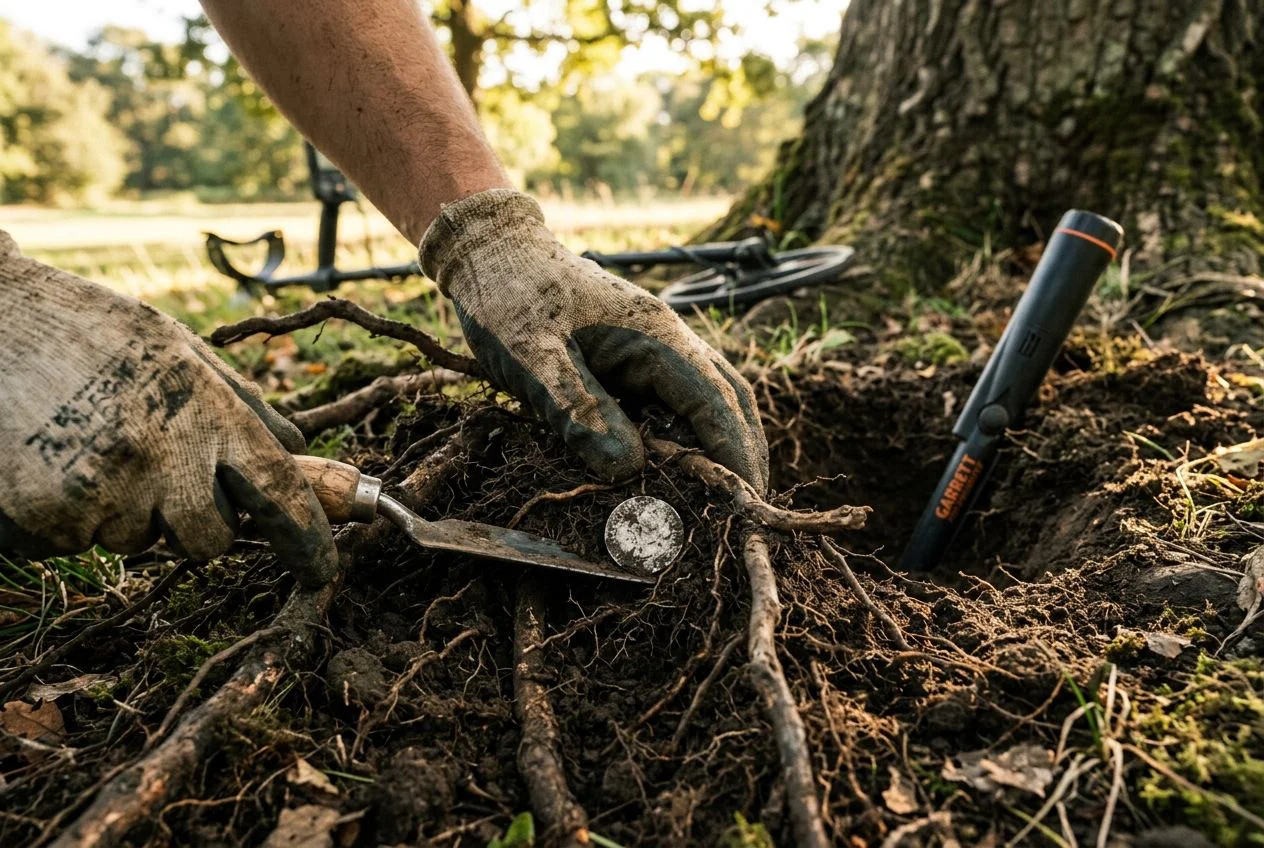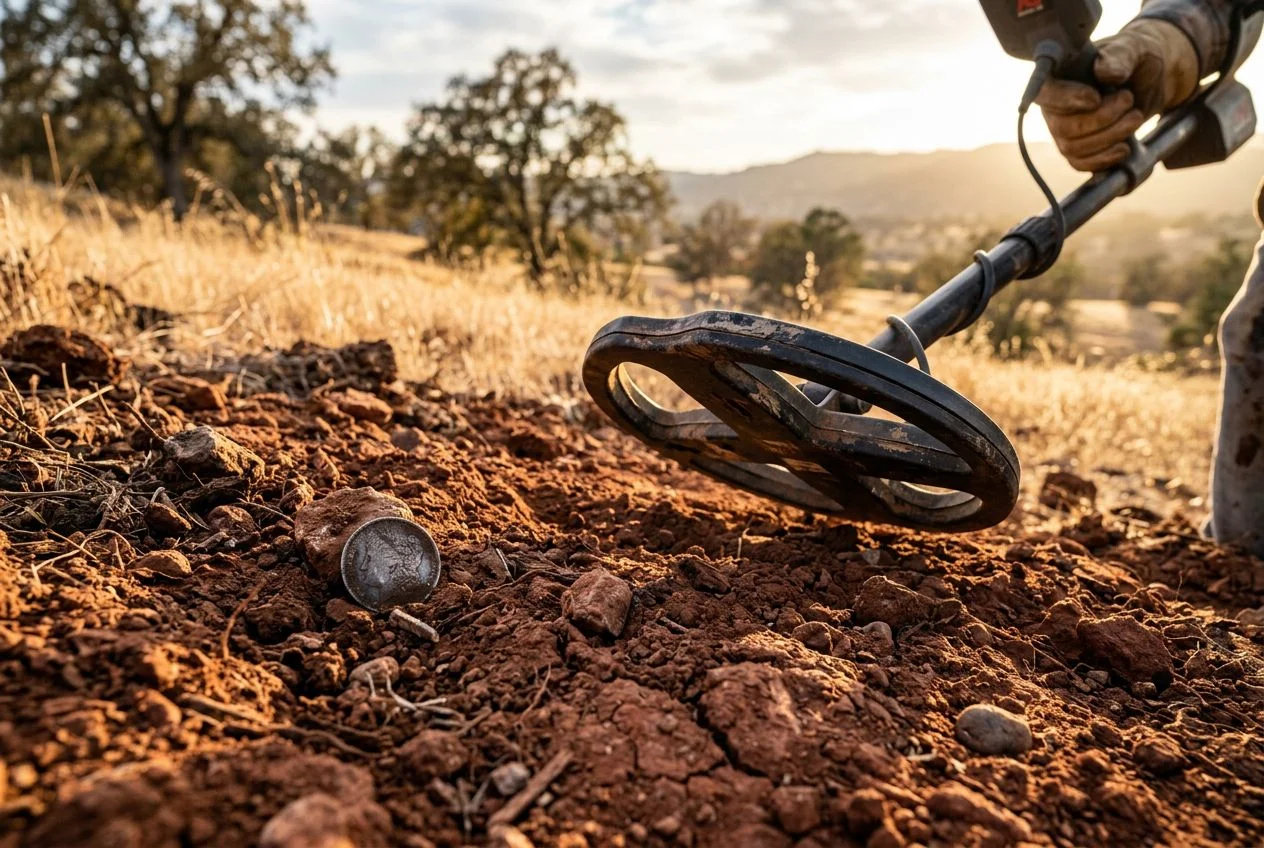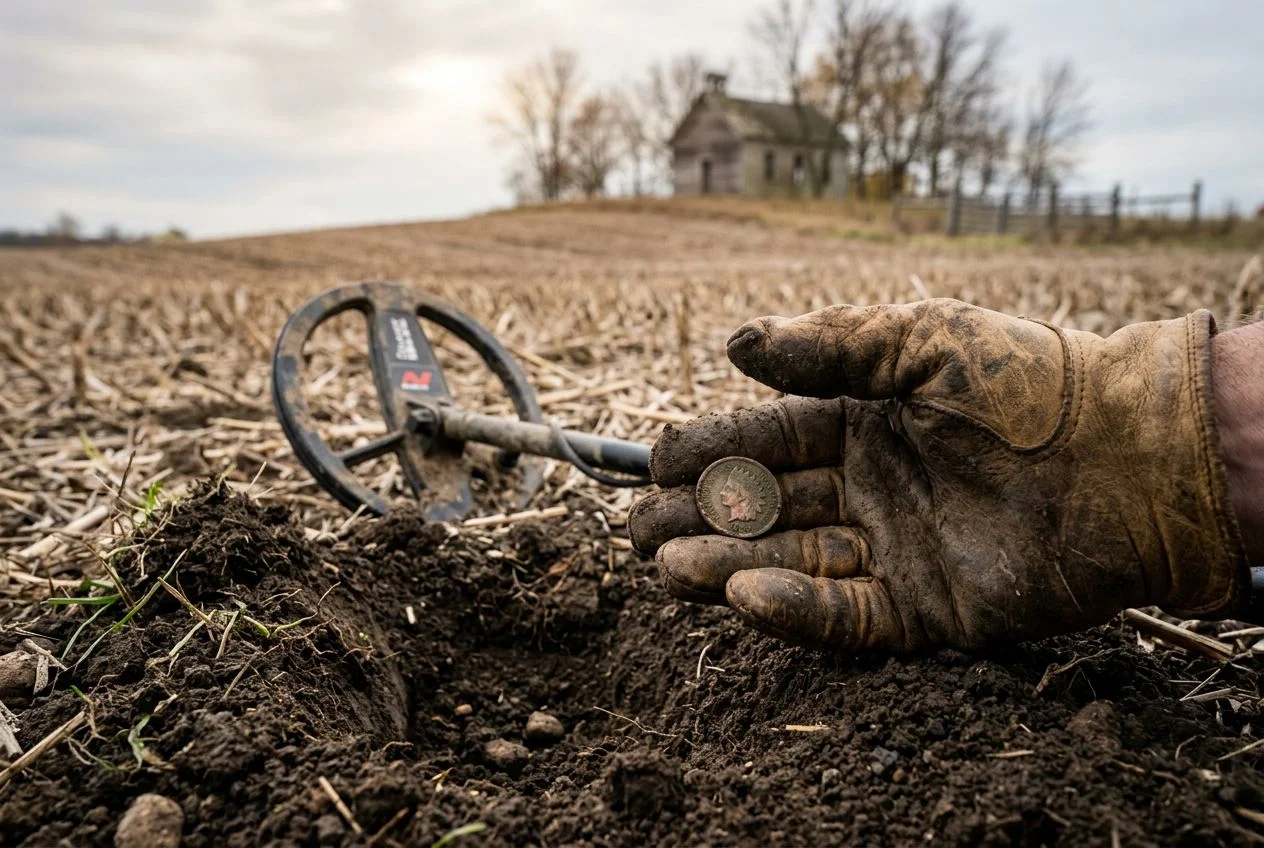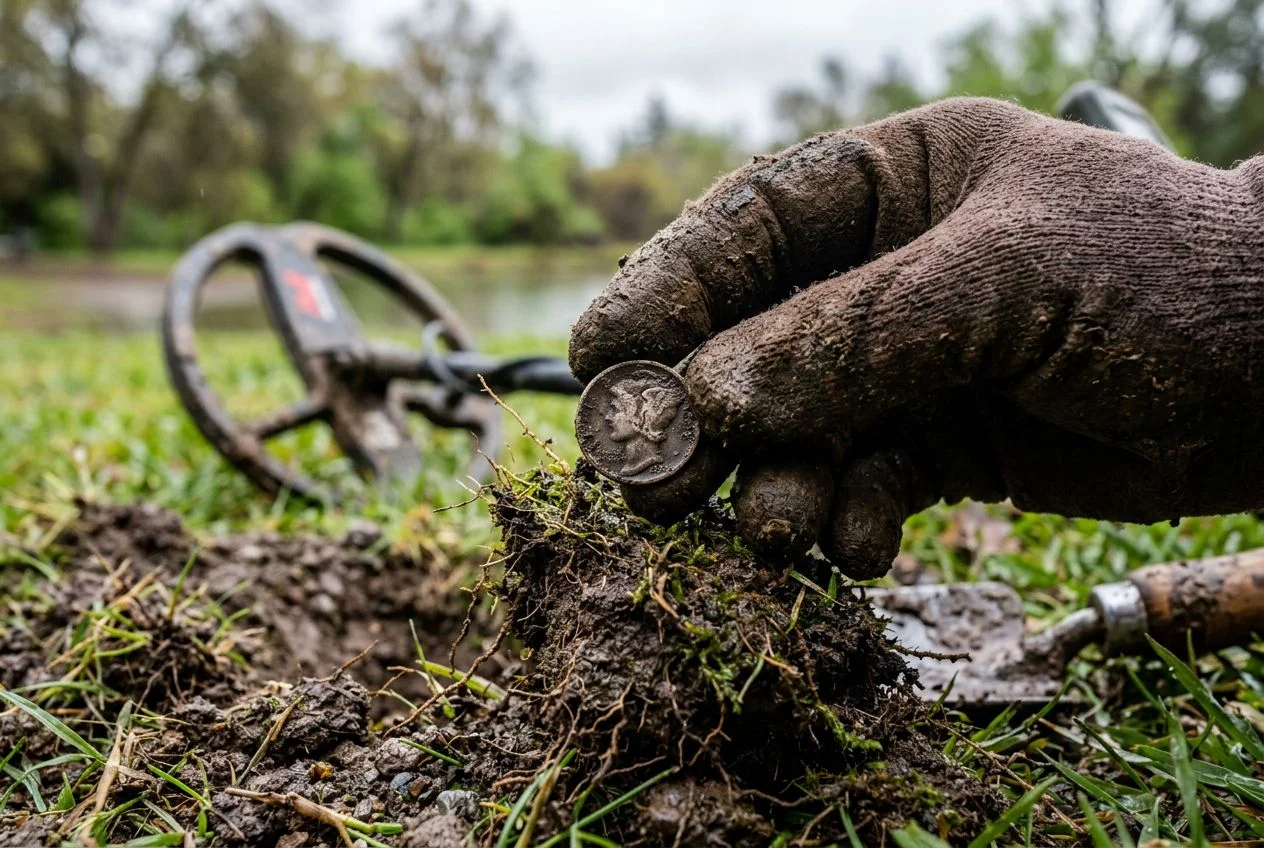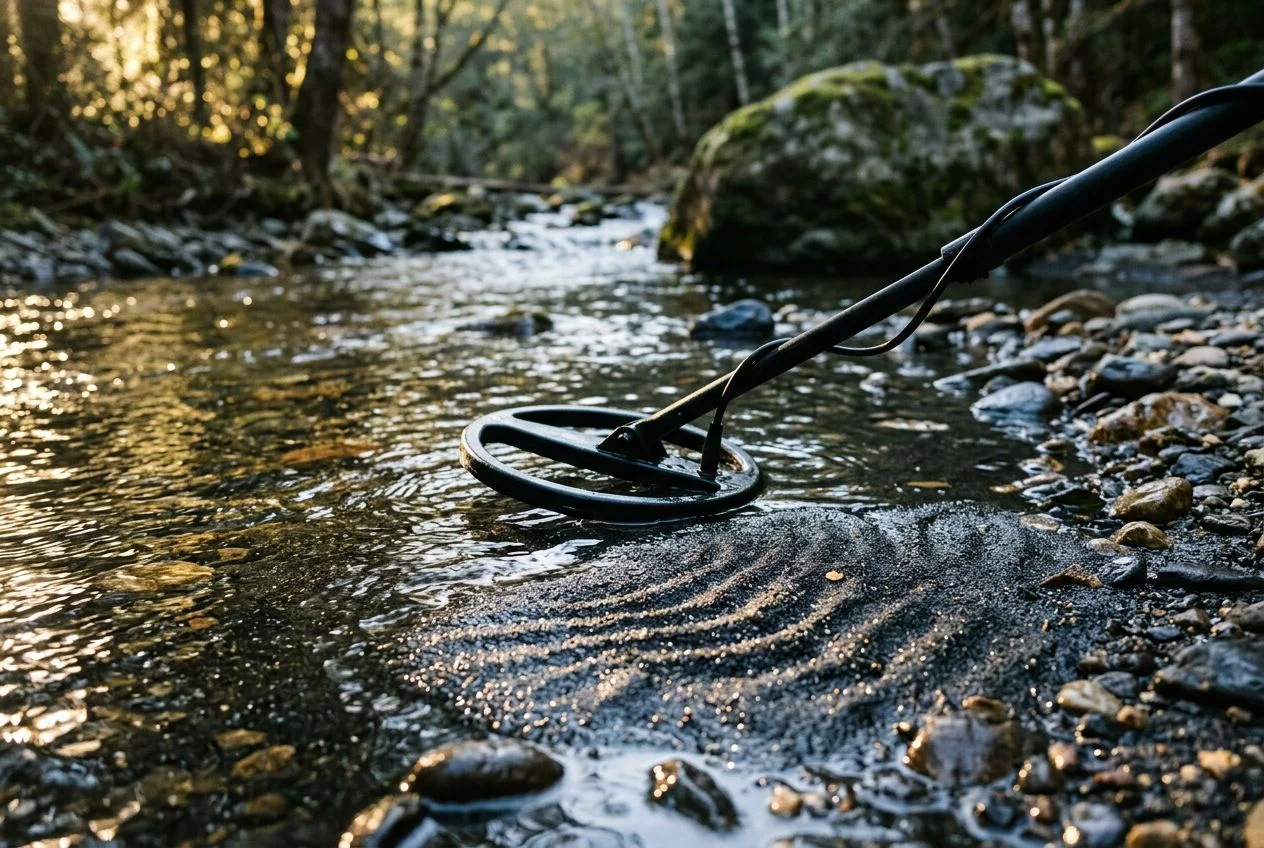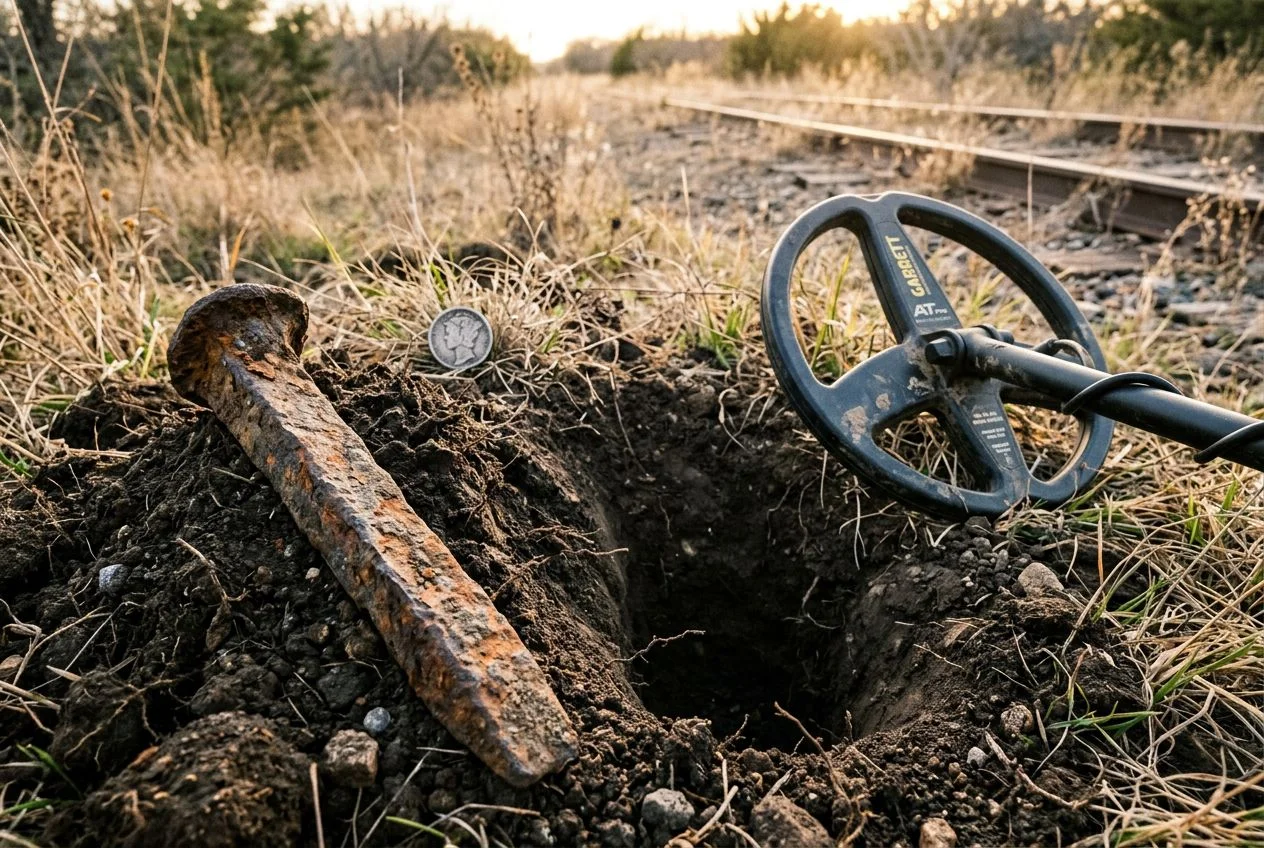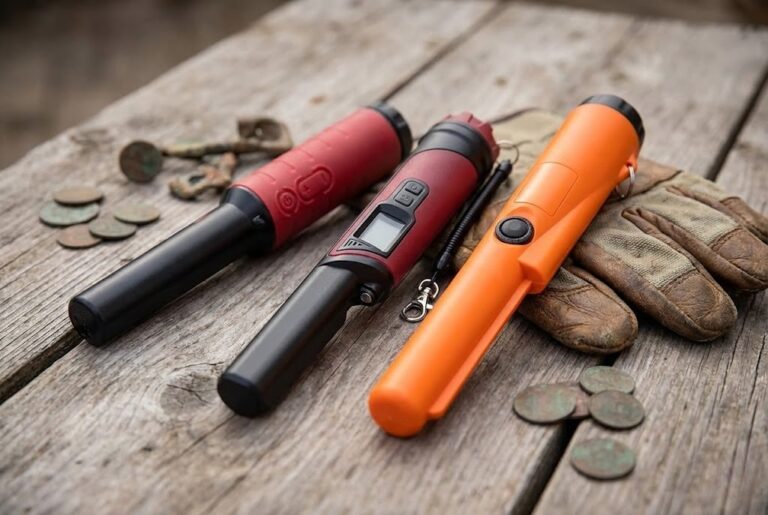
I’ll never forget my first treasure hunting trip at a Civil War site in Virginia. Twenty minutes in, I’d dug a hole you could hide a basketball in, trying to find one tiny Minié ball my detector wouldn’t stop screaming about. Marcus walked over with this bright orange tool, stuck it in my crater, and pulled out my target in fifteen seconds.
“You’re gonna want one of these,” he said.
He was absolutely right. That little orange pinpointer has saved me hundreds of hours over five years. But here’s what nobody tells you starting out: picking the right one really depends on where you hunt and what you’re looking for.
The Garrett Pro-Pointer AT is still the best overall choice for most people in 2026, giving you solid reliability and 20-foot waterproof capability for around $127-150.[1] For tight budgets, the DR.ÖTEK MT6-Pro punches way above its weight at just $49.99. And if you want top features, the Minelab Pro-Find 40 leads the pack with incredible depth and technology that tells you if something’s worth digging.[2]
- Why Every Metal Detecting Enthusiast Needs a Quality Pinpointer
- Pinpointer vs Metal Detector: Understanding VLF and Pulse Induction Technology
- Best Metal Detector Pinpointer for Beginners: The Garrett Pro-Pointer AT
- Best Budget Pinpointer: DR.ÖTEK MT6-Pro Under $50
- Professional Pinpointer with Discrimination: Minelab Pro-Find 40
- Specialized Pinpointers: Waterproof, Wireless, and Gold Prospecting Options
- Pinpointer Buying Guide 2026: Common Questions About Metal Detecting Pinpointers
- Pinpointer Buying Guide 2026: Common Questions About Metal Detecting Pinpointers
- How to Choose a Pinpointer: Making the Right Decision for Your Metal Detecting Needs
- References
Why Every Metal Detecting Enthusiast Needs a Quality Pinpointer
Without a pinpointer, metal detecting can be pretty brutal on your time. Your main detector is great at scanning big areas, but once you’ve dug that plug, that big coil becomes more problem than help. I’ve watched newcomers spend five minutes pawing through dirt for a quarter three inches down. With a decent pinpointer, you’ll have that coin in fifteen seconds.
Your main detector gets you close, telling you a target’s somewhere within a few inches. But a pinpointer gives you 360-degree detection within about 3-4 inches of the tip.[4] It’s like someone saying “your keys are in the living room” versus “your keys are under that couch cushion.”
Modern pinpointers face three big challenges. First is ground mineralization – cheap ones go crazy with false signals in saltwater sand or iron-rich clay. Second is waterproofing that actually works, where budget models often fail despite their claims. Third, you need the right balance of depth and precision, because too much depth can actually make pinpointing harder.
Pinpointer vs Metal Detector: Understanding VLF and Pulse Induction Technology
Most pinpointers use something called VLF technology, which stands for Very Low Frequency. Basically, they send out a continuous signal that responds when it hits metal. This works great in normal dirt and makes them super accurate for finding coins in typical conditions. The problem shows up when that signal hits mineralized ground. The dirt itself starts acting like metal, and your pinpointer goes haywire with what we call “false signals.”
I learned this lesson the hard way on a beach trip to the Outer Banks. My budget pinpointer wouldn’t stop beeping at the wet sand near the water. It was driving me nuts. Meanwhile, these other guys with pulse induction pinpointers were pulling out targets left and right from the exact same spot.
Pulse Induction works differently. Instead of a continuous signal, it fires short bursts into the ground and measures how long it takes for the signal to fade.[3] Ground minerals and actual metal objects fade at totally different speeds, so a PI pinpointer can basically ignore that mineralized sand or salty water that would make a regular VLF unit useless. This makes PI the way to go if you’re serious about beach hunting. The downside? They cost more and eat through batteries faster.
Best Metal Detector Pinpointer for Beginners: The Garrett Pro-Pointer AT
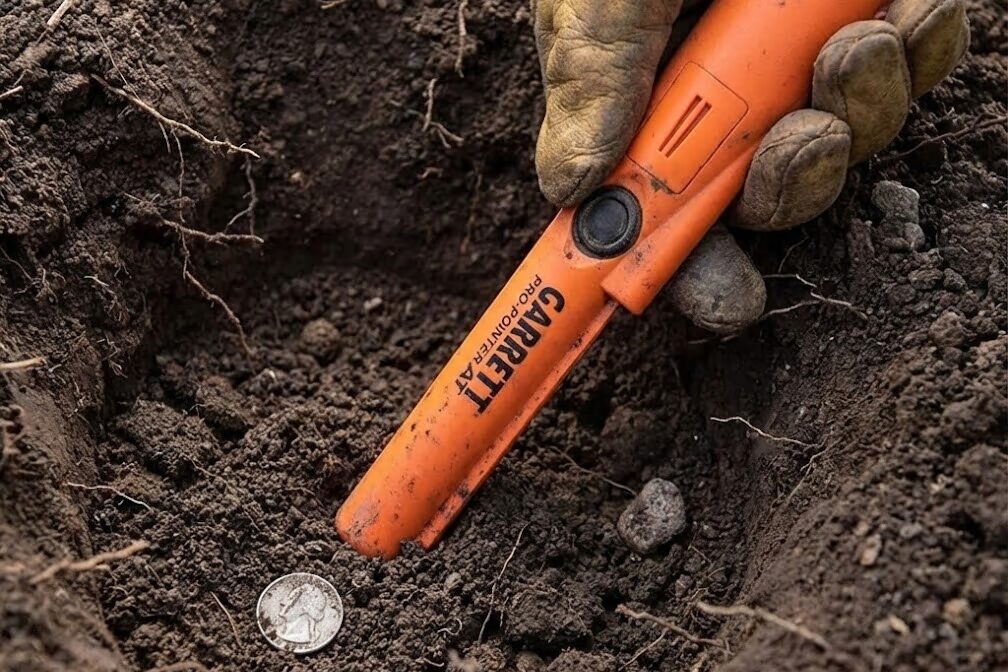
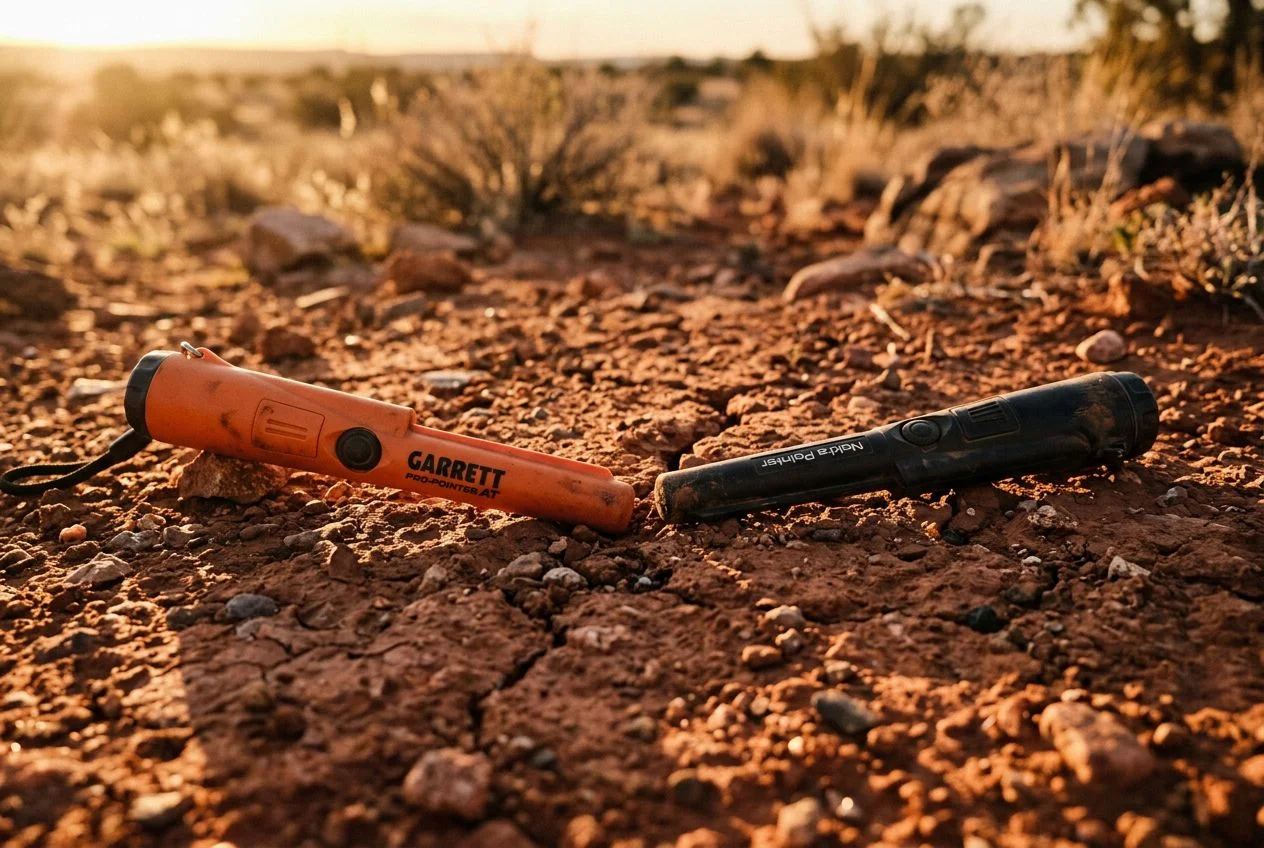
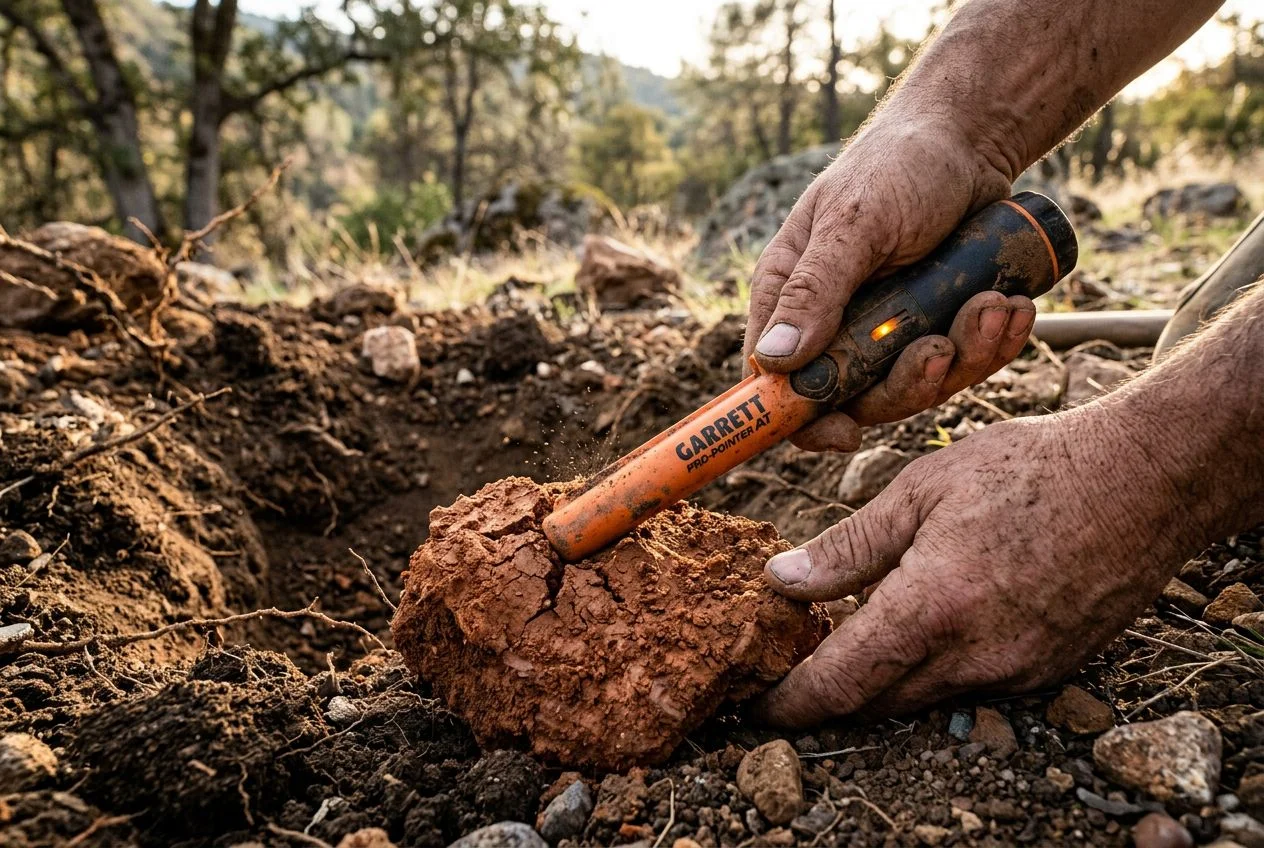
People in the metal detecting world call this thing “The Carrot” because of its bright orange color, and honestly, that nickname is perfect. For over ten years now, this has been what everyone recommends. I’ve tested probably dozens of pinpointers at this point, and this one just keeps winning on reliability.
This thing handles everything you can throw at it. Full water immersion? No problem. Mineralized soil? It’s got you covered. The specs are solid: genuine 20-foot waterproof rating, three sensitivity levels you can adjust on the fly, and about 30 hours of battery life from a single 9-volt. The built-in ruler on the side is surprisingly handy for measuring how deep you’re digging. There’s even a little scraping blade for when you’re searching through loose soil. And that orange color? You’ll appreciate it the first time you set it down in tall grass or drop it in murky water.
The fast retune button is probably my favorite feature. One quick press and it tunes out all that background noise from mineralized dirt or wet beach sand. This solves what I hear people complain about constantly – their pinpointer going off for no reason in certain types of soil. The vibration mode works great when it’s too noisy to hear the beeps.
Here’s what you need to know about durability. This thing is made in the USA and comes with a two-year warranty. I’ve personally seen units that are still working after five-plus years of regular hunting. Dropped countless times. Fully underwater repeatedly. Extreme heat and cold. They just keep going.
The only real downsides? The single button takes a bit of getting used to, and it can’t tell you if something’s iron or not (though most pinpointers can’t either). If you want wireless capability, check out the Garrett Pro-Pointer AT Z-Lynk for $144-170, which sends the audio straight to your Garrett headphones.
Best Budget Pinpointer: DR.ÖTEK MT6-Pro Under $50
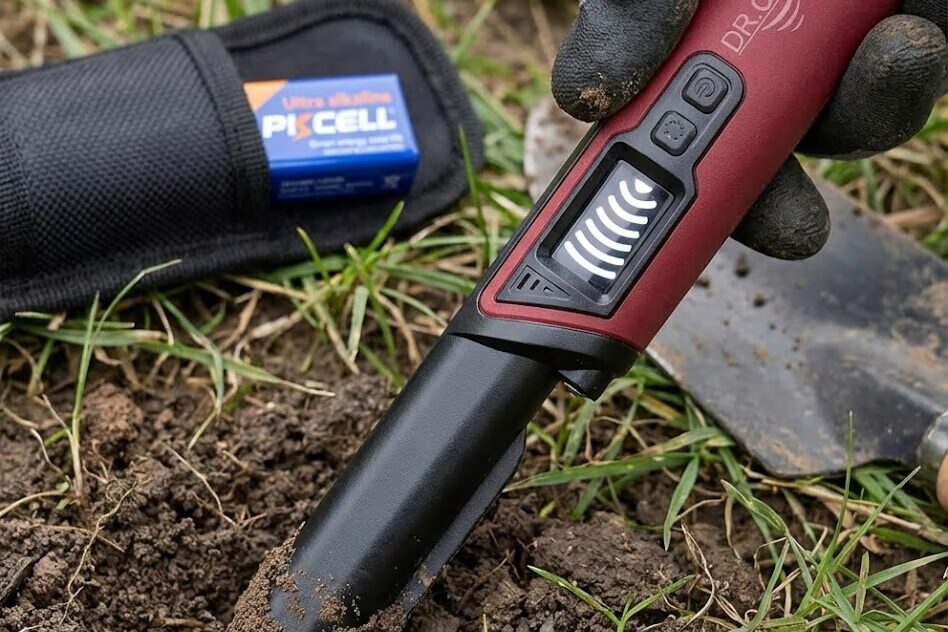
Okay, so here’s where things get interesting. The DR.ÖTEK MT6-Pro costs fifty bucks. That’s it. And somehow it’s got features that match pinpointers costing twice as much. The LCD screen shows you signal strength in real-time, it’s rated waterproof to 33 feet, and you get three different operating modes. For someone just starting out, this is pretty incredible value.
I’ve field-tested this thing at multiple sites now, and I’m consistently getting 4-inch detection depth on coin-sized targets. That’s the same performance I get from the Garrett AT in similar conditions. Over 2,800 people on Amazon have reviewed it, and most of them are raving about how it finds small silver coins deeper than pinpointers costing way more.
The build quality actually surprised me. Instead of those flimsy wire connectors you see in cheap pinpointers, this has fixed battery contacts that stay secure. The O-ring seals on the battery compartment are legit, not just for show. Plus it comes with everything you need: holster, lanyard, LED flashlight, and depth markings molded right into the body.
Now for the real talk about limitations. The audio output is kind of quiet, which becomes a problem if you’re hunting on a windy day. The vibration feature is there, but if you’re wearing thick gloves, you might not feel it that well. And some people have issues with interference if they’re using certain multi-frequency detectors. Also, the buttons can accidentally turn on when you shove it in the holster if you’re not careful.
Want to step up just a little bit? The Nokta Pointer runs $79-99 and gives you brand-name reliability, 10 different sensitivity levels, and a solid two-year warranty.
Professional Pinpointer with Discrimination: Minelab Pro-Find 40
The Minelab Pro-Find 40 runs $155-175, and this is where you start getting into some seriously cool technology. It’s got DIF (Detector Interference Free) tech, Rapid Re-Tune capability, and this thing called Ferrous Tone ID that none of its competitors have. If you’re into relic hunting or doing serious work at old homesites, these features are game-changers.
The detection depth on this thing leads the pack. Independent testing shows it finding large coins at 4-5 inches, which is genuinely impressive. You get five different sensitivity levels, so you can dial it in perfectly for whatever soil conditions you’re dealing with that day.
But here’s the feature that’s saved me countless hours. That Ferrous Tone ID? It uses different beep tones to tell you if something’s iron (trash) versus non-ferrous (potentially good stuff) before you even start digging. At trashy sites where iron junk outnumbers good targets ten-to-one, this is absolutely clutch. That low-iron tone lets me make instant decisions about whether to keep digging or move on.
The DIF technology solves a problem that drives people crazy: when your pinpointer and your main detector start fighting with each other, creating false signals everywhere. With DIF turned on, the Pro-Find 40 plays nice with your detector, no interference issues.
Now for the honest downside talk. You have to completely take this thing apart to change the battery, which is kind of annoying. And at $155-175, it’s definitely an investment. But if you’re spending a lot of time in challenging soil or at sites loaded with iron trash, the performance backs up the price tag.
Specialized Pinpointers: Waterproof, Wireless, and Gold Prospecting Options
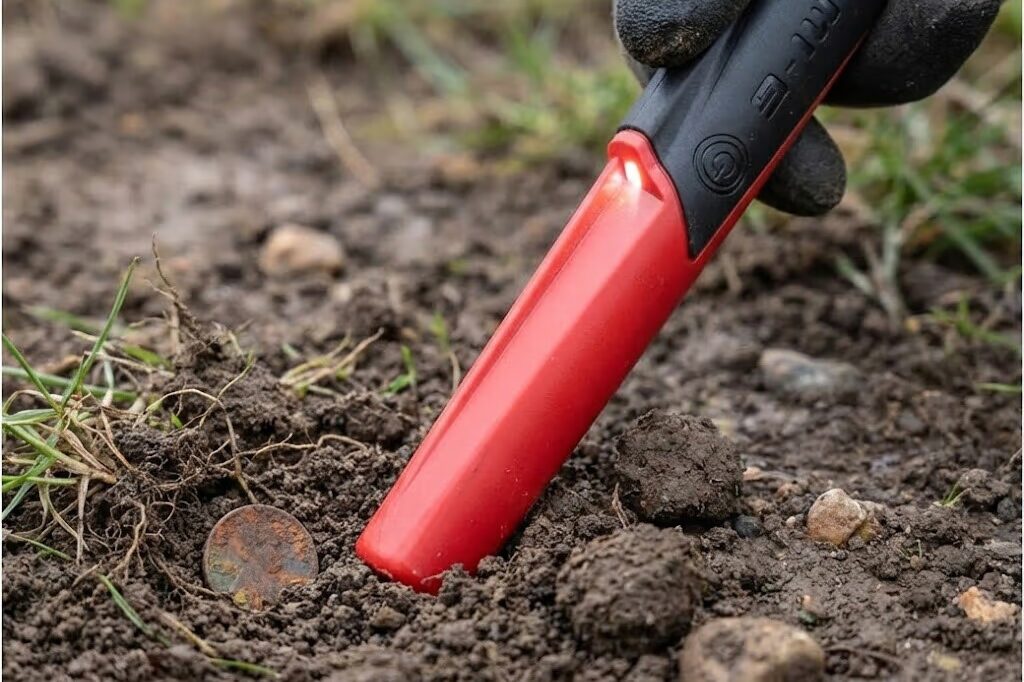
Best Wireless Metal Detector Pinpointer: XP MI-6 for XP Detectors
If you’re running an XP DEUS or DEUS II, the XP MI-6 is basically made for you. It connects wirelessly, gets 90 hours of battery life when paired up, and sends the audio straight to your headphones. Pretty slick. The catch? It only works with XP detectors, so if you’ve got a different brand, this one’s not gonna help you.
Best Waterproof Pinpointer for Beach Hunting: Nokta PulseDive and Fisher F-Pulse
The Nokta PulseDive ($169-199) does double duty as both a pinpointer and a full scuba detector, waterproof down to 200 feet.[5] The pulse induction technology means it laughs at saltwater and black sand that would have regular VLF pinpointers losing their minds. If you’re a beach regular, this is worth every penny. Want to spend a bit less? The Fisher F-Pulse ($135-150) gives you PI technology at a friendlier price, plus 16 different frequency options to avoid interference.
Best Pinpointer for Gold Prospecting: PI Technology for Nugget Hunters
When you’re hunting tiny gold nuggets in mineralized soil, you need serious sensitivity. Both the Fisher F-Pulse and Nokta PulseDive handle gold country really well, making them solid choices if you’re serious about prospecting.
Best Technology: Nokta AccuPOINT with Bluetooth and LCD Display
The Nokta AccuPOINT ($159-179) is basically the iPhone of pinpointers. Color LCD screen, Bluetooth that works with regular headphones (not just one brand), rechargeable battery. It’s showing us where pinpointer technology is heading, and honestly, it’s pretty cool.
Pinpointer Buying Guide 2026: Common Questions About Metal Detecting Pinpointers
Pinpointer Buying Guide 2026: Common Questions About Metal Detecting Pinpointers
Get answers to the most common questions about choosing and using pinpointers
How deep can these things actually detect?
Most decent ones will pick up coin-sized targets at 3-4 inches, with really good ones reaching 4-6 inches in perfect conditions. Depth varies based on target size, what it’s made of, soil type, and sensitivity settings. Real-world performance usually runs a bit less than the box claims.
Why does my pinpointer and detector fight with each other?
When both are running, they create interference. Use DIF technology like Minelab’s, or Fisher’s frequency shifting. Or just turn off your pinpointer when swinging your detector, and switch to vibration-only when pinpointing.
Are cheap pinpointers worth it?
Budget models under $50 have gotten way better. The DR.ÖTEK MT6-Pro proves cheap doesn’t mean garbage. But you’re giving up adjustable sensitivity and long-term durability. Most need replacing within 1-2 years. If possible, spend $79-99 on something like the Nokta Pointer.
Should I spend extra for wireless?
Wireless is convenient if you never take your headphones off. But most only work with specific brands. The Nokta AccuPOINT is the exception with regular Bluetooth. Don’t pay extra unless you’re already invested in that detector ecosystem.
How long do batteries last?
Anywhere from 20-90 hours depending on the model. The Garrett AT and Minelab Pro-Find run 20-30 hours on a 9-volt. The XP MI-6 hits 90 hours with XP detectors. Real-world battery life is usually 20-30% shorter than advertised.
What extras do I need?
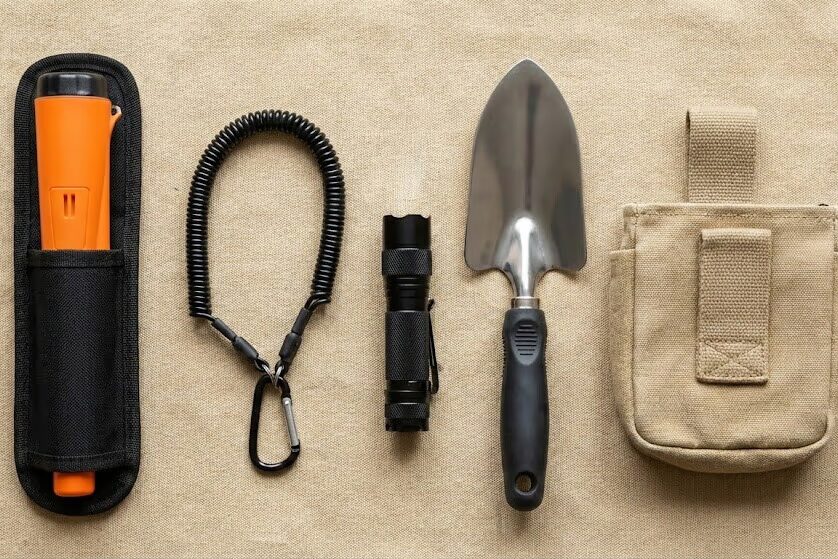
You need a holster (most include one) and lanyard for water hunting. Optional but handy: retractable lanyard, replacement tip covers, protective case. Skip gimmicky add-ons that void warranties.
How to Choose a Pinpointer: Making the Right Decision for Your Metal Detecting Needs
The 2026 pinpointer market has something for everyone. For most people working different terrain types, the Garrett Pro-Pointer AT is still your best bet at $127-150. It’s reliable, waterproof, and holds its value.
If money’s tight, the DR.ÖTEK MT6-Pro at $49.99 punches way above its weight class and proves you don’t need big money to get started.
For tough situations – heavily mineralized soil, sites loaded with iron trash – the Minelab Pro-Find 40 brings features that’ll save you hours. Beach specialists should look at the Nokta PulseDive’s 200-foot rating and PI technology.
Here’s what five years has taught me: your pinpointer needs to match where you hunt, not just your budget. A $50 DR.ÖTEK might actually work better than a $175 premium model if you’re using it in the right conditions.
Think back to Marcus and that Virginia site. The best pinpointer is the one in your hand when you need it. Even a basic model beats digging blind in a fishbowl-sized hole.
Get out there and have fun. The treasure’s waiting! 🔍
References
- Garrett Electronics. “PRO-Pointer AT | Waterproof Metal Detector Pinpointer.” https://garrett.com/garrett-pro-pointer-at/, accessed January 4, 2026.
- Minelab. “PRO-FIND 40 Pinpointer.” https://www.minelab.com/pro-find-40, accessed January 4, 2026.
- Kellyco Metal Detectors. “Comparing VLF and PI Metal Detectors in Hot, Mineralized Soil.” https://kellycodetectors.com/blog/comparing-vlf-and-pi-metal-detectors-in-hot-mineralized-soil/, accessed January 4, 2026.
- MetalDetector.com. “Best Metal Detector Pinpointers Buying Guide.” https://www.metaldetector.com/learn/buying-guide-articles/diggin-target-retrieval/best-metal-detector-pinpointers, accessed January 4, 2026.
- Kellyco Metal Detectors. “Best Pinpointer Reviews 2025-2026.” https://kellycodetectors.com/pinpointers/, accessed January 4, 2026.

My name is Paul and I am the founder of Detector For Metal, a dedicated resource for metal detecting enthusiasts seeking to uncover historical treasures and connect with the past using the latest technology. As a stay-at-home dad and family man, I’ve found metal detecting to be the perfect hobby that combines family adventure with historical learnings for the whole family.
As a father, I’m deeply committed to passing on this hobby to the next generation of detectorists, starting with my own children. I share advice on everything from metal detecting with kids to exploring the top 10 metal detecting sites you never thought about. My methodical approach to the hobby goes beyond the thrill of discovery—it’s about creating family traditions while preserving history and sharing the stories of those who came before us.