Table of Contents
Last month, my buddy Mike caught me staring at my laptop screen. I was digging through a press release about metal detector software updates. He stood there for a solid ten seconds before asking the obvious question: “You’re reading about software? For a metal detector? It’s a stick with a coil on the end, Paul.”
He’s not entirely wrong. At its core, a metal detector is still a stick with a coil on the end. But that stick has gotten a lot smarter in the last few years — and a lot of detectorists haven’t noticed yet.
The global metal detector market is projected to hit roughly $2.4 billion by 2030. It’s growing at about 5.1% annually, according to industry analysts. Much of that growth comes from the quiet integration of artificial intelligence and machine learning into detectors. Not just for industrial food processing and airport security, but for the machines we swing in fields, forests, and beaches.
I’ll level with you: I was skeptical at first. “AI” is one of those terms that gets slapped on everything these days. But after spending time looking at what’s actually changing under the hood, I think this is worth paying attention to. Here’s what detectorists actually need to know — not the marketing fluff, but the real changes happening in the machines we use.
How AI and Machine Learning Improve Metal Detection

Traditional metal detectors work on a pretty simple premise. You swing a coil that generates an electromagnetic field. When that field encounters a conductive metal object, it creates a secondary field that the detector reads. Based on signal strength, phase shift, and a few other variables, the detector gives you a target ID number and a tone.
That’s worked fine for decades. The problem? False signals. Anyone who’s detected a park knows the heartbreak of digging a sweet 75 VDI reading that turns out to be a crushed aluminum can from 1993.
Modern AI-powered detectors change this by doing something different: they learn what they’re detecting. Using deep learning algorithms trained on massive datasets of metal signatures, these systems can automatically identify and classify different metal types in real time. A 2025 technology analysis confirms that modern AI algorithms leveraging deep learning and big data analysis enable detectors to significantly boost accuracy and reduce false positives. They adjust sensitivity and recognition parameters based on environmental changes on the fly.
What does that mean in plain English? Your detector doesn’t just measure conductivity anymore. It analyzes patterns across multiple dimensions — signal shape, decay rate, ground response, depth characteristics — and matches them against a library of known signatures. The result is a target ID that’s far more reliable than what you get from a simple conductivity reading.
What Machine Learning Adds to Target ID Today
Let me be honest: we’re not at the point where your detector will tell you “1865 Indian Head penny, 8 inches deep, between that oak tree and that rock.” The marketing sometimes implies we’re there, but we’re not. Here’s what’s actually available today:
Better discrimination. This is the biggest practical improvement. AI-driven systems use machine learning algorithms trained on extensive datasets to distinguish between items that would fool a conventional detector. A crushed soda can and a silver coin can produce similar conductivity readings. But their full electromagnetic response signatures look very different to a properly trained neural network. As one analysis notes, these algorithms enable systems to precisely recognize a wide array of metallic objects. They differentiate between harmless items like coins or belt buckles and potential threats or trash.
Adaptive ground balancing. Ground mineralization is every detectorist’s nemesis. Highly mineralized soil can mask targets, create ghost signals, or require constant manual adjustment. AI systems can dynamically adjust sensitivity and recognition parameters based on environmental changes. They select optimal settings for current ground conditions without you touching a knob.
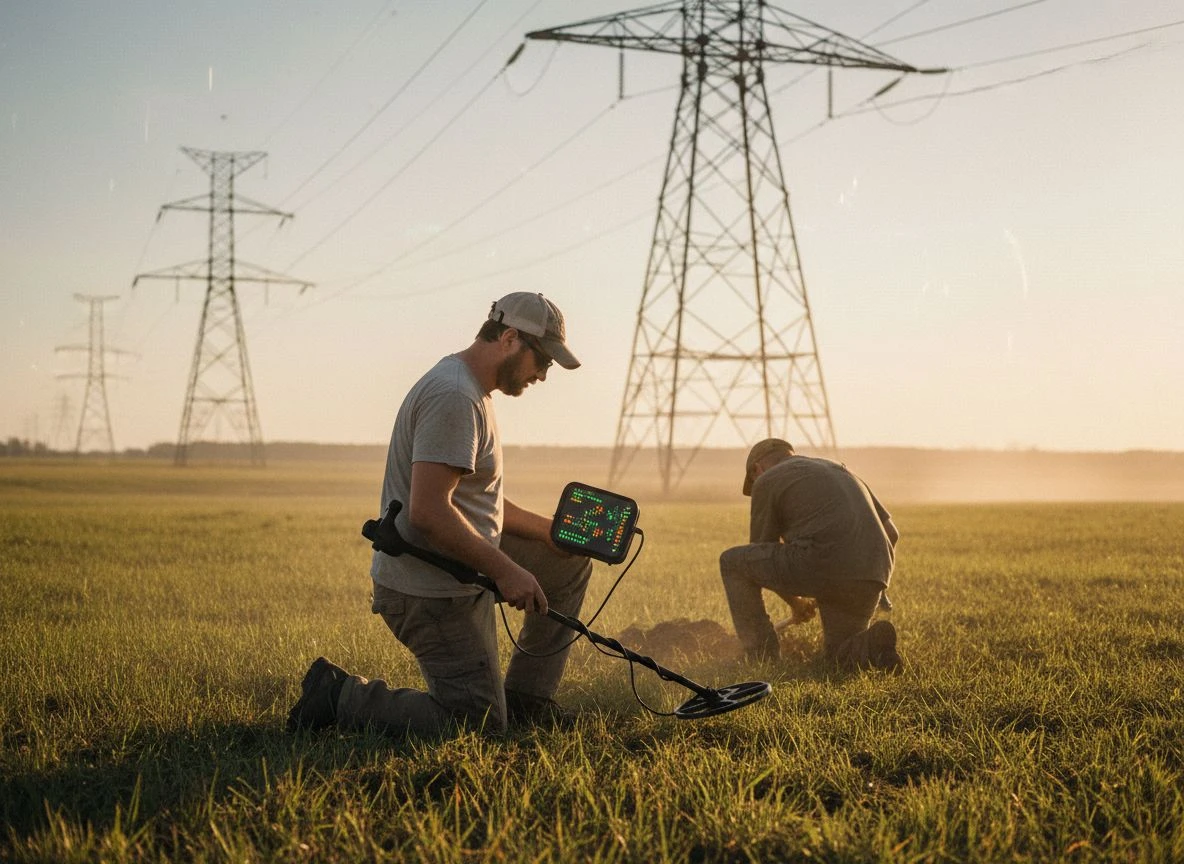
Real-time noise rejection. EMI from power lines, cell towers, and other detectors on group hunts creates noise that conventional filters handle poorly. AI-powered noise rejection analyzes the difference between consistent interference patterns and target signals. It filters out EMI while preserving genuine target responses.
I’ve experienced this myself. The last time I was hunting a site near power lines — the kind of place that normally drives my old machine crazy — I watched a friend’s newer detector with adaptive signal processing work through it like the interference wasn’t there. He pulled a seated Liberty dime from 8 inches down while my machine was practically screaming aluminum foil at every swing.
What Can’t AI Do in Metal Detecting Yet?

If there’s one area where AI is making the biggest difference for hobbyist detectorists, it’s target identification. And this is where things get genuinely exciting.
Traditional target ID gives you a single number, typically 0-99, based on conductivity. The problem is that different objects can produce overlapping numbers. A gold ring, a pull-tab, and a piece of copper wire can all hit in the same range depending on size, shape, orientation, and depth. That’s why experienced detectorists learn to “read” the sound — the shape of the audio response tells you more than the number alone.
AI changes this by analyzing more data points simultaneously. Instead of a single conductivity reading, the system examines:
- The full waveform of the return signal
- How the signal changes as you sweep at different angles
- The harmonic content of the response
- Ground response characteristics at different frequencies
- Signal decay patterns over time
Modern detectors already use digital signal processing and multi-frequency capabilities to distinguish metal types, estimate depth, and provide target identification through sophisticated algorithms. AI takes this further by continuously learning from the data it processes. It improves its accuracy over time. As one industry overview explains, machine learning-based detectors can precisely recognize a wide array of metallic objects through continuous learning processes.
The result? A two-dimensional target ID display that shows not just the conductivity number but also a “confidence” indicator or ferrous content reading. The Minelab Manticore is probably the most visible example in the hobbyist space right now. Its advanced 2D Target ID system represents a significant step beyond conventional single-number displays. Its Multi-IQ+ engine delivers about 50% more detection power than the Equinox series. Much of that comes from smarter signal processing rather than just raw power.
Should You Upgrade for AI and Machine Learning?
I don’t want to overhype this. AI-powered detecting isn’t magic, and it comes with its own set of challenges.
Training data matters. The accuracy of an AI system depends entirely on the quality of the data it was trained on. A system trained primarily on coin-sized targets in moderate soil might perform poorly on deep relics in highly mineralized ground. Different manufacturers have different training datasets. The gap between the best and worst is significant.
Environmental adaptation takes time. Dynamic learning capabilities sound great in theory. But in practice, a detector needs time to “learn” a new environment. If you’re switching between a saltwater beach and a forest floor, the system may need several minutes to adjust its baseline.
You still need to dig carefully. Better target ID means fewer trash digs, but it doesn’t eliminate them. I’ve watched people with the latest AI-enabled machines still dig modern pennies at 6 inches thinking they had silver. The technology is improving discrimination, not replacing judgment.
The cost barrier. Advanced processing doesn’t come cheap. The detectors with meaningful AI features sit at the upper end of the consumer market. As the technology matures, expect it to trickle down to mid-range models. But we’re probably 2-3 years from sub-$500 detectors with genuine machine learning capabilities.
What to Expect from Future AI Metal Detectors
If you’re in the market for a new detector, here’s what I’d recommend thinking about:
Look for proven algorithms, not marketing buzz. Every manufacturer will claim “AI-powered” something soon. Dig deeper. What specifically does the system do differently? How does it handle ground mineralization? What’s the track record in user forums?
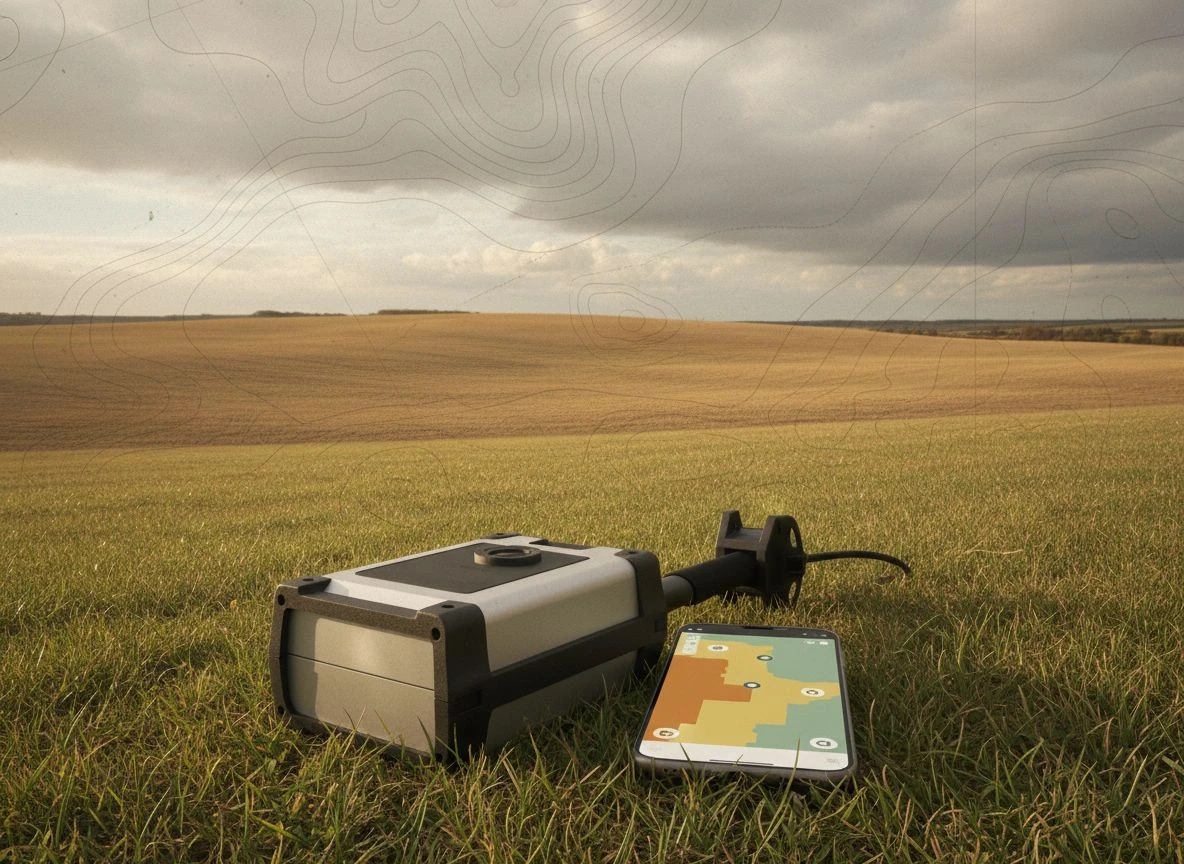
Consider the ecosystem. Some manufacturers are investing heavily in software development platforms. For example, in early 2026, Garrett announced its Clarity platform. It’s a proprietary deep learning-based system designed to improve detection and indication capabilities across their product line. The company’s senior product manager stated that Clarity represents their commitment to leveraging AI to achieve performance enhancements previously deemed impossible. That kind of investment suggests ongoing improvement and software updates, not just a one-time feature.
Don’t abandon your research. Here’s the thing that hasn’t changed: research beats expensive gear every time. A $300 detector at a well-researched site will outperform a $5,000 AI machine at a random park where everyone’s already hunted. The technology helps you interpret what your detector tells you — but it can’t tell you where to swing in the first place.
Watch the used market. As early adopters upgrade to the latest AI-equipped models, you can find excellent conventional detectors at deep discounts. A used Equinox 800 or Fisher Gold Bug Pro will still find everything it found before AI came along. Don’t feel pressured to upgrade just because the technology exists.
The next few years will bring some genuinely interesting developments. Future trends include enhanced connectivity through cloud-based data sharing. Users can share detection data instantly or receive automated updates on ground conditions. Imagine pulling into a new detecting location and your detector automatically downloading local soil composition data and known target signatures. That’s coming sooner than you might think.
The Internet of Things is also making its way into detecting. Remote monitoring and management via IoT technology allows users to view data and adjust parameters from mobile devices. Some industrial detectors already do this. Consumer models will follow.
But here’s the thing that gives me hope about this technology: done right, AI doesn’t replace the human element of detecting. It reduces the frustration quotient. Fewer trash digs means more time spent on productive hunting. Better target ID means less time wasted and more discoveries per hour. The joy of research, the thrill of identifying a promising site, the camaraderie of hunting with friends — none of that changes.
What changes is the efficiency of the hunt. And in a hobby where time in the field is precious — especially if you’re squeezing in hunts between work and family obligations — that efficiency matters.
My buddy Mike still rolls his eyes when I talk about machine learning algorithms and neural network training data. But you know what? Last weekend, he borrowed a detector with adaptive ground balancing for a hunt at a heavily mineralized site that usually drives him crazy. He dug three keepers in two hours and couldn’t stop talking about how “the machine just seemed to know what it was doing.”
I didn’t say “I told you so.” Mostly because I was too busy digging my own targets. But the technology is real, it’s here, and it’s only going to get better from here.

My name is Paul and I am the founder of Detector For Metal, a dedicated resource for metal detecting enthusiasts seeking to uncover historical treasures and connect with the past using the latest technology. As a stay-at-home dad and family man, I’ve found metal detecting to be the perfect hobby that combines family adventure with historical learnings for the whole family.
As a father, I’m deeply committed to passing on this hobby to the next generation of detectorists, starting with my own children. I share advice on everything from metal detecting with kids to exploring the top 10 metal detecting sites you never thought about. My methodical approach to the hobby goes beyond the thrill of discovery—it’s about creating family traditions while preserving history and sharing the stories of those who came before us.