Table of Contents
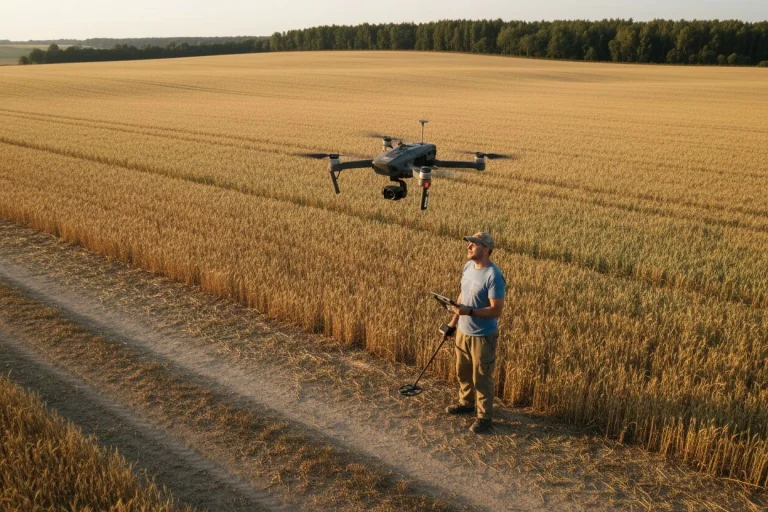
My buddy Tom texted me last month. “Found an old foundation on Google Maps,” he said. “Gonna drone it tomorrow, see what’s there.”
I’ve known Tom long enough to hear what he’s not saying. He thought a drone could fly anywhere over that foundation, no questions asked. I made the same assumption when I first looked into aerial scouting. I was dead wrong.
The truth about drone law and metal detecting is more layered than most hobbyists realize. I spent an afternoon on the FAA website and another one calling state park offices. So let me tell you: before you launch anything over your next search site, you need to understand what’s legal and what’ll get you a fine faster than you can say “suspicious signal.”
Let me break this down by what I’ve learned — including a few mistakes I almost made myself.
What FAA Rules Apply to Metal Detecting Drones?
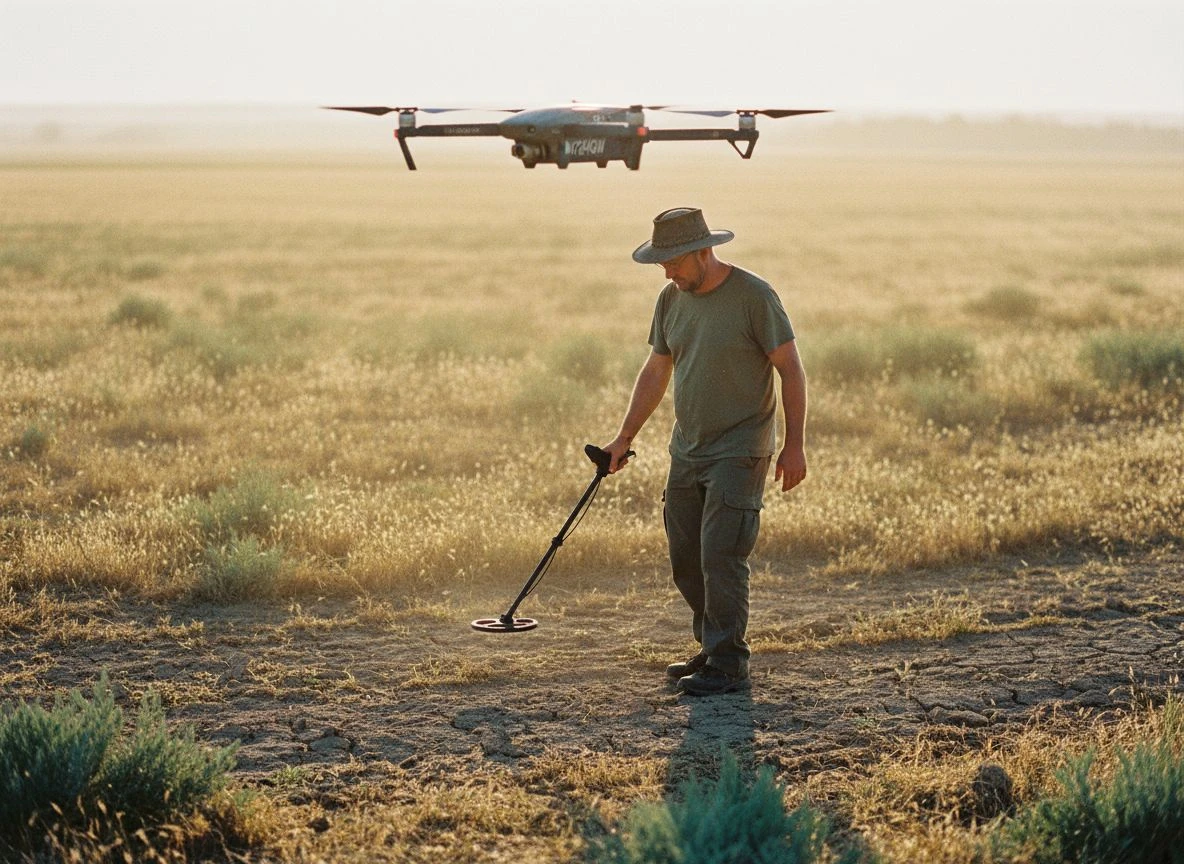
Let’s start with the easy part. The Federal Aviation Administration governs all navigable airspace in the United States. That includes the air above your detecting sites. The FAA considers the airspace over private property part of the national airspace system. You don’t own the air above your land. Neither does the farmer whose field you just got permission to hunt.
If you’re flying a drone for recreational purposes — and most hobbyist scouting missions qualify — you need to follow FAA recreational flyer rules. This means:
You must pass the TRUST test. The Recreational UAS Safety Test is free. It takes about 30 minutes. You need to have your certificate on you when flying. I took mine online while waiting for my kids’ soccer practice to end. It’s not hard, but it’s mandatory.
Register your drone. If your UAV weighs more than 0.55 pounds — and most decent scouting drones do — you need to register it with the FAA. Then display the registration number externally. It costs $5 and lasts three years. Cheaper than a single pull-tab hunt.
Fly below 400 feet. That’s the hard ceiling for recreational operators. Most drone scouting for detecting sites works best between 50 and 150 feet anyway. So this is rarely a limitation.
Maintain visual line of sight. You need to see your drone with your own eyes at all times. You can’t fly it behind a treeline or over a hill while you sit in your truck watching the feed on your phone. I know that’s the exact use case a lot of detectorists want. Doesn’t matter.
Don’t fly near airports without authorization. Controlled airspace around airports requires FAA authorization. You typically get it through the LAANC system. The B4UFLY app will tell you if you’re in a restricted zone before you even unpack your drone.
Here’s the thing people get wrong: the FAA doesn’t care what you’re doing with the drone’s camera. They don’t regulate privacy, surveillance, or whether you’re scouting for old cellar holes. The FAA regulates the flight itself. So as long as you’re following their rules, the feds are satisfied.
How State Laws Impact Your Metal Detecting Drone
Here’s where I nearly made my mistake.
I had permission to detect on a friend’s family property outside Sacramento — about 40 acres of old farmland with a foundation from the 1890s. I planned to fly my drone over the back fields to look for soil discoloration and old building footprints. Seemed straightforward.
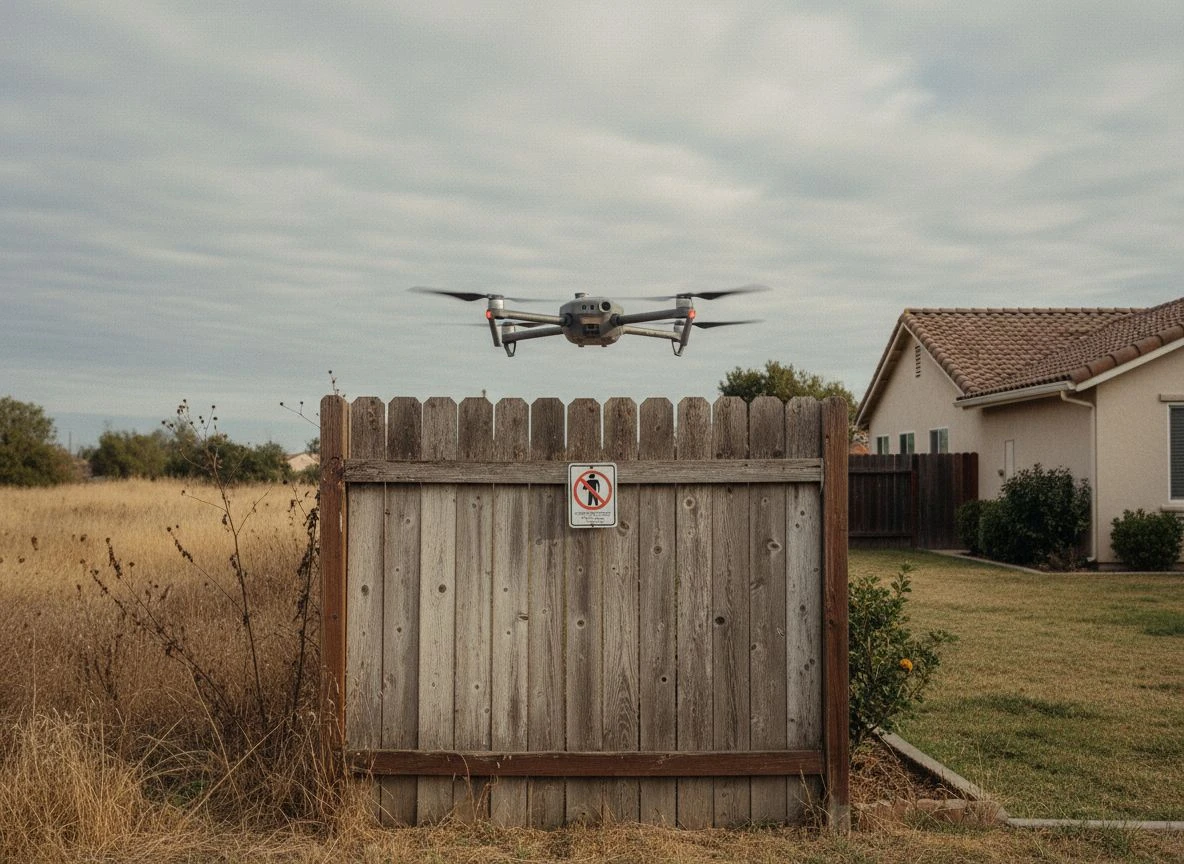
Then I checked state drone laws. Turns out Idaho and Tennessee — and plenty of other states — have specific laws about drone surveillance of private property. Idaho generally prohibits drone photography of private property without the owner’s consent. Tennessee makes it unlawful to use drones to surveil individuals where they have a reasonable expectation of privacy.
Now, my friend owned the land, so consent wasn’t an issue. But the adjacent properties? If my drone drifted even slightly over the neighbor’s yard while I was scanning — I was flying at 150 feet — I could have been in violation of state privacy laws. Not FAA law. State law.
This is the critical distinction most hobbyists miss. The FAA says “you can fly here.” Your state or local municipality says “not so fast.” State laws around privacy, trespass (for the drone itself, not you), and surveillance vary wildly.
Some states make it a misdemeanor to fly within 50 feet of a home without permission. Others have specific restrictions about capturing images of people on private property. And local ordinances? They can ban drones in city parks entirely, even if the FAA allows it.
Bottom line: Before you fly over any detecting site, check both state and local laws. The FAA gives you permission to fly. Your state can make it illegal to look.
Drone Metal Detecting on Private Property
This is the scenario most detectorists care about. You’ve got permission to detect on private land, and you want to use a drone to scout the property from above.
The good news is that flying a drone over private property is generally permissible under FAA regulations. Provided you’re in uncontrolled airspace and following all recreational rules. The FAA has a strong position here — they govern the airspace, not the ground.
But here’s where it gets sticky: if you’re lingering over someone’s home, or hovering while you examine a specific spot, or recording the neighbor’s backyard, you’re entering state privacy law territory. Even if it’s technically legal under FAA rules, the landowner can still raise complaints. You can still face legal issues.
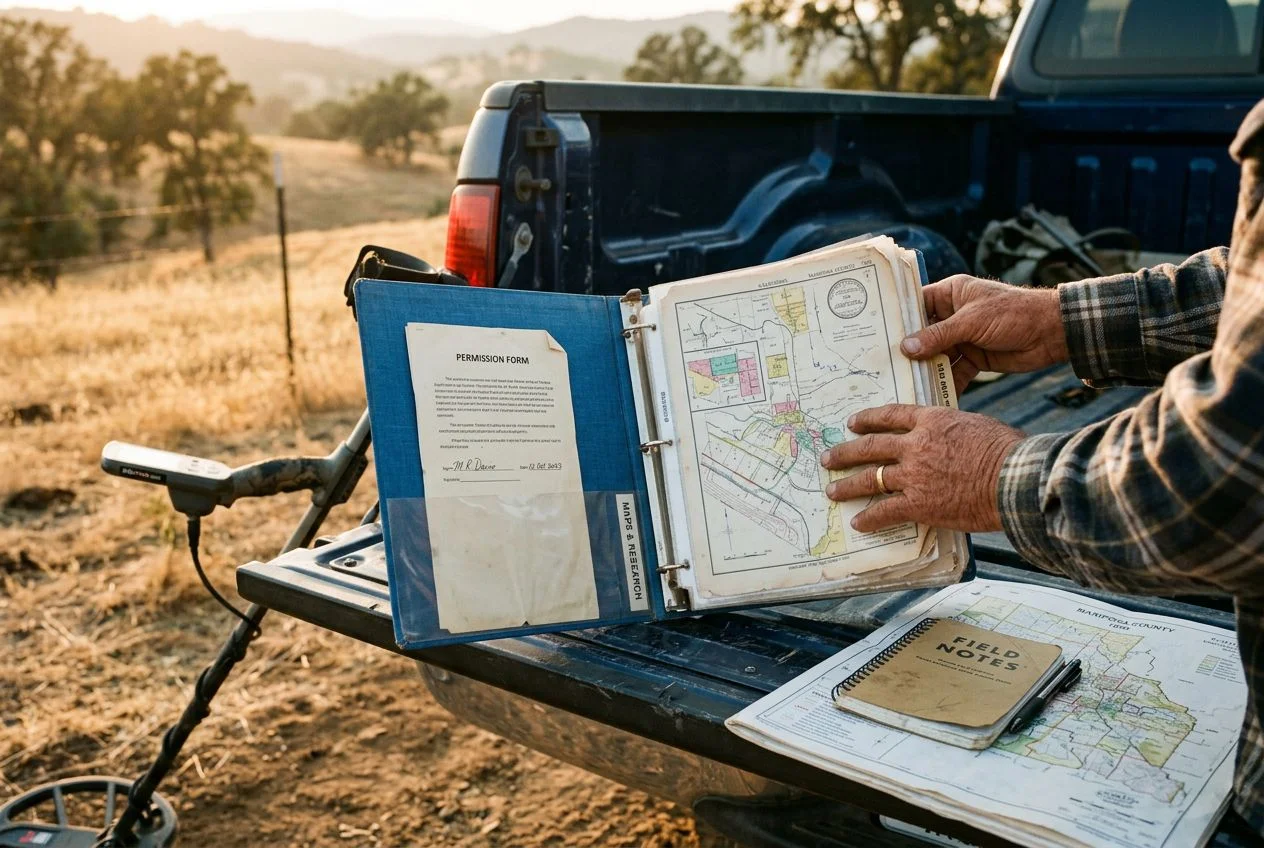
My approach is simple: if I have permission to detect on a property, I also get permission to fly a drone over it. I add it to my permission form. That way, if the neighbor sees my drone and calls the sheriff, I can say “yes, I have the property owner’s consent to be here and to operate this UAV.”
And I never, ever fly over someone else’s property without permission. Even if I’m standing on an adjacent legal site. It’s not worth the headache.
Public Lands Rules for Metal Detecting Drones
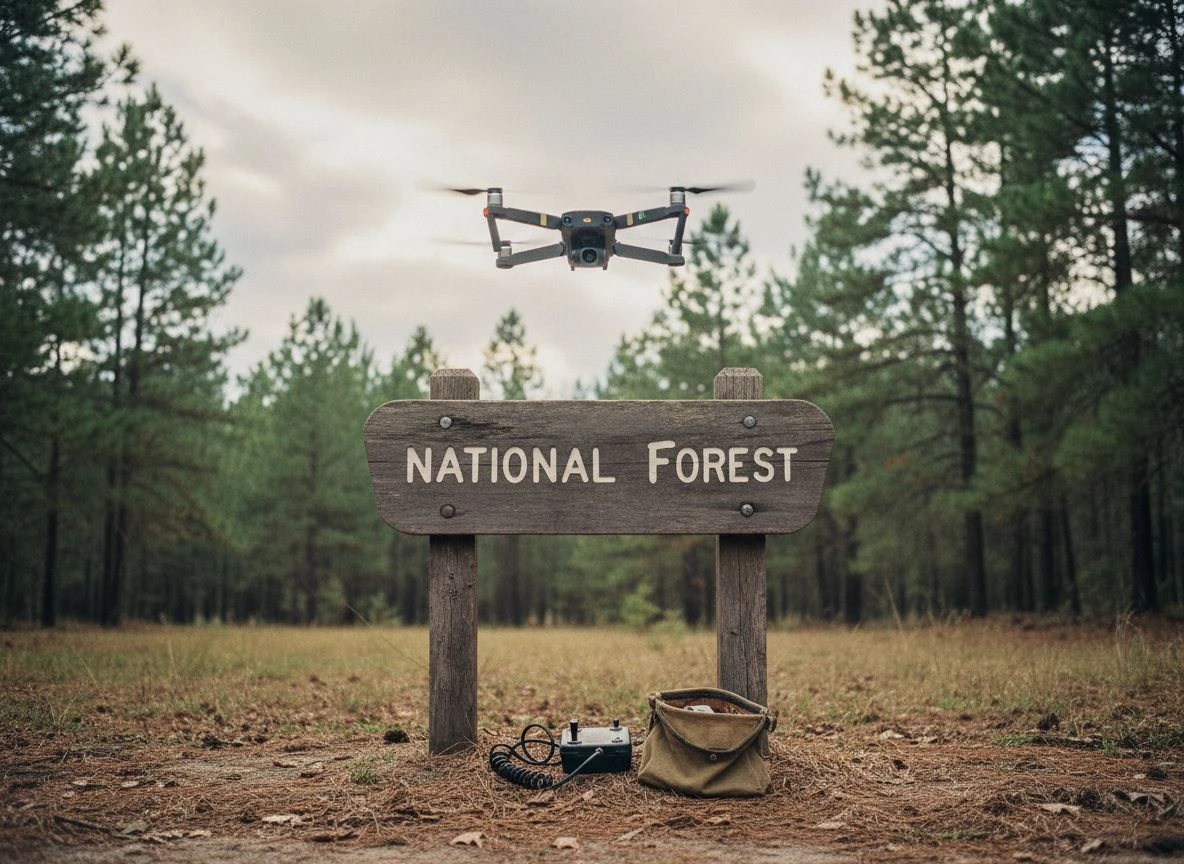
This is where a lot of detecting hobbyists get tripped up. You can follow every FAA rule perfectly and still break the law — because the land manager has their own restrictions.
National Parks: Hard no. Metal detecting is prohibited in all National Parks, National Monuments, and National Historic Sites without exception. Drones are typically banned too. Don’t even think about it.
National Forests and BLM land: Generally more relaxed. Casual, non-commercial detecting for modern coins and objects is usually allowed on National Forest System lands. Drone operations are often permitted too, but check the specific forest’s regulations. Some have seasonal restrictions for wildlife protection or fire risk.
State Parks: Highly variable. Utah State Parks at Echo State Park, for example, allows both metal detecting and drone operation — but only with a Special Use Permit issued in advance, and a $10 fee. Drone users must avoid flying over people, wildlife, campgrounds, and day-use areas. Any historical or cultural items found must be turned in to park staff. You can’t keep them.
Other state parks ban drones outright. Some ban metal detecting entirely. A few allow both but require separate permits.
County and local parks: Even more variable. Williamson County Parks in Tennessee prohibits drone operation by the general public without prior written authorization. They also prohibit metal detecting entirely, except for supervised lost-item searches.
The pattern here is clear: the entity that manages the land sets the rules for what happens on the ground and in the air above it. The FAA gives you permission to fly up to 400 feet. The land manager can say “not over my land, you don’t.”
Is a Metal Detecting Drone Actually Legal to Use?
Now, there’s a difference between scouting with a camera and using a drone to actually detect metal from the air.
Systems like the TreasureHunter3D DroneRover attach a 3D magnetometer sensor to your drone, allowing you to scan for ferromagnetic anomalies from the air. At about 200 grams for the sensor unit, it’s light enough for most mid-range drones to carry. The theory is sound: you survey a large area fast, then ground-truth the hits with your conventional detector.
But here’s the thing — and I’ll level with you — the legal question isn’t really about the type of sensor you’re carrying. Whether you’ve got a GoPro or a magnetometer, you’re still operating a UAV. All the FAA rules apply. All the state privacy laws apply. All the land manager restrictions apply.
The DroneRover doesn’t change whether you can fly. It changes what you can find once you’re legal.
Pre-Flight Checklist for Metal Detecting Drones
I’ve learned this the hard way, through a few close calls and one very awkward conversation with a park ranger. Here’s my pre-flight routine now. I recommend you adopt something similar.
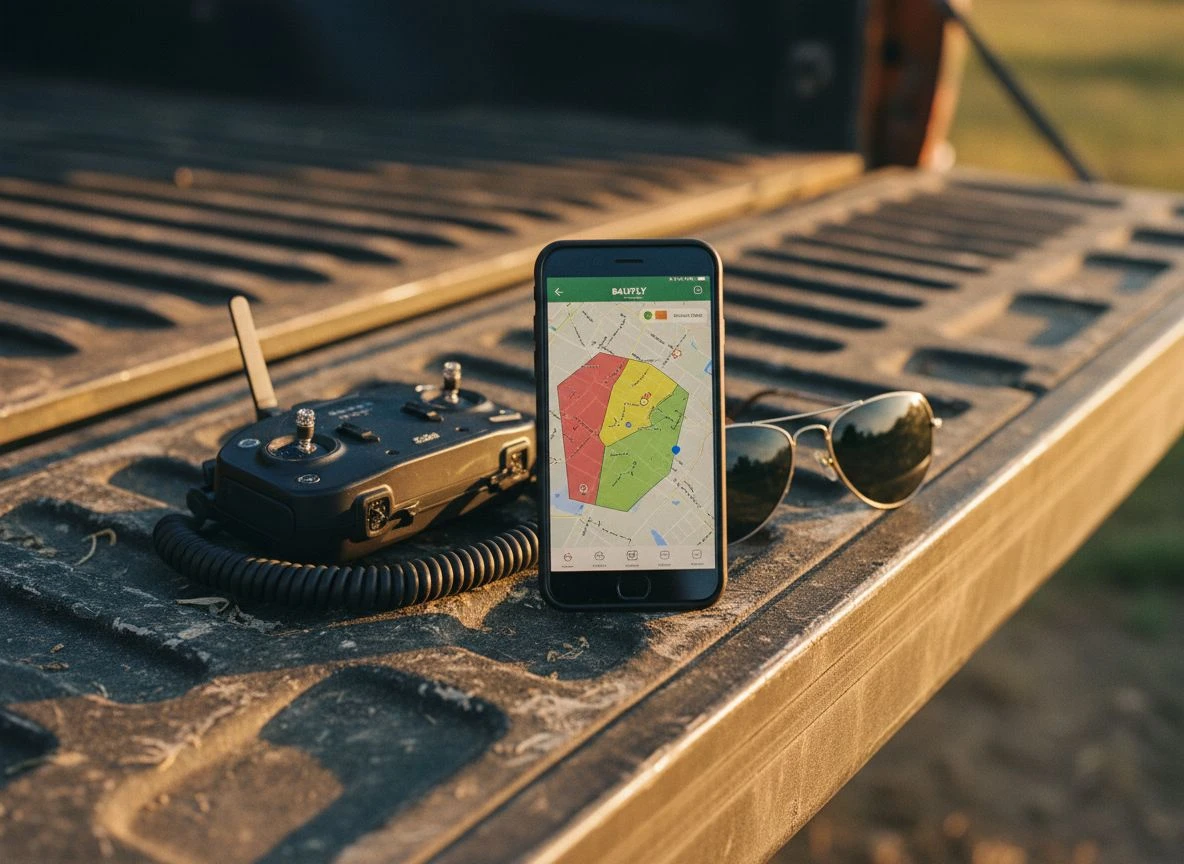
- Check the land ownership. Is this private land with permission? Public land? What agency manages it? Check their drone policy specifically.
- Check the airspace. Use the B4UFLY app or a similar tool. Am I in controlled airspace? Do I need LAANC authorization?
- Check state and local laws. Spend 15 minutes looking up drone privacy laws in your state. Some states have specific restrictions that apply even on private land.
- Check metal detecting rules for that specific site. Remember — even if drone flight is legal, detecting might not be. And vice versa. You need both permissions to be valid.
- Confirm visual line of sight. Can I actually see my drone from where I’ll be standing? If not, I can’t legally fly it.
- Have your documentation ready. TRUST certificate, drone registration, written permission from the landowner, any permits required by the land manager.
- Don’t linger over private property. Sweep, scan, move on. If you’re hovering over someone’s house for five minutes, you’re asking for trouble.
Key Takeaways for Metal Detecting Drone Users
Here’s what I tell Tom now. Yes, you can use a drone to scout your detecting sites. It’s a powerful tool, and systems like the DroneRover make it even more valuable by adding aerial metal detection capability. But you can’t just launch it anywhere and assume it’s legal.
The legal framework is a three-layer cake: federal FAA rules, state and local laws, and land manager restrictions. You have to satisfy all three layers. Miss one, and you’re breaking the law, even if you think you’re doing everything right.
I almost learned this the hard way over that foundation near Sacramento. Read the rules first. Get permission. Fly responsibly. Then let your drone — and your detector — do the work.
My pre-flight routine now takes 15 minutes. That’s 15 minutes I’m not swinging my coil, but it’s 15 minutes that keeps me legal, respectful, and welcome to come back another day.

My name is Paul and I am the founder of Detector For Metal, a dedicated resource for metal detecting enthusiasts seeking to uncover historical treasures and connect with the past using the latest technology. As a stay-at-home dad and family man, I’ve found metal detecting to be the perfect hobby that combines family adventure with historical learnings for the whole family.
As a father, I’m deeply committed to passing on this hobby to the next generation of detectorists, starting with my own children. I share advice on everything from metal detecting with kids to exploring the top 10 metal detecting sites you never thought about. My methodical approach to the hobby goes beyond the thrill of discovery—it’s about creating family traditions while preserving history and sharing the stories of those who came before us.