Table of Contents
When you’re underwater metal detecting freshwater, wading gets you to the secret spots, but it’s a high-risk move. This is especially true for underwater metal detecting in freshwater. One wrong step can turn a great day dangerous. This isn’t just a gear list. It’s a modular system I built through trial and error. It starts with a core safety module, then adds what you need for your specific water. I learned this the hard way on a gorgeous stretch of the lower Yuba River.
Essential Safety Rules for Wading in Water
This is your universal safety base. It’s the gear you’ll never regret having. It includes a wading belt, polarized glasses, a whistle, and a compact PFD for lakes or heavy flow. This stuff turns a potential disaster into a minor inconvenience.
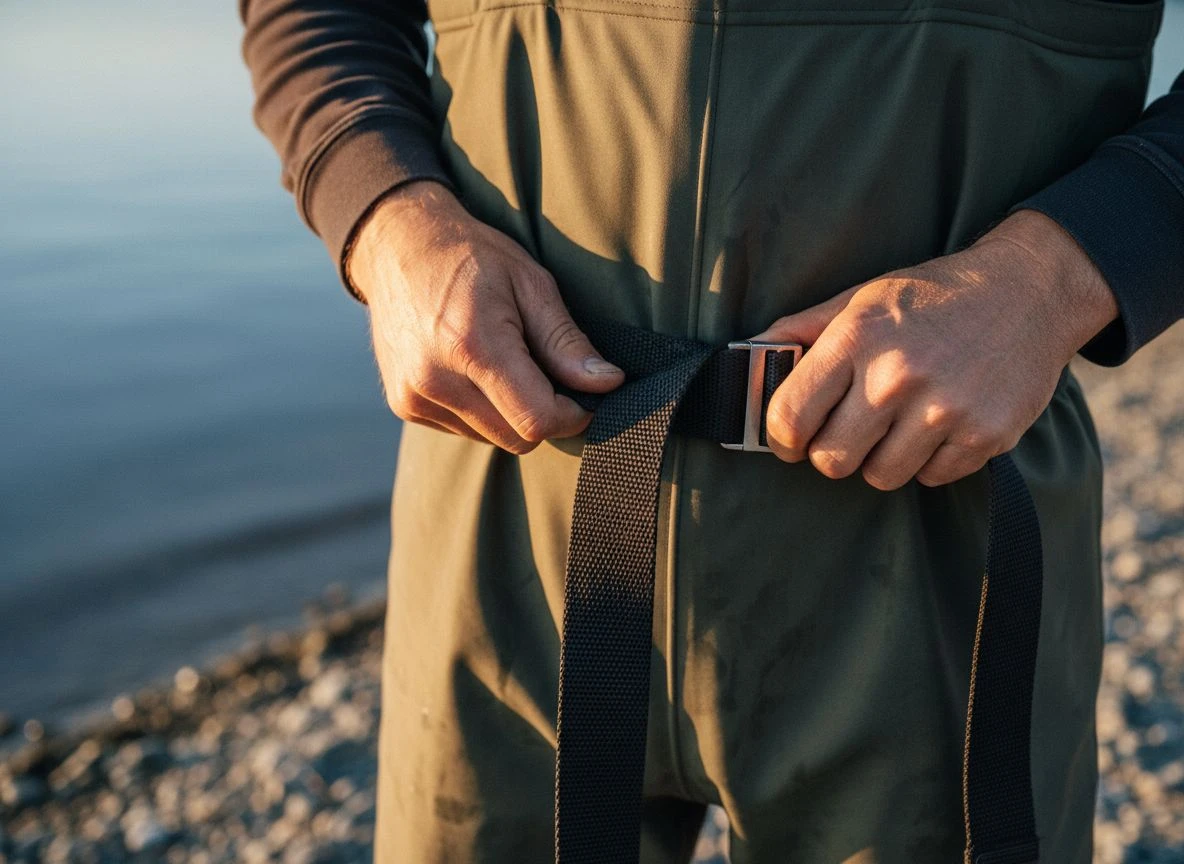
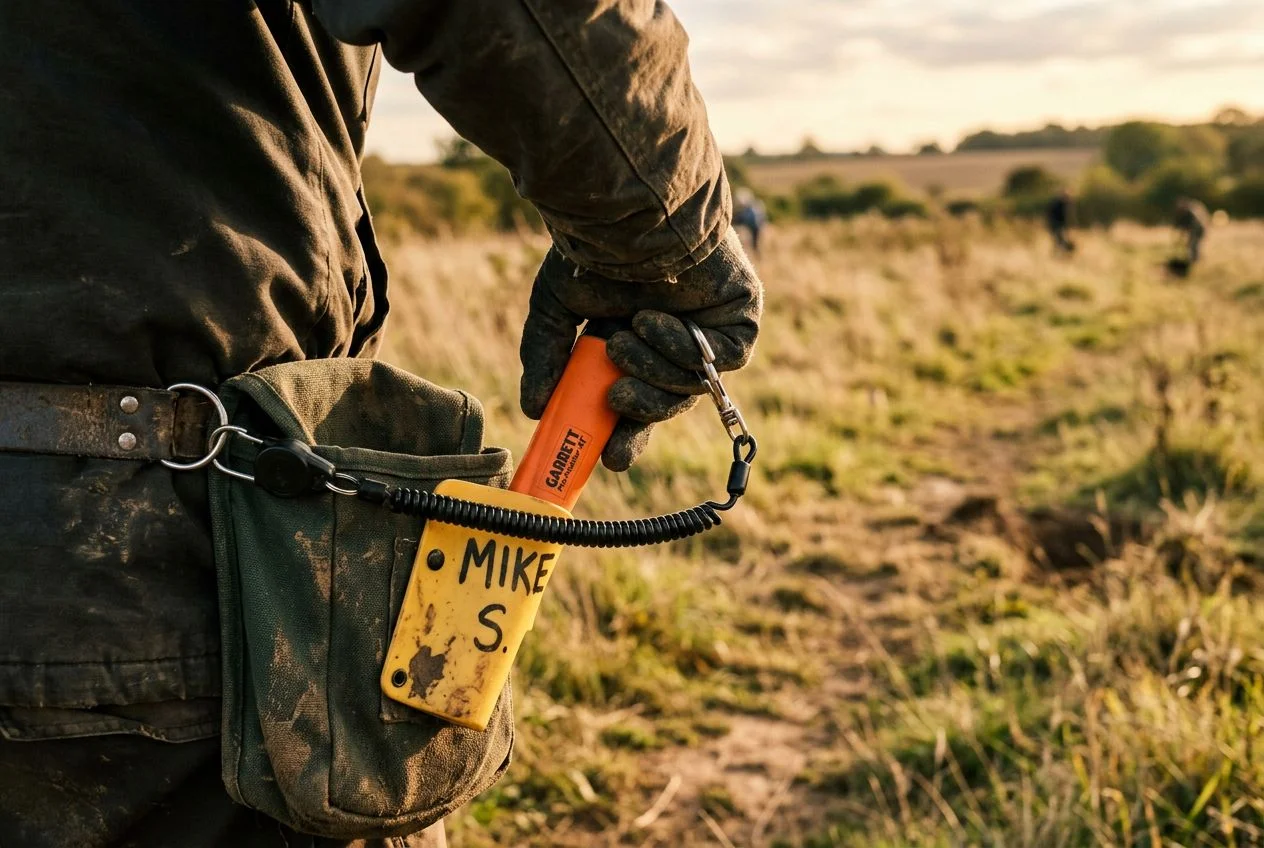
My buddy Mike used to scoff at wading belts. “It’s just a strap, Paul. I’ve got good balance.” That changed at a local reservoir. He was shuffling through the muck, felt his boot sink, and his weight shifted. He went down hard. The water was only waist-deep. But as Orvis points out, that’s enough for waders to fill like a sail if you’re not belted. He wasn’t. It took him a panicked minute to get up, his waders heavy and awkward. He bought a belt the next day.
The wading belt is non-negotiable. It’s the single most critical safety item if you’re wearing waders. Period.
Here’s another truth: water saps heat fast. Prolonged time in cool water risks hypothermia. Your core module is your first defense.
The rest of the module is about seeing and being heard:
- Polarized Sunglasses: These aren’t just for glare. They cut surface reflection. You can see submerged logs, drop-offs, and slick rocks. As any seasoned wade fisher knows, seeing the hazard is step one.
- A Whistle: Attach it to your PFD or belt. Your voice will give out long before a whistle’s blast will. It works when you’re too winded to yell.
- A Compact PFD (for lakes/high flow): Most river guides skip this. In a river, a fall might wash you to shallows. In a deep lake, a cramp or a step into an old creek channel leaves you treading water. A low-profile, inflatable belt-pack PFD is invisible until you need it to save your life.
This isn’t the fun gear. It’s the essential, boring foundation. Get this right first. Your detecting buddy—and your family—will thank you.
How to Choose Between Waders and Wet Wading
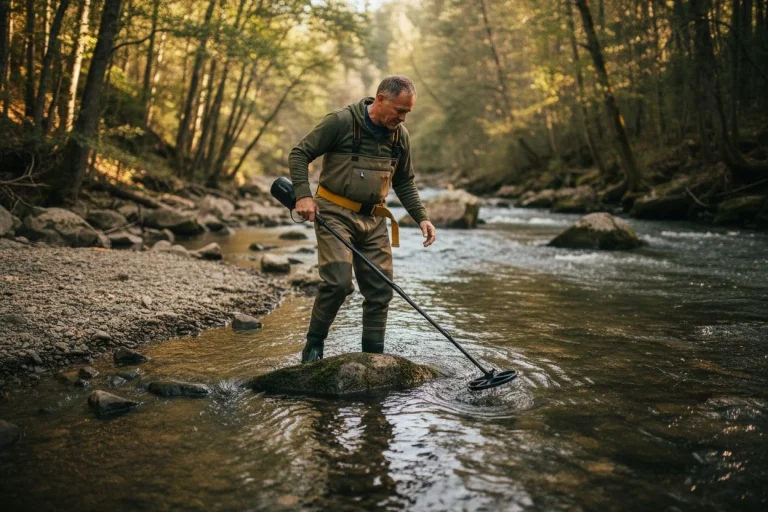
Your choice comes down to one main factor: water temperature. Cold water (early spring, mountain streams) needs the insulation of waders. Warm summer lakes and slow rivers are perfect for wet wading—wearing quick-dry clothes right in the water. This is a safety and comfort decision.
For cold water, you need waders. Your first choice is height: hip waders for shallow edges or waist-to-chest waders for deeper, moving water. A proper fit is crucial for mobility and safety. Always check the manufacturer’s specific sizing chart. Ill-fitting waders are miserable and risky.
When the water and air are warm, wet wading is the way. Here, footwear is your whole foundation. I strongly recommend closed-toe wading boots over sandals. They protect against sharp rocks and branches. Your bare foot will swim in a boot made for a wader bootie. You need a system: start with neoprene guard socks for a snug fit, then use external gravel guards to keep sand out. This combo, as detailed by seasoned waders, turns a loose boot into a secure platform.
Ask yourself one question: “Am I trying to stay dry and warm, or am I okay getting wet to stay cool?” Your answer points you to the right kit.
Best Footwear for Traction and Grip
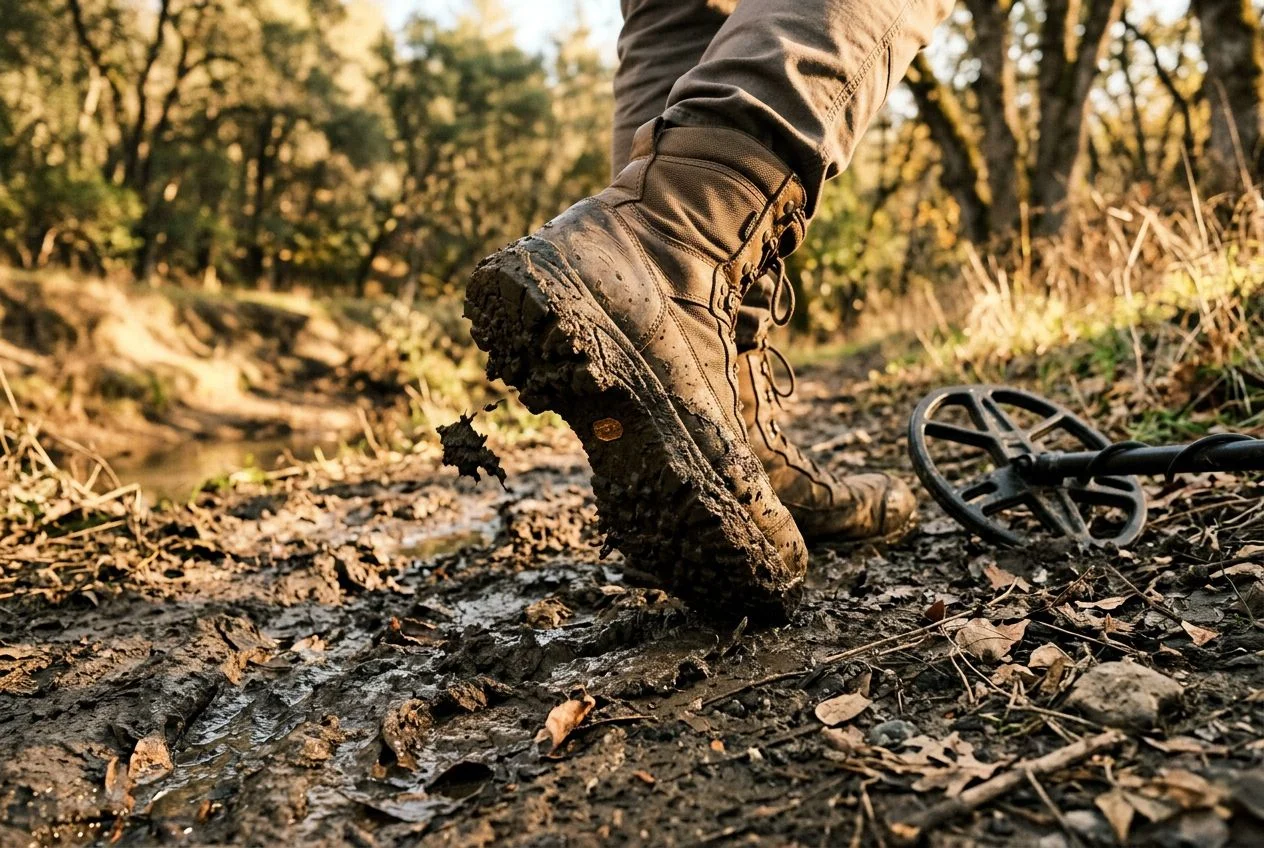
Your boots are your only contact with a hidden, underwater world. The right sole means the difference between a confident hunt and a sudden dunk. For slick, algae-covered rocks, felt soles have legendary grip but come with a downside. Modern rubber soles with cleats offer great traction and are easier to clean.
I learned this testing boots on slick Sierra granite. My old felt-soled boots gripped like Velcro on wet rock. My newer rubber-cleated pair needed more careful foot placement. But that grip has a cost, which I’ll get to.
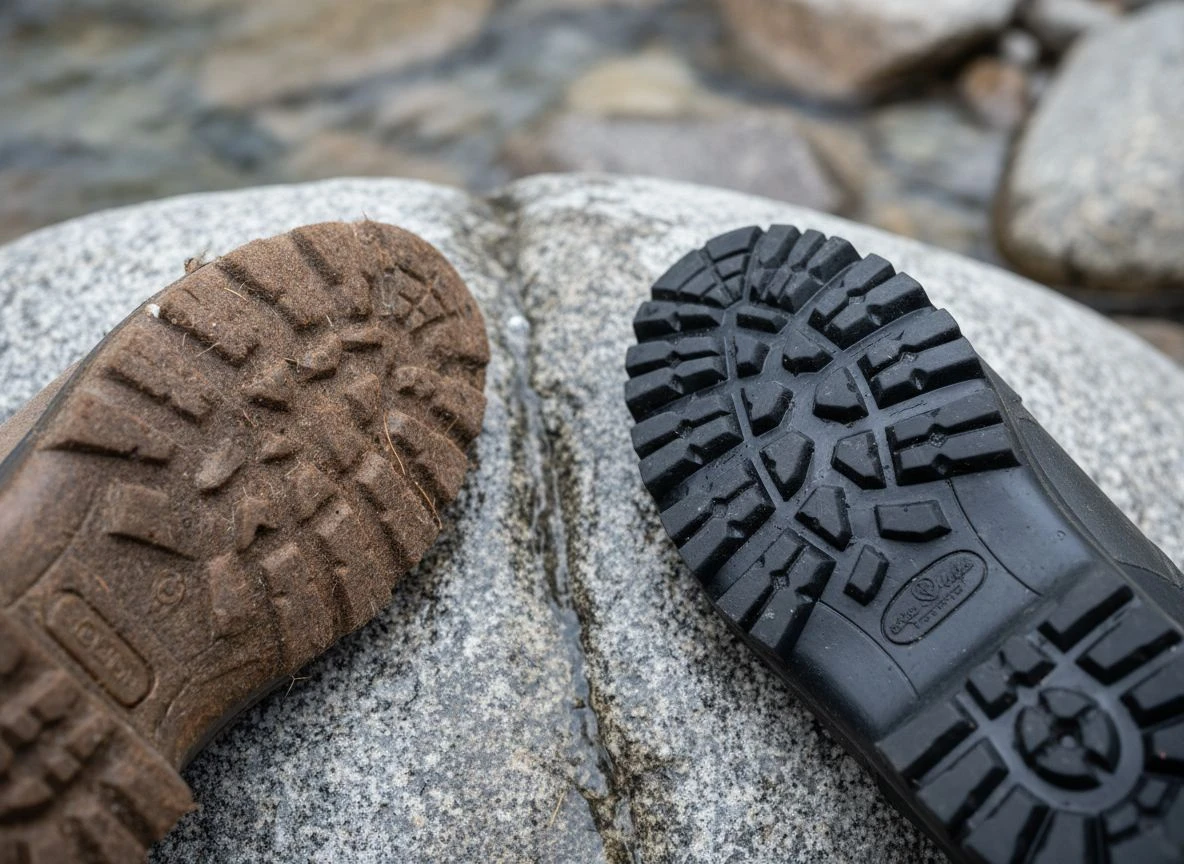
The felt vs. rubber debate is a trade-off. Felt soles are still the best for slimy, rounded river rock. Rubber soles with cleats or studs give excellent all-around traction and are tougher on trails. As a good wading guide notes, these rubber soles are a reliable choice for varied conditions.
Your boot’s fit is part of traction. A loose boot will shift and wreck your stability. A secure, snug fit makes sure the sole works with your foot.
Finally, learn to read the bottom. Avoid wading through lily pads or thick weeds. Experienced wade fishers warn the bottom there is often soft, deep muck. It can trap a boot and pull you off balance.
Choosing felt soles means accepting a big responsibility. You must prevent spreading invasive species. That’s so important it gets its own section next: Invasive Species Protocol: A Required Practice. It’s not optional.
Using a Wading Staff for Better Stability
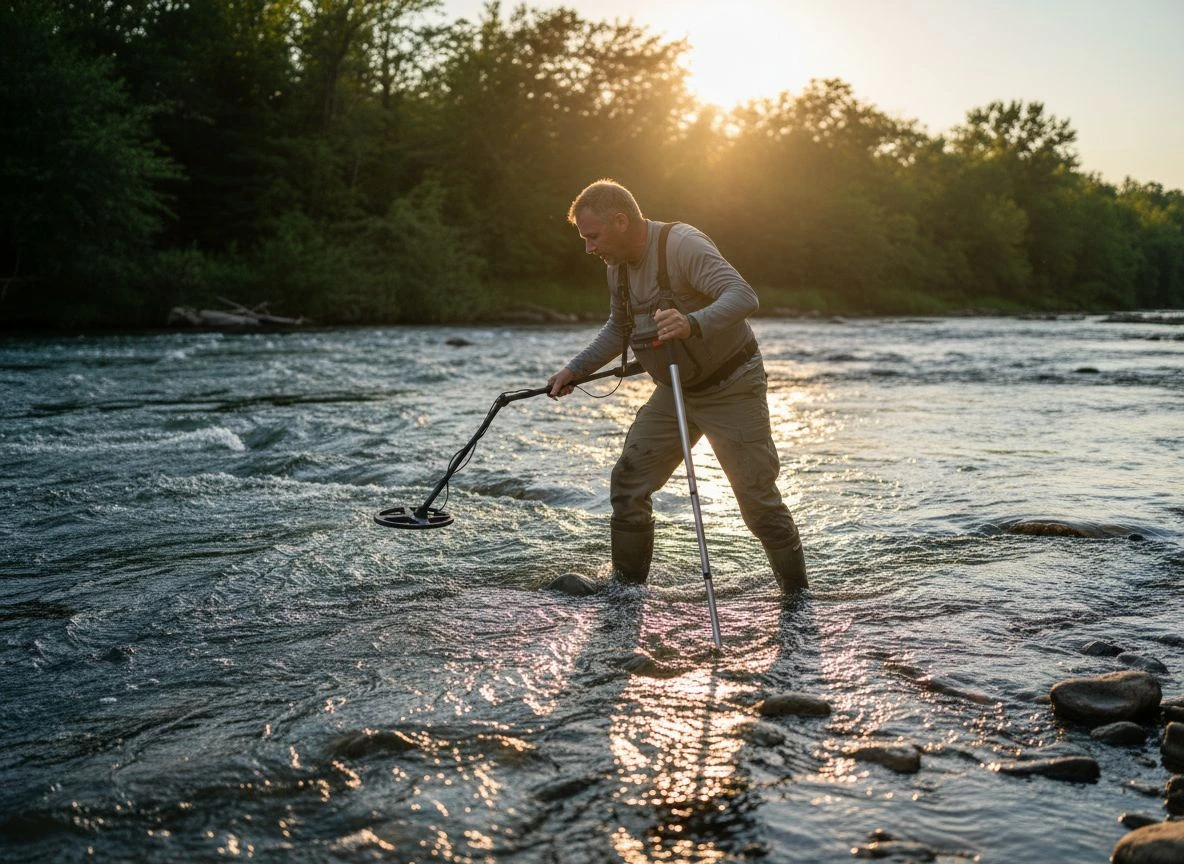
Short answer: A wading staff is a game-changer for tough conditions. It gives you a stable third leg to probe the bottom and brace against current. Use it in heavy flow, murky water, or any time your footing feels unsure. The right technique is simple: plant the staff on your downstream side, probe ahead, then step.
I don’t use a staff every time. On a calm lake with a sandy bottom, it’s extra gear. But in a river with strong current or muddy, silt-filled water, it’s a must. My buddy Mike waded for years without one. He finally got one after knee surgery. He now calls it his “cheat code” for staying upright.
The technique is specific. Always hold and plant the staff on your downstream side. This lets you lean into it against the current. The motion is probe, then step. Tap the riverbed ahead to find solid footing before you move. A key tip from seasoned anglers is to never walk backward. A retreating step is when you’re most likely to trip. If you need to go upstream, turn around carefully.
Think of the staff as a sensitive probe. It turns a risky crossing into a series of known, safe steps.
Organizing Your Gear and Tools on the Go
Your pack is your mobile base camp. For a quick two-hour trip, a waist pack with one waterproof pouch might be enough. For a full-day lake hunt, a vest or sling pack that keeps weight high and tight is key for balance. The goal is organization that doesn’t fight you mid-wade.
I learned this the hard way on the American River. I used an overloaded backpack. When I needed my pliers, I had to shrug the whole thing off in chest-deep current. It was a clumsy mess. Now, I match the pack to the mission.
For short trips, a minimalist chest or waist pack is perfect. It holds the essentials—a multi-tool, a small dry bag, spare parts. For all-day adventures, I prefer a sling pack. It carries more but lets you swing it to your front to get gear without taking it off. This keeps your balance secure.
No matter what you choose, organization is key. Your “grab-and-go” kit should be muscle memory. Mine lives in a specific pocket: a Leatherman multi-tool, a spool of tippet, a zip-top dry bag for my phone, and a small flashlight.
Accessibility is everything. You shouldn’t be unpacking on a slippery rock. Here’s my 5-minute pack check: lay out my core kit, load it in the same pocket, then practice reaching for each item with the pack on. If it’s a fight on dry land, it’s a hazard in the water.
Wading Tactics for Rivers and Currents
Short answer: You move through current with a deliberate, defensive stance. Use slow, sideways “crab steps” to keep balance. Always cross at an upstream angle to reduce the force on your legs. Have an exit plan for sudden water rises. The golden rule: get into position before you start detecting.
Wading a river is chess against physics. I treat every crossing as a series of planned, stable positions. The key move is the crab-like step. You sidle sideways, planting one foot solidly before moving the next. This keeps your center low and your legs braced against the flow.
My buddy Tom learned this the hard way on the Yuba. He was focused on a spot and took a direct step into a deeper channel. The current hit him broadside at thigh-level. His downstream foot slid off a rock. He caught himself with his staff, but it was a close call. The river doesn’t care about your target.
Always cross at an angle, quartered upstream. This makes your body a narrower profile to the flow. It uses your leg strength to push against the water.
Your pre-wade scout should find the slowest, shallowest crossing point. But have a backup. Watch for sudden water rises from upstream dam releases. This is a real danger on many rivers. If the water color changes or you feel a surge, get to shore fast. The best tactic is useless if you’re caught mid-river when the flow doubles. Get to your spot, plant your feet, then hunt. The find is your reward for a safe crossing.
Wading Strategies for Lakes and Soft Bottoms
Short answer: Lake wading trades pushing current for pulling bottoms. Your main hazards are soft, silty bottoms that trap boots and sudden drop-offs. A wading staff for probing and a PFD are non-negotiable here. A fall in deep lake water with filled waders is a silent, severe emergency. This is a major risk for underwater metal detecting freshwater lakes.
Lakes trick you into feeling safe. Without a current, you just want to walk out. That’s a mistake. The flat surface hides a variable bottom. One step you’re on gravel. The next you’re sinking into sediment like wet concrete. I give lily pad beds and weedy edges a wide berth for this reason. The bottom there is almost always soft muck that will swallow a boot. Avoid lily pad areas due to soft, mucky bottoms.
This is where your staff becomes a probe. Before you step, tap and push the staff tip into the sediment ahead. If it sinks in deep with little resistance, back up and find a new route. That silt creates suction. It can make pulling out a buried leg an exhausting struggle.
The other big lake risk is depth. Rivers warn you with current; lakes just drop away. I always wear chest waders here, as you routinely find deeper water than expected. This makes a PFD absolutely essential. If you trip and go under in a lake, there’s no current to push you to shallows. Filled waders will anchor you. A PFD turns a potential tragedy into a cold, embarrassing, but survivable swim back.
Ethical Wading and Stopping Invasive Species
Short answer: Your gear can spread ecological damage. Felt soles and mesh bags can harbor invasive species like mudsnails or didymo (“rock snot”). Treat a thorough clean-out as mandatory post-hunt maintenance. It’s a non-negotiable part of being a steward. Protecting waterways is a core duty for anyone doing underwater metal detecting freshwater.
I learned this after a trip to a Sierra stream with Tom. We found great old lures. But a week later, I found a tiny, weird snail on my finds pouch. A local biologist confirmed it: a New Zealand mudsnail. One female can clone herself and wreck local insect life. I’d almost become an accidental invader.

Now, my post-wade clean-up is as serious as checking my belt. The drill takes three minutes: Inspect, Remove, Brush, Spray.
Keep a stiff brush and a spray bottle in your car. Use a 10% bleach/water mix or a product like AQUA-SOL. First, inspect all gear for debris and weeds. Remove them on the spot. Then, brush everything down—boot soles (especially felt), waders, bags. Finally, spray all contacted surfaces and let it sit.
This isn’t optional, feel-good advice. In many places, it’s the law. Our hobby needs healthy ecosystems. Make this three-minute clean-up part of your ritual. It’s the most important piece of gear you never pack.
Building Your Water First Aid Kit
Short answer: Your standard hiking kit won’t work. Wading creates unique problems: blisters form fast on wet skin, cuts get infected quickly, and a cold fall risks hypothermia. A dedicated, waterproof kit is the final, non-negotiable piece of your system.
I learned this on the Feather River. A tiny hotspot on my heel, ignored at the truck, became a huge blister after two hours in damp socks. I was hobbled. The hunt was over. It was a stupid, preventable end to a perfect day. Now, I never step in without a small, waterproof pouch stocked for wading’s specific miseries.
The must-haves go beyond bandaids. Hydrogel blister pads are a miracle on wet skin. Waterproof tape and bandages actually stay on. Antiseptic wipes are critical for cleaning scrapes before they get infected. I always pack a compact emergency blanket. If you fall in cold water, early hypothermia (shivering, confusion) can set in fast (Source 2). This is your first defense. A tick removal tool is small and vital for brushy shores. Finally, throw in spare, dry socks. Treating a blister is pointless if you put a wet sock back on.
It’s the least glamorous part of your kit. But when you need it, nothing else will do.
Assembling Your Ultimate Wading Toolkit
Short answer: Your wading toolkit isn’t a fixed list. It’s a modular system. Start with the Core Safety Module (belt, glasses, whistle). Add your Wading System (waders or wet-wading gear). Then, pick your Environment Module for lakes (PFD, silt strategy) or rivers (staff, cleats). Finally, commit to the Ethics Module (invasive species clean-up). This way, you’re never overpacked or underprepared.
Remember this from the research: No fish is worth the risk of drowning; be prepared to retreat if uncomfortable. That’s the whole point. We obsess over belts and traction so a hunt for history doesn’t become a fight for footing.
For me, this preparation is freeing. When my kit is dialed, I can stop worrying about survival. I can focus on the joy of the hunt: reading the water, working a gravel bar, feeling that solid thunk under my coil. It’s about the history, not the hassle. But that only happens with the right foundation. Start with safety. Build for your environment. Always respect the water. This mindset is key for successful underwater metal detecting freshwater.
What’s the one piece of gear or hack in your wading toolkit you swear by? I’d love to hear what works for you. Let me know in the comments.

My name is Paul and I am the founder of Detector For Metal, a dedicated resource for metal detecting enthusiasts seeking to uncover historical treasures and connect with the past using the latest technology. As a stay-at-home dad and family man, I’ve found metal detecting to be the perfect hobby that combines family adventure with historical learnings for the whole family.
As a father, I’m deeply committed to passing on this hobby to the next generation of detectorists, starting with my own children. I share advice on everything from metal detecting with kids to exploring the top 10 metal detecting sites you never thought about. My methodical approach to the hobby goes beyond the thrill of discovery—it’s about creating family traditions while preserving history and sharing the stories of those who came before us.