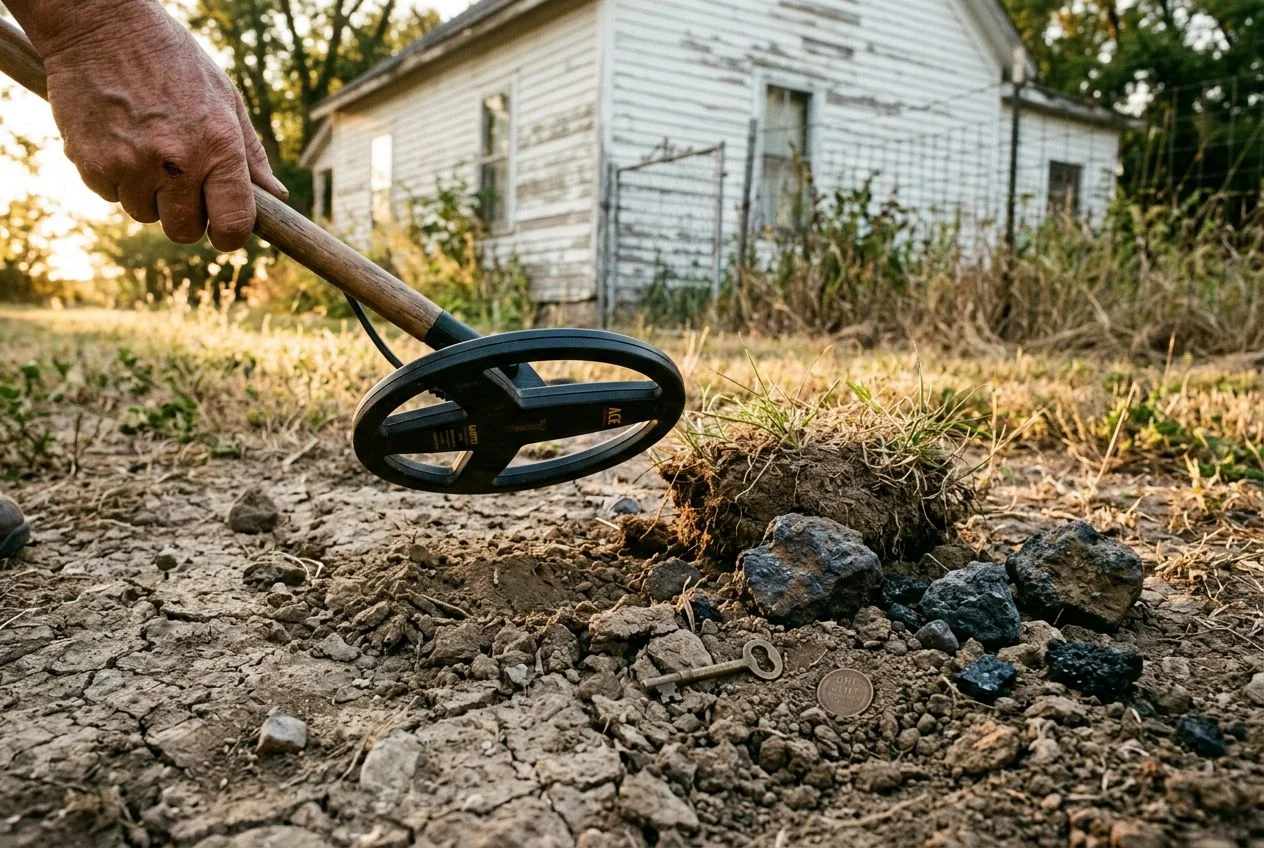
Six months into metal detecting, I’d found very little worth keeping. Just bottle caps. Lots of bottle caps. And pull tabs. I was this close to listing my detector on Craigslist.
Then I met Earl at a club meeting. He’s 67, weathered as an old oak, and he casually drops this bombshell: he’d just found four Indian Head pennies and a Seated Liberty dime. That weekend. In the middle of nowhere. In a forest.
“Wait… how do you even find old homesteads for metal detecting?” I asked, probably sounding desperate.
Earl grinned. “Simple. Learn to read what the landscape’s telling you. The woods remember everything maps forget.”
That five-minute conversation changed my entire approach to treasure hunting.
- Why Abandoned Homesteads Are the Best Metal Detecting Locations
- The Iron Mask Challenge at Old Homestead Sites
- How to Find Old Homesteads: Maps and Visual Clues Work Together
- 5 Visual Clues to Forgotten Homesteads (What to Look For)
- Combining Multiple Clues for Successful Homestead Detection
- Research Tips for Locating Forgotten Homesteads (Getting Permission)
- Metal Detecting Laws and Safety at Historical Sites
- Why Relic Hunting at Abandoned Homesteads Changes Everything
- How to Find Old Homesteads for Metal Detecting: Your Action Plan
- References
Why Abandoned Homesteads Are the Best Metal Detecting Locations
Here’s what nobody tells beginners: the best metal detecting sites aren’t the obvious places. Not parks. Not beaches. Not even those farm fields everyone brags about.
The real goldmines? Forgotten homesteads buried under 100 years of forest growth. Or standing invisible as ghosts in active farmland.
The math makes perfect sense once you think about it. Historical sites like old homesteads give you three magic ingredients: people living there for decades, tons of outdoor activity, and almost zero disturbance since. Time plus people equals treasure. Simple as that.
Think about life before air conditioning existed. Families spent entire days outside. Every day meant trips to the well. Walks to the outhouse. Moving between buildings. Washing clothes in the yard. Kids playing in the dirt. Each activity meant chances to lose coins, buttons, jewelry.
And here’s the kicker: unlike city parks that get hunted every single weekend, many abandoned farms haven’t seen a metal detector in decades. Some have never been hunted at all.
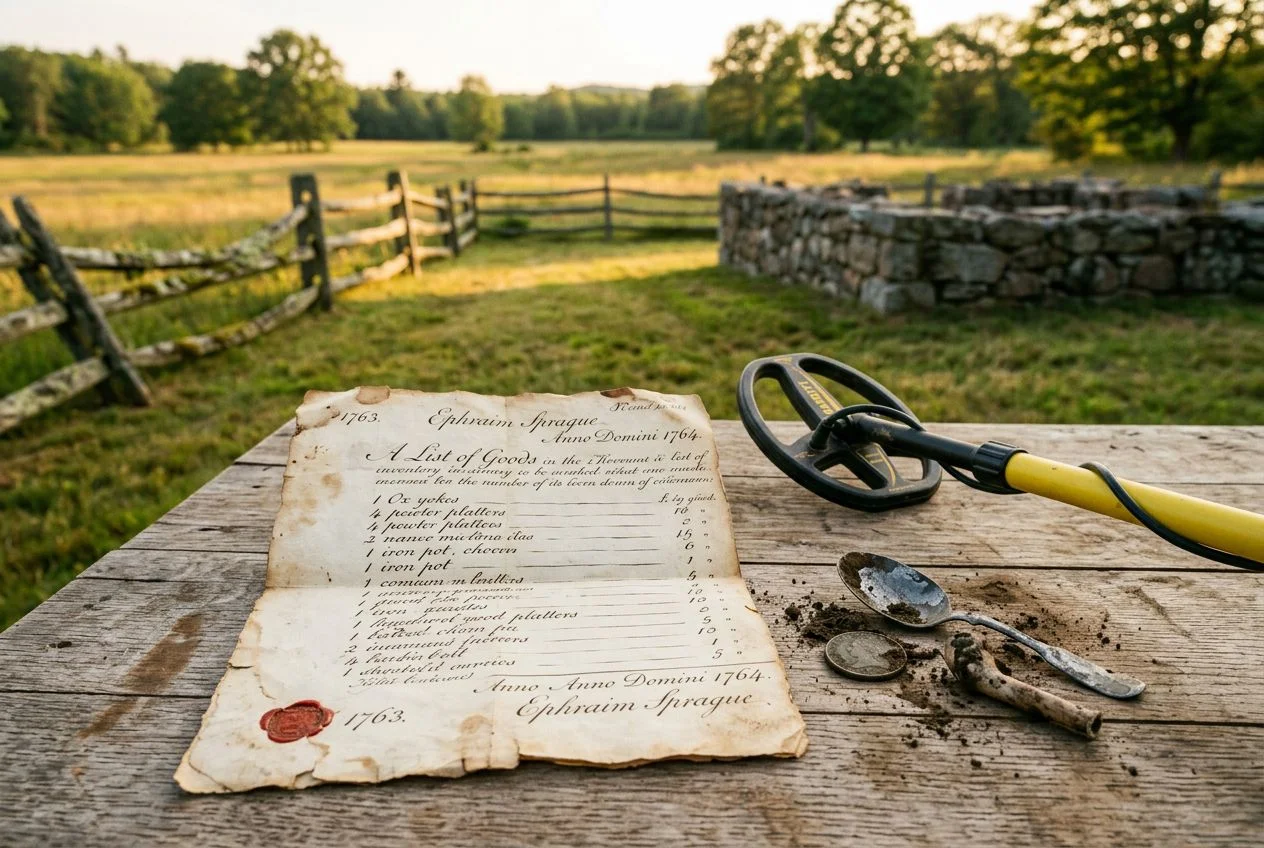
The Homestead Act (1862-1976) handed out 270 million acres across America.[6] That created 1.6 million documented homesteads. Peak activity hit between 1900-1930. These historical homestead locations still hold Indian Head pennies, Seated Liberty silver coins, Barber coins, Morgan dollars, Buffalo nickels, Civil War buttons, and engraved gold jewelry.
The problem? These abandoned homesteads stay invisible unless you know the visual signs of old home sites. Buildings crumbled a century ago. Maps put dots fifty yards off. You could walk past productive treasure hunting locations completely blind to the landscape clues screaming “dig right here!”
The Iron Mask Challenge at Old Homestead Sites
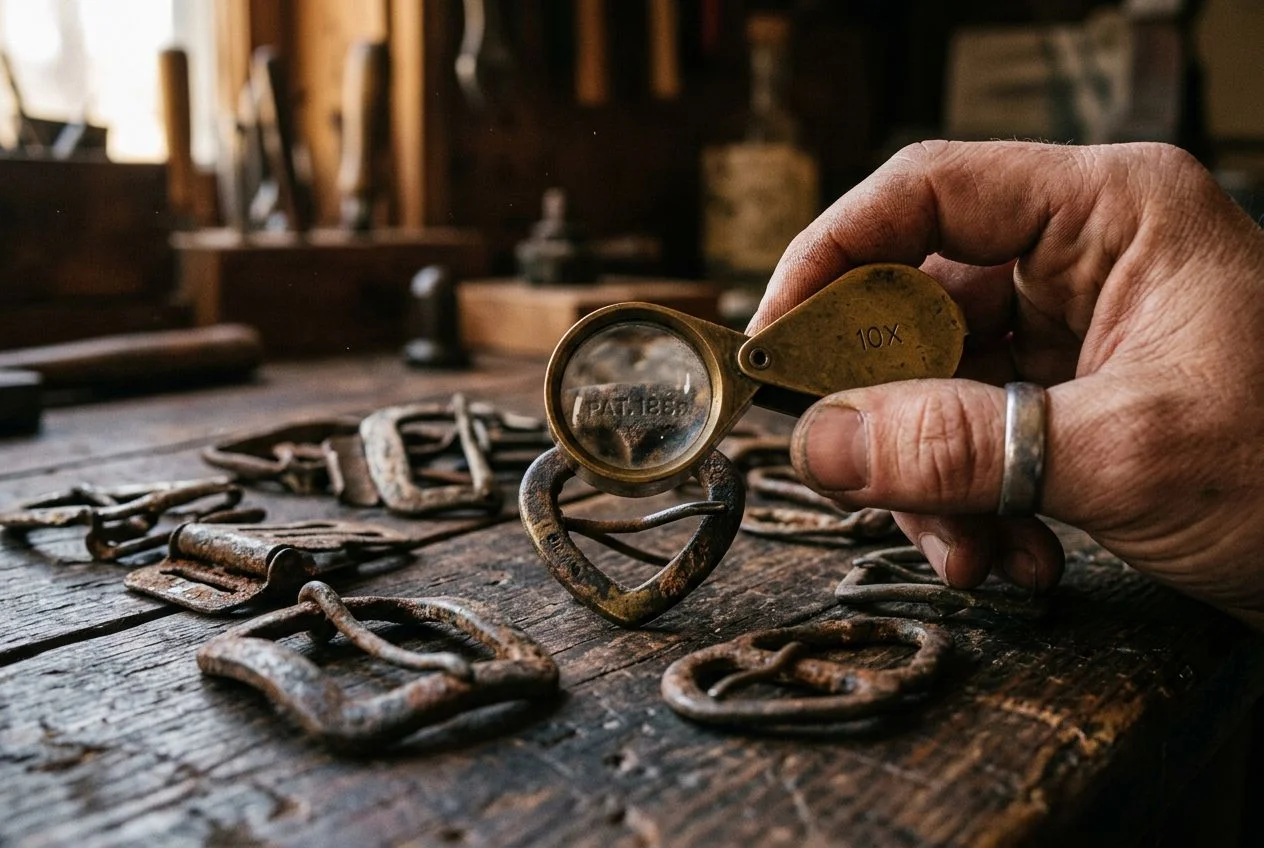
Let me be straight about what you’re walking into. Old house sites are absolutely packed with iron trash. Hand-forged nails everywhere. Stove parts. Tin roofing. Wire. This creates what we call an “iron mask”—basically, all that junk hides the good targets like coins and buttons.
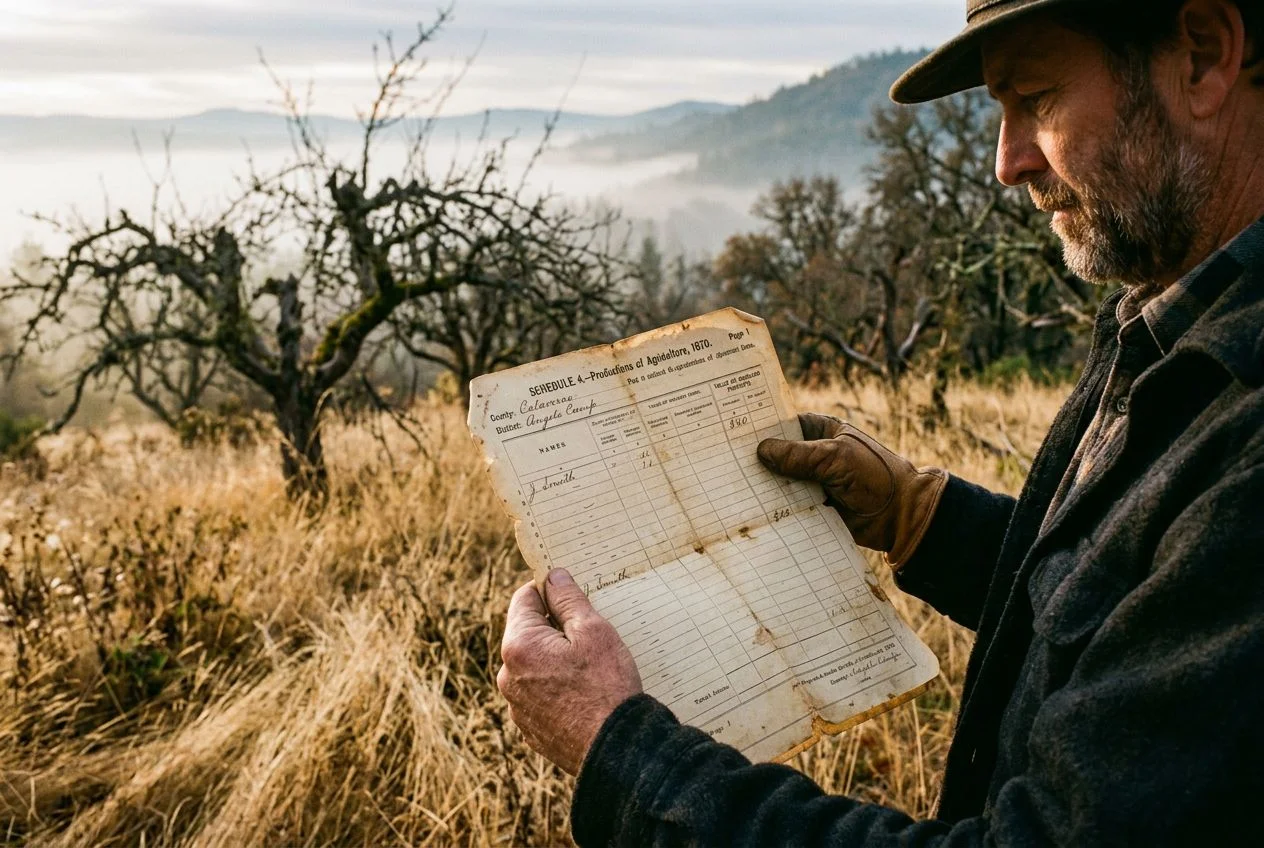
I spent three hours at my first homestead site digging nothing but square nails. Nothing else. Just nails. My buddy Tom showed up, swung his detector for twenty minutes, and pulled a 1902 Barber dime from six inches down. Same exact site. Same general area. Completely different results.
What made the difference? Tom understood old homestead detection techniques,[7] especially the “Triangle of Treasure.” That’s the connection between the house foundation, water source, and outhouse. He focused on the pathways linking these three points. The high-traffic zones where people actually dropped stuff while going about their daily lives.
That’s why visual clues for forgotten homesteads matter so much. They don’t just help you find homestead sites. They show you exactly where to hunt within those sites.
How to Find Old Homesteads: Maps and Visual Clues Work Together
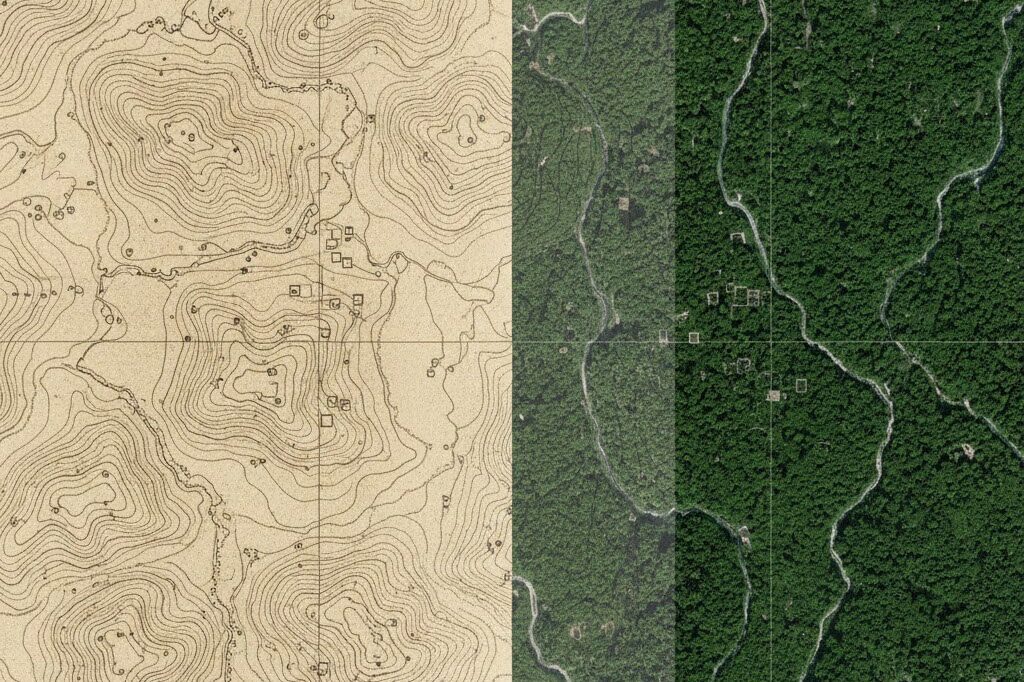
I do something most people find weird: I spend Sunday mornings at my local historical society. Looking at dusty old maps from the 1800s. Those tiny black squares on maps from 1900? Each one marks a structure.[1] When I cross-reference those with modern satellite images and see only forest, boom—I’ve got a high-probability target.
Modern technology makes this almost too easy now. LiDAR literally strips away the trees digitally, revealing old foundations you can’t see from the ground.[2] HistoricAerials.com shows you ghost outlines of buildings from aerial photos taken in the 1930s.[5] Apps let you overlay those historical maps right onto your phone’s GPS.
But here’s where most people screw up completely. They treat those old maps like modern GPS coordinates. Drive to the exact spot. Swing the detector for twenty minutes. Find zilch. Give up forever.
The problem? Mapmakers in 1900 didn’t have laser precision. That dot marking a homestead could be fifty yards off in literally any direction.
This is where landscape clues for metal detecting locations become absolute game-changers. Maps get you to the right general area. Then you pocket your phone and start actually looking at the woods around you. Daffodils blooming in March where they shouldn’t be. Rectangular dips in the ground. Stone wall patterns. Those visual signs pinpoint the actual abandoned homestead.
5 Visual Clues to Forgotten Homesteads (What to Look For)
Visual Clue 1: Daffodils and Ornamental Plants Mark Old Home Sites

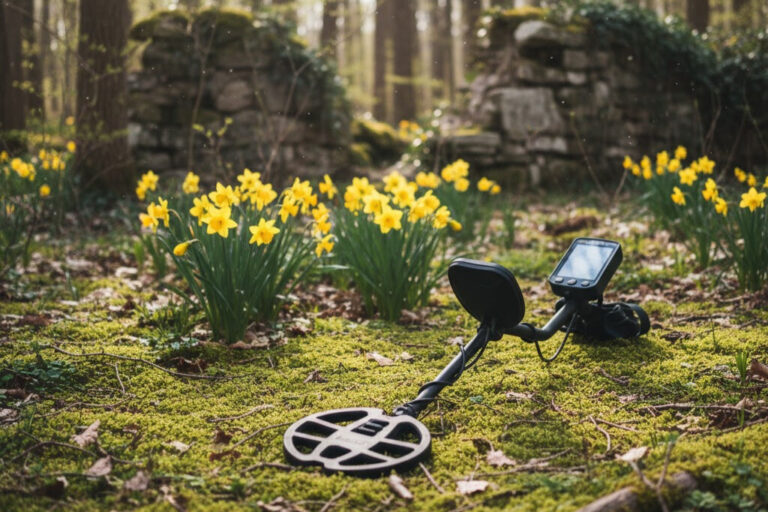
April in the woods. Dense trees everywhere. Then suddenly, 100 feet ahead, I spot these bright yellow flowers just glowing against the brown background.
Earl barely glances up. “Bingo,” he says, like we just hit the jackpot.
Here’s the thing that changes everything about finding historical home sites: daffodils don’t belong in American forests. At all. They came from Western Europe. So when you see them growing wild in the woods? Someone planted them there. On purpose. Probably 100+ years ago.
These little survivors are absolute tanks. They don’t need anyone to water them or care for them. Deer won’t touch them. They just keep blooming, year after year, long after the people who planted them are gone.[7]
Expert treasure hunting guides rate daffodils at 95% reliability for spotting abandoned homesteads.[8] That spring bloom makes them visible from crazy distances. Those bright yellow patches basically scream “Hey! Dig here!”
Other plants that mark old home sites:
- Lilac bushes (people planted them by front doors)
- Day lilies (usually around the outhouse)
- Old apple trees standing among maples (marks the orchard)
- Yucca plants if you’re hunting in the South
The combo Earl taught me? Lilac by the door, day lilies around the outhouse, apple tree where the orchard was. Find all three, and you’ve definitely found a homestead.
Visual Clue 2: How to Identify Old Foundations and Cellar Holes
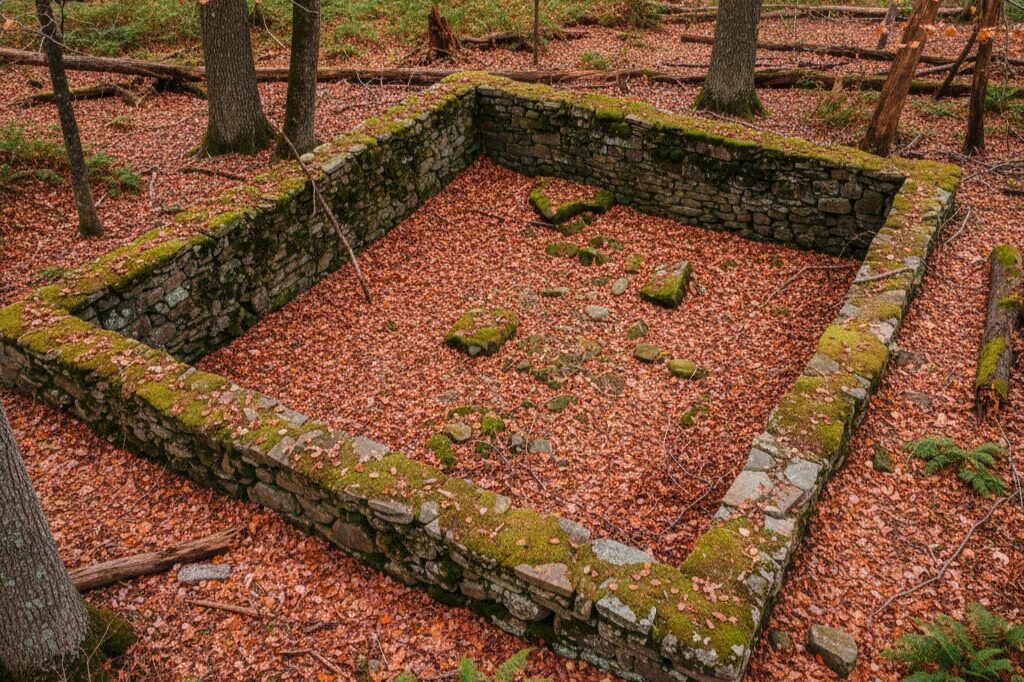
Wood rots. Stone doesn’t. That’s why identifying old homestead foundations works so well even a century later.
Old foundations show up as rectangular dips in the ground. Usually about 12 by 18 feet for really old sites from the 1700s. They’re lined with carefully stacked fieldstone. Sometimes the stones have mortar. Sometimes they’re just stacked dry.
I found my first cellar hole hiking in New Hampshire. The leaves had just dropped. Suddenly there it was—this perfect rectangle in the forest floor. Twenty feet long, fifteen wide, with stone walls still standing three feet high in spots.
Inside the foundation? Iron signals absolutely everywhere. Nails. Hinges. Stove parts. The whole nine yards. But outside, in what used to be the front yard? Two Wheat pennies. A Buffalo nickel. And what I’m pretty sure is a Civil War button.[7]
Pro tip for metal detecting at forgotten homestead sites: Hunt outside the cellar hole. Right near where the front entrance would’ve been. That’s where people lost stuff during everyday life. The inside has all that structural iron, but it’s also got potential hiding spots and domestic items.
Look for wells too. They’re circular pits lined with stone, usually somewhere near the foundation. In farm fields where plows smashed everything, you’ll see dense patches of brick pieces, broken pottery, and old glass. That’s your “field clue” pointing straight at a demolished home.
Visual Clue 3: Leveled Ground and Terracing Reveal Homestead Locations
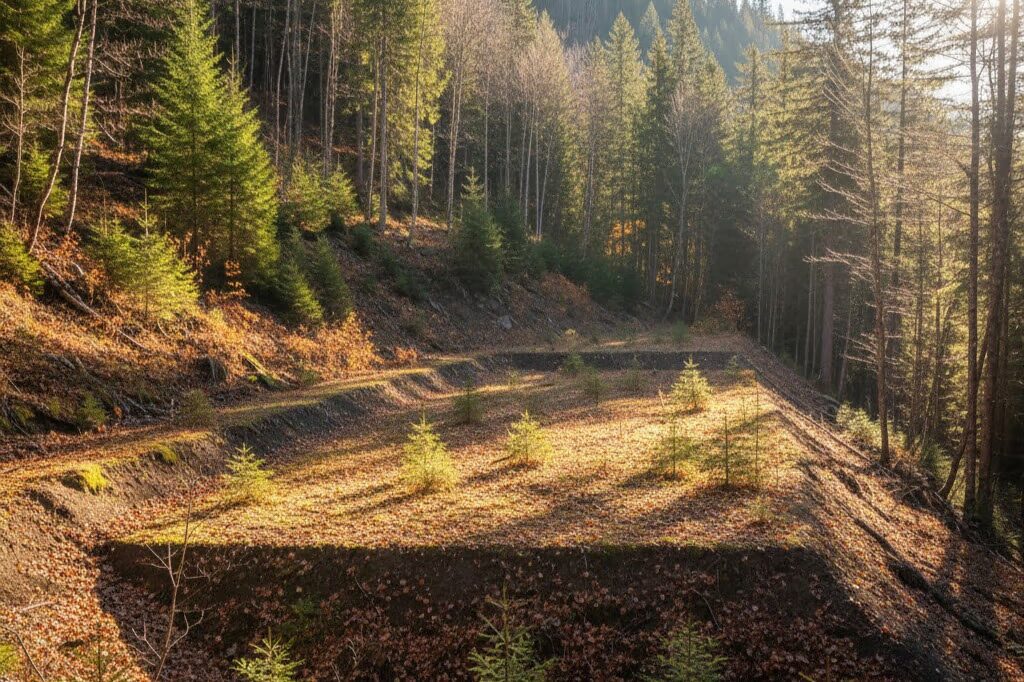
Nature does curves. Nature does slopes. Nature does not do perfectly flat rectangles on the side of mountains.
Earl stops dead on this Vermont mountainside. Points at what looks like totally normal forest to me. “See that flat spot?”
I don’t see anything. Then he traces it out with his finger. A perfectly level bench cut right into the slope. Maybe 30 by 40 feet. Completely, impossibly flat in an area where literally everything tilts.
What to watch for when hunting productive metal detecting spots:
- Flat areas where physics says there should be a slope
- Sudden level changes that look too perfect
- Earth mounds sticking up in otherwise flat prairie fields
- Raised strips marking where buildings once stood
Visit potential sites in early spring before plants take over. Or late fall after the leaves drop. Light snow is amazing for this—it highlights every tiny variation in the ground that’s invisible during summer.
Visual Clue 4: Stone Wall Patterns for Finding Abandoned Farms
New England alone has something like 240,000 miles of stone walls. That’s enough to wrap around the entire planet ten times. Seriously.
So the question isn’t “Is there a wall?” Because walls are literally everywhere in the Northeast. The real question is “What’s the wall pattern telling me?”
Look for wall openings. Those mark old gates. Notice where walls form right angles or create enclosed boxes. Those were pastures, gardens, family yards. Multiple wall types intersecting? That means serious long-term use at these historical sites.
I learned this one the hard way in Connecticut. Found a cellar hole with a stone wall running past it. Hunted all the obvious spots around the foundation. Got absolutely nothing. Came back with Earl the next week.
He points at a wall opening maybe 40 feet away. “That was their gate. Hunt the pathway between there and the house.”
Five minutes later, I’m holding an 1897 Indian Head penny.
Expert move: Follow those walls away from the main foundation. They’ll lead you to barns, springhouses, smokehouses. People worked at those spots too. Dropped stuff there too.
Visual Clue 5: Old Trees That Signal Productive Detecting Spots
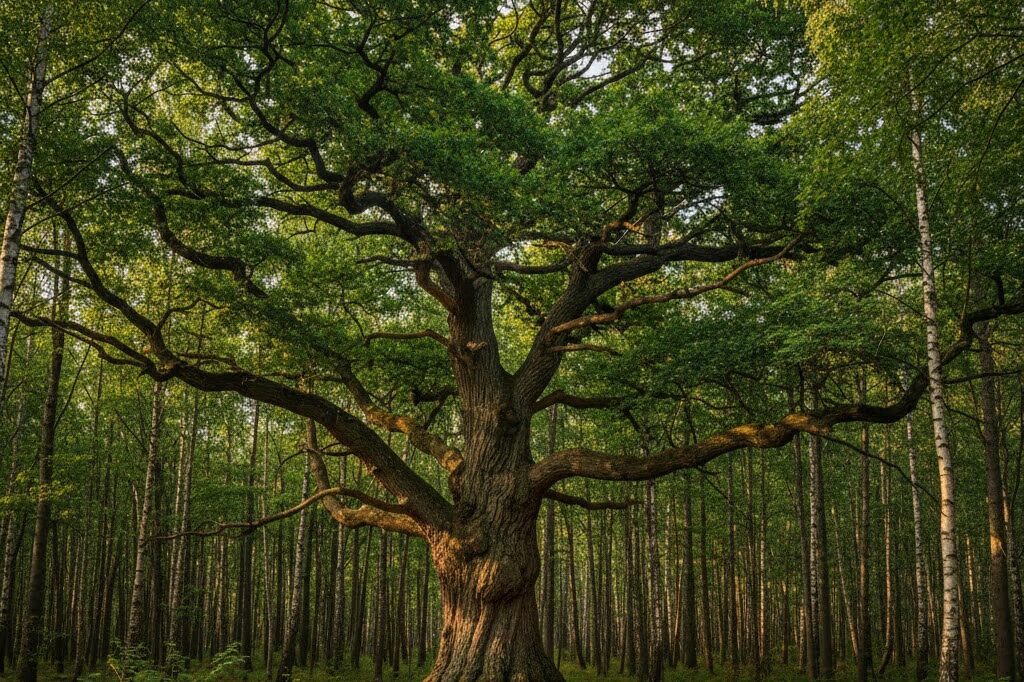
This one separates casual weekend warriors from serious relic hunters. You’ve got to understand how forests change and spot trees that absolutely shouldn’t be where they are.
Trees that scream “homestead”:
Big loners: A single massive oak standing in the middle of younger forest. Way, way bigger than everything around it. That was a yard tree. Families sat in its shade for hours. Everything in their pockets fell right at its base. Hunt in a circle around where the branches spread out.
Apple trees in hardwood forests: Apples don’t naturally grow wild in dense woods. Someone planted an orchard right there.
Black locust clusters: People planted these on purpose because the wood resists rotting. Perfect for fence posts. Find a bunch of black locust, you’ve found the old barnyard.
My absolute best find ever came from this clue. I was metal detecting at a Pennsylvania homestead, spotted this enormous oak maybe 60 feet from the foundation. Easily 200 years old. Trunk six feet across. Standing completely alone while all the surrounding trees were younger and packed together.
I hunted a 20-foot circle around that tree. Found three Seated Liberty dimes. An 1876 Indian Head penny. And a gold wedding band with “Sarah 1889” engraved inside.
Combining Multiple Clues for Successful Homestead Detection
Here’s Earl’s secret: one weird thing might be random chance. But multiple indicators together? That’s certainty.
You’re hiking. You spot daffodils blooming in April near a flat area on a slope. Interesting. You walk closer. There’s a rectangular depression lined with stone. A cellar hole. Nearby stands this massive oak, twice the size of every other tree around. Stone walls cross near the site.
That’s not coincidence. That’s an abandoned homestead. 95%+ confidence. One of the absolute best places to metal detect for relics.
Research Tips for Locating Forgotten Homesteads (Getting Permission)
Look, I’m going to be straight with you. Research equals results. Period. And most of that research happens sitting at a desk or in a dusty library, not out in the field swinging a detector.
One Sunday per month, I’m at my local historical society. Looking through old county atlases from the 1870s-1920s. These aren’t just maps—they show the actual names of who owned what land.[3] This lets me trace property history. Sometimes I can even track down descendants of the original homesteaders.
I use Bureau of Land Management records to dig up original homestead claims.[3] Who filed. When they filed. Where exactly they settled. Modern apps let me overlay all these old maps right onto my phone’s GPS. It’s honestly kind of mind-blowing.
But here’s the reality check: the absolute best metal detecting sites are on private property. That gorgeous homestead you found on a mountainside? Somebody owns that mountain. The forgotten farm in the valley? Still part of someone’s land, even if they haven’t walked back there in 30 years.
Getting permission has become an art form for me. I approach landowners professionally. I bring printed copies of historical maps showing their property. I explain that I’m genuinely interested in local history, not just treasure. I promise to document and share what I find. I make it crystal clear I know all the legal stuff and take it seriously.[9][10]
My success rate? Maybe 40%. But that 40% has produced more amazing finds than five straight years of hunting public parks ever did.
Metal Detecting Laws and Safety at Historical Sites
Old wells at abandoned homesteads are legitimately dangerous. Like, fall-in-and-die dangerous. Always probe any suspicious depression with a long stick before getting close. Old foundations can have walls that collapse without warning. And all that rusty iron you’ll be handling? Keep your tetanus shots current. Trust me on this.
The legal stuff you can’t ignore:
The Archaeological Resources Protection Act (ARPA) protects sites over 100 years old on federal lands.[9] That’s not a suggestion. That’s federal law with actual penalties. National Forest regulations restrict metal detecting in tons of areas.[10] State laws are all over the map—what’s perfectly legal in one state might be a felony across the border.
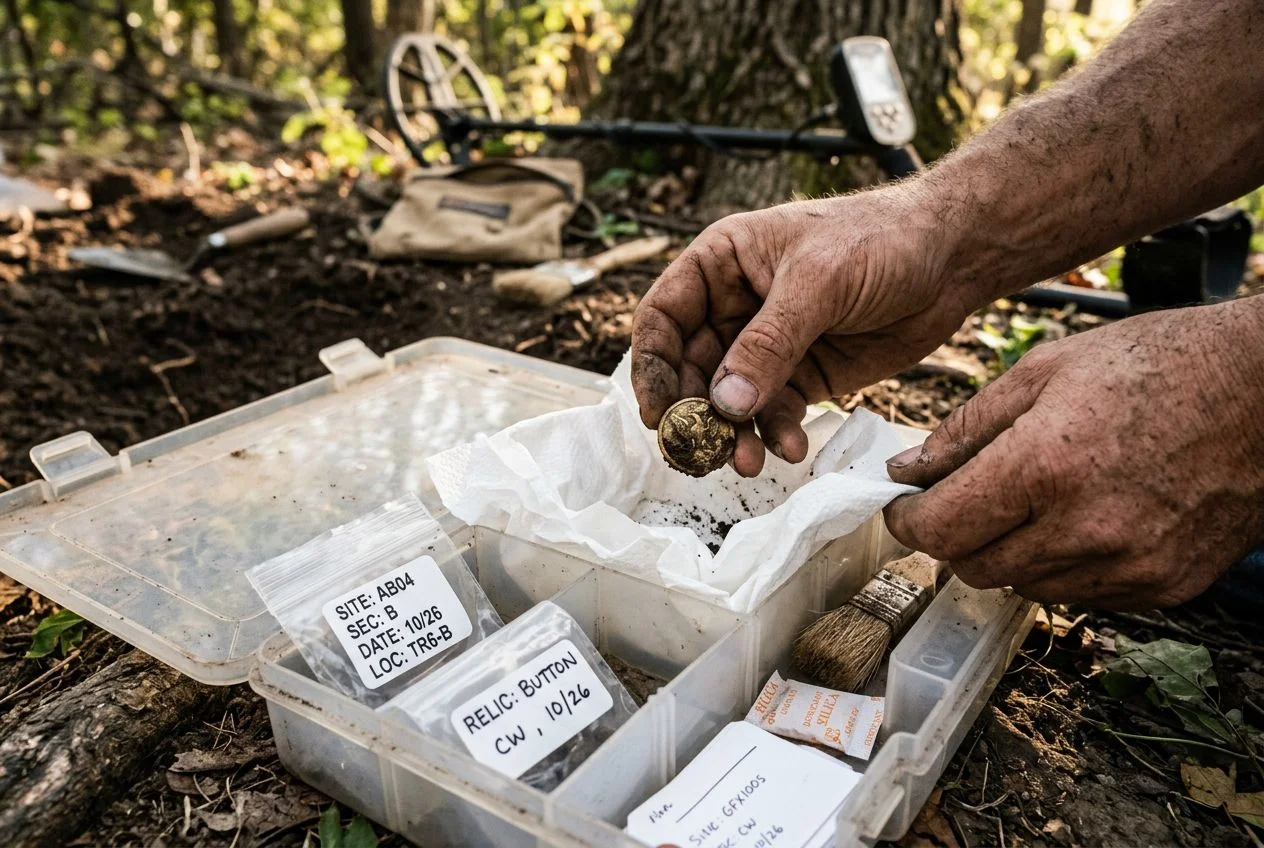
Basic ethics for relic hunting: Fill every hole you dig. Pack out all your trash. Don’t damage living trees or plants. If you find something truly significant at historical sites, share that info with local museums or historical societies. We’re not just treasure hunters. We’re amateur historians preserving pieces of the past.
Why Relic Hunting at Abandoned Homesteads Changes Everything
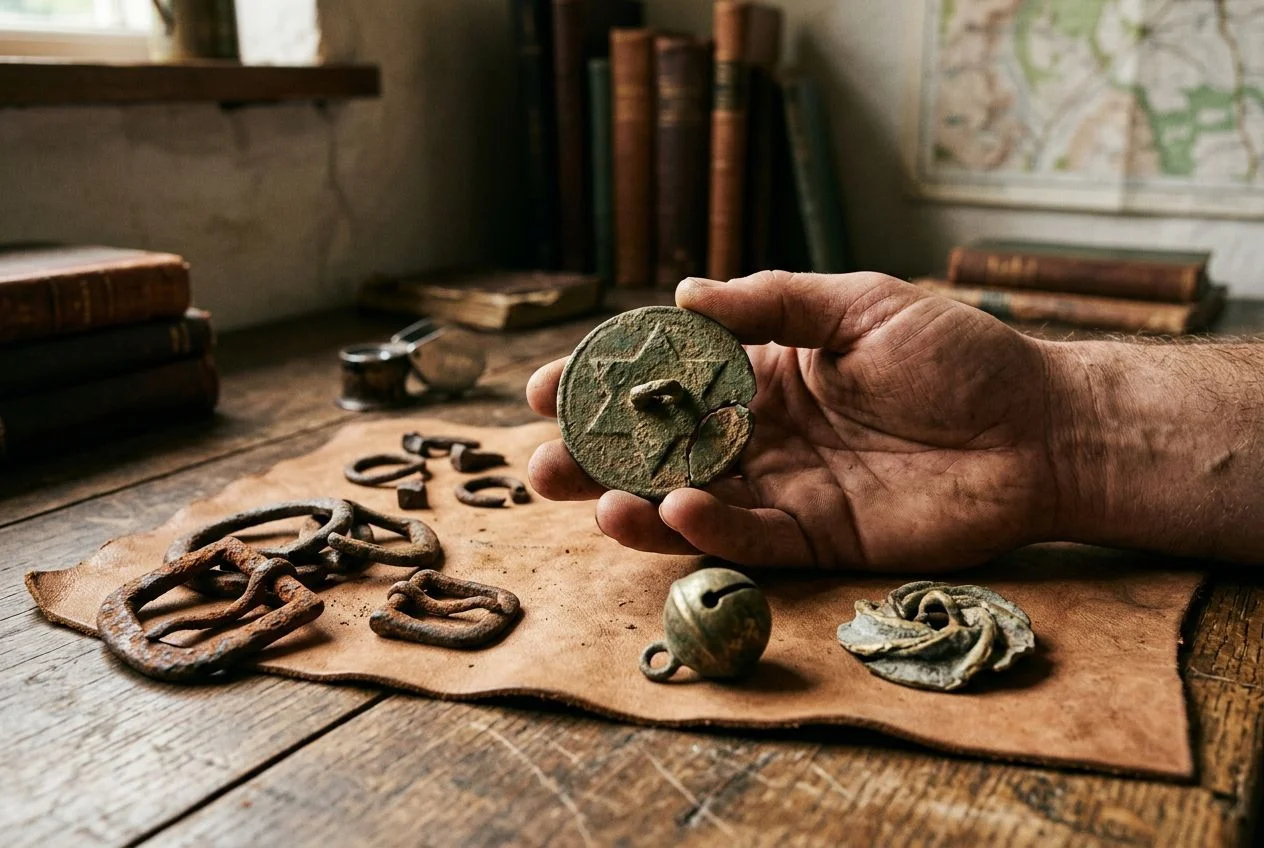
Two years ago, I was this close to selling my metal detector and calling it quits. Now? I’ve found over a dozen productive abandoned homestead sites using these exact techniques.[7][8] My personal tally includes 47 Indian Head pennies, 23 Seated Liberty and Barber silver coins, 8 Buffalo nickels, a gold locket with an actual photo still inside, and more buttons and relics than I can count.
But here’s what really hooks you about relic hunting at forgotten homesteads: every single find connects you to actual people who lived actual lives.
That 1889 wedding band I mentioned? I spent two months digging through county records. Found her. Sarah Elizabeth Morrison. Married James Whitmore in 1889 when she was just 19. They had seven kids. Worked that mountain farm for 42 years. I found her ring under the oak tree where her family probably gathered on summer evenings over a century ago.
That’s not just treasure hunting. That’s literally holding a piece of someone’s life story in your hand.
How to Find Old Homesteads for Metal Detecting: Your Action Plan
Alright, enough reading. Time to actually do something.
This weekend, visit your local historical society or library. Ask to see county maps from 1870-1920. Look specifically for small black squares in areas that are forest now. Pick one site within an hour’s drive of your house.
Visit that spot in early spring or late fall when visibility is best. Walk the area slowly. Really look at what’s around you. Search for these five visual clues:[7][8]
- Daffodils or other planted flowers blooming where they shouldn’t be
- Stone foundations, cellar holes, or circular well pits
- Flat ground or obvious terracing on slopes
- Stone walls with openings or intersections
- Huge old trees standing alone, or apple trees in hardwood forests
Find three or more of these indicators in the same spot? Congratulations. You’ve found an abandoned homestead. Probably one of the best places to metal detect for old coins and relics in your entire area.
If it’s private land (and it probably is), knock on doors and ask permission. Be professional. Be honest. Be respectful. Then hunt smart using the techniques from this guide. Focus near the front entrance. Around big shade trees. Along the pathways between the house, well, and outhouse.
Remember this: maps get you to the general area. Your actual eyes and brain pinpoint the exact target. The landscape remembers absolutely everything that maps forget.
Stop reading. Start looking. Forgotten homesteads are literally hiding in every single county in America. Just waiting for someone who knows how to spot the signs and read the landscape’s secret language.
Happy hunting—may your signals be solid and your finds tell amazing stories. 🔍
References
- U.S. Geological Survey. “TopoView – Historical Topographic Map Collection.” https://ngmdb.usgs.gov/topoview/
- U.S. Geological Survey. “LidarExplorer – The National Map.” https://apps.nationalmap.gov/lidar-explorer/
- Bureau of Land Management. “General Land Office Records.” https://glorecords.blm.gov/
- Library of Congress, Geography and Map Division. “Sanborn Fire Insurance Maps Collection.” https://www.loc.gov/collections/sanborn-maps/
- HistoricAerials.com. “Historical Aerial Photography and Topographic Maps.” https://www.historicaerials.com/
- National Archives and Records Administration. “Homestead Records.” https://www.archives.gov/research/land
- Metal Detecting World. “How to Find and Hunt Colonial Cellar Holes.” https://www.metaldetectingworld.com/
- Kellyco Metal Detectors. “Guide to Finding Old Homesteads for Metal Detecting.” https://www.kellycodetectors.com/
- National Park Service. “Archaeological Resources Protection Act (ARPA) of 1979.” https://www.nps.gov/subjects/archeology/archaeological-resources-protection-act.htm
- Serious Detecting. “State-by-State Metal Detecting Laws and Regulations.” https://www.seriousdetecting.com/

My name is Paul and I am the founder of Detector For Metal, a dedicated resource for metal detecting enthusiasts seeking to uncover historical treasures and connect with the past using the latest technology. As a stay-at-home dad and family man, I’ve found metal detecting to be the perfect hobby that combines family adventure with historical learnings for the whole family.
As a father, I’m deeply committed to passing on this hobby to the next generation of detectorists, starting with my own children. I share advice on everything from metal detecting with kids to exploring the top 10 metal detecting sites you never thought about. My methodical approach to the hobby goes beyond the thrill of discovery—it’s about creating family traditions while preserving history and sharing the stories of those who came before us.