Table of Contents
My first trip to the ocean with a metal detector was a disaster. I often get asked, “Can you use a metal detector on the beach?” My answer is always yes, but my first experience made me doubt it.
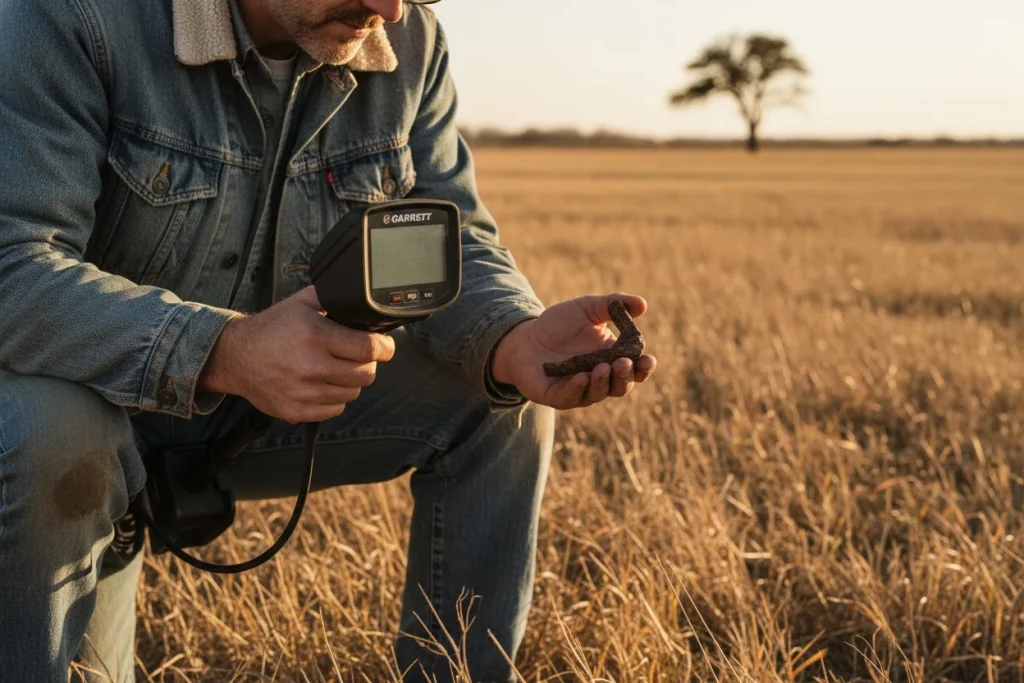
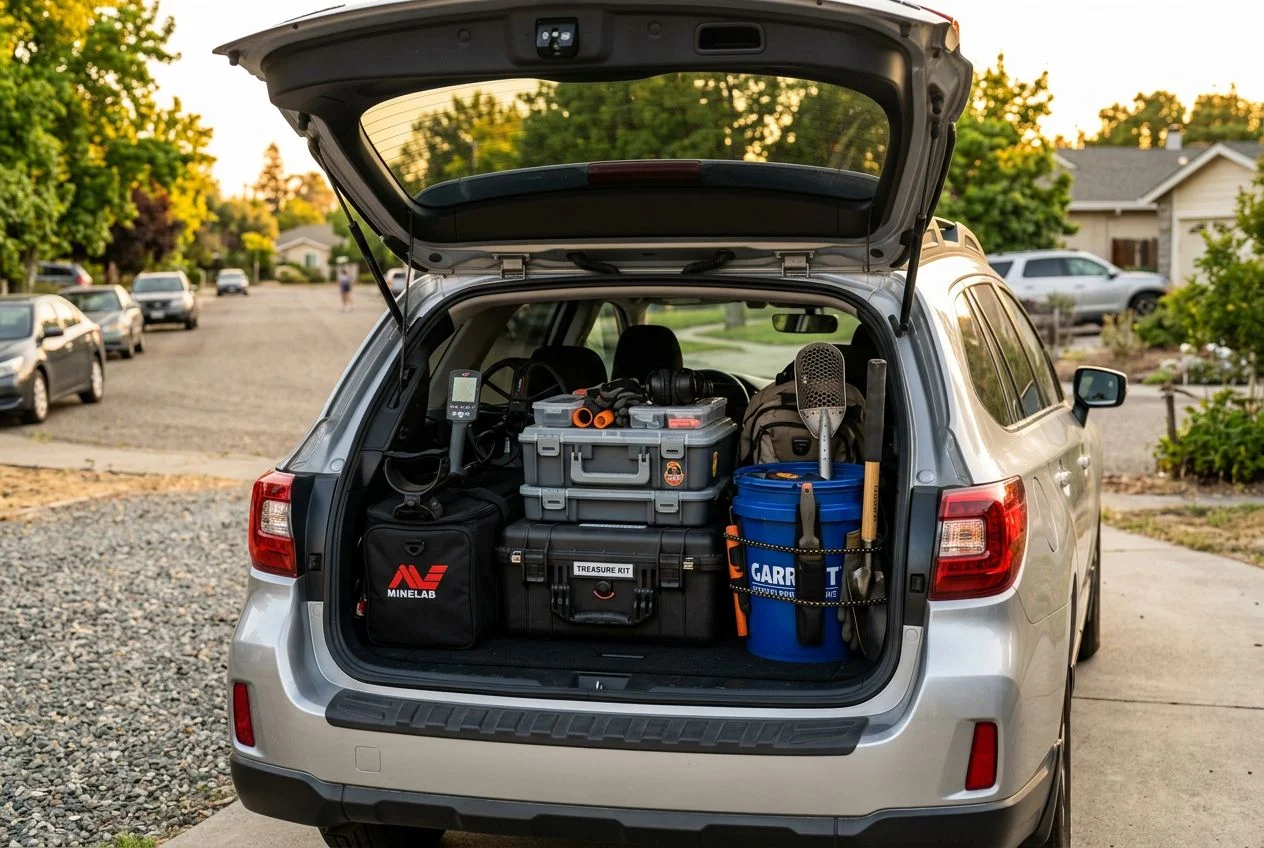
I showed up with my trusty Garrett AT Pro. That machine had pulled dozens of silver dimes out of Sacramento’s old parks. At the beach, it humiliated me. A few feet of wet sand made it scream with every sweep. The constant chatter of false signals sounded like a robot having a seizure. I dug hole after hole, finding only black sand and seawater. I left after an hour, convinced the whole beach was one giant piece of foil. My buddy Mike still brings it up. “Remember when you tried to fight the Pacific Ocean with a park machine?” Yeah, thanks, Mike.
That failure sent me down the rabbit hole. I realized using a metal detector on the beach isn’t just detecting near water. It’s a completely different discipline. It’s a three-way fight against salt, black sand, and the constant shift between wet and dry ground. Everything changed when I stopped treating the beach like a sandy park. I started treating it like the complex, mineralized environment it is. The chatter stopped. The false signals vanished. Finds like gold rings, silver coins, and historic artifacts started showing up.
So, can you use a metal detector on the beach? The answer is a resounding yes. But you need the right decoder ring. Let’s break down the three big challenges and the techniques to beat them.
How Saltwater Interference Disrupts Using a Metal Detector on the Beach
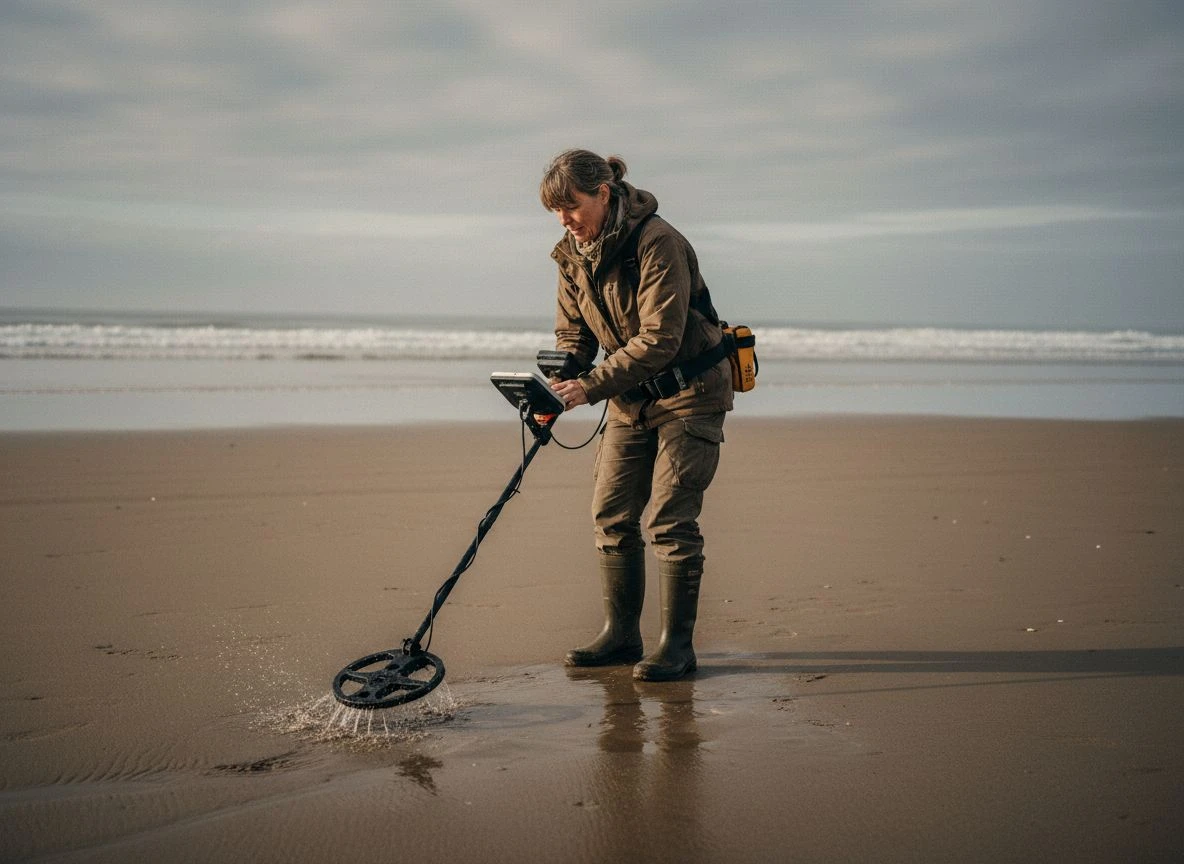
That frustrating chatter I experienced? That was my detector having a conversation with the salt. Saltwater is highly conductive. When your detector’s electromagnetic field hits wet, salty sand, it doesn’t just see “ground”. It sees what looks like a giant, shallow, conductive target. It’s trying to tell you, “Hey, there’s metal everywhere!” As Minelab’s technical guide explains, this conductive salt disrupts the signal. It creates “excessive ground noise” that can mask real targets and dramatically reduce your depth.
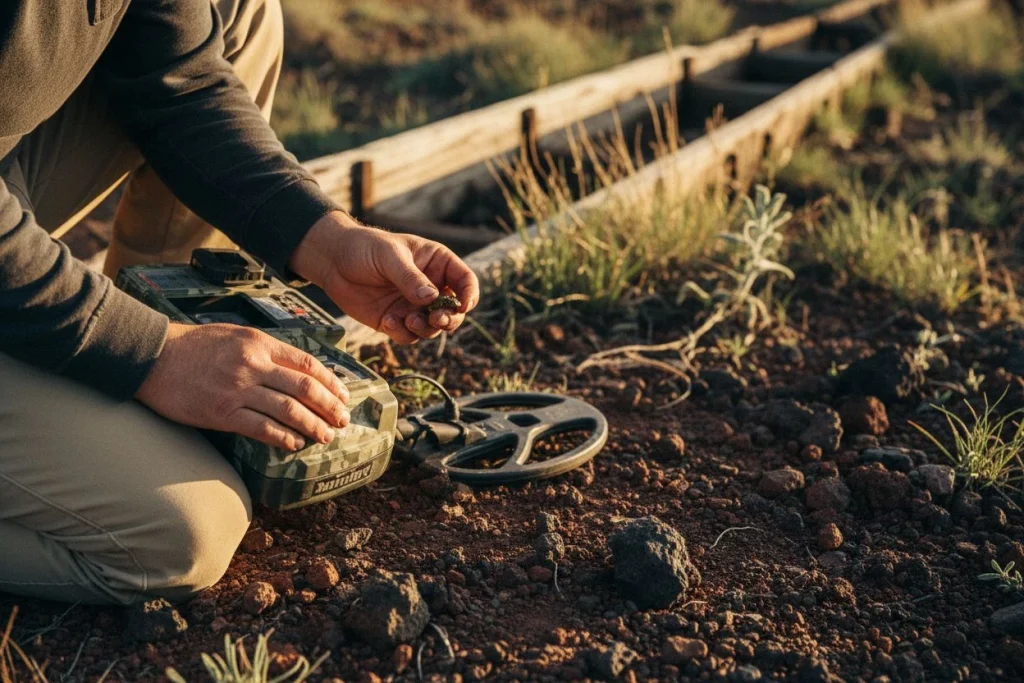
Modern multi-frequency detectors are built for this. My Minelab Equinox 900 has dedicated beach modes for a reason. “Beach 1” is for dry and wet sand. “Beach 2” is a special algorithm for the highly conductive surf zone and shallow water. The machine applies a digital filter to ignore the salt’s constant scream. It listens for the whisper of a target underneath. This is the core of successfully using a metal detector on the beach.
Your first move on any beach should be a ground balance. Don’t just turn it on and go. If your detector has an automatic ground balance function (like my Equinox or the Minelab Manticore), use it. Do it in the dry sand. Do it again when you hit the wet sand. Do it once more if you’re wading into the surf. The mineralization changes in just a few feet. Your machine needs to recalibrate. A guide from Serious Detecting on the Equinox 800 stresses this exact point: ground balance whenever you move zones. It takes ten seconds. It’s the difference between a stable hunt and a useless one when you use a metal detector on the beach.
Conquering Black Sand When Using a Metal Detector on the Beach
If salt is the loudmouth, black sand is the thief. You’ll often find it in patches, particularly in the wet sand and tidal zones. It feels heavier and looks darker. It’s your detector’s worst nightmare in disguise, especially when trying to use a metal detector on the beach effectively.
Black sand is primarily magnetite, a ferrous (iron-based) mineral. This creates a double-whammy of interference. As detailed in a technical breakdown, it presents both positive (magnetic) and negative (conductive) mineralization. Your detector has to perform a kind of digital judo to cancel out both at once. Not all machines can do it. This dense, magnetic material acts like a sponge. It absorbs and scatters your detector’s signal. It can make deep targets disappear. It causes erratic, jumpy target IDs even over a good target. This is a major hurdle for anyone learning to use a metal detector on the beach.
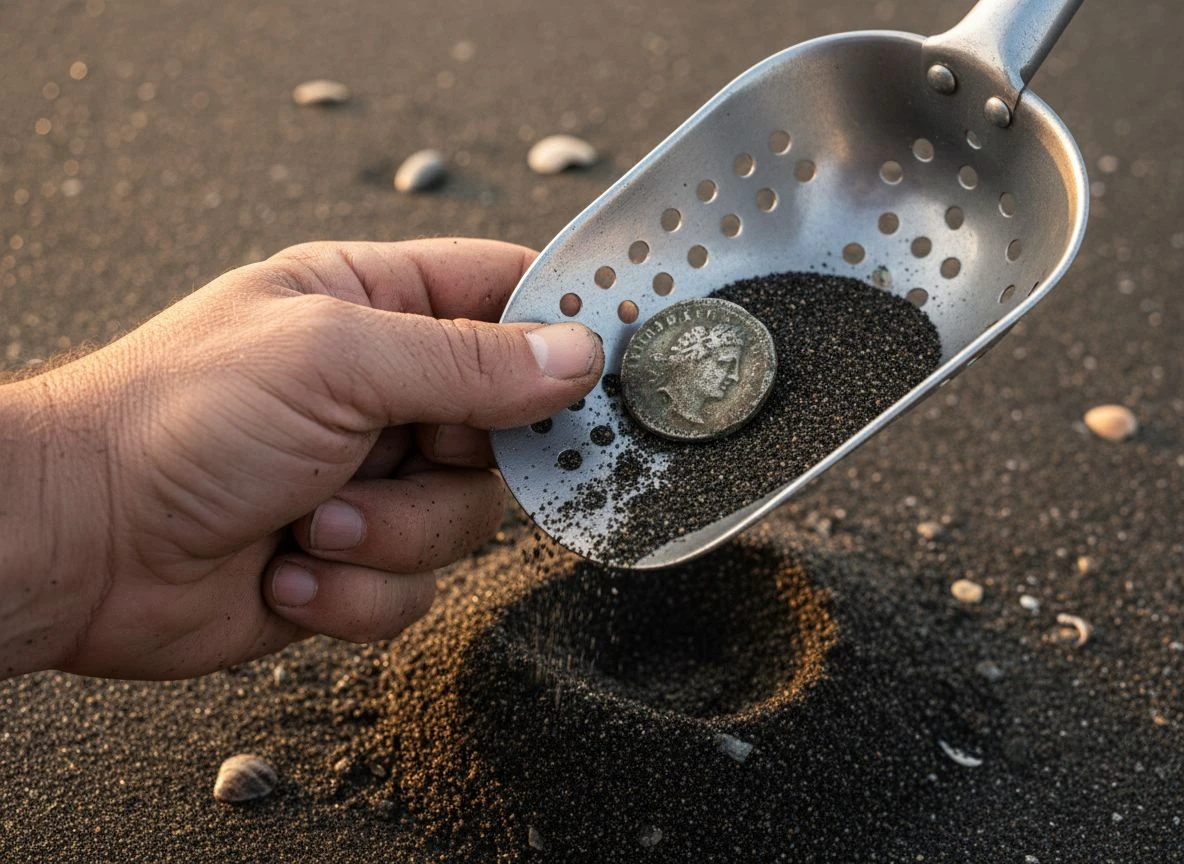
I learned this on a notoriously mineralized beach north of Santa Cruz. I’d get a beautiful, high-toned “quarter” signal. I’d dig down six inches into black sand and find… nothing. The signal would vanish. I was chasing ghosts. The target was likely still deeper, but the black sand distorted everything.
The fix? First, slow way down. A fast sweep won’t give your detector time to process the mineralization. Second, lower your sensitivity. It seems counterintuitive—don’t we want maximum sensitivity? Not when it’s amplifying ground noise. For the Minelab Manticore in heavy black sand, experts recommend dropping sensitivity to 18–22. A quieter, more stable detector that can reach eight inches is infinitely better than a screaming one that can’t see past four. Mastering this is key to using a metal detector on the beach.
Wet Sand vs. Dry Sand: Essential Strategies for Using a Metal Detector on the Beach
Treating the dry beach and the wet surf zone as the same environment is the biggest mistake you can make when you use a metal detector on the beach. They need different gear, different techniques, and even different goals.
Dry Sand Beach Hunting: Targeting Modern Jewelry and Coins
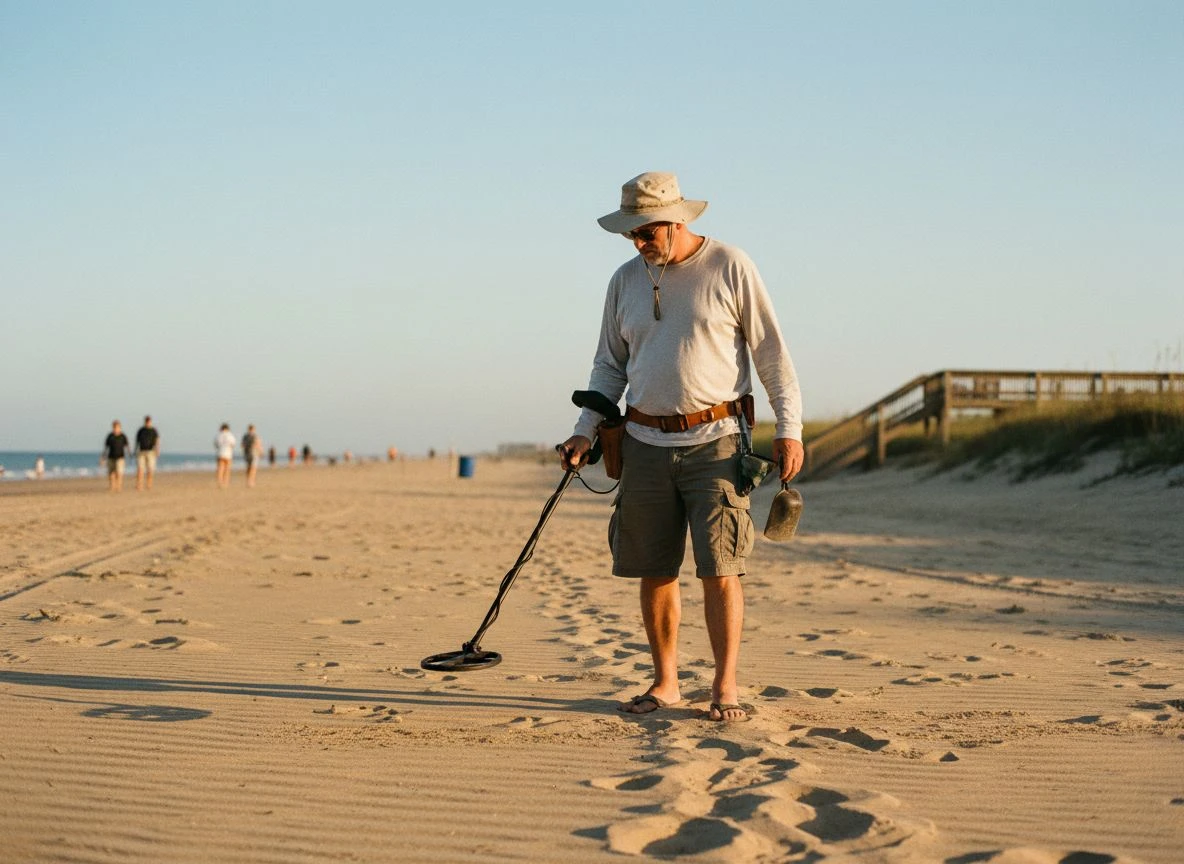
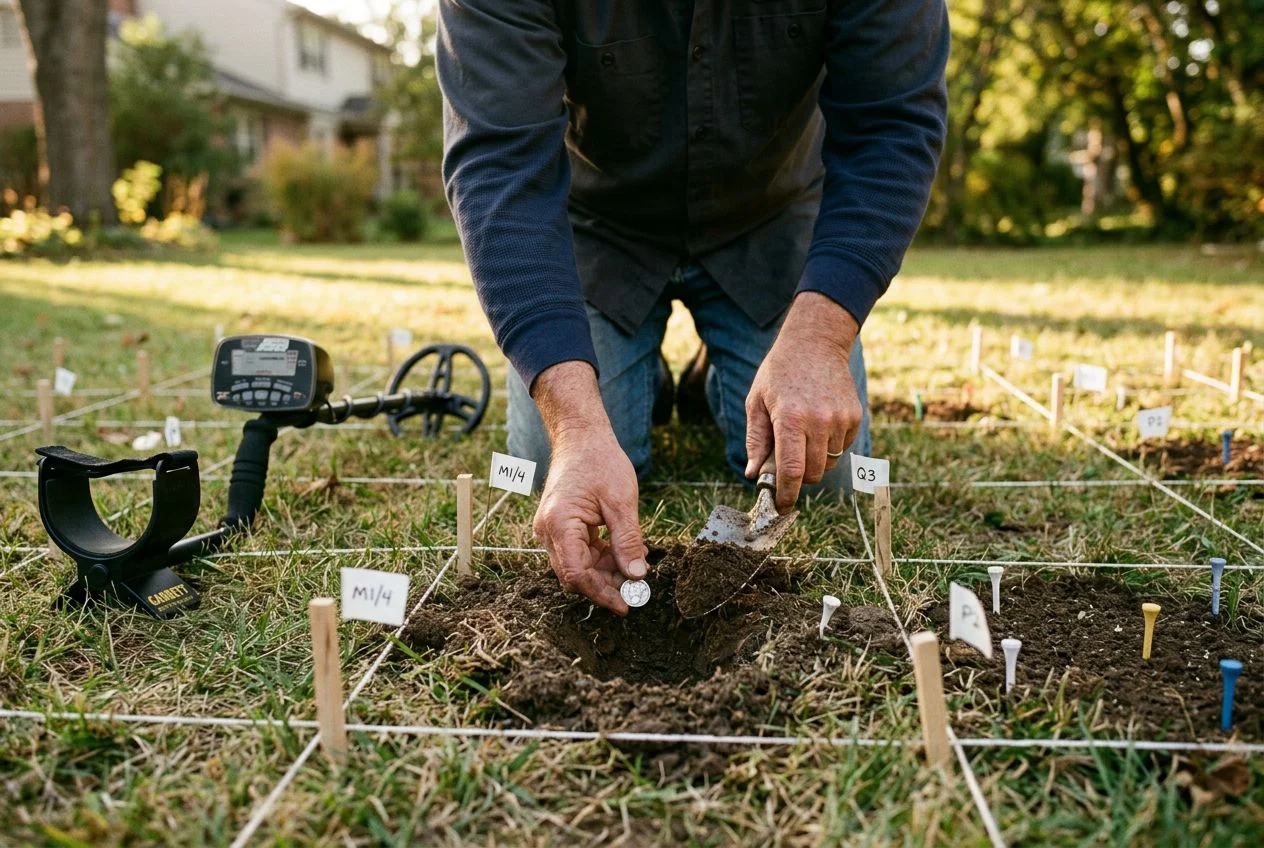
This is the forgiving zone. Mineralization is low. Your detector runs quiet. You can use settings similar to a clean park. This is where people lose modern jewelry, coins, and tabs. It’s also where tourist crowds congregate. Hunt here after a holiday weekend or during peak season. You’ll dig more trash, but you’ll also find recent drops. I use a higher recovery speed (5-6) here to separate targets in the trashy towel lines. I keep my sensitivity up around 22-24. A simple hand scoop is all you need. This is the easiest way to start using a metal detector on the beach.
Mastering the Wet Sand and Surf Zone for Older Treasures
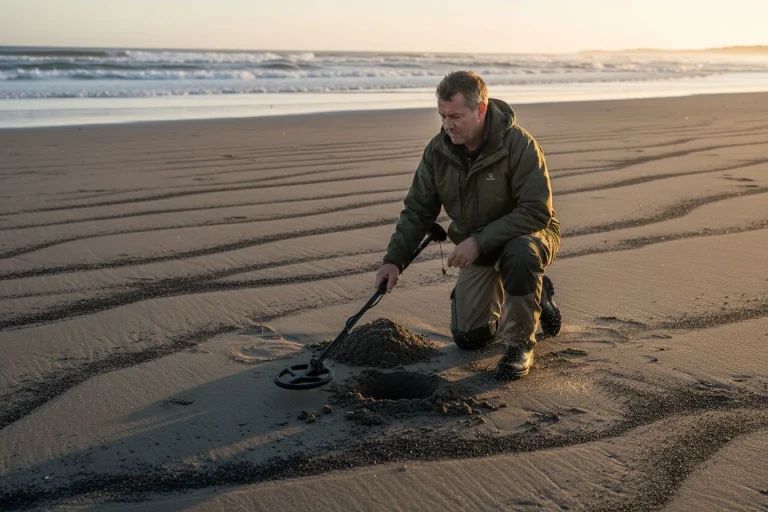
This is where the serious beach hunters play. The waves act as a natural sifter. They pull lighter materials like shells and pebbles back out to sea. They leave heavier metals behind in a layer called the “hard pack.” This is where you find older coins, heavy gold rings, and historic relics. This is also the war zone of salt and black sand. To truly use a metal detector on the beach for treasure, you must master this zone.
Here’s my wet sand /surf ritual for using a metal detector on the beach:
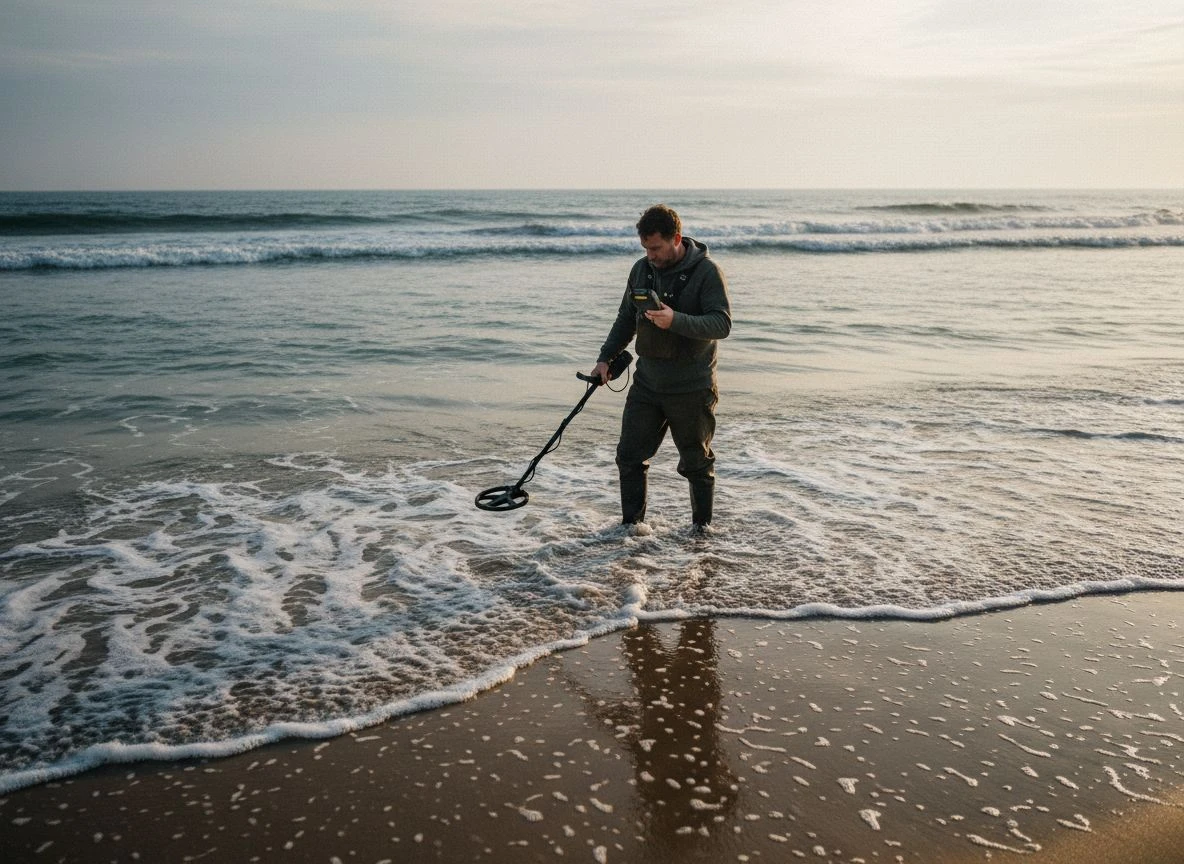
- Switch Modes: I go directly to my Equinox’s “Beach 2” or the Manticore’s “Surf and Seawater” mode.
- Re-Ground Balance: I press that button right where the water washes over my coil.
- Adjust Settings: Sensitivity down to 20 (or lower if it’s chattery). Recovery speed to 4 for a bit more depth penetration.
- Gear Up: This is where you need a long-handled stainless steel scoop. The 2026 Ultimate Guide from Serious Detecting is adamant about this. Digging with a hand tool in wet sand is a back-breaking lesson in futility. The sand collapses. Waves fill your hole in seconds. A long handle lets you stand, scoop quickly, and shake out the target before the hole disappears.
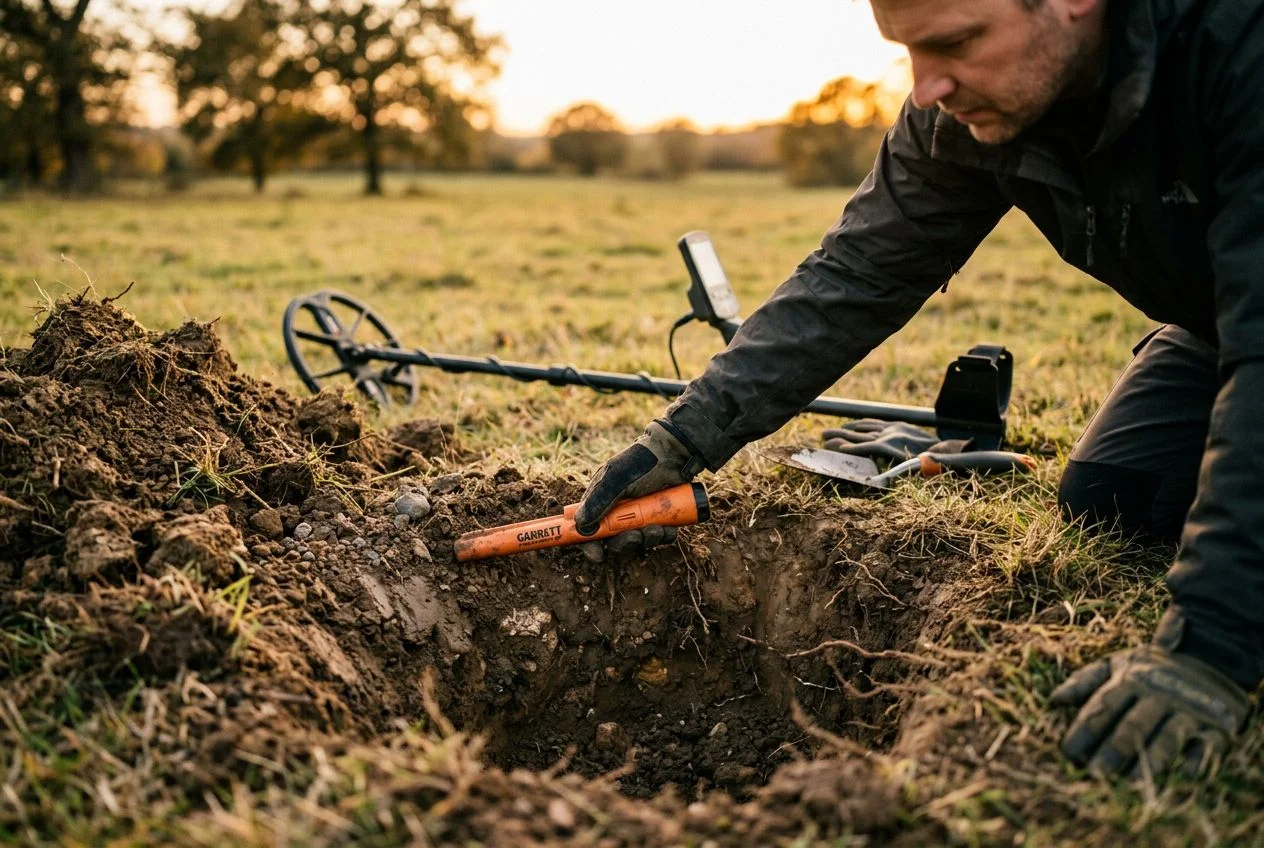
- Sweep Technique: Keep the coil low, level, and in constant contact with the sand. If you lift on the turn, you’ll miss targets. Hunt perpendicular to the waterline. Work the slope where the waves crash. The best hunting is often on a low tide that reveals more of this productive zone.
Your Step-by-Step Beach Metal Detecting Game Plan
So, what does a successful beach hunt look like with all this decoded? Here’s my typical approach, born of a decade of trial and significant error. This is how I use a metal detector on the beach.
I check the tide charts. I aim for a low tide, preferably early in the morning. I start in the dry sand. I do a quick grid of the high-traffic areas near boardwalk access points. I’m listening for obvious high tones and digging the easy stuff. After 30 minutes or if I hit a trash wall, I move to the wet sand.
I wade in up to my ankles. I perform my ground balance ritual and slow my sweep to a crawl. I’m now listening for fainter, deeper signals. The iron grunt of a bottle cap is obvious. The tight, high whisper of a small gold chain is not. This is where discipline matters—don’t over-discriminate. If you cut out low tones, you’re cutting out gold.
When I hit a patch of black sand and the machine starts to mutter, I don’t fight it. I lower my sensitivity two or three points until it settles down. Stability is king. I might only be getting six inches of depth now, but that’s six accurate inches. This nuanced approach is what it means to truly use a metal detector on the beach.
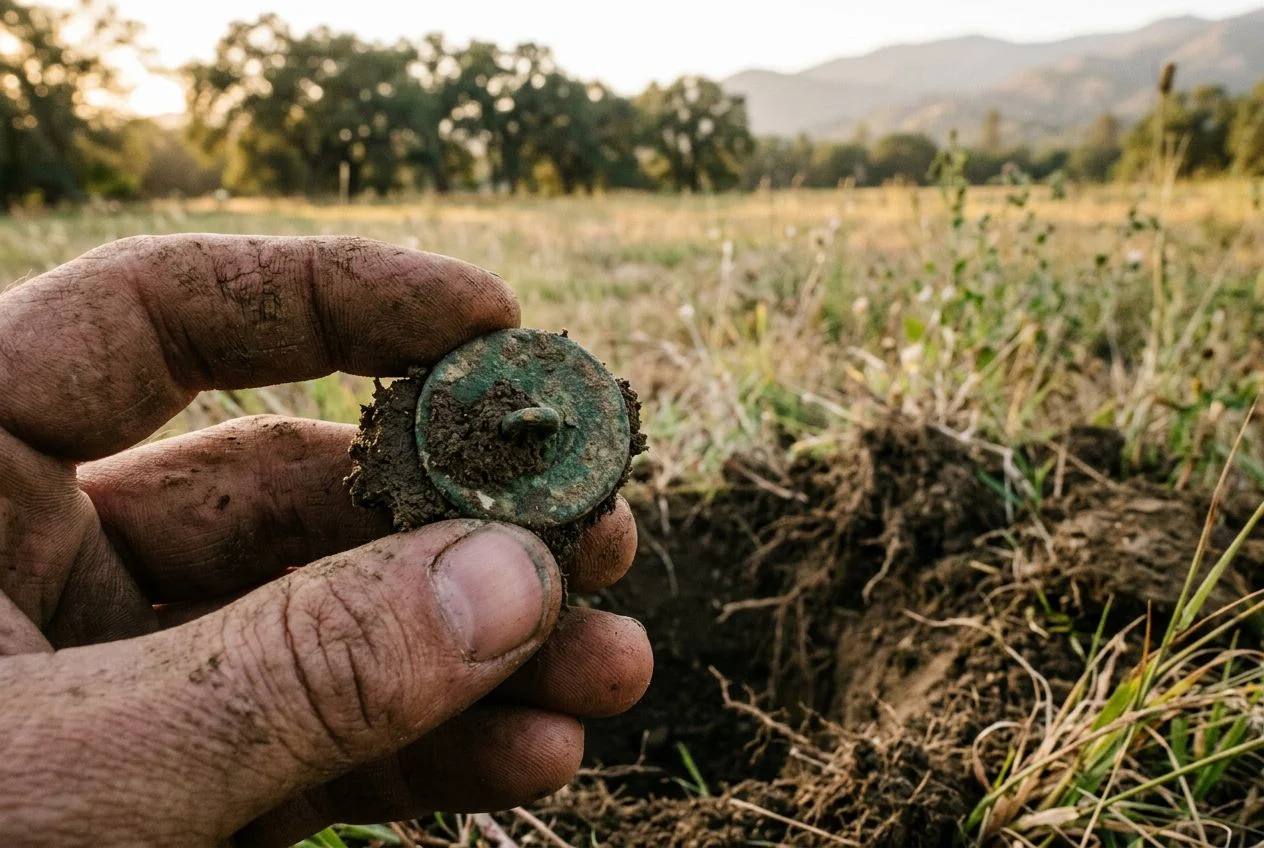
My best beach find came from exactly this scenario. It was a man’s heavy 14k gold class ring from the 1940s. The signal was faint and broken, in wet, black-sand-laden sand at the surf’s edge. My pre-black-sand self would have lowered the coil, heard the instability, and walked away. I’d have assumed it was ground noise. But with the sensitivity tuned for the conditions, that faint signal held. Three scoops with the long handle, and there it was, glinting in the sieve.
The beach doesn’t give up its secrets easily. It fights back with salt, magnetism, and shifting tides. But once you understand the language it’s speaking, everything changes. Learn to decode the chatter, compensate for the thief, and respect the divide between wet and dry. Then it starts to talk. And what it has to say is often made of silver and gold. So, can you use a metal detector on the beach? Absolutely—if you learn its unique language.

My name is Paul and I am the founder of Detector For Metal, a dedicated resource for metal detecting enthusiasts seeking to uncover historical treasures and connect with the past using the latest technology. As a stay-at-home dad and family man, I’ve found metal detecting to be the perfect hobby that combines family adventure with historical learnings for the whole family.
As a father, I’m deeply committed to passing on this hobby to the next generation of detectorists, starting with my own children. I share advice on everything from metal detecting with kids to exploring the top 10 metal detecting sites you never thought about. My methodical approach to the hobby goes beyond the thrill of discovery—it’s about creating family traditions while preserving history and sharing the stories of those who came before us.