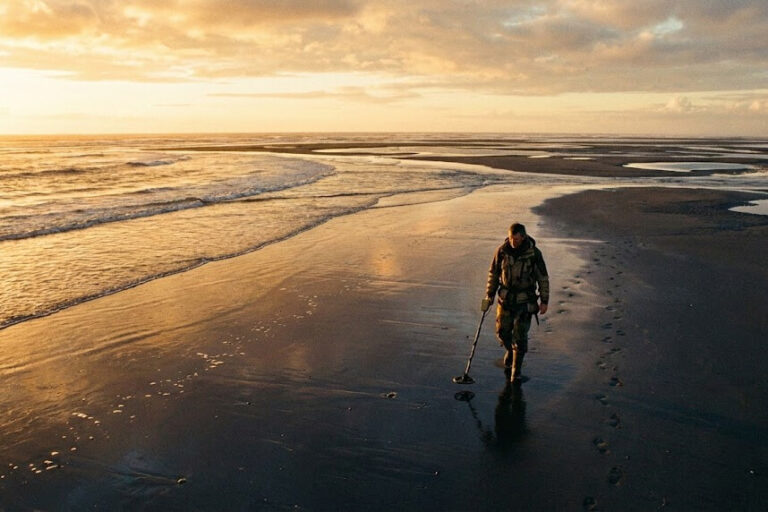
Picture this. I’m on the beach at 7 AM, finding bottle caps and aluminum foil. Meanwhile, some guy with a detector that looks older than my car is pulling gold rings from the wet sand like he’s got X-ray vision. Same beach. Same morning. Totally different results.
What was his secret? He got there two hours before low tide. I showed up whenever I felt like it.
That morning changed how I think about beach detecting forever. Here’s the thing: when to metal detect at beach matters way more than where you go. You could own the fanciest detector beach setup on the market, but if you’re swinging it during high tide, you’re missing the zone where 80-90% of the good stuff sits.[1] The ocean hides beach treasure from you half the day. Most people never figure this out.
This low tide metal detecting strategy isn’t just about showing up when the water’s out. It’s about understanding how the Moon and Sun work together to expose hunting spots most folks never reach. When you get the timing right—especially during spring tides—metal detecting exposed beach can give you up to 300 meters of extra hunting space. That’s 300 meters of lost jewelry, scattered coins, and stuff that hasn’t seen a detector in weeks.
Get your beach treasure hunting timing right, and you stop wandering randomly. You start hunting like you actually know what you’re doing.
- Understanding Tide Timing for Beach Metal Detecting: Why When You Hunt Matters More Than What You Own
- Best Time for Beach Metal Detecting: The Four-Hour Low Tide Window Strategy
- Beach Detecting After Low Tide: Reading the Beach for Hidden Treasure
- Planning Beach Hunt Low Tide: Tools and Tide Charts You Actually Need
- Your First Low Tide Metal Detecting Session: Maximize Finds at Low Tide
- Low Tide Metal Detecting Strategy: The Bottom Line on Beach Treasure Timing
- References
Understanding Tide Timing for Beach Metal Detecting: Why When You Hunt Matters More Than What You Own
How Tides Work: The Low Tide Treasure Hunting Guide Basics
Tides aren’t random. They’re as predictable as sunrise. The Moon and Sun pull on Earth’s oceans hard enough to move massive amounts of water around. When these forces line up during new and full moons, you get spring tides. These are your best chances for beach detecting.
Quick note: spring tides have nothing to do with the season. The word “spring” comes from water “springing forth” with serious force.[2] This creates the biggest high tides and lowest low tides of the month. It happens twice monthly—new moon and full moon—when the Sun, Earth, and Moon line up perfectly. Their combined force makes tidal ranges about 30% bigger than average. For anyone hunting beach treasure, this means more exposed sand, lower water, and access to spots that stay underwater during weaker tides.
Understanding these metal detecting tidal patterns makes a huge difference. Take a beach with a gentle slope and a two-meter tide range. At low tide, you get 100 meters of exposed wet sand. Bump that up to a six-meter range during spring tides, and suddenly you’re working 300 meters of extra territory.[3] I’ve hunted the same beach during both types of tides. It’s like hunting two completely different places.
But here’s where planning beach hunt low tide gets really interesting. When spring tides happen during the Moon’s closest pass to Earth (called perigee), you get “king tides.” These are the lowest lows of the entire year. They expose beach areas that stay underwater for months. Mark these dates on your metal detecting tide chart. They’re worth waking up early for.
Why Metal Detecting at Low Tide Exposes the Best Beach Treasure Zones
Let me tell you something that changed my whole approach to tide hunting. Heavy stuff doesn’t stay where people lose it. Physics sorts everything automatically.
Gold weighs a lot—specific gravity of 13 to 19.3 depending on purity. Silver comes in at 10.49. Beach sand? Just 2.65.[4] When waves turn sand into basically a thick liquid, these weight differences create natural sorting. This is the key to maximize finds at low tide. Light stuff like aluminum pull-tabs stays high and shallow. Gold rings sink straight down through the liquified sand until they hit something solid—usually a clay or shell layer we call hardpan.
This sorting means good stuff concentrates in specific spots. Troughs, cuts, and the bottom of slopes all work the same way. Wave energy drops just enough to let heavy objects fall but not move them around anymore. The wet sand between high and low tide marks becomes a catch-all for months or years of lost items. This is why knowing how to hunt during low tide makes such a huge difference.
The problem? During high tide, this whole productive zone sits under one to three meters of water. But when you go beach detecting after low tide—especially during spring tides—the ocean pulls back. All those concentrated deposits sit there exposed, waiting for anyone with a detector and the right timing.
Best Time for Beach Metal Detecting: The Four-Hour Low Tide Window Strategy
When to Metal Detect at Beach: How to Hunt During Low Tide (Start Earlier Than You Think)
Most beginners make the mistake I made. They show up right at low tide and wonder why experienced hunters are packing up. Here’s the truth about the best tide for beach detecting. Your productive window runs from two hours before low tide through two hours after. That’s four hours total.[5]
Why start early for beach hunting during low tide? You want to follow the water down the beach. Work freshly exposed wet sand before other people reach it or the tide comes back. When I get there two hours before low tide, I’m working metal detecting exposed beach that was underwater an hour ago. The sand is still dark and packed down. Nobody’s hunted it yet. I get first crack at whatever the previous high tide dropped off.
Think of it this way. Your tide schedule for metal detecting says low tide hits at noon. I start detecting around 10 AM near wherever the water is right then. As the water keeps going out, I work my way downslope. I stay near the active waterline where recent losses pile up. By noon, I’ve already covered the upper and middle beach. Then I spend the stable low-tide period on those lowest troughs and flats that only show up at maximum low water.
Spring Tides vs. Neap Tides: Using Tide Schedule for Metal Detecting Success
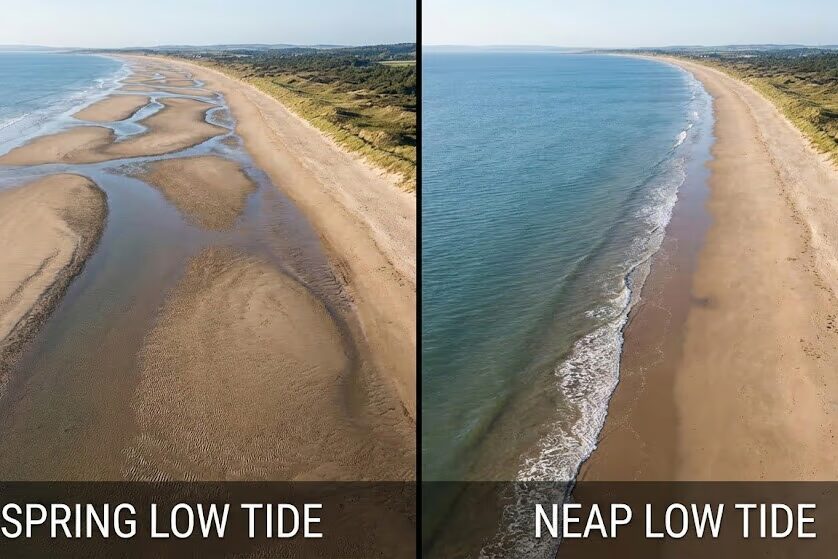
Here’s something I see all the time. Someone tries beach detecting once during a neap tide. They find nothing but trash. They decide the whole hobby is worthless. Meanwhile, experienced treasure hunting folks are checking charts and circling spring tide dates like they’re lottery numbers.
During spring tide cycles, low tide drops way lower than average. This is the critical part of low tide beach treasure hunting that beginners miss. A spot that shows 50 meters of wet sand during neap tide could reveal 100 to 150 meters during spring tide. That’s double or triple the hunting space.
I learned this lesson the expensive way. Spent three trips hitting the same beach during neap tides. Found some coins and pull-tabs but nothing valuable. Then I came back during a spring tide with the moon at perigee. First hour: two silver rings and a gold pendant. Same techniques, same detector beach setup. The difference was reaching spots that had been collecting targets for two weeks underwater.
The practical takeaway for your beach hunt? Always prioritize spring tide windows, even if the timing isn’t convenient. A spring tide morning low at 6 AM beats a neap tide afternoon low at 3 PM by miles.
Beach Detecting After Low Tide: Reading the Beach for Hidden Treasure
Beach Metal Detecting Low Tide Tips: Visual Clues for Finding Treasure
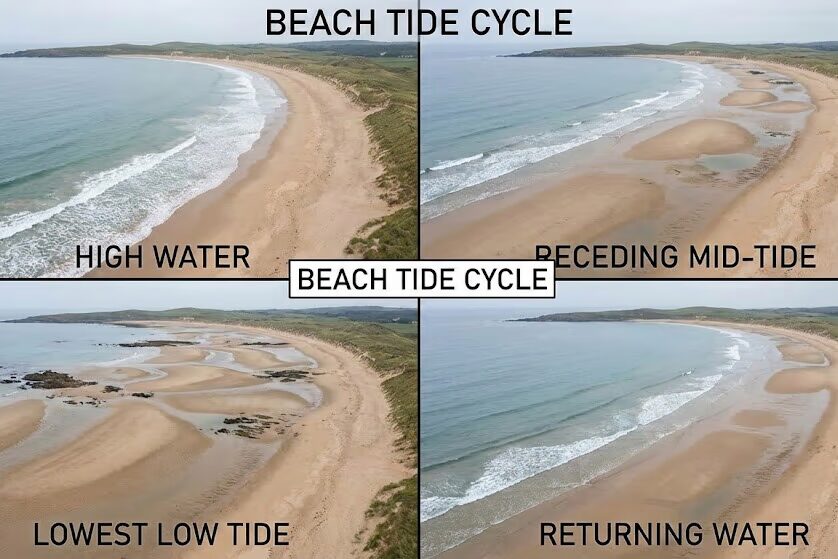
I used to walk beaches looking for flat sand. Turns out I was hunting the worst spots possible. Beaches aren’t uniform surfaces. They’re constantly shifting landscapes of slopes, troughs, cuts, and flats. These are the beach metal detecting low tide tips that completely changed my success rate.
Cuts are jackpot features. They’re steep drop-offs or scooped-out sections in the beach face. Wave action carves them out by washing sand away.[6] Picture a staircase cut into the beach—that’s a cut. Why do they matter for low tide metal detecting strategy? They expose deeper, older sand layers where targets have been piling up for weeks or months. When winter storms strip away summer sand, cuts appear like big X marks.
Troughs are depressions running parallel to the waterline. You usually find them between sandbars. Water rushing back from the beach flows into these low channels. Heavy items settle there as wave energy drops off. I’ve found multiple targets within feet of each other in troughs. It’s like the beach has a coin slot that keeps paying out.
During low tide, look for spots where sand appears darker and more packed down. This means recent water exposure and active sorting. Dark, wet, firm sand is where you want to be.
Beach Hunting During Low Tide: Following the Receding Water Strategy
Here’s my step-by-step approach to the low tide metal detecting strategy. I start detecting about two hours before the predicted low tide at wherever the waterline is right then. As I work, the water keeps going out. My progression is simple. Move downslope following the waterline out to sea. Stay at the active water’s edge where fresh deposits show up. This tide strategy maximizes your time on untouched ground.
The receding tide exposes beach zones in order. First comes upper wet sand where people wade and swim during mid-tide. Then steeper mid-beach slopes appear with those valuable cuts and scallops where targets pile up. Finally, the lower beach emerges with troughs and flats that normally stay underwater except at low water.
Planning Beach Hunt Low Tide: Tools and Tide Charts You Actually Need
Metal Detecting Tide Chart Resources and Best Tide for Beach Detecting Equipment
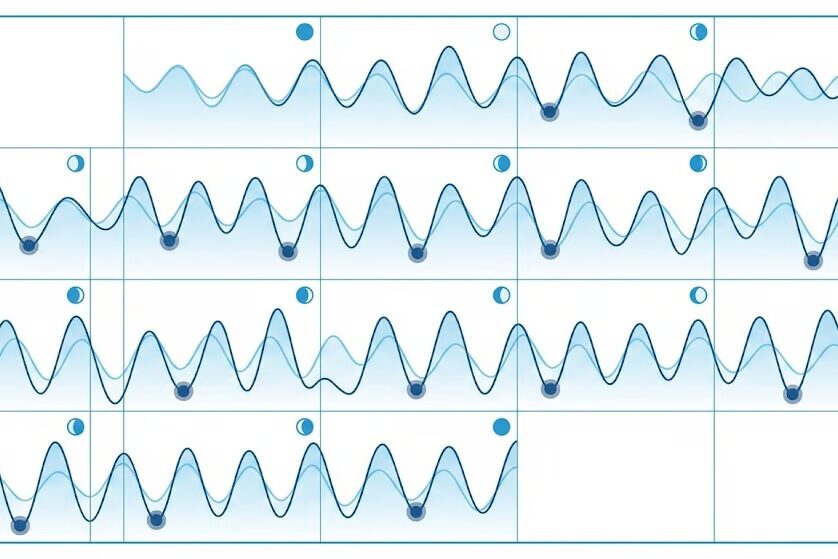
NOAA’s Tides & Currents website gives you free, accurate predictions for thousands of spots.[7] It’s government data. That means it’s reliable and not trying to sell you anything. This is your go-to metal detecting tide chart resource.
When you’re reading tide charts for planning beach hunt low tide sessions, you need three things. The time of low tide, the predicted height, and whether it’s a spring or neap tide cycle. Look for the lowest predicted heights. These are your target dates. Negative tides work especially well because they expose areas that stay underwater during normal low tides.
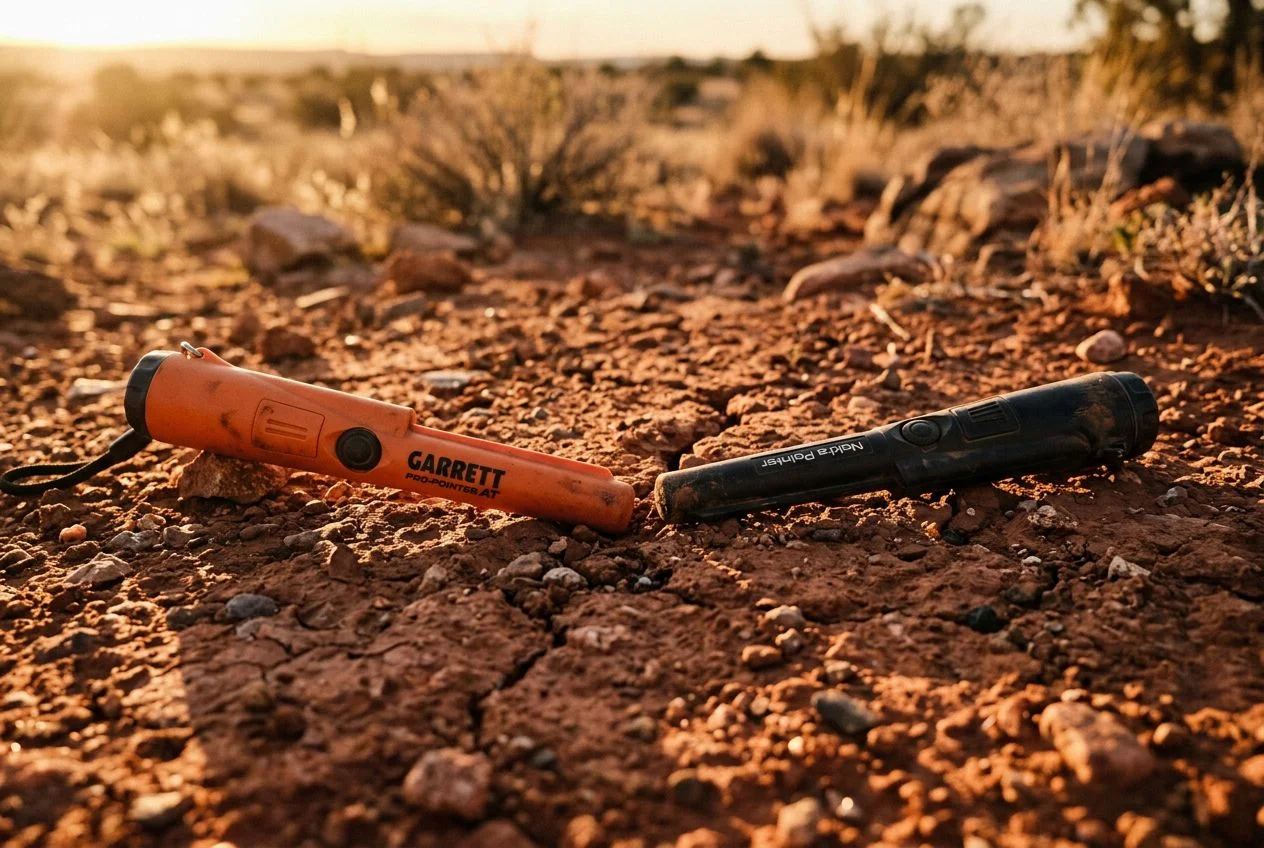
For equipment, you don’t need to spend crazy money to start. Get a waterproof detector that handles saltwater and wet sand. What matters more than the detector is having a quality sand scoop, headphones to hear faint signals over wave noise, and a pinpointer to speed up target recovery.
Low Tide Beach Treasure Hunting Safety: Ocean Rules That Keep You (and Your Gear) Safe
Here’s something treasure hunting articles don’t talk about enough. The ocean can kill you. I’m not being dramatic here. Rip currents account for more than 100 deaths every year in the US alone.[8] When you’re focused on your detector screen hunting beach treasure, it’s super easy to lose track of wave patterns and water depth.
Never turn your back on the ocean. Ever. I got knocked flat by a wave I didn’t see coming once. My detector took a saltwater bath that required a complete teardown to save it.
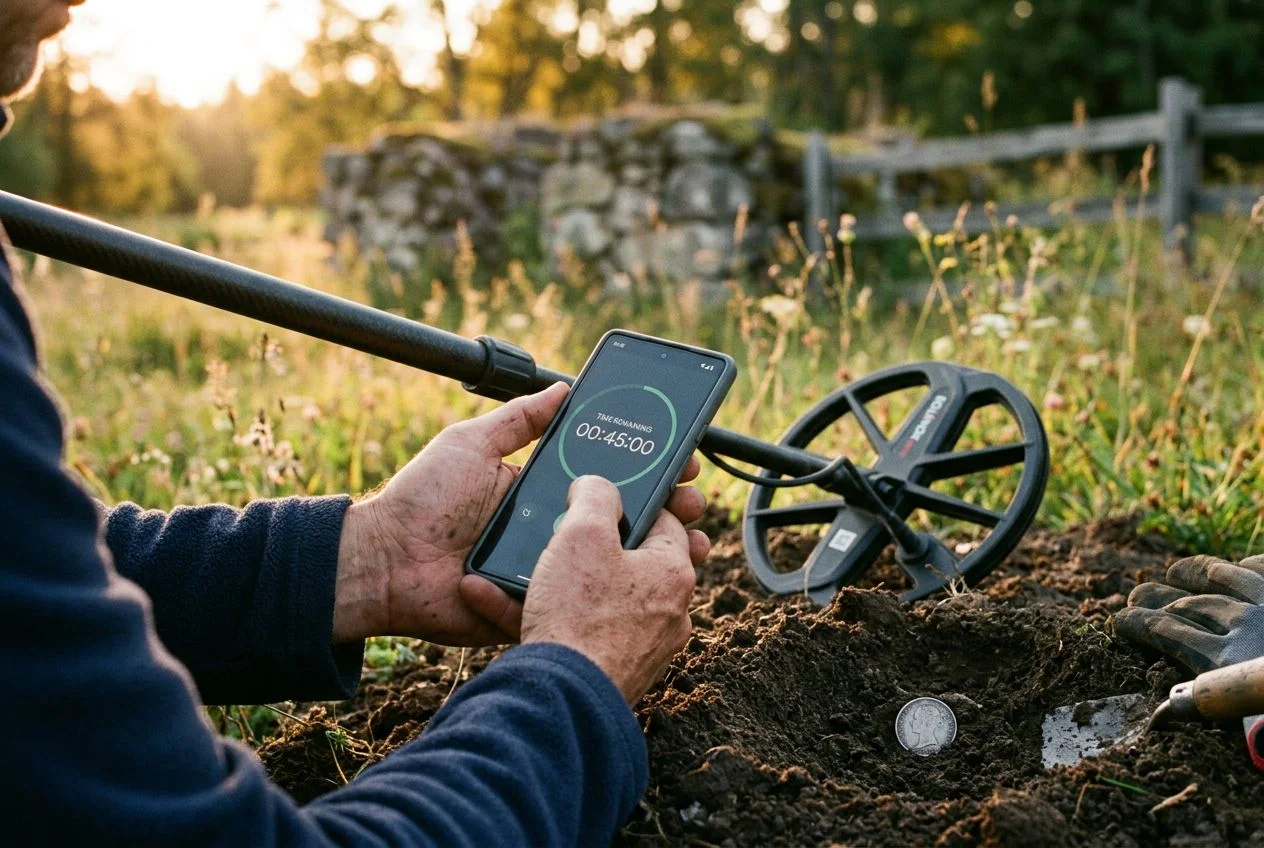
Water comes back faster than you think, especially during spring tides. I set a phone timer for 30 minutes before the tide starts rising hard. When it goes off, I start working my way upslope even if I’m not done with the lower beach.
Also, check local rules before detecting any beach.[9] Some places ban detecting completely. Others have seasonal limits during nesting periods. Five minutes of research prevents expensive tickets.
Your First Low Tide Metal Detecting Session: Maximize Finds at Low Tide
Before your first beach detecting session, spend time learning your equipment on dry land. Know what your detector sounds like when it hits gold versus aluminum. The beach is not where you figure out your settings.
Pick a beach you can research. Look for history. Old swimming areas, demolished piers or pavilions, beaches that have been popular for decades. These spots have years of accumulation working in your favor. Mix that historical knowledge with proper low tide timing, and you’re hunting smart instead of randomly.
Start during a spring tide for your first serious hunt. Check charts for the lowest predicted water level. Get there two hours before low tide. Work in a system, covering ground in overlapping passes instead of wandering around.
When you find your first target in the wet sand during that perfect window—when you realize you’re digging in sand that was underwater an hour ago—everything clicks. You’re using physics and tide timing to reach zones where the odds actually favor you.
Low Tide Metal Detecting Strategy: The Bottom Line on Beach Treasure Timing
Beach metal detecting without understanding tides is like fishing without knowing when fish feed. Sure, you might get lucky once in a while. But you’re fighting the odds instead of using them. The low tide strategy turns random beach wandering into a system backed by how gravity and waves naturally work.
That guy with the old detector who pulled three gold rings while I found bottle caps? He wasn’t luckier than me. He understood something I didn’t. Timing and location beat equipment every single time. His beat-up old machine worked fine because he put himself in the right zone at the right time. That’s where most valuable targets naturally pile up.[10] My expensive detector was useless because I was hunting the wrong spot during the wrong tidal stage.
The ocean constantly sorts treasure for you. It concentrates heavy stuff in predictable zones based on weight and wave energy. During high tide, all that concentrated treasure sits underwater where you can’t reach it. During low tide—especially spring tide lows—it’s sitting there exposed and waiting. The four-hour window before and after low tide is your shot.
This isn’t complicated. Check the tide charts. Circle spring tide dates. Get there two hours early. Follow the water out. Hunt the cuts, troughs, and slopes. Respect the ocean’s power. Go home with finds that make other detectorists ask what your secret is.
The secret is timing. Everything else is just details.
Now go check those tide charts and plan your next hunt. The ocean is revealing treasure zones right now as you read this. Someone’s going to hunt them at low tide tomorrow. Might as well be you.
Happy hunting! 🏖️
References
- Metal Detecting World. “Wet Sand Beach Hunting Tips.” https://www.metaldetectingworld.com/beach_hunting_p7.shtml
- The Old Farmer’s Almanac. “What Are Spring Tides and Neap Tides?” https://www.almanac.com/what-are-spring-tides-neap-tides
- Tech Metals Research. “Beach Metal Detecting Tips.” https://www.techmetalsresearch.com/guide/beach-metal-detecting-tips/
- Engineering ToolBox. “Specific Gravity of Metals and Minerals.” https://www.engineeringtoolbox.com/specific-gravity-solids-metals-d_293.html
- MDHTALK. “Metal Detecting High & Low Tides.”
- Kellyco Detectors. “Metal Detecting on the Beach.” https://kellycodetectors.com/blog/metal-detecting-on-the-beach/
- NOAA Tides & Currents. “Tide Predictions.” https://tidesandcurrents.noaa.gov/tide_predictions.html
- NOAA. “Rip Currents.” https://www.noaa.gov/jetstream/ocean/rip-currents
- DetectHistory. “Metal Detecting Laws by State – USA.” https://detecthistory.com/metal-detecting/usa/
- Metal Detecting World. “When To Beach Hunt.” https://www.metaldetectingworld.com/beach_hunting_p3.shtml

My name is Paul and I am the founder of Detector For Metal, a dedicated resource for metal detecting enthusiasts seeking to uncover historical treasures and connect with the past using the latest technology. As a stay-at-home dad and family man, I’ve found metal detecting to be the perfect hobby that combines family adventure with historical learnings for the whole family.
As a father, I’m deeply committed to passing on this hobby to the next generation of detectorists, starting with my own children. I share advice on everything from metal detecting with kids to exploring the top 10 metal detecting sites you never thought about. My methodical approach to the hobby goes beyond the thrill of discovery—it’s about creating family traditions while preserving history and sharing the stories of those who came before us.