Table of Contents
If you trust your detector’s screen more than your own brain, you’re leaving your best finds in the ground. This metal detecting case study research began for me at a forgotten train stop. I’d spent months researching the spot near Auburn. On my first trip, my Minelab Equinox 900 screamed with a perfect, high-pitched 82 on the Target ID. That number shouts “silver coin” to any detectorist. My heart raced as I dug. I was already picturing the Mercury dime I was sure I’d pull. Six inches down, my pinpointer led me to… a modern, crushed screw cap. That was my first real lesson in moving “beyond the beep.”
I used to treat those digital readouts like gospel. A high number meant “dig.” A low number meant “ignore.” My whole strategy was frantic reaction, not patient interpretation. I’d been following the audio cue and the flashy number. But as the FBI’s guide for law enforcement puts it, effective searching requires mastering the technical skills behind the signal. I was just listening to the beep.
That screw cap was a perfect teacher. According to guides like the one from Joan Allen, a Target ID in the 80s should indicate a conductive metal like silver or copper. And it did—the cap was aluminum. The machine wasn’t wrong. It was giving me a raw data point I didn’t know how to read. I was missing the other clues. I missed the slight brittleness of the tone. I missed the way the signal blobbed when I swept from a different angle.
That day set up the whole conflict for my hunt. Was every high tone just modern trash? Or was real history hiding underneath? My journey shifted from frantic digging to forensic listening. I had to learn that the number is just the opening line of a conversation. Patience is the skill that lets you hear the whole story. What followed was an hour of digging nails. It was a lesson in iron masking. Finally, I heard the sweet, repeatable sound of something truly old.
How Historical Research Transformed My Metal Detecting Case Study

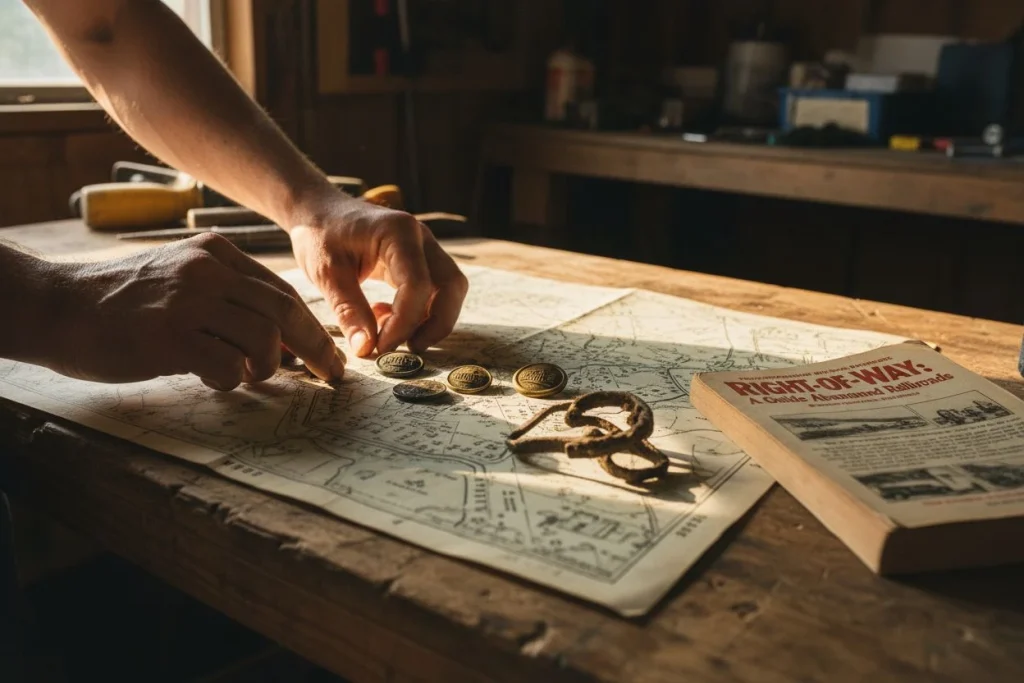
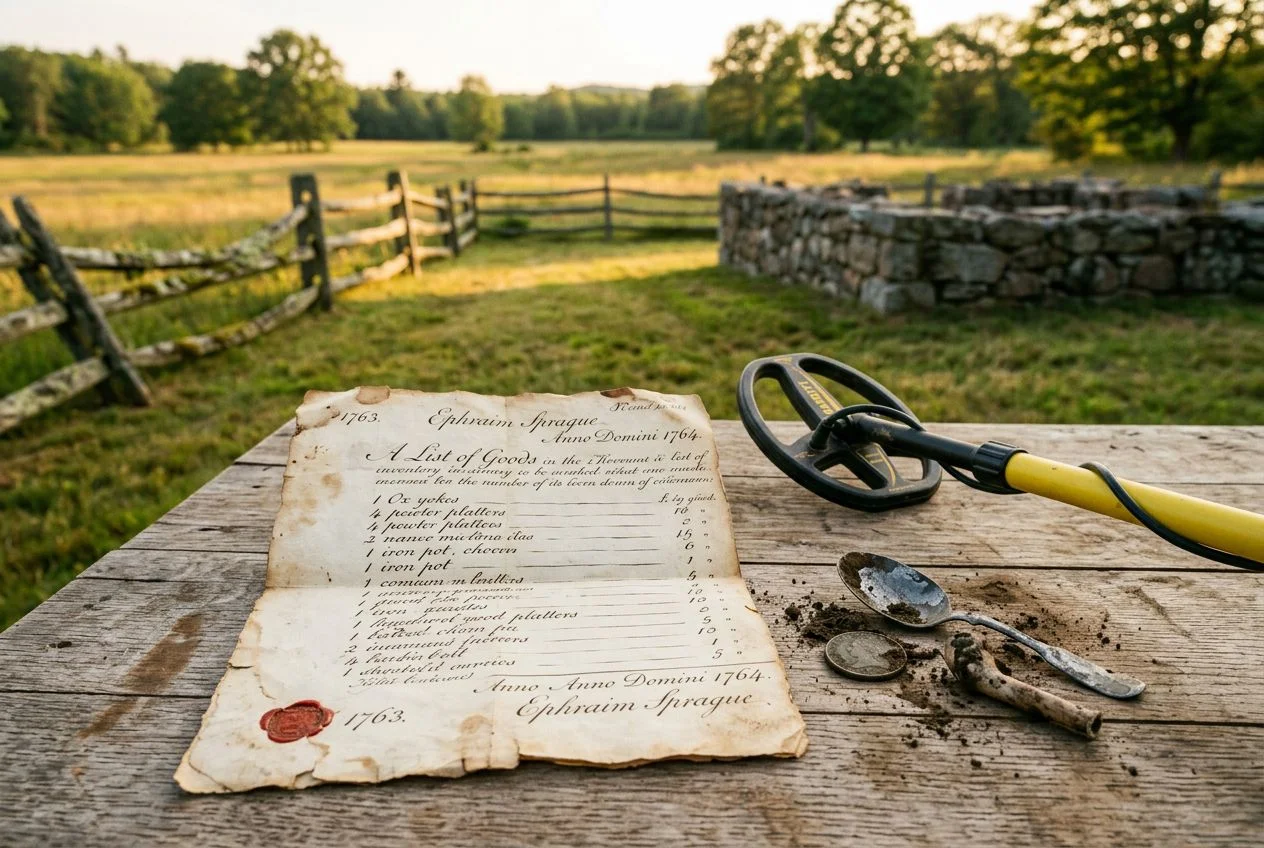
If you don’t do the historical homework, you’re just swinging expensive beepers over random dirt. My hunt started months before I ever turned on my Equinox. It started in the archives of the Placer County Historical Society. I wasn’t looking for a “spot.” I was piecing together the story of a tiny whistle-stop called “Cain’s Landing.” It vanished from maps after the 1920s.
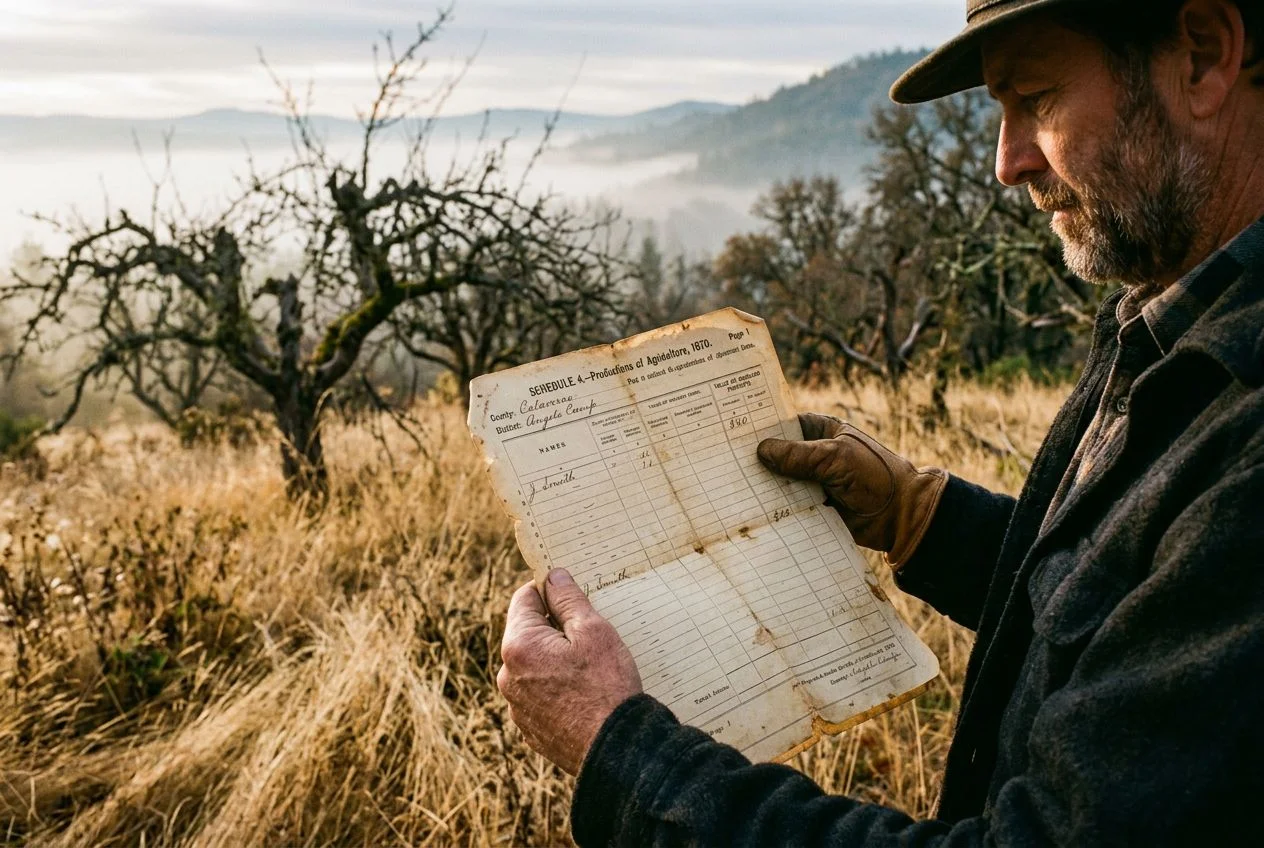
The real break came from an 87-year-old former conductor named Ed. I met him at a society meeting. Over weak coffee, he sketched a rough map on a napkin. “Platform was here,” he said, tapping a spot. “Passengers waited under that big oak. And the baggage boys would toss trash right over the fence there, into the gully.” That last detail—the unofficial trash dump—is pure gold for a detectorist. But his memory alone wasn’t enough. I cross-referenced his sketch with 1905 Sanborn Fire Insurance maps. They precisely showed the station’s footprint, outbuildings, and even the water tank. The “where” was now a ten-square-yard grid.
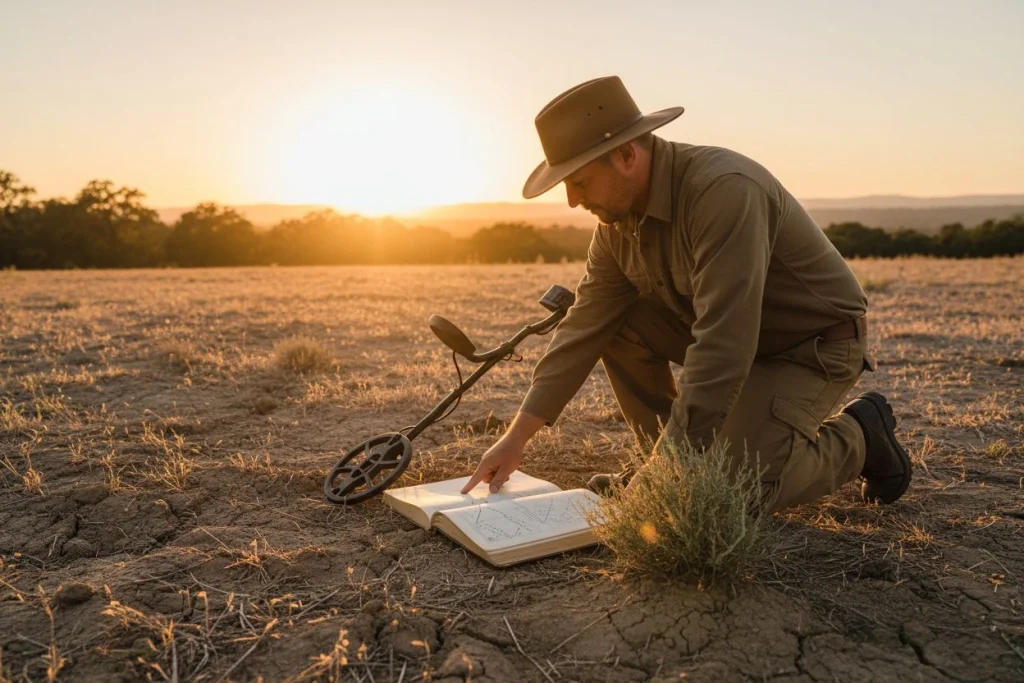
This phase is where 90% of the “luck” in this hobby is made. The newspaper ads, the maps, the old-timer conversation—that’s the work. The detector just confirms what the research suggests. I had a high-probability site before I’d dug a single plug. Your best next site might not be in a field guide. It’s probably in a conversation at your own local historical society. Start there. This is the core of any successful metal detecting case study research.
Understanding What Your Metal Detector Signals Mean
Target ID numbers are clues, not commands. A high number suggests conductivity, not value. My breakthrough came when I stopped chasing single, perfect beeps. I started listening for the story within the chaotic signal. I listened for the repeatable high tone whispering beneath the iron’s roar.
When Target ID Numbers Give False Signals
Back at the train stop, my Equinox would sing out a solid 84. As guides like the one from Joan Allen explain, a number in the 80s points at a conductive metal like silver or copper. My brain shouted “Mercury dime!” But that same sweet 84 could be a modern crushed aluminum can. The machine reports conductivity. It can’t tell age or intent. I dug dozens of high-TID targets that were just 20th-century trash. The first lesson was brutal. A good number alone is a terrible reason to dig.
How to Detect Targets Buried in Iron
The real history was hiding next to the junk. This site was littered with railroad iron—spikes, bolts, track fragments. As noted in guides on target identification and recovery, a good target sitting beside iron gets “masked.” The good signal is overwhelmed. You get a broken, erratic chirp that most people dismiss. My first few passes, I ignored these fragmented whispers. I was missing everything.
Recognizing Consistent Target ID Tones
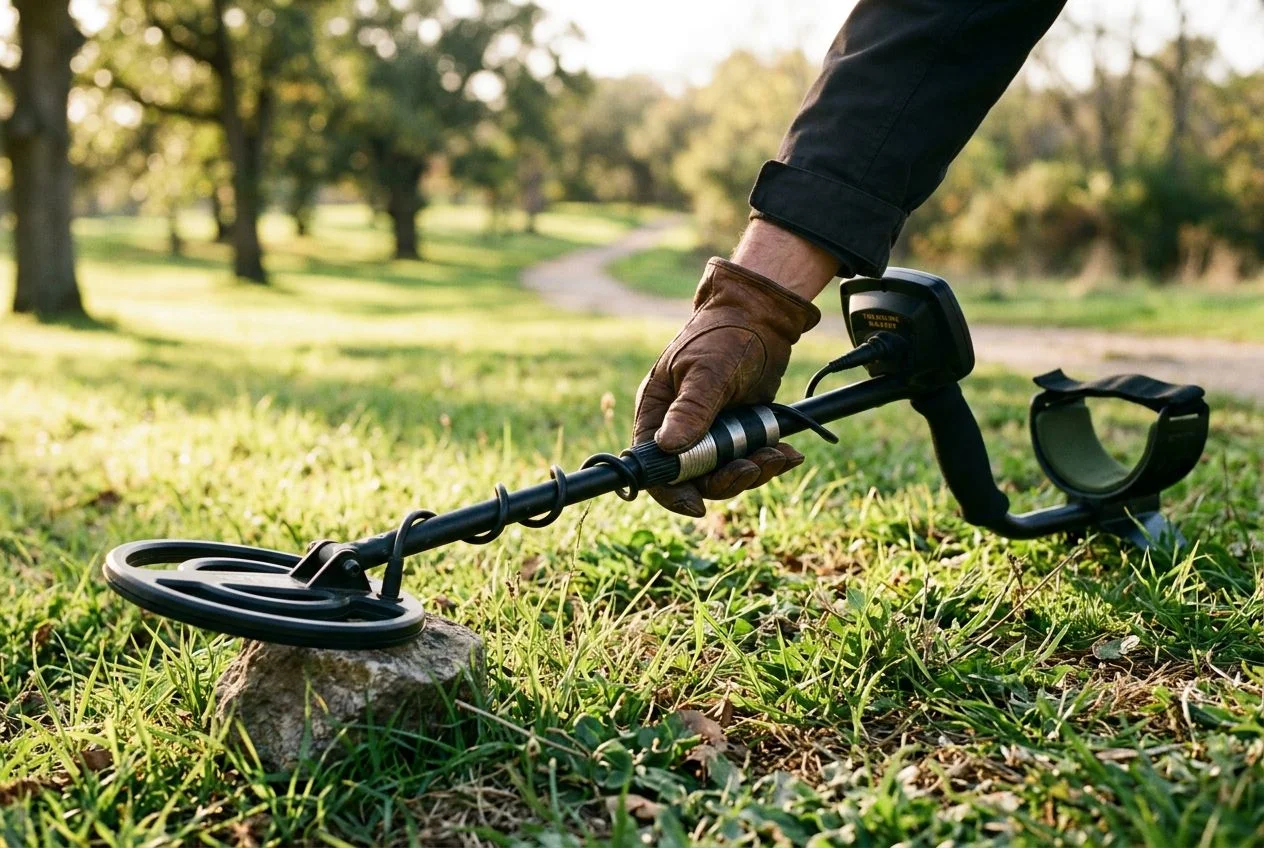
The method to break through is simple. It requires the discipline I initially lacked. First, sweep slow and low. As emphasized in the FBI’s technique guide for law enforcement, a consistent coil height is critical. Keep it parallel to and just brushing the ground. Second, sweep from multiple angles. A piece of iron will often “blob” or change tone. A masked good target will give a fleeting but repeatable high tone from at least one direction. I learned to pivot 90 degrees over every questionable signal. If I heard that clean, high-pitched tone just once amidst the grunts, I’d dig. This slow, multi-angle interrogation finally unlocked the site’s secrets.
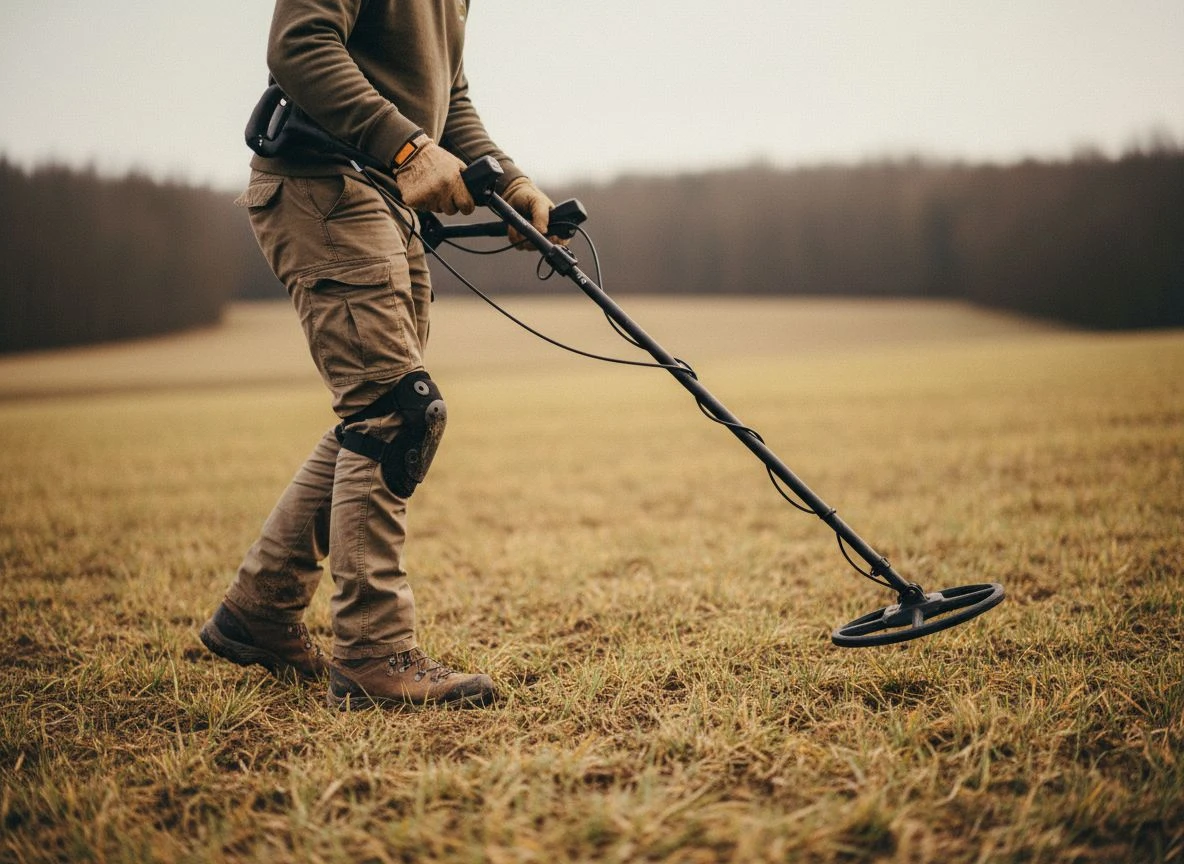
Is Digging Trash a Necessary Detecting Skill?
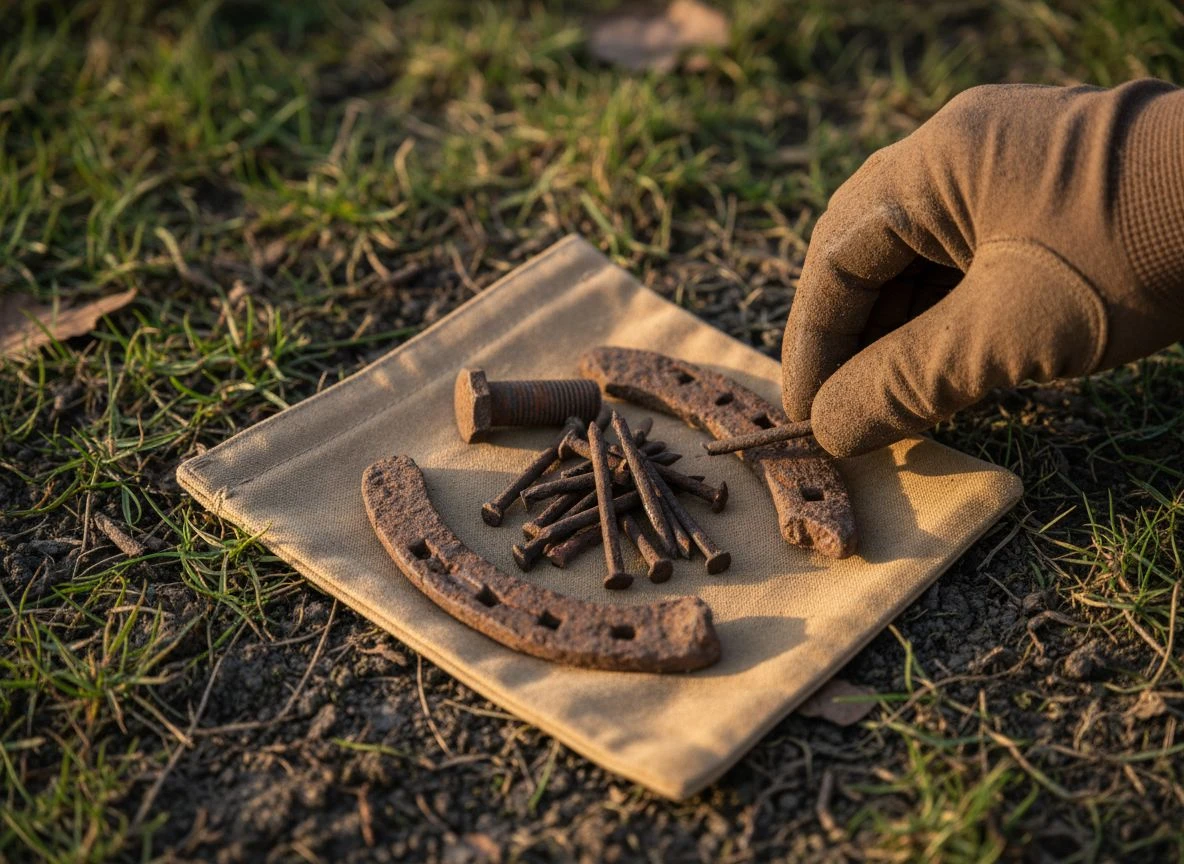
The most crucial detector skill isn’t on any control panel. It’s the discipline to dig a dozen iron signals you know are junk. You do it to clear the “masking” layer. This creates a clean audio canvas for the one good target hiding beneath. It transforms patience from a virtue into a deliberate, technical process.
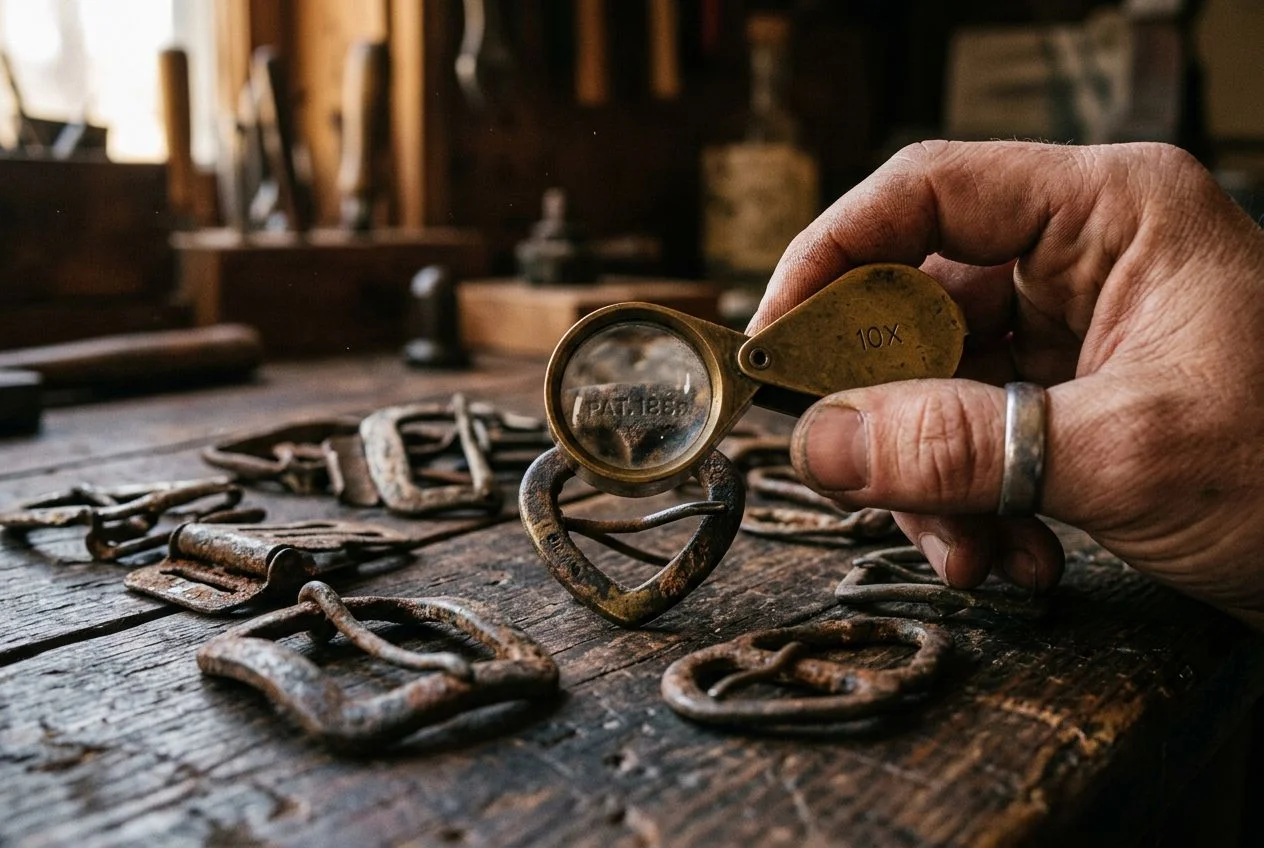
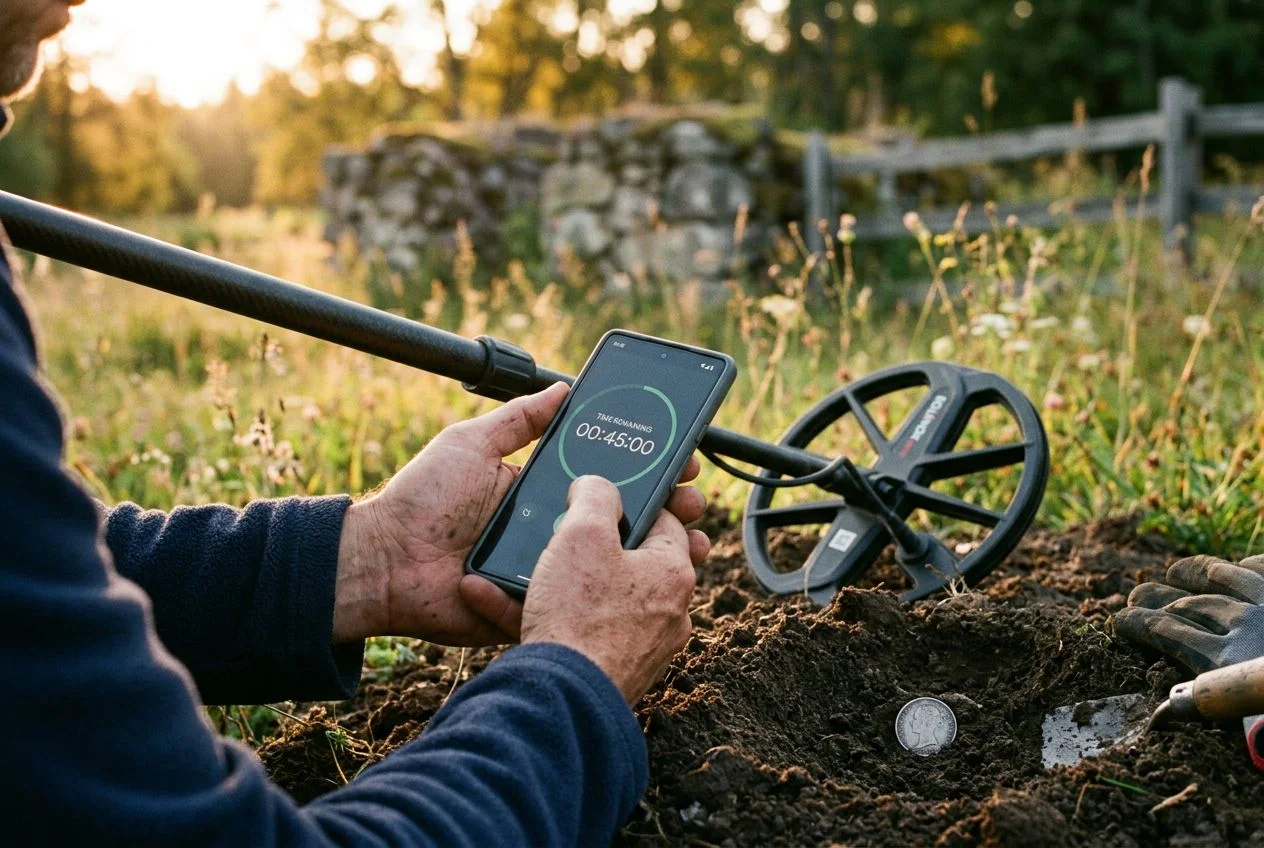
My buddy Mike would have left after ten minutes. I almost did. The first 45 minutes at Cain’s Landing yielded nothing. It was a symphony of low grunts and mid-tones. They resolved into square nails, rusty bolts, and horseshoe fragments. My back ached. My optimism faded. My screen was a scrolling log of despair: TID 12, 18, 22. Iron. More iron.
But this is where the real work happens. As detailed in the Trimontium Museum’s archaeological survey, getting results requires a “high level of patience and precision.” They weren’t just digging targets. They were systematically clearing clutter to map history. I adopted the same mindset. Each nail I removed wasn’t a failure. It was one less piece of iron trash to mask a whisper-thin dime signal.
This physical patience enables technical patience. Once the worst of the iron blanket was lifted, I could slow down. I began re-checking every faint, broken chirp I’d ignored. A signal that first sounded like iron-tainted trash could solidify into a repeatable high tone. You just had to approach it from multiple angles in the cleaner ground. “Beyond the beep” meant enduring 45 minutes of noise to finally hear the signal. The coins came only after the nails were gone.
The Responsible Way to Recover Historical Finds
A perfect signal means nothing if you destroy the site retrieving it. Good recovery technique is a skill equal to good detecting. It’s the final, critical step. It respects the land and preserves the context of your find. Following the disciplined process from archaeological guides ensures the site remains intact for others.
After nearly an hour of clearing nails, I finally isolated a clean signal. It was a crisp, repeatable high tone. It registered a solid 82 on my Equinox, screaming “large cent or silver dime” from six inches down. This was the moment patience built. Now, the recovery had to be just as deliberate.

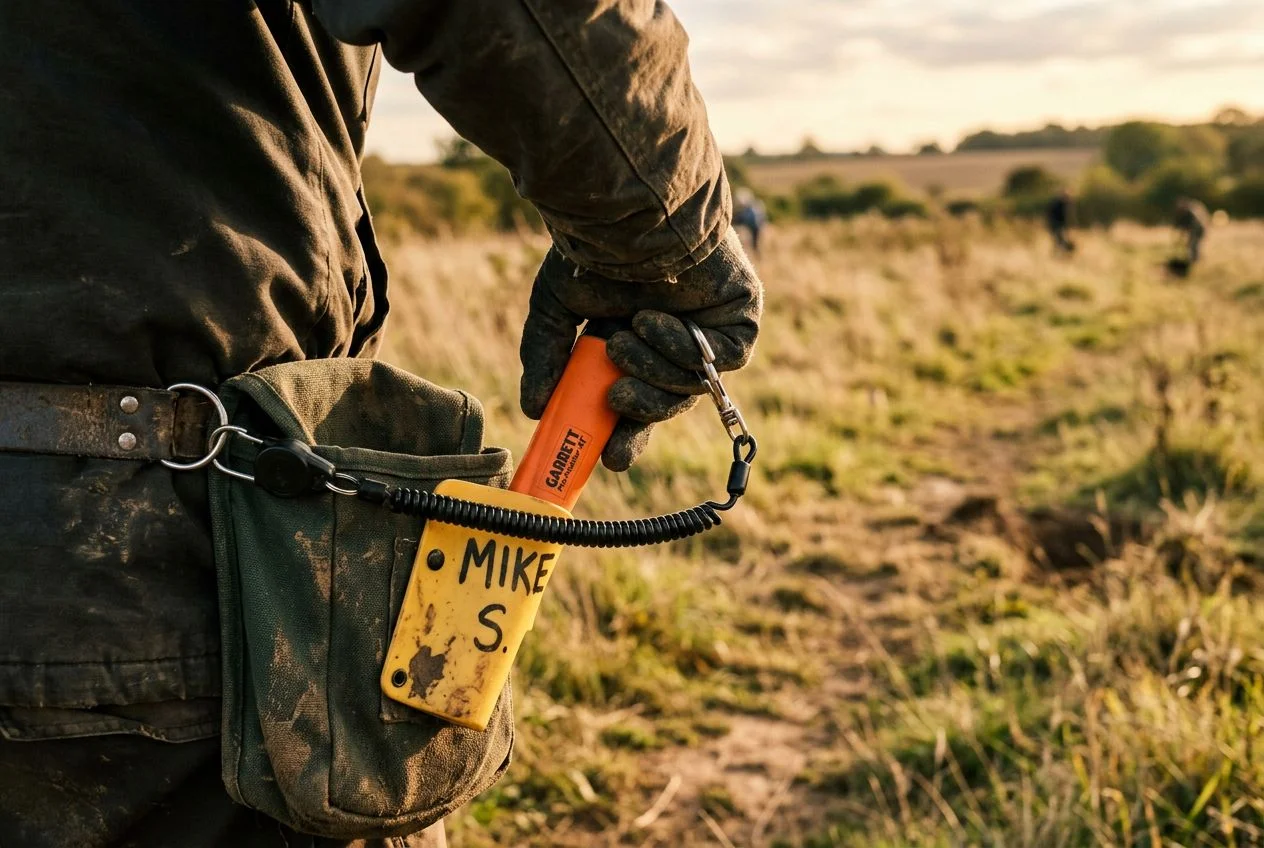
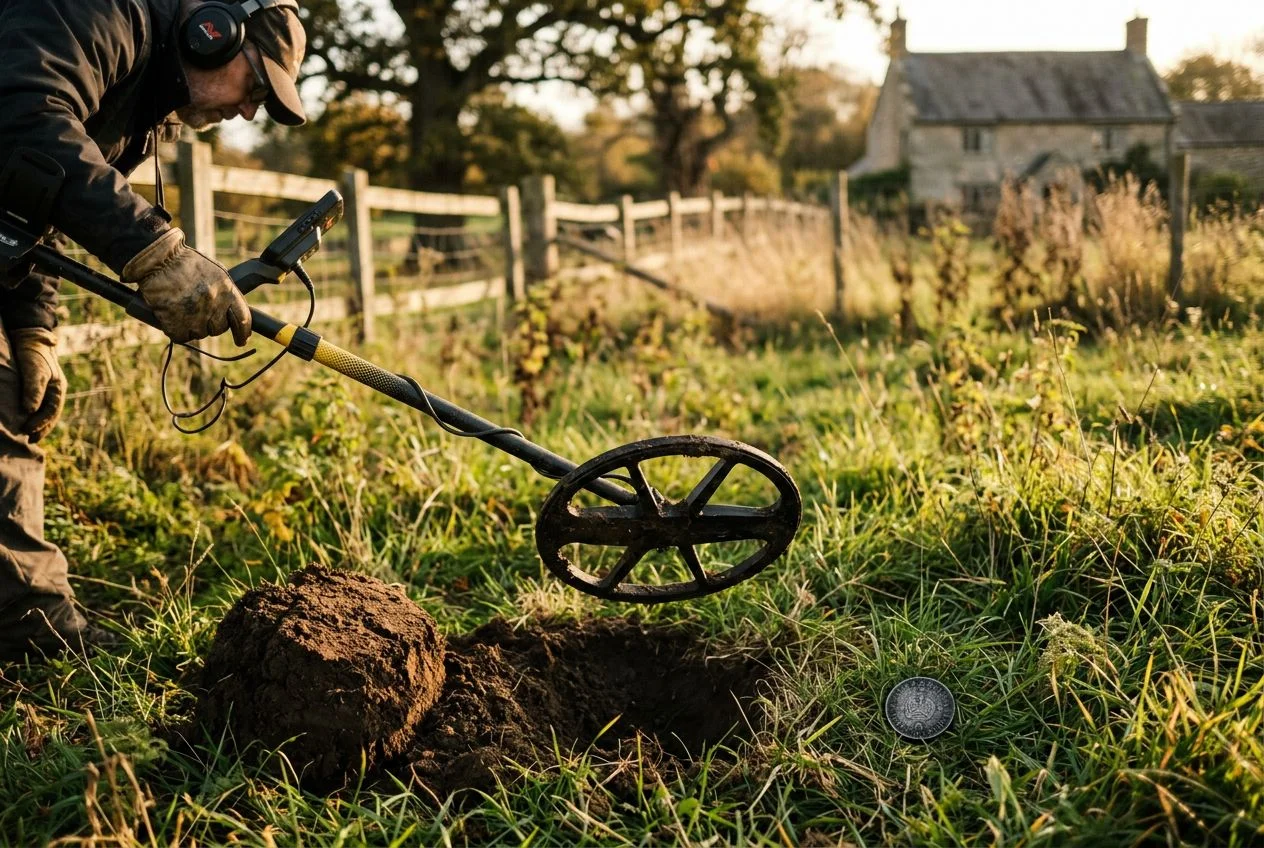
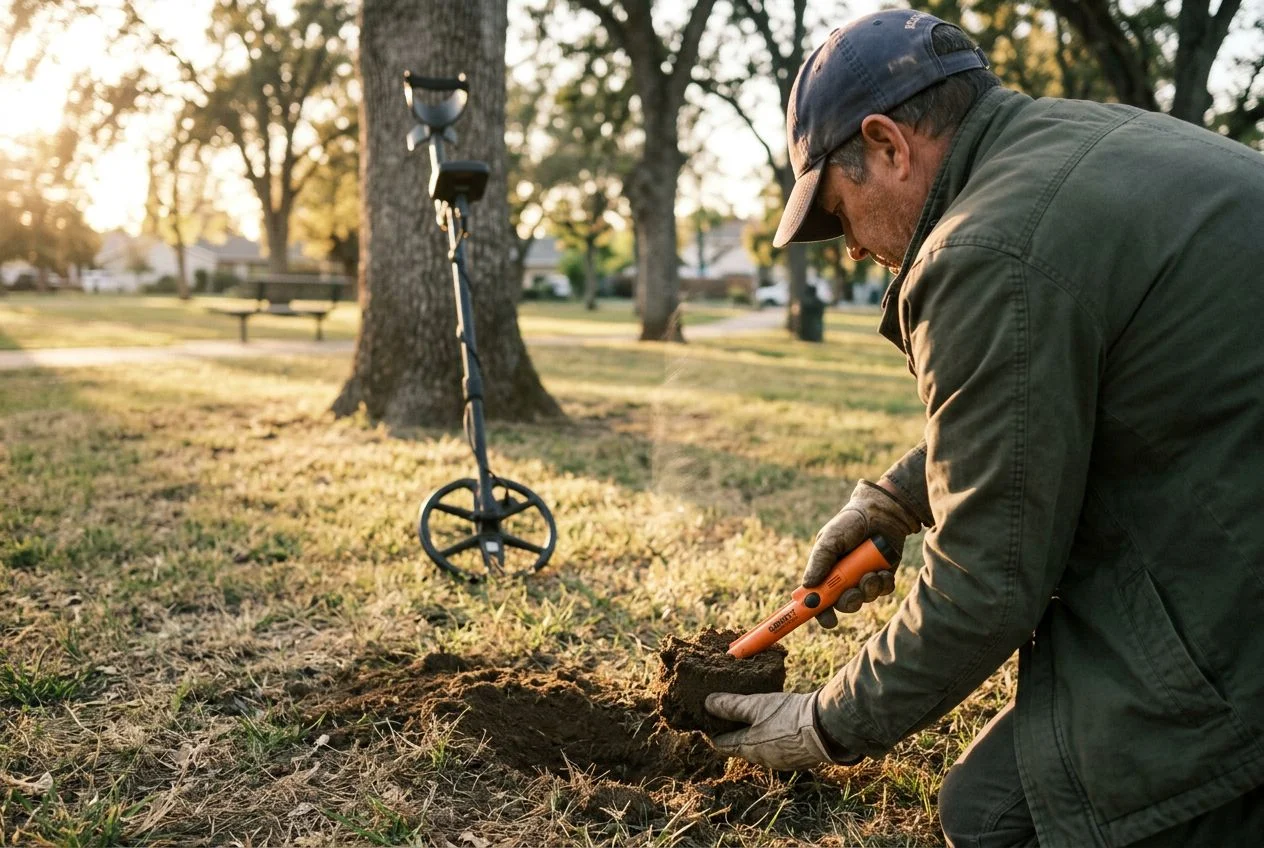
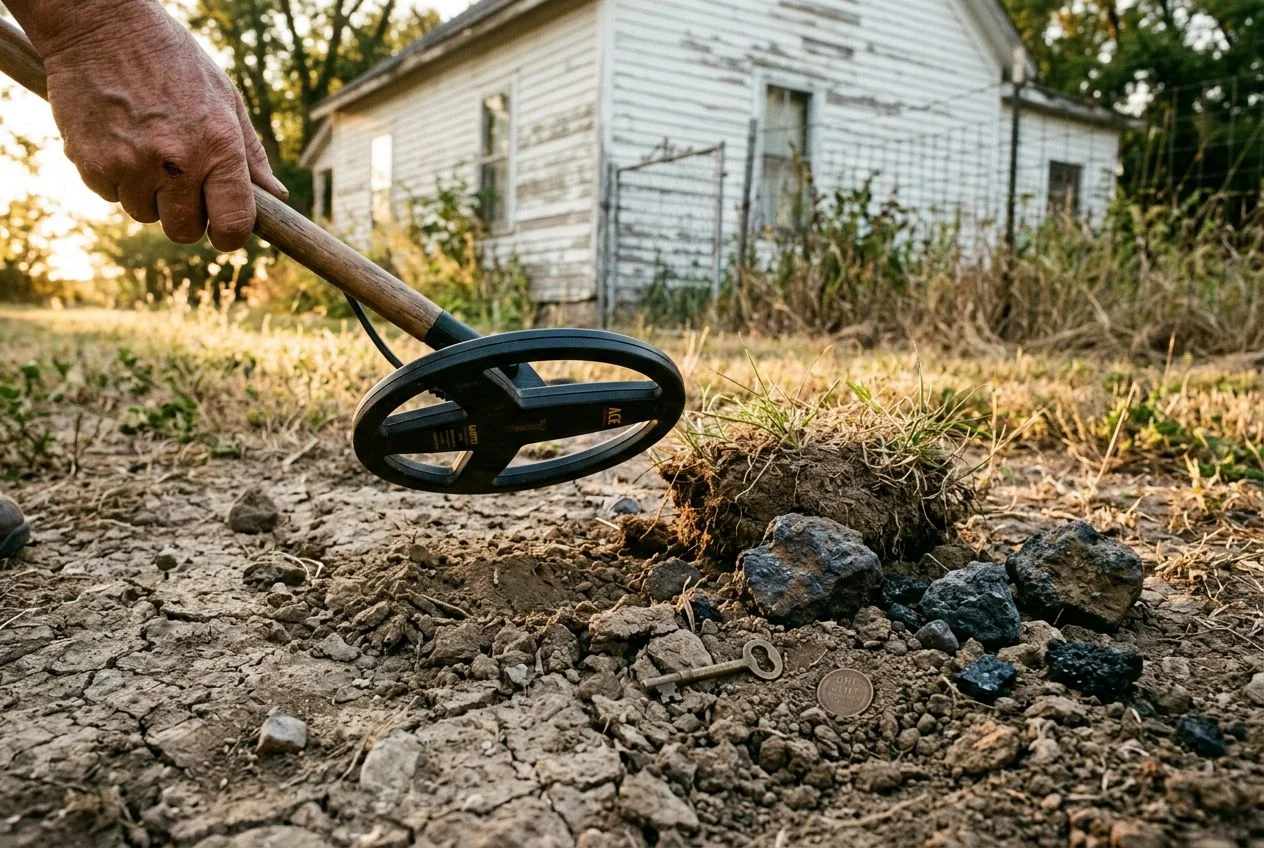
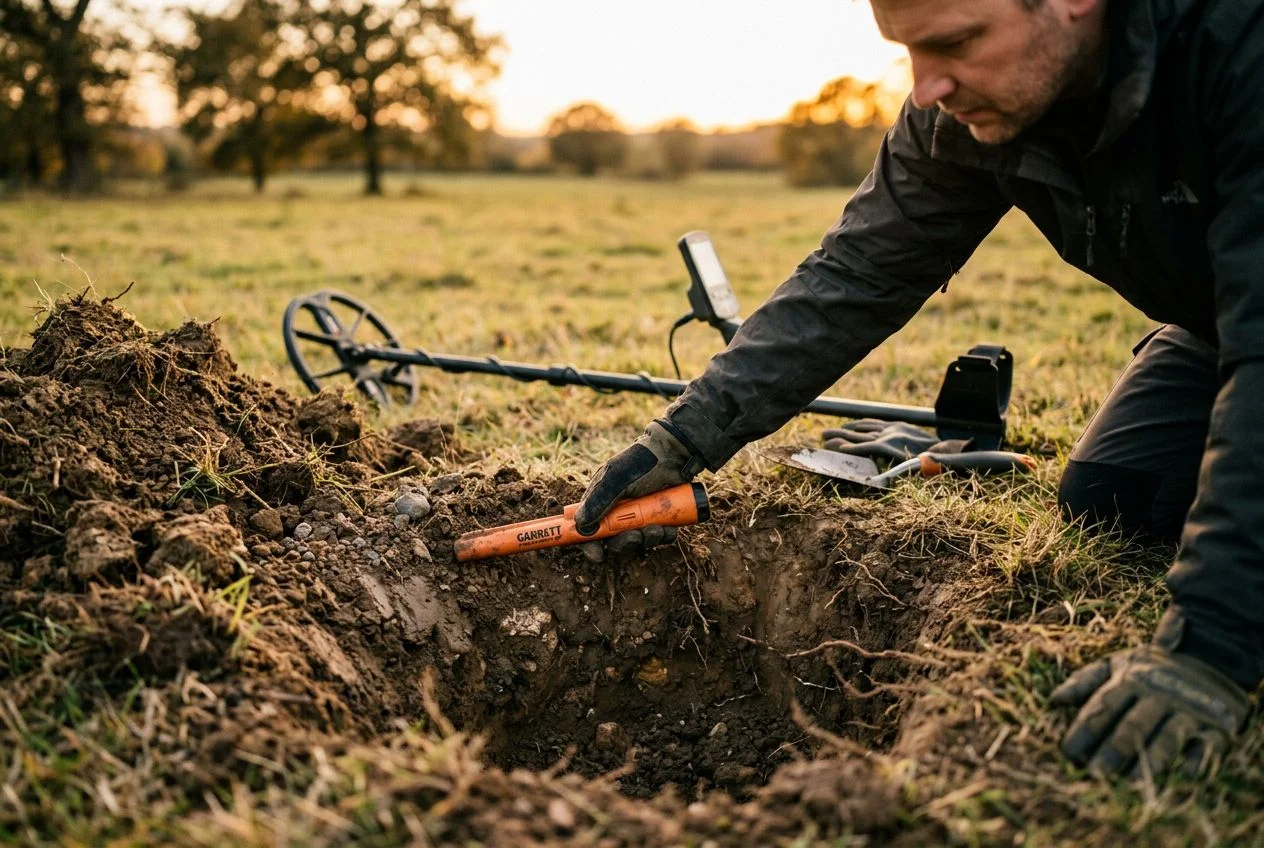
I followed the non-destructive “plug” method outlined in archaeological guides. Using my Lesche digging tool, I cut a neat, three-sided horseshoe shape in the sod. I was careful to keep the grass roots intact. I levered the plug back to expose the dark soil. I placed it on my cloth drop cloth. Then, as emphasized in the FBI’s technique guide for precise recovery, I switched to my pinpointer. It buzzed steadily at the bottom of the hole. I carefully scraped away thin layers of soil until the edge of a blackened coin appeared.
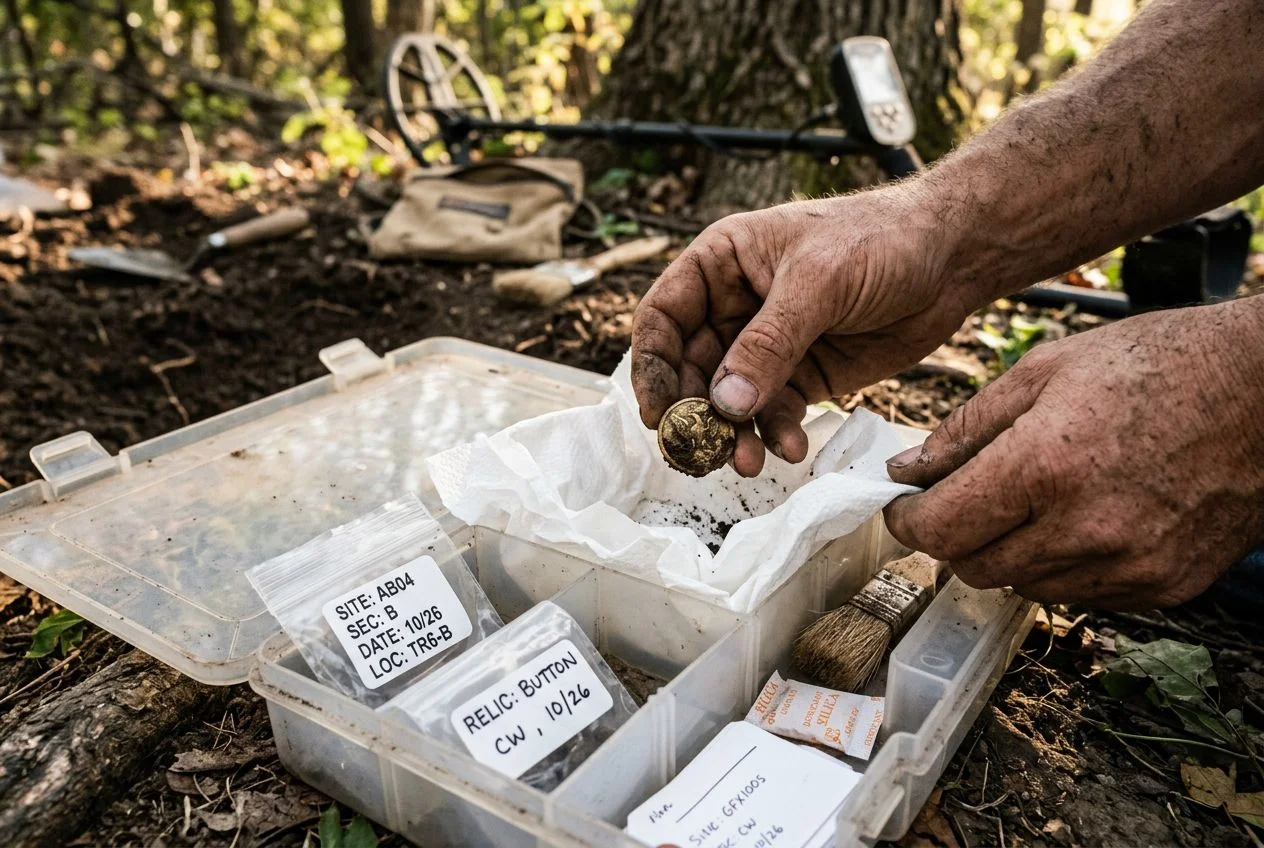
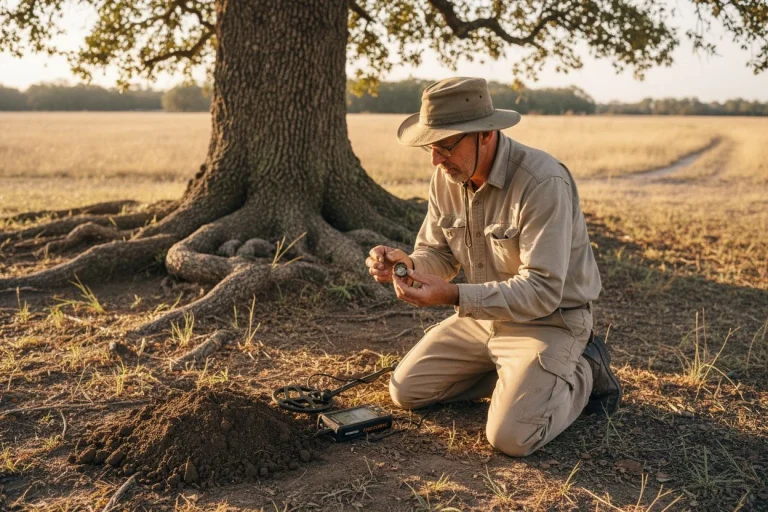
I didn’t cheer. I used a pair of tweezers to lift out my first Indian Head cent from the site—an 1887. I placed it in my palm and took a quick in-situ photo for my records. Context is king. Then I gently slid it into a padded coin pouch. The “history over value” belief isn’t abstract. It’s this exact ritual. I meticulously returned all the soil. I nestled the plug back into place and tamped it down with my boot. Ten minutes later, you’d never know I was there. The history was in my pouch. The field was ready to tell its next story.
What My Finds Taught Me About Target ID
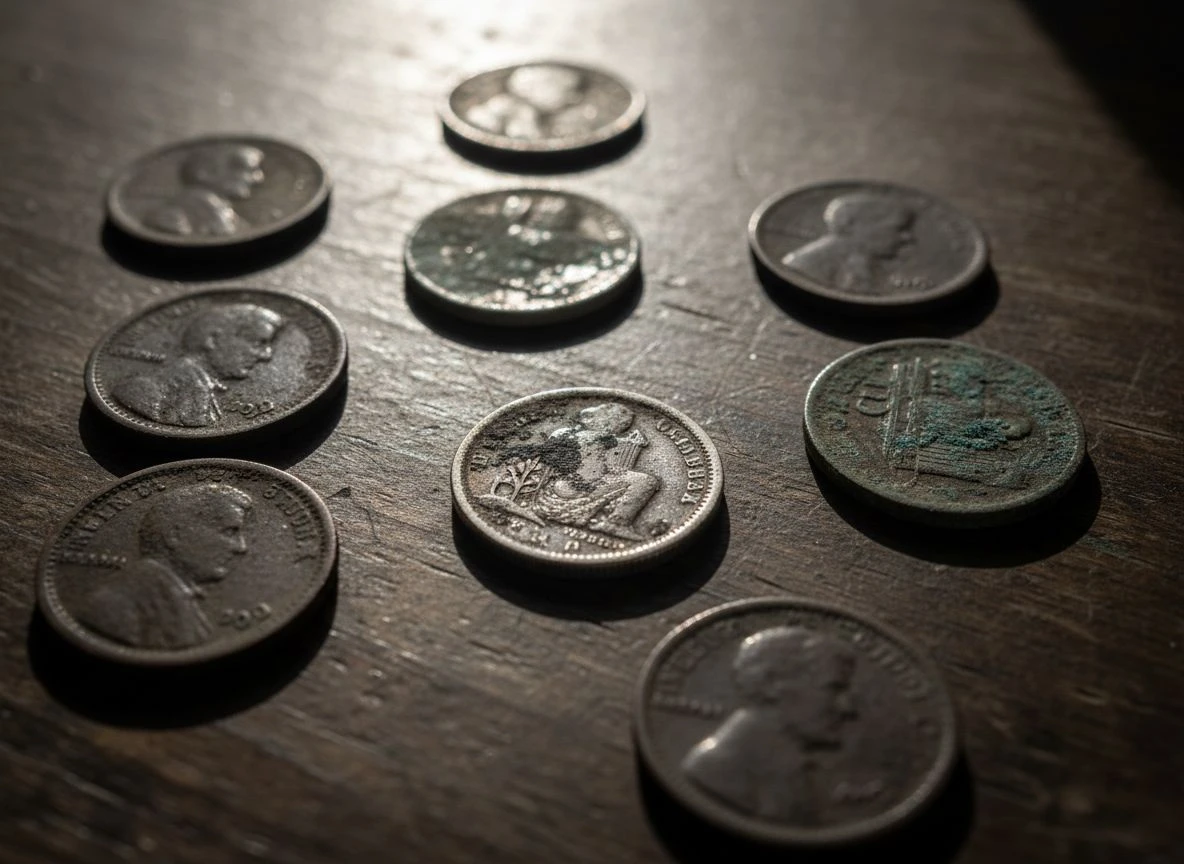
The haul wasn’t about treasure, but timeline. My patience had filtered a clear historical signal from a century of noise. It revealed a precise window of activity. The ground wasn’t just giving up coins. It was telling a story.
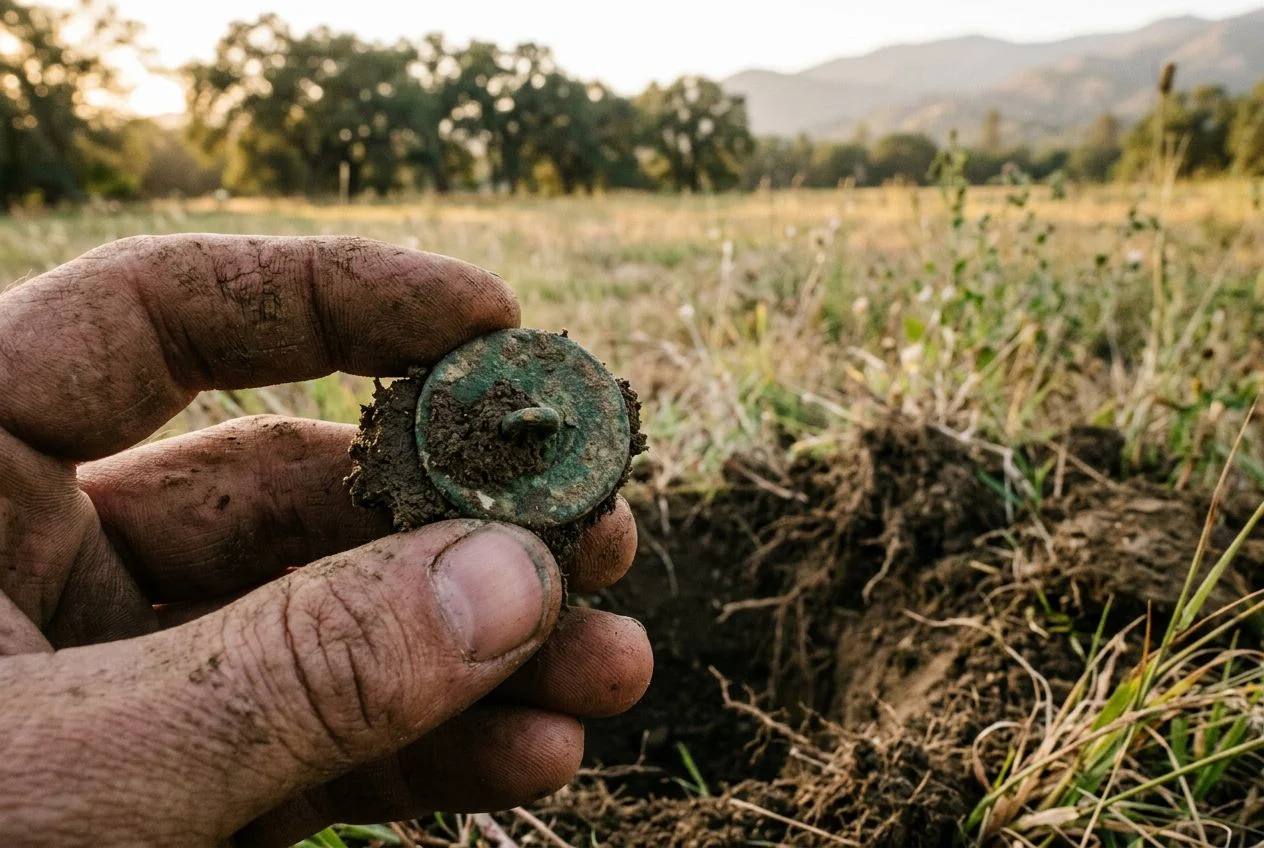
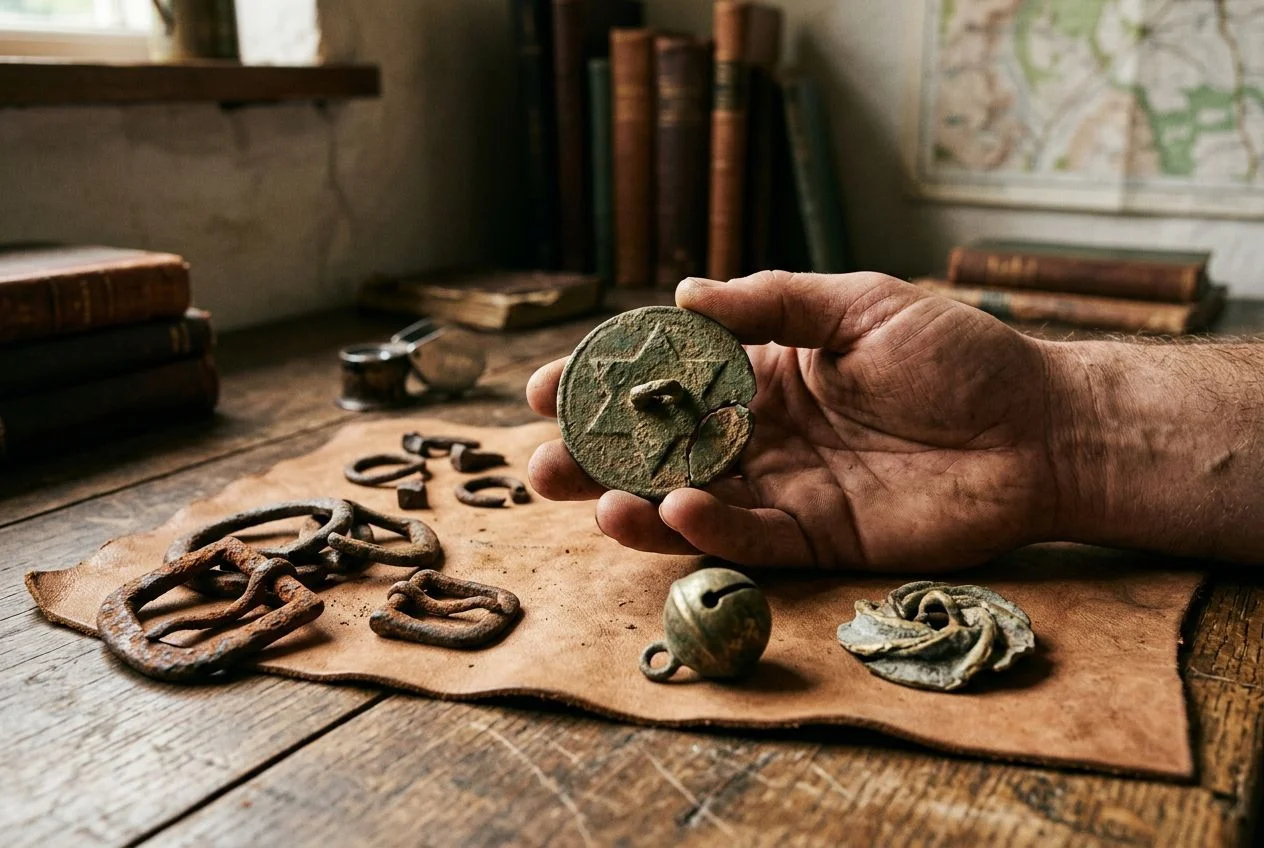
The final tally from Cain’s Landing was a time capsule: 12 Indian Head pennies (earliest: 1887, latest: 1908), 3 V Nickels, over 40 square nails, and the crown jewel—a single Seated Liberty dime from 1893. It was black with a heavy patina. As Serious Detecting’s identification guide notes, that corrosion can completely disguise silver. Careful cleaning and ID is essential. When I showed the blackened disc to my wife that evening, she asked, “Is it even a coin?” A gentle rub with baking soda and aluminum foil revealed Lady Liberty seated on a rock. Her date, 1893, was the final, perfect data point.
This assemblage was the lesson. The coins weren’t random. Their dates clustered tightly in the 1880s to early 1910s. This wasn’t a spot used for decades. It was actively used for a specific, definable period—likely the exact lifespan of that train stop. The nails spoke to the wooden structures that once stood there. Using a guide to identify key dates and types helped cement the narrative. Every dug nail had cleared the way for this revelation. The “value” was never in silver weight. It was in mapping a forgotten place in time. Patience didn’t just find coins. It conducted the archaeology of a ghost stop.
Can Target ID Ever Be Trusted? A Metal Detecting Case Study Research Conclusion
Target ID is a clue, not a command. Patience means trusting the process. It’s slow, methodical hunting and signal interrogation over chasing high numbers. It’s the skill that filters history from trash. It turns a noisy site into a productive one.
Q: Isn’t this “patience” just a fancy word for wasting time digging nails?
It can feel that way. The first hour at Cain’s Landing was exactly that. But each cleared nail increased the ground’s “signal-to-noise ratio.” By removing the iron masking, I created a cleaner electrical environment for my detector. The subsequent high-conductivity hits for the coins were crisp and undeniable. I’d done the tedious work first. You’re not just digging trash. You’re clearing static from the radio.
Q: What if I’m at a public spot and someone else is hunting faster? Won’t they get the good stuff?
This is where the real test happens. A hunter swinging fast is skipping over masked, deeper, or faint targets. They’ll get the obvious surface coins. Your patience is your advantage. You’re working the signal patterns they’re missing. As the Focus Speed etiquette guide notes, keeping 20-30 feet of distance prevents interference. It embodies this non-competitive, focused approach. Let them have their lane. You’re listening to a different channel.
Q: My detector doesn’t have fancy Target ID numbers. Can I still use this method?
Absolutely. This is more about audio and consistency than a screen. A simple machine will still give a cleaner, higher-tone response on a coin. It will give a low grunt for iron. The principles are the same. Use slow, low sweeps. Listen for repeatable non-ferrous tones. Dig the consistent signals from multiple angles. Patience is a universal skill.
The best way to develop this feel? Join a local club. Watch an experienced detectorist work. Ask them about the sounds they’re hearing. Hunt alongside them. It will accelerate your learning more than any manual. It turns theory into instinct. This is the practical takeaway from my metal detecting case study research.
Start Your Own Target ID Journey Today
The lesson from that train stop wasn’t about a detector setting. It was that target ID is a language. Patience is the skill of listening for its true meaning. This metal detecting case study research proves that combining historical investigation with slow, methodical hunting lets you translate chaotic signals into a clear story. The real treasure is the narrative you piece together from the ground up.
As the FBI bulletin framed it, the detector is just a tool. It requires both knowledge and hands-on experience to master. Your local history is full of forgotten “Cain’s Landings.” Look for old picnic groves, abandoned fairgrounds, former trolley stops. Start with the research. Visit your historical society. Study old maps. Then let patience guide your coil. For more on turning research into finds, see our guide on finding old home sites.
I’d love to hear how this approach works for you. What’s a story your patience helped you uncover? Share your own experience with a tricky, research-driven site in the comments below. The best finds are always the stories we get to share. Ready to apply these lessons? Check out our beginner’s guide to metal detecting to get started.

My name is Paul and I am the founder of Detector For Metal, a dedicated resource for metal detecting enthusiasts seeking to uncover historical treasures and connect with the past using the latest technology. As a stay-at-home dad and family man, I’ve found metal detecting to be the perfect hobby that combines family adventure with historical learnings for the whole family.
As a father, I’m deeply committed to passing on this hobby to the next generation of detectorists, starting with my own children. I share advice on everything from metal detecting with kids to exploring the top 10 metal detecting sites you never thought about. My methodical approach to the hobby goes beyond the thrill of discovery—it’s about creating family traditions while preserving history and sharing the stories of those who came before us.