Table of Contents
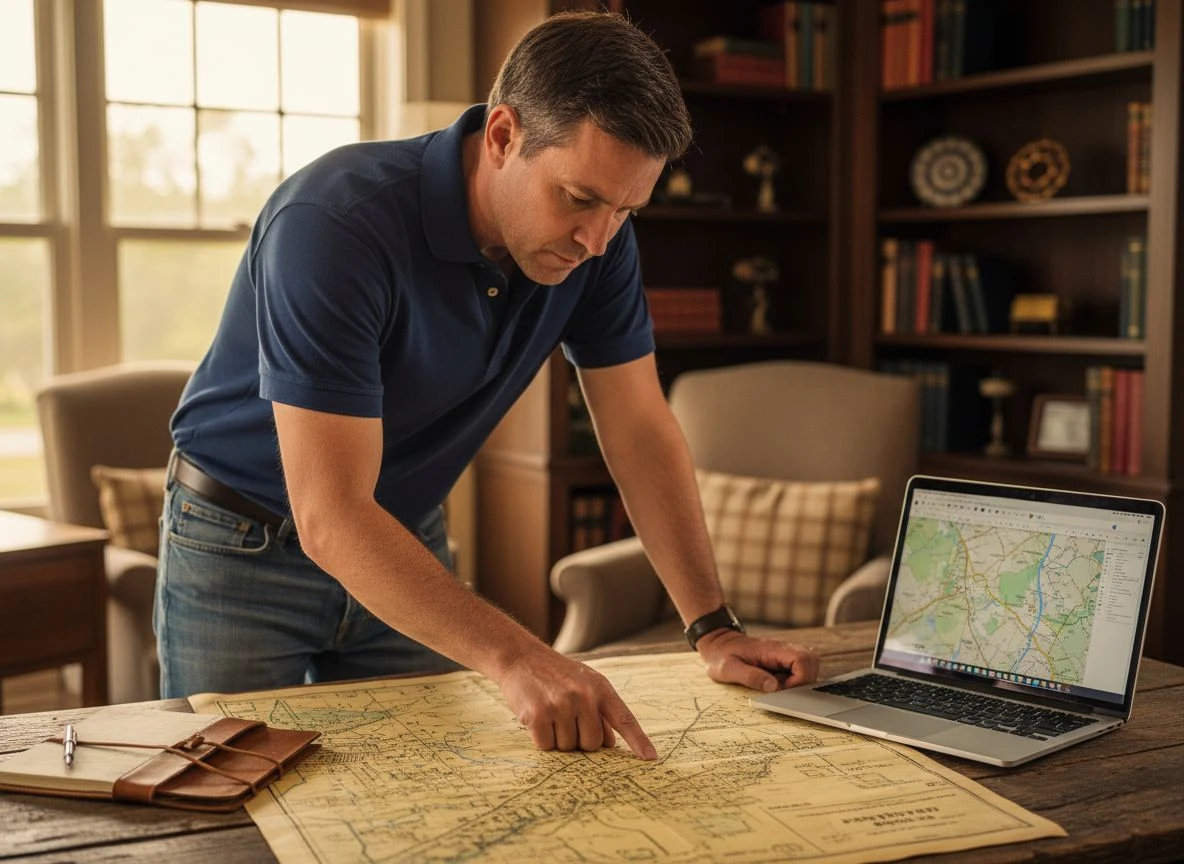
Getting permission to detect private land in California is simple, but it’s not easy. It comes down to one thing: swapping fear for a prepared, professional conversation. That conversation is your key to the state’s best history, from Gold Rush relics to lost homestead treasures. I’m going to show you the exact three-phase system—Research, The Ask, and The Aftermath—that I and other California pros use to build lasting relationships with landowners.
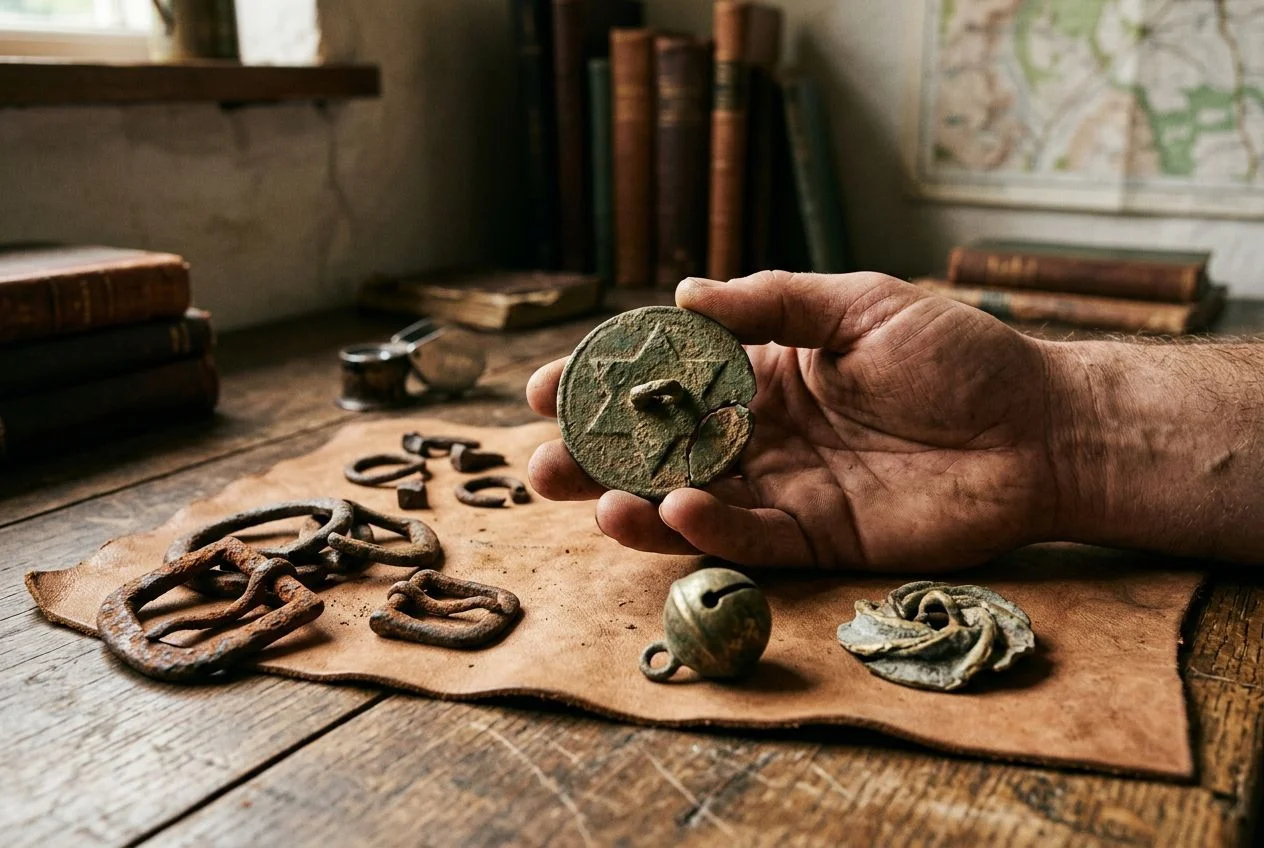
Let’s be honest. The hardest part of this hobby isn’t learning your machine or digging a clean plug. It’s walking up to a stranger’s door. I remember my first successful attempt. My knees were literally shaking at an old farmhouse outside Sacramento. I mumbled something about local history and showed the owner a printout of an 1895 map. To my shock, he said yes. An hour later, I pulled my first-ever Large Cent from his pasture. The coin was worth maybe twenty bucks. The lesson was priceless. Your golden ticket isn’t a form; it’s a conversation.
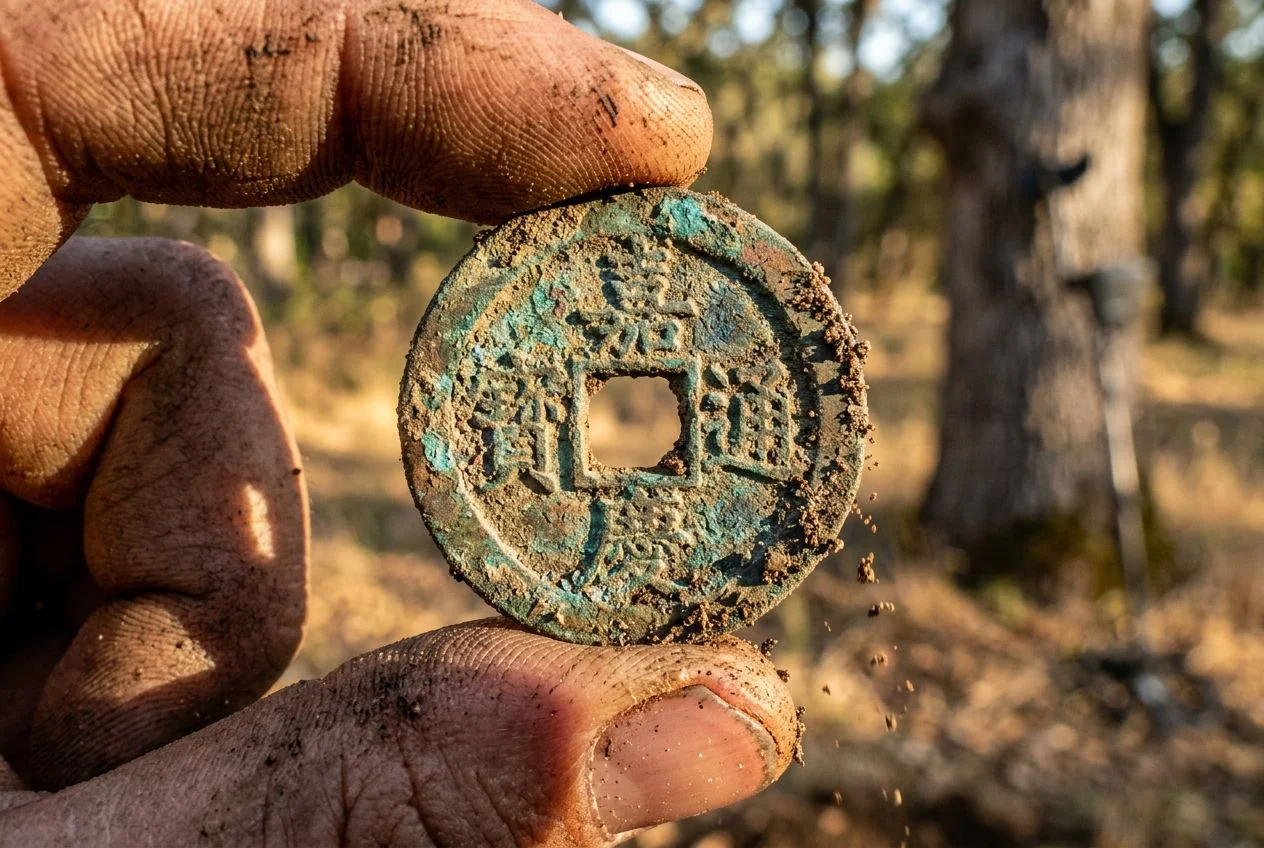
This matters because California’s private land holds incredible history. Think of the 2014 find where a couple unearthed 1,400 Gold Rush-era coins on their property. That’s a once-in-a-lifetime event, but it shows what’s underfoot. You just have to get to it ethically and legally.
So let’s move beyond vague advice like “just be polite.” I’ve built a professional, repeatable system from my own triumphs and awkward rejections. We’ll break it into three phases: the Research before you knock, the Script and Strategy for “The Ask” itself, and the crucial Aftermath that gets you invited back.
Forget seeing this as a transaction. The goal is to build a relationship. Let’s get you that first “yes.”
How to Research a Property Before Knocking
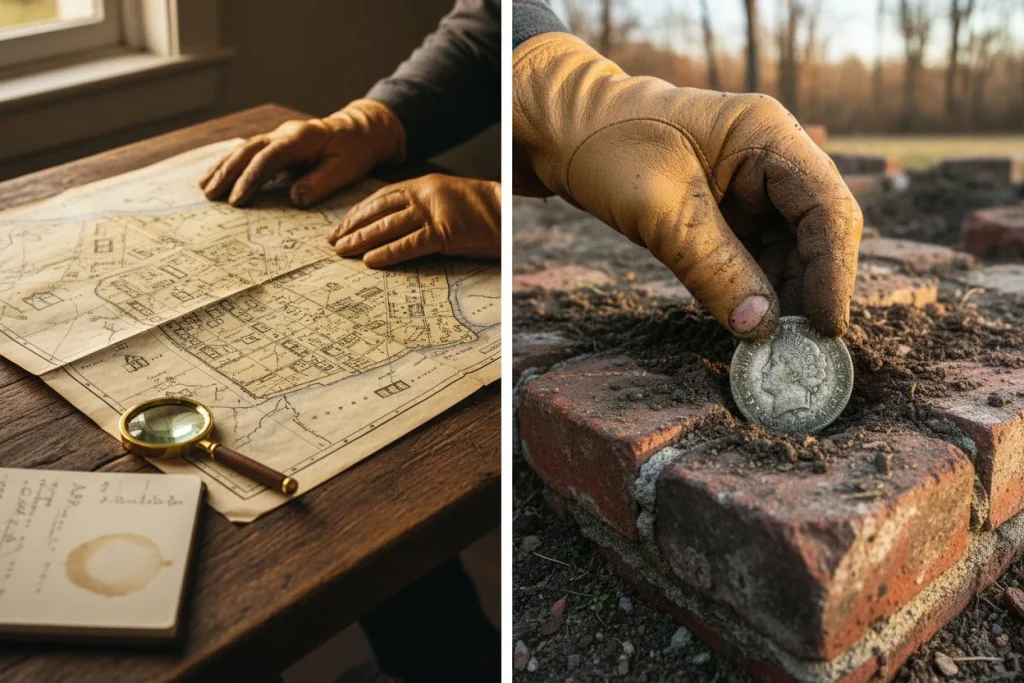
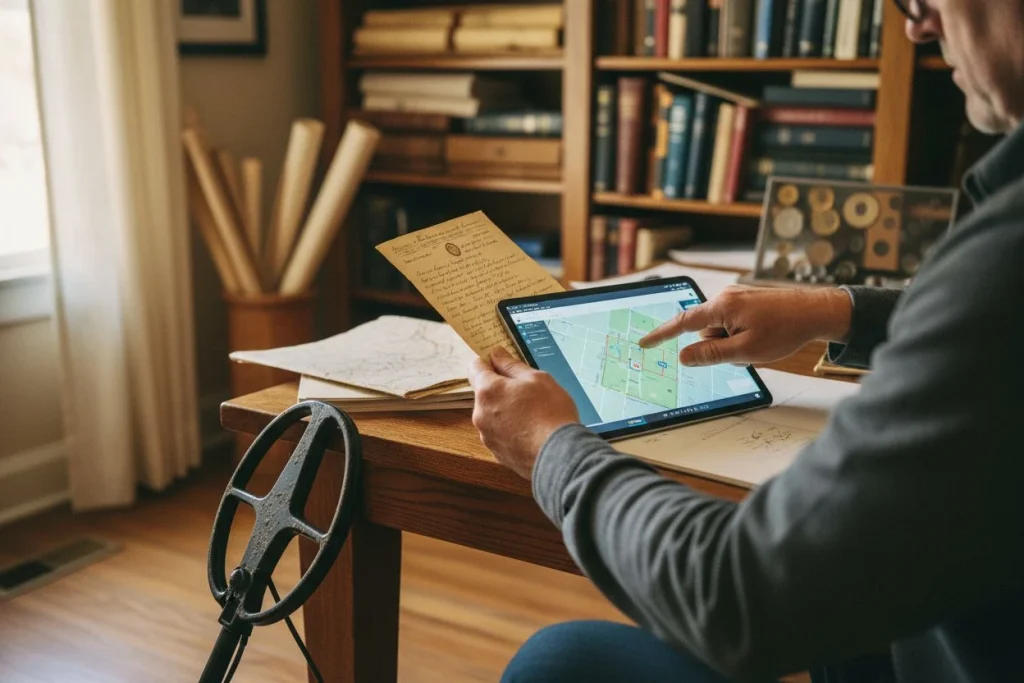
Your first move isn’t knocking on a door. It’s hitting the books and databases. This research phase separates the professional from the trespasser. You’ll use county records and mapping apps to find the true owner and learn the property’s history. This intel changes your ask from a random request into a targeted conversation.
I learned this the hard way. I got a tip about an old stagecoach stop in the Sierra foothills. I drove two hours, buzzing with excitement. I confidently knocked on the door of the farmhouse I’d picked out. The man who answered was not happy. “You’re the third detectorist this month,” he grumbled. The historic site was on the neighboring parcel, owned by an absentee landlord in San Francisco. My failure to check the legal owner wasted my day and annoyed a resident. It was a perfect way to get the whole area blacklisted.
Locate Property Owners Using Public Records
Never trust a guess like “I think the family down the road owns it.” You need legal certainty. Start with your county’s official assessor’s office website, like SacCounty.net for my area. These public portals let you search by address or parcel number. You’ll find the legal owner and their mailing address. As guides on securing access emphasize, this is your single source of truth.
For a detectorist-friendly approach, I use hunting apps like OnX Hunt or Gaia GPS. California pro Mark Dayton notes these apps overlay property lines and owner names on a satellite map. You can see exactly whose door to knock on before you leave your house. This step alone prevents my stagecoach-stop embarrassment.
Uncover a Property’s Past for Better Finds
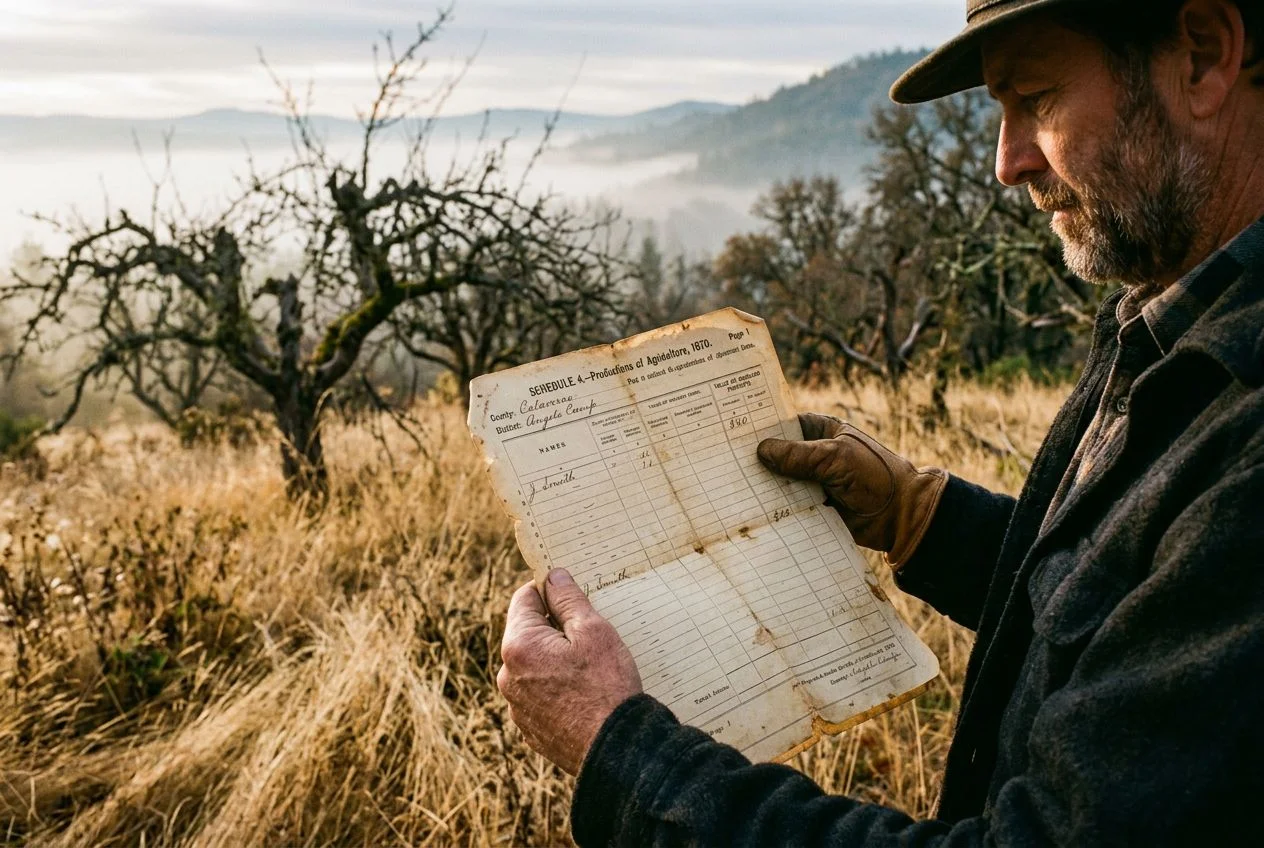
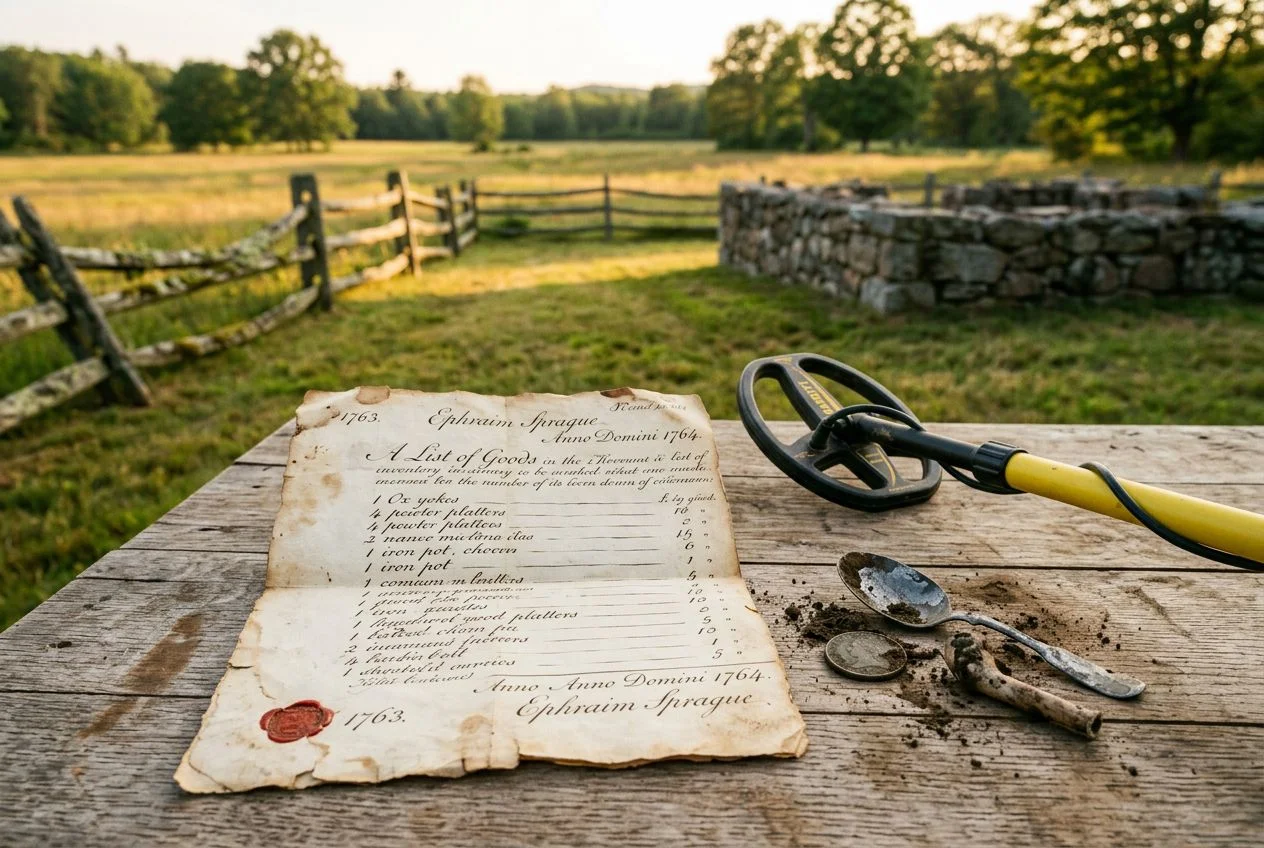
Knowing who owns the land is step one. Knowing why the land is interesting is step two. It’s your secret weapon. Was it a 1900s dairy farm? A Depression-era camp? A site of a former church? A search of historical archives, like the Library of Congress’s Sanborn map collection, can give you a story.
Walking up and saying, “I found an old map showing a blacksmith shop here in the 1890s. I’d love to see if any history remains,” is powerful. It’s much better than a vague, “Can I detect here?”
Strategy for Absentee vs Resident Owners
Your research will reveal a critical choice. A resident owner you can visit face-to-face. An absentee owner (like my San Franciscan) needs a letter or phone call. This is a strategic fork in the road.
For an absentee owner, your first contact must be professional. Send a concise, friendly letter by mail. Explain your hobby and your historical interest in their specific parcel. Clearly offer to call them to discuss it. Enclose a pre-addressed, stamped return postcard for them to check “Yes” or “No.”
For a resident owner, you’re preparing for the conversation in Phase 2. This homework isn’t optional. It’s the foundation every successful “yes” is built on.
Build Your Metal Detecting Permission Kit
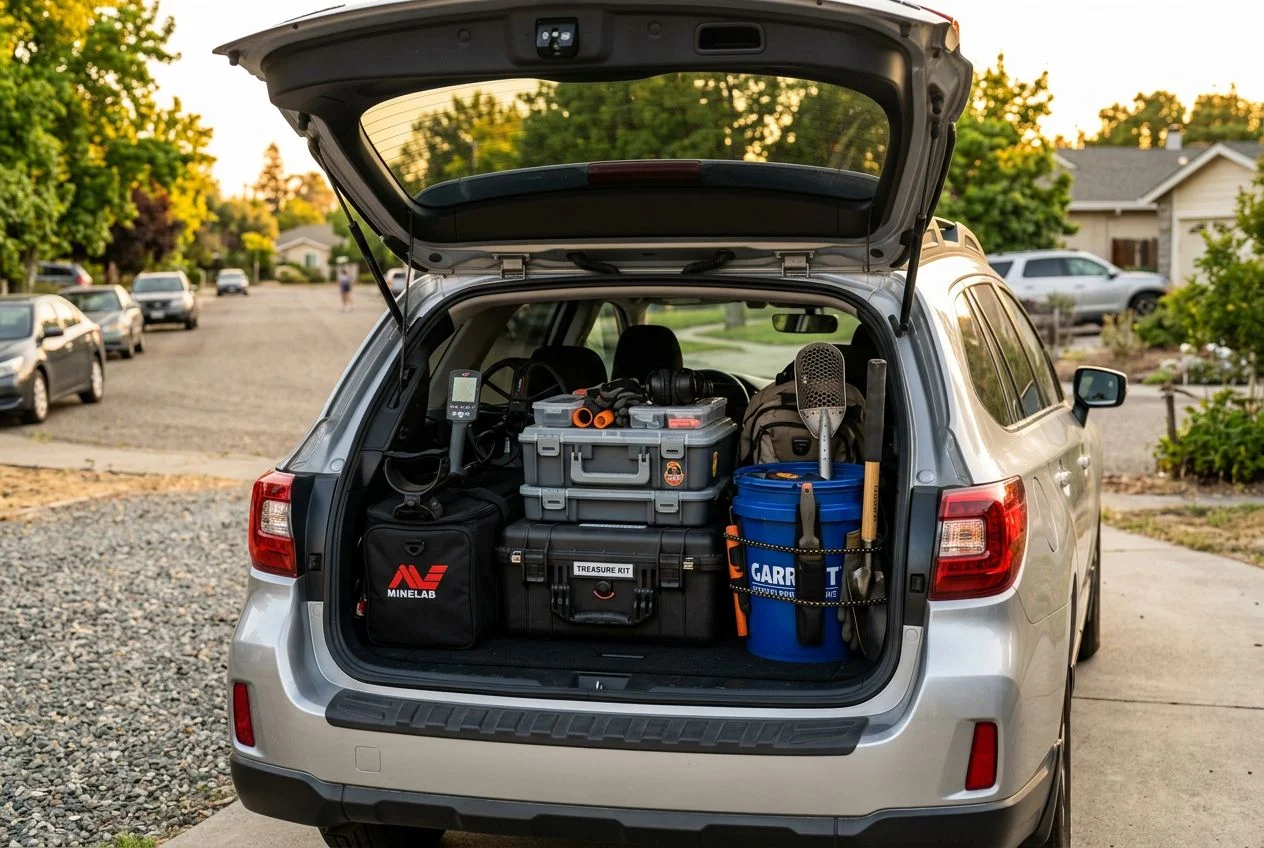
Think of this as gearing up for the most important hunt of the day: the conversation. Your success isn’t just about what you say. It’s about how you’re perceived the moment that door opens. A professional, prepared presentation builds trust instantly. It separates you from everyone else who’s knocked before. This kit is your proof that you’re serious, safe, and respectful.
Dress for Success: Look Trustworthy
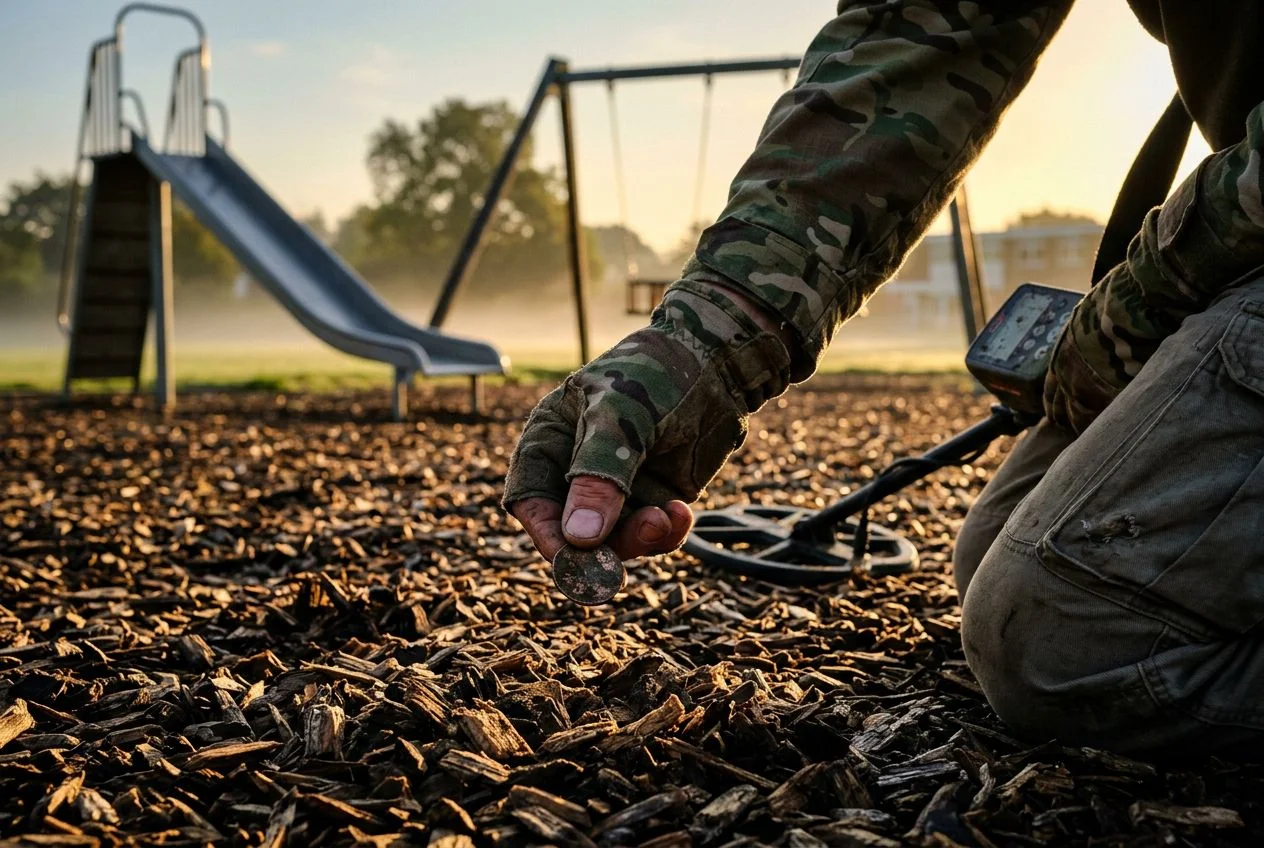
Forget the stereotypical treasure hunter look. As California pro Mark Dayton wisely advises, showing up in full camouflage sends the wrong message. You want to look like a responsible neighbor, not a commando. I wear a clean polo or button-down shirt and jeans. It says, “I respect your property and this opportunity.” A guide from Serious Detecting puts it perfectly: professionalism opens doors that suspicion closes.
Essential Gear for Getting Permission
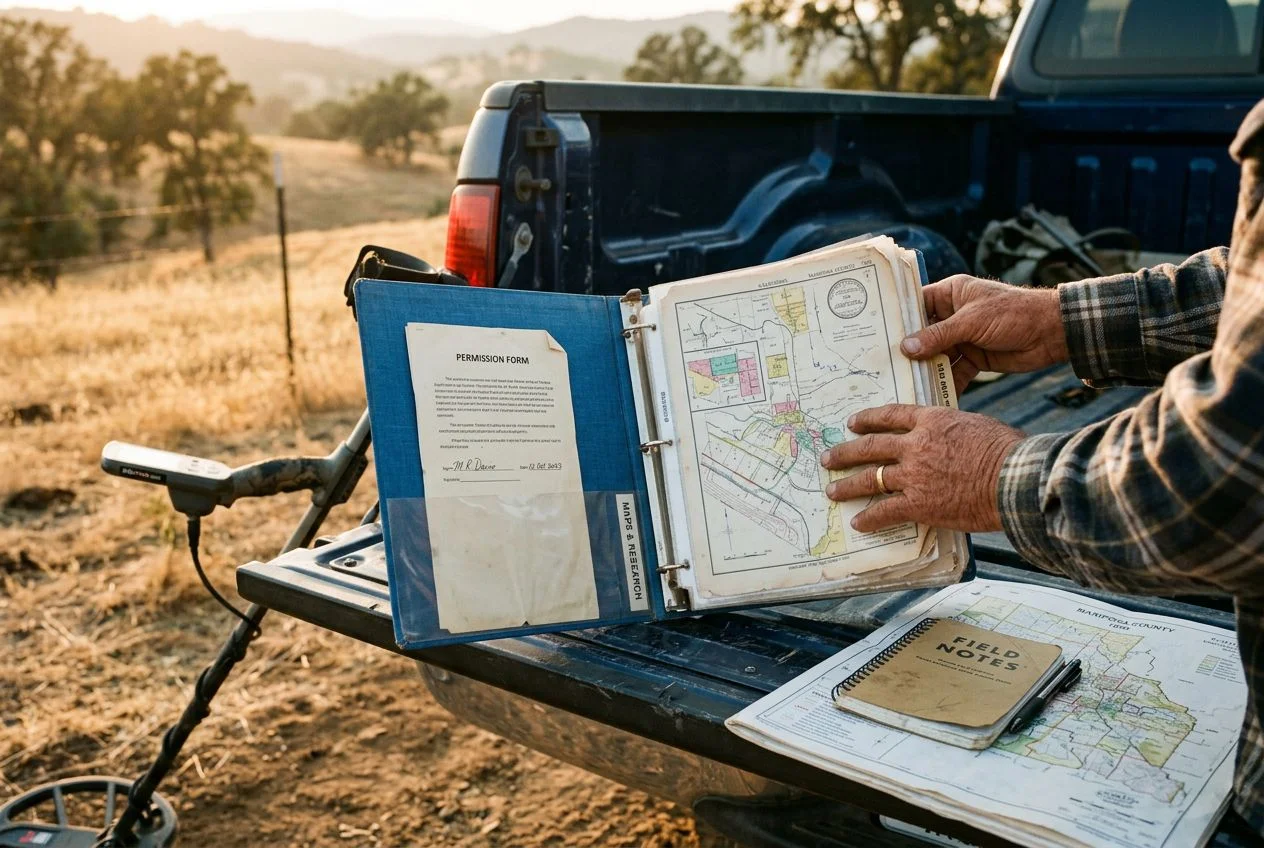
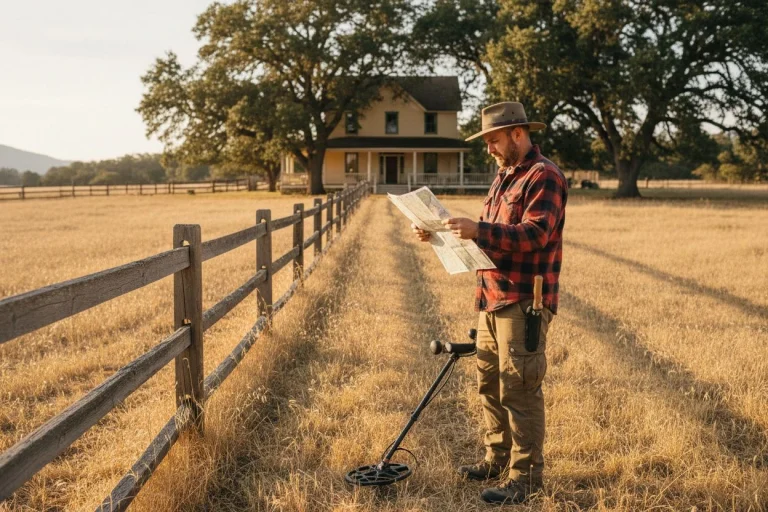
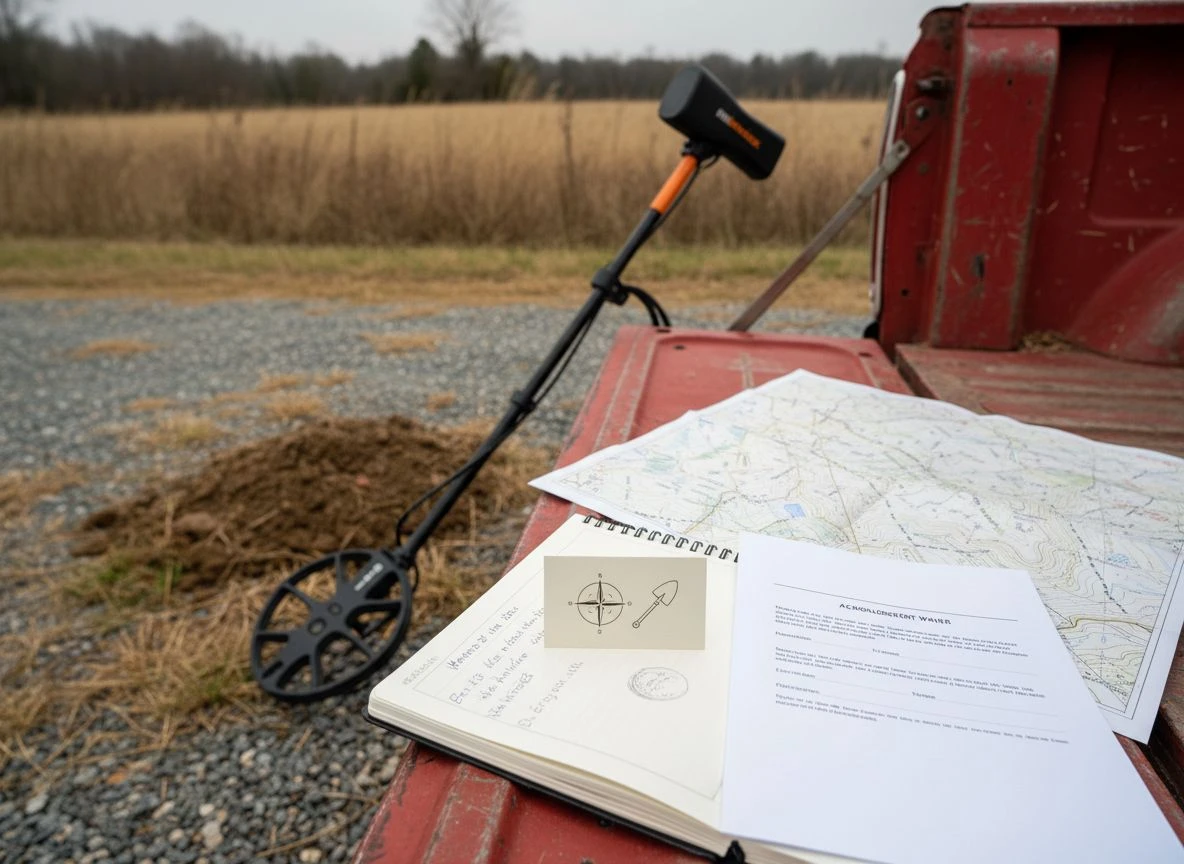
Have these in hand when you introduce yourself. A simple business card with your name and number makes you legit. A notebook shows you’re there to listen—jot down the owner’s rules. Bring a printout of the property map from your Phase 1 research. Pointing to “this old orchard area right here” on a map shows you’ve done homework. You’re not just randomly scouting their backyard.
Why You Need a Metal Detecting Liability Waiver
Here’s the game-changer most detectorists skip. It’s the best tool for calming a landowner’s biggest fear: lawsuit liability. A simple, one-page waiver states that you accept all responsibility for your own safety and any property damage. It releases the owner from liability. It’s not a complex contract; it’s a peace-of-mind tool. I’ve seen hesitant “maybes” turn into solid “yeses” the second I offered one. We’ll have a proven template ready for you to use at the end of this guide.
Your Action Now: Don’t wait. Grab a clean shirt, order those business cards, and start drafting your waiver. Having this kit assembled turns nervous theory into confident action.
The Best Way to Ask for Metal Detecting Permission
This is where your research and preparation pay off in a 60-second conversation. The goal isn’t a sales pitch. It’s a friendly, confident chat that addresses the landowner’s unspoken concerns before they even voice them.
Ask for Permission on Weekend Mornings
Never show up at dinner time. I aim for weekend late mornings, around 10 a.m. It feels neighborly, not intrusive. Walk up to the door empty-handed (your kit is in the car). Stand clearly in view of the porch and smile. As the team at Kellyco emphasizes, the face-to-face ask is irreplaceable for building trust. You’re not a solicitor; you’re a local history enthusiast.
Your 60-Second Permission Pitch Script
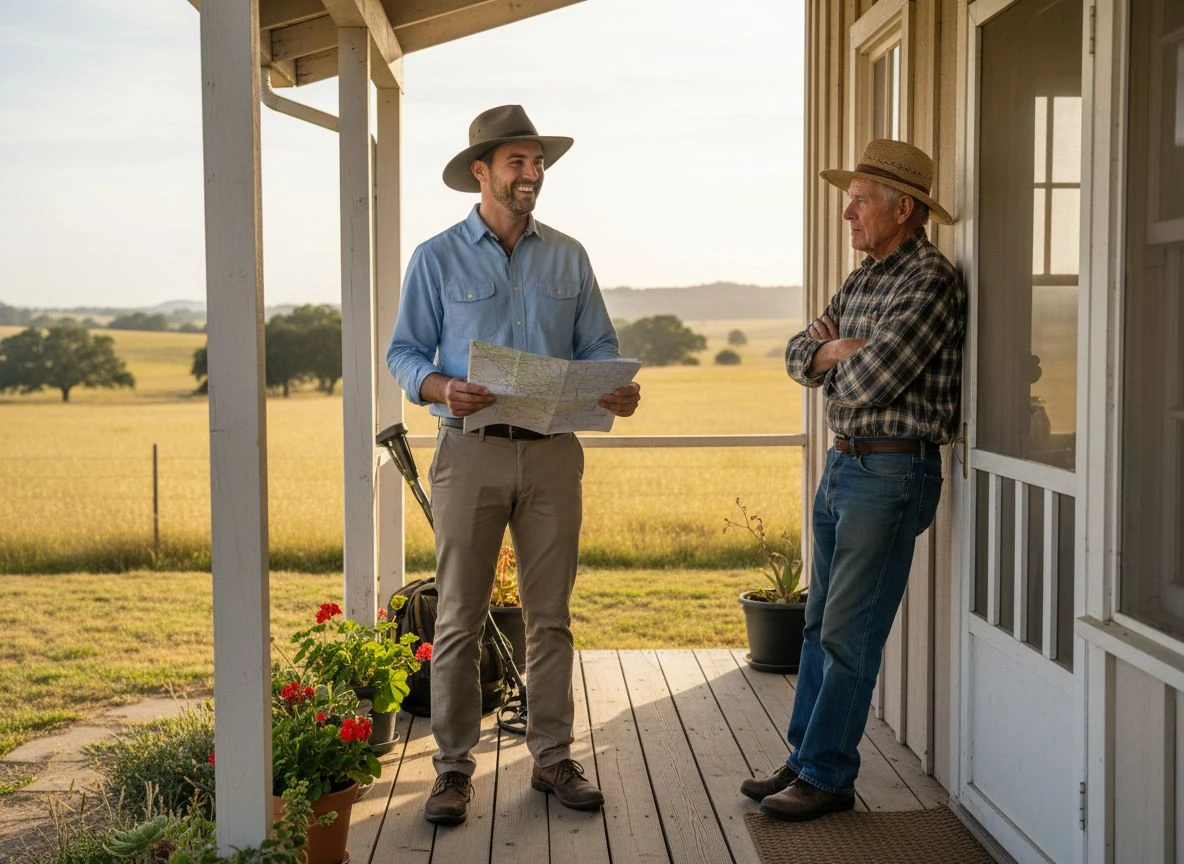
“Hi, my name’s Paul. I hope I’m not catching you at a bad time. I live over in [Your Town/Neighborhood] and I’ve been researching some local history around here. I was looking at old maps and saw that your beautiful property was part of the old [Mention specific: ‘Auburn stagecoach route,’ ‘Johnson dairy farm,’ etc.]. I was wondering if you might be open to letting me do a bit of respectful metal detecting? I’d be thrilled to see if any history is still tucked away in the ground, and I’m always happy to clean up any modern junk I find.”
This script does the heavy lifting. It establishes you as local. It shows you’ve done homework, proving you’re serious. It compliments the property and frames it as historical exploration. It immediately offers the benefit of trash removal.
What If the Owner Says No?
The most common pushback is liability. This is when you get your Permission Kit from the car. “I completely understand that concern. I actually have a simple one-page liability waiver right here that holds me fully responsible.” Handing them that document changes the game.
If they’re hesitant but curious, I use my most effective tool. MetalDetectingWorld rightly suggests it as a perfect “foot in the door”: “I’m also happy to use the detector to help you find any lost items—a family heirloom, property pins, even old irrigation lines. Consider it a thank you.”
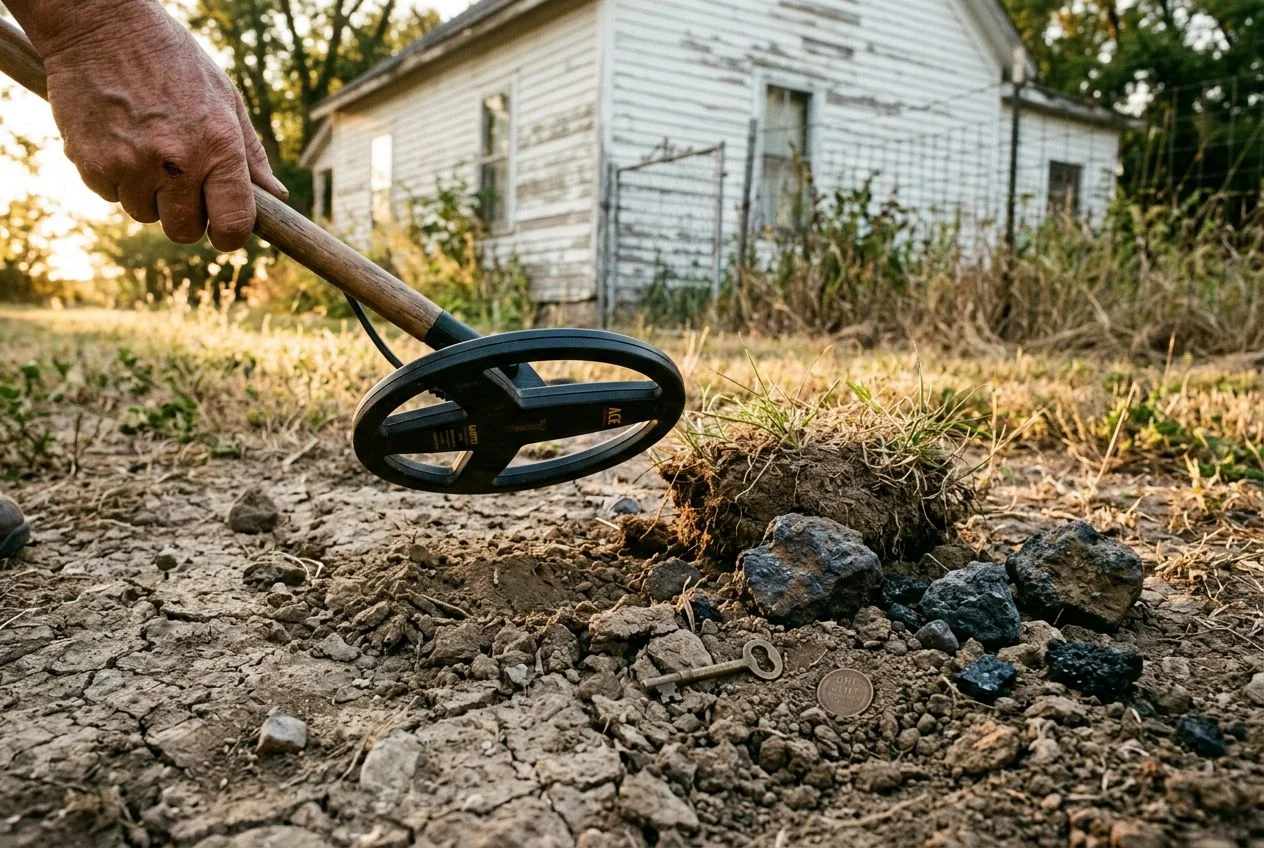
I used this exact offer on a hesitant owner of an old Auburn homestead. He finally said, “Well, my wife lost a silver bracelet in the garden twenty years ago…” I found a modern pull-tab and a 1920s wheat cent that afternoon. He was so fascinated by the penny that he gave me open access to his three-acre property. The bracelet is still out there, but the permission is solid.
Pro Tip: If they say “no,” thank them politely for their time. Leave a business card. Say, “If you ever change your mind, or need help finding something lost, please give me a call.” A graceful exit can turn a “no” today into a “yes” next year.
Answering Owner Concerns About Damage and Liability
Once you’ve got the landowner’s initial interest, the real conversation begins. They’re almost certainly thinking about three things: Will you wreck my lawn? Could I get sued? And… what if you find gold? Addressing these head-on with clear solutions turns a “maybe” into a “yes.”
Let’s tackle them in order.
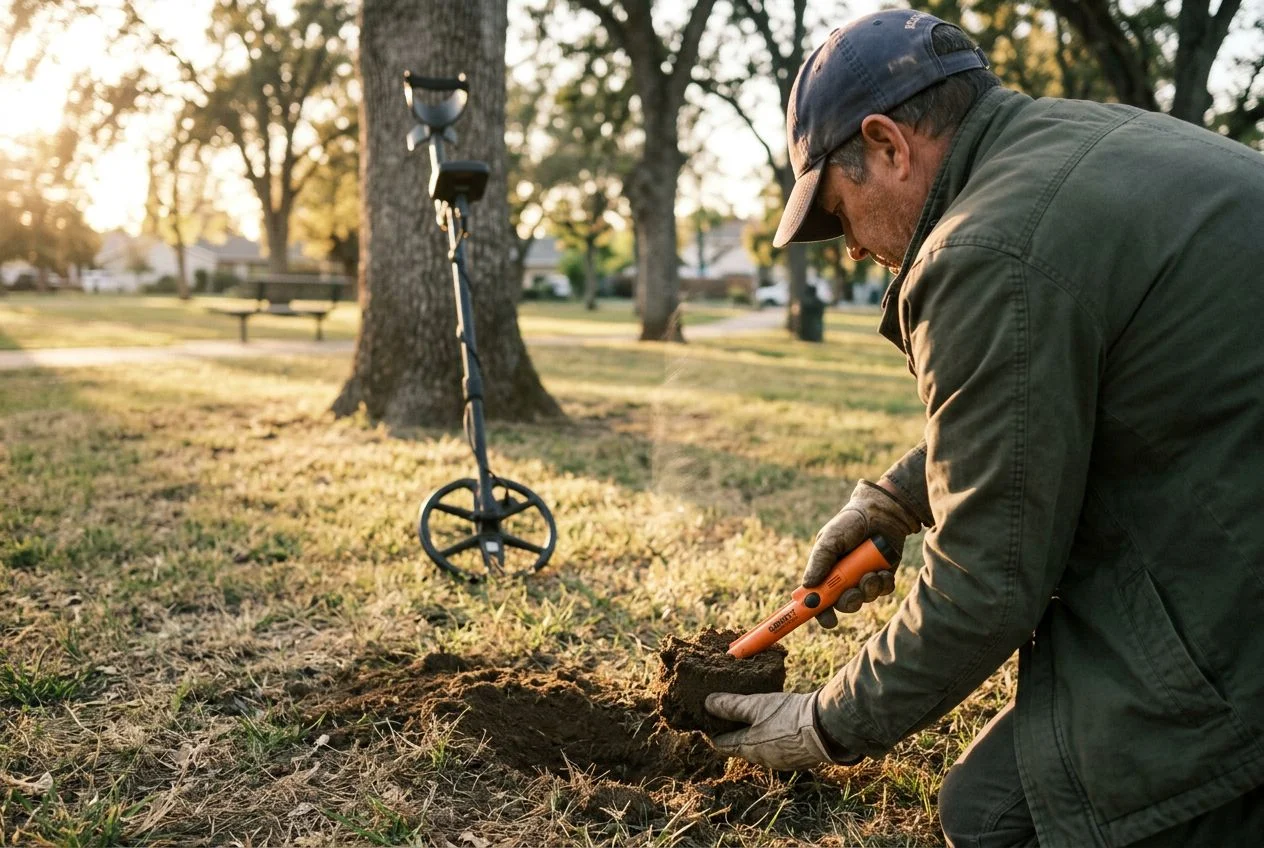
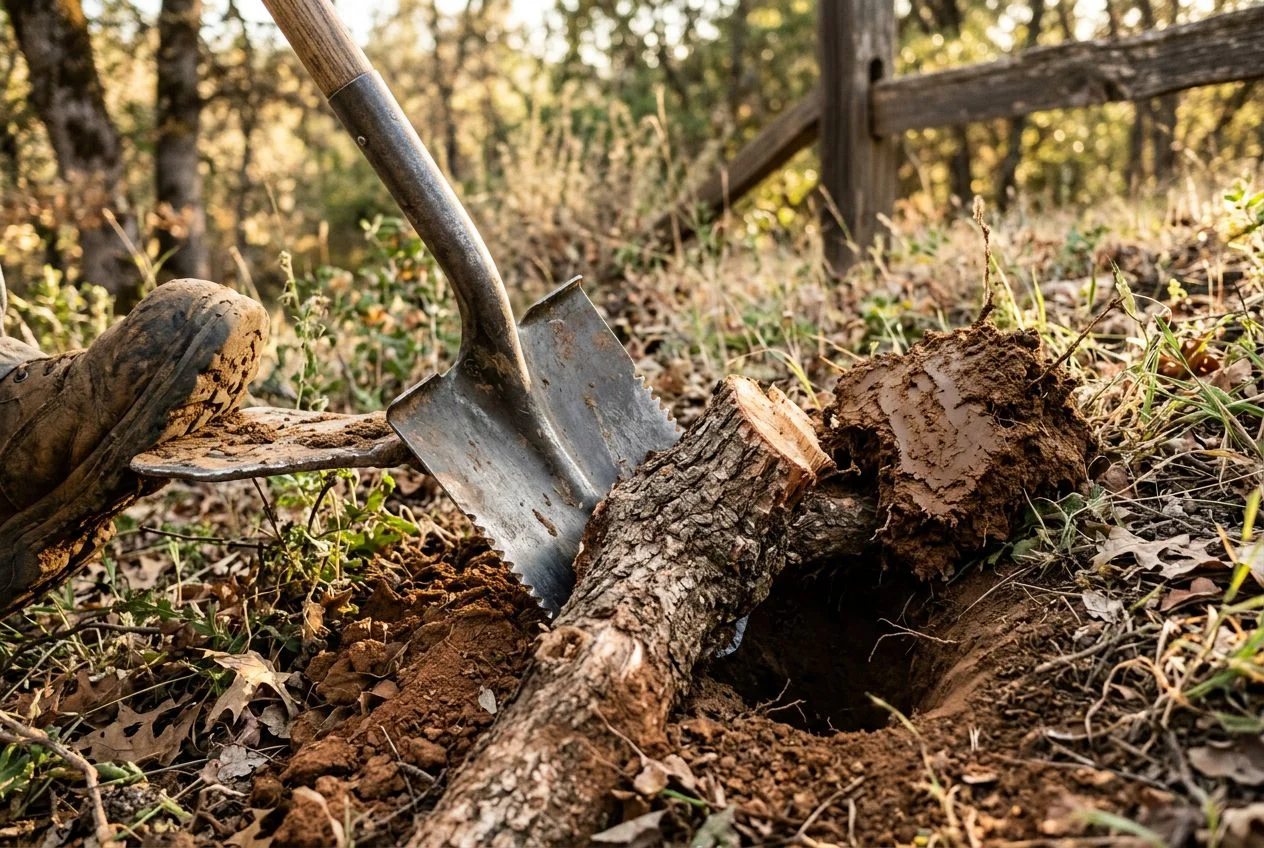
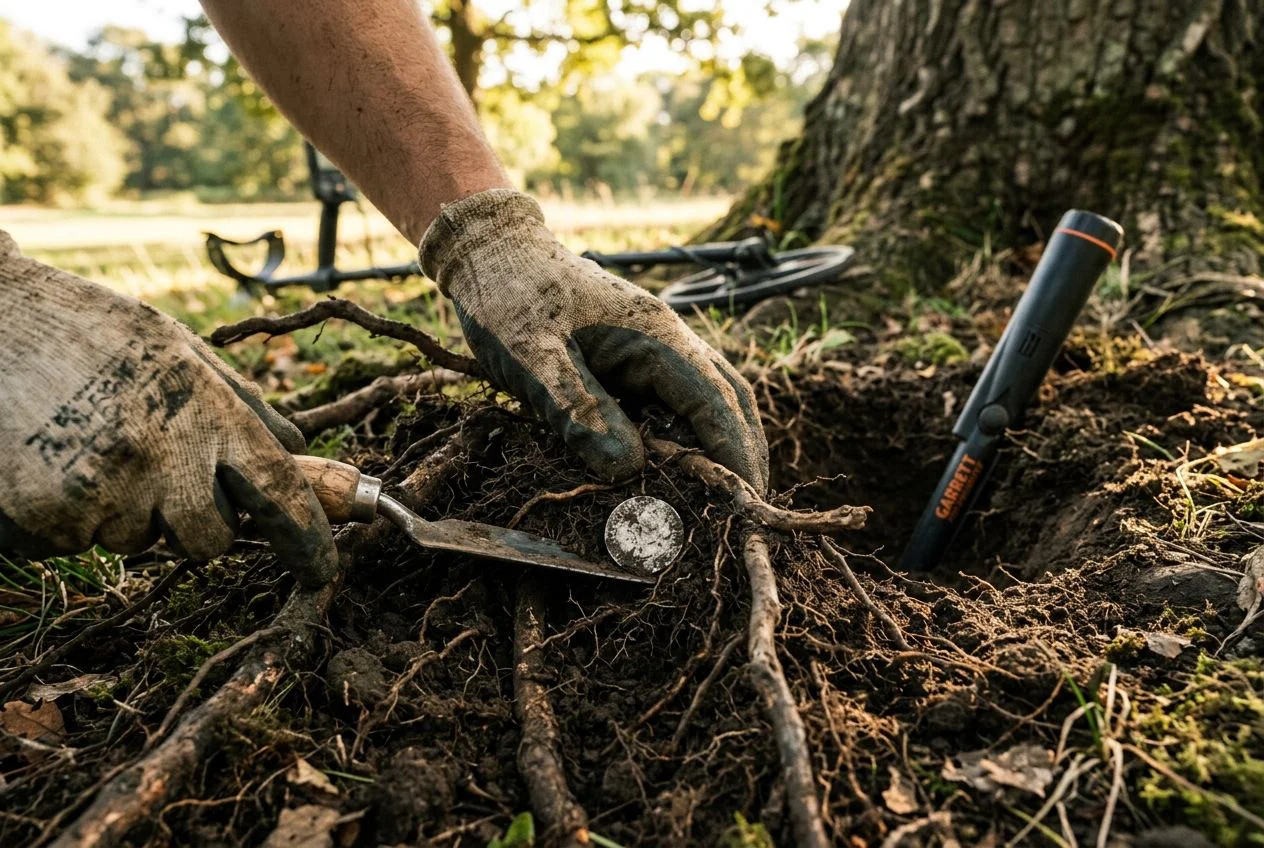
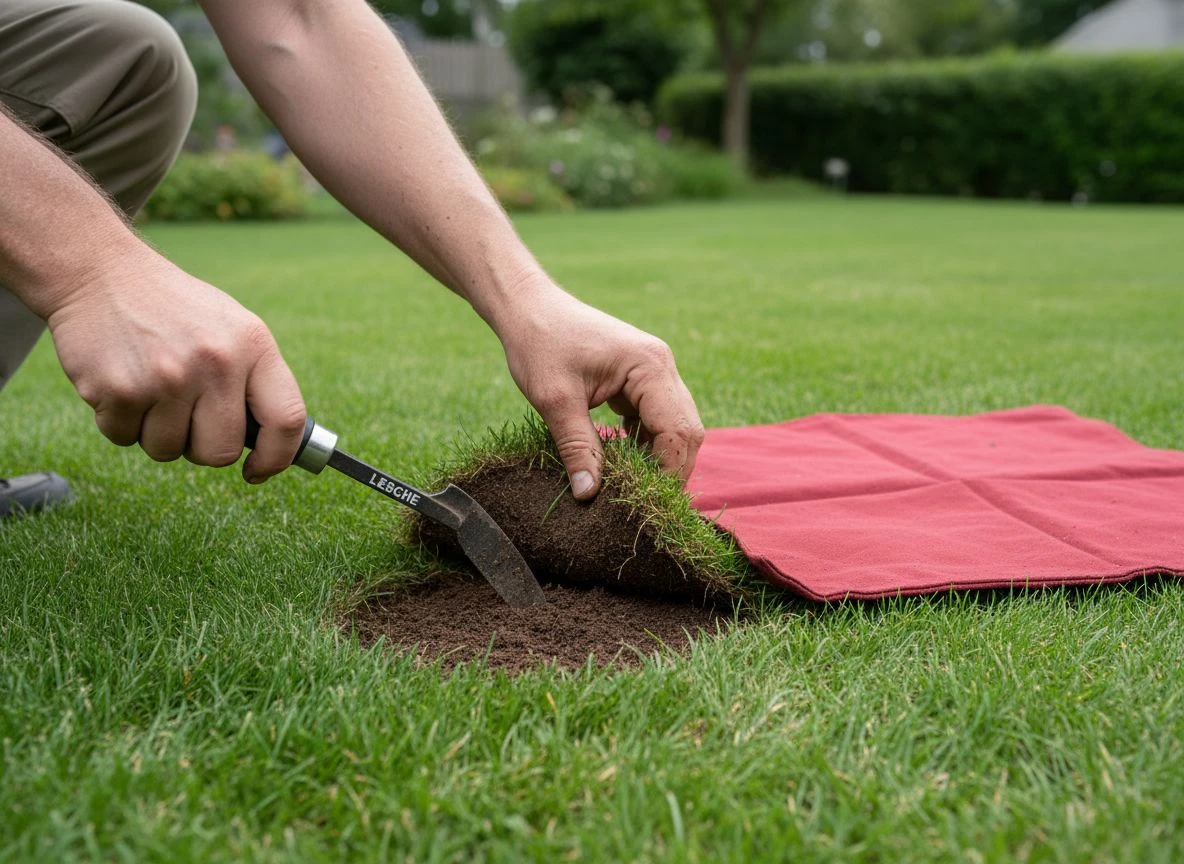
Property Damage is the easiest fear to dispel. I show them my plug-cutting technique right in their driveway. I explain how I cut a neat, three-sided flap, place the sod on my drop cloth, and tamp the plug back in so it heals within days. I cite the Metal Detecting Code of Ethics from SeriousDetecting.com, which makes filling every hole rule number one. It’s a visual guarantee that I’ll leave no trace.
Legal Liability is where your waiver earns its keep. I present it not as a scary contract, but as my written promise: “This just says I’m responsible for my own safety and any accidental damage. It protects you, so you don’t have to worry.” In a cautious state like California, this document is a peace-of-mind powerhouse.
Finally, “The Split.” Be ready for this question. Have a fair, pre-agreed plan. For gold hunting, research from LP Metal Detecting suggests offering a split—it aligns your interests.
My standard, fair offer is this: Any bullion gold or rare coin hoard? We split 50/50. Any artifact with clear historical significance? That’s theirs to keep or donate. Common coins, relics, and all the modern junk? That’s mine to sort, clean, or dispose of. It’s honest, ethical, and shows you’ve thought it through.
Think about it. If you were the landowner, which of these three concerns would keep you up at night? Having an answer ready isn’t just strategy. It’s respect.
Your First Hunt After Permission Approval
Getting that “yes” is just the first step. The real work begins now. Your mission is simple: be the most respectful, trustworthy guest they’ve ever had. Do this, and that single permission can turn into years of access.
Set Expectations for Your First Dig
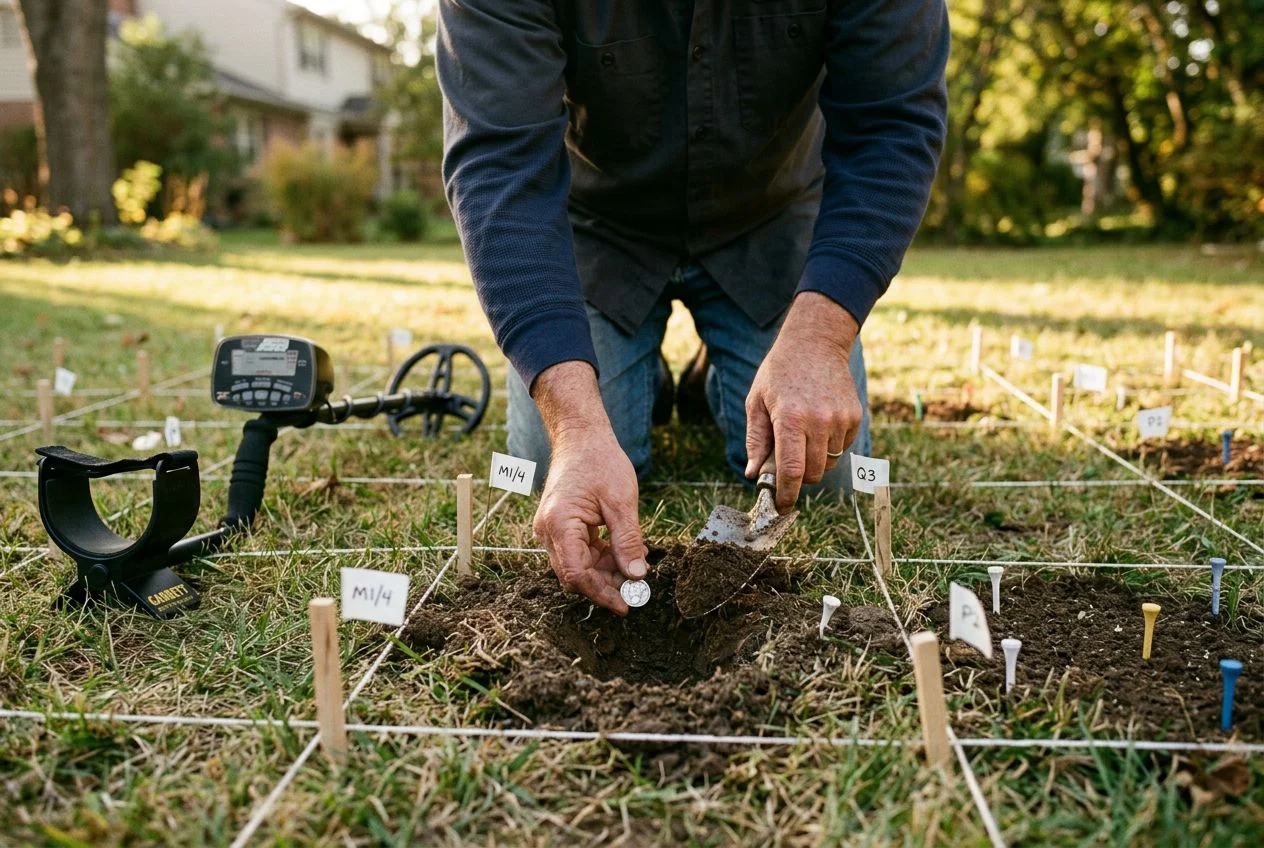
On your first visit, be conservative. I stick to the most obvious historical zone we discussed for just an hour or two. This isn’t the time to grid the entire property. It’s proof-of-concept: you said you’d be careful, so show them. I also collect any surface trash I see on my way in and out. It’s a small, visual gesture that reinforces your value.
How to Leave No Trace While Metal Detecting
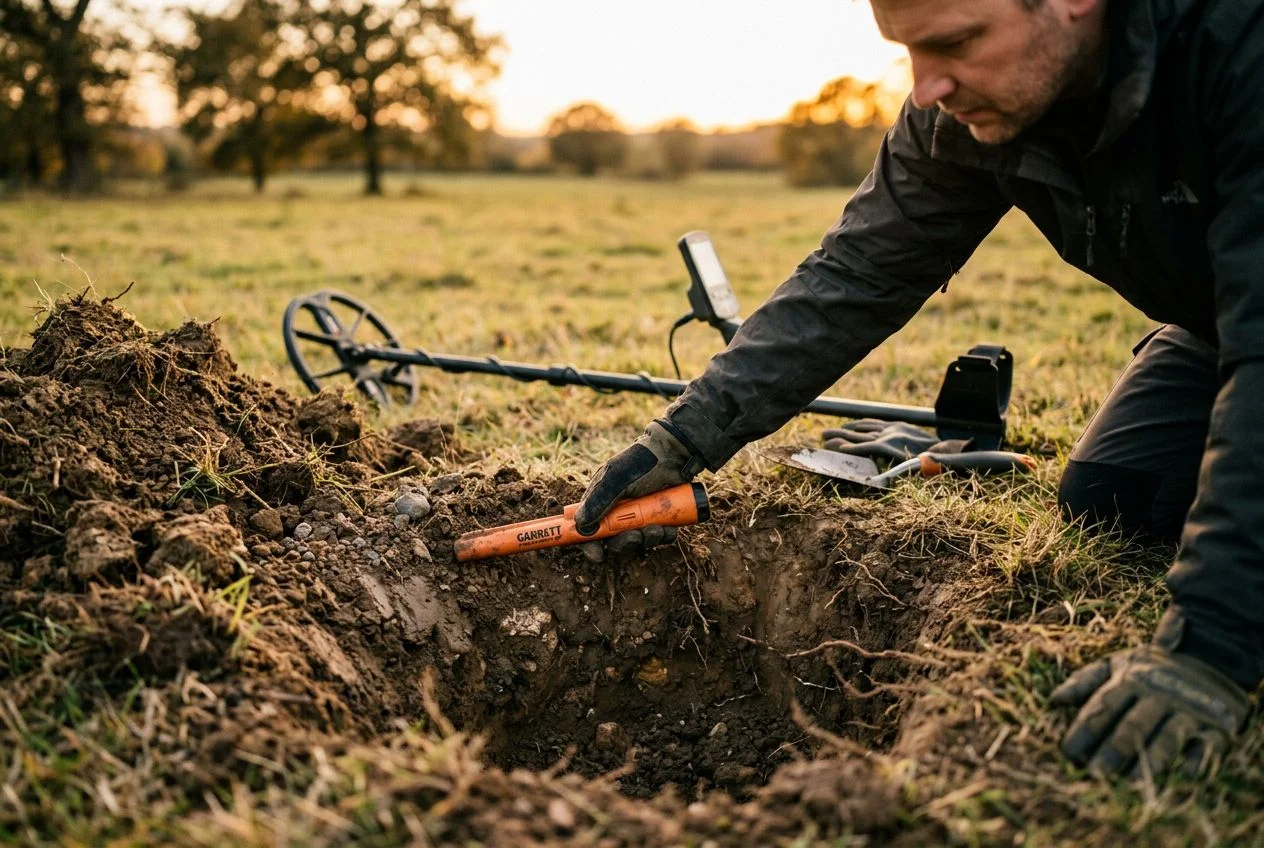
This is the cornerstone. Every single hole must be filled perfectly. All trash—yours and anyone else’s—leaves with you. I use a drop cloth for every plug. I cut a neat three-sided flap and tamp the soil back so it’s flush. This isn’t just good practice; it’s the non-negotiable rule #1 from the Metal Detecting Code of Ethics.
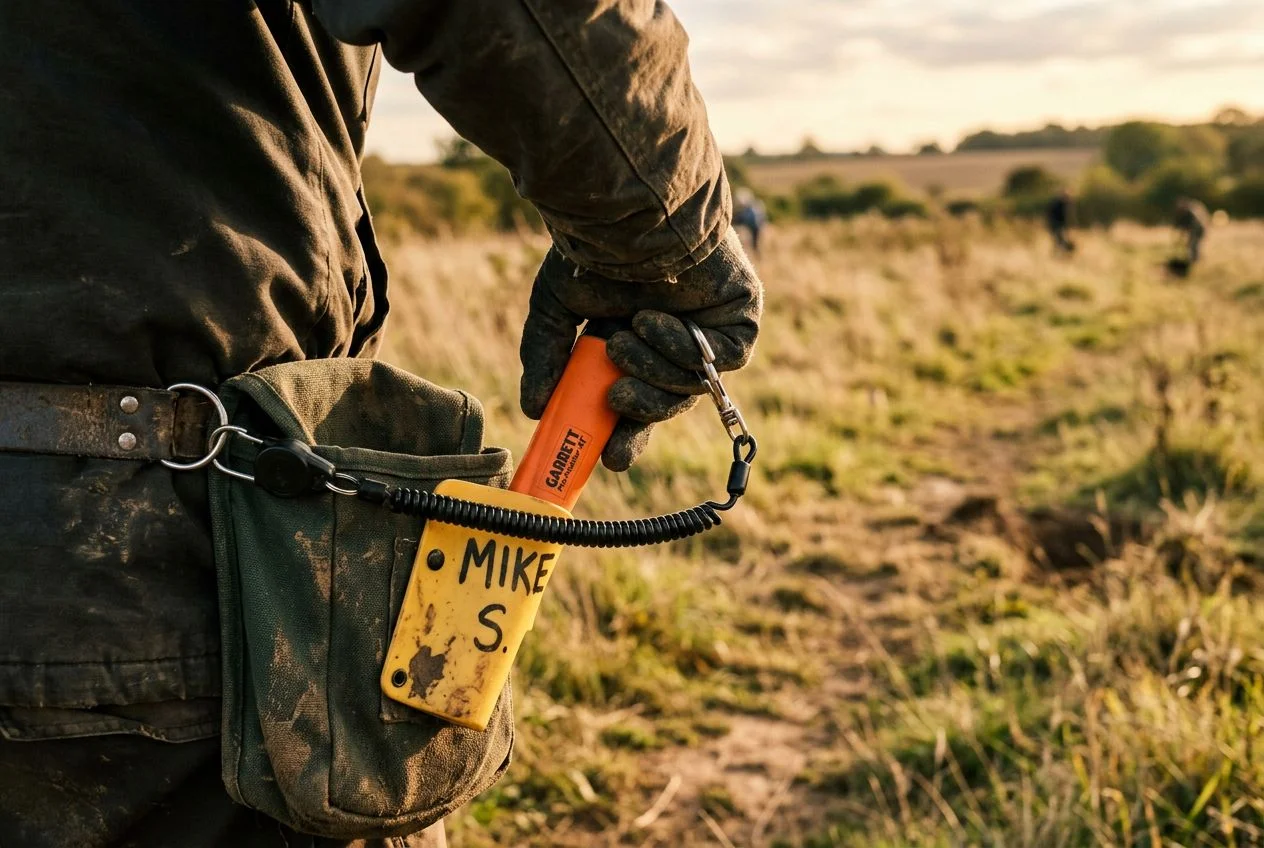
My buddy Mike lost access to a prime 1920s homestead. He got excited, rushed his last plug, and left a gate open. The owner saw it from his kitchen window. Trust is built in minutes and destroyed in seconds.
Show Owners the History You Uncover
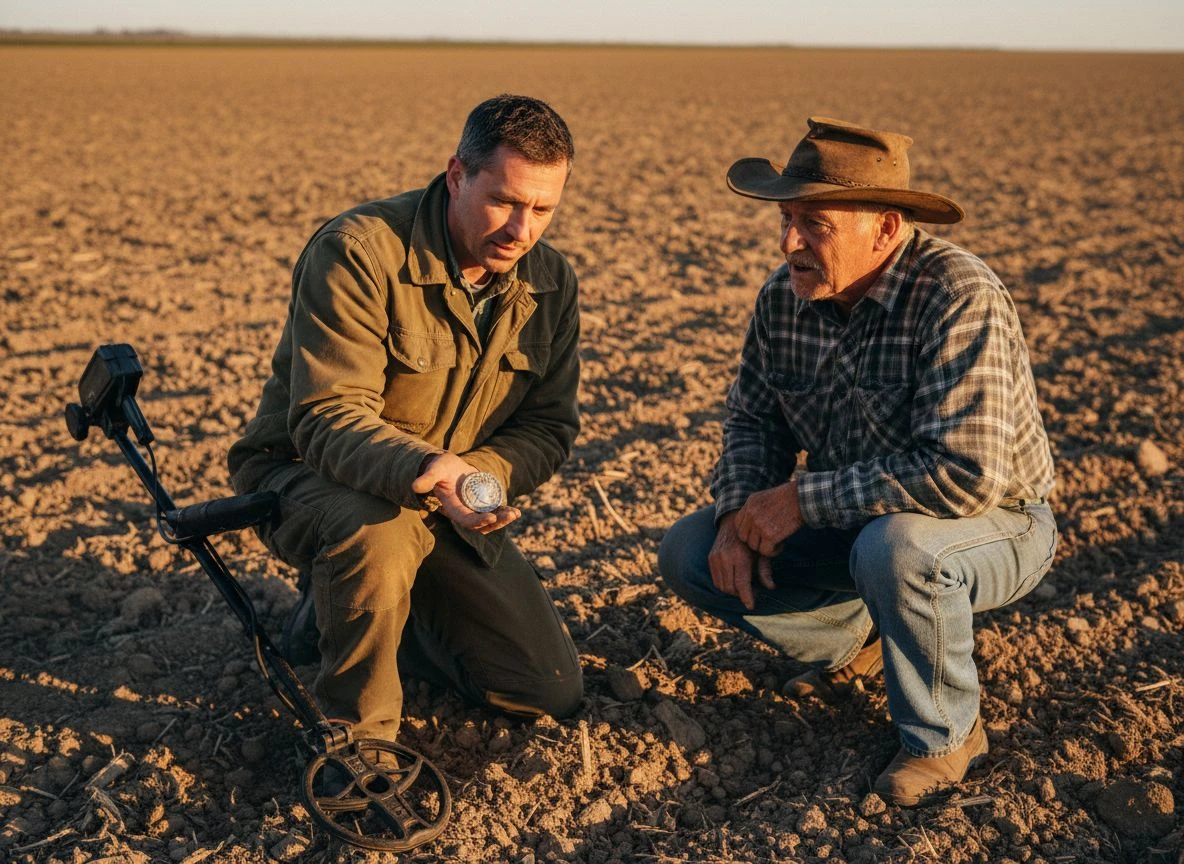
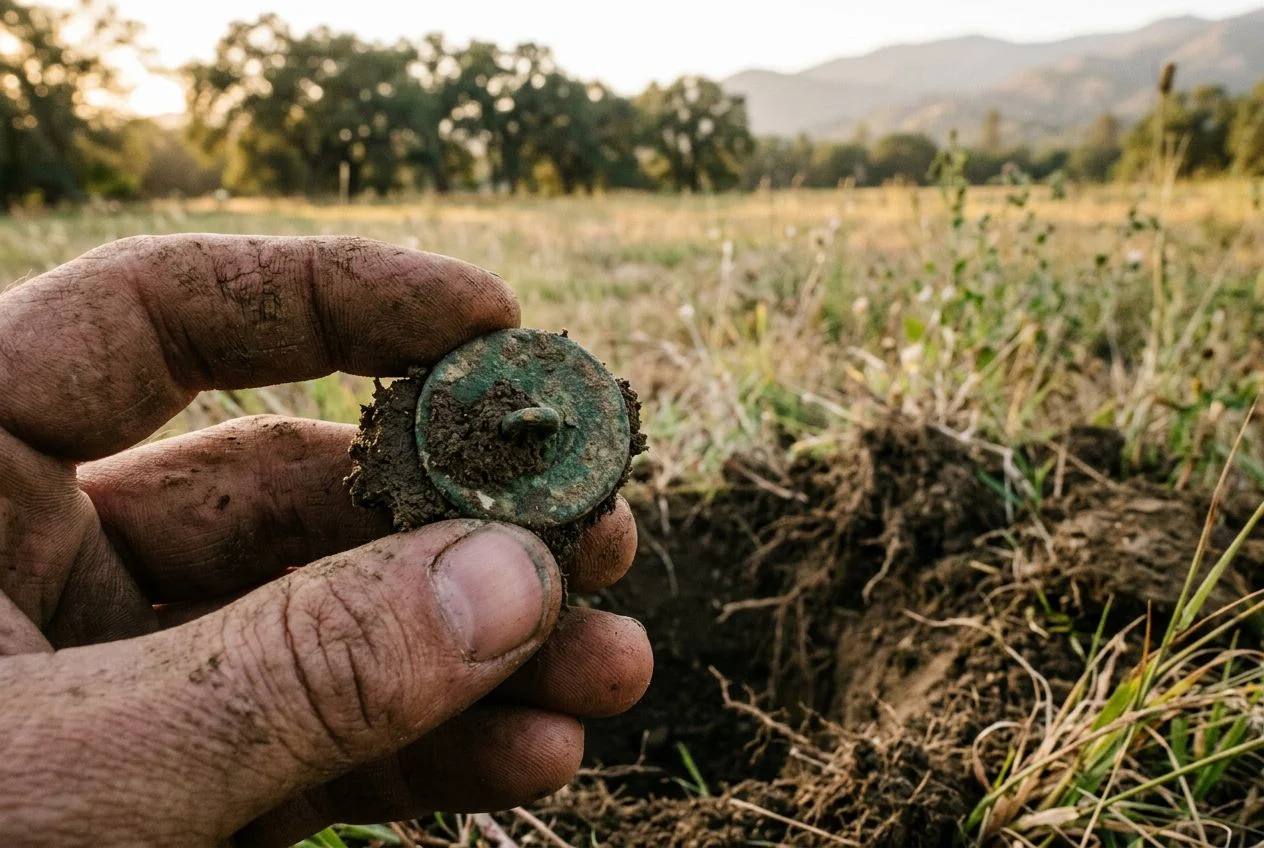
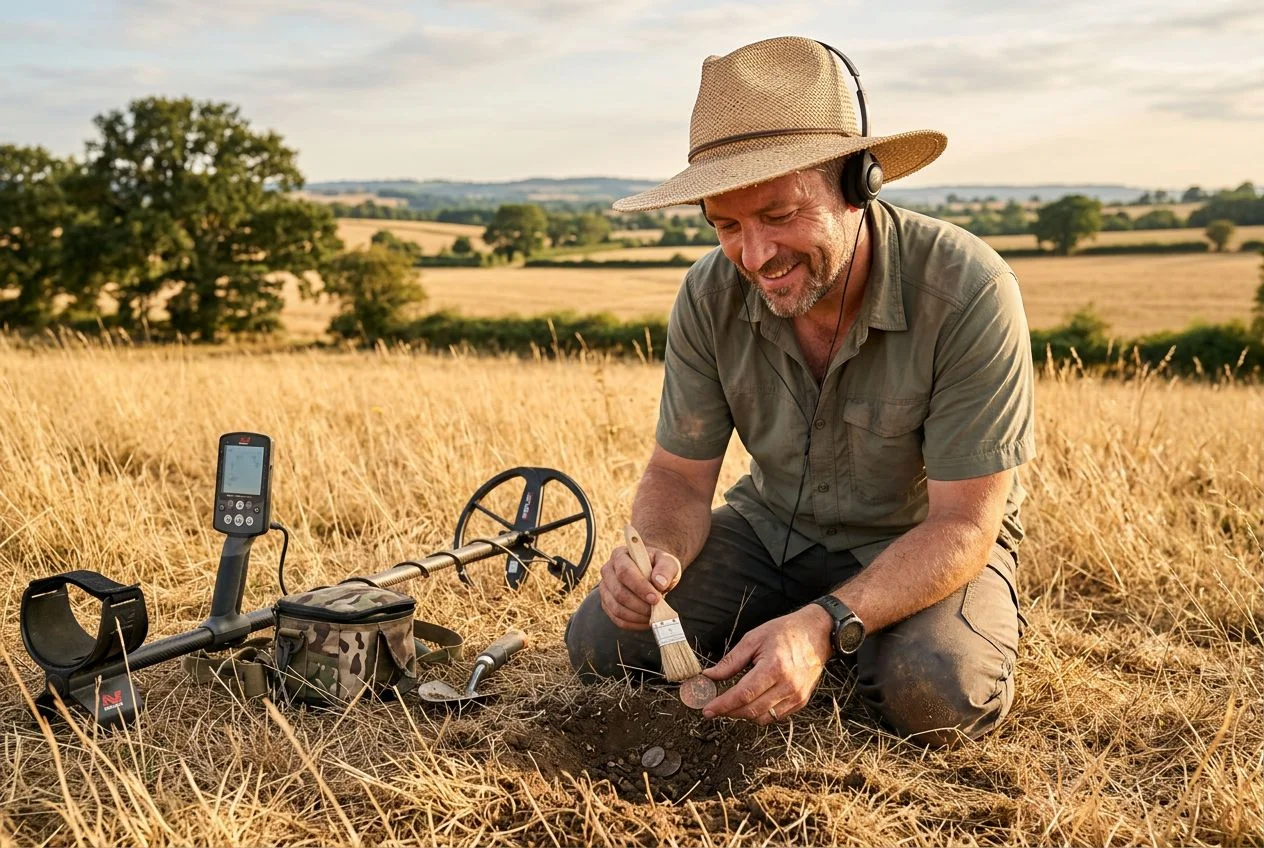
When you find something cool, share it immediately. I’ll send a quick text: “Just pulled a 1909 wheat penny from near that big oak you mentioned! Thought you’d get a kick out of it.” It’s not about the penny’s value. It’s about including them in the discovery. This transforms you from a stranger with a detector into a partner uncovering their property’s history. It builds the rapport for a standing invitation.
Follow-Up Strategies for Repeat Access
Getting the “yes” is just the first chapter. The real secret to a decades-long partnership is what you do after you pack up. This follow-up process makes you a welcome guest, not a one-time visitor.
First, send a thank-you note. A text is fine, but a handwritten card is absolute gold. It’s a tangible, classy gesture that stands out. Drop it in the mail a day or two after your hunt.
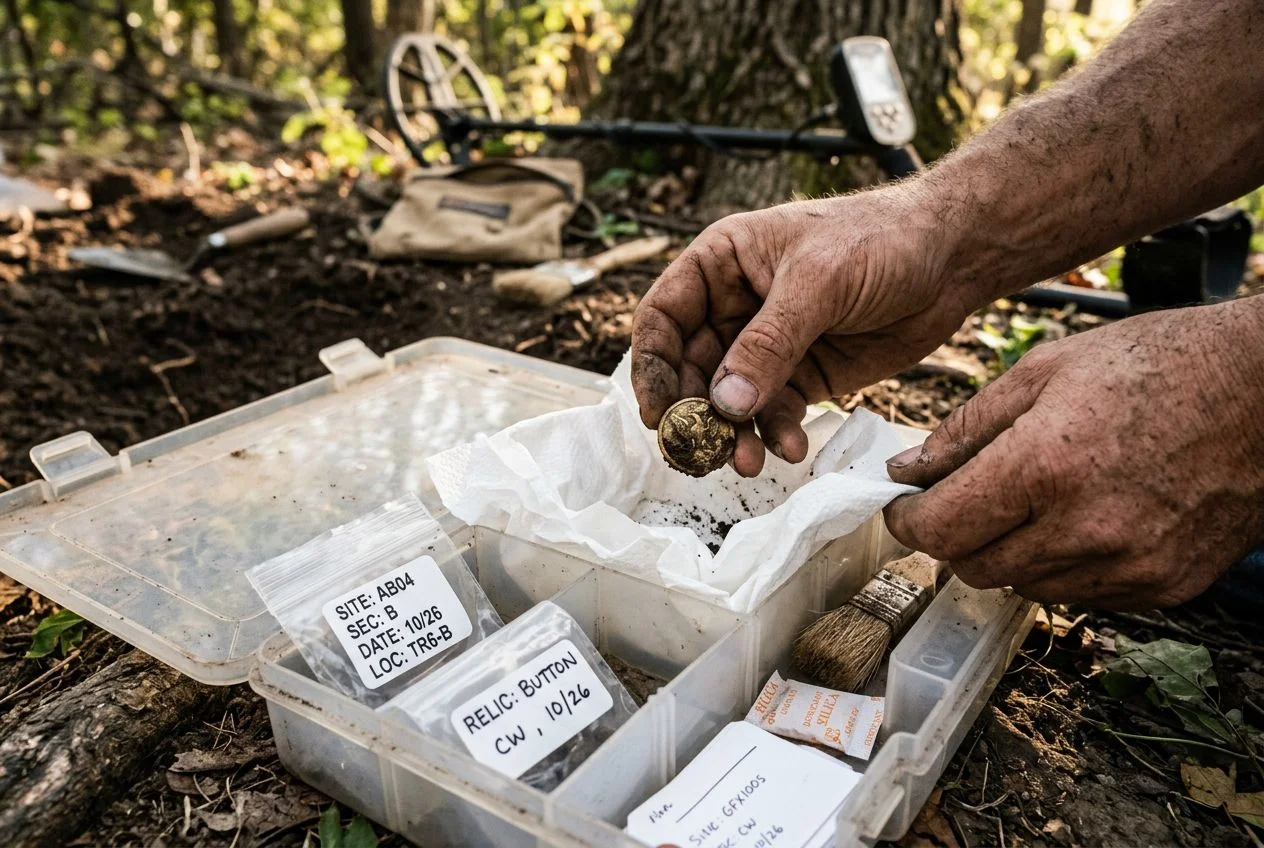
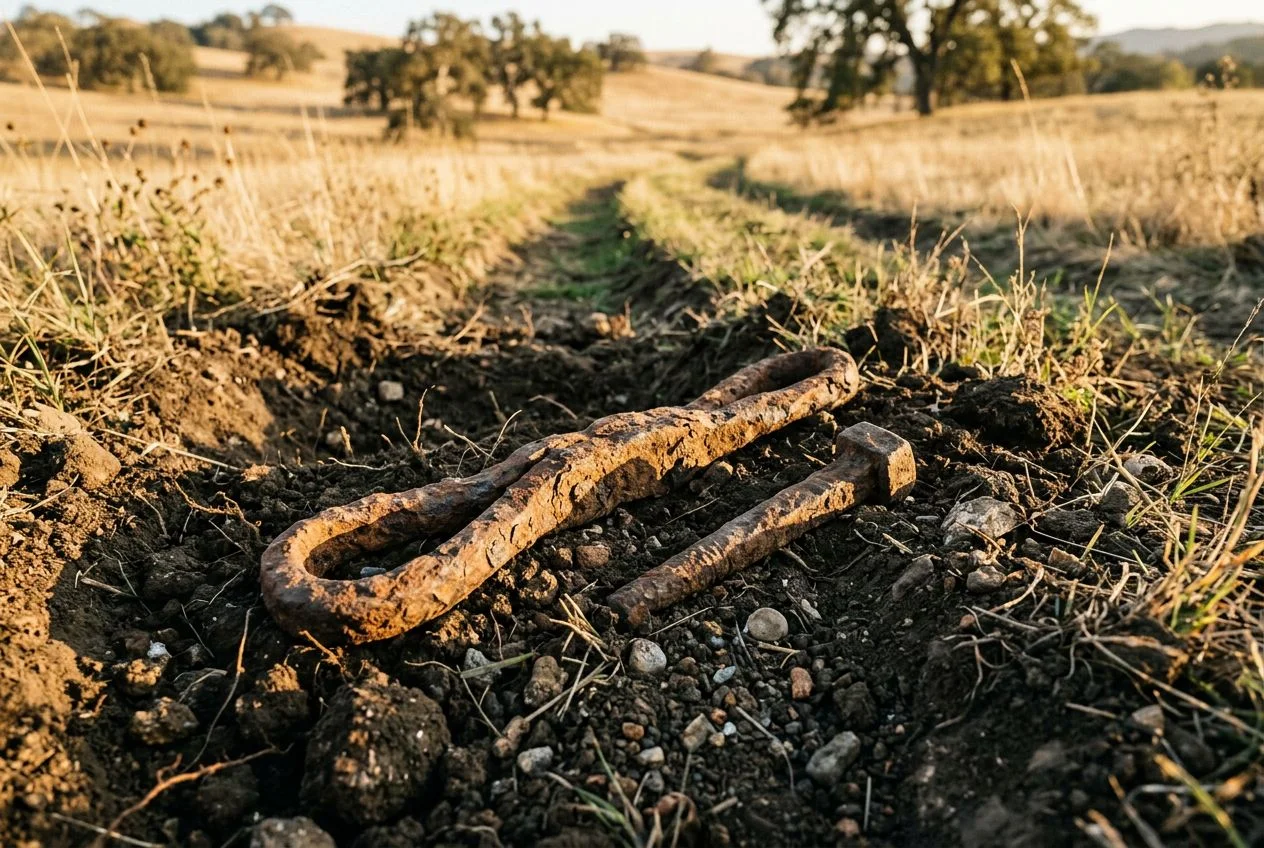
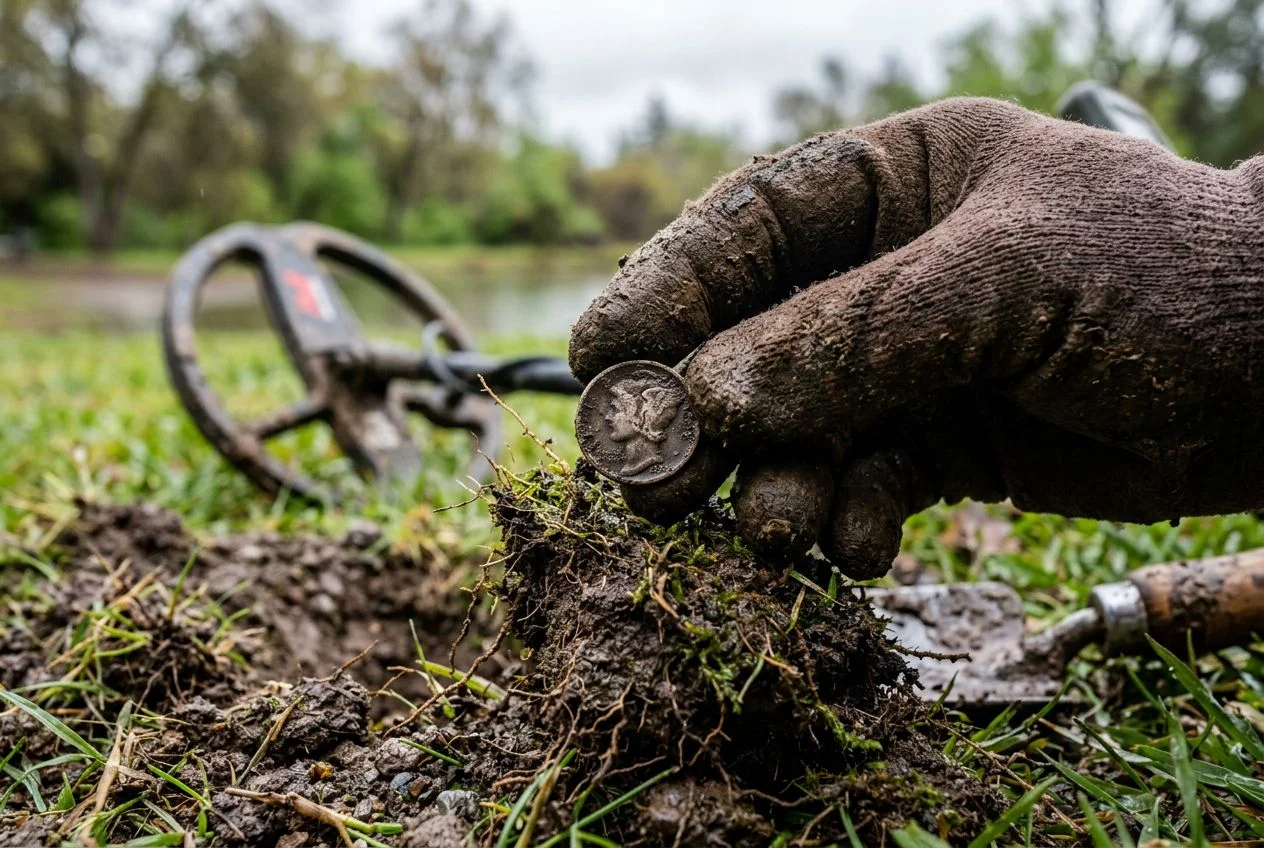
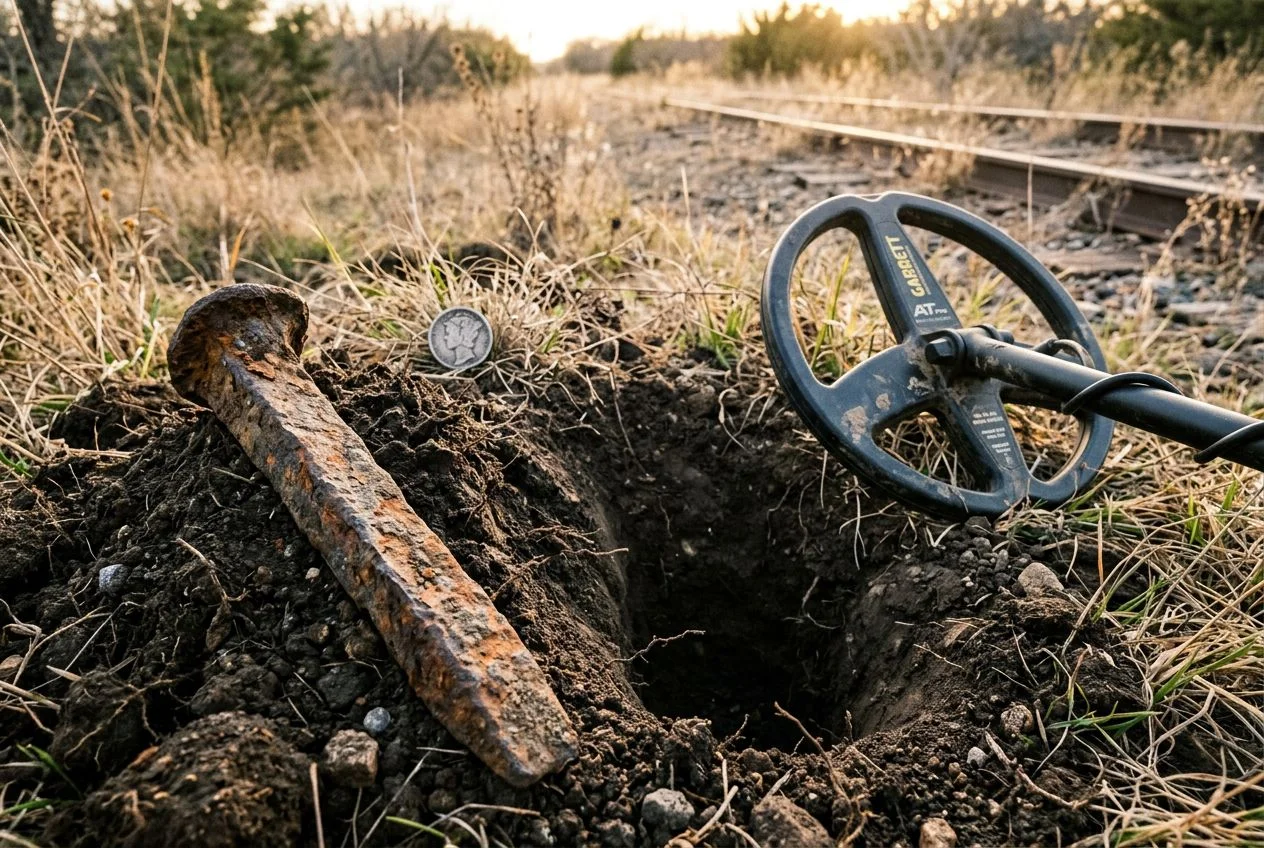
Next, share the story of your best find. Don’t just tell them—show them. Text a clear picture of that 1920s merc dime or that old horse bit. Explain where you found it relative to their barn. This isn’t about value. It’s about including them and validating their property’s history. It makes the experience personal for them.
Finally, offer a no-strings-attached favor. The best offer is: “If you ever need a property pin located or want me to scan the garden for a lost tool, just give me a shout.” This isn’t a bargaining chip. It’s a genuine offer to help. It shows your character and turns you from “that detector guy” into a trusted resource.
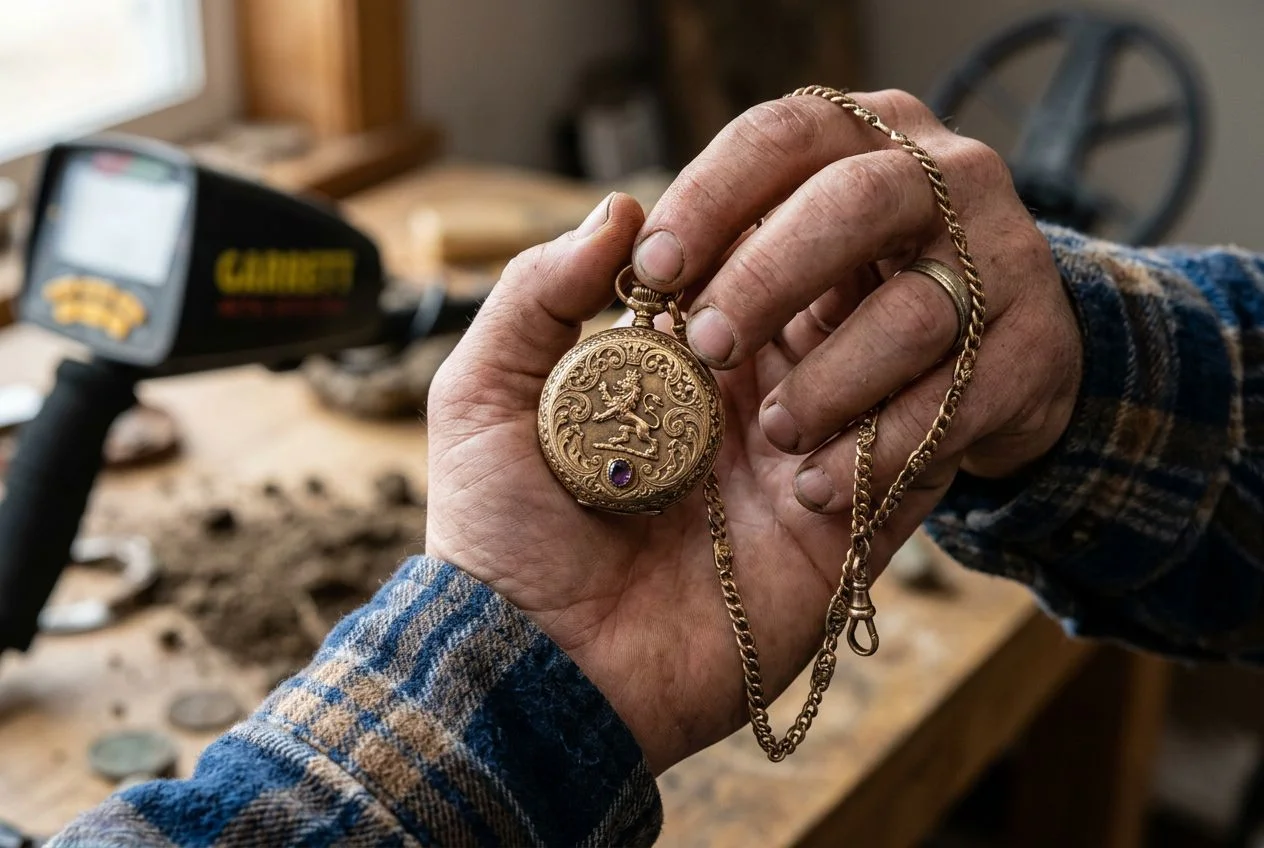
Do these three things, and you won’t just get invited back next season. You’ll get referrals. I’ve been detecting the same Auburn ranch for eight years now because I sent a thank-you card with a picture of their grandfather’s pocket watch. The access was granted on day one, but the trust was built on day two.
Permission Opens Doors to Historic Finds
At its core, getting permission isn’t about winning a negotiation. It’s about starting a conversation. It’s the passport to discovering California’s history, not a prize to be won and forgotten. The shift from “getting a yes” to “building a connection” is what matters. It separates a one-time visitor from a lifelong detecting partner.
This professional approach does more than get you through the gate. In a state where land access is under pressure, it protects our hobby’s reputation. Every tidy plug, every shared photo, and every thank-you note tells landowners we’re respectful stewards, not trespassers. We’re all ambassadors.
To make this process seamless, I’ve put together two essential templates. You’ll get a straightforward Liability Waiver for instant peace of mind, and a simple Find Agreement for clarity on significant finds. They’re the tools I use to turn a hesitant “maybe” into a confident “yes.”
Download the FREE Liability Waiver & Find Agreement Templates Here
Take this system. Use these tools. Go build those partnerships. The history is waiting.

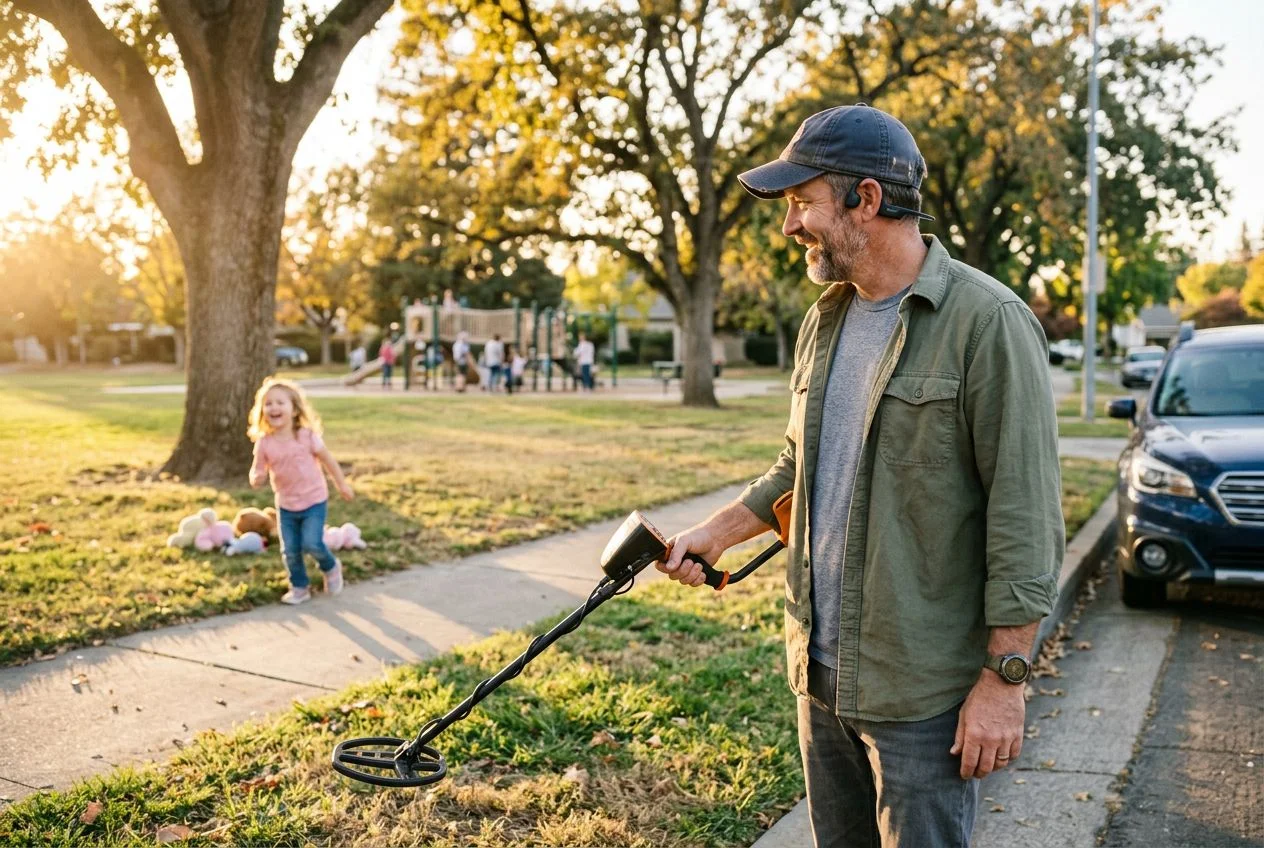
My name is Paul and I am the founder of Detector For Metal, a dedicated resource for metal detecting enthusiasts seeking to uncover historical treasures and connect with the past using the latest technology. As a stay-at-home dad and family man, I’ve found metal detecting to be the perfect hobby that combines family adventure with historical learnings for the whole family.
As a father, I’m deeply committed to passing on this hobby to the next generation of detectorists, starting with my own children. I share advice on everything from metal detecting with kids to exploring the top 10 metal detecting sites you never thought about. My methodical approach to the hobby goes beyond the thrill of discovery—it’s about creating family traditions while preserving history and sharing the stories of those who came before us.