Table of Contents
I’ll be honest — when my buddy Mike first told me about drone-mounted metal detectors, I laughed. “You want me to fly a detector over a field and expect it to find things 30 meters deep?” I asked him. “That sounds like science fiction, not treasure hunting.”
Six months later, I’m eating my words.
I’ve been metal detecting for more than 15 years now. I’ve learned to be skeptical of gear that promises to revolutionize the hobby. Every few years, something comes along that claims it’ll change everything. Mostly, it doesn’t. But the TreasureHunter3D DroneRover is different. It’s not a replacement for your handheld detector. It’s something else entirely: a reconnaissance tool that lets you see what’s underground without walking a single step.
What Is a DroneRover Detector
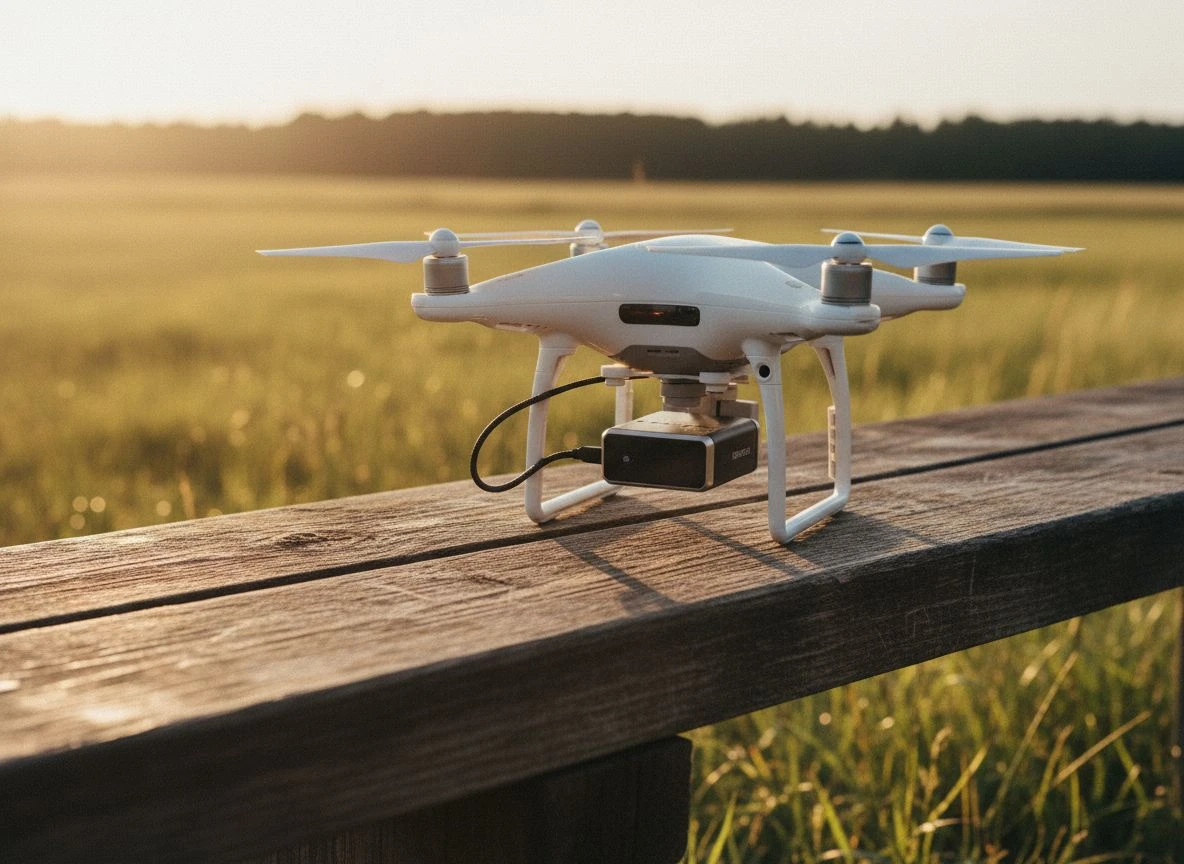
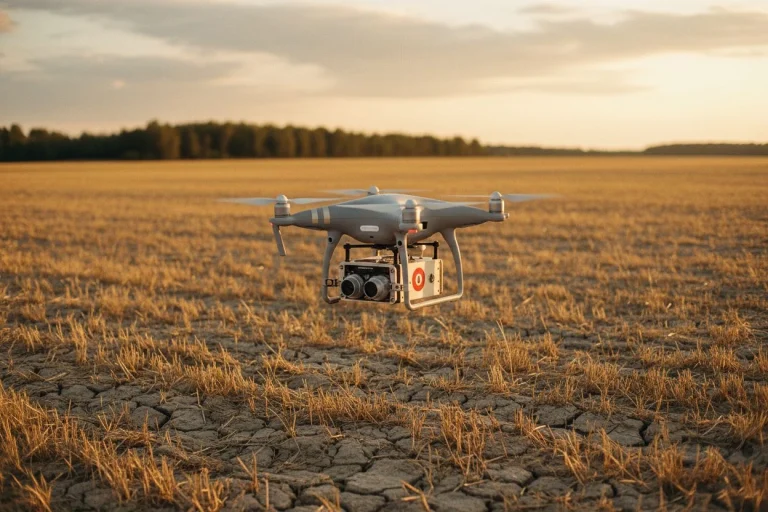
The DroneRover is a 3D treasure detector sensor. It attaches to any drone that can carry about 200 grams — basically, anything in the DJI Phantom class or similar. The sensor itself weighs just 100g, with a 200g receiver unit. Together, they turn your drone into an aerial ground-scanning system. It can detect both metallic and non-metallic objects up to roughly 30 meters underground under optimal conditions.
Let me repeat that: 100 feet deep. From the air.
According to TreasureHunter3D, the DroneRover uses an active AI correction system to boost sensitivity. It detects precious metals like gold, silver, and ancient bronze. It also picks up hidden structures like chests, rooms, graves, and tunnels. It works via Bluetooth 4.0 to a smartphone or tablet, giving you real-time 2D and 3D visualization while the drone is still in the air.
How Does the DroneRover Work
The setup process is surprisingly straightforward. You attach the sensor to your drone. Connect it wirelessly to your controller and phone. Mark the area you want to scan on the app, and launch. The drone can fly autonomously, scanning the defined area while transmitting data back in real time. Or you can fly manually using the “fast scan” mode for quick checks.
One Reddit user who’s tested both the DroneRover and the companion GoldenEye+ described their workflow: use the drone to scan large areas first, identify anomalies, then deploy the handheld unit for detailed follow-up. This two-step approach makes a lot of sense — you’re not digging blindly based on a single aerial reading.
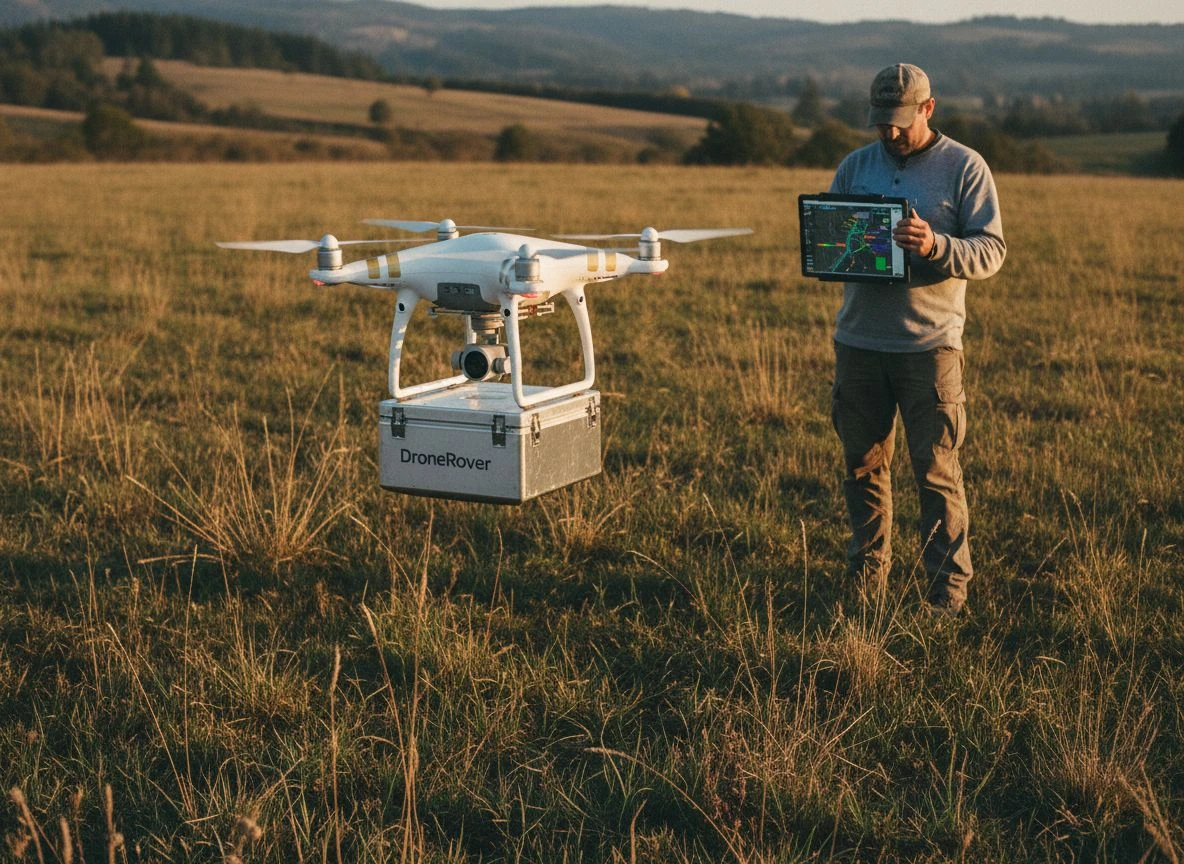
The DroneRover includes a 32-bit ARM Cortex-M4 processor running at 38.4 MHz. That handles real-time digital signal processing and error correction on the fly. The sensor range is listed at 1km, and the drone itself can fly up to 7km depending on the model and conditions.
DroneRover’s Biggest Advantages
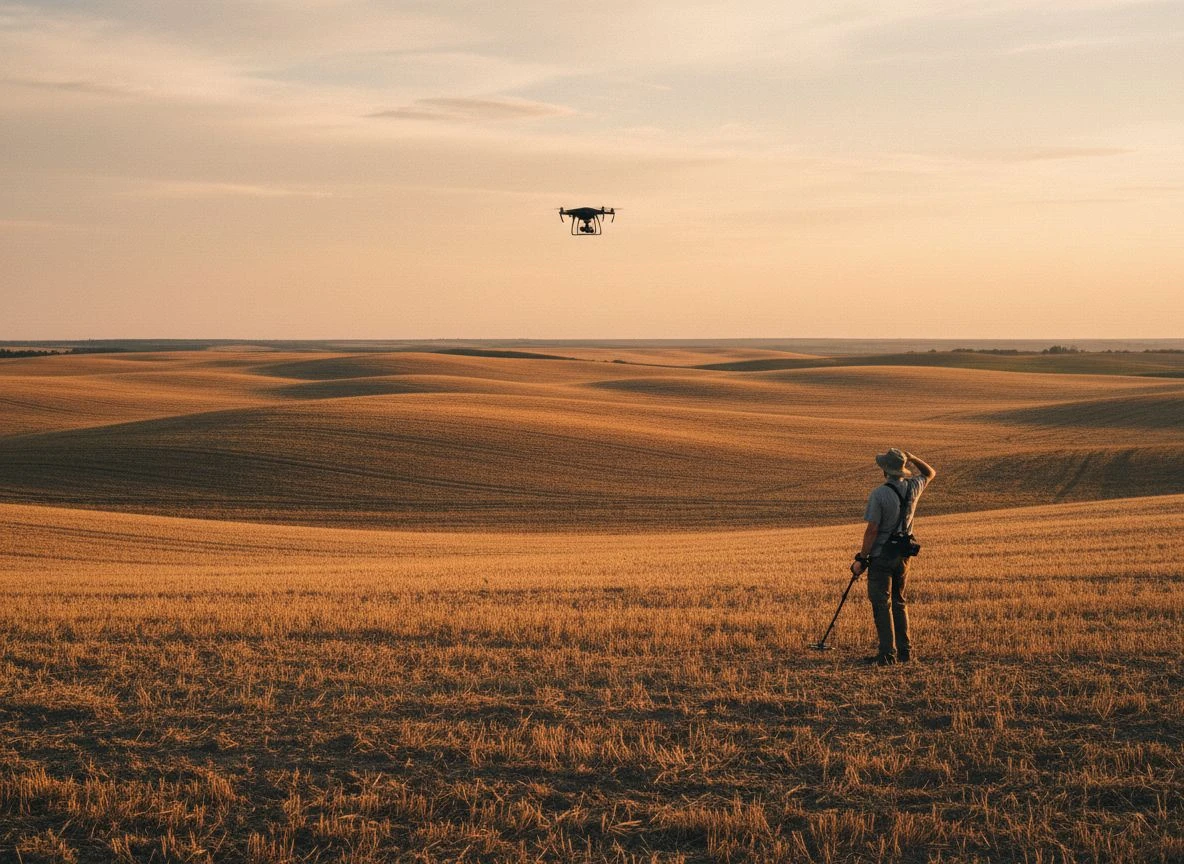
A fully charged battery lets you cover up to one square kilometer in a single scan, according to the DroneRover support documentation. That’s roughly ten times faster than a walking detectorist. It also opens up terrain that’s otherwise impossible to search effectively — overgrown fields, uneven ground, areas with hazardous access.
For the research-driven detectorist, this is a game-changer. I’ve spent months researching old stage stops and forgotten settlements. Then I’d spend multiple weekends walking grids trying to confirm whether there’s actually anything worth digging. With the DroneRover, you could survey an entire historic townsite in a single afternoon. Map the underground anomalies. Then return only to the promising spots.
The object detection range — up to 30 meters — is significantly deeper than any handheld detector I’ve used. My Minelab Equinox 900 tops out around 12 inches for coin-sized targets. Maybe 2-3 feet for larger objects in ideal soil. The DroneRover is designed for structures: chests, caches, underground rooms, tunnels. It’s a completely different use case.
What DroneRover Can’t Do
Now, let me level with you about the things that aren’t in the marketing material.
First, the DroneRover is not suitable for small objects. A single coin on the beach? Forget it. This isn’t a replacement for your handheld detector. The depth penetration also decreases significantly with drone distance from the ground. Fly higher to cover more area, and you lose detection depth. You’re trading coverage for capability.
Second, it’s not ideal for windy environments, inside buildings, or populated areas. That’s a significant limitation if you’re hunting urban parks or historical districts near residential neighborhoods.
Third, the cost. The DroneRover is priced at $9,410.49. That’s not a typo. This is professional-grade equipment, not a weekend hobbyist’s toy. You need to be serious about your detecting to justify that investment.
Fourth, there’s a learning curve. One user noted that the devices take “a while to get used to” and expressed frustration with the lack of documentation and video tutorials. Customer support responds within 2-3 business days, which is reasonable but not instant. The companion app for iOS and Android is listed as “coming soon,” which suggests the software ecosystem is still maturing.
Finally, full functionality — including autonomous scanning and 3D visualization — requires a DJI Phantom 3 or 4 (excluding RTK models). If you use another drone, you’re limited to “Fast Scan mode” with a basic bar indicator. The company is working on attachments for the DJI Mavic 3 and Mavic 3E, with app migration to the DJI controller system underway. But that’s not ready yet.
How Experienced Detectorists Use DroneRover
Based on field reports and user feedback, here’s the practical workflow that serious hunters are adopting:
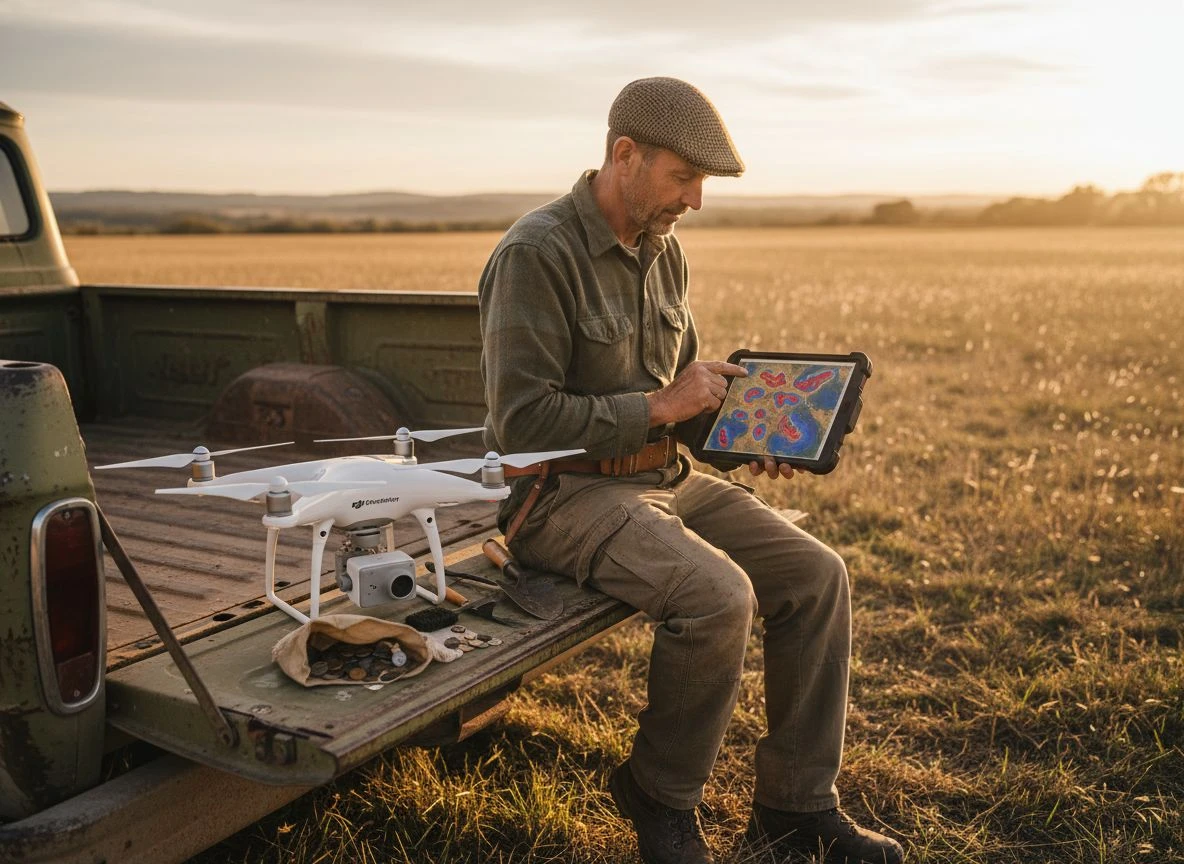
- Reconnaissance flight — Fly the DroneRover over your target area to identify underground anomalies. This takes 20-30 minutes for a significant area.
- Data analysis — Review the 3D scans on your phone or export them to PolarWave DATA for deeper analysis.
- Target selection — Mark the most promising anomalies based on size, depth, and shape.
- Ground confirmation — Use a handheld device like the GoldenEye+ or a traditional detector to verify targets before digging.
This workflow maximizes efficiency. You’re not wandering aimlessly. You’re not digging every promising signal. You’re using aerial data to create a heat map of what’s actually below the surface, then only excavating the high-probability targets.
Is the DroneRover for You
The DroneRover isn’t for everyone. It’s a specialized tool with a specialized use case.
Buy it if:
- You’re a professional treasure hunter or archaeologist working large sites
- You have access to historic properties where you can scan significant acreage
- You’re looking for large, deep targets like buried caches, structural foundations, or tunnels
- You already own a compatible DJI Phantom 3 or 4 drone
- You have $9,400+ to invest in detection equipment
Skip it if:
- You primarily hunt parks, beaches, or suburban lots
- You’re looking for coins, jewelry, or small relics
- You’re a beginner or intermediate detectorist on a typical hobby budget
- You don’t have access to a compatible drone
DroneRover Final Verdict
The TreasureHunter3D DroneRover is not the future of metal detecting — it’s the present of aerial surveying applied to treasure hunting. It solves a real problem: how to efficiently search large areas for deeply buried targets that no handheld detector can reach. But it introduces new challenges: cost, complexity, environmental limitations, and a learning curve that’s steeper than any traditional detector I’ve used.
I still spend most of my weekends swinging a coil over old homesteads and forgotten swimming holes. But for those big research projects — the ones that start with an 1890s map and a hunch — the DroneRover is the tool I’d bring. It’s not science fiction. It’s just really, really expensive science fact.
And Mike? He still thinks I’m crazy. But he’s asking to borrow it for his next hunt.

My name is Paul and I am the founder of Detector For Metal, a dedicated resource for metal detecting enthusiasts seeking to uncover historical treasures and connect with the past using the latest technology. As a stay-at-home dad and family man, I’ve found metal detecting to be the perfect hobby that combines family adventure with historical learnings for the whole family.
As a father, I’m deeply committed to passing on this hobby to the next generation of detectorists, starting with my own children. I share advice on everything from metal detecting with kids to exploring the top 10 metal detecting sites you never thought about. My methodical approach to the hobby goes beyond the thrill of discovery—it’s about creating family traditions while preserving history and sharing the stories of those who came before us.