Table of Contents
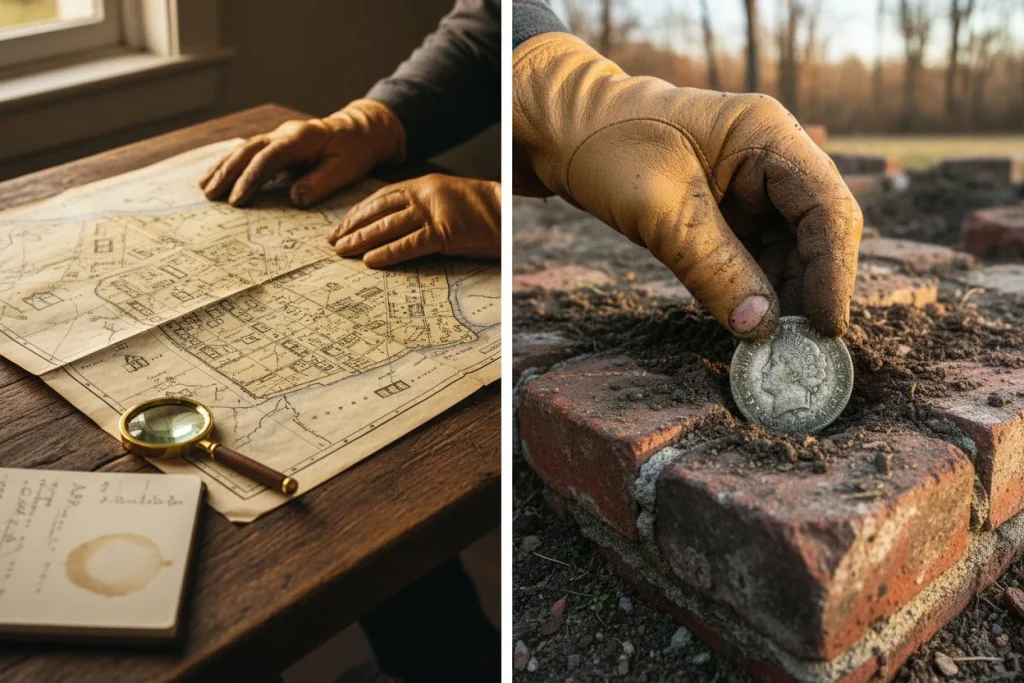
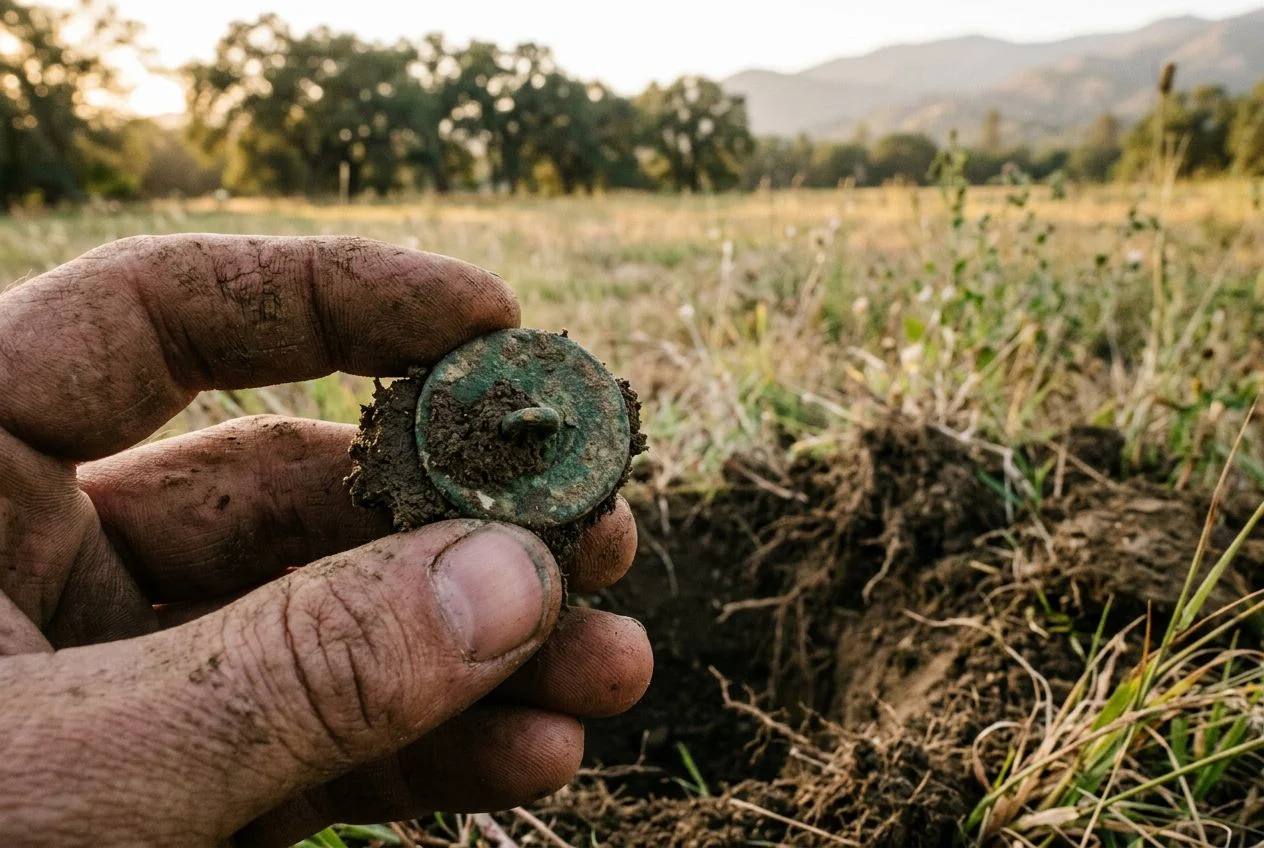
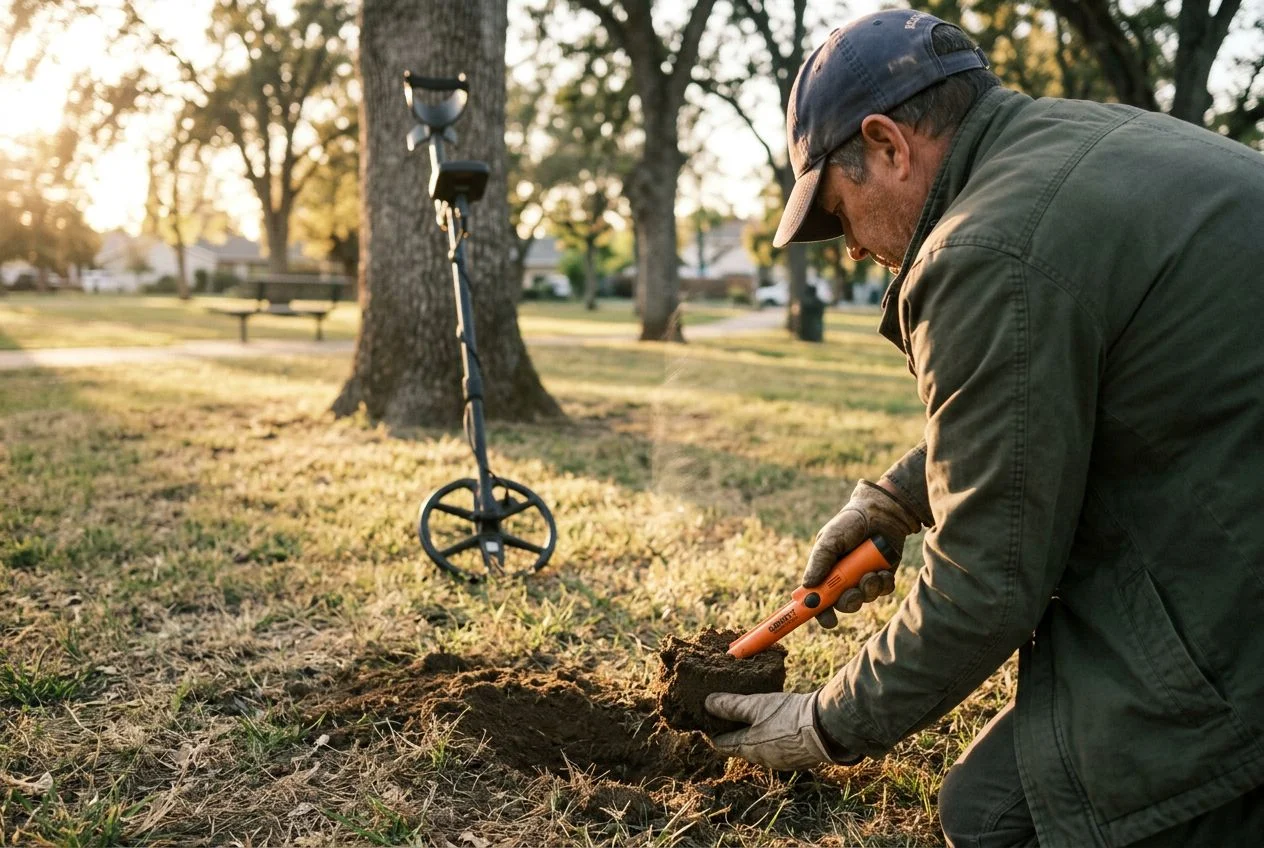
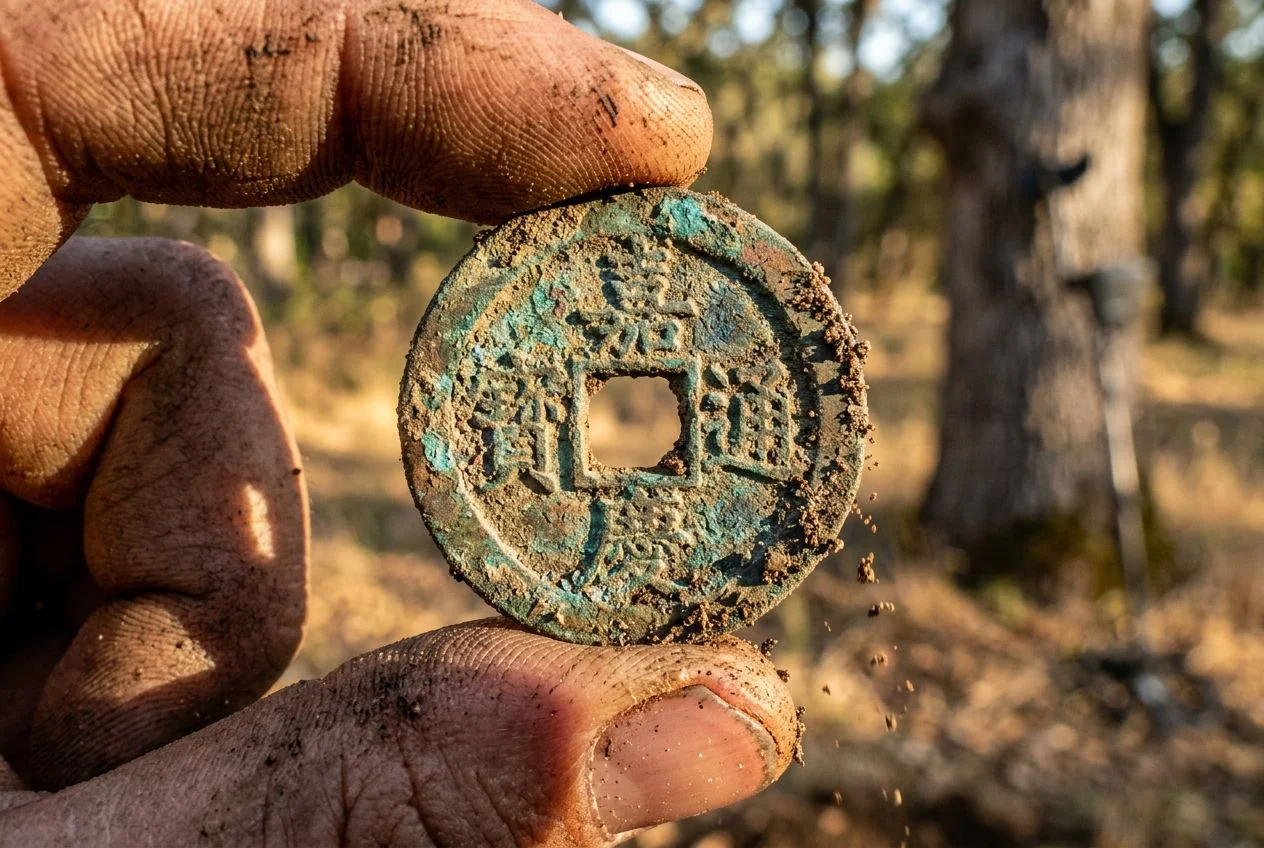
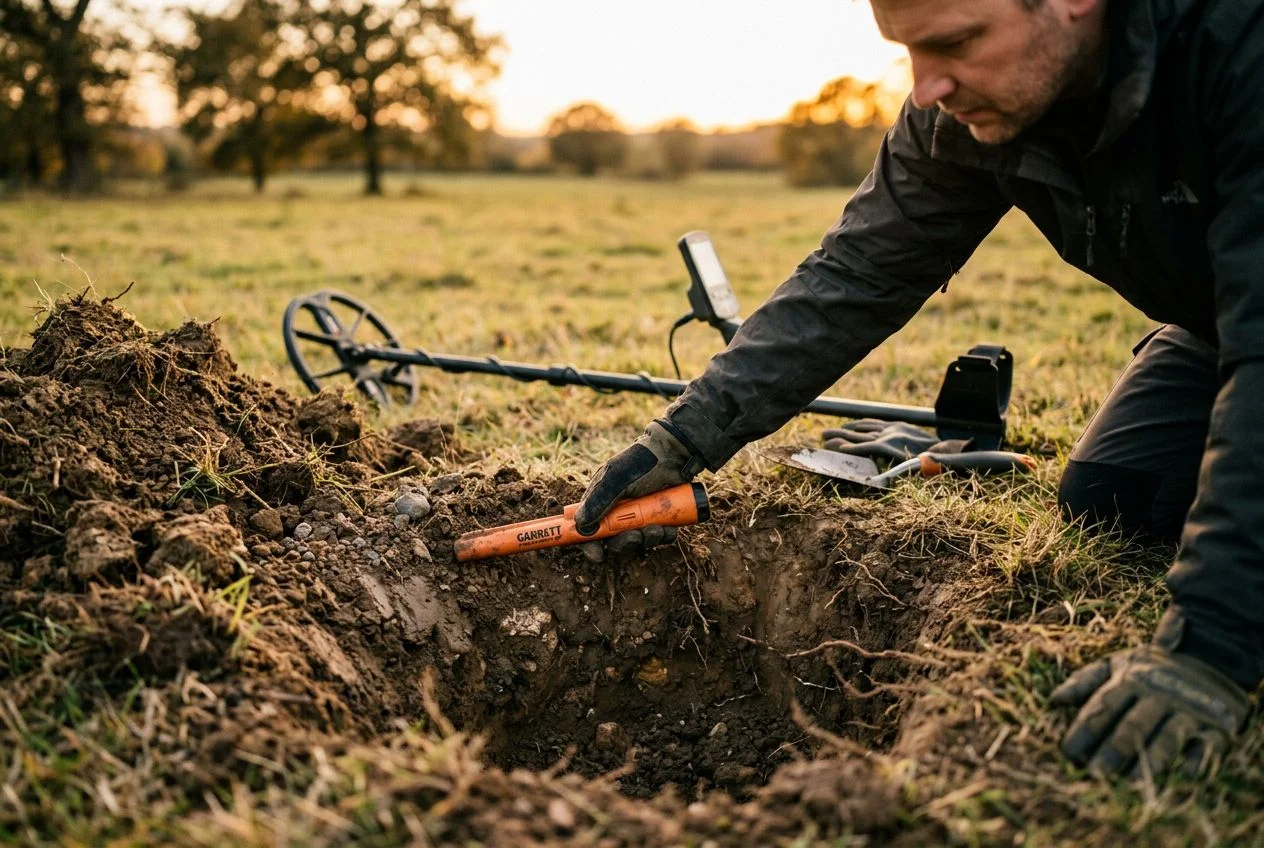
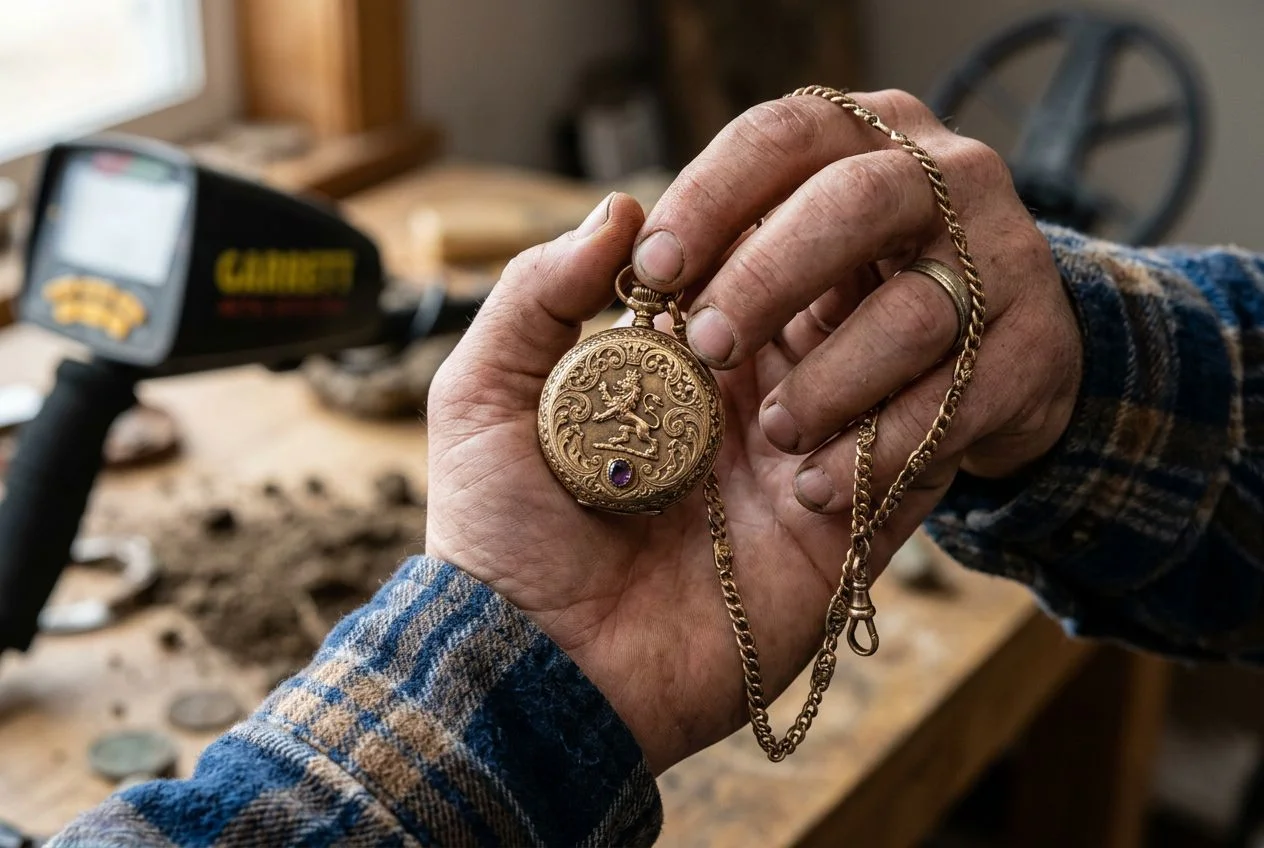
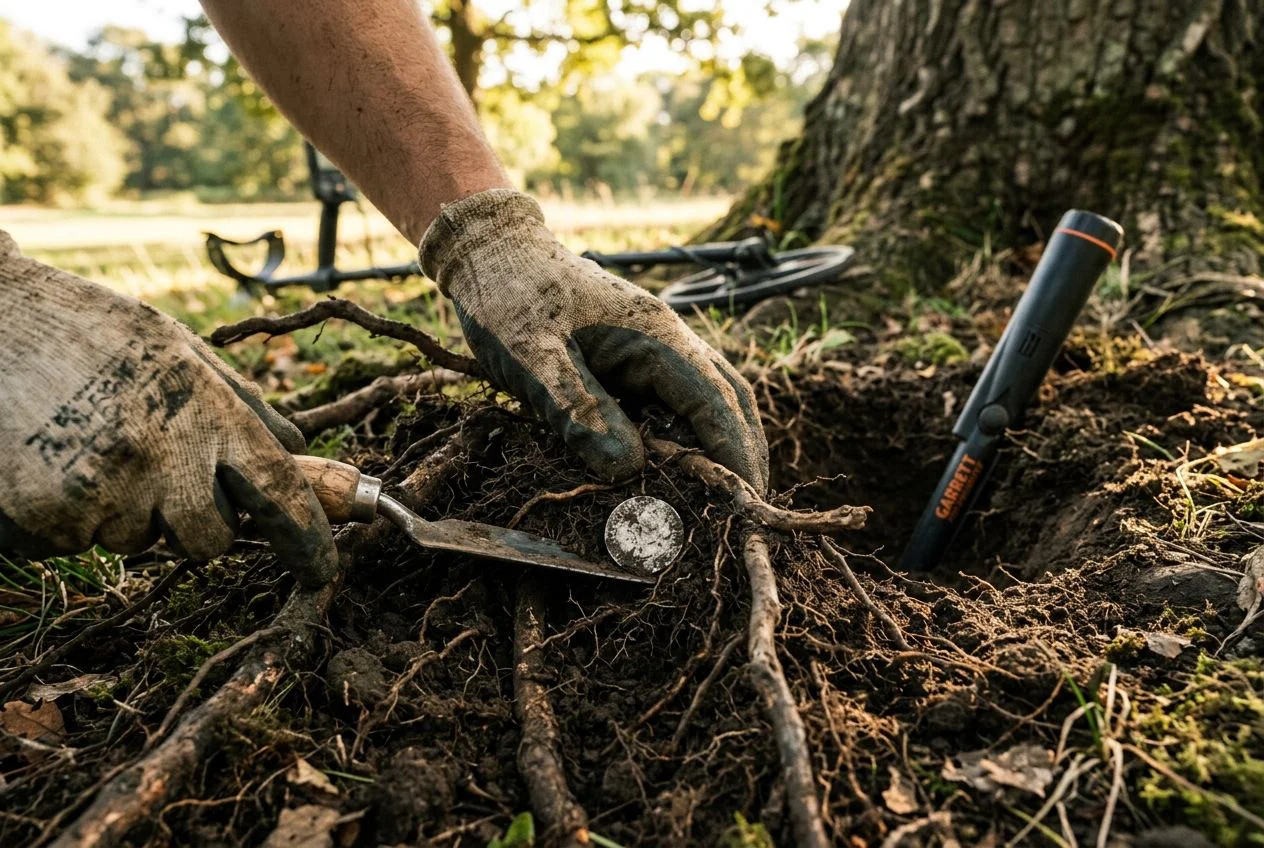
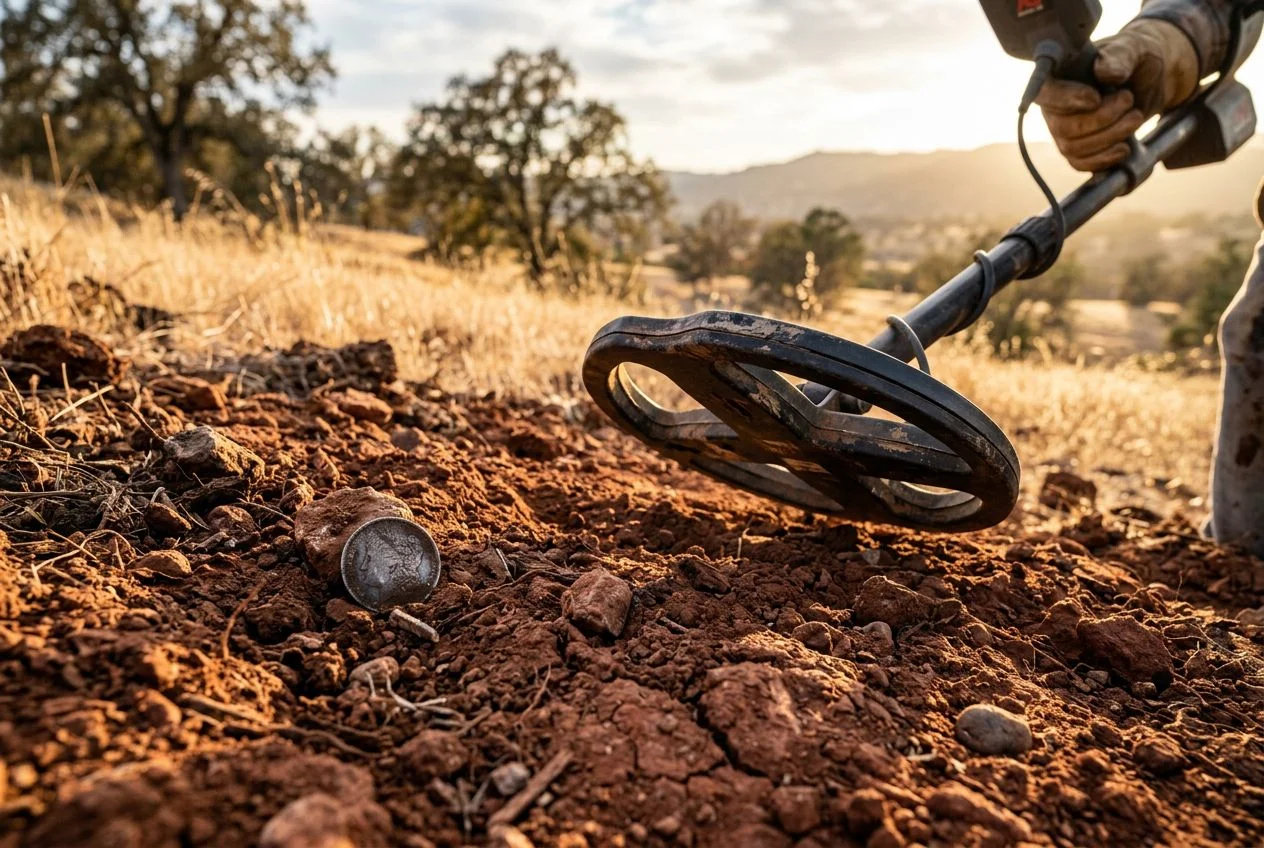
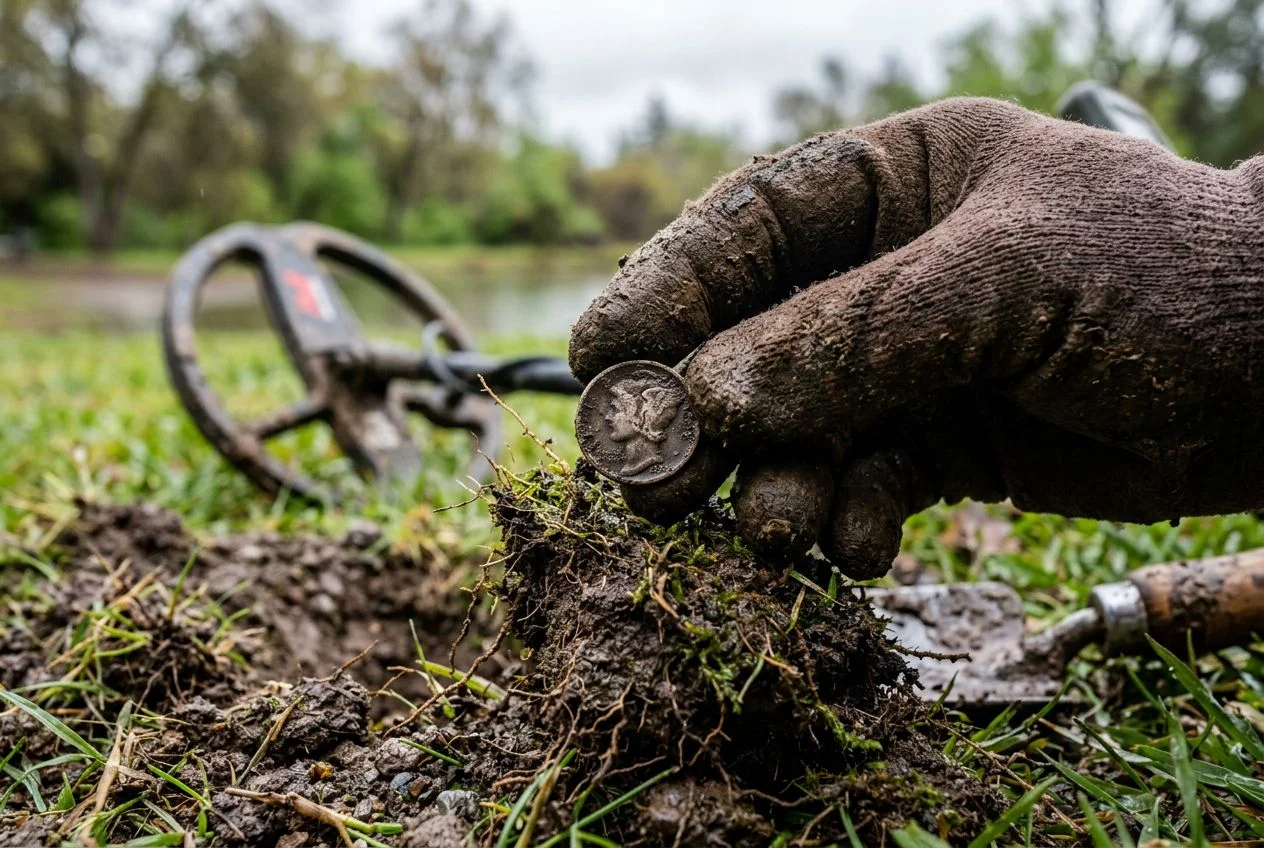
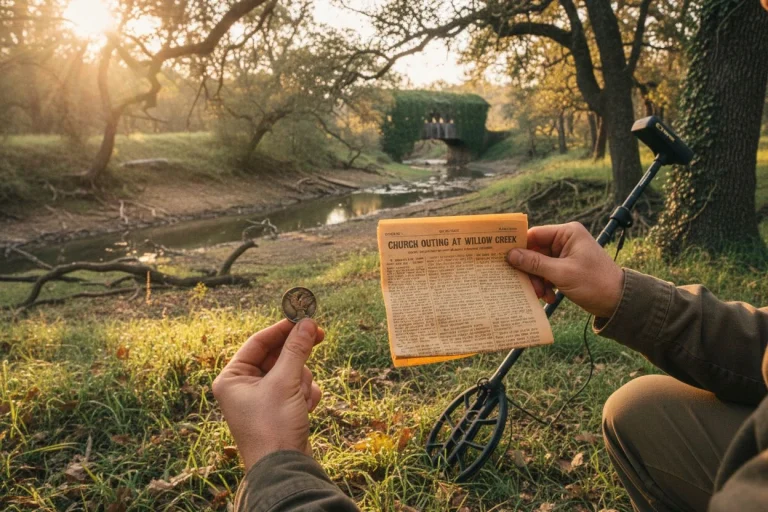
I found my first Mercury dime not in a manicured park or a relic-rich field, but at a swimming hole that vanished from every modern map. The clue came from a historical newspapers metal detecting find — a 1923 newspaper snippet buried in a social column about a church outing: “the old swimming hole near Mill Creek.” Two weekends of bushwhacking later, my Garrett AT Pro hit a solid 79 at six inches. Out came a 1916-D Mercury dime — bent, but beautiful. (I’m probably more excited about that than any normal person should be, but you get it.)
That moment taught me a lesson every detectorist eventually learns. The best sites aren’t the ones everyone hunts. They hide in old newspapers. They wait for someone to dig them up. Here’s the exact workflow I use to turn dusty clippings into GPS coordinates. Grab a notebook. You’ll want to write down the search strings I’m about to share.
How Old Newspapers Reveal Hidden Metal Detecting Sites

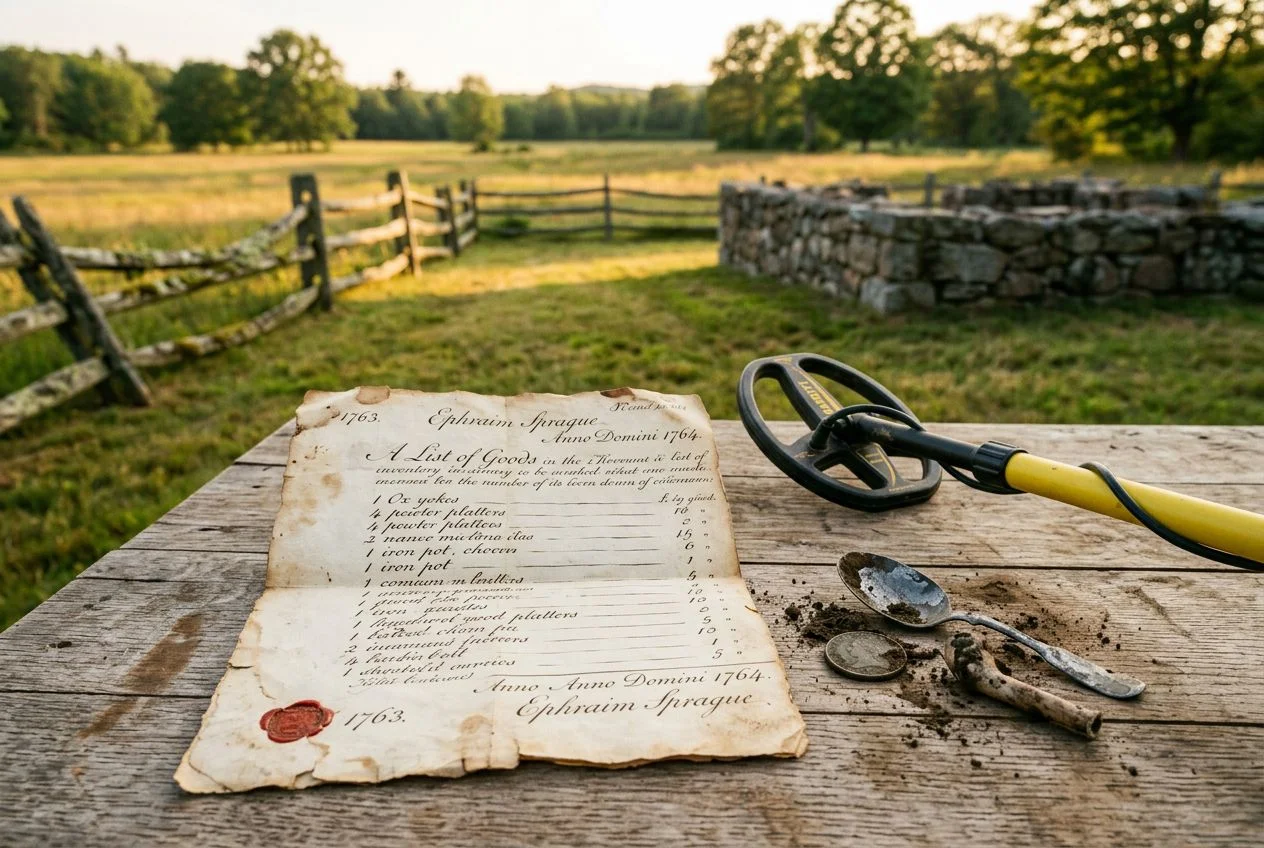
Historical newspapers metal detecting research captures fleeting announcements. Church picnics, Sunday school outings, Fourth of July swims — these events never appear on any map. Small-town notices usually name a specific landmark. They give a distance or a ridiculous detail. That makes the spot easy to triangulate decades later.
I’ve found that maps only tell part of the story. A 1901 county atlas might show a road or a creek. It won’t tell you that the local Baptist congregation gathered every August “at the grove behind the old mill dam” for an all‑day picnic. That’s where newspapers come in. They recorded the why and where of community life. Exactly the kind of data that helps a detectorist narrow a hundred‑acre forest down to a hundred‑foot patch of ground.
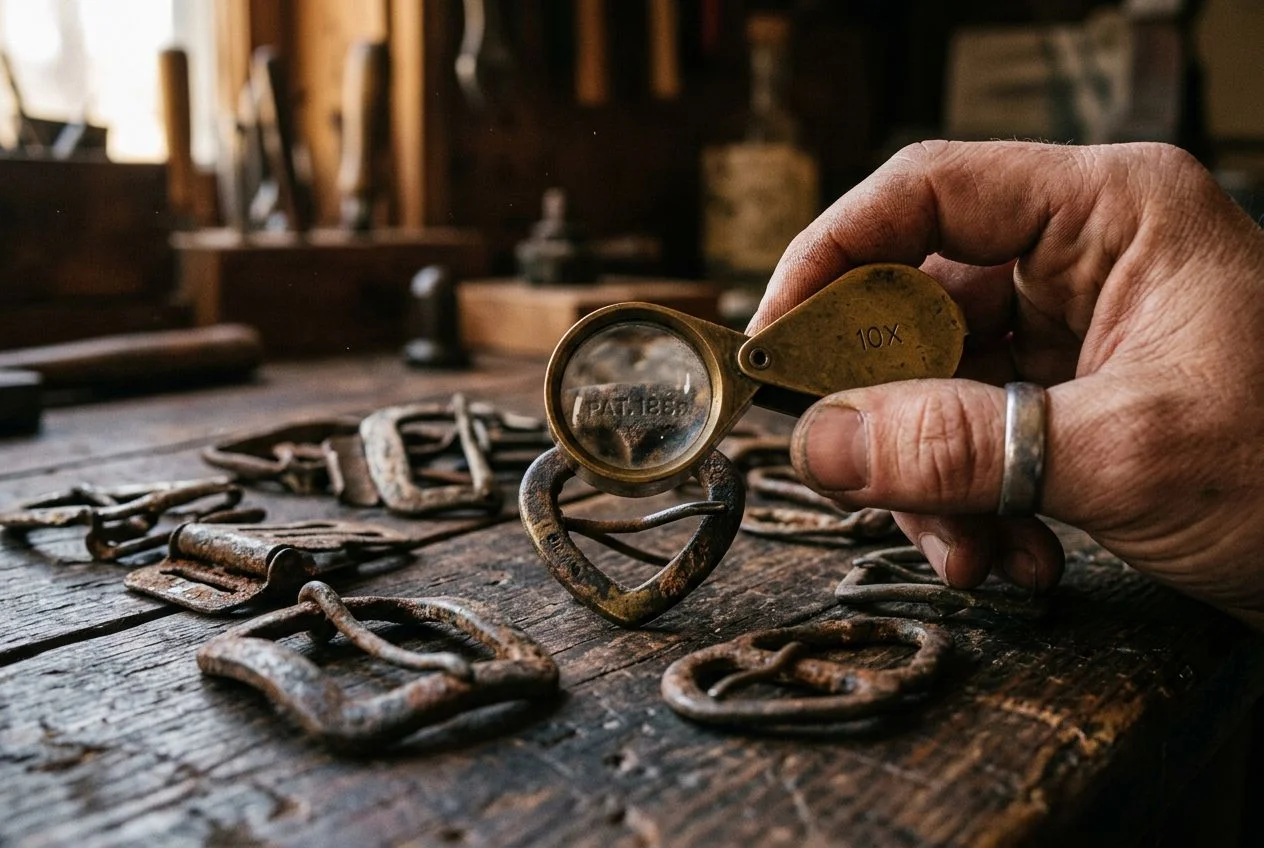
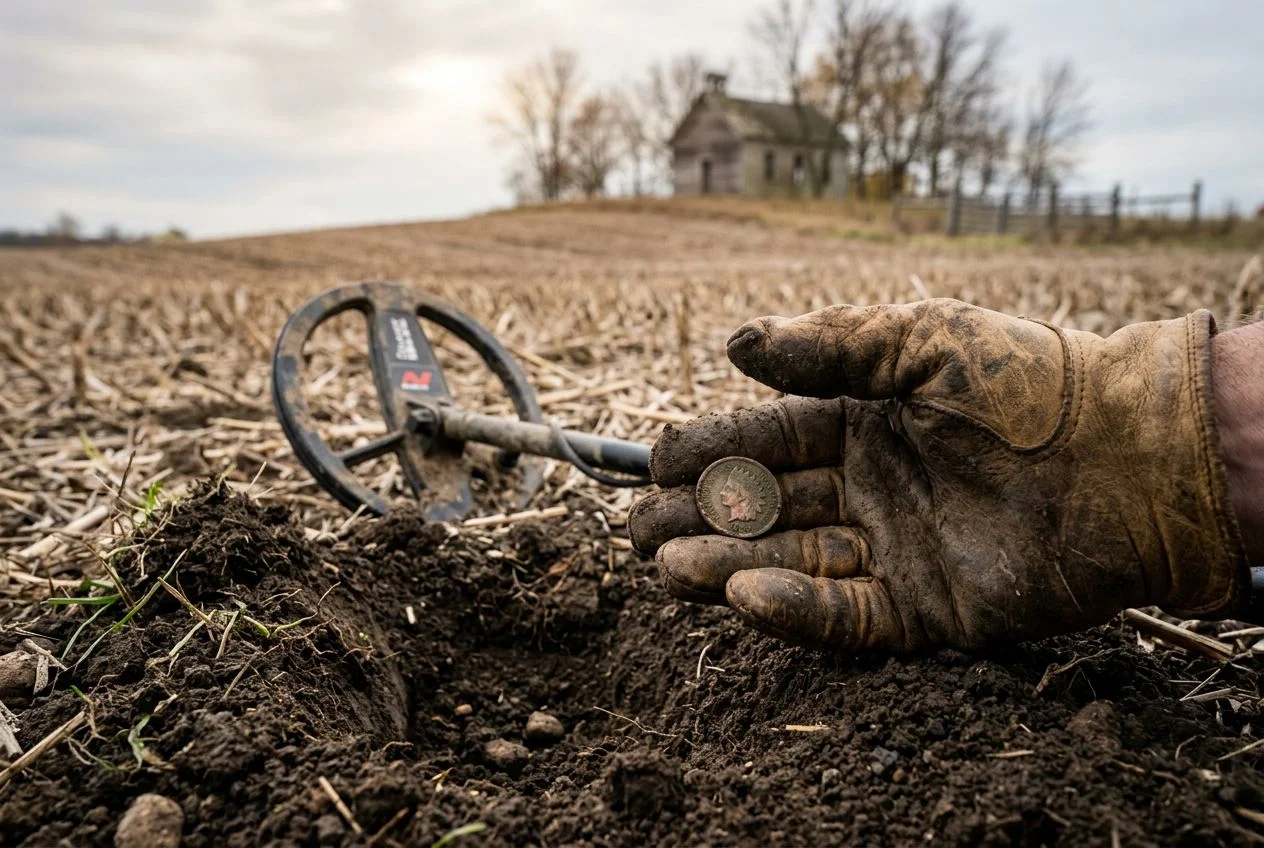
Take my favorite example. I stumbled onto an 1892 announcement for a Sunday school picnic. It required, I’m not making this up, “three wagonloads of watermelons.” That absurd detail sold me. Who orders three wagonloads unless they’re expecting a crowd? The article placed the picnic “on the north bank of Big Sandy Creek, a quarter mile west of the covered bridge.” That level of specificity is a gift. I drove out there. I mapped the old bridge site on a historical overlay. Within an hour my coil sang over a brass harness buckle and a handful of 1890s Indian Head pennies.
Here’s the thing: most detectorists skip newspapers because the search can feel like rummaging through a dusty attic. But once you learn the right search strings — phrases like “Sunday school picnic,” “annual outing,” or “grove near” — the data practically falls into your lap. I cover those exact strings later in this guide. If you want to dive deeper into the overall research workflow, my full guide on library research for detecting sites breaks down how to combine newspaper clues with maps, deeds, and aerial photos. For now, just remember this. If you’re only using modern maps, you’re leaving the best sites in the archives.
Essential Digital Archives for Historical Research
Before you can start digging up forgotten picnic groves and swimming holes, you need to know where the old newspapers live. The good news: most historical newspaper archives are now digitized. You can access them with a library card, a free account, or a modest subscription. The trick is knowing which platform to use for your specific location and time period.
The big three paid databases are Newspapers.com and GenealogyBank. Newspapers.com has the largest single collection — over 800 million pages. It is ideal for broad searches across multiple states or decades. GenealogyBank overlaps somewhat. It often includes smaller rural papers that Newspapers.com misses. Both offer free trials. You can test-drive the search strings I share later without committing.

Chronicling America from the Library of Congress is the essential free resource. It covers U.S. newspapers from 1777 to 1963. It focuses on pre-1924 material outside copyright restrictions. The search interface is clunkier than paid options. But the price is right. It excels for nineteenth-century content — exactly when many picnic groves were in their heyday.
Your local library is your secret weapon. Most libraries provide free remote access to state-specific newspaper collections. These don’t appear on major platforms. California, for example, has the California Digital Newspaper Collection. Nearly every state has an equivalent. Call your library’s reference desk. Ask what newspaper databases they offer. I’ve found entire runs of small-town weeklies this way. They were completely invisible to Google.
For microfilm-only holdings, use the Newspaper Locator tool from your state library or historical society. This lets you search by county and time period. You can find physical reels. Then request them through interlibrary loan or visit in person. Yes, it’s slower. But those local papers often carried the most detailed accounts of church outings and community swims. Details that never made it into big-city dailies.
The key takeaway: start broad, then drill down. Begin with free platforms to test your keywords. Move to paid databases for volume. Finally, hit the local library for the niche stuff. Once you know which archives are available, you’re ready for Phase 2 — finding the exact words that unlock hidden sites.
Finding Lost Swimming Holes Through Targeted Searches
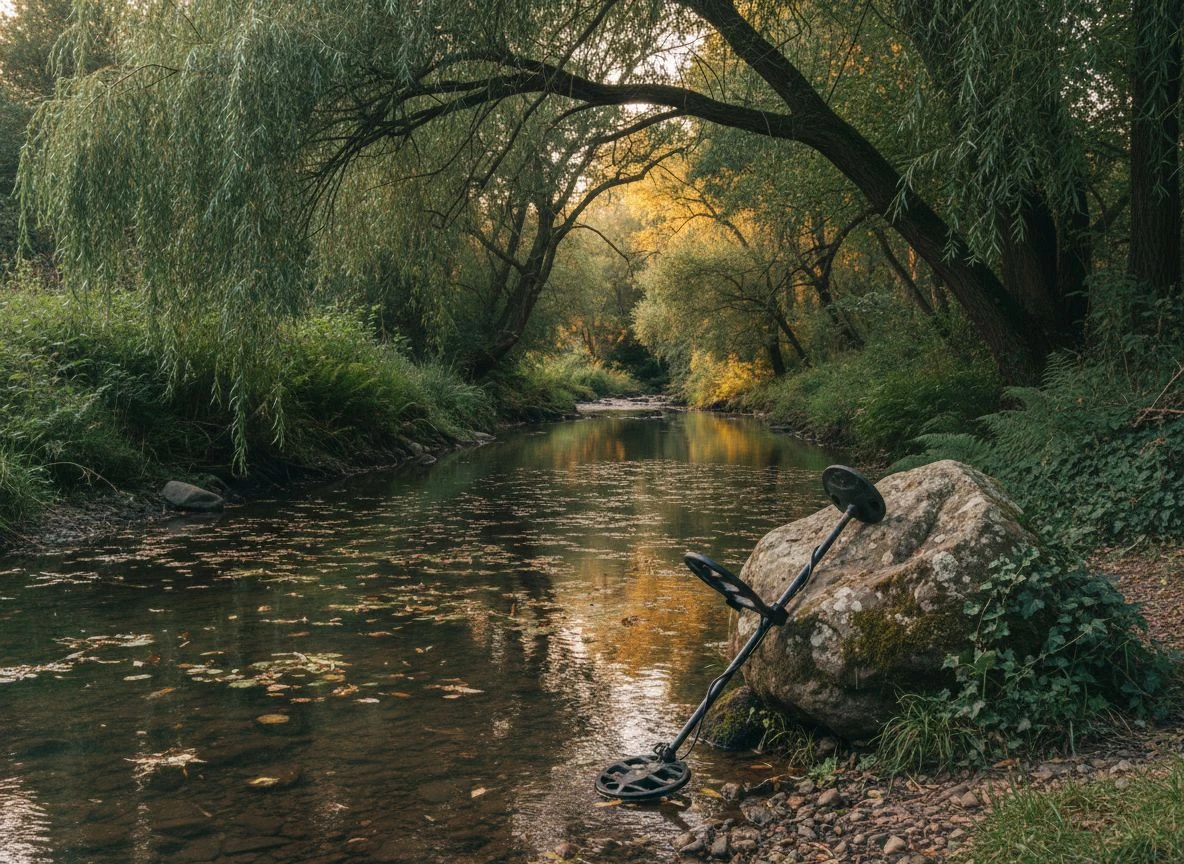
Here are the exact search strings I use to pry forgotten picnic groves and swimming holes out of old newspapers. I’ve tested these across every major archive. They consistently turn up announcements that give a name, a landmark, or a distance. Enough to pin a site on a map.
For picnic groves, run quoted phrases like “picnic grove,” “annual picnic,” “Sunday school picnic,” and “church picnic.” Add “grove near” plus a local landmark (e.g., “grove near mill”) or “political picnic” (parties often rotated through the same groves). For swimming holes, try “swimming hole,” “bathing beach,” “swim at the dam,” “old swimming hole,” or “creek swimming.” Also use wildcard terms like “outing,” “excursion,” and “basket dinner.” Social columns love those vague words.
Pause and copy these strings into your notes. I’ll wait.
Once you have a candidate, pair it with a date and county filter in your archive of choice (Newspapers.com, GenealogyBank, or your library’s state collection). That alone has saved me hours of sifting. When you get a hit, the article will almost always give you enough detail to sketch a location — “one mile east of town” or “the grove behind the old mill dam.” From there, the real detective work begins: matching that description to modern ground. I cover that exact process in my guide on finding hidden detecting sites using aerial photos.
Using Social Columns to Locate Forgotten Picnic Groves
Most historical newspapers metal detecting guides focus on headlines and ads. The real gold lives in the social columns. Those gossipy paragraphs track who visited whom and where they held their Sunday outings.
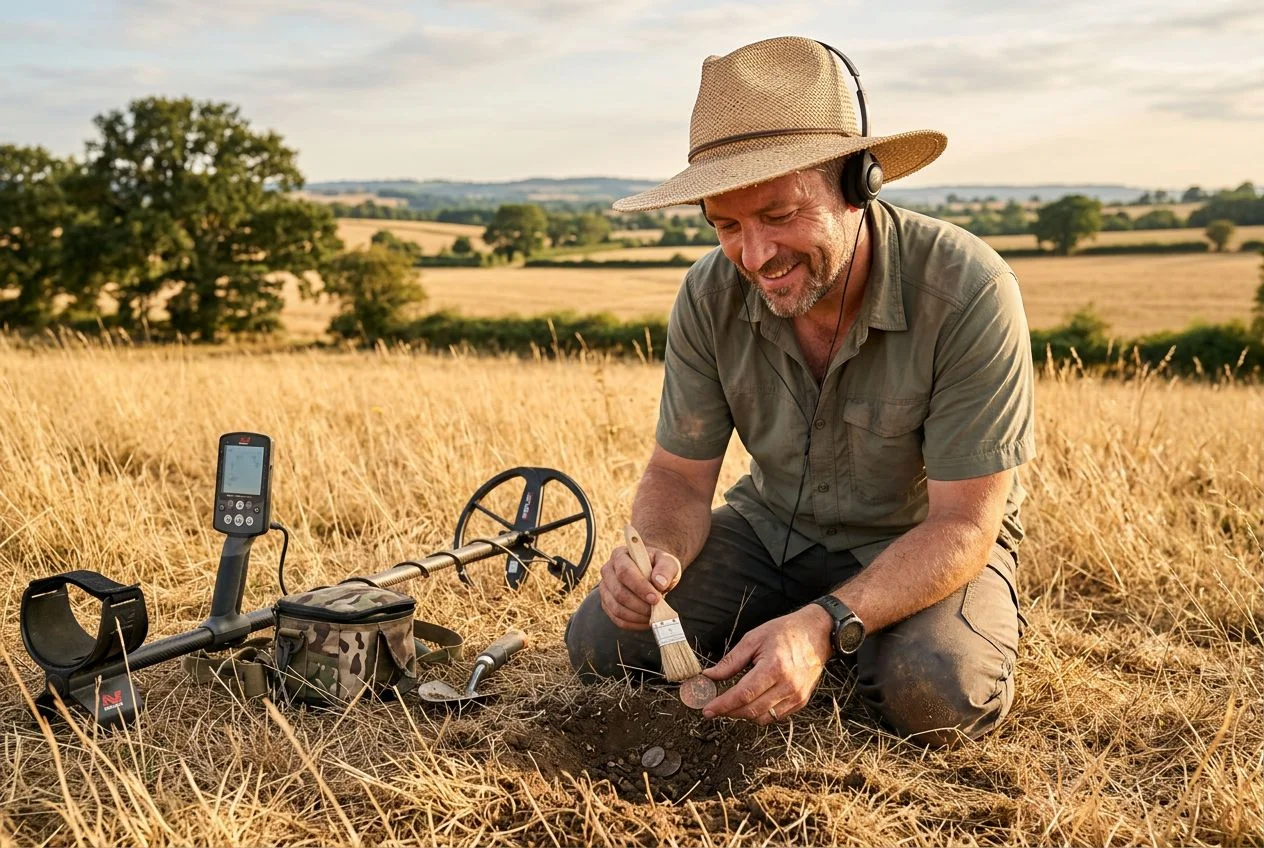
I stumbled onto one of my best honey holes by accident. Flipping through a 1908 weekly paper, I hit a single line: “The Brown family picnicked at Sycamore Glen last Sunday.” That was it. No address, no map. But the name was enough. I cross-referenced it against old land deeds. Sycamore Glen was a grove along a creek bed two miles north of town. When I walked it three months later, the site was so overgrown with poison oak I nearly turned back. But under the brambles, the ground was littered with old bottle caps, a silver locket, and enough wheat cents to fill a coffee can. The social columns had done the work. No one else had bothered to read them.
The trick is to search for casual phrasing: “called on,” “enjoyed an outing at,” “spent the day at.” These columns are full of place names that never made it onto official maps. That trip taught me the value of documenting every step of the search. I cover that habit in my guide on The Hidden Historian Mindset: Documenting Metal Detecting Finds.
How to Turn Newspaper Clippings into GPS Data
A newspaper mention gives you a name and a distance. The real detective work is turning “three miles north of the courthouse” into a specific patch of ground you can actually walk.
That “three miles north of the courthouse” line appeared in an 1897 article about the Elm Street Sunday School picnic. I pulled out a period topographic map of the county — the kind the Geological Survey published in the early 1900s. The courthouse was easy to find. I measured three miles north along the main road using the map’s scale bar. Then I looked for natural features the article mentioned: “the grove of old oaks at the bend of Cane Creek.” The topo map showed a sharp meander exactly where my measurement landed.
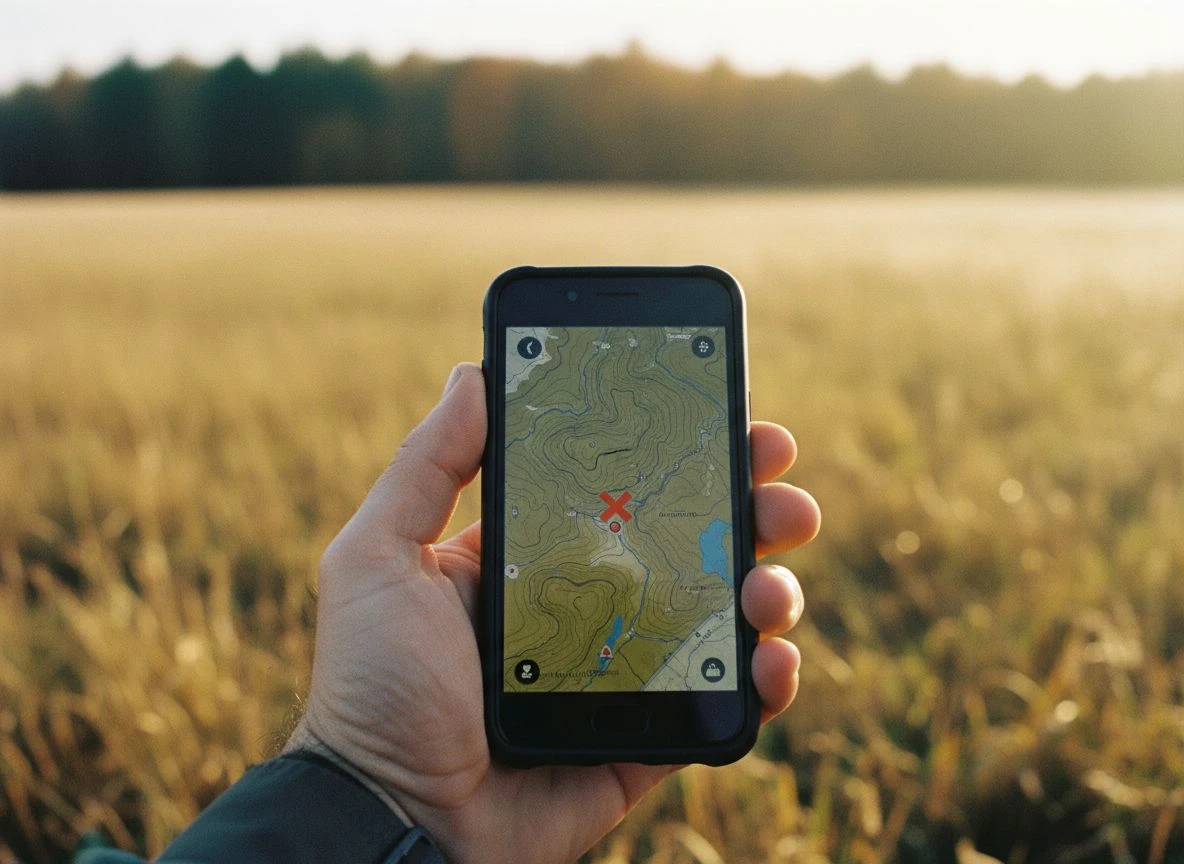
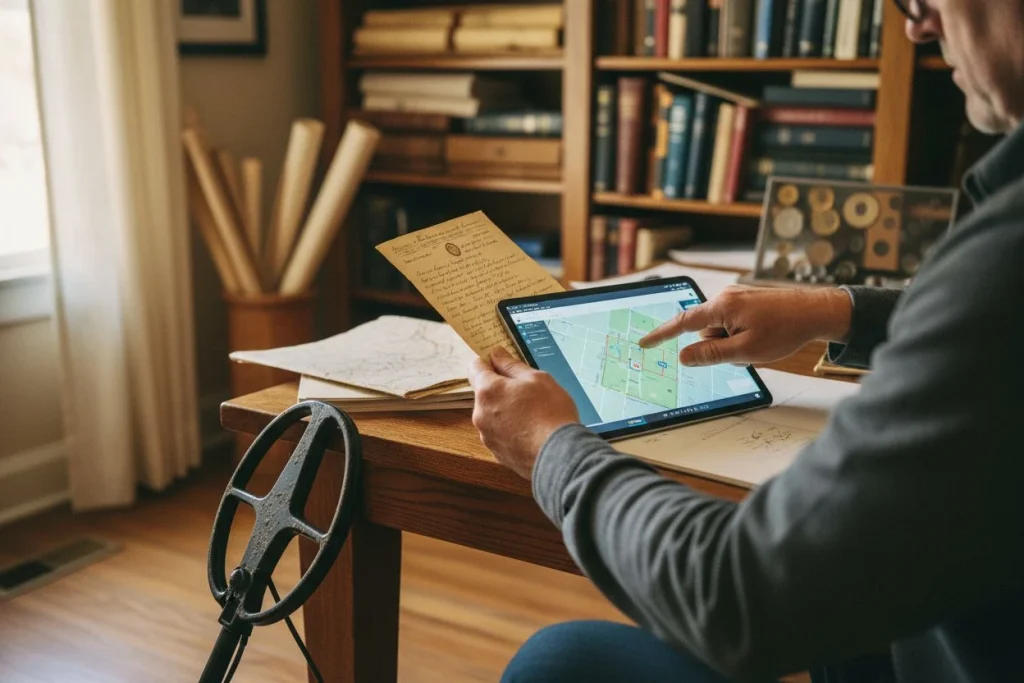
Next, I opened Google Earth and turned on the historical imagery slider. Scrolling back to 1994, I could see a cluster of mature oaks forming a dark crescent at that same bend. The grove’s outline was still visible in the tree canopy after nearly a hundred years. Cross-referencing with Sanborn maps confirmed the property had been a church-owned parcel in the 1890s.
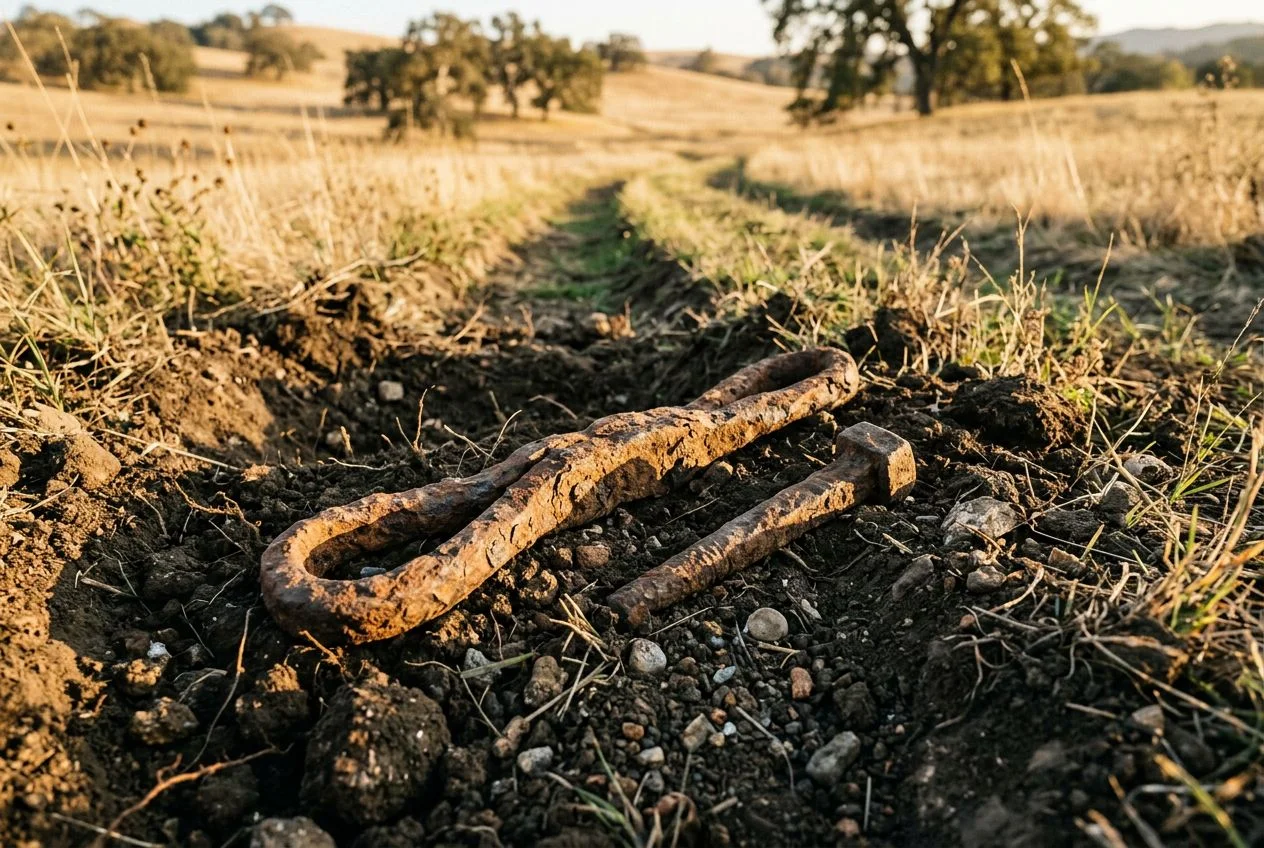
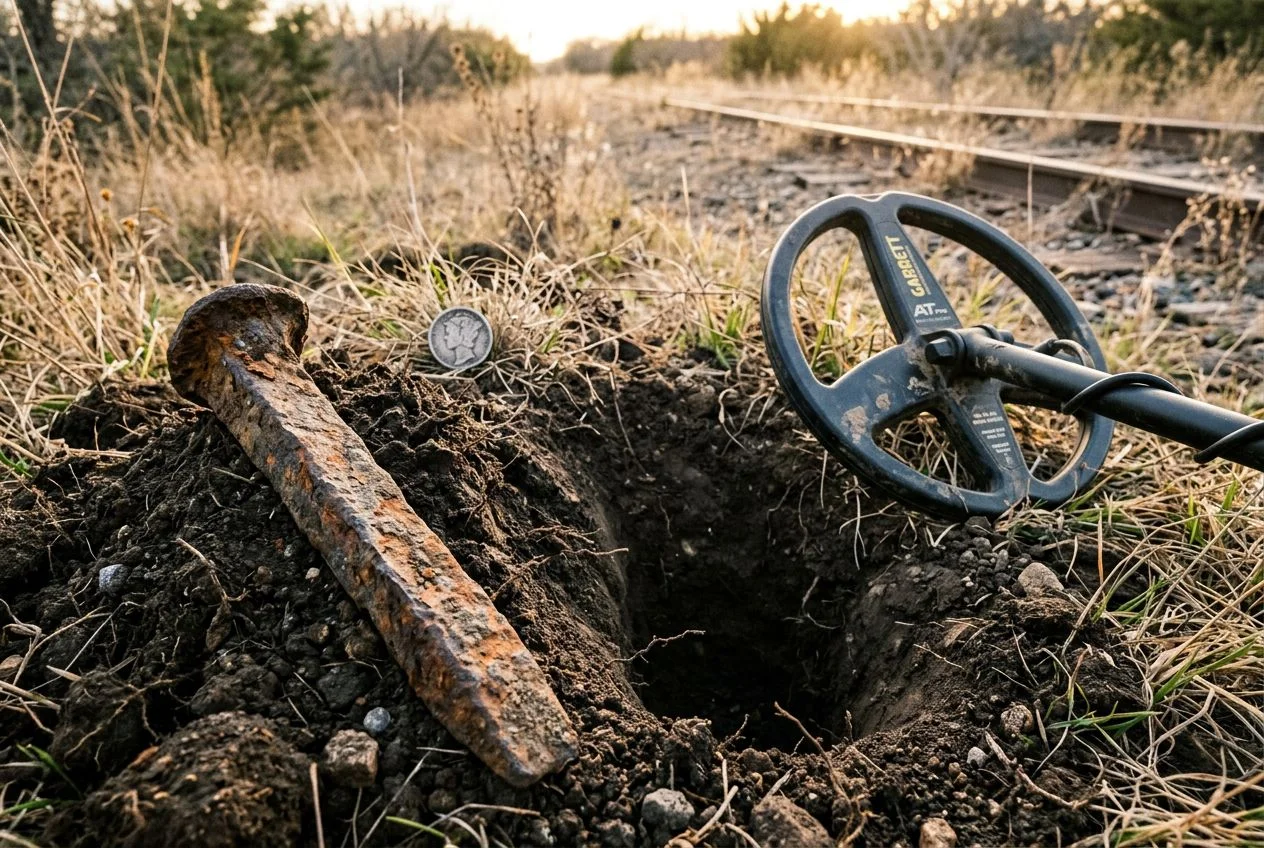
On the ground, the oaks were still there. So were the rusted remnants of iron park benches. Enough wheat cents to fill a coffee can. That day taught me the value of reading the clues abandoned sites leave behind — from bench bolts to bottle dumps that match old picnic layouts. The newspaper gave me the name. The maps gave me the spot. The ground kept the secret for over a century.
Verifying Your Research with Historic Aerial Maps
A single newspaper mention is a lead, not a location. To turn “the grove near the old mill” into a spot where you can swing a coil, you need to stack multiple sources — maps, city directories, and historical aerial photos — until they all point to the same patch of dirt. That’s where historical newspapers metal detecting research truly shines.
Find Hidden Detecting Sites is a full primer on using aerial imagery. Here’s the quick workflow I use. Start with an 1890s or early 1900s topographical map. Look for the natural features referenced in the article: creek bends, hilltops, stands of oak. Then overlay a Sanborn fire insurance map (if the area was built up) or a plat map to confirm who owned the parcel. Church-owned land or “Sunday School grounds” often shows up on plat maps as a separate lot. Finally, open Google Earth’s historical imagery slider. Scroll back to the 1950s or 60s. Old picnic groves often leave a signature: a clearing in the woods, a cluster of historic oak trees planted in a rough circle, or faint lines from wagon roads that led to the site.
Verification checklist callout:
- ☐ Newspaper article mentions a named location (Sycamore Glen, Miller’s Grove, etc.)
- ☐ Period topo map confirms natural features align with the description
- ☐ Plat map or Sanborn map shows ownership consistent with the event (church, school, civic group)
- ☐ Historical aerial photos show a clearing or structure at that spot
- ☐ City directory from the era lists a park, pavilion, or grove at the same address
Cross-referencing this way builds a case that holds up in the field. I’ve used this exact method to confirm sites that were completely overgrown. The ground remembers, and the records prove it. For documenting everything before you dig, see Master Legal Metal Detecting Historic Site Documentation.
Ethical Guidelines for Exploring Abandoned Locations
A newspaper clipping isn’t a permission slip. That forgotten picnic grove you spent hours researching might look like public land on an 1890s map. But in 2026, it’s almost certainly someone’s soybean field, gated hunting preserve, or a county park with strict detecting rules. The excitement of matching an old article to a GPS coordinate can blind you. Ownership changes. Boundaries shift. “Abandoned” doesn’t mean “unowned.”
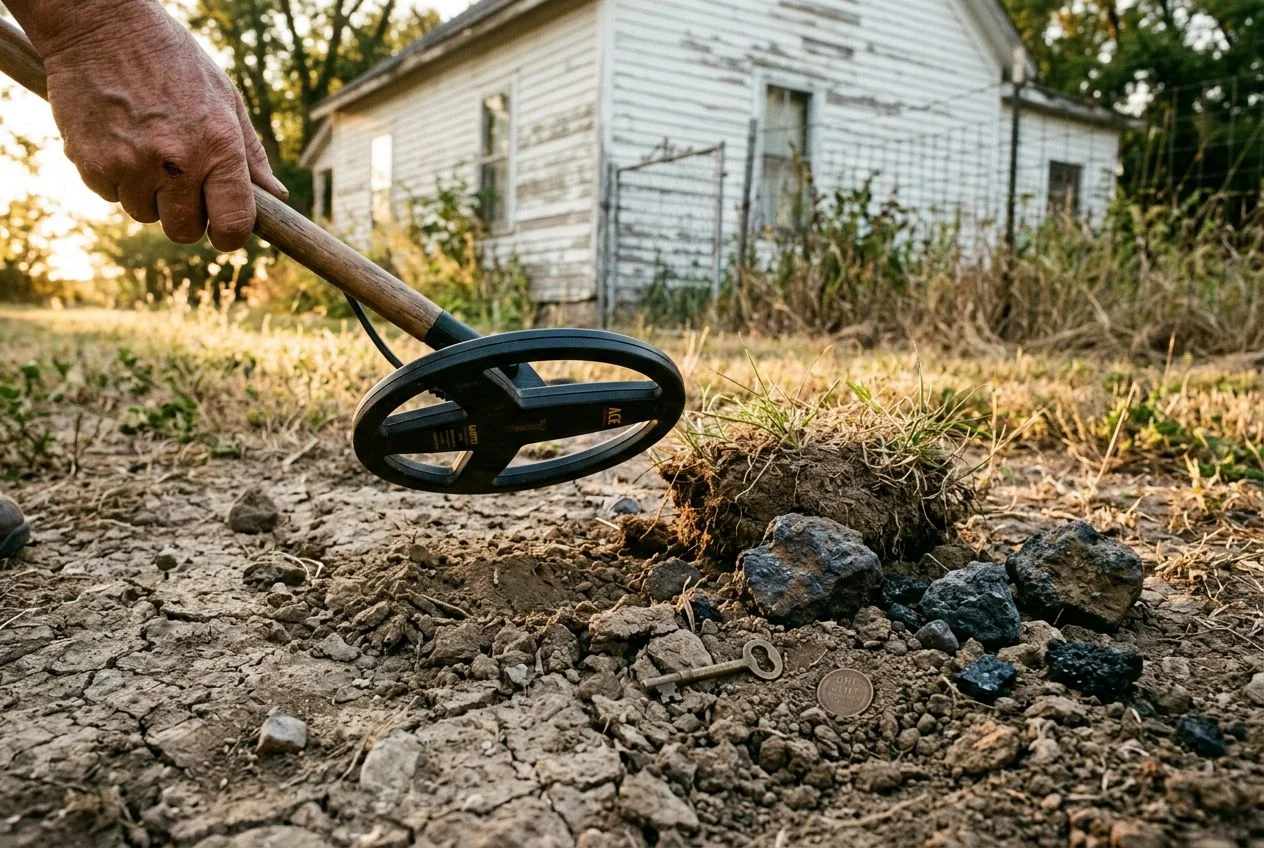
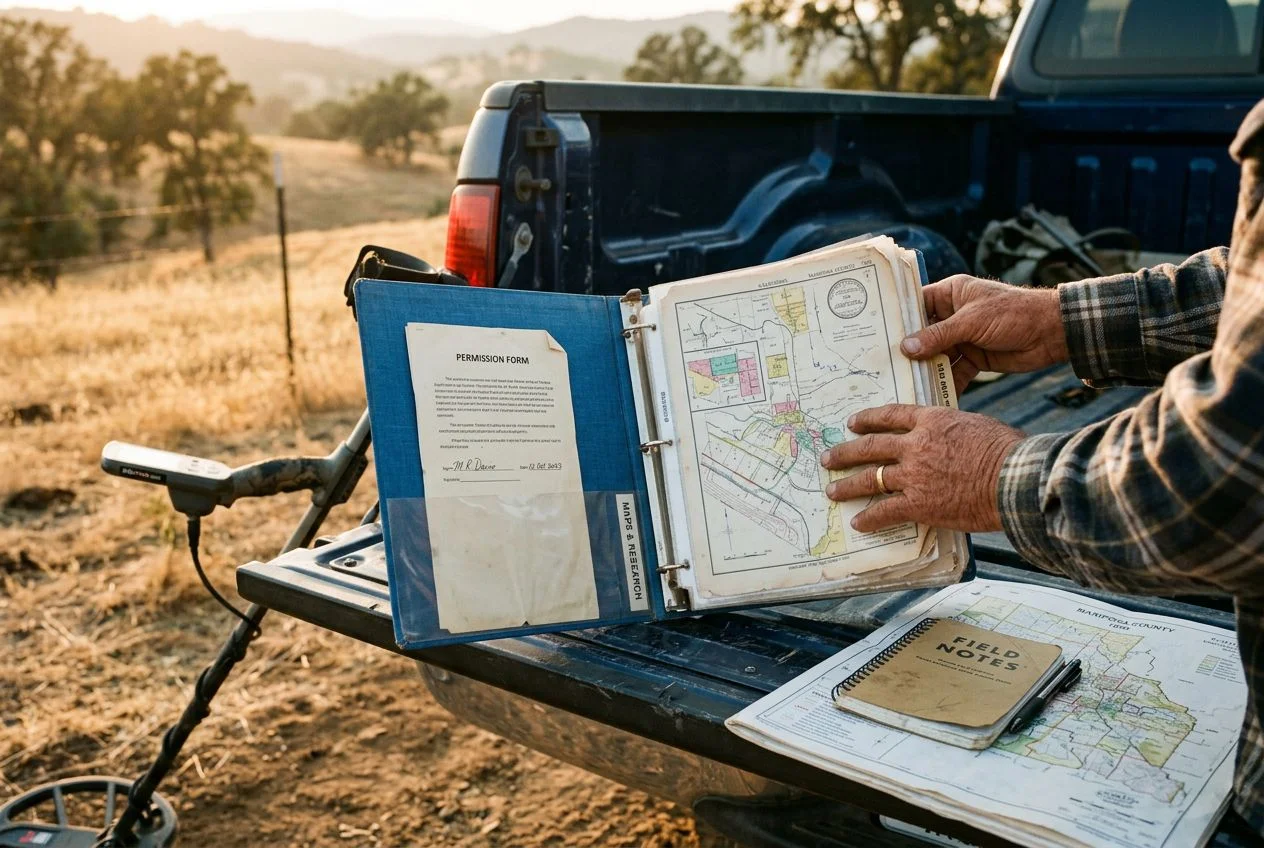
I’ve driven three hours to a swimming hole referenced in a 1921 social column. I found a “No Trespassing” sign every fifty feet. The spot was perfect — shallow creek bend, old oaks, likely bottle dump. But without permission, that coil never left the truck. Here’s the cold truth: some sites you find in the archives will be unreachable. That’s part of the work. Document the location thoroughly. Check current county parcel maps. If it’s private, find the owner. Many farmers are happy to let a responsible detectorist walk their land. Especially if you bring the newspaper article showing what used to be there. It makes a compelling case for petitioning the owner.
Before you knock on any door, have your legal metal detecting site documentation ready — the article, the map overlay, proof of ownership research. It shows you’re serious, not just a random digger. For swimming holes specifically, also check the wading safety and gear guide. Deep mud, submerged glass, and hidden currents can turn a promising spot into a hazard. Fill every hole. Respect the ground. Report anything that looks historically significant. The hobby only survives if we earn the trust of landowners and regulators. Before you pack your detector, read this section carefully. It could save you from a fine.
Finding Your Next Great Site in Newspaper Archives
A newspaper archive is the closest thing detecting has to a time machine. Every social column, church picnic announcement, and swimming hole mention is a breadcrumb. It leads to ground that’s been undisturbed for decades. The search strings I’ve shared aren’t magic. They’re just a system for finding those breadcrumbs faster than scrolling randomly. The real magic happens when you match an old article to a patch of dirt. You pull something that hasn’t seen sunlight since 1912.
I still get a jolt every time I open a digital archive and find an event announcement that no one’s used for detecting before. That feeling never gets old. If you want to dig deeper into the research side of the hobby, Your Ultimate Metal Detecting Weapon Is Researching Metal Detecting Sites in a Library walks through the full workflow with maps and directories.
Now it’s your turn. Open your library account. Try the search strings from this article. Email me your first find story. I’ll feature the best one in a future newsletter. Happy hunting — and happy researching.

My name is Paul and I am the founder of Detector For Metal, a dedicated resource for metal detecting enthusiasts seeking to uncover historical treasures and connect with the past using the latest technology. As a stay-at-home dad and family man, I’ve found metal detecting to be the perfect hobby that combines family adventure with historical learnings for the whole family.
As a father, I’m deeply committed to passing on this hobby to the next generation of detectorists, starting with my own children. I share advice on everything from metal detecting with kids to exploring the top 10 metal detecting sites you never thought about. My methodical approach to the hobby goes beyond the thrill of discovery—it’s about creating family traditions while preserving history and sharing the stories of those who came before us.