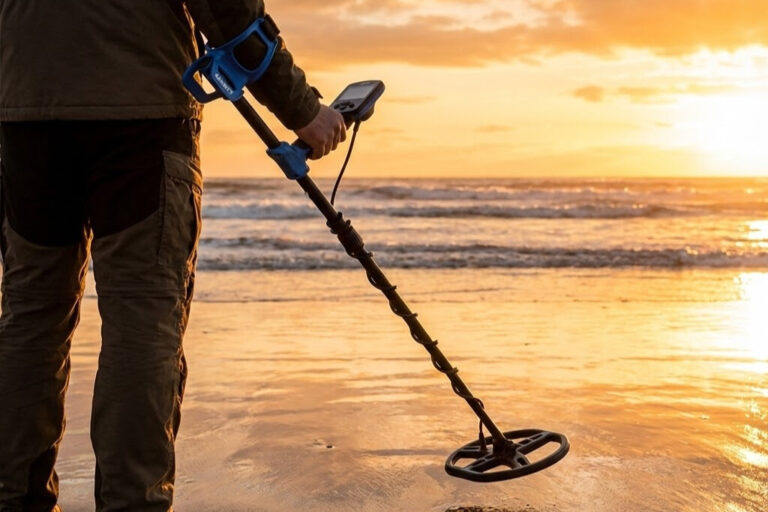
Picture this: November 2024, and my neighbor Jerry’s practically running laps around the park. Why? Garrett just dropped their first multi-frequency metal detector. Jerry had been defending his trusty AT Max for years while watching his buddies switch to Minelab and Nokta. “Finally,” he kept saying, “Garrett’s back in the game.”
The Garrett Vortex detector series runs from $449 to $599. You get three models to choose from for coin hunting, beach detecting, and relic detection—the VX5, VX7, and VX9. What makes this waterproof detector different? You can start cheap and upgrade later without buying a whole new machine [1].
I’ve spent months watching people test these things. I’ve read the forum fights, tracked the firmware updates, and talked to folks who actually use them. Here’s the real story: the Vortex shines at beach detecting and gives you options other detectors don’t. But it’s got growing pains. The target identification can be wonky, and the software still needs work.
Is it perfect? Nope. Worth considering? Absolutely—if you know what you’re getting into.
- Garrett Vortex VX5 vs VX7 vs VX9: Which Metal Detector Model Should You Buy?
- Garrett Vortex Metal Detector Features: Multi-Frequency Technology & Target ID Explained
- How Deep Does Garrett Vortex Detect? Real-World Beach, Coin & Gold Performance
- Garrett Vortex vs Minelab vs Nokta: Metal Detector Comparison
- Best Garrett Vortex for Beginners: VX5, VX7, or VX9?
- Garrett Vortex FAQ: Coil Sizes, Discrimination Modes & Battery Life
- Is Garrett Vortex Worth It? Final Verdict on Buying This Metal Detector 🎯
- References
Garrett Vortex VX5 vs VX7 vs VX9: Which Metal Detector Model Should You Buy?
Here’s where Garrett did something clever—and a bit sneaky. They built one metal detector. Just one. Then they sell it to you three different ways based on which features the software unlocks.
Think about that for a second. Every VX5, VX7, and VX9 rolling off the assembly line in Texas is identical. Same parts, same build, same everything. The only thing that changes? What the software lets you do [2].
Here’s how the best Garrett Vortex model breakdown works:
The VX5 costs $449. You get the basics—multi-frequency detection and a 13 kHz single-frequency mode. Perfect for getting started.
The VX7 runs $534. Now you’re adding beach mode, a 5 kHz option for deeper targets, and you can adjust recovery speed.
The VX9 tops out at $599. This one’s fully unlocked. Seven different frequencies to choose from (5, 9, 13, 18, 25 kHz), fancy three-tier target ID, and speed settings for serious competition hunting.
Here’s the cool part: Let’s say you buy the VX5 today. Six months from now, you’re hooked on beach detecting. You don’t need a new detector. Just pay Garrett $85 for a software unlock, and boom—you’ve got a VX7. Want to jump straight to VX9? That’s $150 from the VX5.
People online got pretty fired up about this. “I’m paying to unlock hardware I already own!” Sure, I get it. But flip that around. This is the first time you can grow with your detector without eating a massive loss when you sell your “beginner” machine.
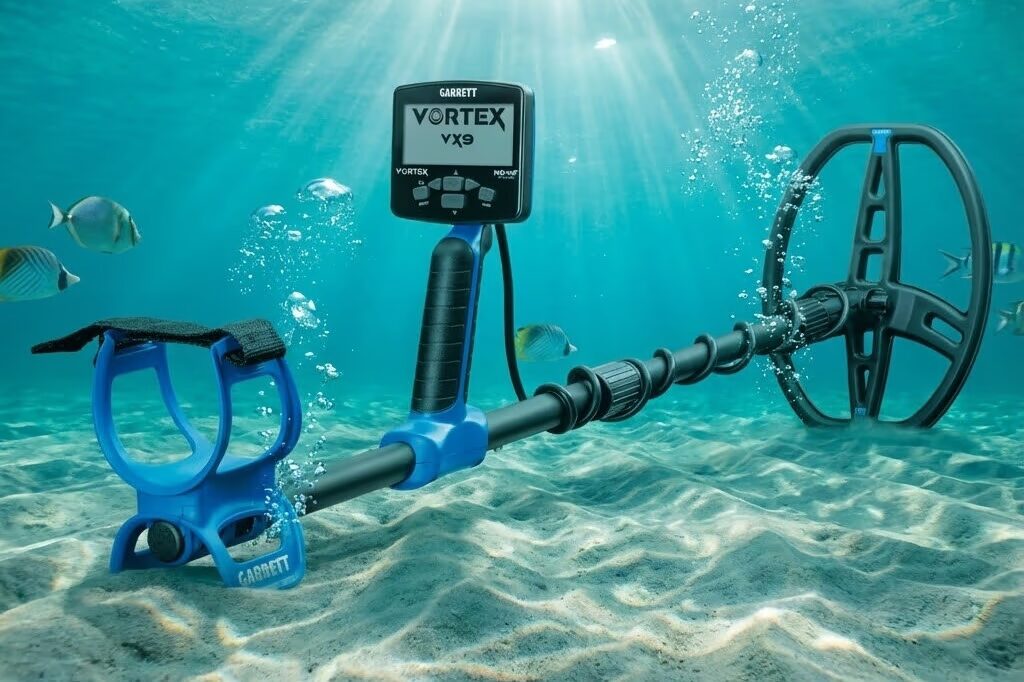
The whole Vortex line is waterproof to 16 feet. That beats both the Minelab Equinox and Nokta Legend, which tap out at 10 feet. If you surf hunt or do underwater recovery, those extra six feet matter.
Battery life? About 15 hours on a charge. The whole thing weighs three pounds, give or take.
Garrett Vortex Metal Detector Features: Multi-Frequency Technology & Target ID Explained

What Is Multi-Frequency Metal Detecting? (Explained Simply)
My buddy Jerry tried explaining multi-frequency technology to me at our local coffee shop. He drew waves on napkins for a solid hour. By the third refill, I finally got it.
Old-school metal detectors send out one frequency. That’s like fishing with one type of lure. The Garrett Vortex uses MD-MF technology—it sends out multiple frequencies at the same time.
Why does this matter when you’re treasure hunting? Different stuff responds to different frequencies. Big silver coins and copper relics? They show up better at low frequencies like 5 kHz. Small gold jewelry and thin old coins? They need higher frequencies—think 18 to 25 kHz.
With multi-frequency, you’re not picking one or the other. You’re getting all of them working together. That’s huge for dealing with saltwater messing up your signals or mineralized soil throwing false positives.
The VX9 gives you seven different frequency options. You used to need multiple Garrett detectors to get that kind of range. Now it’s all in one box.
| Feature | VX5 | VX7 | VX9 |
|---|---|---|---|
| Price | $449 | $534 | $599 |
| Frequencies | 2 options | 4 options | 7 options |
| Target ID | 1-tier | 2-tier | 3-tier |
| Recovery Speed | Fixed | 2 settings | 3 settings |
| Waterproof | 16 ft | 16 ft | 16 ft |
Garrett Vortex Target ID Problems: What Users Are Saying
Okay, so here’s where things get messy with the Vortex detector. The VX9 uses this three-tier target ID system. It’s totally different from the simple number scales you see on other metal detectors.
One scale shows non-ferrous targets (your silver, your copper). Another scale shows complex ferrous stuff. The third scale is for simple iron like nails.
Sounds smart, right? In real life? Not so much.
The forums exploded with complaints. People kept saying the target ID was “clumping too many targets in the same bin.” Translation: you think you’re digging a dime, turns out it’s a quarter. One guy on DetectorProspector put it this way: “A few times when I dug a dime, it turned into a quarter when I pulled it out of the ground” [3].
Garrett released a firmware update in September 2025—version 9.11. It supposedly fixed the target ID issues. People are still arguing about whether it actually worked. And here’s the kicker: you can’t downgrade the firmware if the update makes things worse.
Oh, and here’s the frustrating part. People running single-frequency mode report the target ID works way better. Which kind of defeats the whole point of buying a multi-frequency Garrett Vortex metal detector in the first place.
How Deep Does Garrett Vortex Detect? Real-World Beach, Coin & Gold Performance
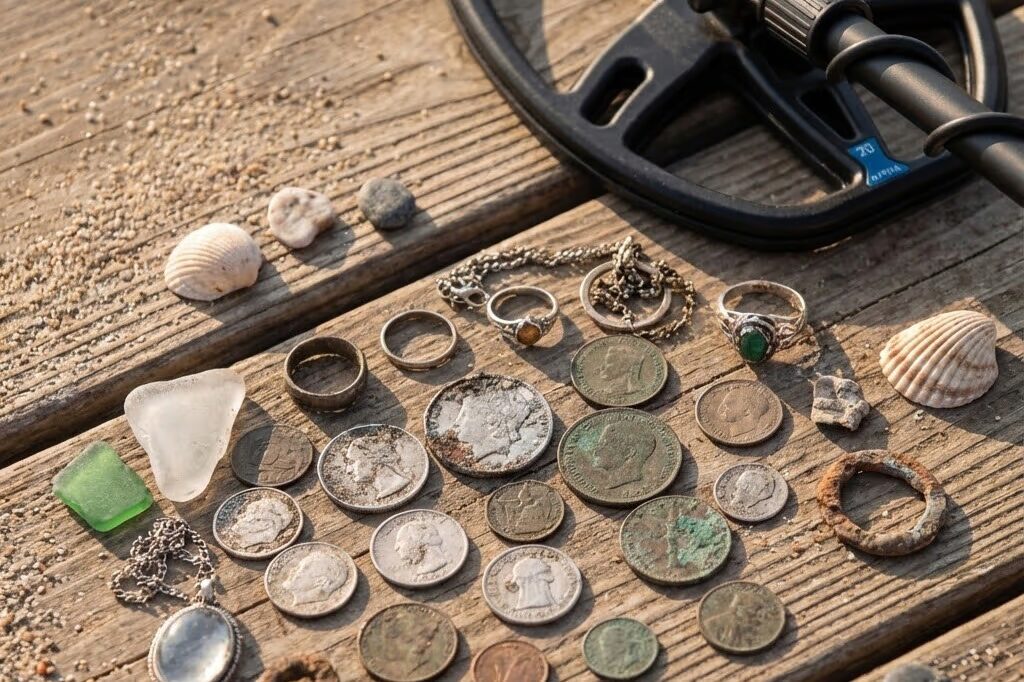
Garrett Vortex Beach Detecting: Best Waterproof Detector Performance
Ask anyone who’s tested the Garrett Vortex, and they’ll tell you the same thing: this detector loves the beach.
The Multi-Frequency Salt mode (only on the VX7 and VX9) tackles a problem that drives beach hunters crazy. Saltwater creates false signals that make single-frequency detectors go haywire. The Vortex filters that noise out.
People have tested this thing in conditions that would’ve had their old machines beeping nonstop at nothing. That 16-foot waterproof rating means you can chase signals right into the surf. No more stopping at the water’s edge like you’re afraid to get wet.
One user posted about finding 124 coins in under three hours at a playground with the VX9. Beach hunters keep saying the same thing: it beats the older AT Max for coin detection, hands down [4].
Garrett Vortex Coin Detecting: Park Hunting & Depth Test Results
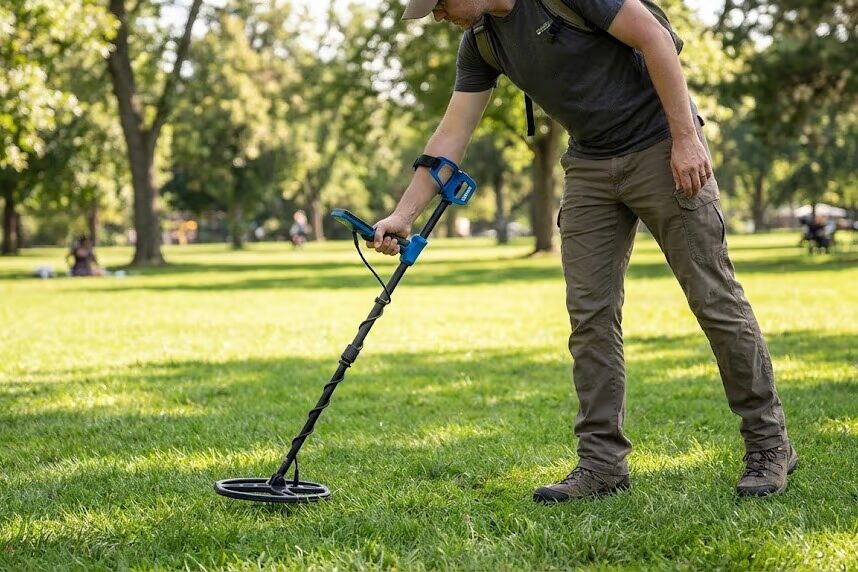
For regular park hunting, the Vortex does fine. It’s not going to blow your mind, but it gets the job done.
The Fast Mode on the VX9 helps when you’re in trashy areas where targets are packed close together. The discrimination modes try to filter out bottlecaps and aluminum junk. Sometimes it works, sometimes you’re still digging trash. That’s metal detecting for you.
Now, about depth. How deep does Garrett Vortex detect coins? The promotional stuff says you can find coin-sized targets past 12 inches in good conditions. But here’s the catch: this detector only hit the market in late 2024. We don’t have a ton of controlled Garrett Vortex depth test data yet.
What we do know: all three models handle mineralized soil better than entry-level detectors. They’ve got 175 points of ground balance resolution. In English? They can deal with dirt that messes up cheaper machines.
Garrett Vortex for Gold Prospecting: Should You Buy It for Gold?
Let’s be real about Garrett Vortex gold prospecting. If you’re serious about finding gold nuggets, buy a detector made for that.
Sure, the VX9’s 25 kHz frequency should help with small gold. In theory. But talk to actual prospectors, and they’ll tell you to get the AT Gold or a proper PI machine.
Finding gold jewelry in parks during regular coin hunting? The Vortex handles that fine. Heading to Arizona to hunt nuggets in goldfields? You need different gear for serious relic hunting and gold prospecting.
Garrett Vortex vs Minelab vs Nokta: Metal Detector Comparison
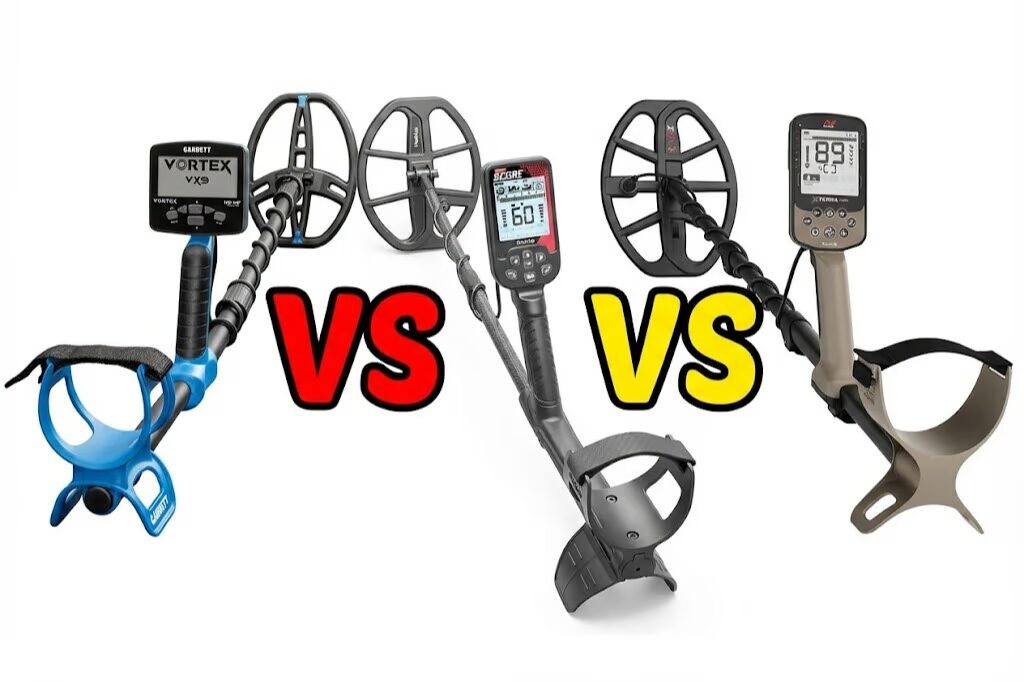
Time for some real talk. The mid-range metal detector market is brutal right now.
Minelab and Nokta have been making multi-frequency detectors for years. They’ve had time to work out the bugs, refine the software, and figure out what actually works. Garrett’s playing catch-up with the Vortex.
When you compare Garrett Vortex vs Minelab or Nokta options, the numbers tell a story. The Nokta Triple Score and Minelab X-Terra Elite are both around the same price as the VX9. They’re more polished. They’ve been through multiple firmware updates. They just work better right now [5].
What the Garrett Vortex does better:
First, that 16-foot waterproof rating. Most competitors tap out at 10 feet. If you’re serious about surf hunting or diving for treasure, those extra six feet matter.
Second, the upgrade system is genuinely clever. You can grow with your detector without buying new gear. No other brand lets you do that.
Third, American manufacturing. If that matters to you (and for some folks, it really does), Garrett builds these in Texas. Customer service tends to be solid.
Fourth, it’s simpler to learn than the Minelab Equinox series. Less menu diving, fewer settings to screw up.
Where the competition wins:
The firmware is more stable. Minelab and Nokta have been doing this longer. It shows.
Audio options blow the Vortex away. Nokta gives you 50 different tones. The Vortex maxes out at five. For experienced hunters who “listen” to their detector, that’s a big deal.
Standard Bluetooth. The Vortex forces you into proprietary Z-Lynk wireless. Everyone else uses regular Bluetooth headphones you probably already own.
Weight. Nokta’s 2.6 pounds, Minelab’s 2.3 pounds. The Vortex is three pounds. After swinging for hours, you feel the difference.
And here’s a big one: you can downgrade firmware on competitor detectors if an update causes problems. Garrett won’t let you roll back.
Look, if American manufacturing matters to you, or you’re invested in Garrett gear, the Vortex makes sense. Just know what you’re signing up for when you buy Garrett Vortex metal detector models.
Best Garrett Vortex for Beginners: VX5, VX7, or VX9?
Let me break this down the way I’d explain it to a friend who just got interested in metal detecting.
VX5 ($449) – Start Here
This is the best Garrett Vortex model for beginners, no question. You’re learning the basics. You don’t need seven frequency options or fancy three-tier target ID yet. You need to figure out what a good signal sounds like versus a pull tab.
The $150 you save by not buying the VX9 right away? Put that toward a quality pinpointer and a proper digging tool. Those will help you more than extra frequencies you don’t know how to use yet.
VX7 ($534) – The Sweet Spot for Most People
You’ve been detecting for a while. You know your way around a park. Now you want to hit the beach or hunt in tougher conditions.
The VX7 gives you beach mode, more frequency options, and adjustable recovery speed. It’s the “Goldilocks” best Garrett Vortex model—enough features to grow into without overwhelming you with options.
Most serious treasure hunting hobbyists who ask me “is Garrett Vortex worth it” end up here. It’s the smart middle ground.
VX9 ($599) – Only If You Know What You’re Doing
Be honest with yourself. Do you actually need seven frequency options? Do you understand what recovery speed does and when to adjust it?
If you just started metal detecting and you’re already eyeing the VX9, pump the brakes. That three-tier target ID is confusing enough for experienced users. For someone new? It’s going to frustrate you.
The VX9 makes sense for competition hunters, people who really understand their gear, or folks who want maximum future-proofing. If that’s not you, save the money or put it toward better accessories.
Garrett Vortex FAQ: Coil Sizes, Discrimination Modes & Battery Life
Can I use my old Garrett coils on this thing?
Nope. And this really ticked off a bunch of AT series owners when the Garrett Vortex metal detector launched.
Garrett designed a new waterproof connector for the Vortex. It won’t work with your old coils. You’re stuck buying Vortex-specific ones. The Garrett Vortex coil sizes available are the Raider, Viper, Ripper, and Reaper. Prices run from $160 to $236, depending on what you need for different treasure hunting jobs.
What about wireless headphones?
The built-in speaker works fine if you’re just walking around parks.
For wireless? You’re locked into Garrett’s Z-Lynk system. That’s $116 for the basic model or $177 for the waterproof version. Standard Bluetooth won’t work with this Garrett detector. Yeah, it’s annoying.
How do the discrimination modes work?
The Vortex gives you notch discrimination to filter out specific junk, iron discrimination for rusty trash during relic hunting, and bottlecap reject settings. The VX7 has four bottlecap settings, the VX9 has six.
Do these discrimination modes work as well as the competition? Not yet. Experienced metal detecting users say they’re still getting refined.
Battery life—will it last all day?
You get about 15 hours on a charge. That beats the Equinox series (12 hours) but falls short of the Nokta Legend (20 hours) and X-Terra Elite (18+ hours).
For most day trips? You’re totally fine. Planning a weekend detecting marathon? Bring a USB-C power bank.
What’s the warranty situation?
Buy from a legit Garrett dealer, and you get three years of coverage. Parts and labor included.
Trying to save money buying gray-market from some random online seller? You might not get warranty service. Not worth the risk on a $450-$600 metal detecting investment.
Is Garrett Vortex Worth It? Final Verdict on Buying This Metal Detector 🎯
Let’s cut through the marketing speak and talk real.
The Garrett Vortex series is a solid waterproof detector with great beach detecting performance and that clever upgrade system. If you’re into beach hunting or casual coin hunting, and you value American manufacturing, buying a Garrett Vortex metal detector makes sense for treasure hunting.
But here’s the truth bomb: Garrett’s playing catch-up here.
This is their first multi-frequency detector. Minelab and Nokta are on their third and fourth generations. The target identification still has issues. The audio options are limited. The proprietary wireless is annoying. The firmware has growing pains.
So when people ask me “is Garrett Vortex worth it,” my answer depends on who’s asking.
That software-upgrade model? Genuinely innovative. Start with a VX5 at $449. Grow your metal detecting skills. Upgrade to VX7 or VX9 when you’re ready. You’re not throwing money away on a “beginner” machine you’ll resell for pennies on the dollar.
That 16-foot waterproof rating? Real advantage for surf hunters and underwater recovery. Most competitors stop at 10 feet. If you’re serious about beach detecting, those extra six feet matter.
Garrett’s customer service? Actually picks up the phone when you call. When things go wrong with your Garrett detector, that counts for something.
But let’s be real about the Garrett Vortex vs Minelab comparison. If I’m spending $599 today, I’m seriously eyeing the Nokta Triple Score or Minelab X-Terra Elite. They’re more mature products for treasure hunting. Fewer bugs. Better track record. They just work.
Here’s my straight advice:
New to metal detecting and watching your budget? Grab the VX5. Learn the fundamentals. Upgrade later if you catch the bug.
Beach hunting is your thing? The VX7 or VX9 makes sense for that salt mode. You’ll use it.
You demand cutting-edge performance for serious relic detection? Wait for more firmware updates. Or look at what Nokta and Minelab are offering.
Loyal to Garrett detectors? The Vortex is their best modern tech. It’s just not perfect yet.
The good news: Garrett keeps releasing firmware updates for this metal detector. People posting Garrett Vortex user reviews say each update improves things for coin detection and treasure hunting. Check back in six months or a year. This whole picture might look different.
Right now? The Vortex is a solid B+ waterproof detector in a market full of A- machines. Good enough for most treasure hunting enthusiasts. Not quite great enough for everyone doing serious relic hunting or gold prospecting.
Choose based on what you actually need, not what sounds cool on paper. And whatever you buy—get out there and swing it. The best detector is the one you actually use.
References
[1] Garrett Official Vortex Series Overview: https://garrett.com/sport/vortex/
[2] Detector Warehouse – What is the difference between the Garrett VX5, VX7 and VX9: https://detectorwarehouse.com/blogs/news/what-is-the-difference-between-the-garrett-vx5-vx7-and-vx9
[3] DetectorProspector Forum – Vortex review from a normal person: https://www.detectorprospector.com/topic/27323-vortex-review-from-a-normal-person/
[4] TreasureNet Forum – Garrett Vortex VX9 Discussion: https://www.treasurenet.com/threads/garrett-vortex-vx9.711515/
[5] Friendly Metal Detecting Forum – Vortex VX7 or VX9 vs Nokta Double or Triple Score: https://metaldetectingforum.com/index.php?threads/vortex-vx7-or-vx9-vs-nokta-double-or-triple-score.309945/

My name is Paul and I am the founder of Detector For Metal, a dedicated resource for metal detecting enthusiasts seeking to uncover historical treasures and connect with the past using the latest technology. As a stay-at-home dad and family man, I’ve found metal detecting to be the perfect hobby that combines family adventure with historical learnings for the whole family.
As a father, I’m deeply committed to passing on this hobby to the next generation of detectorists, starting with my own children. I share advice on everything from metal detecting with kids to exploring the top 10 metal detecting sites you never thought about. My methodical approach to the hobby goes beyond the thrill of discovery—it’s about creating family traditions while preserving history and sharing the stories of those who came before us.