Table of Contents
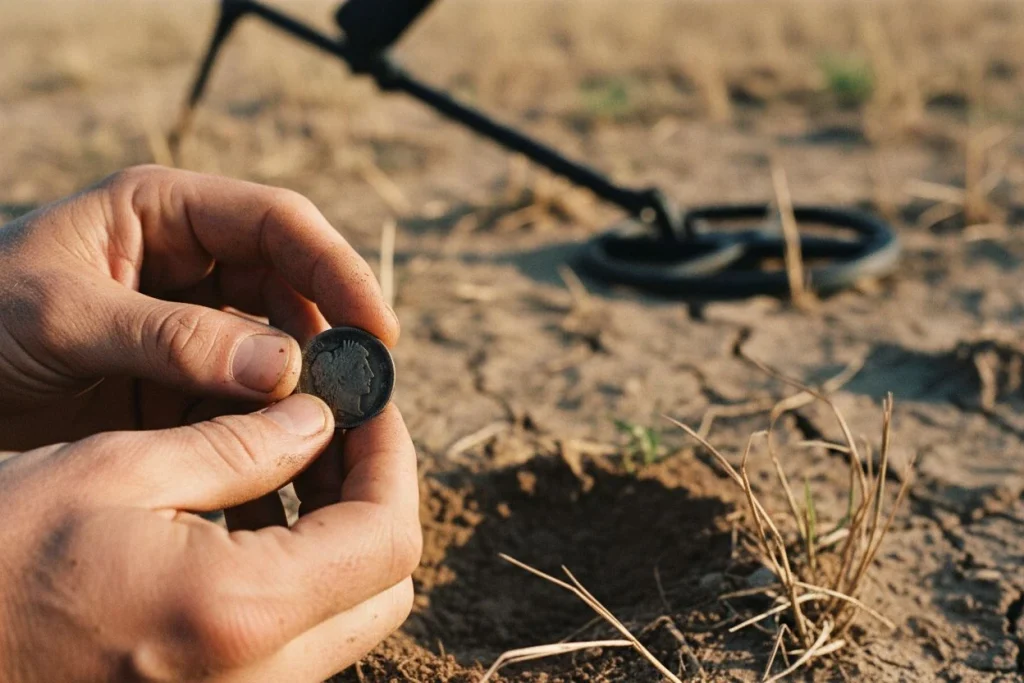
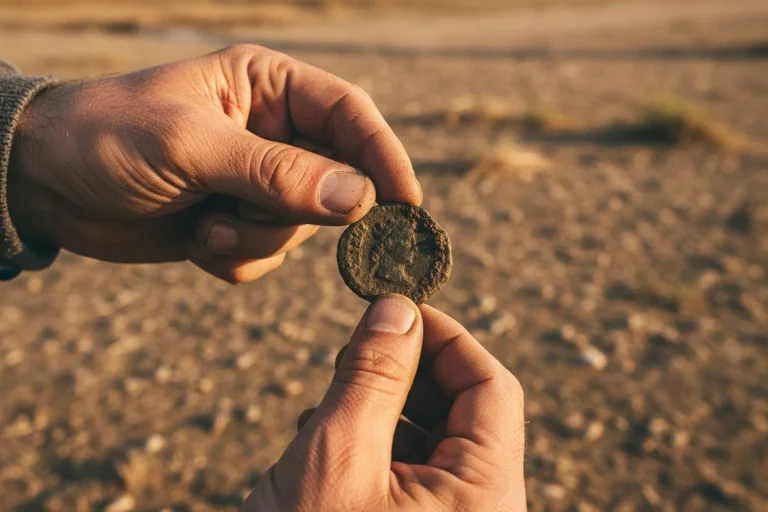
Ever pulled a coin out of the ground and had no idea what you were holding? My first “real” coin find wasn’t a stunner. It came out of the ground near an old swimming hole outside Sacramento looking like a muddy, grayish-green washer. After a nervous rinse with my water bottle, I saw a faint, worn profile. I thought, Huh, a really old Roosevelt dime. My detecting buddy Mike took one look, laughed, and said, “Paul, that’s not a Rosie. You just found a Mercury.”
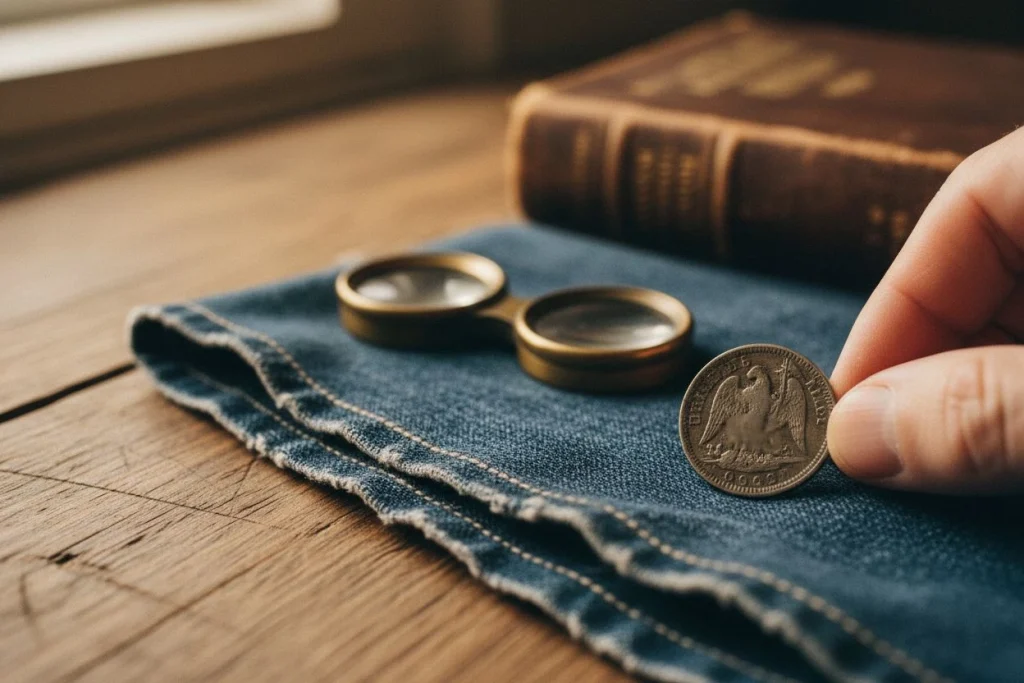
I was thrilled, but also completely stumped. I knew Mercury dimes were silver, but that was it. How old was it? Where was the date? (Spoiler: on the rim, almost completely worn off). It was a 1943, but I spent 20 confused minutes with a magnifying glass first. That mix of excitement and bewilderment is where every detectorist starts with identifying old coins.
The process of identifying old coins you’ve dug is its own kind of treasure hunt. Online guides often focus on pristine, collectible coins. Ours come up worn, corroded, and caked in a century of dirt. This is your field-to-folder guide. We’ll go from a crusty disc to knowing exactly what you’re holding. And we’ll do it without destroying its history or value.
How to Safely Clean Dug Coins Before Identifying Old Coins?
Before we talk about how to identify, we have to talk about how not to ruin your find. My single biggest beginner mistake was being too aggressive.
I once pulled a beautiful, darkly patinated Indian Head cent from an old farmstead. Eager to see the date, I took a soft brass brush to it. Bad move. I didn’t just remove dirt. I stripped away the coin’s natural, aged surface—its history. I turned a potential $20 coin into a $5 one. So, the first rule for any found coin is to never clean or polish it aggressively. Scrubbing destroys the delicate details and the patina that collectors value.
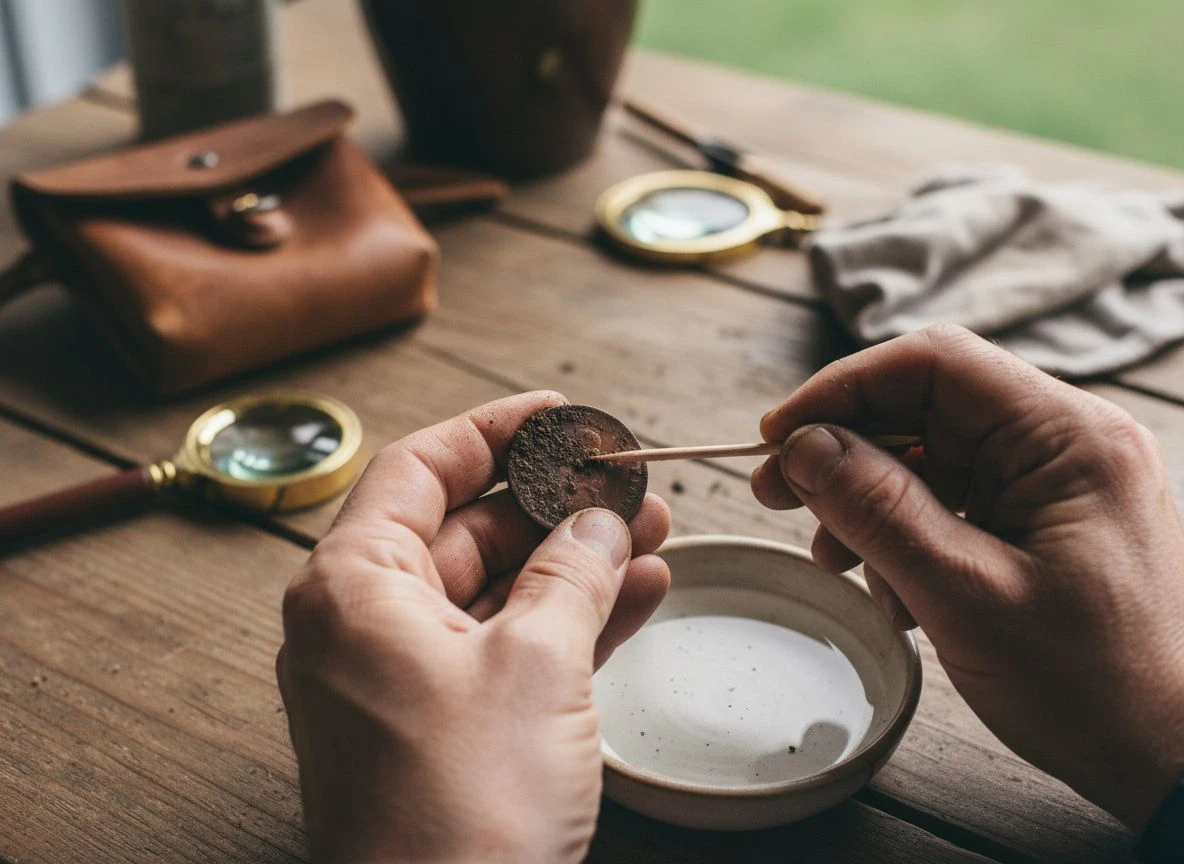
So, what should you do? For a coin caked in dry dirt, a soak in distilled water is the safest start. Gently pat it dry—don’t rub. For tougher crust, some detectorists use a toothpick or a soft wooden peg. The key is to very carefully flake away material from the open fields (the flat areas). Avoid the raised details and lettering. Your goal isn’t to make it shiny. You just need to reveal enough detail to identify it. As the pros at Schulman note, even a corroded coin can be highly valuable if it’s rare. Cleaning can make it worthless.
A Step-by-Step Guide to Identifying Old Dug Coins
Once your find is safely stabilized, it’s time to play detective. This isn’t just a glance. It’s a systematic interrogation. Following a clear process is the key to successfully identifying old coins.
Start with Size, Color, and Edge: Your First Clues.
Pick up a modern quarter, dime, and penny. Get a feel for their size. Your dug coin will likely match one of these standard diameters, even if it’s 150 years old. Next, check the color and edge.
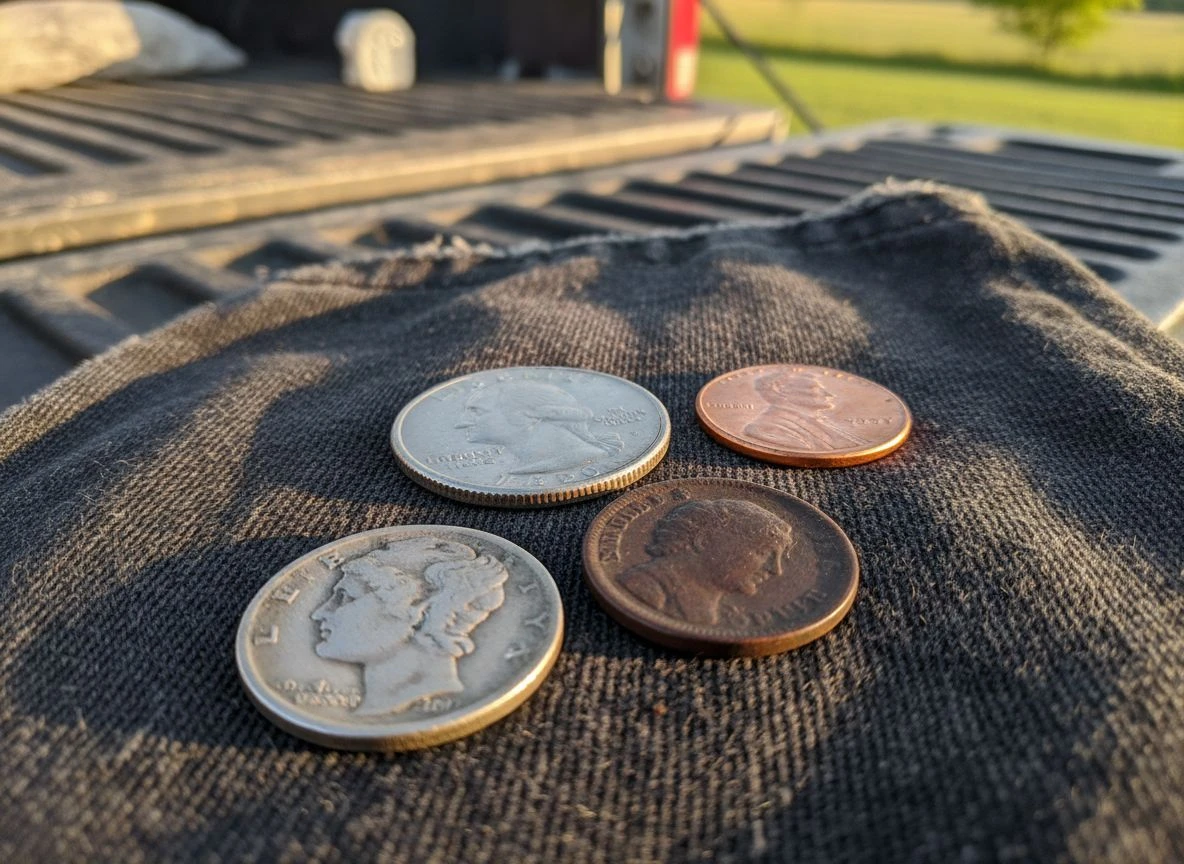
- Silver-White/Gray? Think silver. A key fact for US hunters: any dime, quarter, half dollar, or dollar minted before 1965 is 90% silver. This is your biggest “aha!” moment for value.
- Reddish-Brown? Likely copper or bronze. Think Large Cents, Indian Heads, or early Wheat pennies.
- Check the Edge. Is it reeded (ridged) like a modern coin, or plain and smooth? Early US coins often have plain edges. A reeded edge usually points to a coin from the 19th century or later.
Locate the Date and Mint Mark: A Step-by-Step Search.
The date seems obvious, right? Not always. On worn coins, it’s the first thing to disappear. You’ll need good light and magnification.
- Old Dimes/Quarters/Halves (Barber & earlier): The date is on the reverse (tails side), below the wreath or eagle. You’ll often find the mint mark just below the wreath ribbon or next to the denomination.
- Mercury & Roosevelt Dimes, Washington Quarters: Date is on the obverse (heads side). Mint mark location moved over time. Look on the reverse near the bottom for early ones, or on the obverse near the date for later ones.
- Morgan & Peace Dollars: Date on obverse. Mint mark on reverse, below the eagle.
Is the date completely gone? You’re not out of luck. The design itself is the clue. No date on your silver dime but you see a winged cap? It’s a Mercury (1916-1945). A classical head with “LIBERTY” in a cap? That’s a Barber (1892-1916). This is where a good coin book or app is invaluable.
Why a Physical Coin Book Beats an App for Identification.

Yes, there are coin ID scanner apps, and they’re getting better. But for a beginner, nothing beats a physical reference. I keep a dog-eared copy of The Red Book (A Guide Book of United States Coins) in my gear bag. Why? You can lay your grimy find right on the page and compare. You can flip between pages instantly, cross-referencing designs, and the information is static and reliable. A printed guide provides 100% accurate identification because it’s not trying to interpret a poor image from a corroded coin. An app might fail in the field with no signal, but your book never will.
Understanding Realistic “Dug Coin” Grades and Value for Identifying Old Coins.
Here’s a sobering truth from the field: most coins you dig will not exceed a grade of “Fine”. They’ve been in the ground for decades, sometimes centuries. They’ll be scratched, pitted, and worn. That’s okay! A “Fine” dug 1877 Indian Head cent (a key date) is still an incredible find. Don’t compare your crusty Seated Liberty dime to the gleaming, uncirculated ones on eBay. Value it for its story, not its grade. It’s a good reality check against stories of the most valuable metal detecting finds. Knowing this sets the right expectations and helps you appreciate what you have found.
Quick ID Guide: Common US Coins Found While Metal Detecting
Here’s a field guide for the coins you’re most likely to encounter. I call it my “If you see X, it’s probably Y” list.
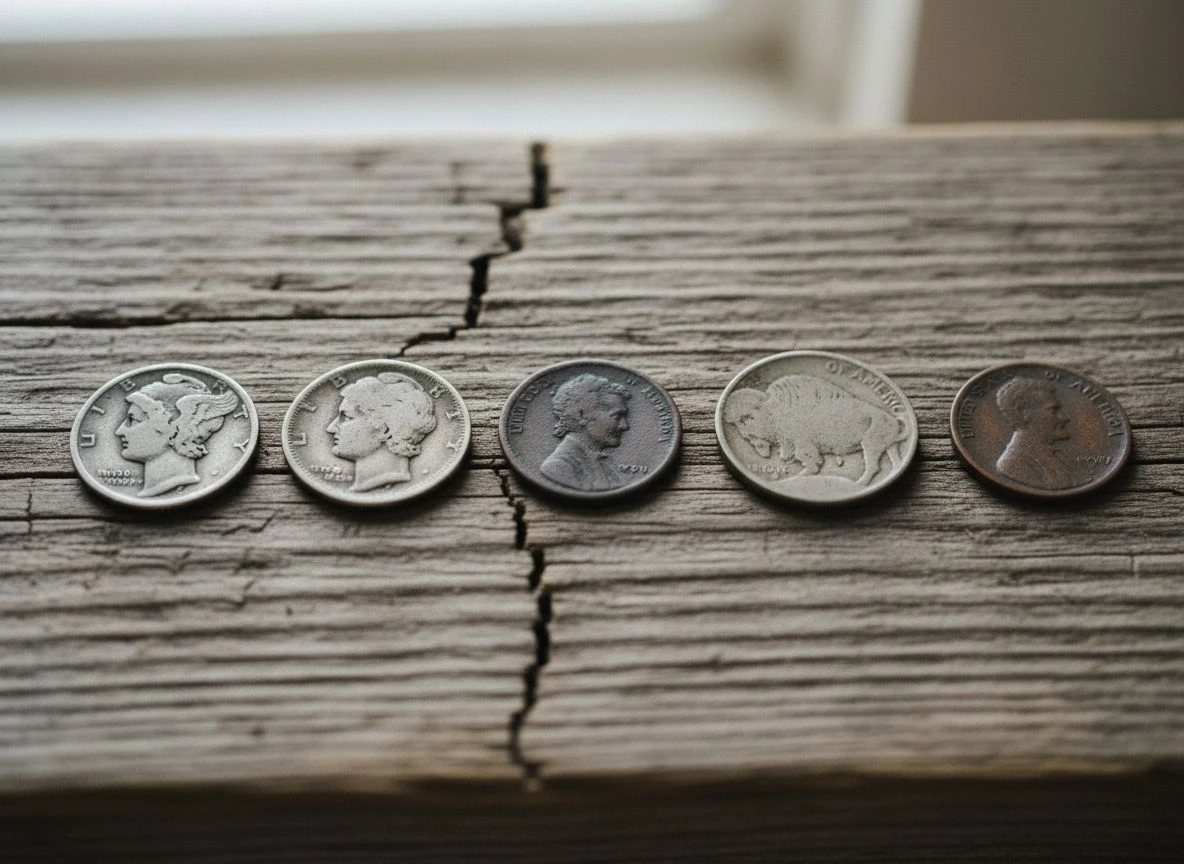
- If you see a winged cap on a small silver coin… It’s a Mercury Dime (1916-1945). Check the reverse for a fasces (bundle of sticks). Date on obverse.
- If you see a classical female head with “LIBERTY” on a headband… It’s a Barber Dime, Quarter, or Half Dollar (1892-1916). Dates are on the reverse. These wear smooth fast.
- If you see a large, majestic eagle with outstretched wings on a big silver coin… It’s likely a Morgan Dollar (1878-1904, 1921) or Peace Dollar (1921-1935). Morgans have a more rounded profile. Peace dollars have a radiant crown and a flatter look.
- If you see two wheat stalks on the reverse of a penny… It’s a Wheat Cent (1909-1958). Obverse is Lincoln. Remember: Pennies from before 1982 are primarily copper. That makes them worth more in metal than face value.
- If you see a Native American in headdress on a nickel… It’s a Buffalo Nickel (1913-1938). The date, famously, is in the raised mound on the obverse. It wears off almost completely. A dateless Buffalo is a rite of passage.
- If you see a simple wreath on the reverse of a copper coin… You might have an Indian Head Cent (1859-1908) or an earlier Flying Eagle Cent (1856-1858). Look for the native headdress on the obverse. For help with even older sites, our guide on colonial metal detecting is a great next step.
The Real Treasure Isn’t Always Silver
My most valuable find, monetarily, was a gold piece. But my favorite find is a completely smooth, dateless Large Cent. I found it near a Colonial-era site in Pennsylvania. It’s worth maybe ten bucks. But holding it, knowing someone lost it before the Civil War, connects me to that history. A mint-state coin in a case can’t do that. This is the core of the hobby that guides often miss. It’s a blend of history and exploration, where even a simple coin can feel like part of a larger U.S. treasure hunt. That’s why the research part is so critical; it turns a hunk of metal into a piece of a story.
The thrill is in the identifying old coins—the moment the puzzle pieces click. Was the person who dropped this Mercury dime a teenager at that swimming hole in 1944? Was the Wheat cent lost by a farmer plowing his field in 1922? When you take the time to safely clean, methodically identify, and respectfully preserve your dug coins, you’re not just collecting metal. You’re curating stories, some of which have the power to become finds that changed history. It’s a skill that improves with every hunt, making each trip out more rewarding.

My name is Paul and I am the founder of Detector For Metal, a dedicated resource for metal detecting enthusiasts seeking to uncover historical treasures and connect with the past using the latest technology. As a stay-at-home dad and family man, I’ve found metal detecting to be the perfect hobby that combines family adventure with historical learnings for the whole family.
As a father, I’m deeply committed to passing on this hobby to the next generation of detectorists, starting with my own children. I share advice on everything from metal detecting with kids to exploring the top 10 metal detecting sites you never thought about. My methodical approach to the hobby goes beyond the thrill of discovery—it’s about creating family traditions while preserving history and sharing the stories of those who came before us.