Table of Contents
A couple of years back, my buddy Tom watched me unbox my first "smart" metal detector and just shook his head.
"You know that thing’s just going to beep more annoyingly, right?" he said.
Six months later, I pulled a seated Liberty dime from a spot we’d both hunted twice before with his top-of-the-line detector. He didn’t find anything either time. My machine had flagged a faint signal his had written off as ground noise.
Tom now owns two smart detectors.
That moment stuck with me. Not because I’m some tech wizard — I’m the guy who still uses paper maps and prints out Sanborn fire insurance overlays. But it showed me something big was changing. The detectors we swing today aren’t the same machines from five years ago. And what’s coming next? It’s going to rewrite the rules entirely.
Let me walk you through what I’ve been seeing, testing, and obsessing over. Fair warning: I’m probably way more excited about some of this than any normal person should be.
How AI Is Making Metal Detecting Smarter
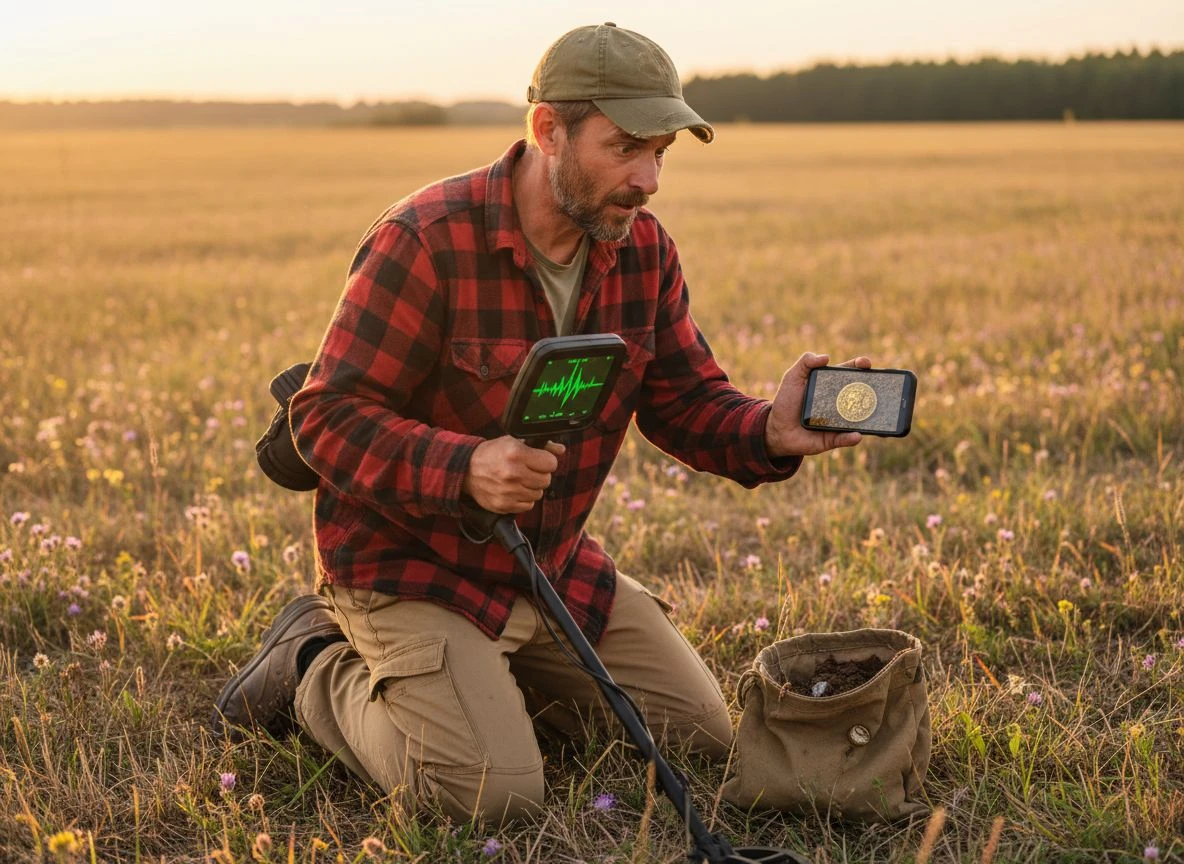
The most immediate change is AI and machine learning inside the detectors themselves. This isn’t some far-off concept — it’s already here.
Modern AI-powered detectors use digital signal processing and sophisticated algorithms to analyze what they sense in real time. Instead of a generic "hey, there’s metal down there" signal, these systems crunch multiple data streams at once: signal characteristics, ground mineralization, target depth, shape analysis. The result? Your detector can tell the difference between a bottle cap and a medieval buckle before you pick up your shovel.
I’ll level with you — I was skeptical at first. I’ve dug enough rusty nails to fill a small landfill. But the first time my machine flagged a target as "likely coin, 6–8 inches, ferrous content low" and I pulled a 1917 Mercury dime, I was sold.
The key here is that AI lets detectors learn from experience. They don’t just use static discrimination tables anymore. They adapt to the specific ground conditions you’re hunting in, filtering out local mineralization that used to drive us crazy. That means fewer false signals and more time digging actual treasure.
One product pushing this boundary is the GoldHunter, which combines VLF detection with real-time smartphone visualization. You’re not just hearing beeps — you’re seeing 3D representations of buried objects on your phone. Position, size, shape, depth. My wife says I collect obscure facts like some people collect stamps, but even she thought that was impressive when I showed her.
Can Drones Really Help Find Treasure?
Here’s where things get really interesting. Drones with metal detection systems are transforming how we survey large areas — and I mean transform.
The numbers are staggering. Drone-mounted systems can cover 5–10 times more area per day than ground-based methods while keeping comparable or better accuracy. My detecting buddy Tom used to spend entire weekends grid-searching a single field. Now he surveys the same area from the air in about an hour.
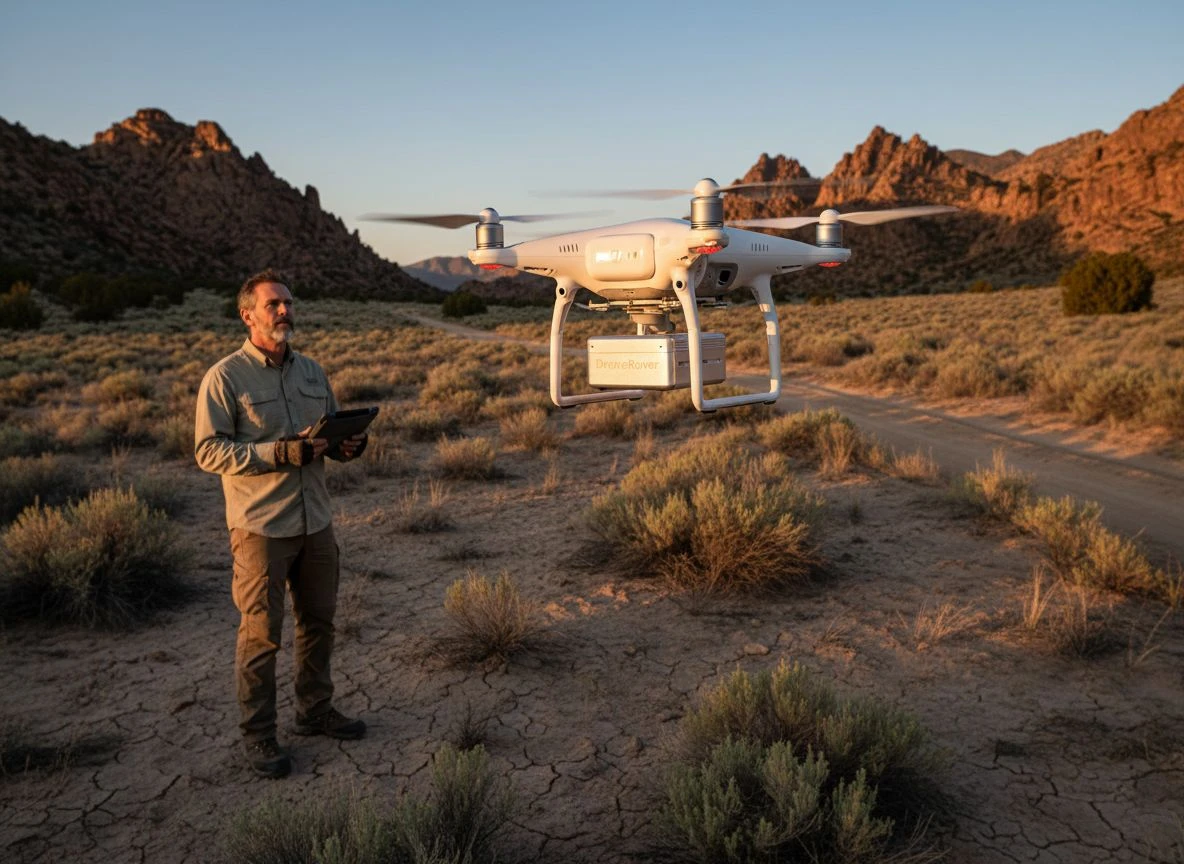
The DroneRover is a perfect example. It’s a compact sensor that attaches to any drone capable of carrying about 200 grams — basically your standard Phantom-style UAV. You define the scan area on a map, launch the drone, and watch real-time 3D mapping appear on your tablet as it flies. Under good conditions, it can detect objects up to 30 meters underground.
I tested one on a remote desert site I’d been eyeing for years. It took me three days to hike and grid-search maybe 40 acres. The drone covered the whole valley floor — probably 200 acres — in about four hours. It found two hot spots I’d walked right past on the ground.
But here’s the real benefit: safety. If you’re searching unstable terrain, minefields, or areas with unexploded ordnance, a drone keeps you at a safe distance while still getting the job done. That’s not just efficient — it could save your life.
(Side note: Tom still insists I’m "lucky" when my drone surveys pay off. I keep telling him there’s nothing lucky about spending three hours setting up a flight grid and analyzing data. It’s work, not luck.)
3D Scanners Reveal What’s Beneath Your Feet
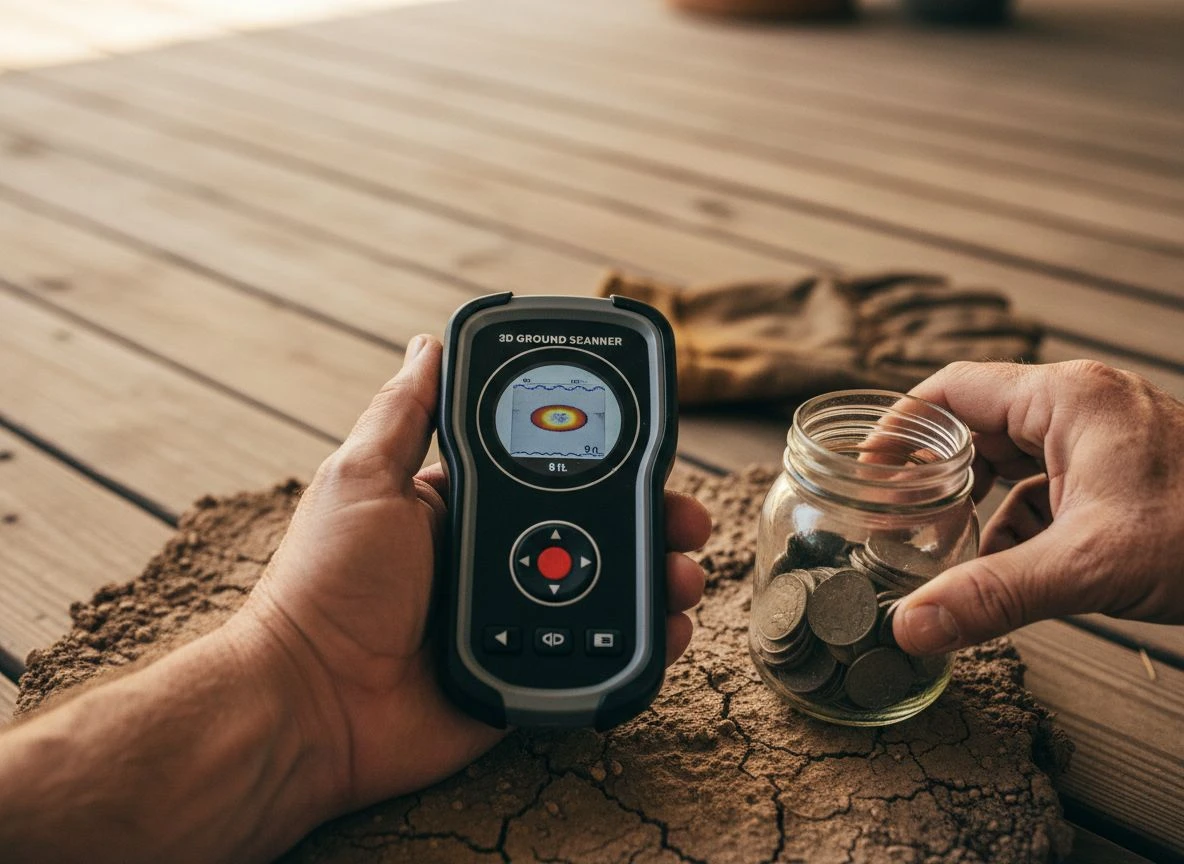
The third piece is 3D ground scanning, and this might be the most mind-blowing development of all.
Traditional metal detectors are great at finding metal. But what about everything else? 3D ground scanners can detect not just metal but also plastics, ceramics, minerals, water, and even underground voids. They use ground-penetrating radar, electromagnetic signals, and magnetometers to build detailed subsurface maps.
I remember spending a weekend at an old homestead site with a friend who had a 3D scanner. We ran both my detector and his scanner over the same 100-foot area. My detector found three coins and a belt buckle. His scanner showed what looked like an old foundation wall, a possible well, and something that might have been a buried cache at about 8 feet down. We dug that cache — it turned out to be a mason jar full of 1920s silver dollars someone had stashed and forgotten.
The depth is what gets me. Traditional detectors max out around 2 meters. Quality 3D scanners can reach down to 10 meters or more. That’s the difference between finding what people dropped and finding what they buried.
The GoldenEye+ takes this further by combining high-resolution 3D scanning with augmented reality. You walk around with your smartphone, and the app overlays what’s underground directly onto your camera feed. It’s like having X-ray vision.
I’m probably way more excited about this than any normal person should be.
Integrating AI, Drones, and 3D Scanning in Detecting
Here’s the thing nobody talks about enough: having all this technology is great, but making it work together is the real challenge.
The future isn’t just AI or drones or 3D scanning. It’s all three working together. Fly a drone with a detection sensor to survey a large area quickly. AI processes the data to identify promising targets and filter out obvious trash. Then use a 3D scanner on those hot spots to map exactly what’s there before you dig. And maybe you’re using an AI-enhanced handheld detector for the final pinpointing.
That workflow is already possible today, but it’s not seamless. You deal with different software platforms, data formats, and connectivity issues. Manufacturers are getting better, but there’s still friction.
The real breakthrough will come when these systems talk to each other natively. Imagine your drone survey data auto-syncing to your handheld detector, which then guides you directly to the most promising targets, flagging them by type and depth. Some of that is already happening with products like the TreasureHunter3D lineup, which shares Bluetooth and data export across devices.
What Average Detectorists Need to Know About Future Tech
Let me be real with you. I’m not saying you need to drop thousands on drone systems and 3D scanners tomorrow.
The basics still work. A good detector, solid research, and patience will find you incredible things. I still spend hours in historical archives. I still talk to old-timers at the local historical society. That research made me good at this hobby, not the gear.
But the gear keeps getting better, and it’s becoming more accessible every year. The TreasureHunter system, for example, offers 3D ground scanning for under $500 — a fraction of what professional units cost a few years ago. The TreasureLight packs similar technology into a flashlight-sized package that fits in your pocket.
The cost barrier is dropping. The learning curve is flattening. And the technology is making detecting more precise and less frustrating.
I’m not saying we should all stop using our trusted detectors overnight. But I am saying that ignoring these developments is like ignoring the shift from analog to digital. You can still hunt with a Garrett ACE 250 and find great stuff. I do, sometimes. But you’re leaving a lot on the table if you don’t at least understand what these tools can do.
Are There Ethical Risks with New Detection Technology?
With great power comes great responsibility, and all that.
These technologies raise some real questions. If you can map an entire archaeological site from the air in an afternoon, what does that mean for preservation? If you can see exactly what’s buried 30 feet down, how does that change the temptation to dig deeper than you should?
I’ve been thinking about this a lot. My personal rule is: know the laws, respect the sites, and if you find something historically significant, report it. The goal isn’t to strip-mine history — it’s to connect with it.
AI-assisted detection and drone surveys don’t change that obligation. If anything, they make it more important. We have tools that can find things our predecessors couldn’t dream of. That means we have a greater responsibility to use them wisely.
Where Metal Detecting Tech Is Heading
I’ve been doing this for over a decade now, and I’ve never seen the pace of change this fast. The detectors hitting the market in the next 2–3 years will make current "flagship" models look primitive.
We’re heading toward a future where:
- AI handles the boring stuff — ground balancing, discrimination setup, trash filtering — so you spend more time digging and less time tweaking settings.
- Drones become standard survey tools — not just for serious hunters, but for anyone who wants to cover ground efficiently.
- 3D scanning replaces guesswork — you’ll know what you’re digging before you break ground, saving time and reducing site damage.
- All your gear talks to each other — seamless integration across devices, platforms, and data formats.
My buddy Tom still gives me a hard time about my "fancy gadgets." But last weekend, I let him take the drone survey setup for a spin on his favorite hunting ground. He found a new hot spot in twenty minutes that he’d walked past for three years.
He hasn’t called me lucky since.
The future of metal detecting isn’t about replacing the old ways. It’s about adding new tools to the kit. The research skills, the patience, the community — those never change. But the way we find targets? That’s evolving fast.
And honestly? I can’t wait to see what comes next.

My name is Paul and I am the founder of Detector For Metal, a dedicated resource for metal detecting enthusiasts seeking to uncover historical treasures and connect with the past using the latest technology. As a stay-at-home dad and family man, I’ve found metal detecting to be the perfect hobby that combines family adventure with historical learnings for the whole family.
As a father, I’m deeply committed to passing on this hobby to the next generation of detectorists, starting with my own children. I share advice on everything from metal detecting with kids to exploring the top 10 metal detecting sites you never thought about. My methodical approach to the hobby goes beyond the thrill of discovery—it’s about creating family traditions while preserving history and sharing the stories of those who came before us.