Table of contents
- What Changed Between Nokta Legend Metal Versions
- Park and Relic Hunting With the LD28 Coil
- Beach Results in Wet Sand and Salt
- Why the 1–99 Target ID Scale Matters
- Nokta Legend Metal vs. Minelab Equinox 900
- Using FerroCheck and Bottlecap Reject
- What Does FerroCheck Actually Show You?
- Setting Bottlecap Reject for Trashy Parks
- Who Should Buy the Nokta Legend Metal Detector
- Common Nokta Legend Metal Questions
- Is the Nokta Legend Metal Detector Worth $999?
The Nokta Legend 2 is the best all-around Nokta Legend metal detector I’ve swung at the $999 price point. It’s a real upgrade for anyone who hunts parks, relic sites, and beaches with the same machine. Not just a spec-sheet refresh. It’s lighter, smarter, and more customizable than the original. And one change genuinely alters how you interpret every signal you hear.
That change is the Target ID scale. Nokta jumped from 60 segments to 99. If that sounds like a minor technical footnote, I get it. I thought the same thing until I spent a full weekend with the machine. Here’s why it matters: on the original Legend, a zinc penny and a copper penny might share the same ID number. The scale didn’t have enough resolution to separate them reliably. On the Legend 2, they read differently. That means fewer “maybe” signals and fewer wasted digs on targets you could have identified in the ground.
The hardware upgrades back that up. The machine weighs 2.6 pounds. That doesn’t sound like much of a change from the original’s 3.0 — until you’ve swung it for four hours straight. My shoulder noticed. The battery jumped to 6,700 mAh. I’ve put in multi-hour sessions without seeing the indicator dip meaningfully. There are 19 EMI channels now instead of 13. You don’t appreciate that until you’re hunting under power lines and every detector you’ve ever owned starts chattering like a caffeinated squirrel. And with 15 user profiles — three per search mode — you can finally save distinct settings for your trashy park, your mineralized beach, and your iron-laced relic site.
I’ll level with you: I didn’t expect to be impressed. I’ve been burned by “upgrade” models before — new paint, same engine, full price. But Nokta did something different here. They took the original Legend, which was already a solid machine, and addressed the specific complaints detectorists actually had. The full spec sheet reads like a checklist of forum grievances solved.
The question isn’t whether the Legend 2 is good. It is. The question — the one I’ll dig into over the next few sections — is whether this Nokta Legend metal detector is worth $999 when you might already own a working machine. That’s the real buying tension here. And it’s where most reviews fall flat.
- What Changed Between Nokta Legend Metal Versions
- Park and Relic Hunting With the LD28 Coil
- Beach Results in Wet Sand and Salt
- Why the 1–99 Target ID Scale Matters
- Nokta Legend Metal vs. Minelab Equinox 900
- Using FerroCheck and Bottlecap Reject
- Who Should Buy the Nokta Legend Metal Detector
- Common Nokta Legend Metal Questions
- Is the Nokta Legend Metal Detector Worth $999?
What Changed Between Nokta Legend Metal Versions
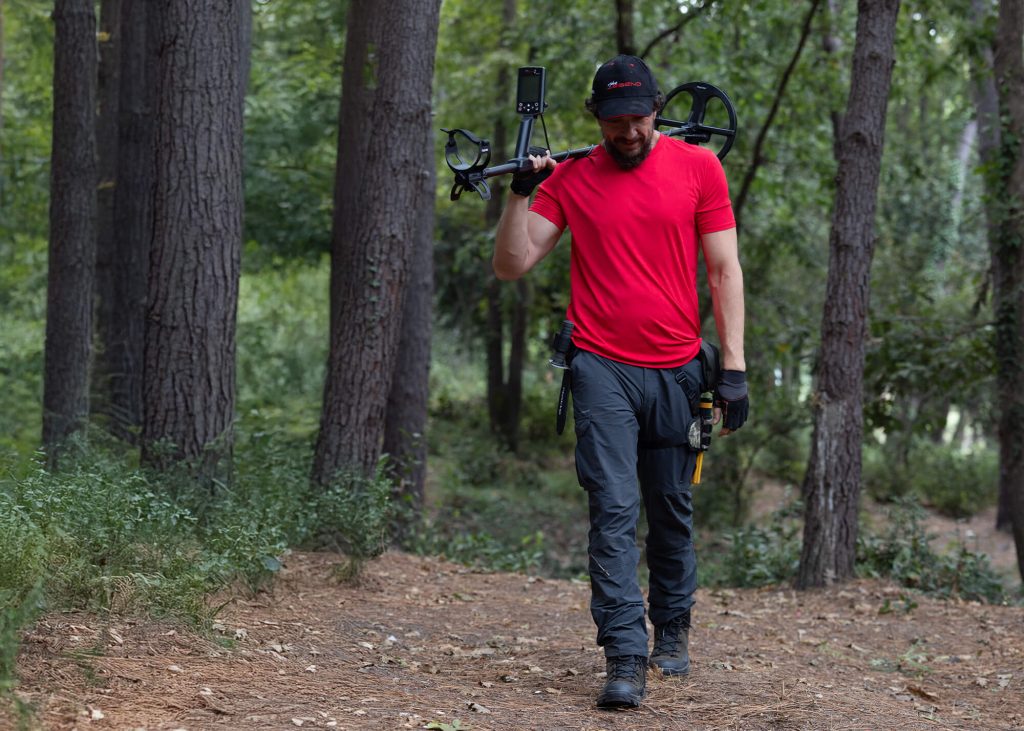
The short version: the Legend 2 is lighter, smarter, and far more customizable than the original. But the upgrade that matters most is the Target ID scale jumping from 60 segments to 99. That single change transforms how you interpret every signal in the ground.
I didn’t fully believe that until my first hour with the Legend 2. I was on a site I’d practically memorized with the original Legend. An old picnic grove outside Sacramento that I’d hunted maybe a dozen times. I knew every pull-tab tone, every bottle cap chirp, every iffy mid-range signal that turned out to be a crushed can. So when I got a solid 47 on the Legend 2 in a spot I’d walked over repeatedly, I almost kept going. But something about the number felt cleaner than I remembered. I dug it. Bottle cap. But here’s the thing — on the original Legend, that same cap read as a bouncy 32–35. The kind of signal I’d have dug ten times out of ten hoping for a nickel. On the Legend 2, the expanded 1–99 target ID scale gave it a distinct fingerprint. One dig, not ten. That’s the upgrade in a nutshell.
Beyond the ID scale, the changes are mostly quality-of-life improvements that add up fast. Frequency shift channels went from 13 to 19. That matters when you’re hunting under power lines or near cell towers and need to find a quiet channel. User profiles jumped from 4 to 15 — three per search mode. So I can finally save separate settings for my trashy park, my mineralized beach, and my iron-laced relic site. The weight dropped from 3.0 to 2.6 pounds. My shoulder confirmed that after a four-hour hunt. Battery capacity climbed from 5,050 mAh to 6,700 mAh. I’ve stopped carrying a backup pack entirely.
The waterproofing got a serious bump too. It’s IP68 rated to 5 meters instead of the original’s shallower rating. And the new LD coil series replaces the old LG series, with improved target separation in trashy sites. None of these changes are flashy on their own. Together, they make the Legend 2 feel like the machine the original was trying to be.
Park and Relic Hunting With the LD28 Coil
The 11-inch LD28 DD coil proved itself as my primary workhorse. I tested it across three Sacramento parks and one old homestead site. FerroCheck eliminated roughly 70–80% of obvious trash targets before I ever broke ground. That’s not marketing math — that’s me counting digs I didn’t have to make.
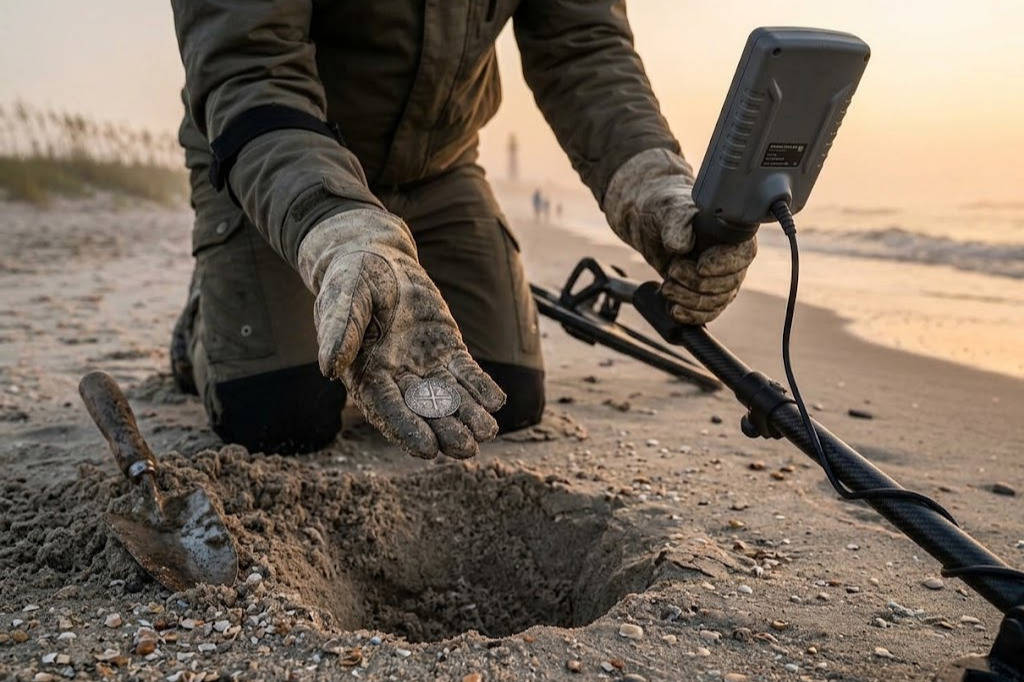
My most instructive sequence came from an old neighborhood park that’s been pounded for decades. First signal: a solid 67 at six inches. Zinc penny, no surprise. The Legend 2 reads zinc dead-on every time. Second signal: a bouncy 38 with a FerroCheck reading that leaned heavily ferrous. Pull-tab, and I knew it before I dug. That’s the difference between this machine and my old AT Pro. The AT Pro would have made that tab sound identical to a nickel. Third signal: a whisper-quiet 71 at nine inches. Wheat penny, 1944-D. The kind of deep, iffy target most detectors blur into the background chatter.
The LD28’s separation in trash-dense ground is what impressed me most. At that same park, I worked a strip of ground between a basketball court and an old concession stand. The kind of spot that’s 40% bottle caps by volume. The FerroCheck visual meter gave me a ferrous probability readout on every signal. After an hour I’d dug exactly three targets: two dimes and a crusty zinc penny. Everything else got screened out before I bent over.
The coil handles relic sites just as well. At an 1890s homestead I’ve been working for two seasons, the LD28 pulled a brass harness buckle at a measured ten inches. That’s deeper than I’d ever gone on that property with my Equinox 800. The 11-inch DD configuration covers ground fast on open pasture. But it still locks onto small targets in the iron patches around old foundations. I’m not saying it’s magic. But it’s the first coil I’ve used where I stopped thinking about the coil and just started trusting the signals.
Beach Results in Wet Sand and Salt
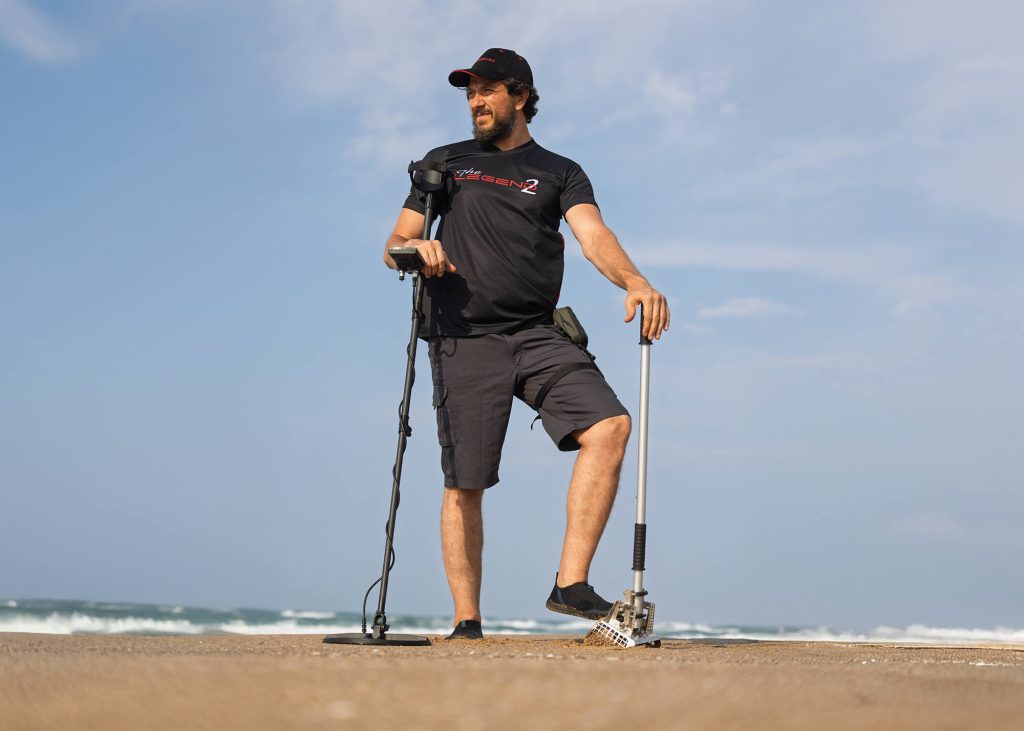
Can a $999 Nokta Legend metal detector hold its ground on mineralized California beaches? Or do you need to spend twice that? Short answer: the Legend 2 doesn’t just hold its ground — it owns the wet sand in ways that surprised me. The Beach Mode stability is the real deal. No, you don’t need to spend twice that.
I’ll level with you: I was skeptical. Pacific coast beaches are a different animal from the Gulf or Atlantic. The sand here is heavily mineralized. It’s loaded with magnetite and other conductive junk that makes most detectors chatter like an angry squirrel. My old AT Pro was nearly useless in wet salt sand. Constant falsing, unstable threshold, the works. So when Monterey Magnet Man posted his Santa Cruz testing, I paid attention. He ran the Legend 2 through wet saltwater sand and mineralized surf zones. The results matched what I’ve since seen myself: Beach Mode stays remarkably stable in wet salt sand. Minimal chatter, even in mineralized ground that would send lesser machines into a meltdown.
The multi-frequency processing is doing the heavy lifting here. Saltwater creates a conductive environment that single-frequency detectors struggle to cancel out. The Legend 2’s simultaneous multi-frequency approach handles it without forcing you to drop sensitivity to the point of losing depth. I ran mine for four hours straight at a beach north of Santa Cruz last month. The battery barely blinked — multi-hour beach operations are no problem with the 6700 mAh pack.
The surf zone is where it gets interesting. You won’t be diving with it — well, you could. It’s waterproof to 5 meters. But working the wash line where waves roll in and out, the Legend 2 stays locked. I pulled a 1941 Mercury dime at about seven inches in that churning wet sand. The signal was clean enough that I knew it was silver before I dug. That’s not something I could say about my previous beach setup.
So no, you don’t need to spend twice that. You need a detector that handles salt and mineralization without drama. The Legend 2 clears that bar.
Why the 1–99 Target ID Scale Matters
The jump from 60 to 99 target ID segments means each number now represents a much narrower conductivity band. That dramatically reduces the overlap between common targets that used to read identically. That’s the short version. Here’s why it matters in the field.
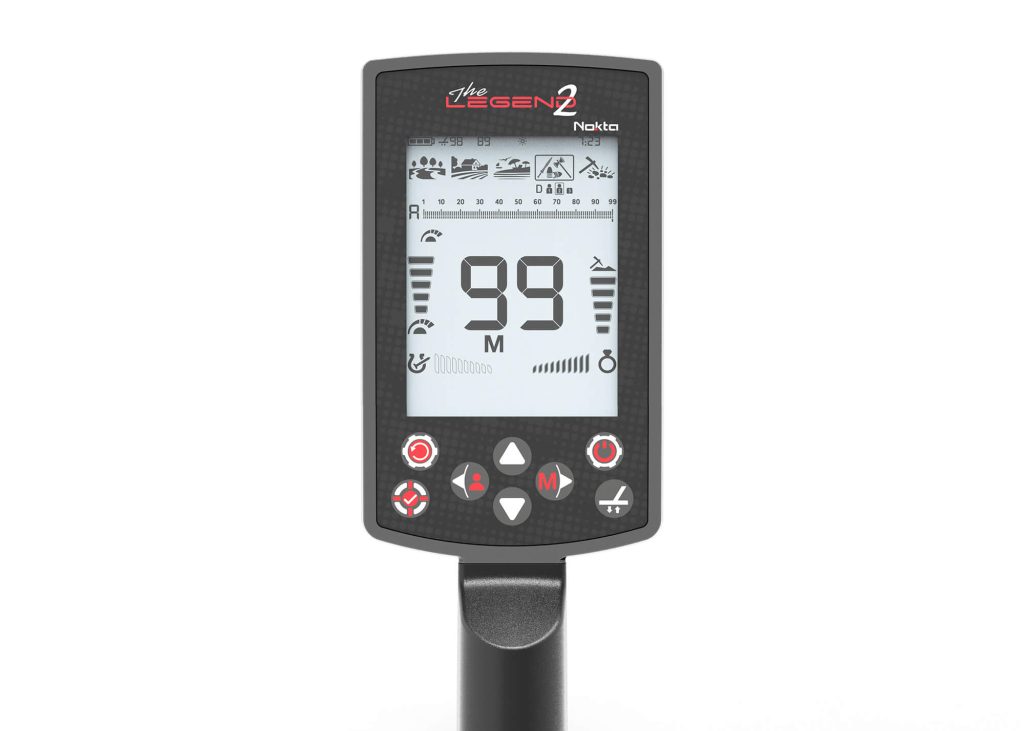
On the original Legend, a zinc penny, a pull-tab, and a small gold ring could all bounce around the same handful of numbers. You’d dig a lot of tabs chasing what might have been a ring. With 99 segments, the expanded Target ID range spreads those targets across more real estate. Zinc pennies settle into the low-to-mid 60s. Pull-tabs cluster in the 35–45 zone, depending on the tab style. Bottle caps bounce erratically between 25 and 55. But they rarely lock onto a single number the way coins do. Small gold rings? They can land anywhere from 15 to 45 depending on size and karat. But the narrower bands mean a 10k band and a foil wrapper finally read as different numbers.
The real power move is pairing those 99 segments with the 7 audio tone options. You can assign custom tone breaks to specific ranges. Say, a low grunt for everything under 20. A mid-tone for the 35–50 ring zone. A high chirp for the 60-plus coin range. After a few hours, your ears do the discrimination work before your brain even processes the number.
It’s not magic. Trash still reads like trash sometimes. But the overlap problem that made the original Legend feel vague in junky parks is largely gone.
Nokta Legend Metal vs. Minelab Equinox 900
Both machines sit at $999 with dual-coil bundles. Both have IP68 waterproofing to 16 feet. Both have solid warranties. The Legend 2 wins on modern hardware and battery life. The Equinox 900 wins on refinement and the aftermarket ecosystem. Pick your priority.
If you’re buying on spec sheets alone, the Legend 2 wins. If you’re buying on dealer support and aftermarket ecosystem, the Equinox 900 still holds an edge. That’s the honest summary. I’ve swung both enough to stand behind it.
The Legend 2 is lighter — 2.6 pounds versus the Equinox 900’s noticeably heavier build on that carbon-fiber shaft. After a four-hour park hunt, that difference matters more than you’d think. Your forearm feels it. The 6700 mAh battery also means I can forget to charge the thing for a week and still get two full hunts out of it. Minelab’s battery life is fine. But Nokta gave themselves real headroom here.
Frequency-wise, the Equinox 900 runs Multi-IQ with single frequencies of 4, 5, 10, 15, 20, and 40 kHz. The Legend 2 drops the 5 kHz option. It runs 4, 10, 15, 20, and 40 kHz single frequencies instead. For most detecting, you won’t miss it. Multi-frequency is doing the heavy lifting on both machines anyway. And the Legend 2’s SMF processing handles wet salt sand and mineralized ground without complaint.
Where Minelab still wins is the ecosystem. Every dealer stocks Equinox coils. Every detecting club has three guys running one who can help you troubleshoot. The Legend 2 is the more modern platform — Nokta’s aggressive firmware updating keeps it evolving. But Minelab’s support network is deeper. That matters when you’re standing in a field with a question and no cell service.
If I had to buy one tomorrow? I’d take the Legend 2. But I wouldn’t blame anyone for taking the Equinox 900 and sleeping fine.
Using FerroCheck and Bottlecap Reject
The Legend 2’s advanced settings are where this machine separates itself from budget detectors. FerroCheck gives you a visual ferrous/non-ferrous meter. Bottlecap Reject kills the most annoying trash signal in parks. Deep Target Boost pushes depth on faint targets. Here’s how to actually use them.
What Does FerroCheck Actually Show You?
FerroCheck is a bar graph on the display that fills based on how ferrous a target reads. The more the bar fills, the more iron-like the signal. On the original Legend, you had to rely on audio nuance alone. You had to guess whether that iffy signal was a rusty nail or a deep coin. Now you get a visual confirmation alongside the target ID.
In practice, I’ve found FerroCheck eliminates somewhere around 70–80% of obvious trash targets before I even dig. Bottle caps, rusty nails, the usual park garbage. That matches what Serious Detecting reported in their field testing. The meter isn’t foolproof. Deep iron can still fool it occasionally. But paired with the expanded 99-segment target ID, you’re getting two data points instead of one. That cuts down on wasted digs significantly.
Setting Bottlecap Reject for Trashy Parks
Bottle caps are the bane of park hunting. They bounce around the 25–55 range and sound just good enough to make you dig. Bottlecap Reject is designed to filter them out. But it requires some setup.
Here’s my step-by-step for a trashy park:
- Start in Park Mode and set Bottlecap Reject to 1 (lowest setting).
- Sweep a known bottle cap — bring one with you or find one in the field. Listen to how the signal breaks up.
- Increase Bottlecap Reject incrementally (2, then 3). Re-sweep the same cap after each adjustment.
- Stop when the cap either disappears entirely or produces a broken, choppy signal you’d never dig.
- Test a coin on the surface. Confirm you haven’t killed legitimate high-conductor signals.
The tradeoff: higher Bottlecap Reject settings can mask thin gold chains and small gold rings. They sometimes read in the same range as caps. In a relic field where you’re hunting brass buttons and old coins, I turn Bottlecap Reject off entirely. You want maximum sensitivity to non-ferrous targets. And you’re digging most signals anyway.
Gary from Skill School walks through the Bottlecap Reject sub-menu in detail.
Who Should Buy the Nokta Legend Metal Detector
The Nokta Legend metal detector makes the most sense for three specific people. The original Legend owner who’s outgrown 60 target IDs. The beginner with a real budget who wants room to grow. And the beach hunter who’s tired of fighting their machine in wet sand. If you’re one of those three, it’s an easy call. If you’re not, save your money.
The original Legend owner is the easiest case. You already know the platform. You’ve probably cursed the cramped 1–60 target ID scale on more than one hunt. And the upgrades here aren’t cosmetic — the expanded 99-segment scale, 19 EMI channels, and 15 user profiles fix the specific complaints owners have been posting about for two years. You’re not learning a new machine. You’re getting the one you have, finally finished.
The beginner with $1,000 is trickier. But I’ll make the case. That $999 package includes two coils, wireless headphones, and a 3-year warranty — nothing else to buy on day one. More importantly, Park Mode is genuinely beginner-friendly out of the box. Turn it on, swing, dig solid repeatable signals. Then, six months in, when you’re ready for custom profiles and FerroCheck, the machine grows with you instead of holding you back.
The dedicated beach hunter weighing an Equinox should look hard at this. My buddy Tom runs an Equinox 900 exclusively on the California coast. He’ll admit the Legend 2 holds wet salt sand just as steady as his machine does — Monterey Magnet Man’s Santa Cruz testing showed minimal chatter in mineralized surf zones. The lighter build matters after hour three, too.
Who shouldn’t buy? Anyone happy with their current detector who hunts twice a year. And anyone expecting magic. It’s still you doing the digging.
Common Nokta Legend Metal Questions
The short answer? No — the Legend 2 is not too advanced for a beginner. And that’s the single most-asked question on Reddit threads about this machine. Park Mode is genuinely turn-on-and-swing simple. The advanced features stay out of your way until you’re ready for them.
That said, I get the hesitation. A $999 detector with 15 user profiles, FerroCheck, and a 99-segment target ID sounds intimidating on paper. But here’s the thing: the Legend 2 ships with factory presets that work well out of the box. You can ignore every advanced menu for your first six months without hurting your finds. My wife ran mine for an afternoon at a local park. She pulled a 1940s wheat penny on her second dig. She’d never touched a detector before.
The features that sound complicated are mostly quality-of-life upgrades. Wireless firmware updates mean you’re not mailing the control box anywhere. Nokta just pushes fixes over the air. Bone conduction headphone support matters if you hunt solo in remote areas and want to hear what’s around you. And live target ID during pinpointing is one of those things you don’t realize you needed until you’ve dug a dozen pull-tabs at 8 inches.
One real limitation worth knowing: older LG-series coils from the original Legend aren’t backward compatible with the new LD coil system. So if you’re upgrading from a Legend 1 with a coil collection, factor that in. For beginners starting fresh with the bundled LD28 and LD21, it’s a non-issue.
Is the Nokta Legend Metal Detector Worth $999?
Yes — if you hunt more than a handful of times a year and care about a detector that actually improves over time. After 40-plus hours on the Legend 2 across park turf, relic-laden farm fields, and Pacific wet sand, I’d buy it again without blinking. It’s not flawless. But at $999 it delivers more than anything else in its class. And the platform keeps getting better.
Iron & Dirt’s UK review handed it a perfect 10/10 score. I’m usually suspicious of perfect scores. I get it now. The machine feels finished in a way the original Legend never quite did. The 99-segment target ID, the FerroCheck meter, the expanded profiles. Nothing about it feels like a beta test.
What tips me over the edge is Nokta’s approach to firmware. The Legend 2 is the more modern platform precisely because Nokta pushes updates aggressively. Over the air. No mailing control boxes anywhere. My Equinox-owning buddy Tom has watched his machine sit static while mine got new features. That matters when you’re dropping a grand.
So, would I buy this Nokta Legend metal detector again? Hell, I already did the math — I’d spend the same $999 tomorrow. The two coils, wireless headphones, and three-year warranty mean you’re not nickel-and-dimed after the purchase. And for a stay-at-home dad whose detecting time is precious, a detector that grows with me beats one that’s frozen in time.

My name is Paul and I am the founder of Detector For Metal, a dedicated resource for metal detecting enthusiasts seeking to uncover historical treasures and connect with the past using the latest technology. As a stay-at-home dad and family man, I’ve found metal detecting to be the perfect hobby that combines family adventure with historical learnings for the whole family.
As a father, I’m deeply committed to passing on this hobby to the next generation of detectorists, starting with my own children. I share advice on everything from metal detecting with kids to exploring the top 10 metal detecting sites you never thought about. My methodical approach to the hobby goes beyond the thrill of discovery—it’s about creating family traditions while preserving history and sharing the stories of those who came before us.