Table of contents
- Why Your Trowel Fails in Real Digging Conditions
- What Makes the Best Metal Detecting Shovel So Tough
- Hand Digger vs Mini Shovel vs Full-Size for Your Terrain
- The Permission Farm Field
- The Public Park
- The Riverbank
- Why Cheap Shovel Steel Snaps in Rocky Soil
- Five Best Metal Detecting Shovels for Hard Ground
- Lesche Sampson 31-inch T-Handle
- Radius Garden Root Slayer
- Predator Tools Hurricane
- StuLine Signature Series 36-inch
- W.W. Manufacturing Ground Hawg
- How to Dig a Clean Plug in Clay Without Ruining the Site
- Common Questions About Metal Detecting Shovels
- “Can I just use a garden shovel from the garage?”
- “What’s the cheapest option that won’t frustrate me?”
- “Do I need a lifetime warranty?”
You need a shovel with a serrated or V-shaped blade. The steel should be heat-treated to at least 50 Rockwell hardness. And you need a footrest that turns your body weight into cutting force. Skip anything stamped, smooth-edged, or under 3mm thick. It’ll fold on the first root.
I learned this the expensive way. My first “upgrade” was a $12 garden spade from the hardware store. On my first hunt at an old homestead outside Placerville, I hit a root the thickness of my forearm. The blade bent like a playing card. Tom, my detecting buddy, walked over with his Lesche Ground Shark and popped the plug in two cuts. He pulled a 1917 wheat penny from that hole. I pulled a bent shovel blade.
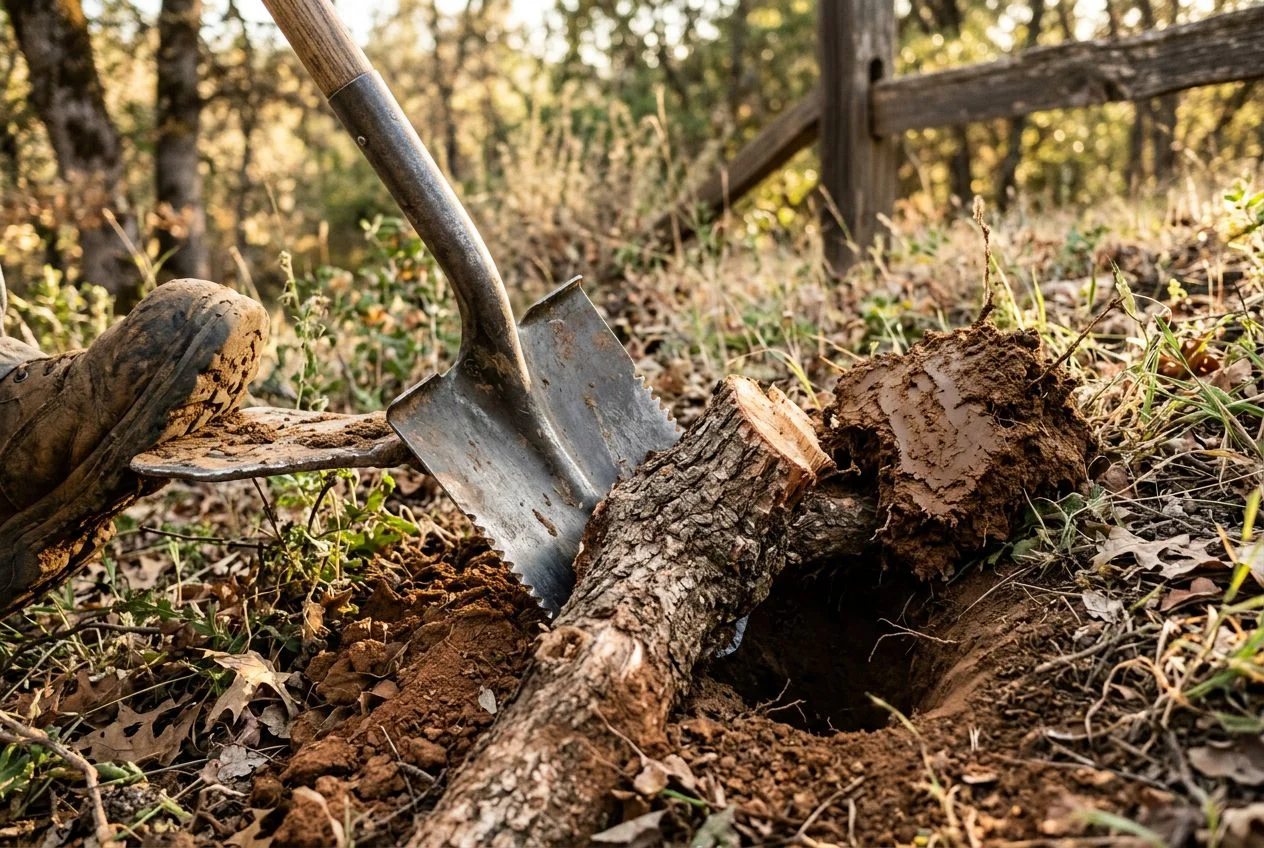
The difference comes down to three things. First, blade geometry. A spear-point or V-shaped blade concentrates force at the tip. That means you drive through clay instead of bouncing off it. The Spear Head Spade is built exactly this way. It’s tempered carbon-manganese steel, sharpened from tip to tail. Second, serration. Roots tear with smooth edges. They cut with serrated ones. The W.W. Manufacturing Ground Hawg uses twin serrated edges to cut a 6-inch-wide, 7-inch-deep plug in three cuts. That’s the kind of efficiency that keeps you hunting instead of wrestling.
Third — and most underrated — the footrest. It’s the difference between 20 pounds of arm force and 150+ pounds of body weight driving the blade. The StuLine Signature Series nails this with a wide T-handle and a double-sided serrated stainless steel blade that weighs 5.8 pounds. Heavy, sure. But heavy is what you want when the ground fights back.
Why Your Trowel Fails in Real Digging Conditions
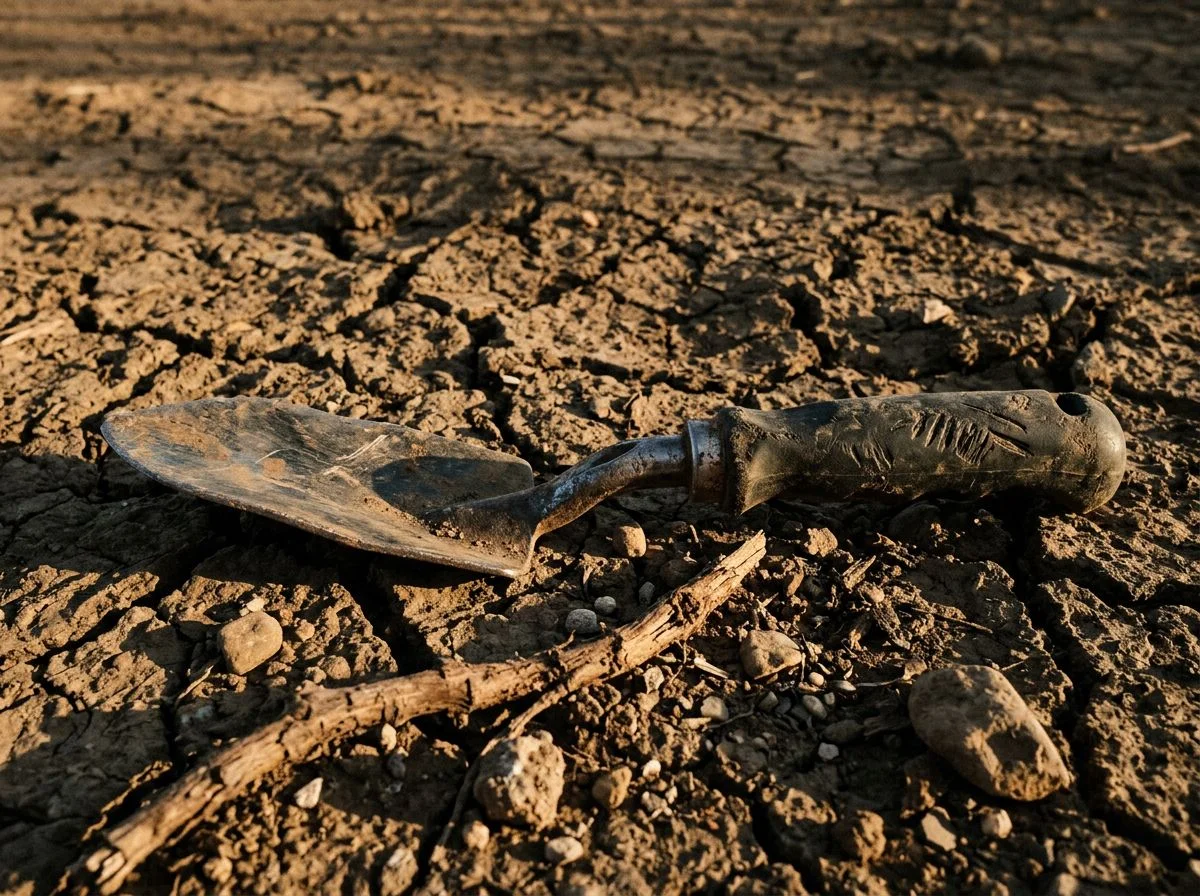
A trowel fails because it’s built for flowerbeds, not compacted clay and roots. It delivers maybe 15-20 pounds of downward force before flexing. A proper detecting shovel with a footrest generates 150+ pounds. That’s not a tool upgrade. That’s a completely different machine.
I learned this the hard way at an old homestead site outside Placerville. My detector hit a solid signal about 7 inches down, right next to what looked like an old fence line. I dropped to my knees and jammed my garden trowel into the soil. Then I hit a root the thickness of my wrist. I leaned into it. The blade snapped clean off the handle — just sheared right there at the weld.
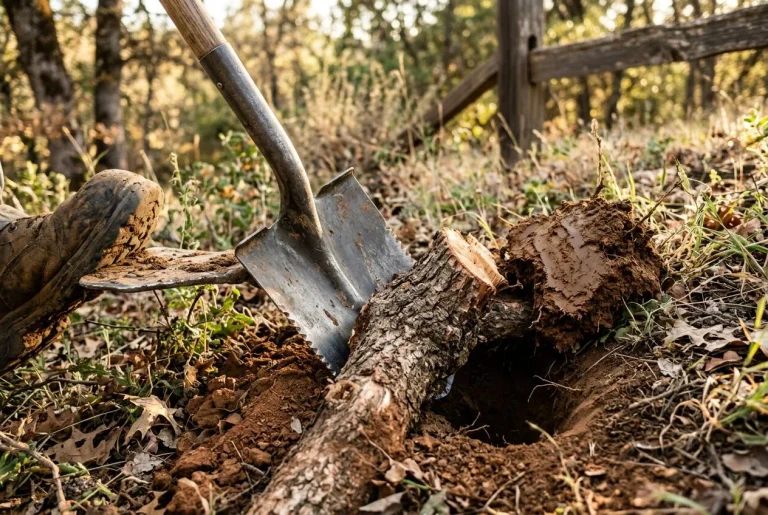
Tom heard the crack from about 20 yards away. He walked over with his serrated shovel, stepped on the footrest, and sliced through that root in two cuts. The third cut popped the plug. He reached in and pulled out a seated Liberty dime — 1887, still with decent detail. I pulled out a broken trowel and a bruised ego.
The physics explains exactly what happened. Most trowels use 1.5-2mm stamped steel. That’s the thin, pressed metal that bends under real pressure. A quality detecting shovel uses 3-4mm heat-treated carbon steel or stainless, rated to 50 Rockwell hardness. It’s the difference between a butter knife and a steak knife. Except you’re cutting through soil that’s been compacting for a century.
The footrest is the real game-changer, though. When you push down on a trowel, you’re limited to arm strength and shoulder angle. When you step on a footrest, you’re driving the blade with your entire body weight. That’s how you go from 20 pounds of force to 150+. In baked clay, that’s the difference between digging a plug and chipping at dirt like it’s concrete.
The trowel isn’t a bad tool for loose soil and shallow targets. It’s just the wrong tool for the ground that holds the good stuff — old homesteads, fence lines, forgotten foundations. Those places are full of roots and rock-hard clay. And they’re exactly where the seated dimes are hiding.
What Makes the Best Metal Detecting Shovel So Tough
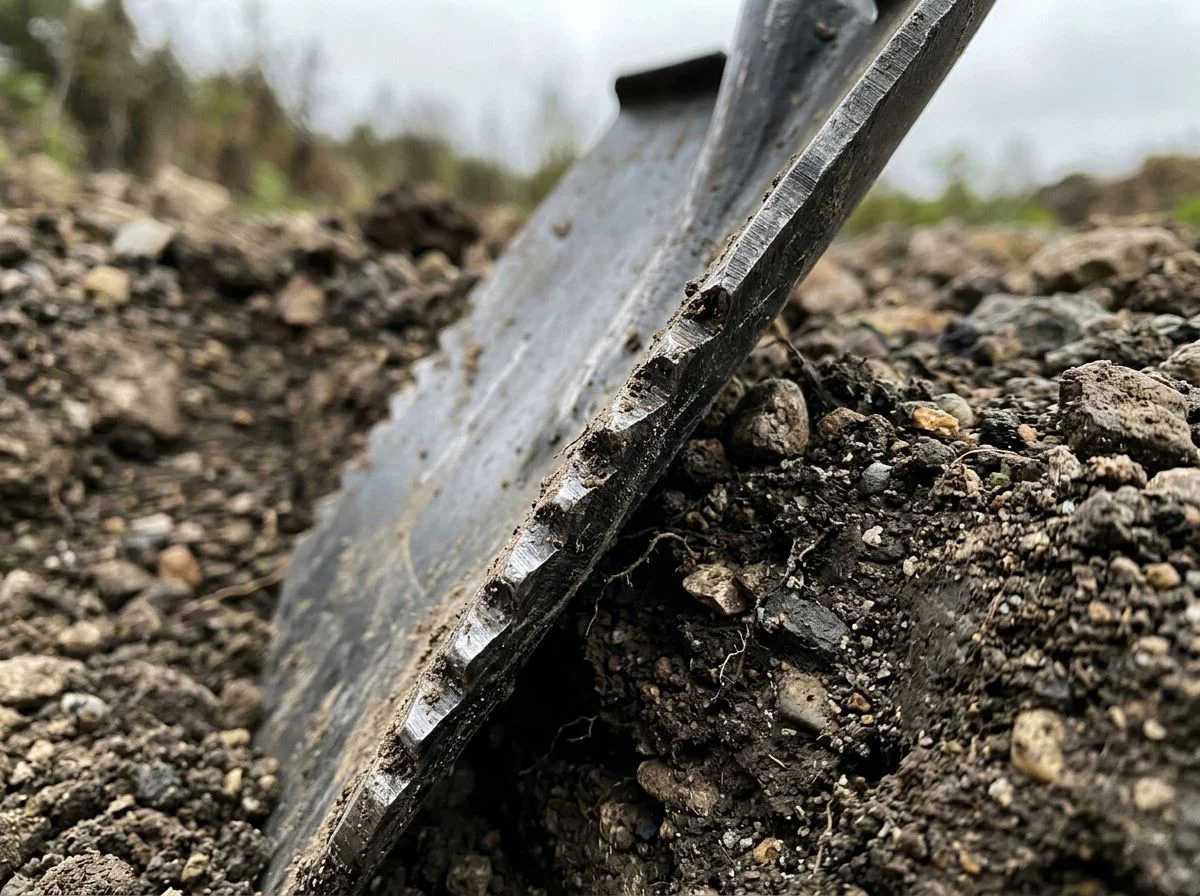
A shovel that conquers roots and clay isn’t just a bigger trowel. It’s a completely different machine. Three elements separate the tools that work from the tools that snap: blade geometry, serration, and the footrest.
Think of it this way. Your flat garden spade is a butter knife. You can saw at that steak all afternoon, but you’re not cutting through. You’re just making a mess and wearing out your arm. A proper detecting shovel with a serrated edge and a footrest? That’s a steak knife with a place to put your boot.
The geometry matters first. A V-shaped or spear-point blade concentrates all your force at the tip. So you drive through clay instead of bouncing off it. The Spear Head Spade is built exactly this way — tempered carbon-manganese steel sharpened from tip to tail. That tip is what gets you started when the ground feels like cured concrete.
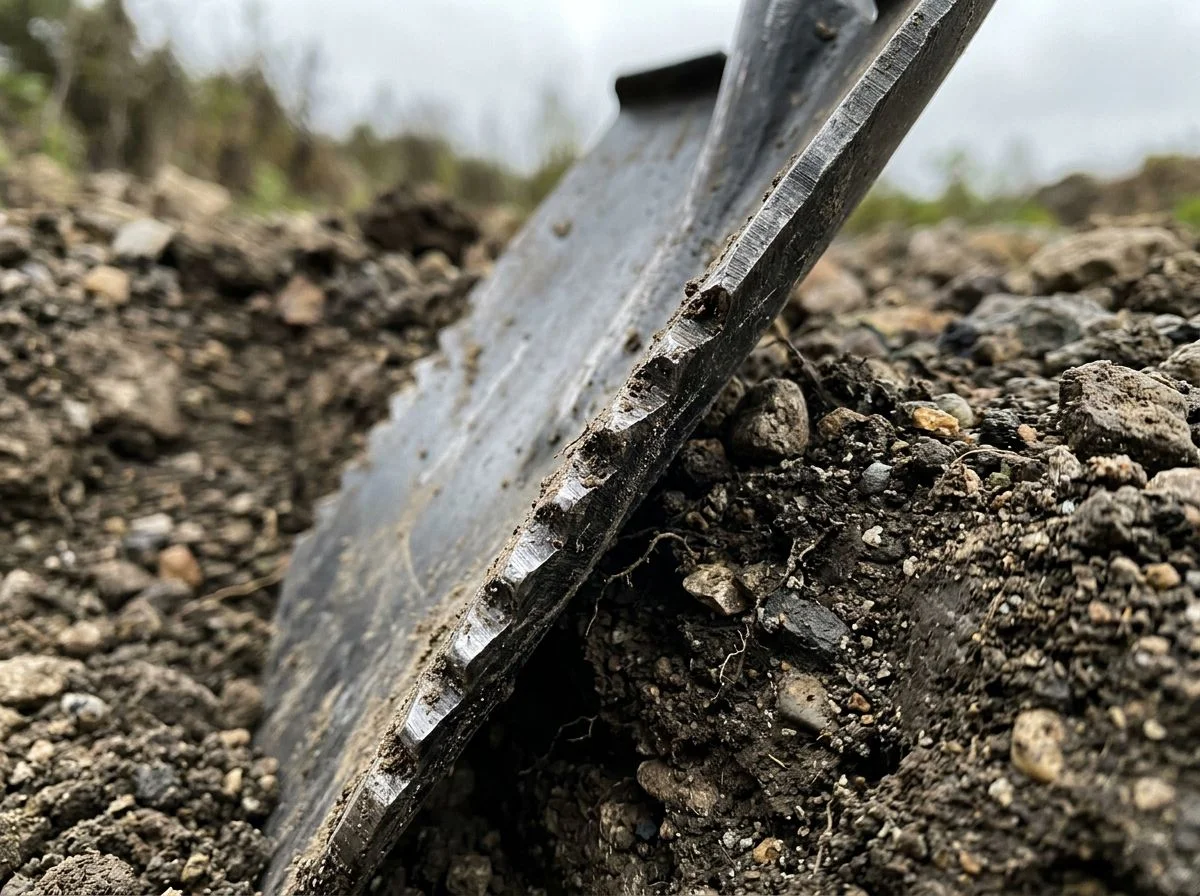
Then comes serration. Roots don’t cut cleanly with a smooth edge; they tear. Serrated edges saw through fibrous material the way a bread knife handles crust. The W.W. Manufacturing Ground Hawg uses twin serrated edges to cut a 6-inch-wide, 7-inch-deep plug in just three cuts. Three cuts. That’s the difference between popping a plug and wrestling a hole.
The footrest is the unsung hero. It converts your body weight into downward force — 150+ pounds driving the blade instead of whatever your shoulder can manage. The StuLine Signature Series weighs 5.8 pounds and features a double-sided serrated stainless steel blade. Heavy, sure. But heavy is what you want when the ground fights back.
And the steel? Don’t overlook it. The Nemesis shovel is heat-treated to 50 Rockwell hardness. That’s the difference between a blade that holds an edge through a full season and one that folds on its first root.
Hand Digger vs Mini Shovel vs Full-Size for Your Terrain
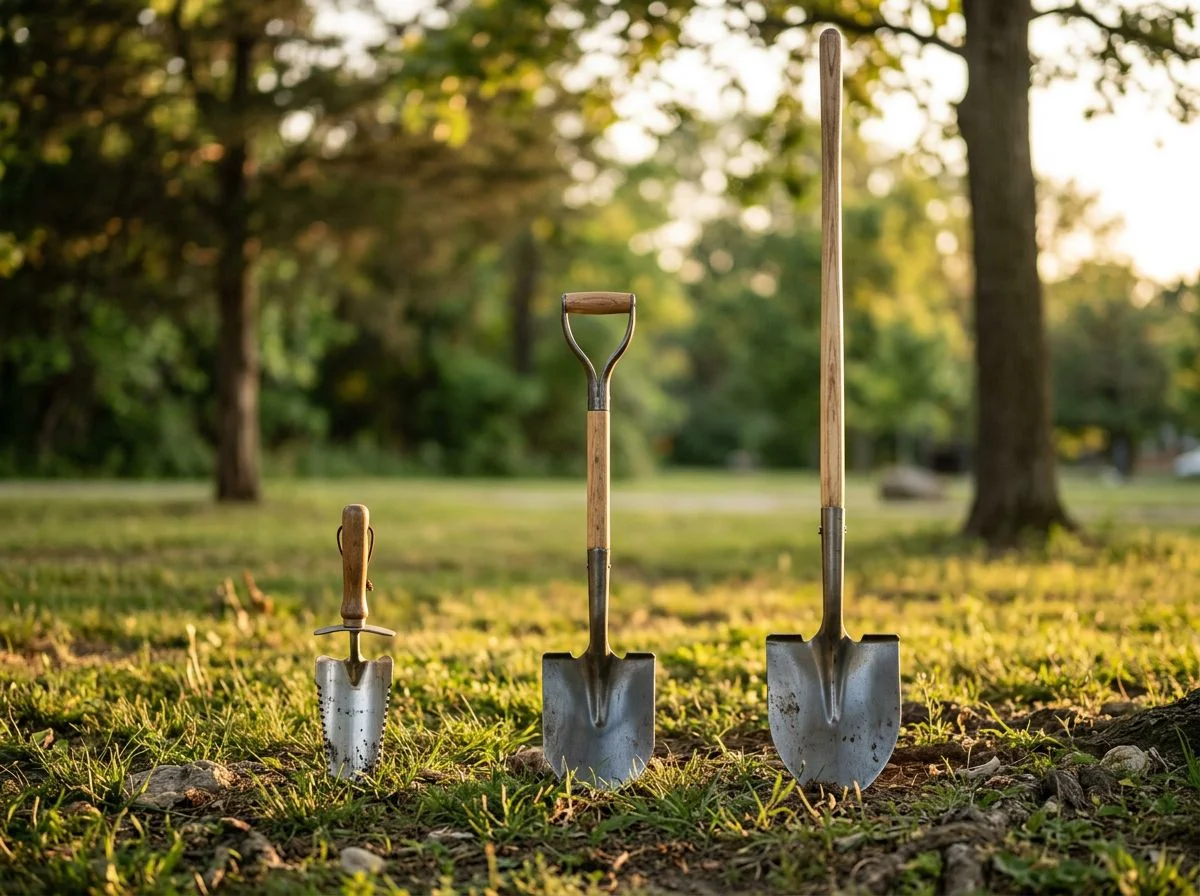
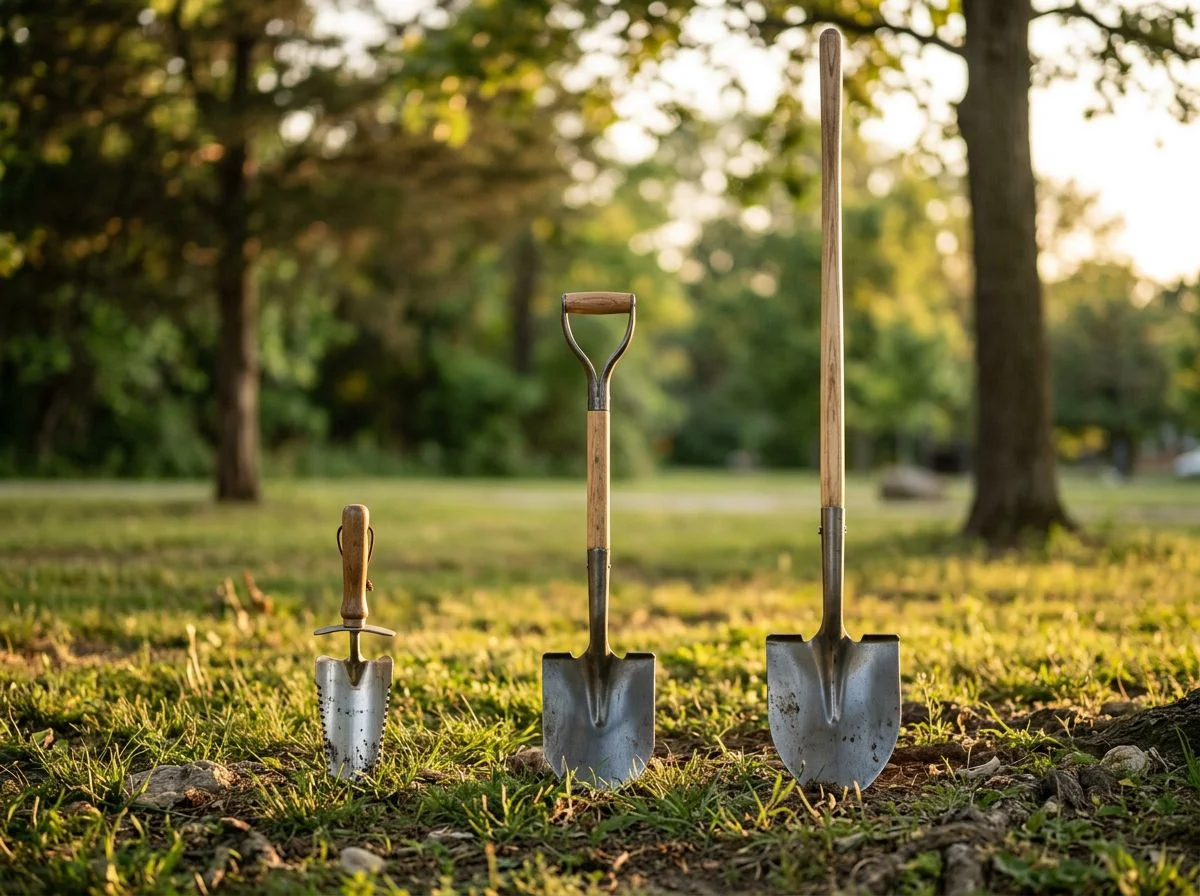
The right tool isn’t about what feels cool. It’s about what the ground demands. A hand digger shines in soft turf. A mini shovel bridges the gap in compacted urban soil. And a full-size shovel is your only real answer when roots and rocks show up. Match the tool to the terrain, and you’ll dig twice as fast with half the effort.
Let me walk you through three hunts from this past spring. They perfectly illustrate how terrain dictates tool choice.
The Permission Farm Field
I got permission to hunt a 40-acre hay field outside Dixon. The owner’s great-grandfather homesteaded it in the 1880s. Soft, loamy soil that hadn’t been compacted by anything heavier than cattle hooves. Targets were shallow, mostly 3-5 inches down. A hand digger was perfect here. Quick to deploy, easy to kneel with. And when you’re digging 30 pull-tabs an hour trying to find the good stuff, speed matters. I wouldn’t have wanted anything bigger. The key with shallow targets in soft ground is minimal disturbance — a small plug, a quick check, and you’re moving again.
The Public Park
Different story entirely. Old parks have soil that’s been walked on, driven over, and baked hard for a century. That’s where the Predator Tools Model 58(s) Little Eagle mini shovel earns its keep. It’s sized between a standard hand digger and a full-size shovel. It’s designed specifically for targets 6-12 inches deep in compacted urban soil. The beauty is discretion. A full-size shovel at a city park draws attention you don’t want. But a hand digger will wreck your wrist by hour three. The Little Eagle lets you cut clean plugs without looking like you’re excavating a foundation.
The Riverbank
Last month I hit a stretch of the American River where the bank is packed with embedded cobble and river rock. My hand digger bounced off the first rock I hit. The Little Eagle would’ve bent. You need a full-size shovel with serious steel — something you can stomp on and pry with. The Tri-Fold Shovel retails for $14, collapses to 9.5 inches, and weighs 2.5 pounds. But honestly, for rocky riverbank work I want something heavier with a real footrest. The point is, embedded rocks require leverage only a full-length handle provides.
Here’s my rule of thumb: if you’re kneeling for every target, use a hand digger. If you’re in compacted soil but need to stay low-profile, grab a mini shovel. If the ground fights back, go full-size. I carry all three in the truck and decide when I see the dirt.
Why Cheap Shovel Steel Snaps in Rocky Soil
Here’s the short version: a $10 stamped-steel shovel bends on its first rocky outing because the metal was never hardened. A heat-treated blade rated to 50 Rockwell hardness will shrug off the same abuse for ten years. The difference isn’t branding. It’s metallurgy.
I learned this the expensive way. Not me personally, but the author over at Focus Speed went through two Fiskars shovels — both under $10 — before a foldable camping shovel snapped on its very first outing. That’s three tools dead before one real dig. I’ve been there too. I bent a garden trowel into a pretzel at an old homestead site while Tom stood five feet away, popping a seated dime with his serrated Lesche.
The problem with cheap shovels isn’t that they’re cheap. It’s that they’re stamped, not forged and heat-treated. LuckyFind puts it bluntly: cheap stamped-steel tools bend easily, while heat-treated options from Lesche can last a decade. That decade isn’t marketing fluff. Heat treatment changes the steel’s molecular structure. It hardens the edge so it holds sharpness while staying tough enough to flex instead of fracture.
Take the Nemesis shovel from Grave Digger Tools. It’s CNC machine sharpened and heat-treated to 50 Rockwell hardness. That’s a real number, not a vibe. 50 Rockwell means the blade edge resists deformation under load. You can pry against rocks without rolling the edge over. My old Fiskars? Probably sitting somewhere around 20 Rockwell on a good day. Might as well have been made of cheese.
So when you’re eyeing that $15 shovel at the hardware store, remember: you’re not saving $70. You’re just pre-ordering three of them.
Five Best Metal Detecting Shovels for Hard Ground
If I had to pick five shovels for roots and clay, the Lesche Sampson is my daily carry. The Root Slayer handles the nastiest cutting. The Predator Hurricane is the lightweight sleeper. The StuLine brings brute force with a lifetime warranty. And the Ground Hawg cuts a perfect plug faster than anything else I’ve swung.
Lesche Sampson 31-inch T-Handle
This is the one I grab first. Mental Metal Detecting calls it their primary go-to tool, and I’m with them. It weighs about 4 pounds — light enough to carry all day without feeling like you’ve been hauling fence posts. The blade is small with a serrated edge on one side. That makes it perfect for maneuvering around rocks and sawing through roots without destroying the plug. I’ve dug hundreds of holes with mine. It’s still the tool I reach for when I’m heading out the door.
Radius Garden Root Slayer
Tom swears by this thing. He hunts old drag strips — think baked clay mixed with embedded gravel that’s been compacted by decades of racing. Standard shovels bounce right off that mess. The Root Slayer’s ripsaw teeth cut through baked clay like it’s frozen butter. Tom pulled a 1958 half dollar from a strip near Folsom last fall. He credits the shovel for getting him through the crust without wrecking the coin underneath. If your ground fights back, this is the answer.
Predator Tools Hurricane
Here’s one that flies under the radar. The Indiana Unearthed review put it on my radar — a curved 9-inch blade, 38 1/4-inch overall length, and it weighs about 3 pounds. That’s absurdly light for a full-size shovel. The serrated edge slices through compacted clay. The curved blade geometry means you’re not fighting the hole to get the plug out. If you want full-size capability without the shoulder workout, this is your tool.
StuLine Signature Series 36-inch
This is the heavyweight. At 5.8 pounds, per Kellyco, it’s not a shovel you forget you’re carrying. But the double-sided serrated stainless steel blade and lifetime warranty mean you’ll never need to buy another one. The wide T-handle spreads the load across your palm. That matters when you’re digging your fortieth plug of the afternoon. It’s the tool I grab when I know I’m heading into serious clay.
W.W. Manufacturing Ground Hawg
The plug machine. High Plains Prospectors notes the twin serrated edges cut a 6×7-inch plug in three cuts — three. That’s the difference between leaving a lawn looking like a gopher convention and leaving it looking like you were never there. If you hunt permissions where the owner cares about their grass, this shovel keeps you welcome.
How to Dig a Clean Plug in Clay Without Ruining the Site
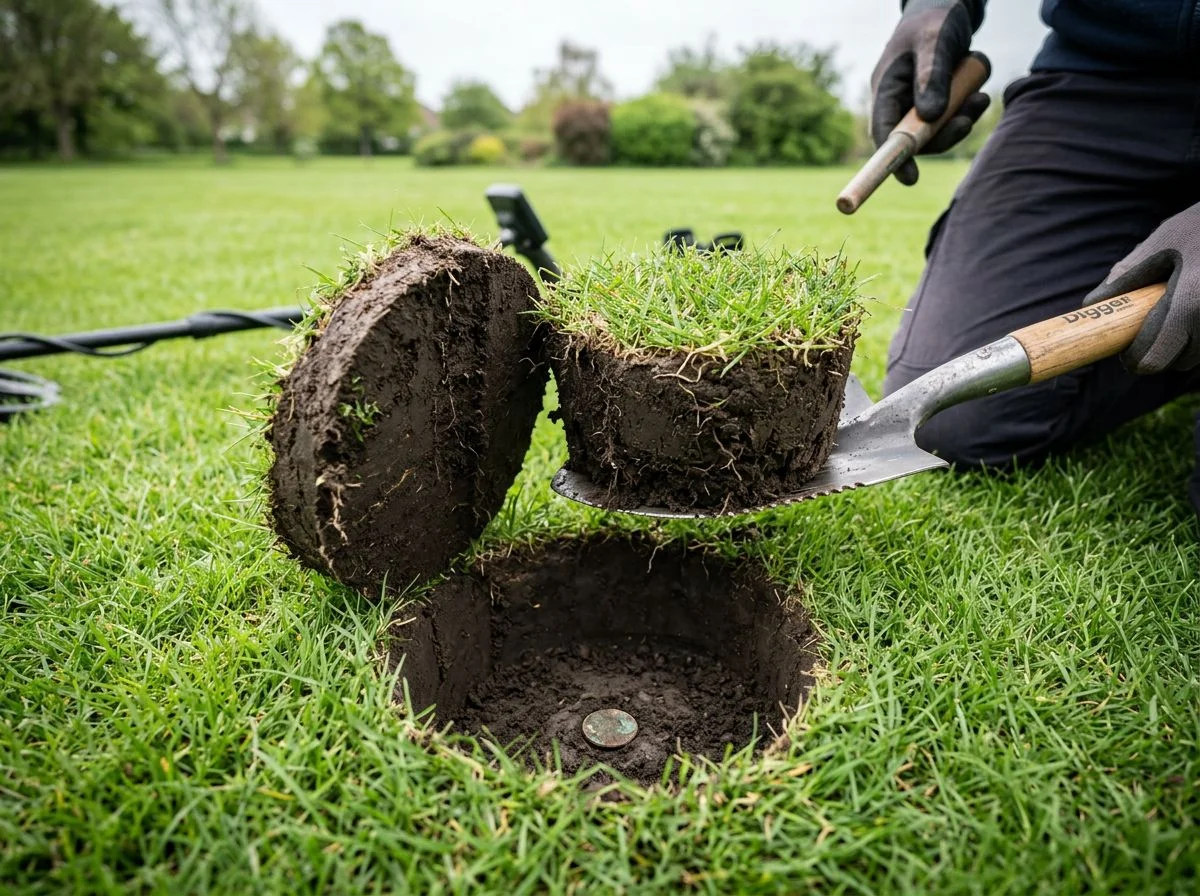
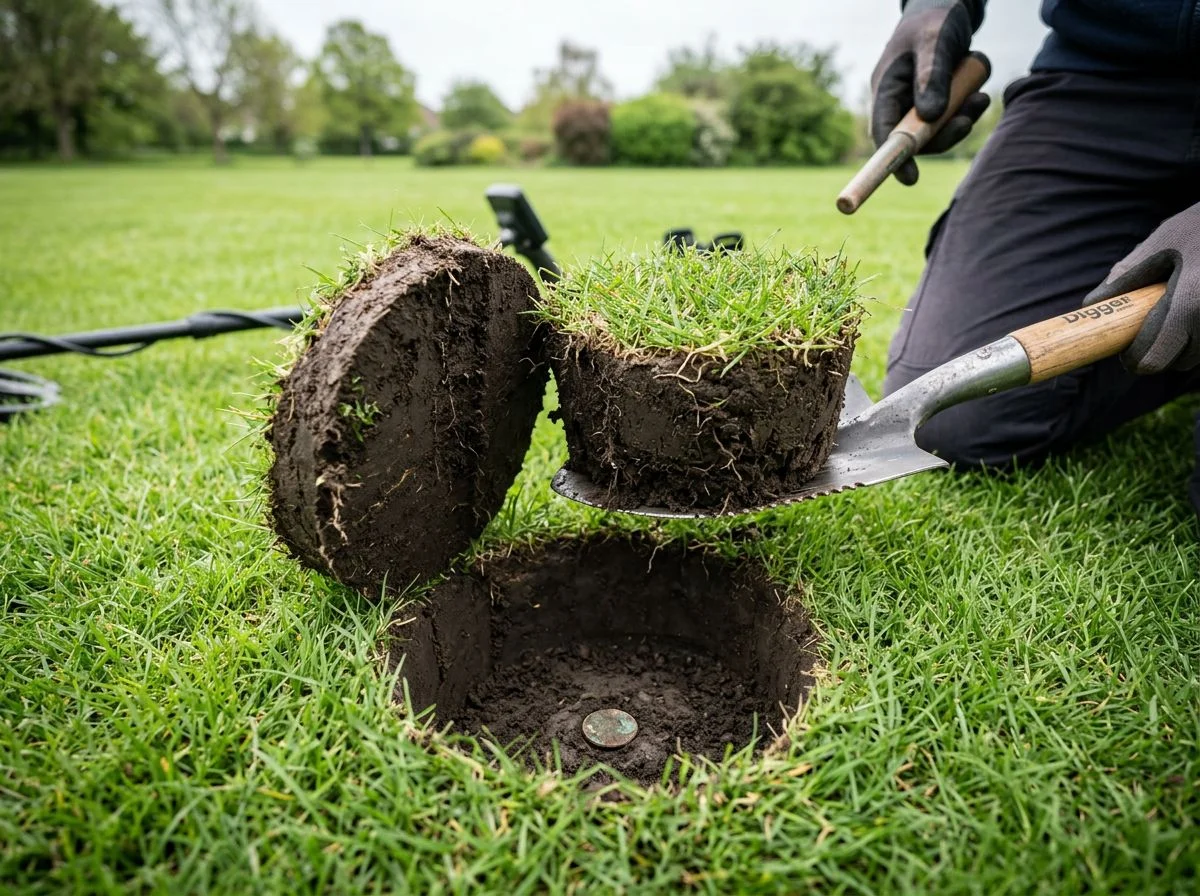
The short answer: cut a three-sided plug about 6×7 inches using a serrated blade at a slight inward angle. Then flip the whole thing back like a hinged lid. Angle is everything. Straight vertical cuts in clay shatter the plug into crumbly pieces that’ll never sit flush again.
Here’s the method I’ve settled on after years of leaving what looked like gopher massacre sites behind me. It starts with the Ground Hawg’s approach: three cuts forming a U-shape, not a full circle. You’re cutting a flap, not a cookie.
First cut goes straight down on the left side of your target. Angle the blade slightly inward — maybe 10 degrees off vertical. That inward angle is the secret. It creates a plug that’s wider at the surface than at the bottom. So when you flip it back, it wedges into place instead of falling through the hole. Second cut mirrors it on the right. Third cut connects them at the back, and you’ve got a hinged plug.
In clay specifically, don’t stomp the blade in one go. Rock it. Push down, pull back, push down again. Clay grips the blade. Forcing it through in one motion is how you end up with a shattered mess and a sore shoulder. The Lesche Ground Shark’s footrest earns its keep here. That wide platform lets you apply steady body-weight pressure through root-packed soil without jerking.
Once the three cuts are done, slide the blade under the plug at the back and lever gently. The hinged front edge — the uncut side — keeps everything attached. Flip the whole thing forward, scan the hole, recover your target. Then fold it back and press with your boot. If you angled those side cuts right, the plug seats itself and the grass survives.
Common Questions About Metal Detecting Shovels
The short answer: yes, you can absolutely start with a garden shovel. But if your ground has any fight in it, you’ll upgrade within a month — probably after bending the blade on your third root. Here’s what actually matters.
“Can I just use a garden shovel from the garage?”
Technically? Sure. I started with one. It bounced off clay, twisted in rocky soil, and left plugs that looked like a badger had a seizure. Garden shovels are built for loose topsoil, not compacted ground. The blade steel is thinner, the edge isn’t serrated, and there’s no footrest for leverage. You can hunt soft park grass with one. But the first time you hit a root thicker than your thumb, you’ll understand why dedicated detecting shovels exist.
“What’s the cheapest option that won’t frustrate me?”
Two solid budget picks. The Tri-Fold Shovel retails for $14 and collapses to 9.5 inches. That makes it genuinely packable — I keep one in my trunk for spontaneous hunts. It’s hardened steel with serrated edges, not a toy. The Garrett Edge Digger is another budget option with a belt sheath. That sheath matters more than you’d think when you’re kneeling and recovering targets every few minutes.
“Do I need a lifetime warranty?”
If you hunt tough ground regularly, yes. I’ve snapped cheap shovels at the weld point — that’s where they all fail. The StuLine 36-inch has a lifetime warranty. That tells you the manufacturer expects it to survive years of abuse. That’s the kind of confidence you want when you’re levering a 10-pound rock out of a hole at hour four of a hunt.

My name is Paul and I am the founder of Detector For Metal, a dedicated resource for metal detecting enthusiasts seeking to uncover historical treasures and connect with the past using the latest technology. As a stay-at-home dad and family man, I’ve found metal detecting to be the perfect hobby that combines family adventure with historical learnings for the whole family.
As a father, I’m deeply committed to passing on this hobby to the next generation of detectorists, starting with my own children. I share advice on everything from metal detecting with kids to exploring the top 10 metal detecting sites you never thought about. My methodical approach to the hobby goes beyond the thrill of discovery—it’s about creating family traditions while preserving history and sharing the stories of those who came before us.