Table of contents
- Probate Records Beat Old Maps for Finding Sites
- Why Probate Records Work for Metal Detecting
- Where to Find Probate Records Without Frustration
- How to Read Old Probate Inventories
- Matching Probate Records to Actual GPS Locations
- What You Can Realistically Expect to Find
- Legal and Ethical Rules Before You Dig
- Common Questions About Probate Records Metal Detecting
Probate inventories are room-by-room itemized lists of everything a deceased person owned, and they double as precise archaeological maps. By cross-referencing those lists with old deeds and maps, you can pinpoint exactly where a homestead stood and predict what’s still buried there.
The magic is in the specificity. When appraisers walked through Joseph Clark’s Massachusetts farmhouse in 1811, they didn’t just note “household goods.” They counted six cups and saucers valued at 12 cents and a single vest worth 42 cents. That level of detail tells you a family lived there long enough to accumulate — and lose — small personal items. Cups break. Buttons pop off vests. Coins slip through floorboards. Every listed object is a potential target category.
The room-by-room format is even better. Seventeenth-century Plymouth Colony inventories recorded possessions by location — “in the parlor,” “in the barn loft,” “in the yard.” That spatial data helps you reconstruct the building’s layout before you ever swing a coil. If the inventory lists tools in the barn and pewter in the kitchen, you know where to focus your grid.
Samson Benson’s 1820s Harlem farm inventory is a perfect example. It lists six fat hogs, a sorrel horse, and an oyster rake — agricultural assets that place him firmly on working farmland. Find that farm’s footprint on an old map, and you’ve just located a detecting site that’s been invisible for 150 years.
The inventory doesn’t just tell you what to look for. It tells you where to stand.
Probate Records Beat Old Maps for Finding Sites
A probate inventory isn’t a map — it’s better. It’s a room-by-room list of everything a dead person owned. Cross-reference it against old deeds and surveys, and it becomes a treasure map more precise than anything a cartographer ever drew.
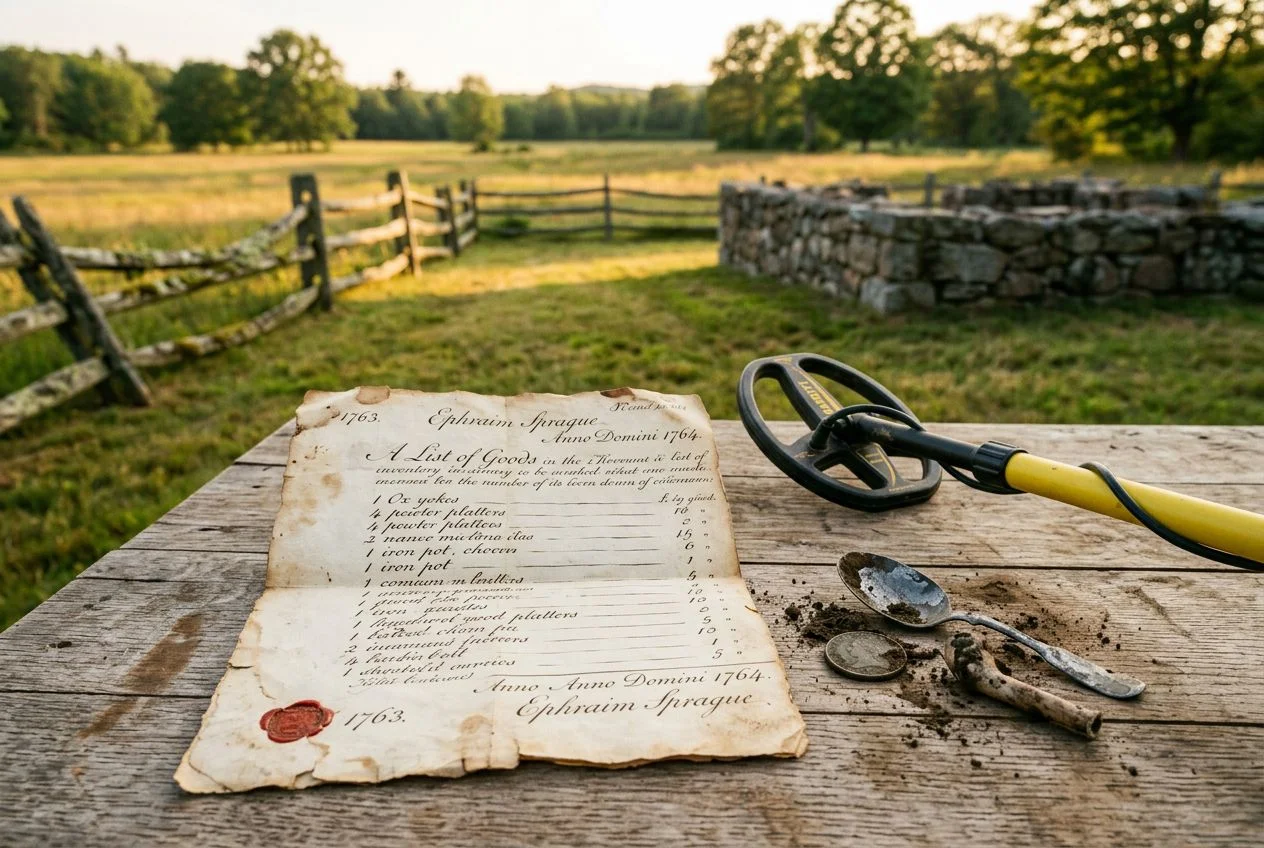
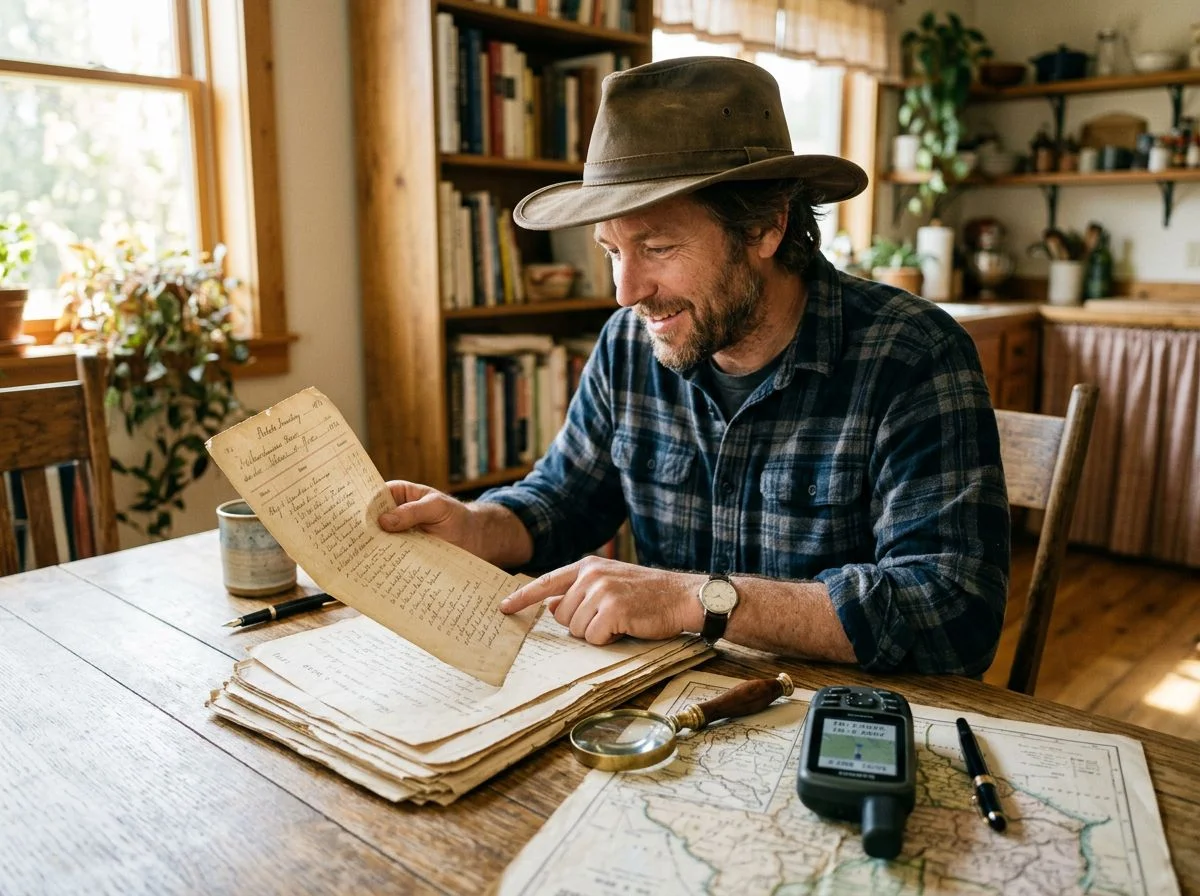
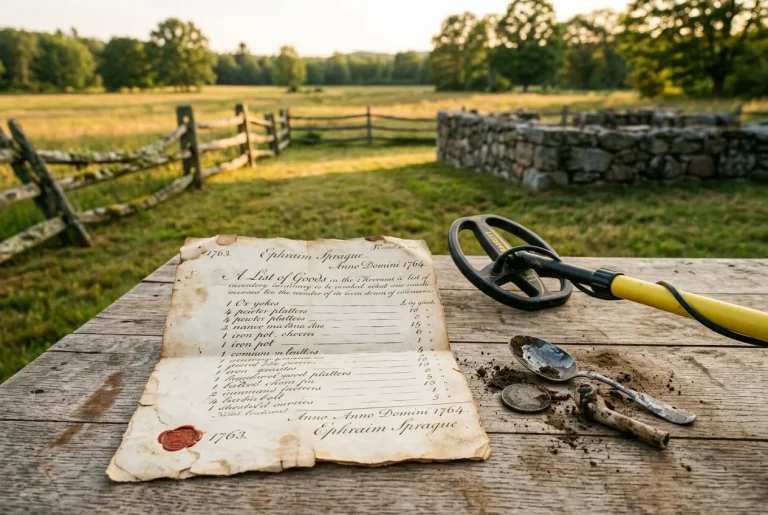
I learned this by accident about six years ago. I was in the county archives, not looking for detecting sites at all. I was chasing a property line dispute for a buddy’s family tree. That’s when I found it: a 1763 inventory listing “one iron pot, two pewter spoons, one brass kettle.” No address, no landmark, just a name and a list. But the executor’s name matched a name on an adjacent deed, and that deed mentioned a creek crossing. Three weekends later, I’m standing in a patch of woods near a creek that hasn’t seen a house in two centuries, swinging my Equinox 900. Eight inches down, out pops a 1780s King George copper. A coin some colonial farmer lost through a floorboard crack — and I found it because a court clerk wrote down that the man owned a brass kettle.
The scale of this resource is staggering. The New York City Municipal Archives alone holds over 11,000 estate inventories from 1786 to 1859. Probing the Past has digitized 325 probate inventories from Virginia and Maryland between 1740 and 1810. And if you’re really ambitious, there are 76 Spanish probate inventories from 16th-century colonial America that archaeologists have used to identify personal property at shipwreck sites.
Most detectorists never touch these records because they think probate is genealogy. That’s the gap. That’s why you’re reading this.
Why Probate Records Work for Metal Detecting
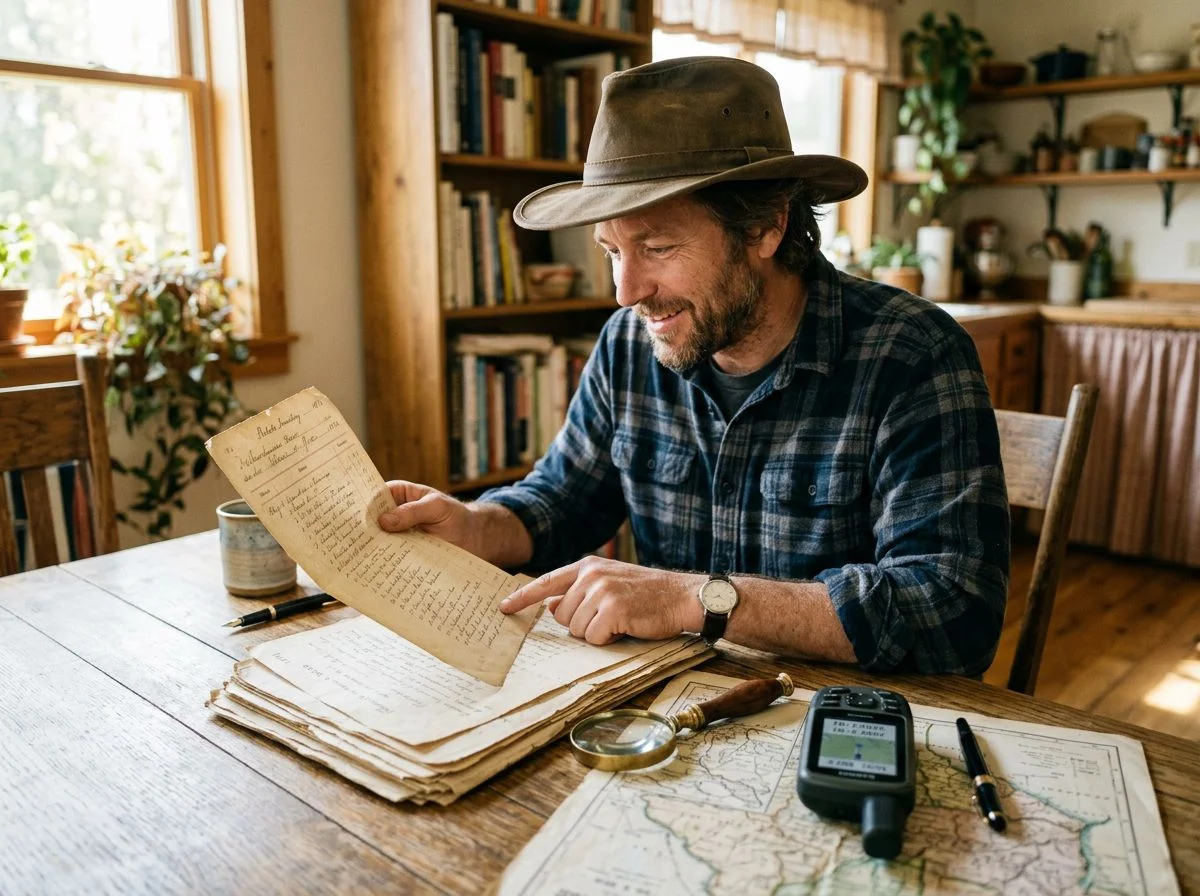
Probate records are the closest thing we have to a time-stamped, room-by-room inventory of what was physically present at a homestead. And that’s exactly what makes them a detectorist’s best friend. They tell you not just that a family lived somewhere, but what they owned, where they kept it, and what they were likely to lose.
The absurd specificity is what gets me. Take Joseph Clark’s 1811 inventory from Hampshire County, Massachusetts. The appraisers valued his 50 acres and buildings at $800, then turned to the personal estate — worth about $159 total. And they didn’t round up. They wrote down “six cups and saucers valued at 12 cents” and “one vest valued at 42 cents.” Twelve cents. Forty-two cents. That’s not an inventory; that’s a photograph.
For a genealogist, that vest is a charming detail. For me, it’s a signal. A family that itemizes a 42-cent vest is a family that lived in that house for years. They raised kids there, worked the land, and dropped things. Buttons pop off vests. Cups shatter on stone hearths. Coins slip through floorboard gaps. Every line item is a potential target category, and the appraiser just handed me the list.
The agricultural entries are even more useful for site confirmation. Samson Benson’s 1820s Harlem farm inventory lists “6 fat hogs,” a sorrel horse, three cows, and an oyster rake. That’s not a suburban parlor — that’s a working farm on Manhattan Island. Match those assets to an old map showing Benson’s land, and you’ve just located a detecting site that’s been paved over or forgotten for 150 years.
The reason most detectorists never use these records is that they think probate is genealogy. It’s not. It’s archaeology with a notary present. The court clerk did the hard work of documenting what was there. My job is just to figure out where “there” was — and the inventory usually gives me enough clues to do exactly that.
Where to Find Probate Records Without Frustration
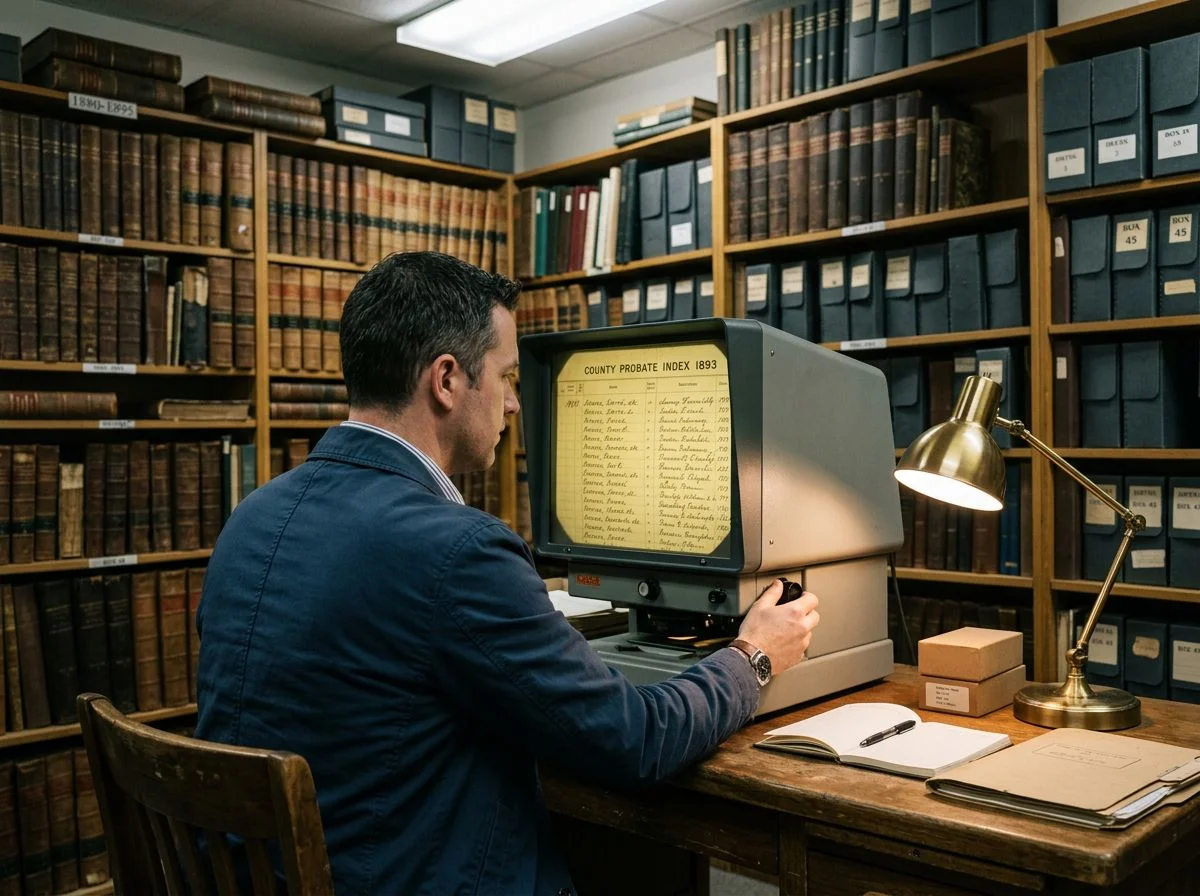
You’ll find probate records in three places: county courthouses (the originals), state archives (microfilm and digitized copies), and increasingly, online databases. The trick is knowing which one to hit first, because each has its own quirks.
Let me tell you about my favorite find — and I don’t mean a coin this time. I was in a county courthouse basement. The kind of place where the fluorescent lights buzz and the air smells like old paper and dust. I’d been poking through probate files for hours, mostly finding estate settlements for farmers who owned nothing but a cow and some pots. Then I saw it: a box labeled “Misc. Probate 1758–1766.” The tape on the lid had yellowed to the color of weak tea. Nobody had opened that box in decades, maybe generations.
Inside was a 1763 inventory. A full room-by-room list of a colonial homestead, written in that spidery 18th-century hand that takes a minute to get used to. It wasn’t in any database. It wasn’t indexed. It was just sitting there, waiting for someone who cared enough to look. That’s the thing about courthouse basements: the best stuff is often the stuff nobody’s digitized yet.
So here’s my honest advice on where to look, in order of accessibility.
Start online. Probing the Past has 325 digitized probate inventories from Virginia and Maryland covering 1740 to 1810. They’re browsable by decade and county, which makes them a great way to learn the format before you dive into handwritten originals. The NYC Municipal Archives holds over 11,000 handwritten estate inventories from 1786 to 1859. They’ve been digitizing them in batches, so check back periodically if your target area isn’t up yet.
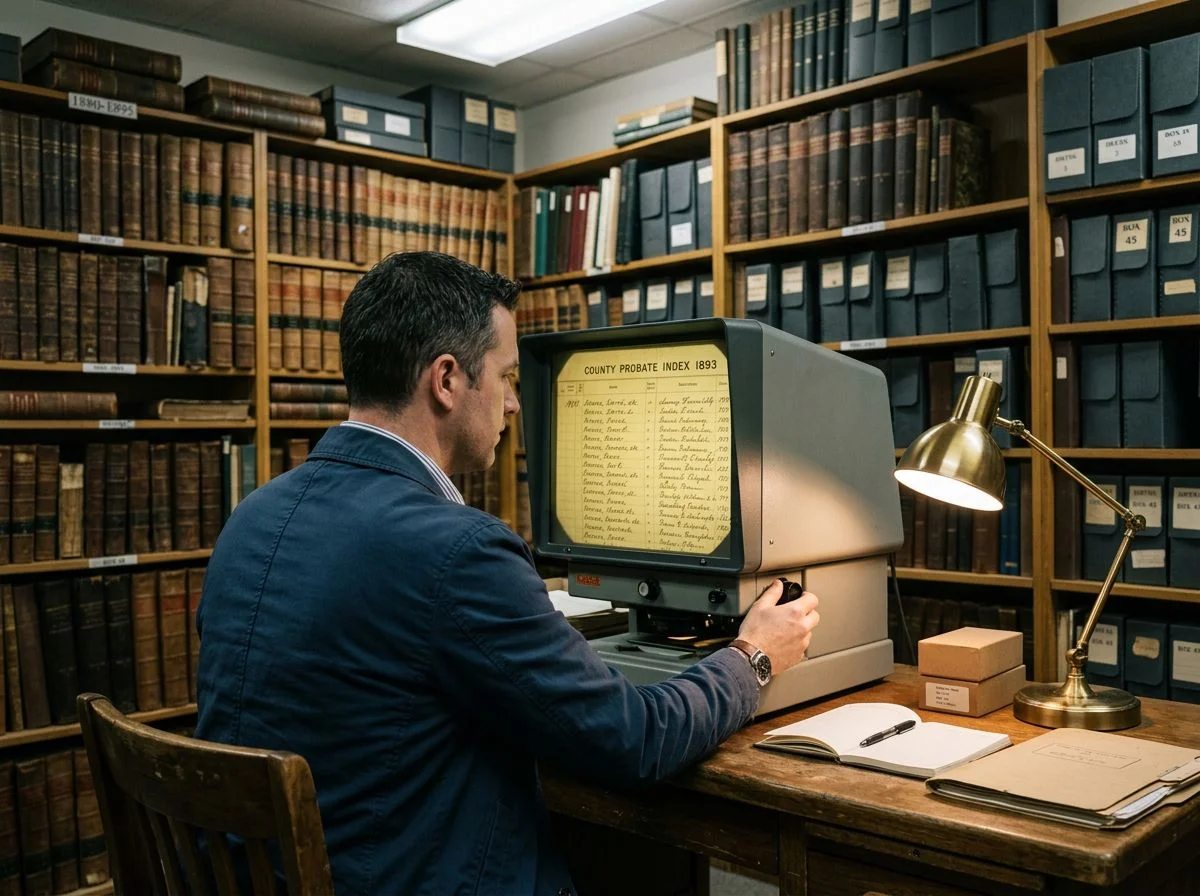
Then hit the state archives. Most states have probate records on microfilm, organized by county and date. The staff are usually happy to point you toward finding aids. Bring a notebook and a camera. Some microfilm readers let you snap photos of the screen.
Finally, go to the source. County courthouses are where the originals live. That’s where you’ll find the boxes nobody’s opened since the Carter administration. Call ahead. Ask about access policies. Some courthouses want appointments; others will wave you toward a basement door and tell you to “have at it.” Bring gloves if they’ll let you handle originals. And for god’s sake, don’t be the guy who damages a 250-year-old document because he was too excited to be careful.
The stuff that’s digitized is the tip of the iceberg. The real treasure is in the basements.
How to Read Old Probate Inventories
Reading a probate inventory is less like reading a list and more like learning a dialect. Archaic spellings, odd abbreviations, quantities that make no sense until you understand the context. Here’s the decoder ring.
The first thing to understand is that colonial merchants had commercial inventories, not just household ones. Take William Wilson’s Charleston probate record. His inventory lists “34 Delf bowls & 33 Delf plates” — that’s not a guy with a big family. That’s a guy with a shop. He also had “21 Black and Enamd Tea Potts” and “3 doz Quart Stone Muggs No 1.” If you found that inventory attached to a property you were researching, you’d know immediately: this was a storefront, not just a residence. That changes where you swing your coil. Commercial sites concentrate coin loss differently than family farms. And the artifact mix leans toward trade goods rather than personal items.
The room-by-room format is the real gold. Plymouth Colony’s earliest room-by-room inventory is Will Wright’s from November 6, 1633. The appraisers walked through and noted what was in each space — the hall, the chamber, the loft. When you see “in the chamber” before a list of items, you’re being told exactly where people slept, dressed, and stored valuables. That’s where small personal items — coins, buttons, buckles — end up falling through cracks or getting lost in floorboards.
The spelling will drive you crazy at first. “Enamd” for enameled. “Tea Potts” as two words. “Muggs” with a double g. Just sound it out. These appraisers wrote phonetically, and once you get the rhythm, it’s surprisingly readable. The real trick is not getting hung up on the weird words. Focus on the quantities and the room assignments. Those tell you what was lost and where to look for it.
Matching Probate Records to Actual GPS Locations
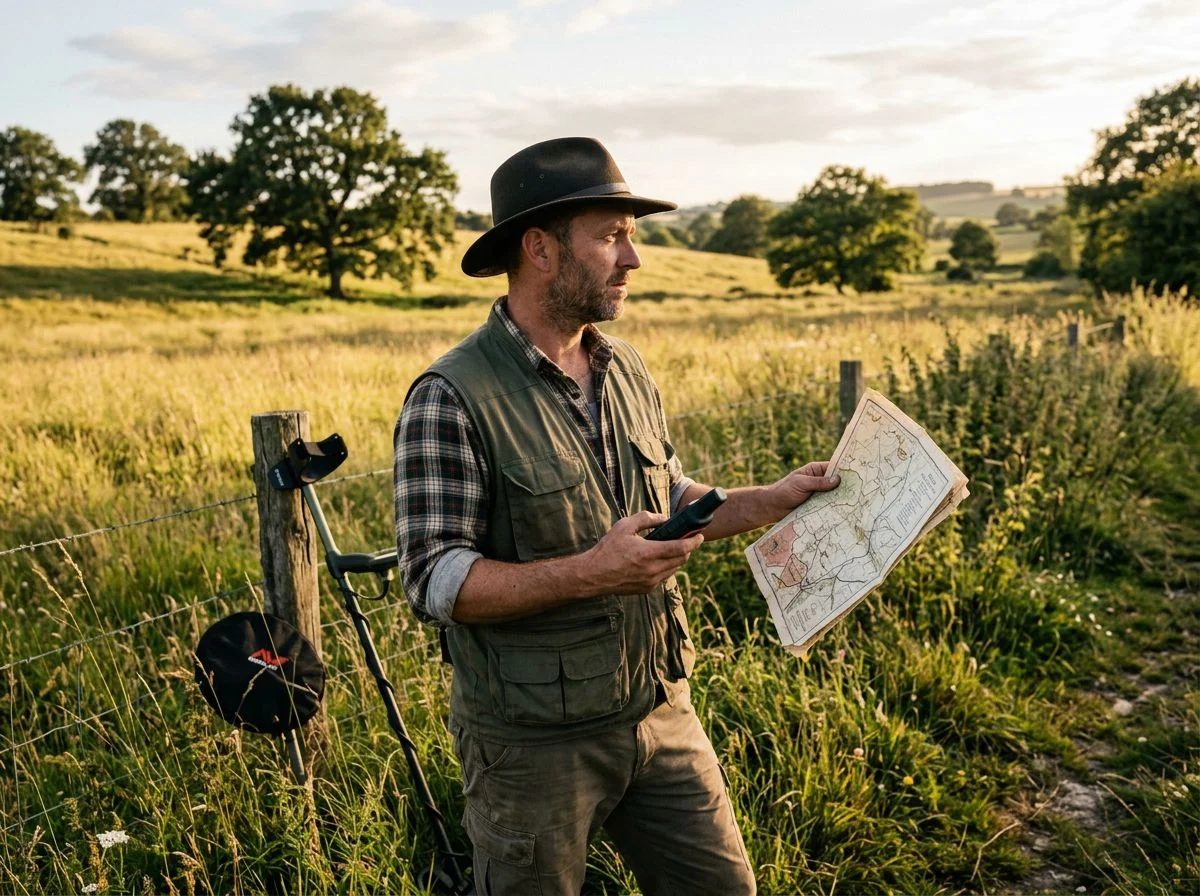
The inventory tells you what was there. The deed, tax map, and old survey tell you where it was. Cross-reference all three against a modern topographic map, and you’ll walk straight to the front door — or what’s left of it.
My Auburn train stop hunt started with a conversation, not a document. An 87-year-old former conductor at a historical society meeting mentioned a flag stop that had faded from every map he’d ever seen. “Just a widening in the road,” he said, “near the old rail bed.” That tip sent me to the county recorder’s office, where I found the original right-of-way deed. Then I pulled the probate inventory for the stationmaster who’d lived on-site in the 1890s. His estate listed “1 iron stove, 2 cots, 3 lanterns, 1 ticket punch.” Enough to confirm a residence, not just a platform.
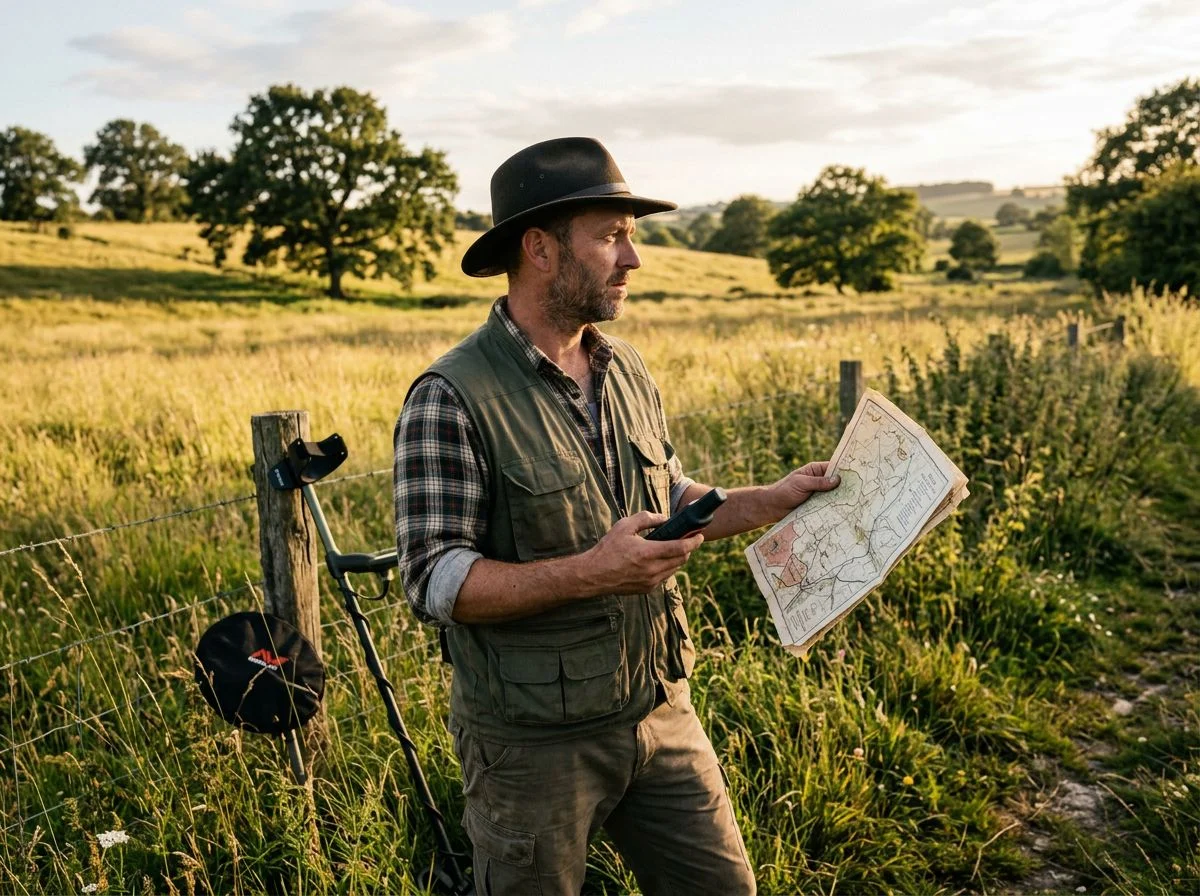
The deed gave me the legal description: “commencing at the southeast corner of Section 14, thence north 23 degrees east 412 feet.” The inventory told me people lived there, which meant coins in the dirt, not just railroad spikes. I plotted the deed’s metes and bounds onto a USGS topo map, drove out, and spent three weekends swinging my Equinox 900 over a slight rise that didn’t look like anything special. Found over 30 Indian Head pennies and my first Seated Liberty dime. The research did the heavy lifting; the detector just confirmed it.
Here’s the workflow that works for me, in order. First, get the legal description from the deed or land patent. Second, find the property on an old plat map or tax assessor’s record. The FamilySearch wiki on United States Probate Records is a good starting point for understanding how these documents connect. Third, overlay that onto a modern map. LiDAR is the secret weapon here. It strips away vegetation and shows foundation depressions you’d never see from the ground.
One thing I have to address, because it comes up when you dig into these records. The 1863 Smyth County tax record showing Abijah Thomas owned 56 slaves valued at $53,800 is a gut-punch of a document. Margaret Linford’s article for the Smyth County Genealogical Society explains how enslaved people were legally classified as property, listed right alongside livestock and furniture. When you’re researching a homestead, you’re going to encounter this. Handle it with respect. These were people, not inventory items. And the sites where they lived and worked deserve the same care and ethics as any other historical ground. Don’t hunt slave quarters without thinking hard about what you’re doing and why.
Cross-referencing records isn’t glamorous. It’s hours at a microfilm reader and squinting at plat maps until your eyes cross. But when the pieces line up — when the deed’s “north 23 degrees east” matches the slight rise on the LiDAR image, and the inventory’s “3 lanterns” tells you someone lived there — that’s the moment the hobby becomes something closer to time travel.
What You Can Realistically Expect to Find
Here’s the reality. An inventory with “one iron pot, two pewter spoons, one brass kettle” tells you a family scraped by. “Six silver teaspoons, one gold mourning ring” signals money. And those two households leave very different signals in the dirt. The poor homestead gives you iron fragments, a stray button, maybe a worn copper. The wealthy one gives you a genuine shot at silver. Both are worth hunting. But you need to know which one you’re walking onto before you waste a weekend digging boot tacks and thinking your detector is broken.
The Spanish probate research out of the University of West Florida drives this home better than anything I’ve seen. They built a database of 76 probate inventories from 16th-century Spanish America — soldiers, sailors, carpenters, blacksmiths, doctors. Then they cross-referenced them against artifacts excavated from the Luna Settlement and the Emanuel Point shipwreck in Pensacola. What they found was that the written record and the physical record didn’t always line up neatly. A soldier’s inventory might list a sword and a cooking pot. But the excavation turns up gaming pieces and religious medals that never made it into the official paperwork. People carried more than they owned on paper.
That’s the lesson I keep relearning. The inventory is a floor, not a ceiling. It tells you the minimum of what was there, appraised by neighbors who were tired, rushed, and not especially sentimental. They didn’t record the coin that slipped between floorboards or the child’s toy lost in the yard. So manage your expectations accordingly. A sparse inventory doesn’t mean a dead site, and a rich one doesn’t guarantee silver. What it guarantees is that someone lived, worked, and lost things there. The rest is up to your coil and your patience.
Legal and Ethical Rules Before You Dig
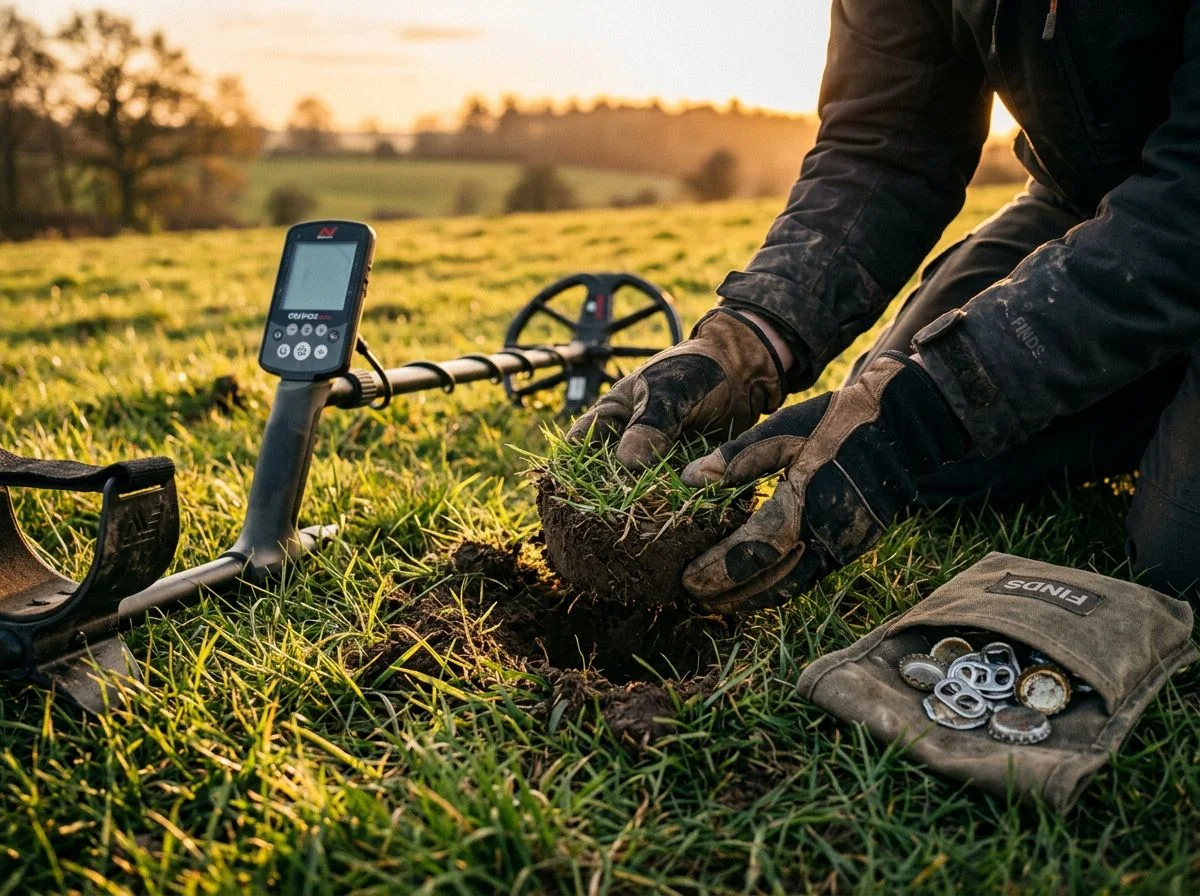
The inventory tells you what was there. The law tells you whether you can dig it. That’s my rule, and it’s saved me from some expensive mistakes. Before you spend a weekend chasing a probate record to a forgotten cabin site, you need to know who owns the land and what the rules are where you live. Because the penalties for getting it wrong are not hypothetical.
In the UK, the law is especially clear-cut. If you find something that qualifies as “treasure” under the Treasure Act, you’re legally required to report it to a local coroner within 14 days. Fail to do that, and you’re looking at a fine or up to three months in prison. That’s not a scare tactic — it’s the actual law, and detectorists have gone to jail over it. A Viking hoard isn’t a souvenir. It’s evidence, and the state treats it that way.
Here in the US, things are messier. Laws vary by state, by county, and by land type. Public land might be fair game or completely off-limits. It depends on whether it’s federal, state, or municipal. Private land always requires permission — and “permission” means written, ideally, with an agreement about who keeps what. I’ve had landowners wave me off with a friendly “go ahead, keep whatever you find.” I’ve had others want a 50/50 split on anything over $50. Get it in writing. It protects both of you.
The ethical side matters just as much. Fill your holes. Pack out your trash. If you find something historically significant — and a probate-driven hunt is exactly where you might — report it. The records that led you there are part of the historical record. The artifacts you pull out of the ground should be too. Digging a site without permission doesn’t just risk a fine. It torches the reputation of every detectorist who comes after you.
Common Questions About Probate Records Metal Detecting
Do I need a will, or will the inventory alone work? The inventory is what you’re after. The will just tells you who got the teapot. The inventory tells you the teapot existed, where it sat in the house, and what else was in the room. That’s your real lead.
Where do I actually find these records? Start at your county courthouse or records office. That’s where I found the Joseph Clark inventory from 1811 — filed in Hampshire County, Massachusetts, with his will. If you’re not local, check digital collections first. The NYC Municipal Archives has over 11,000 estate inventories online, and TeachingHistory.org hosts 325 probate inventories from Virginia and Maryland covering 1740 to 1810. FamilySearch has a probate records wiki that’ll point you to what’s digitized by state.
How do I turn an inventory into a location? The inventory itself won’t give you GPS coordinates. You need to cross-reference it with deeds, tax records, and old maps. The inventory tells you what was there; the deed tells you where the land sat. When I hunted that 1763 Edward Mercer site, the inventory confirmed a working farm, but it was the deed boundaries that put me on the ground.
Do I need to be a genealogy expert? No, but you need patience. These records are handwritten, sometimes in archaic script, and rarely indexed the way you’d hope. Budget a few hours per record. It’s slower than swinging a detector, but the payoff is you’re hunting a site nobody else has bothered to find.

My name is Paul and I am the founder of Detector For Metal, a dedicated resource for metal detecting enthusiasts seeking to uncover historical treasures and connect with the past using the latest technology. As a stay-at-home dad and family man, I’ve found metal detecting to be the perfect hobby that combines family adventure with historical learnings for the whole family.
As a father, I’m deeply committed to passing on this hobby to the next generation of detectorists, starting with my own children. I share advice on everything from metal detecting with kids to exploring the top 10 metal detecting sites you never thought about. My methodical approach to the hobby goes beyond the thrill of discovery—it’s about creating family traditions while preserving history and sharing the stories of those who came before us.