Table of Contents
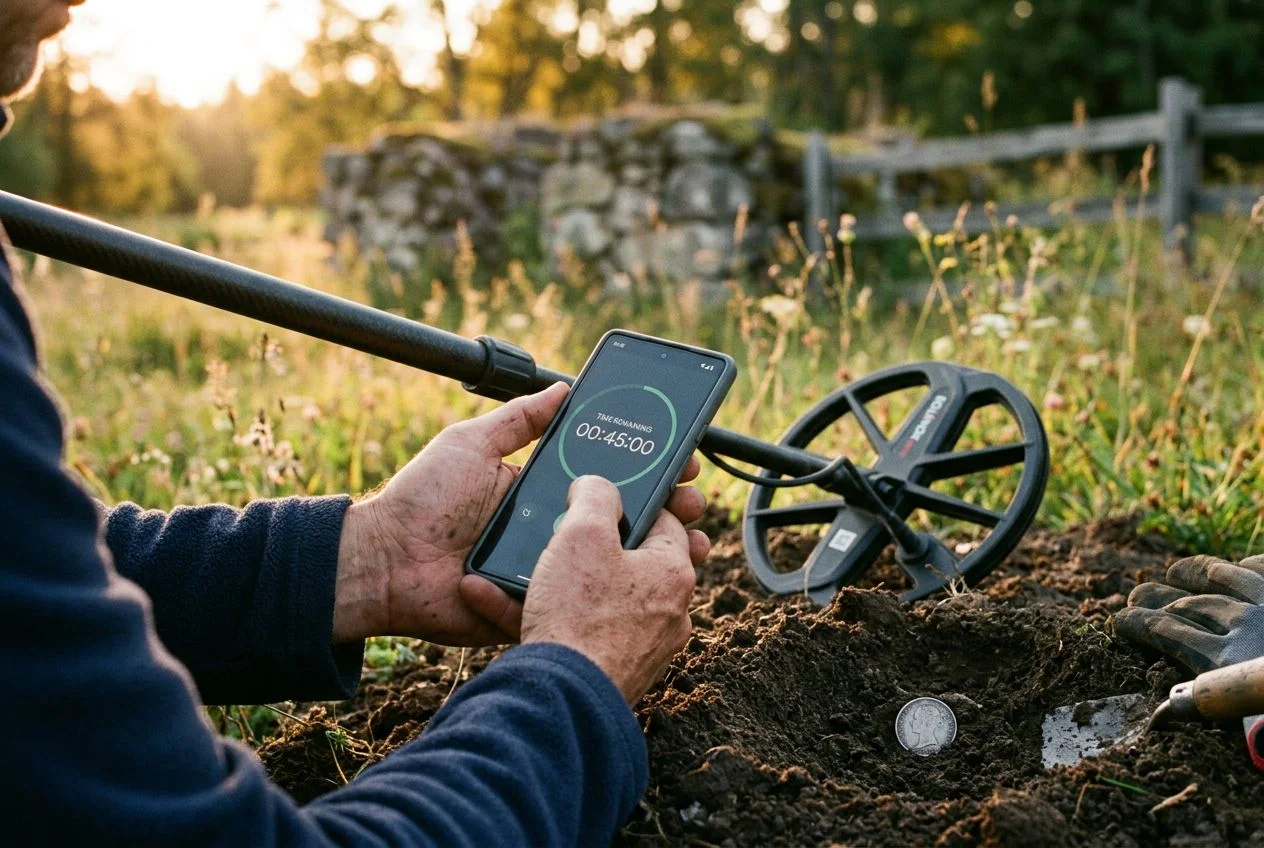
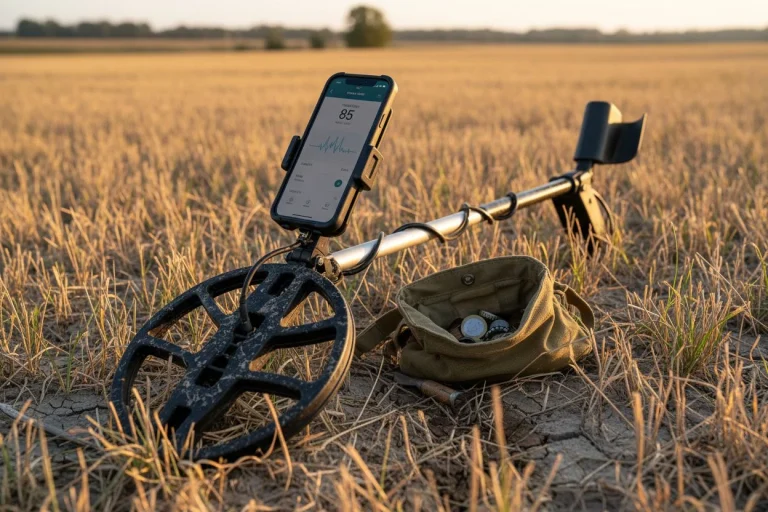
My buddy Tom texted me the other day with a photo of his latest setup. It looked like a standard detector shaft and coil. But where the control box should’ve been, there was a smartphone clipped into a holder, running some app I’d never seen.
“Welcome to 2026,” he wrote. “Your phone does everything else. Why not detecting?”
Tom’s not wrong. We’ve spent the last decade watching smartphones swallow every tool we once carried separately — cameras, GPS units, flashlights, voice recorders. It was only a matter of time before someone figured out how to make them part of our detecting rigs. But I’ve spent more than 15 years swinging coils over everything from California ghost towns to Nevada desert. So I’ve got some thoughts on whether this trend is the future or just a clever gimmick.
I’ll level with you: smartphone-integrated metal detectors aren’t a single thing. There are two very different camps here. Confuse them, and you’ll be disappointed — or pleasantly surprised, depending on what you’re expecting.
What Can Your Smartphone Metal Detector Really Do?
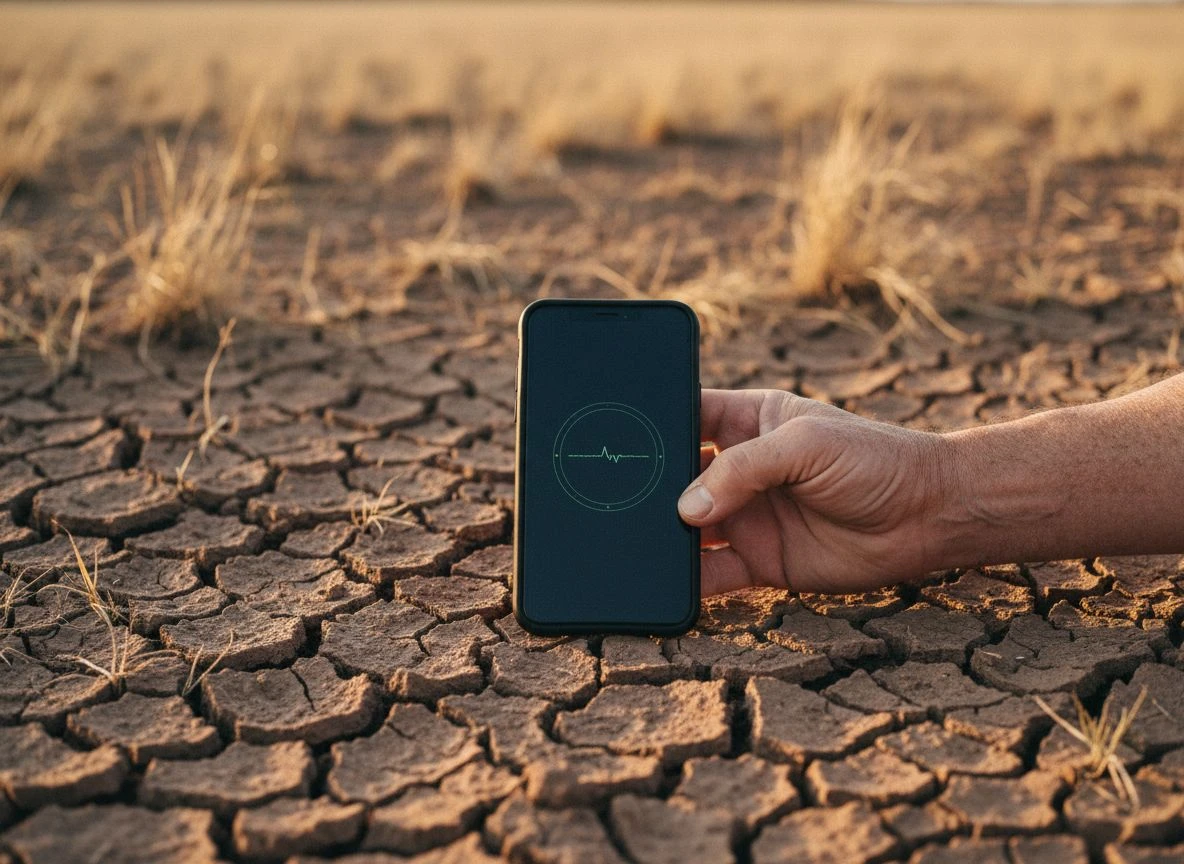
Let’s start with the most common misconception. You’ve probably seen apps claiming to turn your smartphone into a metal detector. Download one, wave your phone near the ground, and boom — instant treasure hunter, right?
Not exactly.
Modern smartphones contain a built-in magnetometer — the same sensor that powers your digital compass. It measures the ambient magnetic field around your phone. When you bring it near something ferromagnetic — iron, steel, certain alloys — the sensor detects that disturbance and the app interprets it as “metal.”
Here’s the catch: smartphones can’t detect all types of metal. That magnetometer picks up changes in magnetic fields, but non-ferrous metals like gold, silver, copper, and aluminum barely register. The stuff most of us actually want to find — coins, jewelry, relics — is almost invisible to a phone’s internal sensors. And even for ferrous targets, detection depth is typically limited to a few centimeters. Accuracy varies constantly due to interference and calibration drift.
The ComputerUser article explains it well: these apps should be considered approximate tools, not replacements for dedicated detectors. They’re fine for finding a dropped nail in the carpet or locating a metal stud behind drywall. But I’ve tried using one to find a steel fence post buried two inches down in my backyard. The app gave me three different locations within a five-foot radius. None of them were right.
So no, your phone alone isn’t the future of detecting for anyone serious about the hobby.
But here’s where it gets interesting.
How External Coils Supercharge Smartphone Metal Detectors
The actual innovation in smartphone-integrated detecting isn’t about using the phone’s internal sensors. It’s about pairing a proper search coil and shaft — real detecting hardware — with your phone serving as the control unit, display, and data processor.
The Quest Air is a great example of this approach. It’s a complete detector setup with a search coil and shaft. But instead of a built-in control box, it uses a smartphone holder and connects wirelessly via Bluetooth to the Quest ARMD app. Your phone becomes the interface — showing target IDs, letting you adjust sensitivity and recovery speed, and emitting audio signals that vary by metal type. The whole rig weighs about a kilogram without the phone attached.
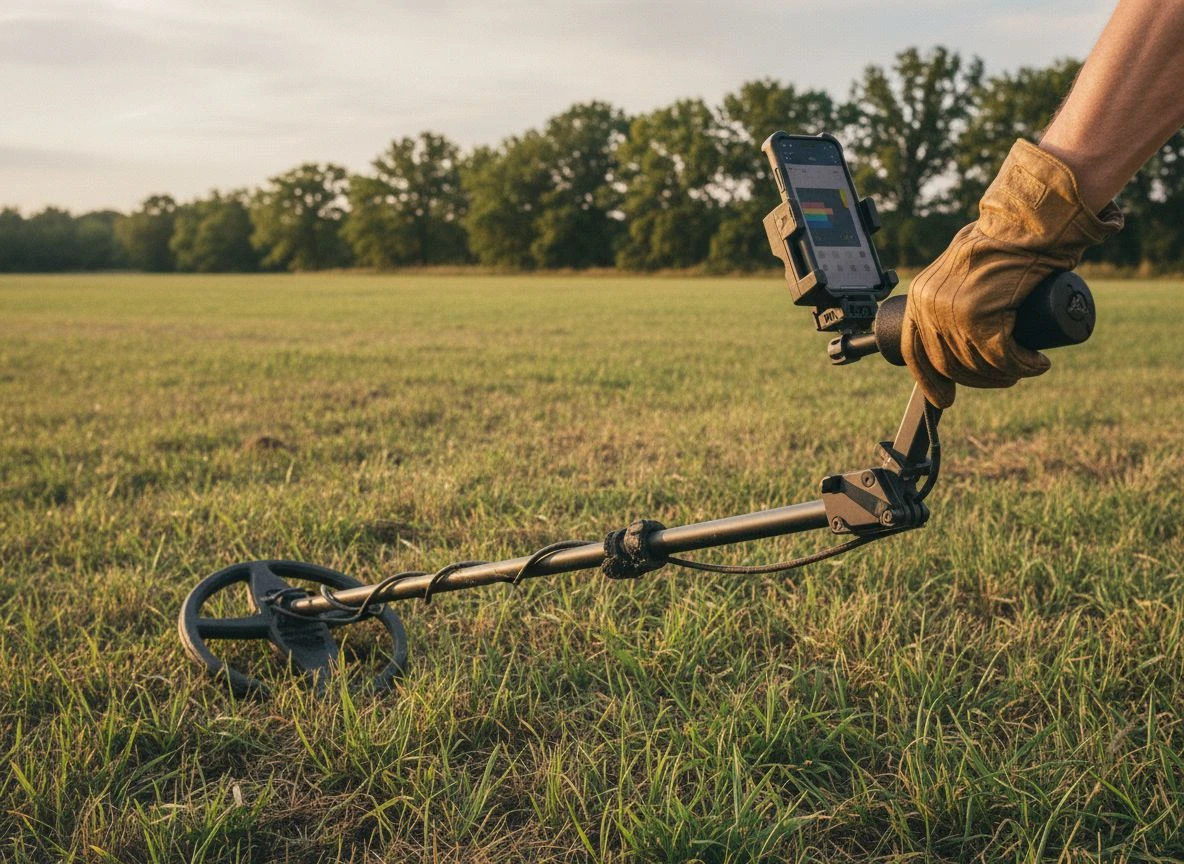
Or consider the GoldHunter VLF metal detector from TreasureHunter3D. This is the world’s first smartphone-visualized VLF detector. It offers real-time 3D ground scans displayed on your phone or tablet. When I say “real-time 3D,” I mean you can actually see the approximate shape, size, and depth of a detected object rendered on your screen as you sweep. That’s not a gimmick — that changes how you interpret what’s underground.
I watched a demo video where someone swept over a test garden. A clear three-dimensional shape popped up on their phone screen before they ever dug a hole. The app showed them roughly where the target was positioned, how deep, and even gave a best-guess on material type. That’s the kind of information you’d normally get only from high-end 3D ground scanners costing thousands of dollars more.
Augmented Reality Enhances Smartphone Metal Detector Visuals
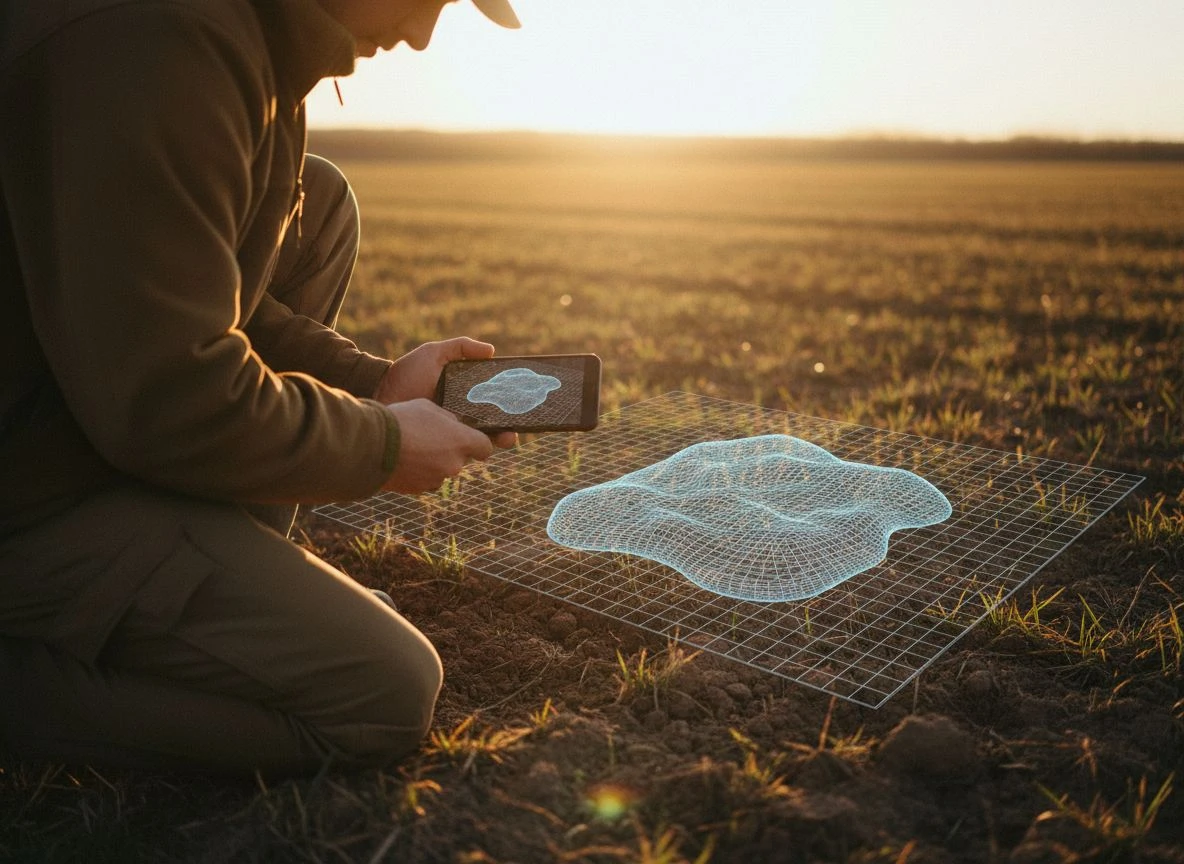
One of the most futuristic developments I’ve seen is the integration of augmented reality (AR) with detecting. The GoldenEye+ system takes this concept seriously — it’s a professional-grade 3D ground scanner that overlays scan results directly onto your smartphone’s camera feed. You point your phone at the ground, and the screen shows a real-world view of the terrain with virtual representations of buried objects floating beneath the surface.
I realize that sounds like something out of a sci-fi movie. And I’m probably way more excited about this than any normal person should be. But think about what that means for target interpretation. Instead of listening to audio tones and guessing whether that scratchy signal is a coin at 6 inches or a pull-tab at 4, you’re looking at a visualization. It shows you exactly where to dig and what you’re likely to find.
The TreasureHunter3D article covering these trends notes that AR technology can overlay digital information onto the real world. It shows details like size, shape, and material in 3D. When I read that, I immediately thought about how many times I’ve dug a deep target only to find a crushed soda can. With AR visualization, you’d see that can-shaped anomaly before your shovel touches the ground.
Is a Smartphone Metal Detector Right for You?
After testing a few of these systems and talking to other detectorists who’ve made the switch, here’s my honest take on who benefits most:
Beginners gain the most. The learning curve for traditional detectors — understanding tones, reading target IDs, interpreting ground conditions — can be steep. Having a visual interface that literally shows you what’s happening makes the hobby way more accessible. You’re not guessing what those beeps mean; you’re looking at the data.
Data nerds (and I say that with affection, because I’m one of them) will love the logging capabilities. Smartphone-connected detectors can record GPS coordinates for every find, track your search patterns, and let you overlay historical maps on your current location. I’ve spent years marking hunt sites with my phone’s GPS app manually. Having it built into the detecting workflow would save me hours of post-hunt data entry.
Casual hobbyists who don’t want to invest in a $1,000+ dedicated control box will appreciate the cost savings. The Quest Air, for instance, costs significantly less than a high-end detector because you’re supplying the brain (your phone) yourself. Upgrades come through app updates, not expensive hardware replacements.
But for serious detectorists who hunt aggressively in rough terrain, extreme weather, or remote locations? I’d be cautious. Your phone is a fragile, expensive, battery-dependent device. It doesn’t love being rained on, dropped, or left in direct sunlight for five hours. I’ve killed two phone screens just from normal detecting — sweat and grit getting into charging ports, dropping phones while taking photos of finds. I can’t imagine what’d happen if my phone was the control unit and something went wrong mid-hunt.
The Hidden Limitations of Smartphone Metal Detectors
Speaking honestly, there are real drawbacks that don’t get enough attention in the marketing materials.
Battery life is the obvious one. A traditional detector can run for 20+ hours on a set of rechargeable AAs. Your phone struggles to make it through a full day of normal use, let alone five hours of continuous Bluetooth streaming, GPS tracking, and screen-on visualization. You’ll need a serious external battery pack, and that adds weight and complexity.
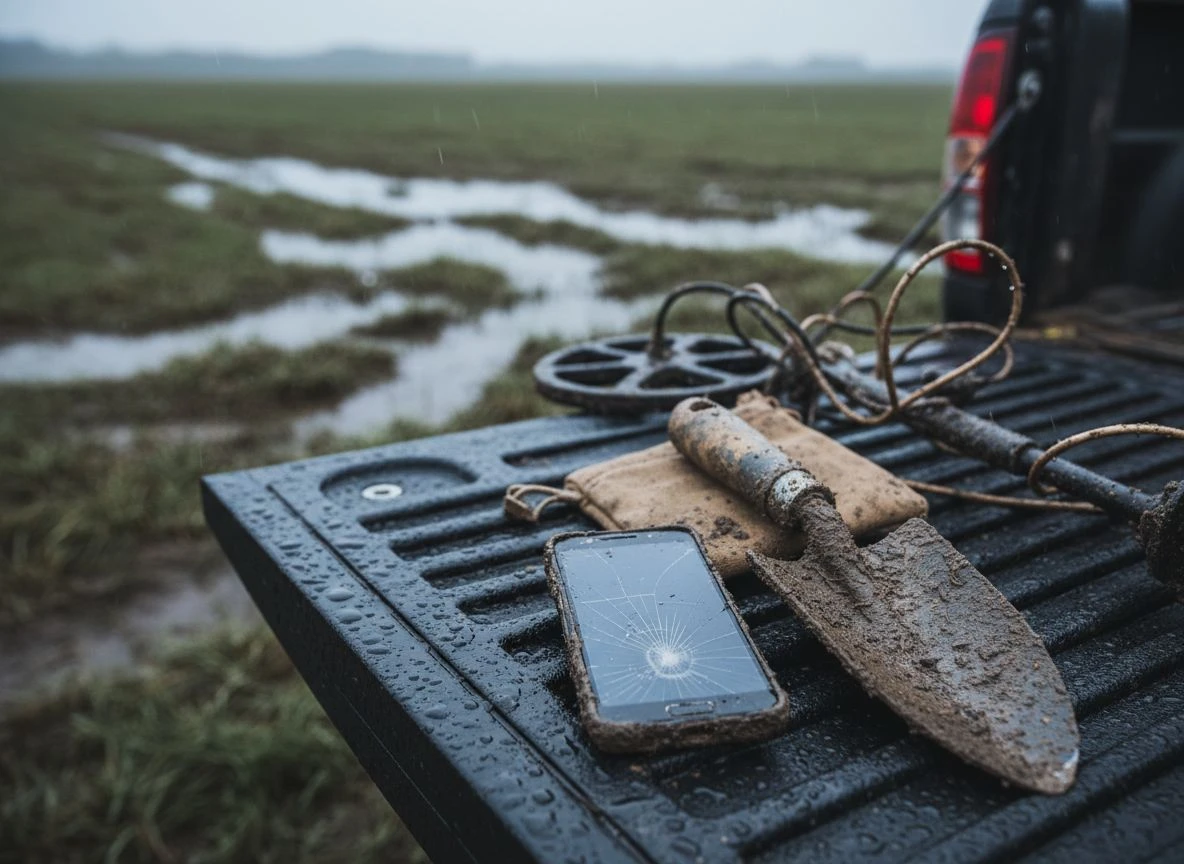
Durability concerns me even more. I’ve detected in rain, dust, mud, and 100-degree California summer heat. My Minelab Equinox 900 handles all of that without complaint. My iPhone does not. Some companies are building rugged cases for this exact use case, but it’s an extra expense and another point of failure.
Connectivity issues are real. Bluetooth drops. App crashes happen. I’ve heard stories from fellow detectorists about losing a perfect target read because their phone decided to install a system update mid-sweep. When you’re in the field, reliability matters more than cool features.
Smartphone Metal Detectors Are the Future of the Hobby
After spending way too much time thinking about this — my wife says I collect obscure tech opinions like some people collect stamps — here’s where I land.
Smartphones alone, using only their internal magnetometer, are not the future of detecting. They’re a party trick, useful for finding a lost screw in the carpet and not much else.
But smartphone-integrated detectors — proper search coils and shafts that use your phone as the control interface and display? That’s absolutely part of where the hobby is heading. The combination of powerful processing, visual interfaces, GPS logging, AR visualization, and regular software updates makes the smartphone an incredibly capable detection platform.
I don’t think dedicated control boxes are going away anytime soon. There will always be a place for rugged, purpose-built hardware that doesn’t depend on your daily driver device. But the line between what a traditional detector can do and what a smartphone-integrated system offers is blurring fast.
If I were starting out today, I’d seriously consider a system like the GoldHunter or Quest Air as a first detector. The visual feedback and lower cost make the learning curve much gentler. But for my primary rig? I’m sticking with my dedicated detector for now — at least until someone figures out how to make a phone that shrugs off rain, mud, and the occasional drop into a creek bed.
Give it another few years, though. I might change my tune.

My name is Paul and I am the founder of Detector For Metal, a dedicated resource for metal detecting enthusiasts seeking to uncover historical treasures and connect with the past using the latest technology. As a stay-at-home dad and family man, I’ve found metal detecting to be the perfect hobby that combines family adventure with historical learnings for the whole family.
As a father, I’m deeply committed to passing on this hobby to the next generation of detectorists, starting with my own children. I share advice on everything from metal detecting with kids to exploring the top 10 metal detecting sites you never thought about. My methodical approach to the hobby goes beyond the thrill of discovery—it’s about creating family traditions while preserving history and sharing the stories of those who came before us.