Table of contents
- Why Headphones Fail First in Summer Heat
- What Summer Heat Does to Your Ears and Detecting
- Backphones vs. Over-Ear for Summer Detecting
- Lightweight Metal Detecting Headphones That Stay Cool
- Wireless Lightweight Metal Detecting Headphones in Heat
- Staying Aware of Your Surroundings in Summer
- Sweat, Materials, and Keeping Headphones Working
- Common Questions About Summer Detecting Headphones
- What I Actually Use in July
For summer hunts, backphones and lightweight on-ear designs beat full-size over-ear muffs almost every time. They keep air moving around your ears, weigh a fraction of traditional headphones, and still let you hear faint deep signals. The trade-off is less noise isolation in wind — but that’s a fair price for staying comfortable through a three-hour hunt.
Backphones are the simplest fix. Instead of cupping your entire ear, they use a slim band that rests across the back of your head with small pads that sit lightly against your ears. High Plains Prospectors notes this design prevents ears from feeling hot and sticky — the exact problem that drives detectorists off the field by mid-morning. They also play nicely with full-brim sun hats, which full-size muffs make nearly impossible to wear comfortably.
If you want wireless without the bulk, the Quest WireFree Lite weighs just 115 grams and uses a behind-the-head band with on-ear pads. That’s roughly a third of the 9–12 ounces typical for full-size headphones, according to MetalDetector.com. The 2.5N headband pressure is light enough that you forget you’re wearing them — until a deep target whispers through.
For XP Deus II owners, the stereo backphone headband replaces the heavy over-ear cups entirely while keeping the same audio module. Serious Detecting confirms it’s the go-to swap for warm-weather hunts and crowded parks where you need to hear what’s happening around you.
The honest trade-off: backphones and open designs let wind noise bleed in. On a breezy beach, you’ll miss some faint signals that full muffs would catch. But on a 95-degree day, staying out two extra hours beats hearing every whisper for 45 minutes.
Why Headphones Fail First in Summer Heat
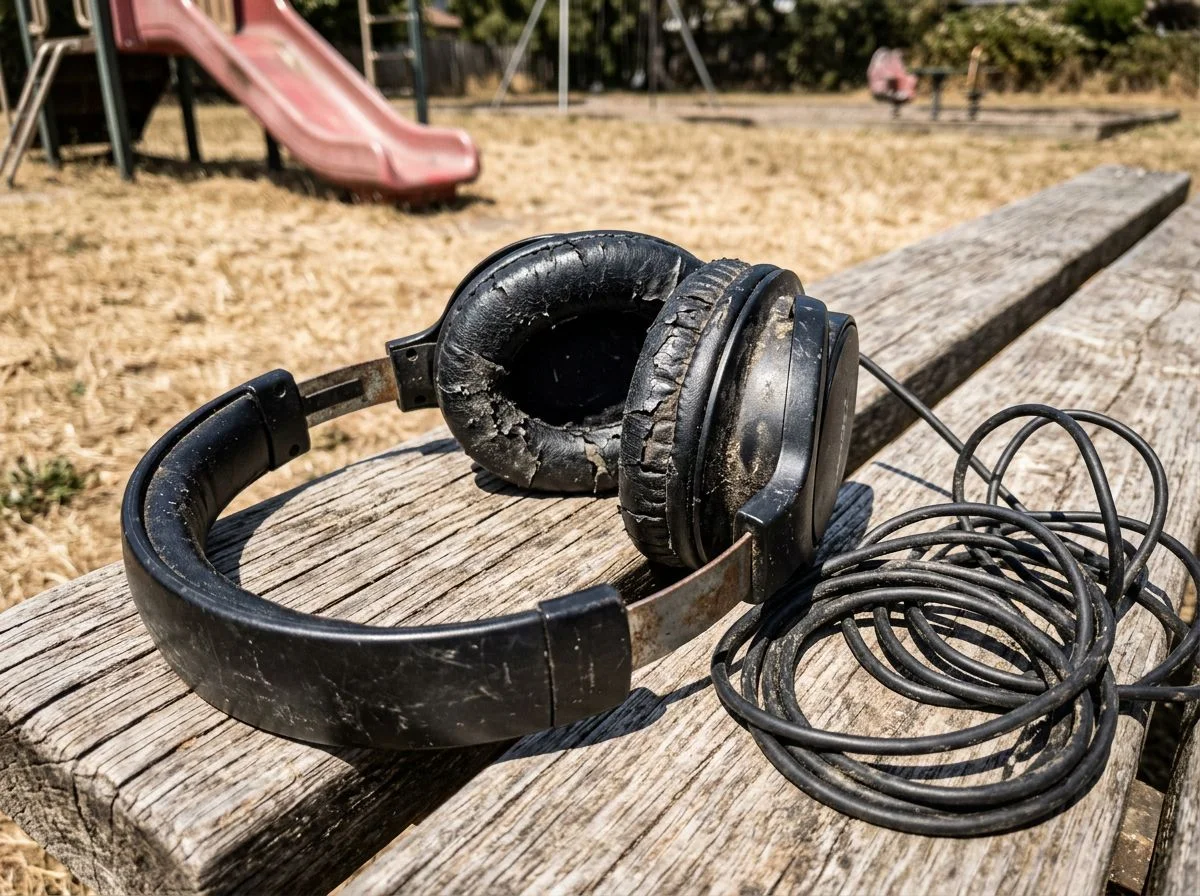
Your headphones fail you in summer because full-size over-ear muffs trap body heat and moisture against your skin. Their weight — typically 9 to 12 ounces, according to MetalDetector.com — turns a comfortable March accessory into an ear oven by July. The fix is a lighter, open design like backphones, which can weigh as little as 115 grams.
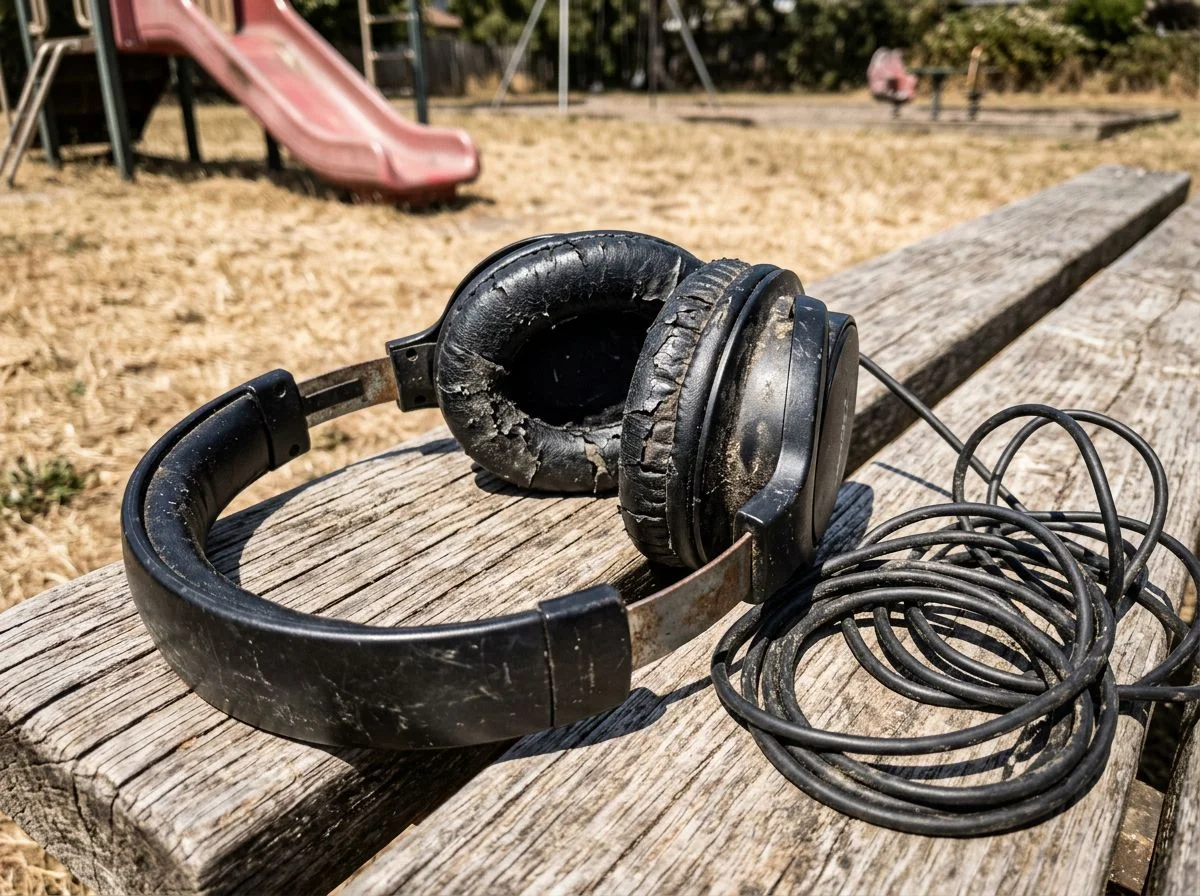
Last July, I was working a park near Sacramento — the kind of spot that’s been pounded for decades but still gives up a wheat penny or two if you’re patient. I’d been out about 45 minutes when I realized I wasn’t listening for signals anymore. I was listening to my own heartbeat, amplified inside those full-size muffs. Sweat was pooling around the ear pads. The headband felt like it was slowly tightening. I dug three pull-tabs in a row because I’d stopped paying attention to the tones — I just wanted the digging to be over so I could stand up and get some air on my neck.
That’s the thing about summer heat and headphones: it’s not just a comfort problem. It’s a performance problem. When your ears are hot and your head hurts, you swing faster, dig sloppier, and start rationalizing why you should pack it in early. High Plains Prospectors puts it simply: full-size headphones trap heat and moisture, while backphones prevent ears from feeling hot and sticky in the first place.
The weight difference matters more than you’d think. Full-size headphones run 9 to 12 ounces — that’s a lot of mass sitting on your head for a three-hour hunt. The Quest WireFree Lite backphones weigh just 115 grams, which is roughly 4 ounces. Less than half. Your neck notices the difference by hour two, and so does your concentration.
The rest of this guide covers what to swap in when the temperature climbs — and what to leave in the car.
What Summer Heat Does to Your Ears and Detecting
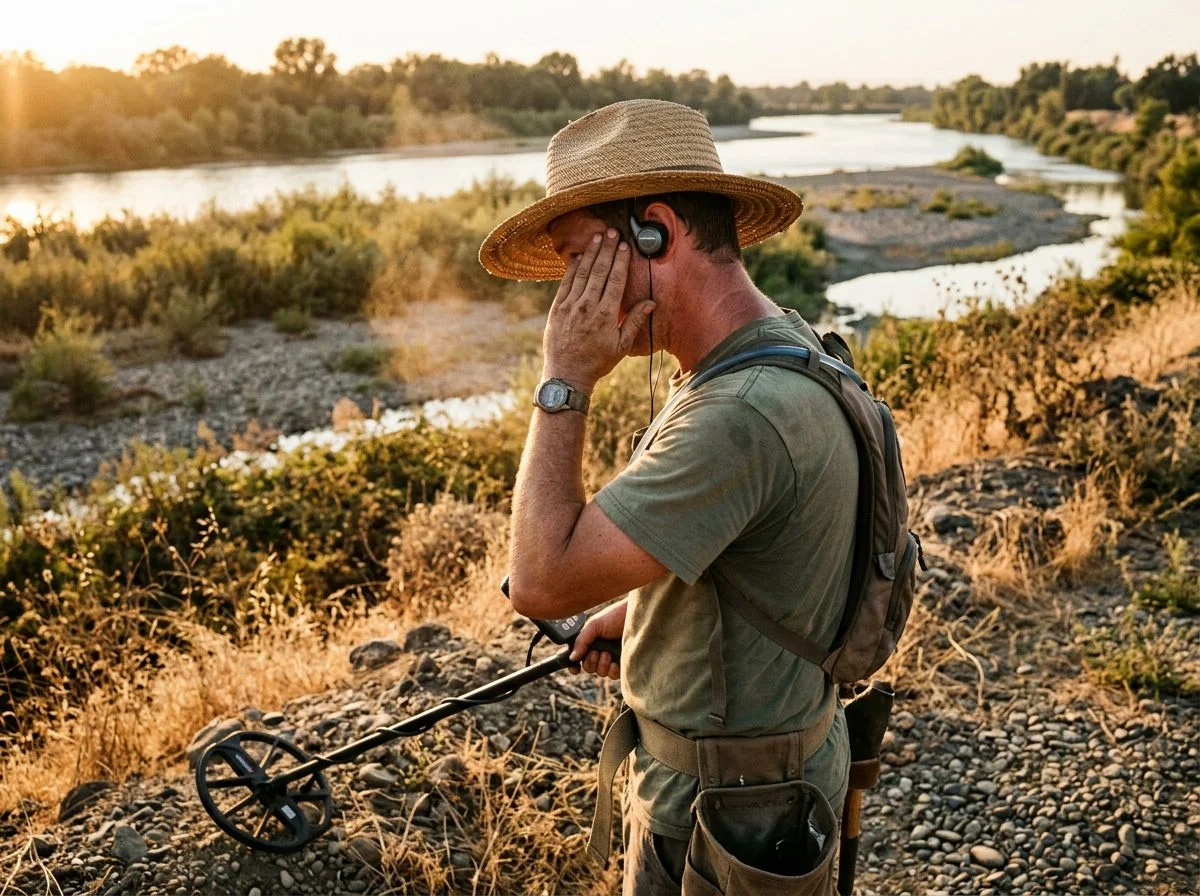
Summer heat doesn’t just make full-size headphones uncomfortable — it actively degrades your detecting. Trapped heat and moisture against your ears, combined with headband pressure and weight, causes a specific kind of fatigue that makes you miss faint signals and cut hunts short. The problem compounds quickly: after an hour or two in direct sun, the discomfort stops being a background annoyance and starts hijacking your attention.
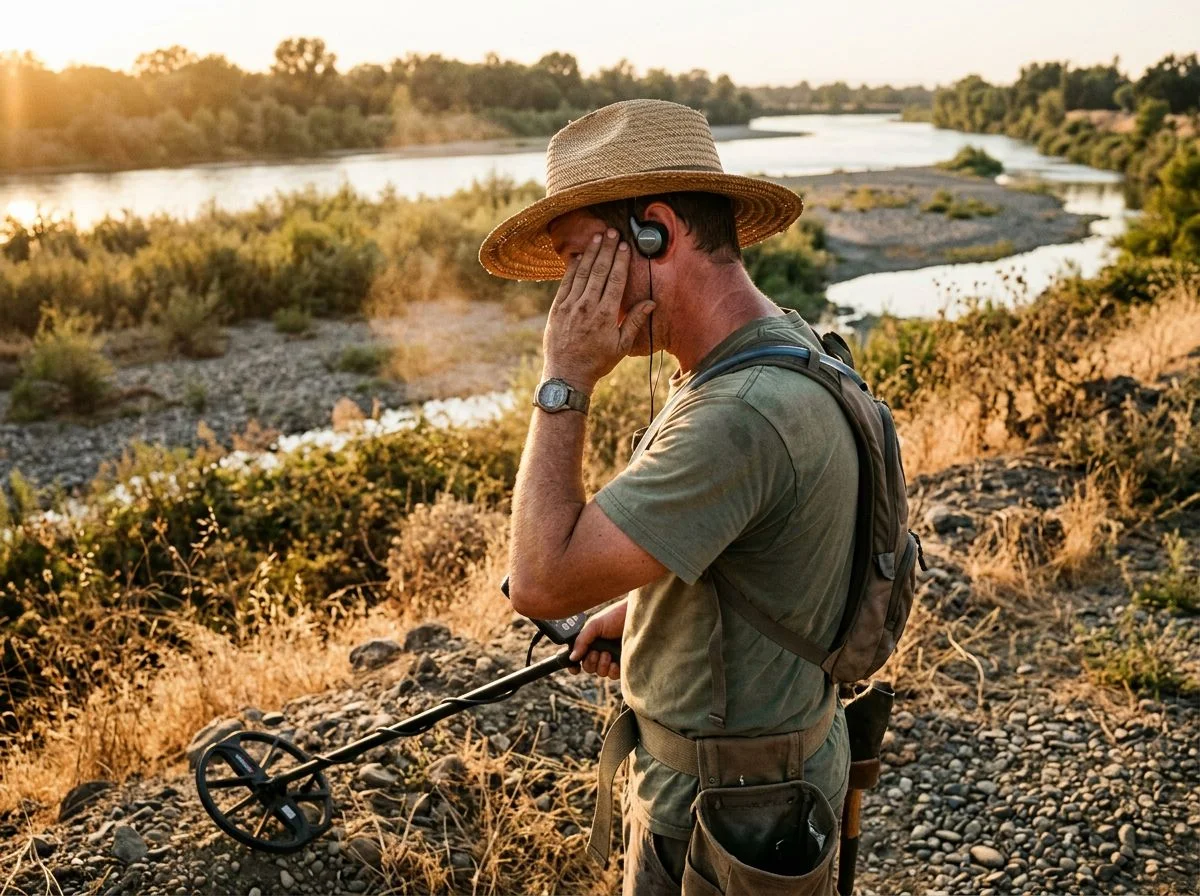
I learned this the hard way my first summer with a serious detector. I’d bought a pair of full-size muffs in March and loved them — the sound isolation was excellent, and I could hear every nuance of every tone. Then June hit. I was working a stretch of riverbank outside Sacramento, and about 90 minutes in, I realized something was wrong. I wasn’t hearing the detector anymore. Not really. I was hearing my own pulse, amplified inside those sealed ear cups. Sweat had soaked the pads. The headband felt like it was pressing directly into my skull. I dug a rusted bottle cap and called it a target, not because I’d misread the signal, but because I’d stopped caring what the signal actually was. I just wanted the hunt to end.
That’s signal fatigue, and it’s real. Serious Detecting confirms that over-ear cups trap heat and moisture, causing discomfort after an hour or two in direct sun. Once that sets in, your brain starts conserving energy by tuning out the very tones you’re out there to hear. You swing faster. You dig sloppier. You rationalize leaving early.
Weight and pressure make it worse. Full-size headphones run 9 to 12 ounces, per MetalDetector.com. The Quest WireFree Lite backphones, by comparison, exert just 2.5N of headband pressure — light enough that you forget they’re there. The difference isn’t trivial. It’s the difference between a three-hour productive hunt and a 45-minute bail-out.
Backphones vs. Over-Ear for Summer Detecting
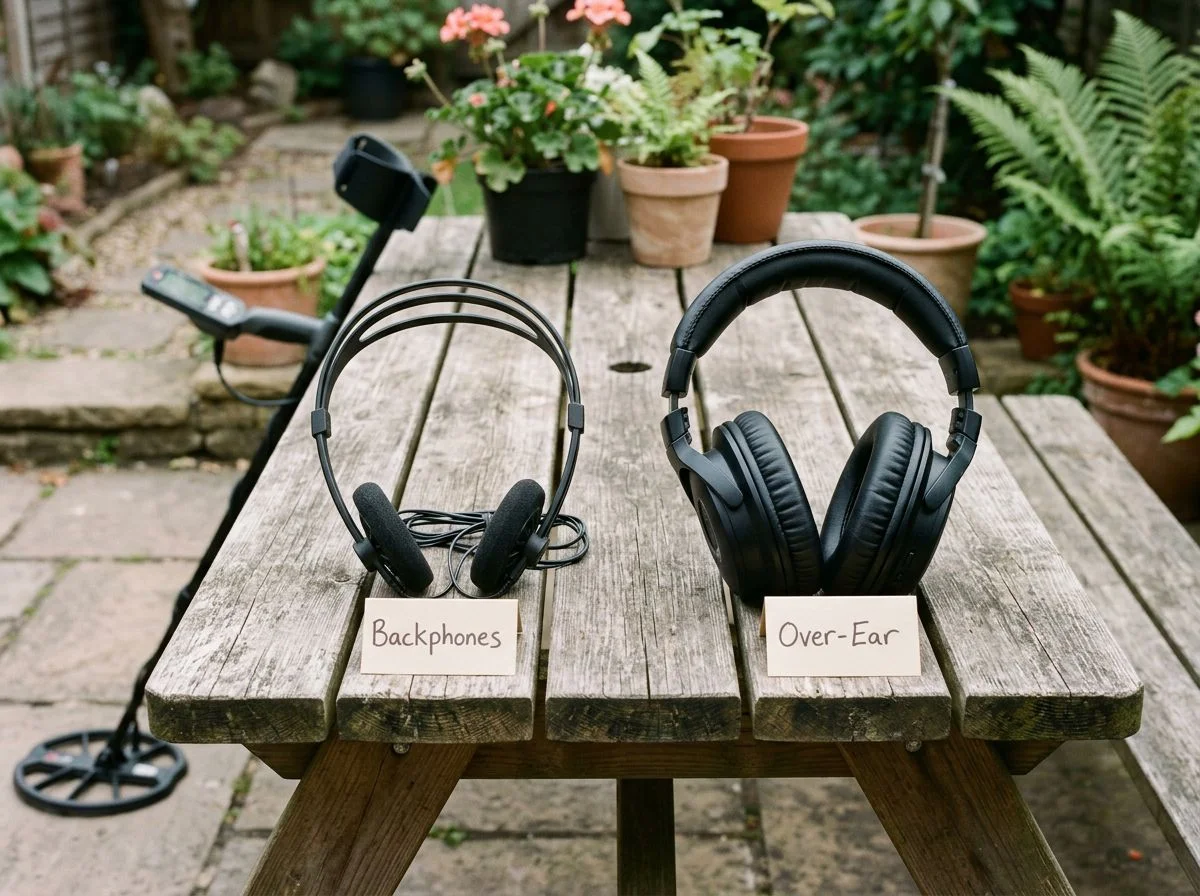
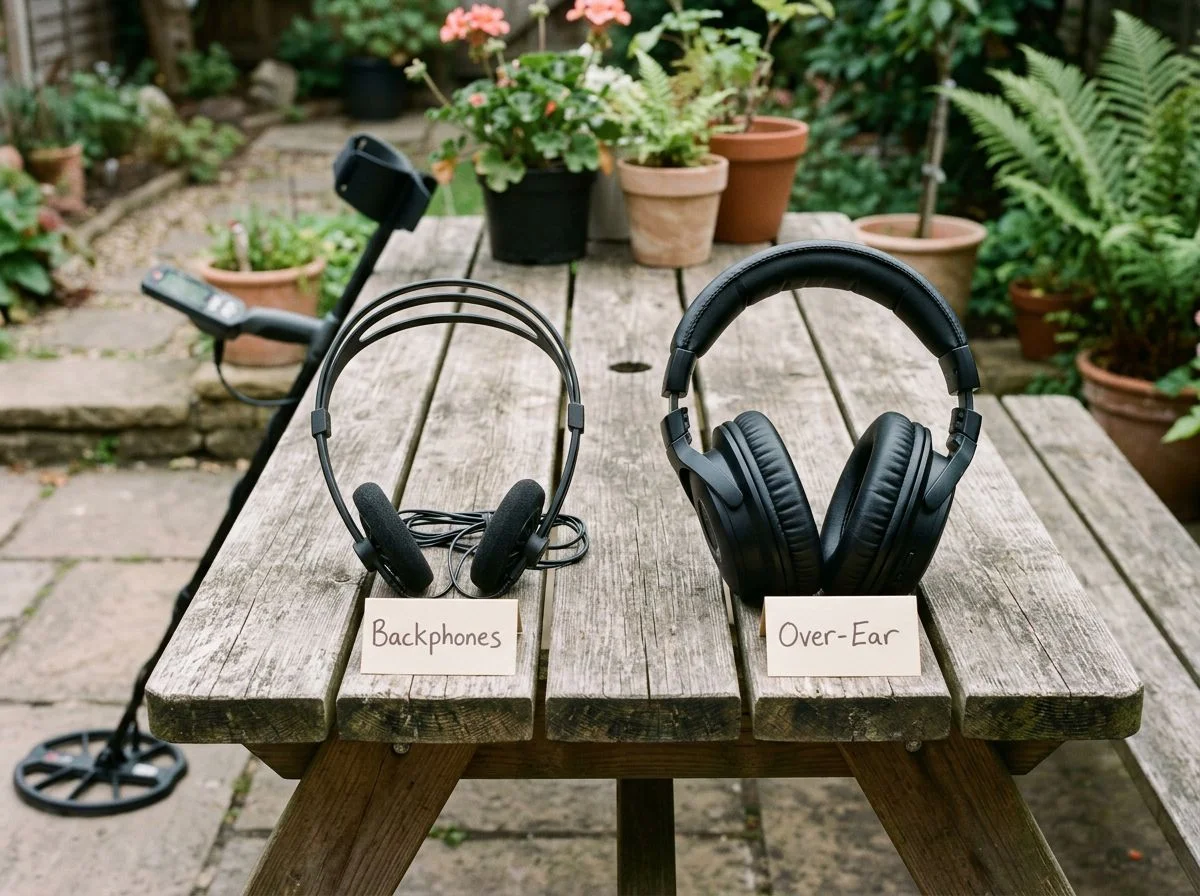
For summer hunting, I’ve landed on a split decision: backphones for calm park hunts where I want airflow and situational awareness, full-size over-ear muffs for windy beach days where noise isolation beats comfort. The right choice depends on where you’re swinging, not just how hot it is.
I made this call the hard way. Two summers ago, I spent a July morning at a Sacramento park — the kind with mature oaks and a playground that’s been there since the 1950s. I wore my full-size muffs out of habit. Forty minutes in, sweat was running down my neck and the ear cups felt like wet sponges. I pulled them off, wiped my ears with my shirt, and immediately heard a kid yell to his mom about a lost watch. That’s when it hit me: I’d been hunting blind to everything except my detector tones. Fine for a quiet field. Not great for a park with bikes, dogs, and people wandering behind me.
Backphones solve that. High Plains Prospectors points out that the slim behind-the-head band lightly covers your ears without sealing them, so air circulates and you stay aware of your surroundings. They also play nice with a full-brim hat — critical when you’re out in direct sun for three hours. I can wear my wide-brim straw hat, hear a kid on a bike coming up behind me, and still catch the faint warble of a deep wheat penny.
But backphones have a real weakness: wind. On a breezy beach, that open design lets gusts rush past your ears and bury the subtle tones you need to hear. High Plains Prospectors is blunt about it — minimal noise isolation in windy conditions. That’s when I switch to full-size muffs. Yes, they trap heat. Yes, my ears get sweaty. But when the surf is crashing and the wind is howling, I need that seal to hear anything at all. The trade-off is worth it for a two-hour beach session where missing a faint signal means missing a ring.
So here’s my current setup: backphones for summer park hunts and any inland spot where I want airflow and awareness. Full-size over-ear for windy beach hunts where isolation wins. I keep both in the truck. The deciding factor isn’t the temperature — it’s the wind and the environment. If I can hear the world around me without sacrificing tones, I go backphones. If the world is louder than my detector, I go full-size and accept the sweat.
That’s the real answer to the showdown: it’s not either/or. It’s a situational choice, and once you’ve hunted both ways in the heat, you’ll know exactly when to swap.
Lightweight Metal Detecting Headphones That Stay Cool
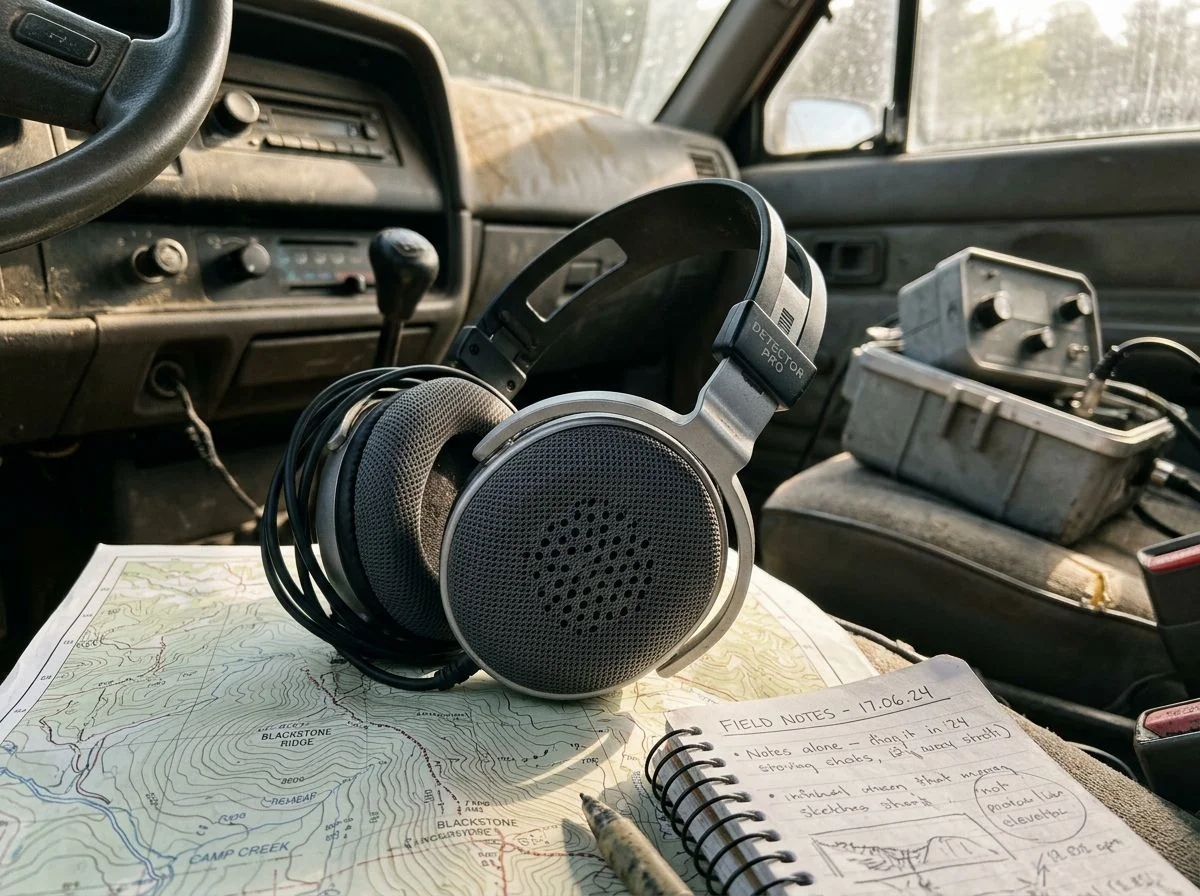
If you want to keep detecting through July and August, two specific lightweight options stand out: the Quest WireFree Lite backphones for universal wireless freedom, and the XP Deus II Stereo Backphone Headband for Deus owners who already have the WS6 ST or WSA ST modules. Both prioritize airflow and minimal weight over sound isolation — exactly what summer demands.
I tested the Quest WireFree Lite on a 95-degree Sacramento afternoon last August, working a grassy median strip near an old trolley line. Three hours in, my shirt was soaked through and my hat brim was dripping, but my ears were fine. Not just tolerable — actually fine. At 115 grams, these things barely register. The on-ear design sits against your ears without sealing them, so what little breeze existed could still circulate. Phase Technical lists the specs that matter for summer: 10-hour battery life, 0.06-second latency, 111 dB SPL, and splash-proof construction. The 2.5N headband pressure means no headache after hour two — which, trust me, is a bigger deal than it sounds.
The wireless setup is the real advantage. The 2.4GHz transmitter plugs into any detector with a standard 1/4-inch jack, so you’re not tethered to the machine. I could set the detector down, dig a target, and stand up without yanking a cord or wrestling the headphones off. Splash-proof matters too — summer detecting means sweaty hands, and you’ll be adjusting the headband constantly.
If you’re already in the XP Deus ecosystem, the XP Deus II Stereo Backphone Headband is the purpose-built answer. Serious Detecting notes that Deus II owners specifically choose this headband for warm-weather hunts and crowded parks. It’s compatible with the WS6 ST and WSA ST modules, and the behind-the-head design keeps air moving around your ears while staying secure during digging and bending. The open-ear design also means you’ll hear a kid on a bike or a dog coming up behind you — something sealed muffs completely block out.
Both options share the same philosophy: less contact, less weight, less trapped heat. Neither will give you the sound isolation of full-size muffs, but on a 95-degree day, that trade-off isn’t a compromise — it’s the whole point.
Wireless Lightweight Metal Detecting Headphones in Heat
Wireless headphones aren’t a luxury in summer — they’re a genuine performance upgrade. You can set your detector down, dig a plug, and stand up without wrestling a cord or fighting your own gear. Once you go wireless in the heat, you’ll wonder why you waited so long.
I made that discovery on a July morning about four years ago, working an old picnic grove outside Sacramento. My wired headphones kept snagging on low branches every time I bent to dig, and the cord would pull the detector off-balance when I set it down to retrieve a target. Frustrating, but manageable — until I stood up fast after digging a deep signal and yanked the jack clean out of the machine. I nearly fell backward into my own hole. Not my finest moment.
The next week, I borrowed Tom’s wireless setup and never looked back. The difference was immediate: I could dig without threading the detector through my legs, step away to grab my pinpointer without unplugging anything, and move freely under trees without that constant tug at my ears. In 90-degree heat, that freedom matters more than you’d think — every small annoyance compounds when you’re already sweating through your shirt.
The catch is that not all wireless is created equal. Hidden History Hunters highlights the Quest WireFree Pro, a system that pairs wireless headphones with a transmitter that plugs into any detector’s audio output — effectively converting any wired machine into a wireless one. That’s the setup that finally convinced me, because I didn’t need a new detector to get the benefit.
Standard Bluetooth is a known problem here. The latency — that tiny delay between the coil hitting a target and the tone reaching your ears — throws off your swing rhythm and makes pinpointing feel sluggish. Dedicated low-latency systems like the Quest’s 2.4GHz transmission solve that. You hear the signal the instant the coil passes over it, same as wired, but without the tether.
In summer, that’s the whole game: staying comfortable enough to hunt longer, without sacrificing the split-second audio feedback that separates a good detectorist from a frustrated one.
Staying Aware of Your Surroundings in Summer
Backphones aren’t just about staying cool — they’re about staying alive. Open-ear designs let you hear what’s happening around you while you hunt, and in summer that means hearing the things that can hurt you before they do. Full-size muffs seal you off from the world; backphones keep you in it. That trade-off matters more in July than any other month.
I learned this lesson on a June afternoon near Folsom Lake, working a rocky drainage line where I’d found some old mining debris. I was wearing a pair of open-ear backphones — the kind that sit lightly against your ears without sealing them — when I caught a sound that wasn’t coming through the detector. A dry, buzzing rattle, maybe ten feet to my left. I froze, turned my head slowly, and there it was: a western diamondback, coiled under a manzanita bush, telling me exactly what it thought of my presence. I backed away, gave it a wide berth, and moved to a different section of the drainage. If I’d been wearing full over-ear muffs, I probably wouldn’t have heard it until I was close enough to make it really angry.
High Plains Prospectors flags this explicitly: backphones allow users to maintain awareness of their surroundings, which matters when you’re working remote terrain. And Serious Detecting notes that open-ear designs are specifically recommended for crowded parks, where you need to hear bikes, dogs, kids, and the occasional “hey, what are you doing?” from a curious passerby. Summer concentrates all of these hazards — snakes, other people, sudden weather shifts — into the same season when you’re most tempted to seal yourself off from the heat. Don’t. The best summer headphones are the ones that let you hear both your detector and your surroundings. That’s not a compromise; it’s the point.
Sweat, Materials, and Keeping Headphones Working
Sweat kills headphones faster than heat does. Summer detecting means salt, moisture, and sunscreen working their way into every seam and pad, so material choice and a simple post-hunt routine matter more than you’d think. Choose gear built for moisture, and clean it before you store it.
The first thing I check on any summer headphone is how it handles moisture. The Quest WireFree Lite is splash-proof, which sounds modest until you’ve watched sweat drip off your jawline onto your gear for three hours straight. That rating means it shrugs off the kind of incidental moisture that ruins cheaper electronics. For serious water work — beach hunting, shallow surf, the kind of detecting where you’re wading more than walking — the Gray Ghost Amphibian II at $169.95 is built specifically for wet environments. It’s overkill for a dry park hunt, but if you’re working a lake shoreline in August, it’s the difference between headphones that survive the season and headphones that die in July.
My maintenance routine after a summer hunt is simple but non-negotiable. I wipe down the ear pads and headband with a damp cloth, then a dry one. If it was a particularly sweaty session, I’ll leave the headphones out overnight — never in the car, never in a sealed bag — so the moisture has a chance to evaporate before I toss them in my gear tote. Salt buildup is the real killer, especially if you hunt anywhere near the coast. Wipe it off the same day, every time. It takes two minutes and your headphones will last years longer.
Common Questions About Summer Detecting Headphones
These are the questions I actually get asked at club meetings every June — the same ones that come up when someone’s been sweating through their third hunt of the month and finally decides to fix the problem. Short answers, no fluff.
“Will regular Bluetooth earbuds work with my detector?” Probably not well. Standard Bluetooth adds latency — sometimes 150-200 milliseconds — and in detecting terms, that’s the difference between your coil passing over a target and your ears hearing it a half-step later. You’ll dig ghost signals or miss faint ones entirely. The Quest WireFree Lite uses 2.4GHz wireless with 0.06-second latency, which is why dedicated detecting headphones exist in the first place. If you’re going wireless, stay under 100 milliseconds or stay wired.
“Do I need headphones if my detector has a built-in speaker?” You need headphones. The speaker drains your battery faster, alerts every kid in the park that you found something, and buries the faint, deep signals that actually matter. This matters more in summer, when you’re already fighting background noise.
“Are backphones compatible with my machine?” Most backphones use a standard 1/4-inch jack, so they’ll work with Garrett, Minelab, Nokta, and XP units that have that socket. The XP Deus II backphone headband is the exception — it’s designed specifically for the WS6 and WSA modules. Check your detector’s output before you buy.
What I Actually Use in July
Right now, for summer park and field hunts, I’m running the Quest WireFree Lite as my daily driver — 115 grams, 10-hour battery, splash-proof, and the backphone design means I can wear my wide-brim hat without fighting the headband. When I’m near water, the Gray Ghost Amphibian II comes out.
The WireFree Lite earns its spot for three reasons. First, the weight — at 115 grams, I forget they’re on after 20 minutes, and that’s the whole point. Second, the 2.4GHz wireless with 0.06-second latency means I’m not missing faint deep signals while I’m untethered from the detector. Third, the backphone design keeps air moving around my ears, so a three-hour July hunt doesn’t end with me bailing out at the 45-minute mark like it used to with my full-size muffs.
The Gray Ghost Amphibian II is my situational second. At $169.95, it’s not cheap, but when I’m working a lake shoreline or beach in August, the full ear-surround muffs and water-ready build mean I’m not gambling with my audio gear. For dry park hunts, it stays in the car — overkill for a playground tot lot.
That’s my summer setup. Two pairs, two jobs, no sweat-soaked ear cups, and no more hunts cut short because my headphones gave up before I did.

My name is Paul and I am the founder of Detector For Metal, a dedicated resource for metal detecting enthusiasts seeking to uncover historical treasures and connect with the past using the latest technology. As a stay-at-home dad and family man, I’ve found metal detecting to be the perfect hobby that combines family adventure with historical learnings for the whole family.
As a father, I’m deeply committed to passing on this hobby to the next generation of detectorists, starting with my own children. I share advice on everything from metal detecting with kids to exploring the top 10 metal detecting sites you never thought about. My methodical approach to the hobby goes beyond the thrill of discovery—it’s about creating family traditions while preserving history and sharing the stories of those who came before us.