Table of contents
- Why Metal Detecting Fence Lines Pays Off
- Active vs. Historic Fence Lines for Detecting
- Metal Detecting Fence Lines Without False Signals
- How Border Patrol Sign Cutting Works
- Why Old Fence Lines Create an Iron Halo
- Can You Detect Near Active Border Fences?
- How to Find Historic Fence Lines Worth Hunting
- Fence Line Detecting Questions Answered
Detecting along a barbed wire fence line — active or historic — means managing two separate signals. You’ve got the wire’s electromagnetic interference. And you’ve got the physical signs of crossing left on the ground beneath it. The fence itself is your best detection tool for metal detecting fence lines. Every crossing leaves a signature in bent barbs, displaced soil, and discarded metal that technology alone won’t catch.
Start by reading the wire before you ever swing a coil. On an active patrol line, look for fresh breaks and bent barbs. Watch for sections where the wire has been lifted and re-tied. Border Patrol agents call this “sign cutting,” and the sign never lies. Even when cameras and sensors get fooled, the physical disturbance tells you where someone crossed and how recently.
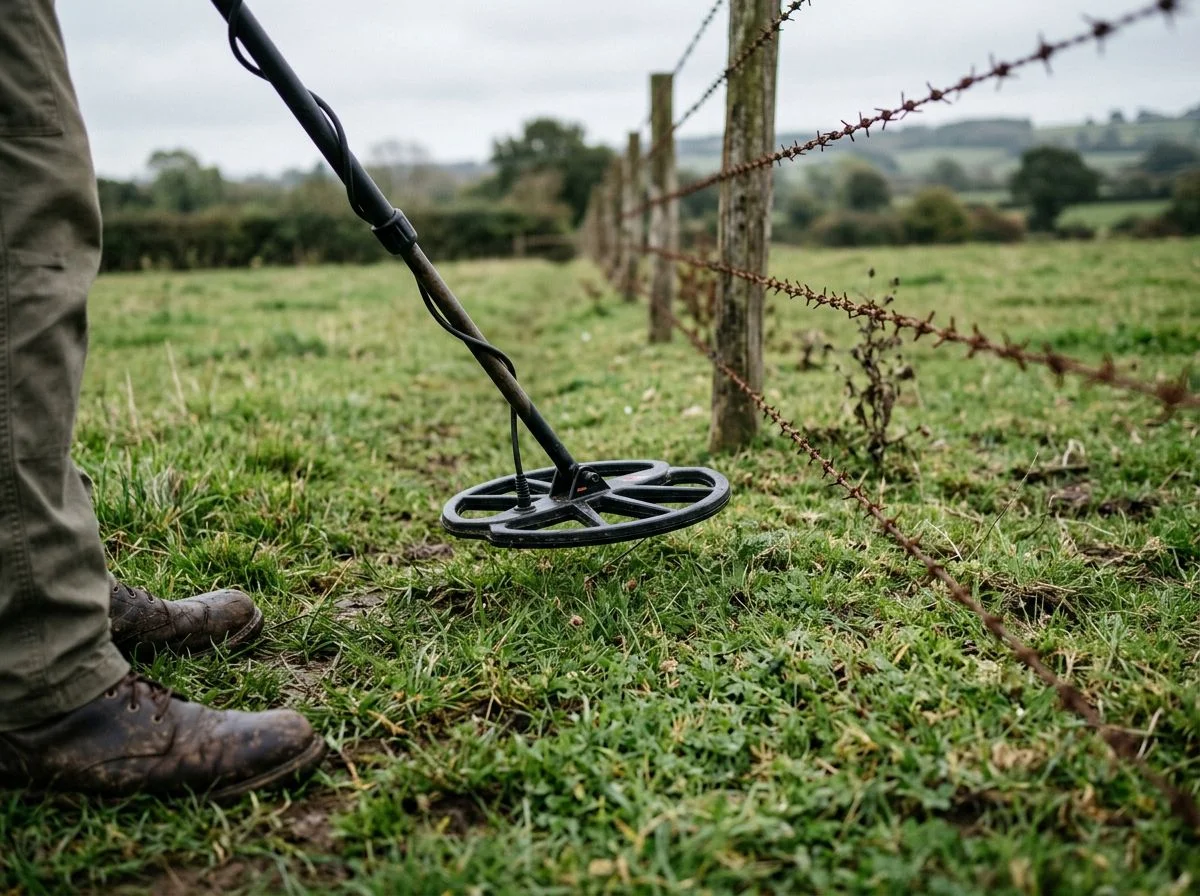
On historic lines, the wire itself is often your biggest interference problem. Hundreds of yards of rusted wire creates a massive electromagnetic halo that masks small targets. The fix is counterintuitive: don’t hug the fence. Work a parallel line 10 to 15 feet out. The wire’s EMI drops off there, but the human traffic pattern — dropped coins, buttons, tools — still concentrates. Surveyors dealing with buried property pins along old fence lines hit this exact problem constantly. The consensus is the same: back off the wire and use a smaller coil.
One more thing worth knowing: rusted wire sheds iron fragments into the soil over decades. This creates a “halo” of ferrous trash that will drive your detector crazy if you run discrimination too low. Crank up your iron rejection. Dig only the repeatable, high-tone signals. The good stuff is there. It’s just hiding under a century of wire droppings.
Why Metal Detecting Fence Lines Pays Off
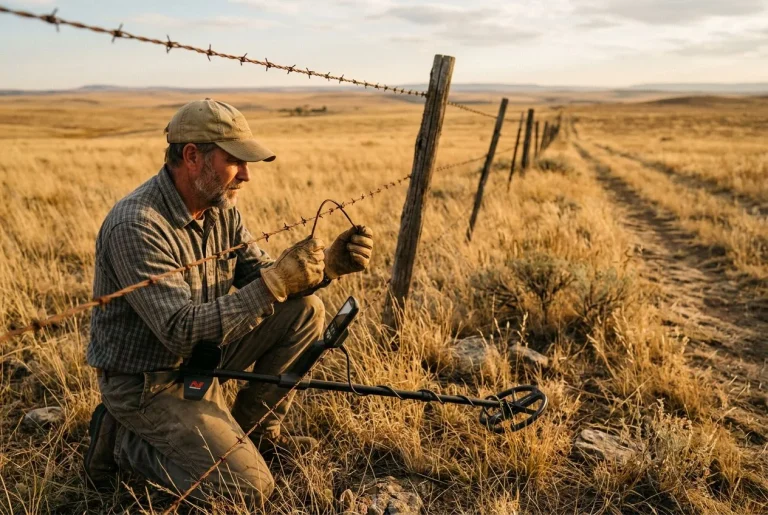
The most valuable detection tool for metal detecting fence lines isn’t a metal detector or a drone. It’s the fence itself. Every crossing leaves a signature in bent barbs, displaced soil, and discarded metal that technology alone won’t catch. The wire is a recording device. Once you learn to read it, the ground beneath it becomes a map.
Here’s the counterintuitive part: most detectorists treat barbed wire as an obstacle. Something to avoid. A source of electromagnetic interference that ruins an otherwise good hunt. But that’s exactly backwards. The fence is what makes the ground worth hunting in the first place.
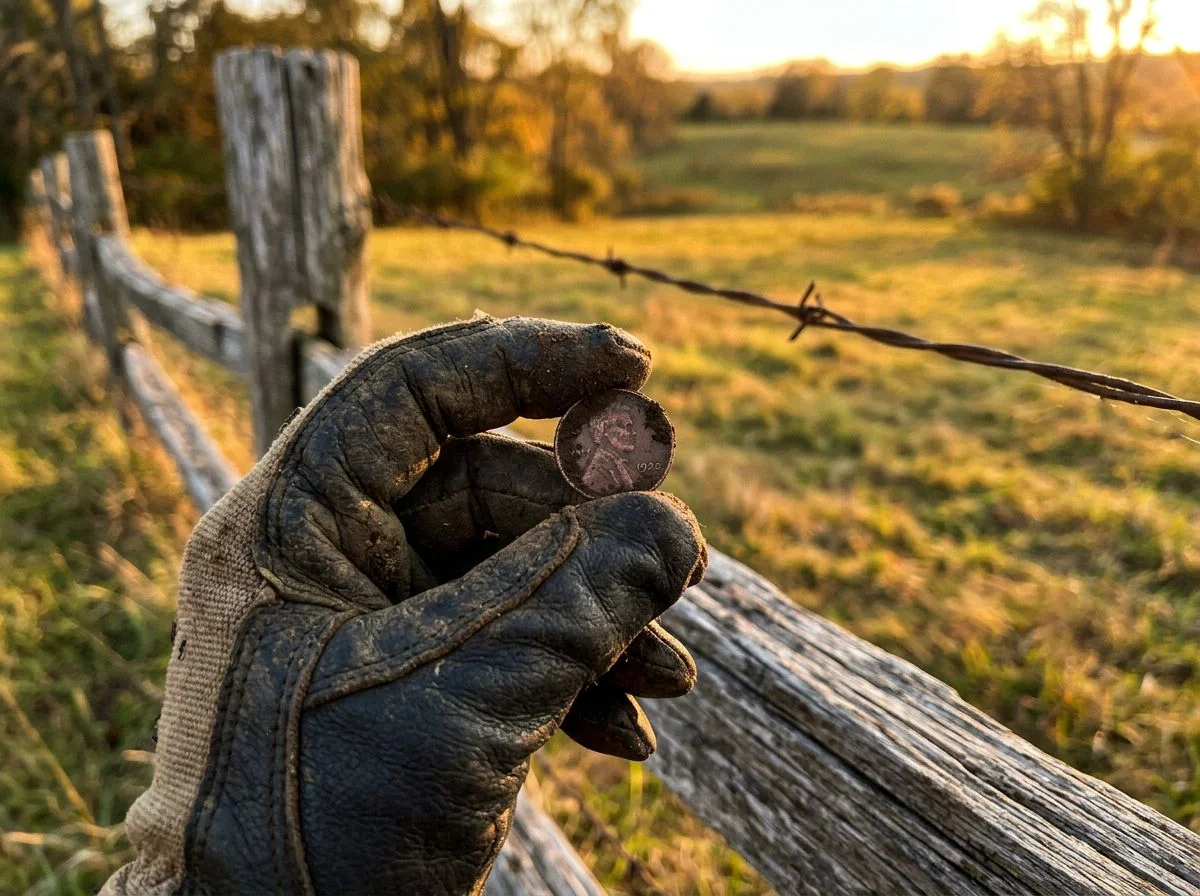
Think about what a fence line actually is. It’s a linear corridor that has funneled human movement for decades — sometimes over a century. Every person who crossed that wire had to touch it, climb it, cut it, or crawl under it. And every one of those actions left something behind. A bent barb. A torn glove. A dropped coin while reaching for the top strand. A pocket knife that slipped out mid-climb. The fence concentrates human activity into a line. And lines are where detectorists find things.
Border Patrol agents figured this out generations ago. They call it “sign cutting,” and the sign never lies. Even when cameras get fooled and sensors fail, the physical disturbance on the wire and the ground tells you exactly where someone crossed and how recently. Seasoned agents trust the sign over technology every time. A bent barb doesn’t glitch. A footprint doesn’t need a software update.
The proof isn’t theoretical. In December 2015, agents in Lordsburg, New Mexico combined traditional sign-cutting with night-vision surveillance. They seized 580 pounds of marijuana worth $464,800 in a single day. Two separate groups. Two separate crossings. Both detected because the agents knew how to read the fence line and the ground around it — not because a sensor pinged them.
Now, you’re probably not hunting smugglers. But the principle transfers directly to metal detecting fence lines. A historic ranch fence line from 1910 saw the same kind of concentrated human traffic: ranch hands, travelers, kids sneaking through, surveyors marking property corners. Every one of them left something. The wire has been recording it all for a hundred years.
The trick is learning to read what the fence is telling you before you ever power on your detector. Look for the signs of crossing — the places where the wire has been lifted, tied, or broken. Those are your high-probability zones. The fence narrows your search area from acres to a line. The signs on the wire narrow it further to specific points. That’s not an obstacle. That’s a gift.
Active vs. Historic Fence Lines for Detecting
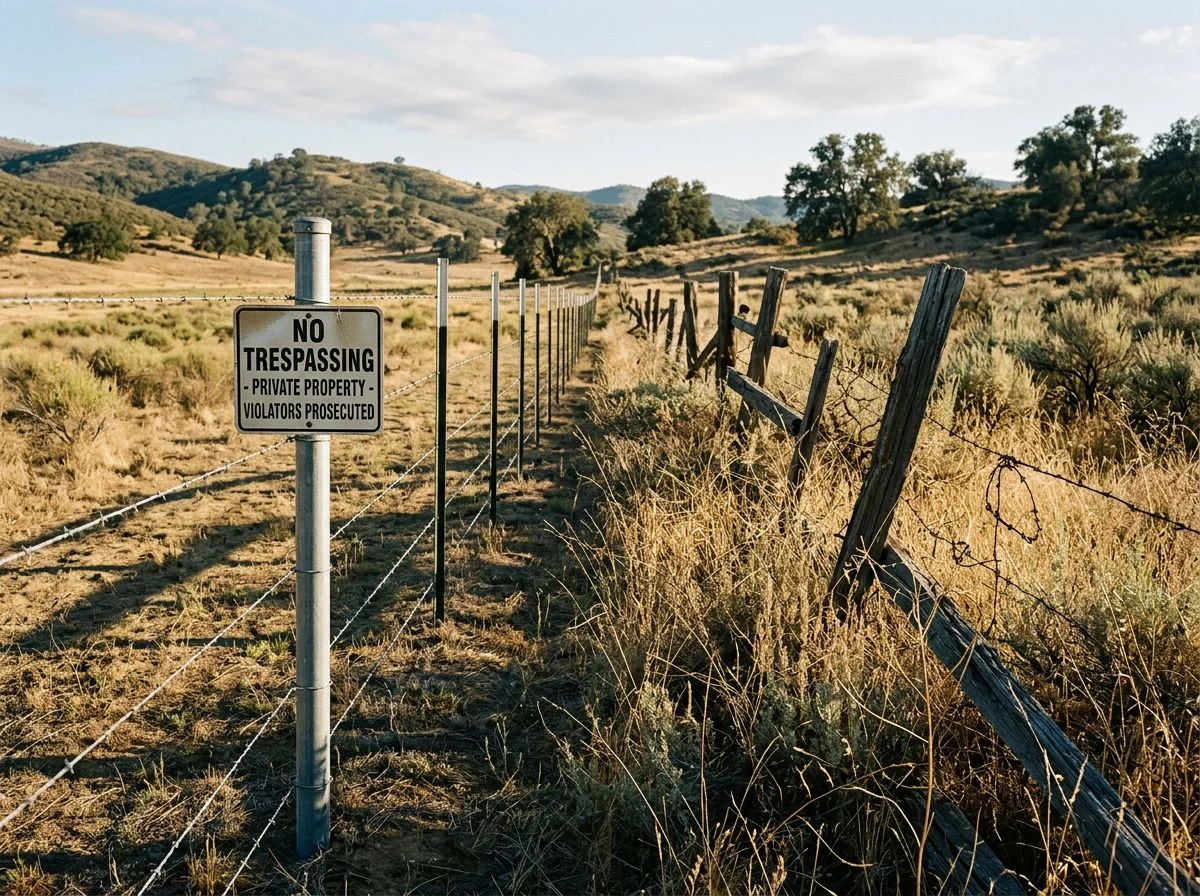
An active patrol line is a security zone. Cameras, sensors, and legal restrictions are watching your every move. A historic fence line is a relic site where the wire itself has become part of the target field. Same barbed wire, completely different rulebook for metal detecting fence lines.
I learned this the hard way near Auburn a few years back. Tom and I had been researching an old ranch boundary that showed up on a 1912 plat map. When we finally found it, the fence had collapsed decades ago. The wire wasn’t standing anymore. It had rusted into the soil in long, tangled ribbons. Every few feet there was a little bloom of iron fragments where a strand had finally given up and disintegrated. My Equinox was screaming. I almost packed it in after twenty minutes of digging nothing but wire droppings.
Then I backed off about twelve feet and hit a clean high tone. Seated Liberty dime, 1877. Then another. Then a third. The coins were sitting right at the edge of the wire’s ferrous halo. The EMI dropped off there, but the human traffic pattern still concentrated. That site ended up producing five seated dimes and a handful of Indian Heads over three weekends. If that had been an active patrol zone, I’d have never gotten within a hundred yards of it without a conversation I didn’t want to have.
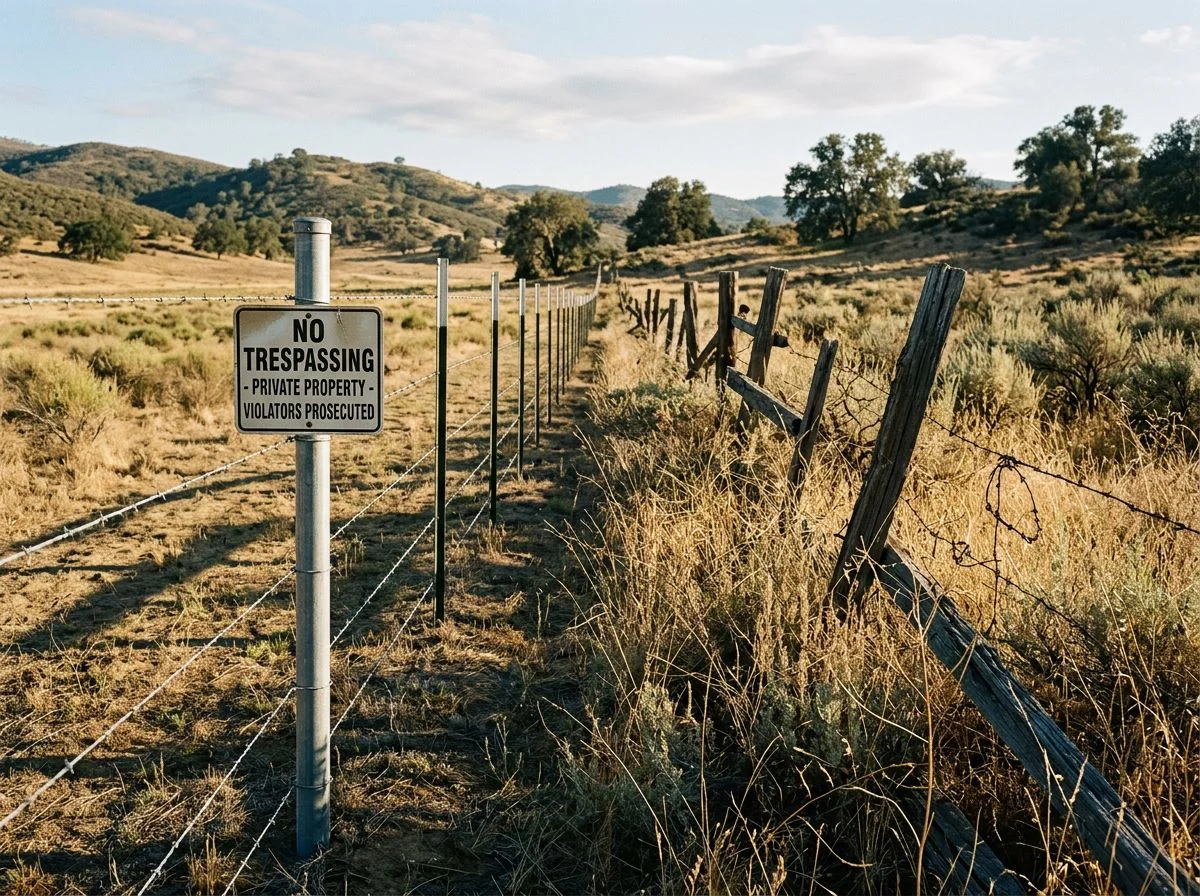
And that’s the real divide. Most people picture the border as a continuous wall. But the “wall” is actually a patchwork. Huge stretches are nothing more than legacy barbed wire, some of it decades old. Meanwhile, CBP’s own description of its surveillance infrastructure reads like a defense contractor’s catalog. Integrated surveillance towers. Persistent surveillance systems. Mobile camera units. Subterranean sensors. An active patrol line isn’t just wire. It’s a monitored perimeter with layers of technology watching the ground you’d want to swing a coil over.
The practical difference comes down to three things: legality, interference, and target profile. On an active line, you’re dealing with restricted access, and the targets are modern — dropped tools, snipped wire fragments, lost pocket items from maintenance crews. On a historic line, you’re hunting the accumulated losses of a century or more. Your biggest enemy is the wire’s electromagnetic signature bleeding into everything around it. Treat one like the other and you’ll either get a trespassing citation or a pouch full of iron trash.
Metal Detecting Fence Lines Without False Signals
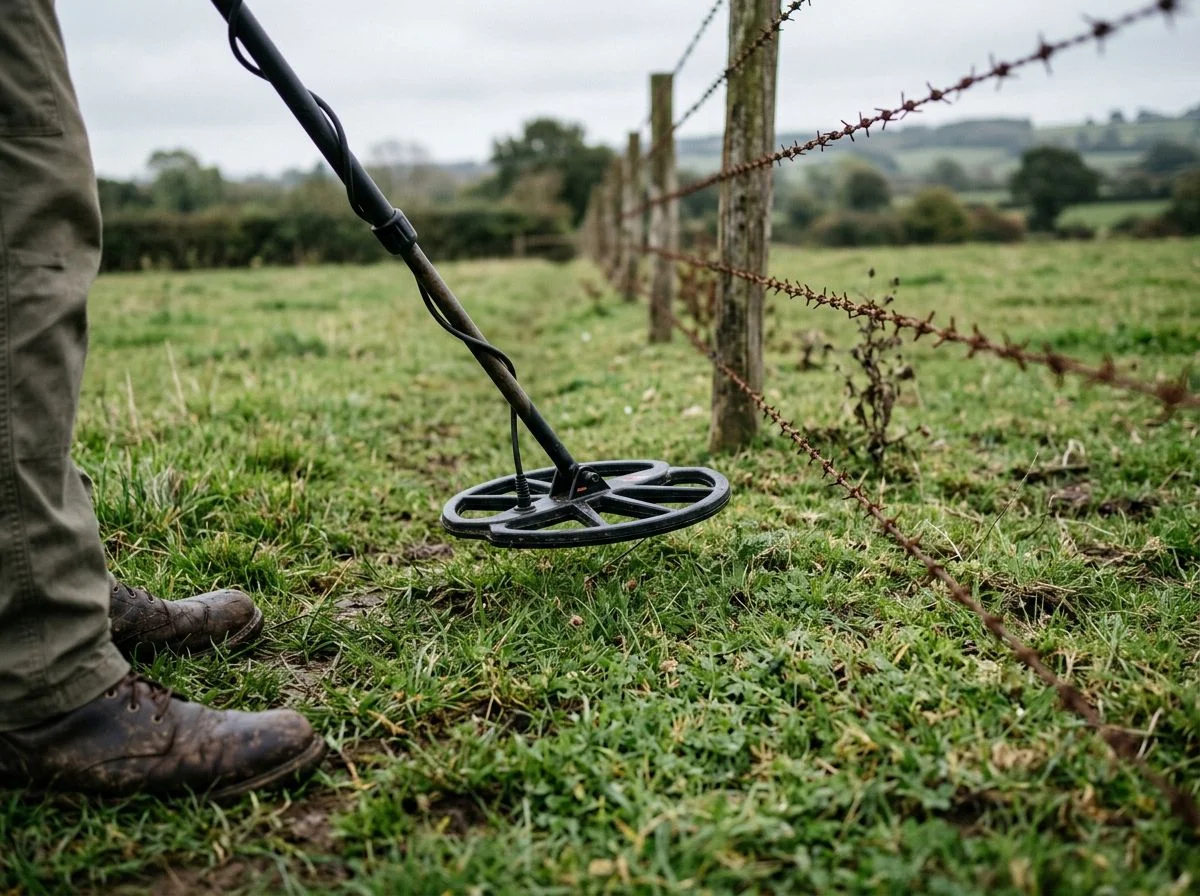
The short answer: a VLF detector with adjustable discrimination and sensitivity will get you through most metal detecting fence lines hunts. But if you’re hunting for buried steel pins or deep iron targets, a magnetic locator like a Schonstedt will do what your VLF simply can’t. The key isn’t buying more gear. It’s knowing which tool to reach for and how to dial it in.
Here’s the thing most people don’t realize until they’re standing next to a hundred yards of rusted wire: your detector isn’t broken. It’s doing exactly what it was designed to do — reporting every piece of metal it sees. The problem is that a barbed wire fence is essentially one continuous metal target stretched across your entire search area. A standard VLF detector reads that as a wall of ferrous signal. Every non-ferrous target hiding near it gets masked.
That’s where discrimination comes in. MetalDetector.com’s breakdown of ferrous versus non-ferrous discrimination is worth reading if you’re new to this. But the practical version is simple. Ferrous targets are iron and steel — the stuff your fence is made of. Non-ferrous targets are brass, copper, silver, lead, and gold — the stuff you actually want to find. When you raise your discrimination, you’re telling your detector to ignore the iron and only report on the good stuff.
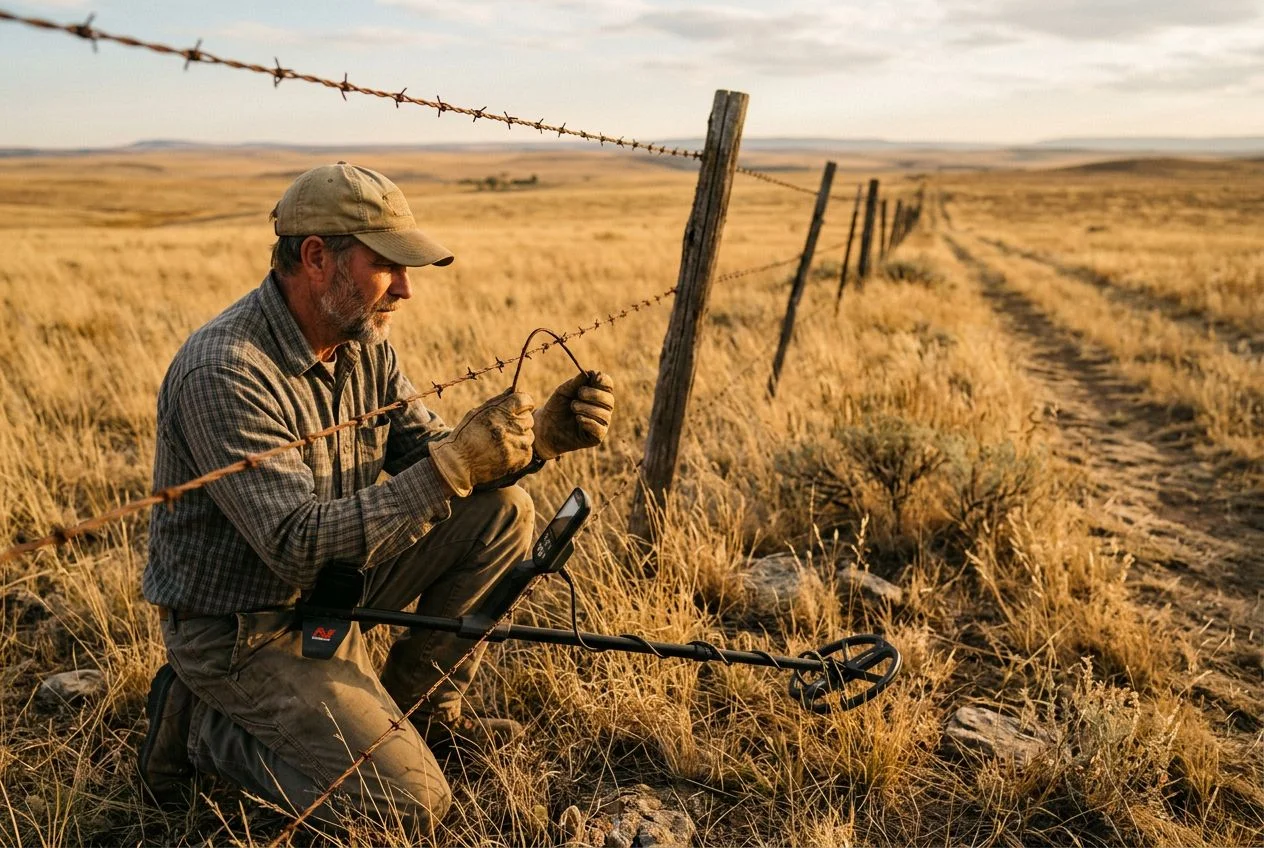
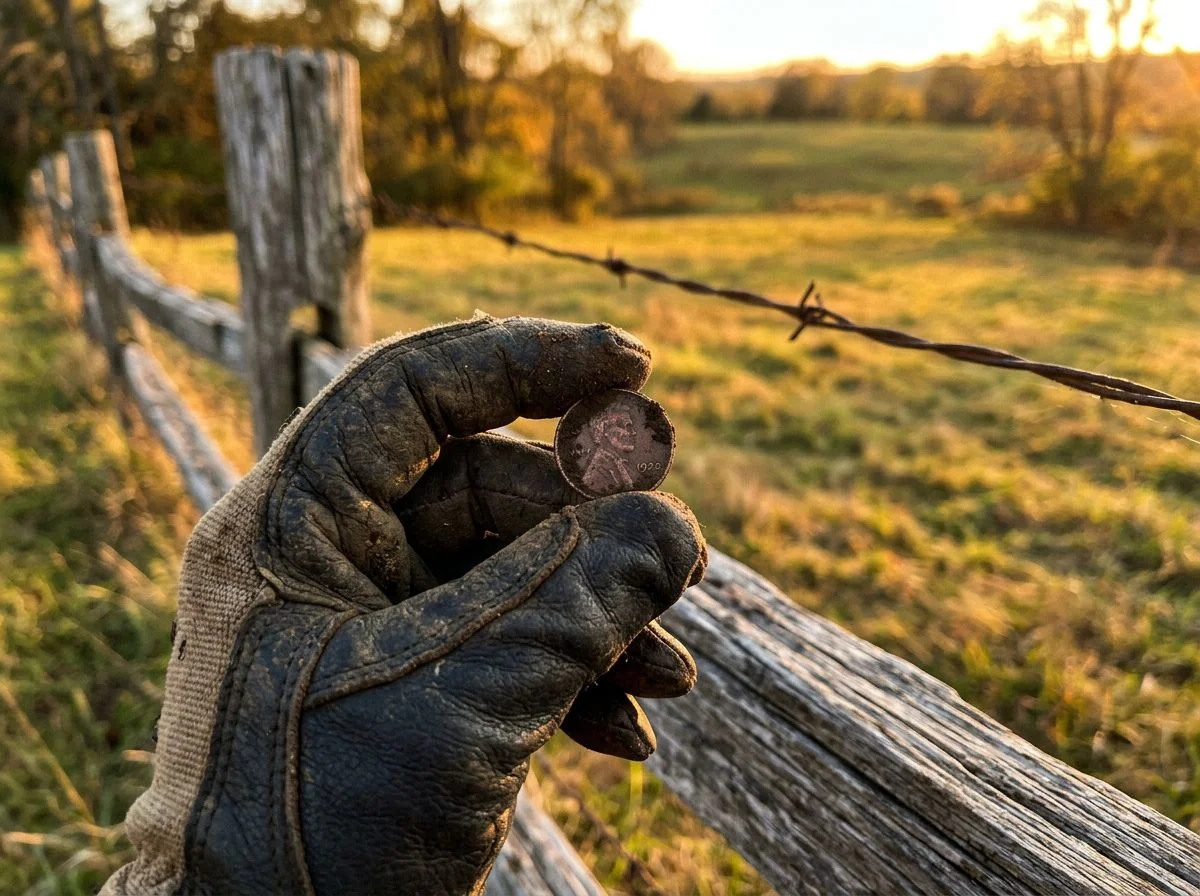
I watched this save a hunt last spring. Tom and I were working an old ranch boundary near Placerville. The fence line was still standing — four strands of rusted barbed wire running maybe 300 yards. My Equinox was useless at first. Every swing produced a wall of low iron grunts. I dropped the sensitivity from 20 down to 12. I bumped the discrimination up to reject everything below a zinc penny. The difference was immediate. The constant chatter faded into a background murmur. Within ten minutes I pulled a 1917 wheat penny from about six inches down, maybe four feet off the wire. Without those adjustments, I’d have never heard it over the fence noise.
But here’s where it gets interesting. If you’re hunting for property markers or old survey pins along a fence line — the kind of deep steel targets that VLF detectors struggle with anyway — the surveyors on the r/Surveying thread will tell you to put the metal detector down and pick up a magnetic locator. A Schonstedt doesn’t care about brass, aluminum, or thin wire. It responds to magnetic fields. That means it locks onto deep iron and steel pins while completely ignoring the non-ferrous trash that drives a VLF crazy. Garrett’s guide to locating property markers recommends a similar approach: use the right tool for the specific target, not just the tool you already own.
So the real answer to “what gear works along barbed wire” is twofold. For coins, relics, and general detecting, a VLF with aggressive discrimination and slightly reduced sensitivity will cut through the noise. For deep ferrous targets like survey pins, a magnetic locator is the only thing that makes sense. I own both. I use both. And I’ve stopped trying to force one tool to do the other’s job.
How Border Patrol Sign Cutting Works
Sign cutting is the practice of reading physical disturbances — footprints, displaced soil, broken vegetation, disturbed wire — to track movement across terrain. Long before drones and ground sensors, Border Patrol agents learned that every crossing leaves a signature. The maxim they still teach is simple: the sign never lies.
The technique has four primary applications that go well beyond chasing smugglers. ITS Tactical breaks them down as search and rescue, property security, intelligence gathering, and locating subjects for law enforcement or military operations. Same skill set, different targets. A lost hiker leaves the same category of evidence as a smuggler. The difference is what you do with it once you’ve read the sign.
The Lordsburg operation in December 2015 is about as clean a demonstration as you’ll find. Just before sunrise, agents spotted seven individuals carrying large backpacks walking north from the U.S.-Mexico boundary. That initial visual was the easy part. What made the operation work was what happened next. After apprehending the group and seizing five backpacks containing 341 pounds of marijuana, agents went back to the sign. Later that same evening, they detected five more individuals attempting to conceal themselves in the desert brush next to a barbed wire fence on the south side of New Mexico Highway 9. The fence line itself had given them away. Disturbed brush. Fresh tracks leading in. The telltale compression of hiding spots that didn’t match the natural terrain. CBP’s official release puts the total haul at 580 pounds of marijuana worth $464,800.
Here’s what that operation teaches anyone working a fence line, whether you’re wearing a uniform or swinging a coil: the wire is a recording device. Every crossing bends barbs, scrapes rust, knocks loose soil, and leaves a trail that doesn’t fade for hours or even days. Technology can be fooled. Sensors false-trigger. Cameras have blind spots. Drones can’t stay up forever. But the physical sign persists. That’s why seasoned agents still trust it when everything else goes dark.
For detectorists, the same principle applies to metal detecting fence lines. The trash line along a historic fence isn’t random — it maps human movement. The gaps in the wire mark crossing points. The concentrations of dropped items tell you where people paused, climbed, or rested. You’re not just detecting metal. You’re reading the same sign a Border Patrol agent would cut, just a hundred years later.
Why Old Fence Lines Create an Iron Halo
The short answer: rusted barbed wire doesn’t just sit on top of the ground. It sheds fragments, decomposes into the soil, and creates a ferrous halo that masks every good target nearby. But that same nightmare is exactly why historic fence lines hold more relics than almost any other site type for metal detecting fence lines.
Here’s what happens. A fence that’s been standing for 80 or 100 years has been rusting the entire time. Barbs snap off. Strands sag and get buried by drifting soil. Every rainstorm washes tiny iron particles down into the ground along the line. Your detector reads all of that as one massive, continuous target — a wall of ferrous signal stretching the entire length of the fence. Drop a silver dime six inches from that line, and the iron halo swallows it completely. That’s the nightmare.
But think about what that wire represents. For decades, every person who crossed that fence — ranchers, farmhands, kids walking to a swimming hole, surveyors, soldiers — did so at specific points. Gates, stiles, low spots, places where the wire was cut and patched. Every crossing meant hands touching the wire. Pockets getting snagged. Tools being set down. Stuff fell. Coins, buttons, pocketknives, harmonica reeds. And it’s all still there, waiting under the iron.
The kicker? The wire itself is often worth digging. The Antique Barbed Wire Society has documented hundreds of distinct wire patterns. Each one was patented, manufactured, and sold during a specific window of time. A rusty strand isn’t just trash. It’s a dateable artifact. The Reddit metal detecting community has even posted displays of barbed wire types found in New Mexico. Collectors frame and label each pattern like butterflies. So when you’re cursing the iron halo, remember: you’re standing on top of both the problem and the prize.
Can You Detect Near Active Border Fences?
The short version: if you’re within sight of an active patrol road, surveillance tower, or maintained border fence, you’re not on a detecting site. You’re in a security zone. Unauthorized presence will be treated as a security incident, not a hobby misunderstanding.
Here’s the reality that every detectorist needs to internalize before even thinking about swinging a coil anywhere near the border. CBP’s own description of its surveillance and detection infrastructure reads like a military asset list. Integrated surveillance towers. Persistent surveillance systems. Mobile surveillance platforms. Subterranean detection. Command-and-control networks that tie it all together. This isn’t passive monitoring. Agents are actively patrolling these zones. The technology is designed to flag movement long before you ever see a uniform.
Which brings me to a cautionary tale worth taking seriously. Over on Rob’s Detectors forum, a detectorist shared an encounter with Forest Service enforcement that went sideways fast. Not because he was doing anything malicious. But because he was in the wrong place with the wrong equipment and no way to explain himself convincingly. The takeaway from that thread isn’t “law enforcement is out to get detectorists.” It’s that when you’re in a federally managed zone near security infrastructure, the burden of proving you belong there falls entirely on you. Near active border infrastructure, that burden is nearly impossible to meet.
The math is simple. Historic fence lines on private land or decommissioned public land? Research, get permission, and hunt ethically. Active patrol zones? Don’t. The risk isn’t just a ticket. It’s being detained, having your gear seized, and potentially facing federal charges. No seated Liberty dime is worth that.
How to Find Historic Fence Lines Worth Hunting
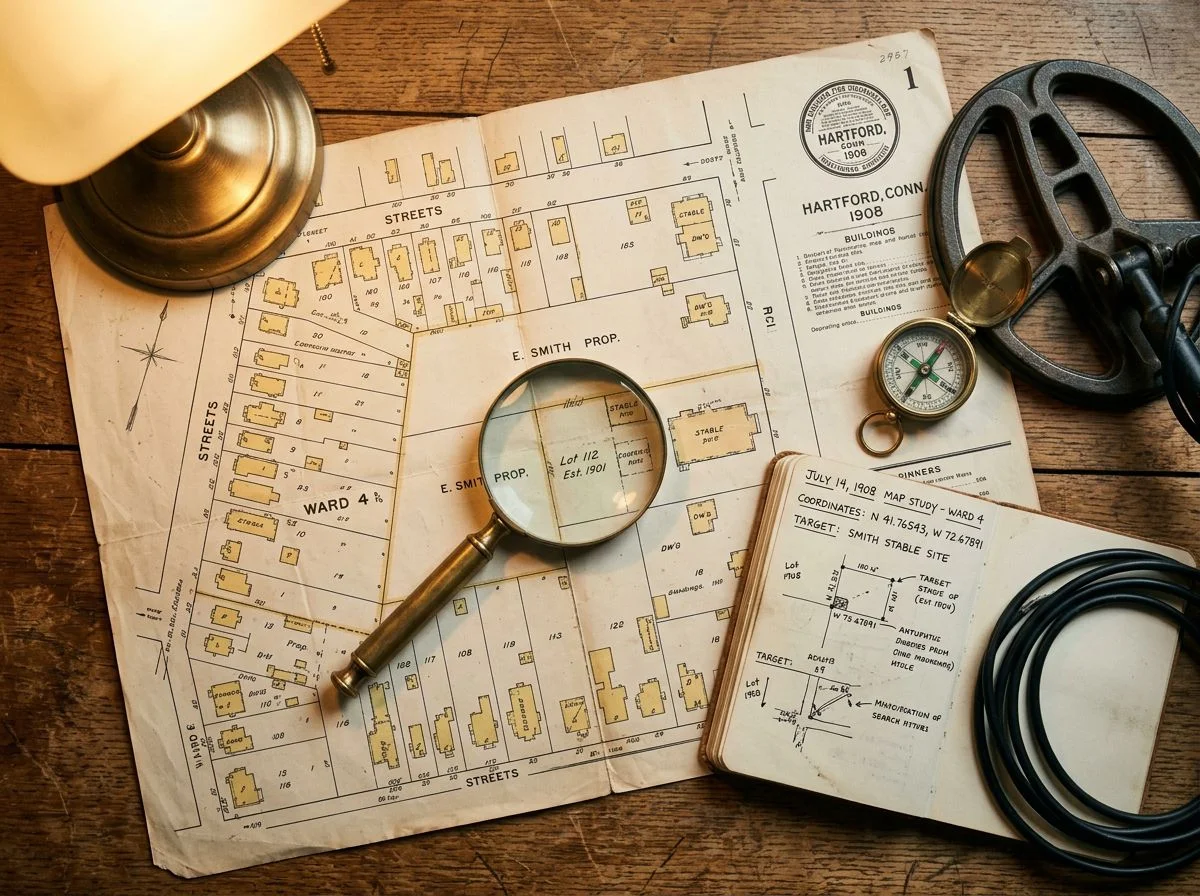
The short version: don’t start with your detector — start with paper. Historic fence lines hide in Sanborn fire insurance maps, old county surveys, and the memories of local old-timers. Find the fence on paper first, then confirm it in the field. You’ll save yourself days of swinging over empty ground when metal detecting fence lines.
Here’s the approach I use for every serious site. It’s never let me down.
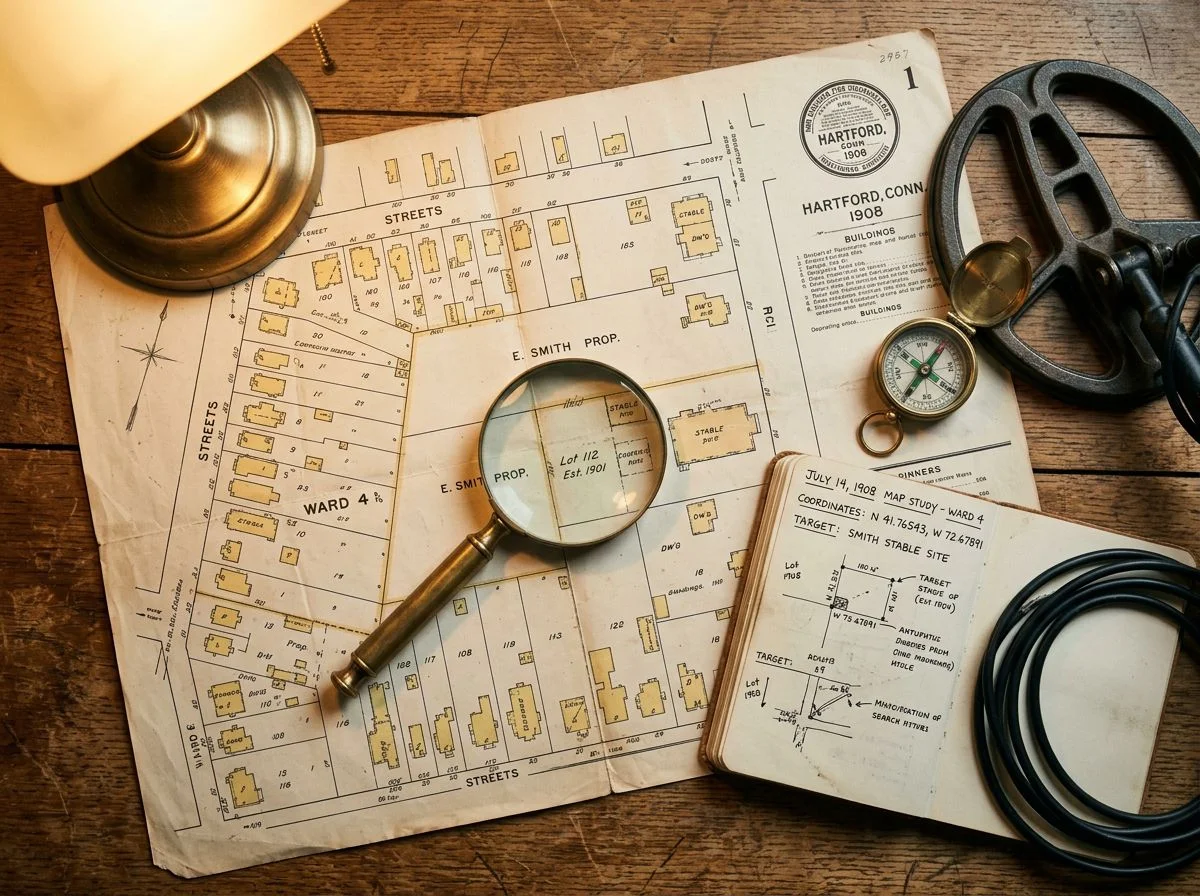
Step 1: Pull the Sanborn maps. These fire insurance maps were drawn for virtually every town in America from the 1860s through the 1940s. They’re obsessive about detail. Property boundaries, outbuildings, corrals, fence lines — if it stood on a lot, Sanborn marked it. The Library of Congress has digitized thousands of them for free. Look for the dashed lines marking property edges. Watch for the small notations for “wire fence” or “barb fence.” Those dashes are your hunting map.
Step 2: Talk to the historical society. This is where the real gold lives. A few years back, I was researching a stretch of old railroad grade near Auburn. I stopped by the local historical society on a whim. An 87-year-old former conductor mentioned, almost as an afterthought, that there’d been a flag stop about three miles east of town. Nothing but a platform and a wire fence to keep cattle off the tracks. The fence line didn’t appear on any modern map. But he remembered exactly where it ran because he’d opened the gate for the morning train for thirty years.
Step 3: Overlay and confirm. I took his description, overlaid it on a modern topo map, and drove out. The fence posts were long gone. But the wire was still there — collapsed, rusted, and buried under decades of pine needles. Three weekends later, I’d pulled over 30 Indian Head pennies and my first seated Liberty dime from the gate crossing. The fence line itself was the map.
Step 4: Date the wire you find. Once you’re on the line, the wire itself tells you if you’re in the right era. The National Park Service’s barbed wire history brochure is a surprisingly good crash course in wire chronology. Different patterns were patented and sold in specific windows. The Antique Barbed Wire Society’s educational materials will help you identify specific patterns and manufacturers. A strand of Glidden “Winner” wire dates your fence line to the 1870s. A strand of 1940s-era “Iowa” pattern tells you the line was rebuilt. Either way, you now know what era of relics you’re likely to find underneath it.
That’s the whole game: paper first, people second, detector third. The fence line was always there. You just needed to know where to look.
Fence Line Detecting Questions Answered
The short version: yes, barbed wire fence lines can be productive detecting spots. But only if you treat the wire itself as the problem to solve, not the nuisance to ignore. Here are the questions detectorists and surveyors actually ask about metal detecting fence lines , answered straight.
“My detector goes crazy anywhere near a fence. Is it even worth trying?”
This is the most common frustration. It shows up constantly on threads like this one from r/metaldetecting where someone’s just posted a photo of a mangled hunk of wire with the caption “mmm barbed wire.” The issue is that rusted wire sheds iron fragments into the soil over decades. This creates a massive ferrous halo that masks everything else. The fix isn’t a better detector — it’s a smaller coil and lower sensitivity. A 6-inch coil lets you work between the wire fragments and hear targets the stock coil misses. And honestly, that “mmm barbed wire” find is sometimes the signal itself. Old wire types are collectible in their own right. Some 1870s patented patterns are worth real money to collectors.
“Can I use a magnetic locator instead of a metal detector for finding pins along a fence?”
Surveyors on r/Surveying swear by this approach. A Schonstedt magnetic locator ignores brass, aluminum, and thin wire mesh entirely. It only responds to iron and steel. That means it’ll find a buried iron survey pin while completely ignoring the barbed wire itself. If you’re hunting property markers rather than coins, this is the tool to borrow or rent before you spend hours fighting your VLF detector.
“I found something weird along an old fence line. How do I know if it’s worth anything?”
The r/homeowners thread on locating survey pins has a good rule of thumb: if it’s rusted and heavy, it’s probably fence hardware or a pin. If it’s non-ferrous and you found it within arm’s reach of the wire, you’re probably looking at something someone dropped while crossing. Either way, the context matters more than the object. A corroded button from a Civil War encampment is more interesting than a modern gold ring, if you know the story behind it.

My name is Paul and I am the founder of Detector For Metal, a dedicated resource for metal detecting enthusiasts seeking to uncover historical treasures and connect with the past using the latest technology. As a stay-at-home dad and family man, I’ve found metal detecting to be the perfect hobby that combines family adventure with historical learnings for the whole family.
As a father, I’m deeply committed to passing on this hobby to the next generation of detectorists, starting with my own children. I share advice on everything from metal detecting with kids to exploring the top 10 metal detecting sites you never thought about. My methodical approach to the hobby goes beyond the thrill of discovery—it’s about creating family traditions while preserving history and sharing the stories of those who came before us.