Table of contents
- Why Schoolyard Metal Detecting Is Overlooked
- Is Schoolyard Metal Detecting Legal?
- When to Detect Schoolyards Without Drawing Attention
- Discreet Gear for Schoolyard Metal Detecting
- High-Yield Schoolyard Zones Most Detectorists Miss
- Dealing With Wood Chips and Rubber Mulch
- A Recovery Method That Leaves Zero Trace
- What You’ll Find in Schoolyards
- Common Schoolyard Metal Detecting Questions
The short version: go early, use a small coil and a hand digger, stay away from the school day, and have a friendly answer ready when someone asks what you’re doing. Schoolyards are high-yield spots — kids lose things constantly — but they’re also high-visibility spots. How you present yourself matters as much as what you find.
My buddy Mike learned this the hard way. He showed up at an elementary school at 2:30 on a Tuesday, detector in hand. He spent ten minutes explaining himself to a custodian who was not impressed. He wasn’t breaking any law, but he looked like a guy who hadn’t thought things through. That’s the whole ballgame with schoolyards: timing and discretion beat everything else.
The best window is early morning — I’m talking 6:00 AM. The only other people around are joggers who couldn’t care less about you. Dusk works too. What doesn’t work is any time when kids are present. Never during school hours, no exceptions. If parents or kids show up while you’re hunting, pack up and move to another section. Or call it a day. A detectorist hovering near playground equipment while children play is a bad look, full stop.
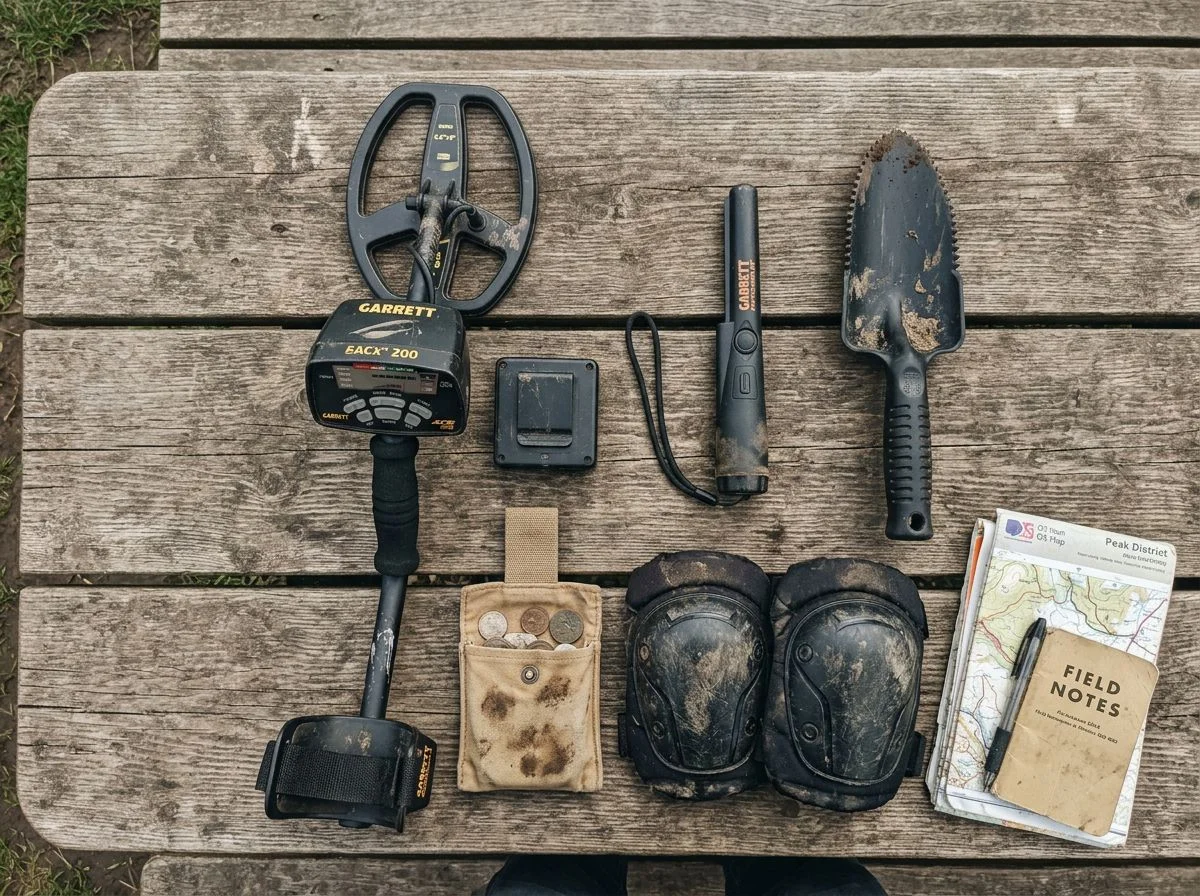
Gear matters for perception as much as performance. Leave the shovel in the car. A handheld pinpointer and a small garden rake will handle wood chips and sand. You won’t look like you’re excavating a utility line. And if someone does approach you, have your trash pouch ready. Show them the rusty screws and sharp can slaw you’ve pulled out of the play area. Suspicion turns into gratitude real fast.
Why Schoolyard Metal Detecting Is Overlooked
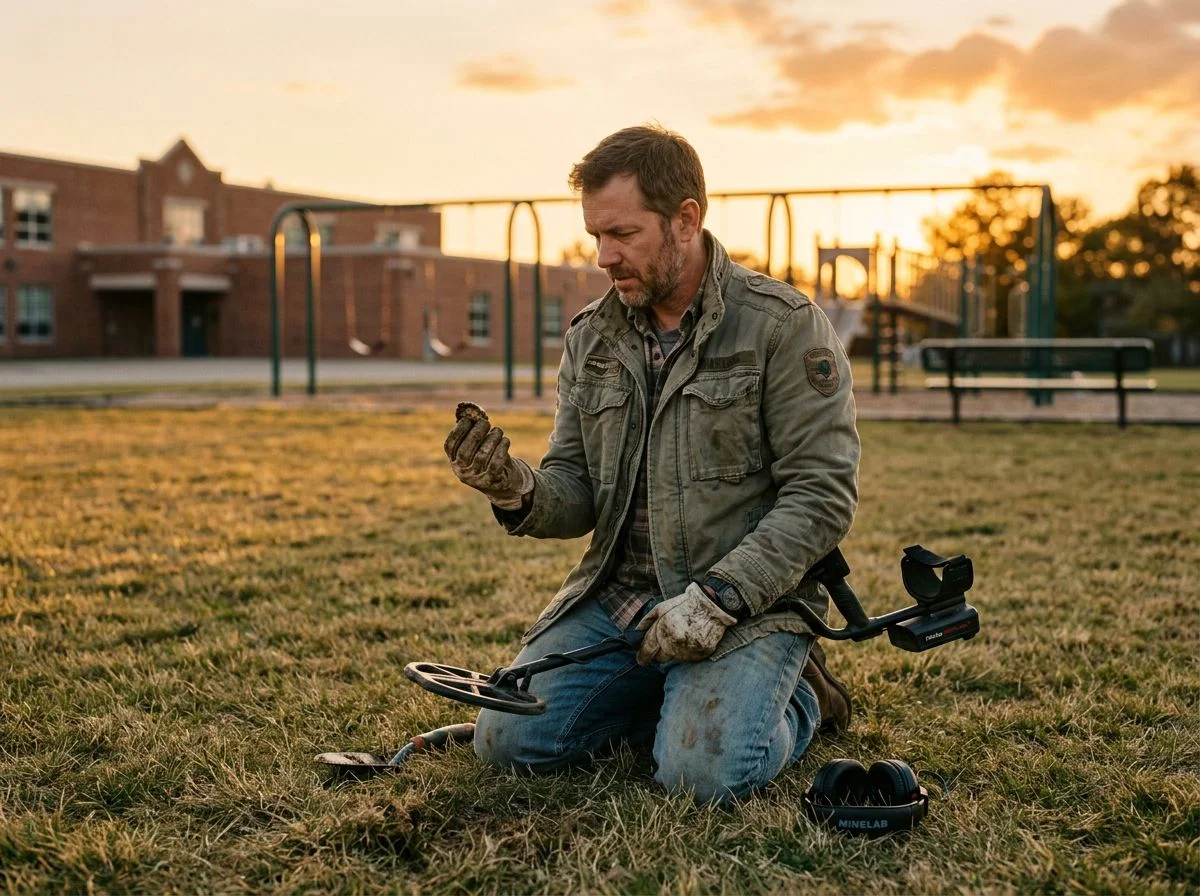
Schoolyards pack more lost items per square foot than almost any other public space. Kids lose things constantly, and no one thinks to hunt there. A school sees 180 days of concentrated human activity every year. Hundreds of bodies running, tumbling, and hanging upside down. Every one of those motions is a chance for a coin to slip out of a pocket or a necklace to come unclasped.
What if the best detecting site in your town is one you drive past every single day without a second thought? I’m serious. Most detectorists obsess over old homesteads and forgotten fairgrounds — and I get it, I do too. But the modern schoolyard down the street might actually outproduce those “historic” spots on a per-hour basis.
Here’s the thing about kids: they don’t stand still. Adults at a park sit on benches, walk paths, maybe toss a frisbee. Kids do handstands, cartwheels, and hang upside down from monkey bars. All that inverted, flailing movement dislodges items at rates far higher than adult recreation areas ever could. Garrett’s own guide to good detecting locations calls schoolyards “prime, repeat-use sites where small items are lost year after year.” They’re not wrong.
The jewelry angle alone is worth the trip. Kids wear rings, necklaces, bracelets — often cheap stuff, but sometimes not. Those items get yanked off by swings, slides, and general chaos. I once pulled a sterling silver charm bracelet out of a wood chip tot lot at 7 AM. I guarantee some kid cried over losing it. The Ring Finders have recovered 24-karat gold chains from school playgrounds — not at beaches, not at parks, but right next to the swing set.
And here’s the kicker: most detectorists skip schoolyards entirely. They assume it’s off-limits, or too awkward, or not worth the hassle. That leaves the field wide open for those of us willing to show up at dawn with a hand digger and a friendly explanation. More on that in a minute.
Is Schoolyard Metal Detecting Legal?
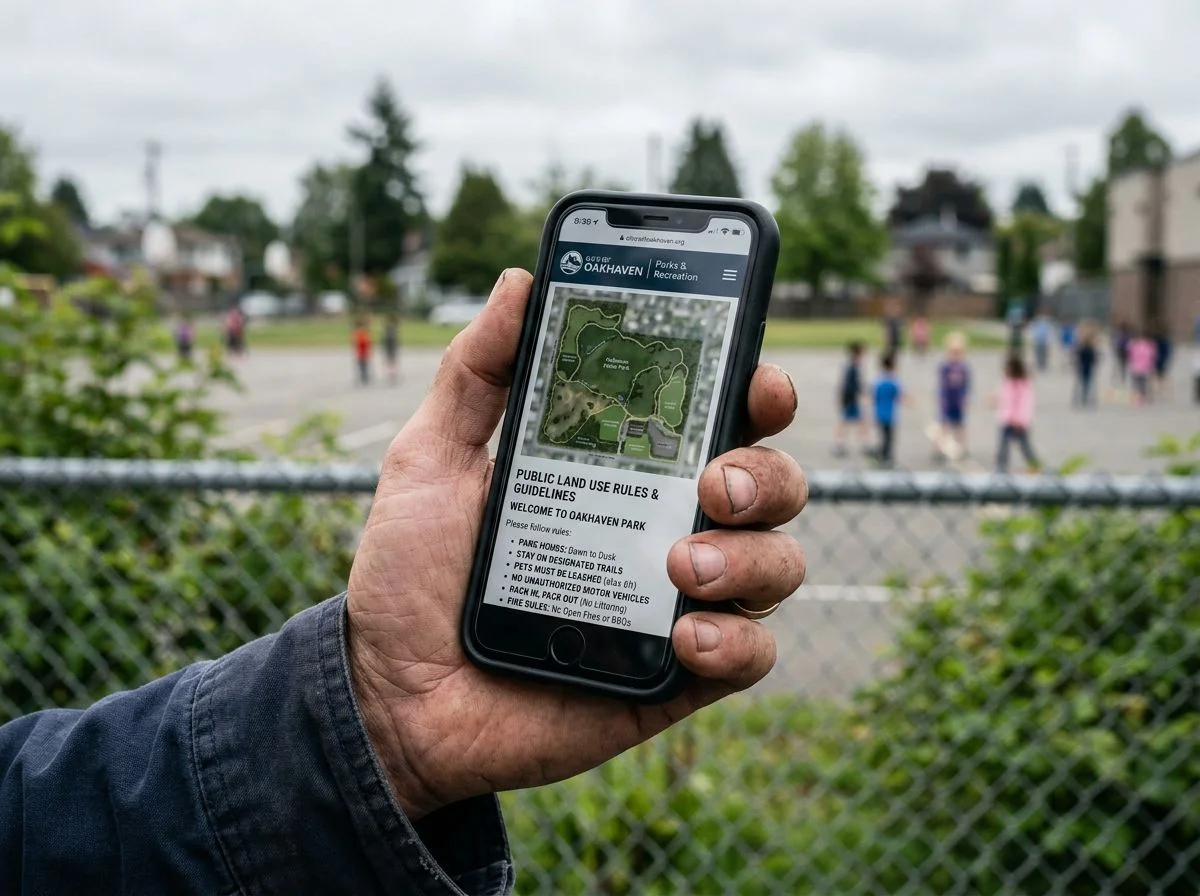
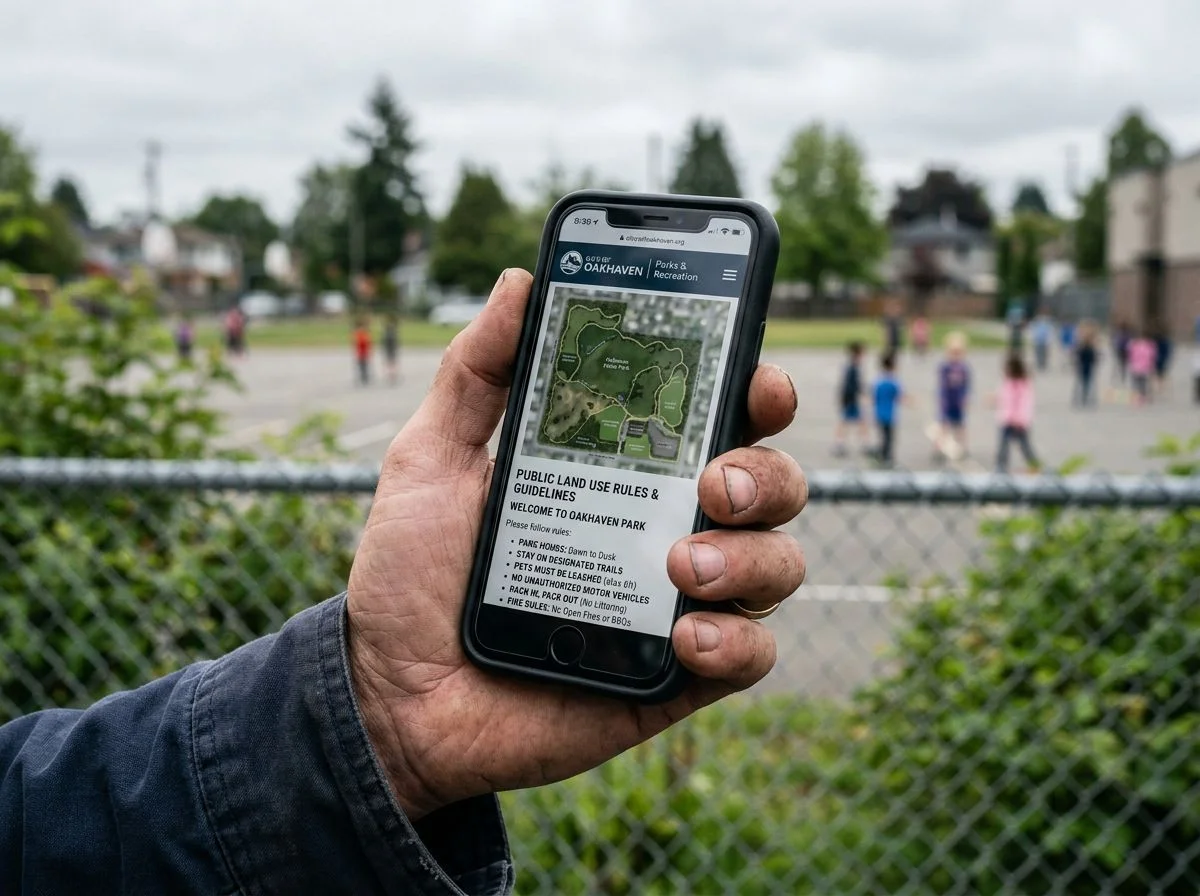
Here’s the uncomfortable truth: schoolyards are not automatically open to detecting just because they’re public property. The rules vary wildly by state, district, and even individual school. “I didn’t know” won’t save you from an awkward confrontation or a trespassing citation.
I learned this the hard way my first year in the hobby. There was an elementary school two blocks from my house. I figured a Saturday morning would be fine. Nobody around, quiet neighborhood, what could go wrong? Twenty minutes in, a custodian rolled up on a golf cart and asked what I was doing. I gave him my friendly spiel about finding lost coins and pulling trash out of the wood chips. He nodded, then said, “District policy says you need permission from the office. I’m going to have to ask you to leave.” He was polite about it, which somehow made it worse. I packed up, drove home, and spent the next hour researching the actual rules. Turns out he was right.
The legal landscape is genuinely confusing. The Texas Association of Metal Detecting Clubs says public school grounds are generally open unless restricted by posted signs, city ordinances, or a school employee. But they still advise checking with the office first. Meanwhile, OMMO’s Texas guide goes further. It states that detectorists must seek explicit approval from the local school district before hunting public schoolyards. Two sources, two different standards, same state.
And it gets stricter elsewhere. Portland’s park policy bans detecting outright in seven named locations. It also restricts recovery tools to blades under 6 inches. That’s not a suggestion — it’s a city ordinance with real teeth.
The takeaway? Spend ten minutes making a phone call before you spend two hours swinging a coil. Private schools are a different animal entirely. That’s personal property, and you need direct owner consent. No gray area.
When to Detect Schoolyards Without Drawing Attention
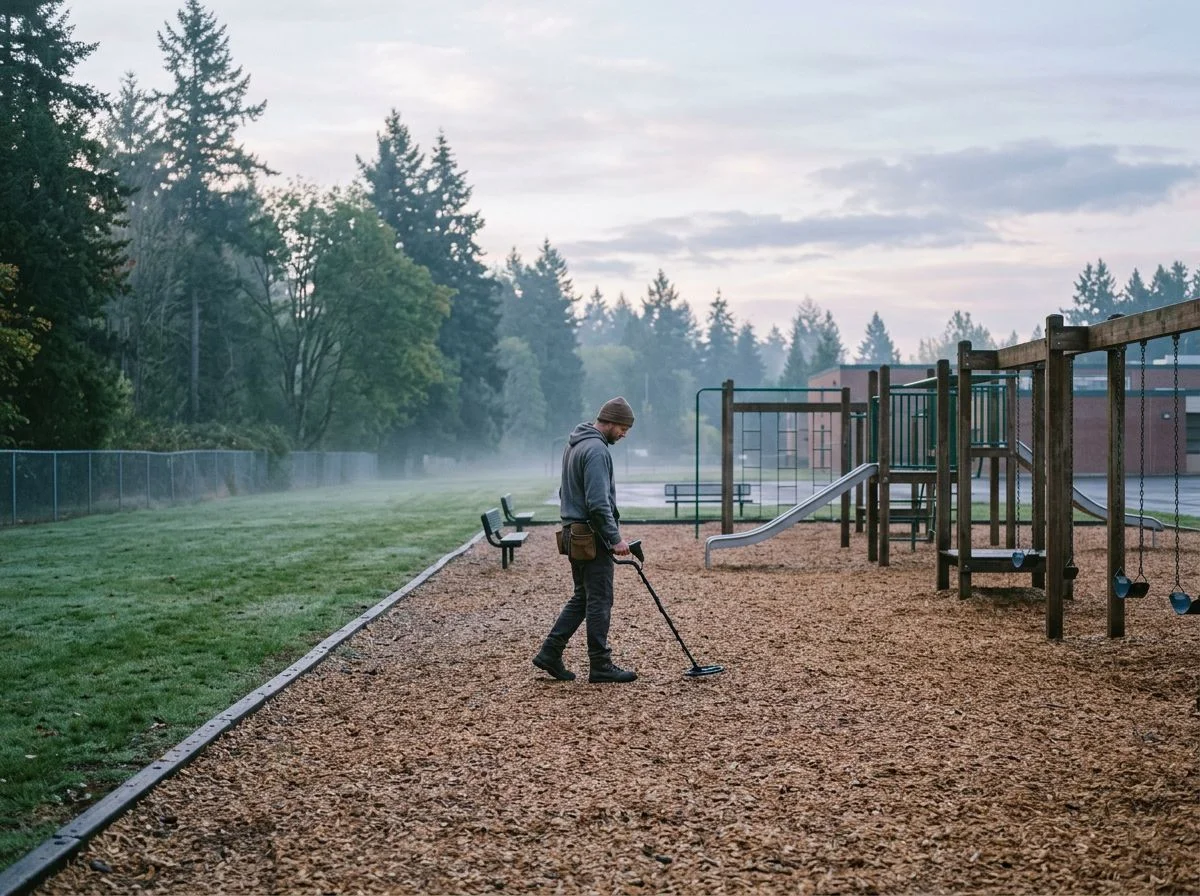
The short answer: go early. Really early. Experienced tot lot hunters consistently recommend 6:00 AM starts or dusk hunts. Those are the only windows when schoolyards are truly empty. No kids, no parents, no custodians eyeing you from the parking lot. Everything else is a gamble.
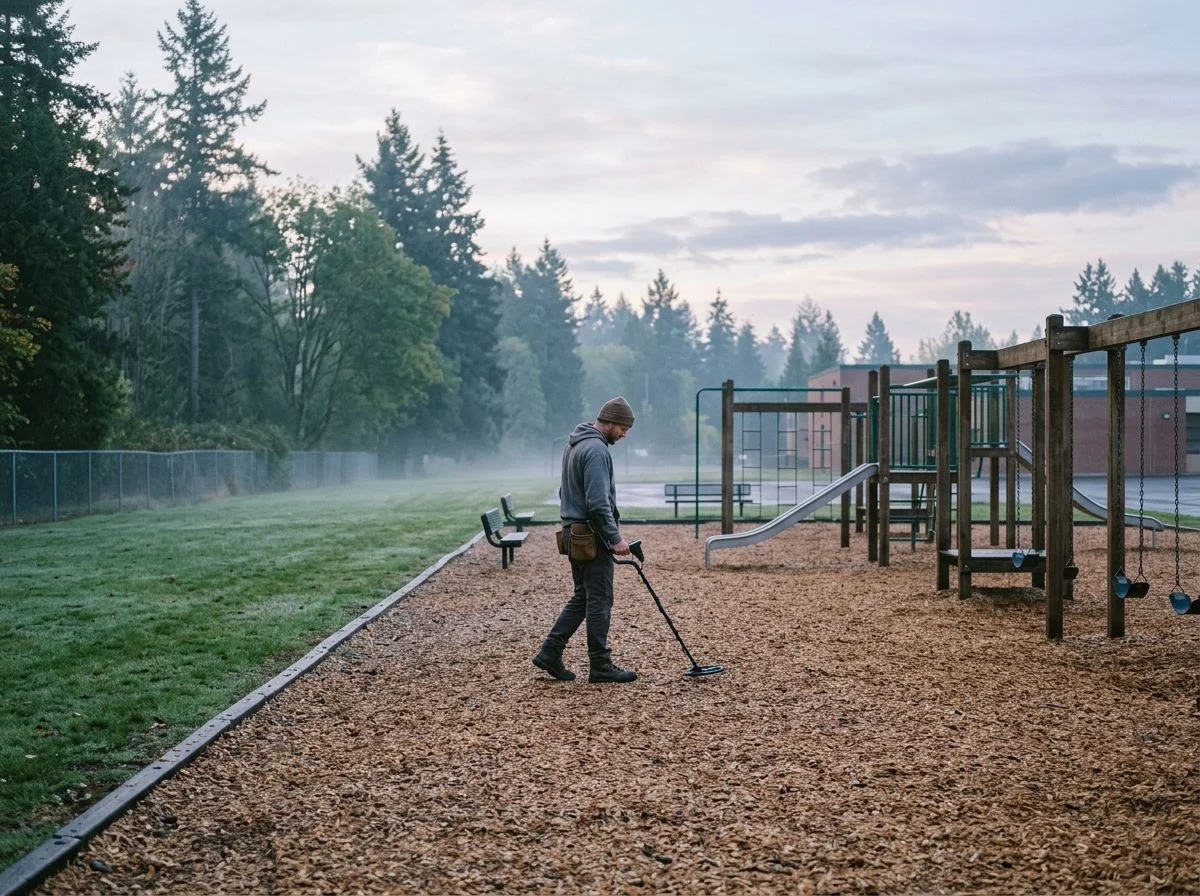
There’s a specific moment I’ve come to love. It’s 6:00 AM on a summer Saturday. The only sounds are sprinklers hissing somewhere across the field and birds that haven’t figured out the day’s started yet. The wood chips are still damp from overnight dew, which actually helps. Moisture improves conductivity and gives you a little extra depth. The playground equipment casts long shadows. Nobody’s around. You can swing your coil in peace and actually hear what your detector’s telling you.
That’s the sweet spot, and I’m not alone in thinking so. A Reddit user named “dirtymoney” who’s hunted dozens of school playgrounds swears by the same approach: show up at 6:00 AM or whenever the park is practically deserted. His rule is simple. If parents or kids arrive, move to a different part of the park immediately. No lingering, no “just one more signal.”
Dusk works too, but it’s trickier. You’ve got fading light. And depending on the neighborhood, an adult with a detector at twilight can draw more attention than one at sunrise. Early morning reads as purposeful. Dusk can read as loitering. I’ll take the 6:00 AM slot every time, even if it means setting an alarm on a Saturday.
The point isn’t just comfort — it’s optics. The Texas Association of Metal Detecting Clubs is explicit that you should never hunt when students are present. The same logic extends to parents and staff. An empty schoolyard is just a field. A schoolyard with kids in it is someone else’s territory, and you’re the stranger with a machine.
Discreet Gear for Schoolyard Metal Detecting
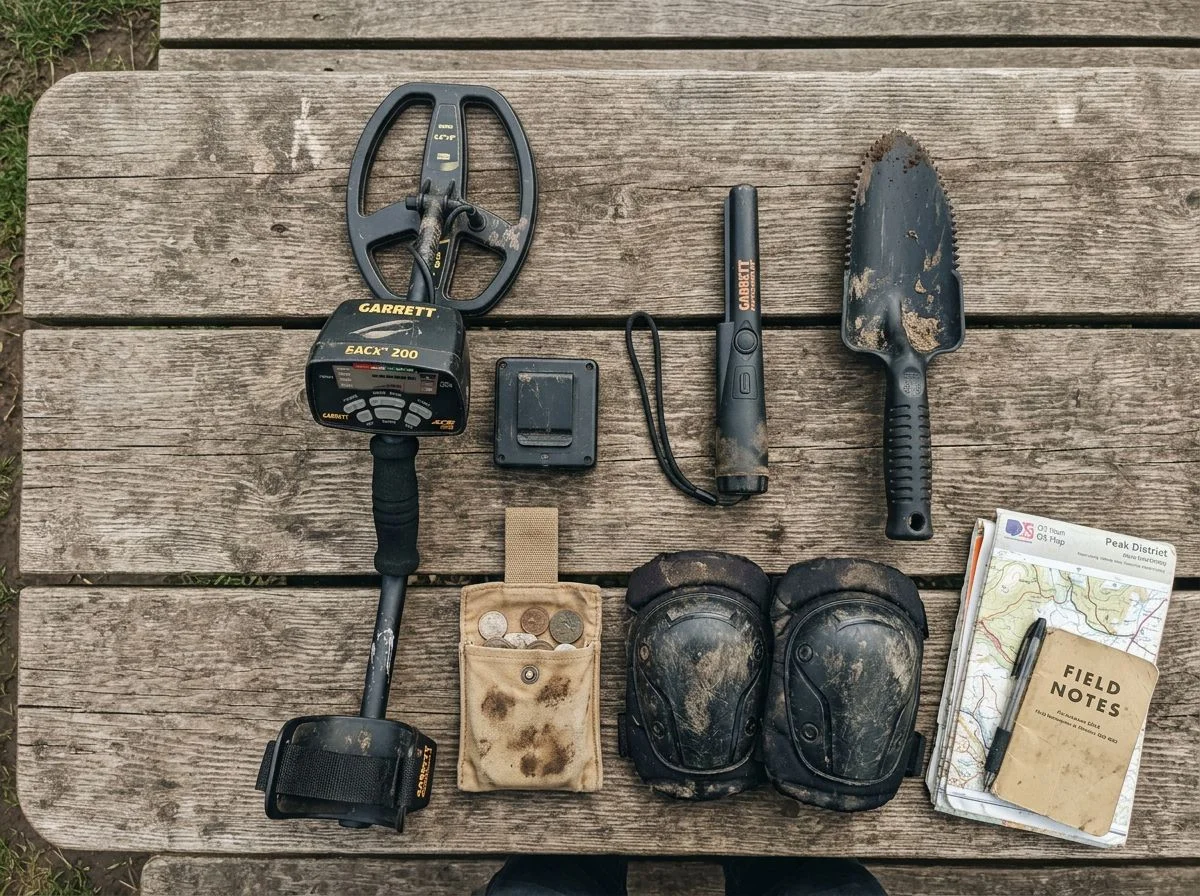
The short version: leave the shovel in the car, swap to your smallest coil, and let a pinpointer do the actual recovery work. You’ll look less threatening, dig less, and still pull the good stuff from the wood chips.
The shovel thing isn’t just my opinion. Multiple forum experts agree that shovels are a “huge no no” in public spaces. Schoolyards top that list. The visual of a grown man walking onto a playground with a full-sized digging tool is exactly what gets detectorists kicked out and ordinances written. Portland’s policy limits blades to 6 inches. Even that’s more than you need in wood chips. A hand trowel or a screwdriver-style probe is plenty.
My go-to setup for tot lots is my smallest coil, a pinpointer, and a three-finger garden rake. The small coil lets me work right up against metal support beams where a bigger coil chatters uselessly. The pinpointer means I’m not carving craters. I find the target, part the chips with the rake, and pop it out. The ground looks untouched when I’m done.
There’s a recovery tool I learned about from an Arkansas detectorist named “tabdog” who hunts wood chip lots constantly. He invented something called the Arkie Barkie Twister specifically for wood chip recovery. It’s basically a twisted metal probe that snags targets without disturbing the surface. I haven’t built one myself, but the logic is sound: less digging, less mess, less attention.
The best PR moment I’ve ever had came from a trash pouch, not a find pouch. A dad approached me at a playground, arms crossed, clearly wondering what I was doing. I showed him my trash side — rusty screws, a bent nail, sharp bits of aluminum can slaw. His posture changed instantly. “Oh, you’re cleaning the place up.” Exactly. The pinpointer and rake made that possible. A shovel would’ve made it a confrontation.
High-Yield Schoolyard Zones Most Detectorists Miss
The short answer: skip the open field and work the edges. Shade trees, benches, picnic tables, walking paths, and the ground directly beneath playground equipment — that’s where gravity and kid physics do the heavy lifting for you.
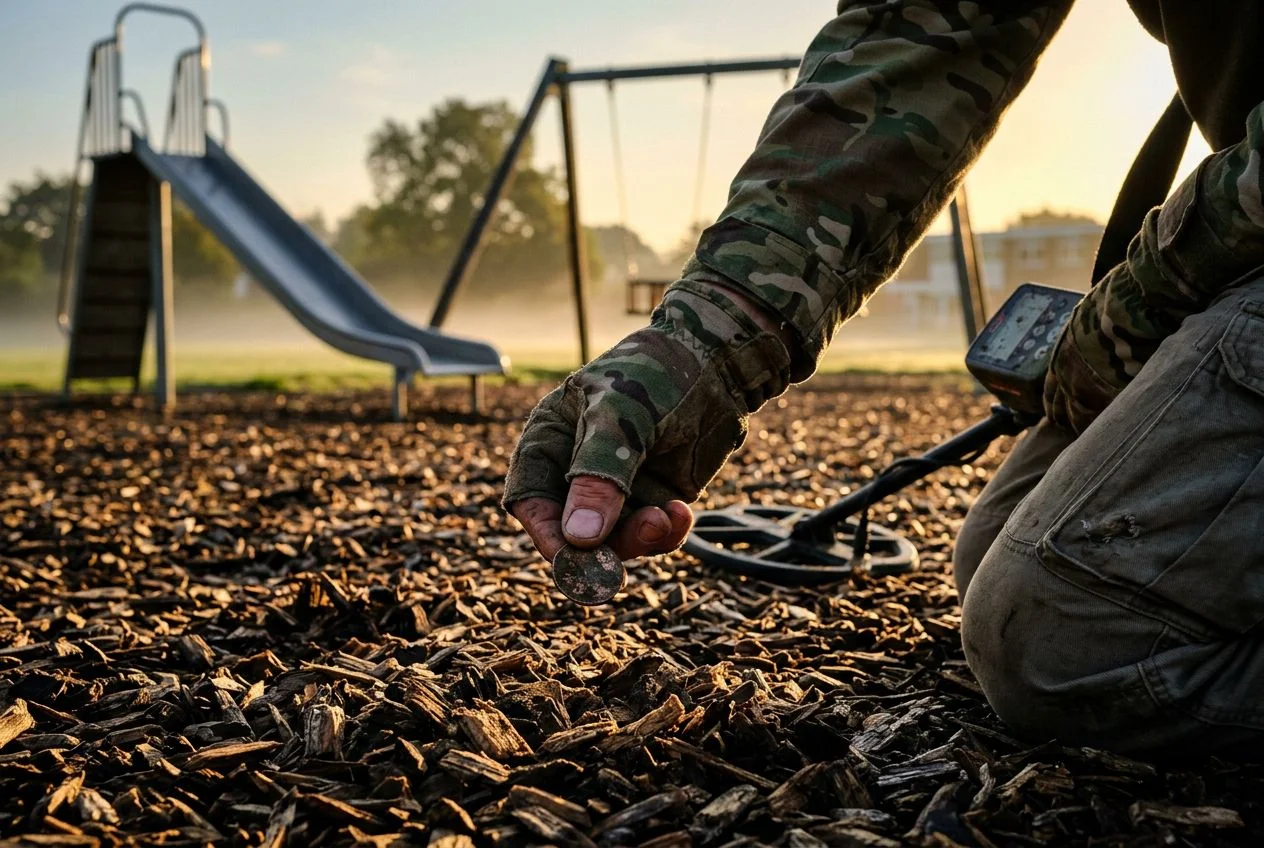
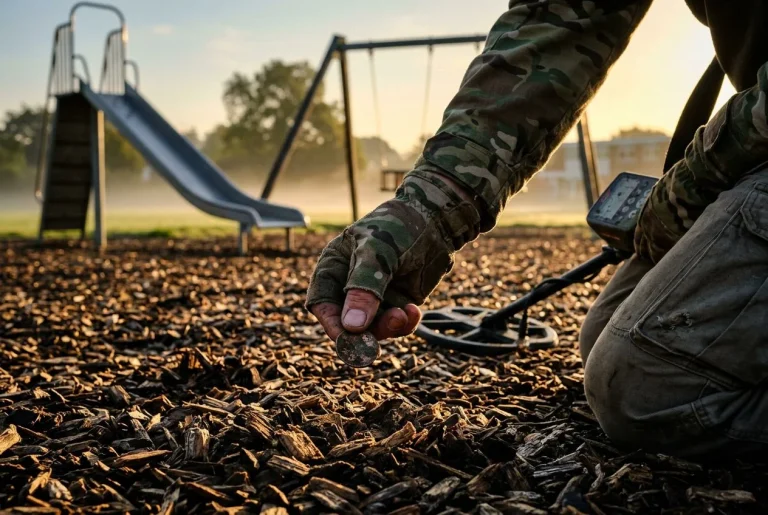
The single most productive spot in any schoolyard is the patch of wood chips directly under the climbing structure. Specifically where kids hang upside down. Think about it. A kid flips over a bar, and every loose coin, earbud, and piece of jewelry in their pockets rains straight down. MetalDetector.com’s guide flags exactly this: “under low branches or climbing structures where upside-down play occurs.” I’ve pulled more clad from a three-foot circle under a set of monkey bars than from the entire surrounding field combined.
Benches are my second favorite. Parents sit, shift around, pull keys and phones from pockets. Things tumble into the grass or chips behind them. Same logic applies to picnic tables and shade trees — anywhere adults park themselves for twenty minutes while kids burn off energy. Garrett’s location guide lists all of these as repeat-use zones precisely because the same spots lose items year after year.
The swings deserve special mention. Kids pump their legs, lean back, and anything loose in shallow pockets goes flying in a wide arc behind the swing set. I always grid the area extending about ten feet back from the swing posts. It’s a bigger zone than most people bother with. Which means it’s often untouched by other detectorists.
Walking paths and trail edges round out the list. People drop things while walking and talking. The edges catch what the center doesn’t. It’s less glamorous than the climbing structure, but it’s consistent.
The pattern here is simple: hunt where motion happens, not where it doesn’t. The open field looks inviting, but it’s a coin desert compared to the twenty square feet under the jungle gym.
Dealing With Wood Chips and Rubber Mulch
The short answer: wood chips are manageable with the right settings. Rubber tire mulch is a nightmare of false signals from metal beads embedded in the rubber. If a playground has that spongy black stuff, I lower my expectations and my sensitivity.
My first encounter with rubber mulch was almost embarrassing. I’d spotted a brand-new playground near my house. All bright plastic and that fresh tire smell. I figured it’d be untouched — new site, new drops, easy pickings. Within thirty seconds my detector was singing like a slot machine. I’m thinking I’ve hit the motherlode. Every swing, another signal. I spent twenty minutes digging little black rubber pellets out of the surface, convinced each one was a coin or ring. It was all metal beads from the shredded tires. The rubber mulch itself is loaded with metal fragments that trigger false signals. No discrimination setting filters them out completely. I went home with a pouch full of rubber and a bruised ego.
Wood chips have their own issue, though it’s solvable. The weed barrier cloth underneath is usually pinned down with metal staples. Those staples love to sound like good targets. Turning down your sensitivity helps you avoid picking them up while still catching coins and jewelry in the top few inches. I run my Equinox 900 at about half sensitivity in tot lots. It works well.
The bigger wood chip problem is shredded aluminum. An Arkansas detectorist named “tabdog” who hunts tot lots constantly has reported tens of thousands of shredded aluminum pieces mixed into wood chip lots — can slaw from drink cans that gets ground up over time. There’s no magic fix for that. You dig it, you move on. That’s the hobby.
A Recovery Method That Leaves Zero Trace
The short answer: use a small hand tool to part the wood chips, retrieve the target with your pinpointer, and rake everything back into place. No plugs, no holes, no evidence. Portland’s park policy mandates a plug no larger than 6 inches in diameter and 6 inches deep. But in wood chips you don’t even need that.
Here’s my exact sequence. Pinpoint the target first. Then kneel beside it, take a three-pronged garden rake, and gently pull the chips toward you in a small fan pattern. Just enough to expose the surface underneath. Sweep the pinpointer through the loose material. Nine times out of ten, the target’s sitting right there in the top two inches, still shiny. Pluck it out. Now reverse the motion: push the chips back with the rake, smooth them with your hand, and stand up. Takes maybe 30 seconds. I’ve had parents walk past me mid-recovery and not even glance over. I just look like a guy tidying the playground.
The only rule that matters: probing must be manual, never powered. A hand rake and a pinpointer are all you need. Leave the Lesche in the car.
What You’ll Find in Schoolyards
Expect mostly modern coins, cheap jewelry, and a steady stream of junk. But every once in a while, a tot lot gives up something that makes your whole week. Tot lots reliably produce clad coins, costume jewelry, and occasionally gold and silver. That’s exactly the hierarchy you should expect.
The bread and butter is clad. Quarters, dimes, nickels, pennies — modern stuff that falls out of pockets when kids go upside down on monkey bars or parents dig for car keys. I’ve pulled over $30 in clad from a single elementary school playground over a weekend. Nothing old, nothing valuable. But it adds up and keeps the pouch feeling productive.
Costume jewelry is the next tier. Kids lose cheap rings, bracelets, and necklace pendants constantly. Most of it is plated brass or aluminum — shiny in the hole, disappointing in the hand. But that’s the cost of doing business.
Real gold and silver do show up, just not often. When they do, it’s usually a chain or ring that an adult lost while playing with their kid. The best example I’ve heard of came from a Bethesda, Maryland school playground. A Ring Finders professional recovered a 24-karat gold chain and pendant that belonged to a student. That’s the exception, not the rule — a professional called in specifically because something valuable was known to be lost.
For every gold chain, expect a thousand pull tabs. That’s the tradeoff. And honestly, it’s one I’ll take every time.
Common Schoolyard Metal Detecting Questions
The short answer: check with the school office first, never hunt during school hours, and carry a pinpointer instead of a shovel. That solves about 90% of the problems before they start. Here are the questions I see come up constantly on forums.
“Do I really need permission for a public school?”
This one sparks arguments every time it gets posted. Here’s the reality: TAMDC notes that school employees can restrict access even without posted signs. So even if there’s no “No Trespassing” sign and no city ordinance, a custodian or principal can still tell you to leave. And they’d be within their rights. Multiple sources confirm the “check with the office first” approach. It takes five minutes. It turns a potential confrontation into a non-event.
“What if someone asks what I’m doing?”
This is the question every new detectorist dreads. A Reddit user named Least-Firefighter392 shared the best answer I’ve seen: show them your trash pouch — rusty screws, sharp metal, can slaw — and explain you’re making the playground safer for kids. Works almost every time. Parents stop seeing a weird guy with a machine. They start seeing someone doing a free cleanup.
“Can I use my regular digging tool?”
No. Leave the shovel and Lesche in the car. Forum consensus is unanimous on this one — using shovels in schoolyards is a “huge no, no” that hurts the hobby for everyone. A pinpointer and a small hand rake are all you need in wood chips anyway.

My name is Paul and I am the founder of Detector For Metal, a dedicated resource for metal detecting enthusiasts seeking to uncover historical treasures and connect with the past using the latest technology. As a stay-at-home dad and family man, I’ve found metal detecting to be the perfect hobby that combines family adventure with historical learnings for the whole family.
As a father, I’m deeply committed to passing on this hobby to the next generation of detectorists, starting with my own children. I share advice on everything from metal detecting with kids to exploring the top 10 metal detecting sites you never thought about. My methodical approach to the hobby goes beyond the thrill of discovery—it’s about creating family traditions while preserving history and sharing the stories of those who came before us.