Table of contents
- What a Metal Detector Target ID Shift Taught Me
- Why Water Changes Everything Your Detector Sees
- How Wet Ground Causes Target ID Shift
- Ground Balance Fights Moisture-Driven False IDs
- The Halo Effect Makes Older Targets Easier to Find
- When Saturation Creates Iron Halos and False Signals
- Why Silver Sometimes Reads Like Iron
- Hunting Wet Ground Without Losing Your Mind
- Common Questions About Target ID Shift in Wet Soil
- Learn Your Soil’s Wet-Weather Personality
When the ground gets wet, your detector’s VDI numbers climb — sometimes dramatically. Dimes start reading like quarters. Pennies jump into the high 90s. A quarter can bounce “all over the place.” If you’re digging strictly by the numbers, you’ll walk right past silver.
Here’s the frustrating part: it’s not consistent. One guy in Alabama reported that dimes and pennies regularly register as quarters in moist ground. His depth barely changed. Another detectorist on the Deus II noticed his silver dimes read 89–91 one day, then 91–93 the next. Same spot, different moisture levels. That’s a three-digit swing on a machine that’s supposed to be precise.
The culprit is dissolved minerals. Rainwater pulls salts, fertilizer residue, and iron compounds into solution. That conductive soup alters how your detector’s electromagnetic field returns to the coil. The processor misinterprets the signal and assigns a VDI that’s too high. In super-saturated soil, the opposite can happen too — target ID numbers bounce erratically as the machine struggles to lock onto anything stable.
My rule when the ground’s soaked: dig anything that’s even close. If a dime range target reads high, dig it. If a quarter signal sounds slightly off, dig it. The Minelab manuals actually recommend sweeping the coil multiple times from different directions to let the machine build VDI confidence. That helps, but it’s not foolproof. When water’s in the equation, your ears and your shovel are more reliable than the screen.
What a Metal Detector Target ID Shift Taught Me
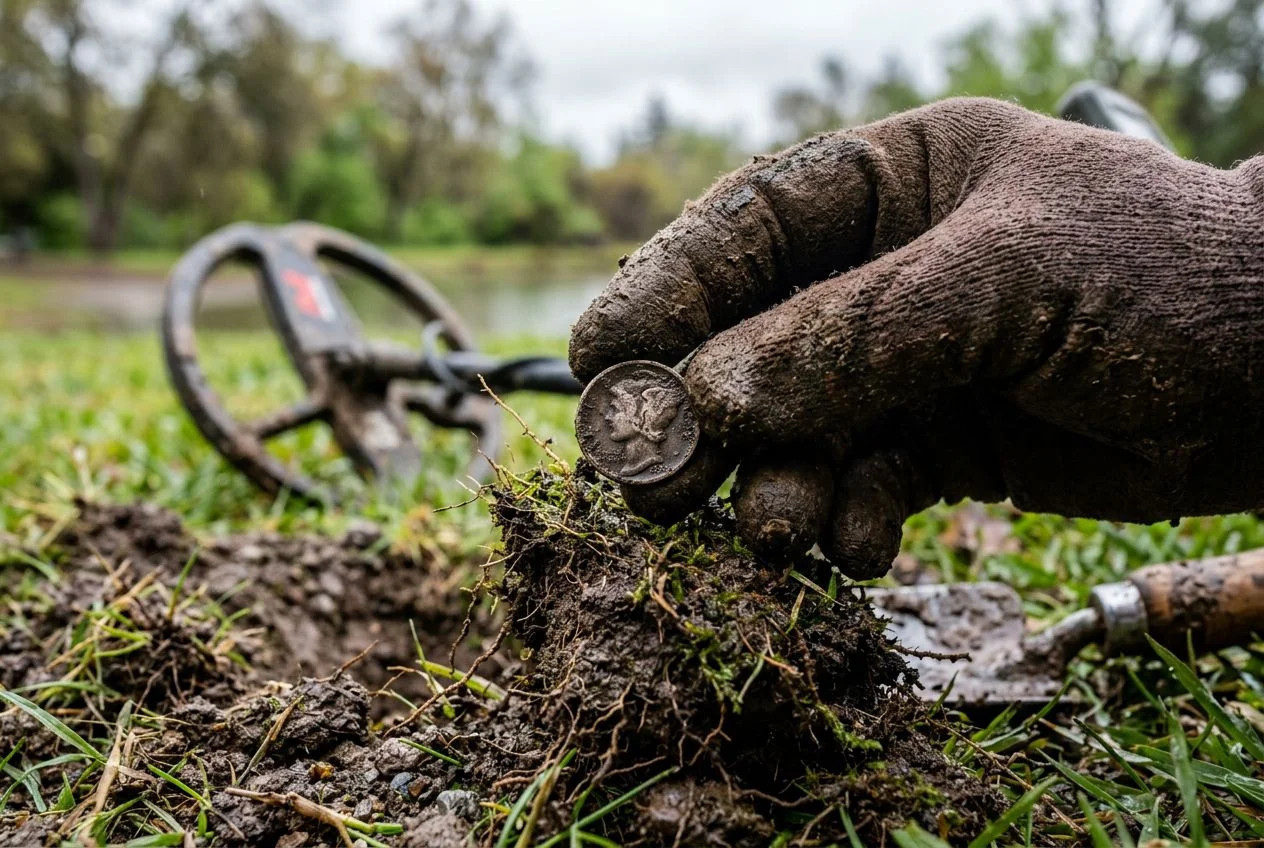
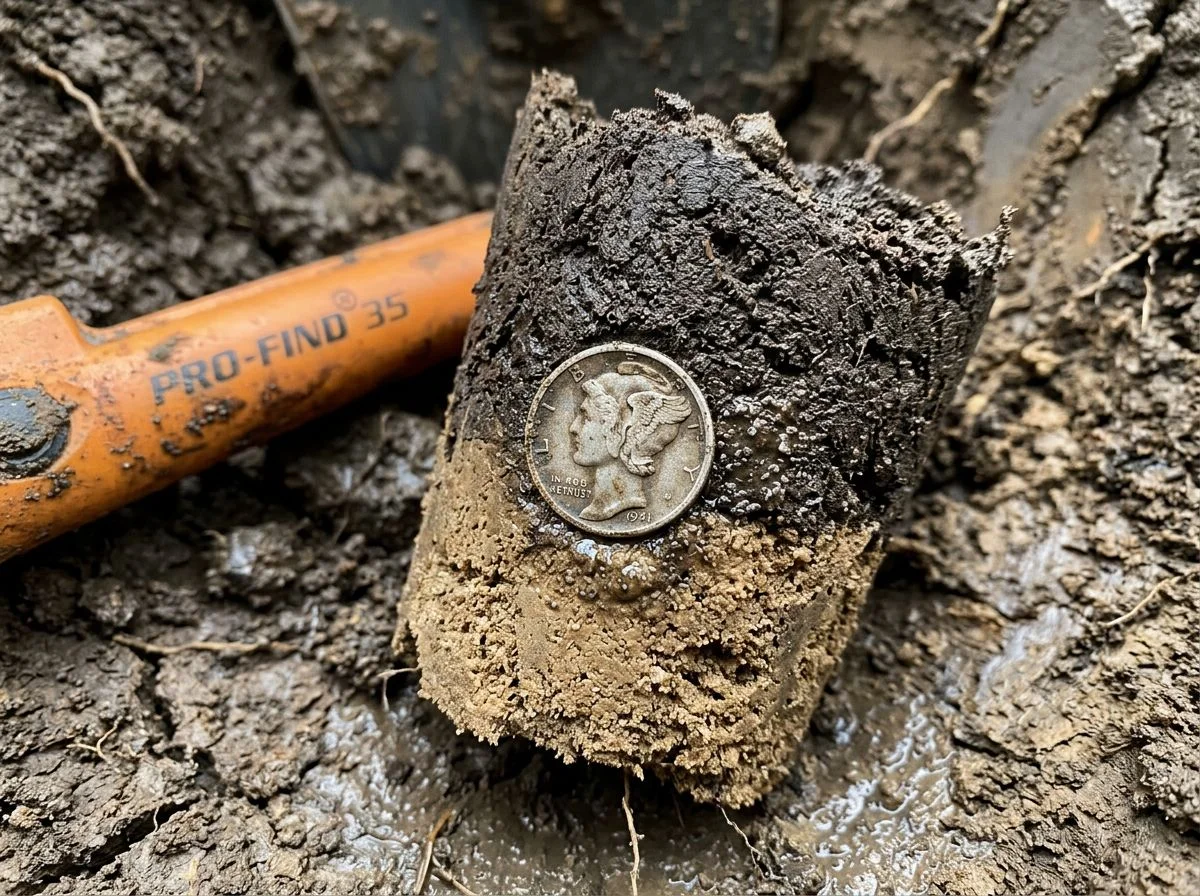
A wet Mercury dime can read 92–94 — solid quarter territory. If you’re digging by the numbers alone, you’ll walk right past it. I almost did.
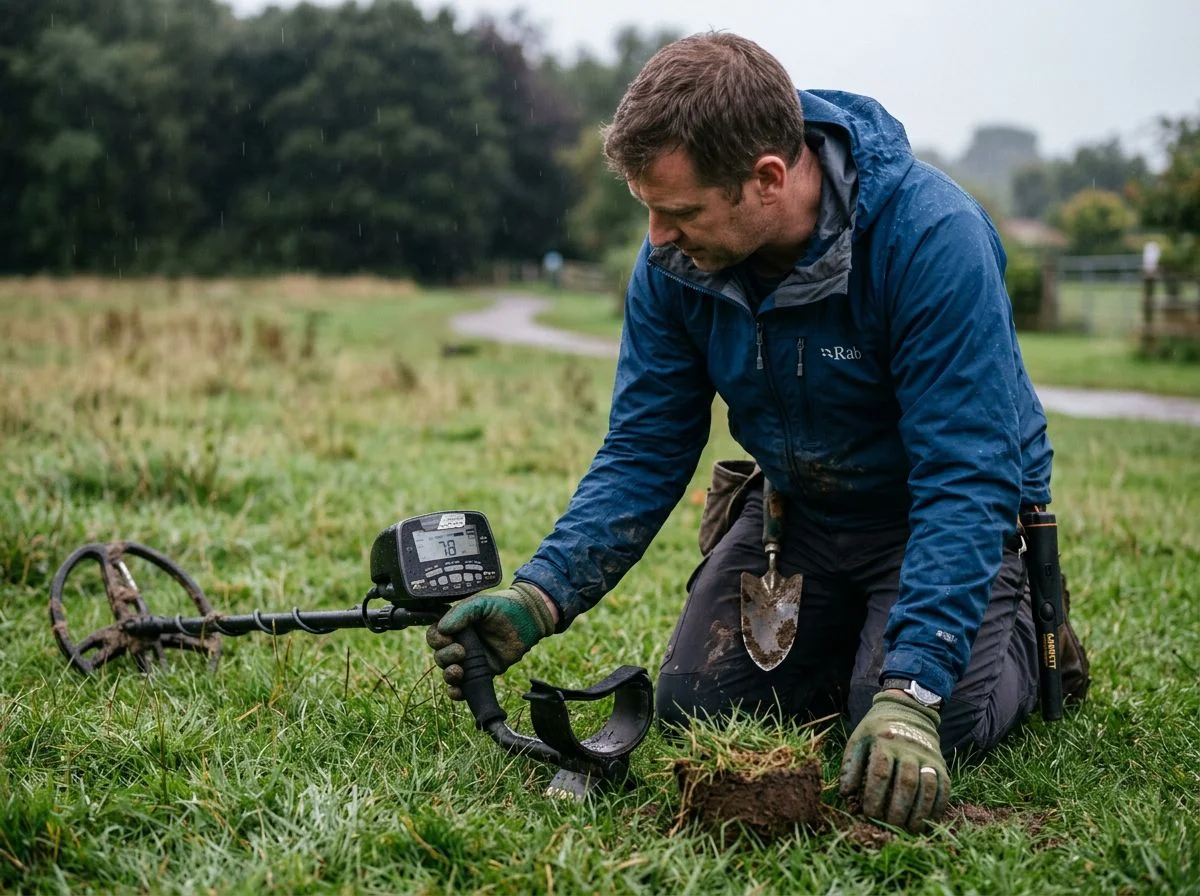
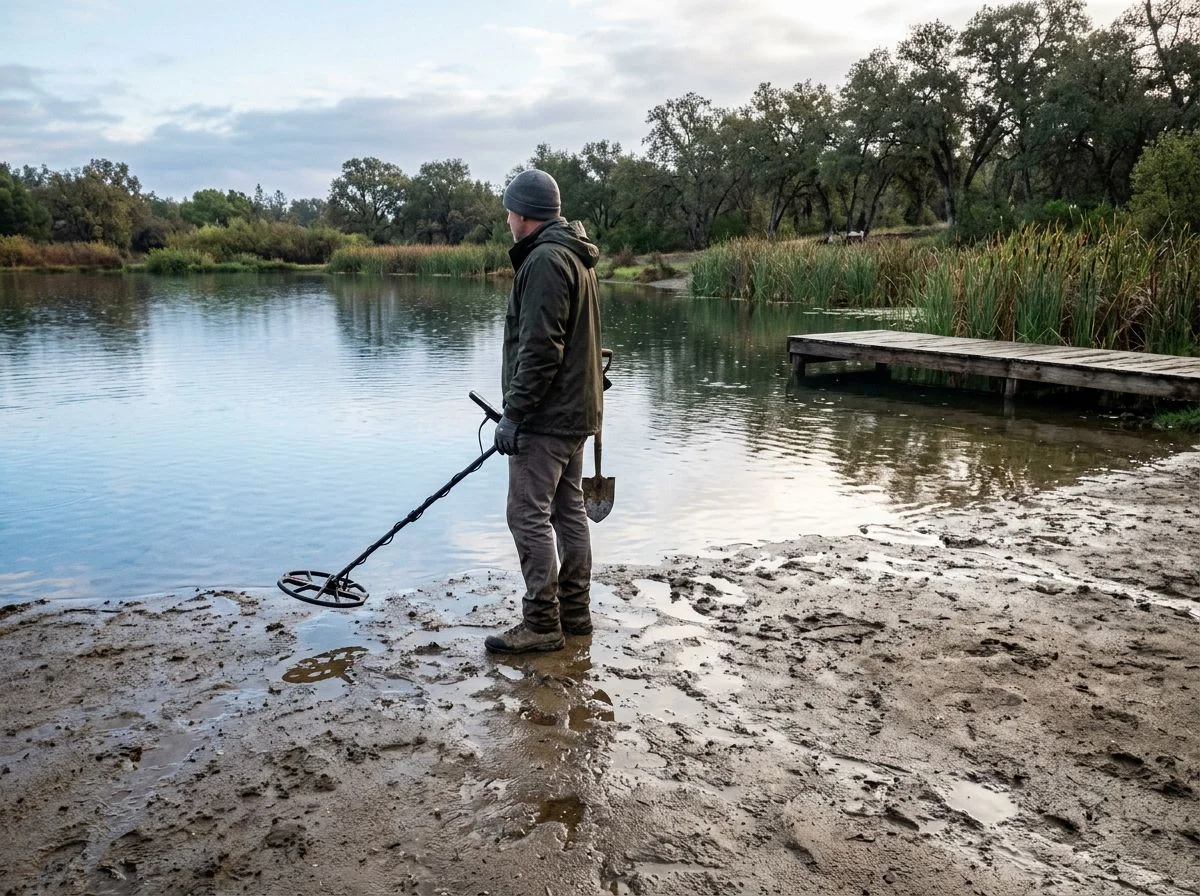
It happened last spring at an old swimming hole outside Sacramento. We’d had three days of steady rain. The ground was that perfect consistency — soft enough to dig clean plugs, wet enough to boost depth. I was running my Equinox 900. About twenty minutes in, I got a screaming high tone. Checked the screen: 93. Solid. Textbook clad quarter. Maybe a silver quarter if I was lucky.
I almost didn’t dig it. The park was loaded with modern change. I’d already pulled four clad quarters from the same general area. But something about the signal felt slightly off. Not unstable, just… wider than a quarter should sound. My rule when the ground’s soaked is to dig anything close, so I cut the plug.
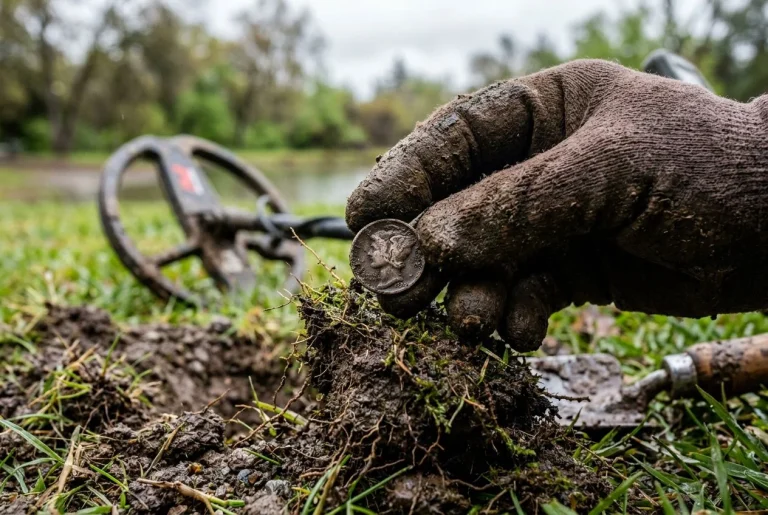
About six inches down, out popped a 1942 Mercury dime. Gorgeous condition, full bands. Probably a $15 coin. The screen had been lying to me by a solid 15 points.
I’m not the only one this happens to. A detectorist named bamadigtab from Bessemer, Alabama reported that dimes and pennies regularly register as quarters in moist ground, even when his depth barely changed. And ohiochris from Findlay, Ohio said his VDI bounces “all over the place” on a quarter in super-saturated soil. That’s the kind of erratic reading that makes a good target look like trash.
The takeaway? When the ground’s wet, your screen is a suggestion, not a verdict. Dig the iffy signals. The silver you save might be your own.
Why Water Changes Everything Your Detector Sees
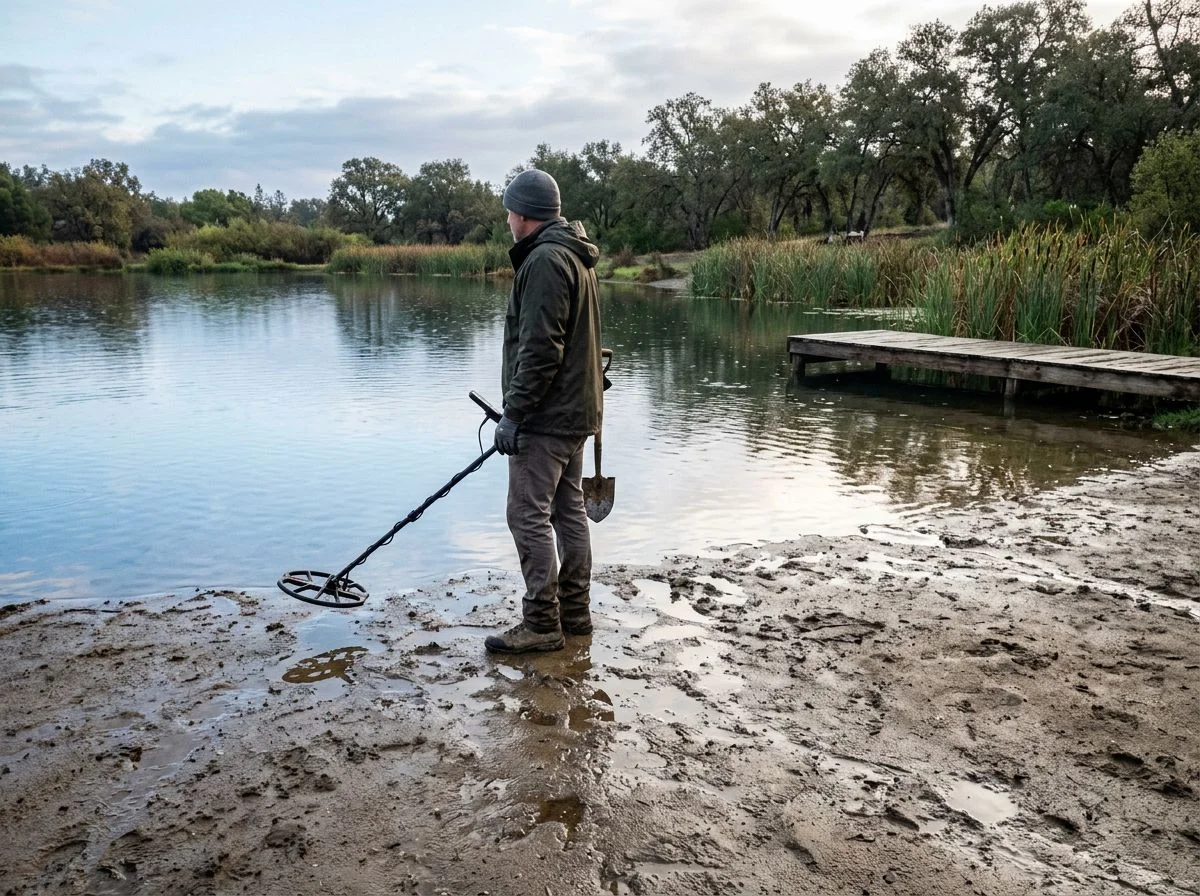
Water doesn’t just make soil heavier. It turns the ground into a weak electrical conductor. That distorts the electromagnetic field your detector relies on. The machine isn’t malfunctioning. It’s reading a completely different medium than the one it was calibrated for.
Think of it like this: dry soil is like a pot of plain water. Add salt before boiling pasta, and suddenly that water conducts electricity differently. Wet soil does the same thing to the minerals already sitting in your dirt. Rainwater fills the air pockets between soil particles. It dissolves salts, fertilizer residue, and iron compounds that were previously inert. That mineral-laden solution now conducts electricity. Weakly, but enough to alter how your detector’s transmitted field travels downward and returns to the coil.
Your machine’s processor doesn’t know any of this is happening. It receives a distorted signal. It compares that signal against its internal reference table. Then it confidently assigns a VDI number. The problem? That reference table was built for normal ground conditions, not a conductive soup.
Dennis Wynne, a professional detectorist and field investigator, explains that chemicals like fertilizers, lime, and iron lawn supplements alter soil electrical conductivity. That directly destabilizes VDI readings and causes detectors to misidentify targets. So it’s not just natural soil minerals. It’s everything we’ve been dumping on our lawns for decades.
The effect can be extreme. One Fisher F75 user hunting brown clay soil loaded with magnetite reported that a copper penny gave a weak but sure response at 10 inches in dry conditions. Once the ground became wet, that signal was lost entirely. The soil became so reactive with moisture that electromagnetic penetration collapsed. Ten inches of depth, gone. Not because the coin moved, but because the medium changed.
That’s the part that messes with your head. The target is still there. The signal just can’t reach it cleanly anymore.
How Wet Ground Causes Target ID Shift
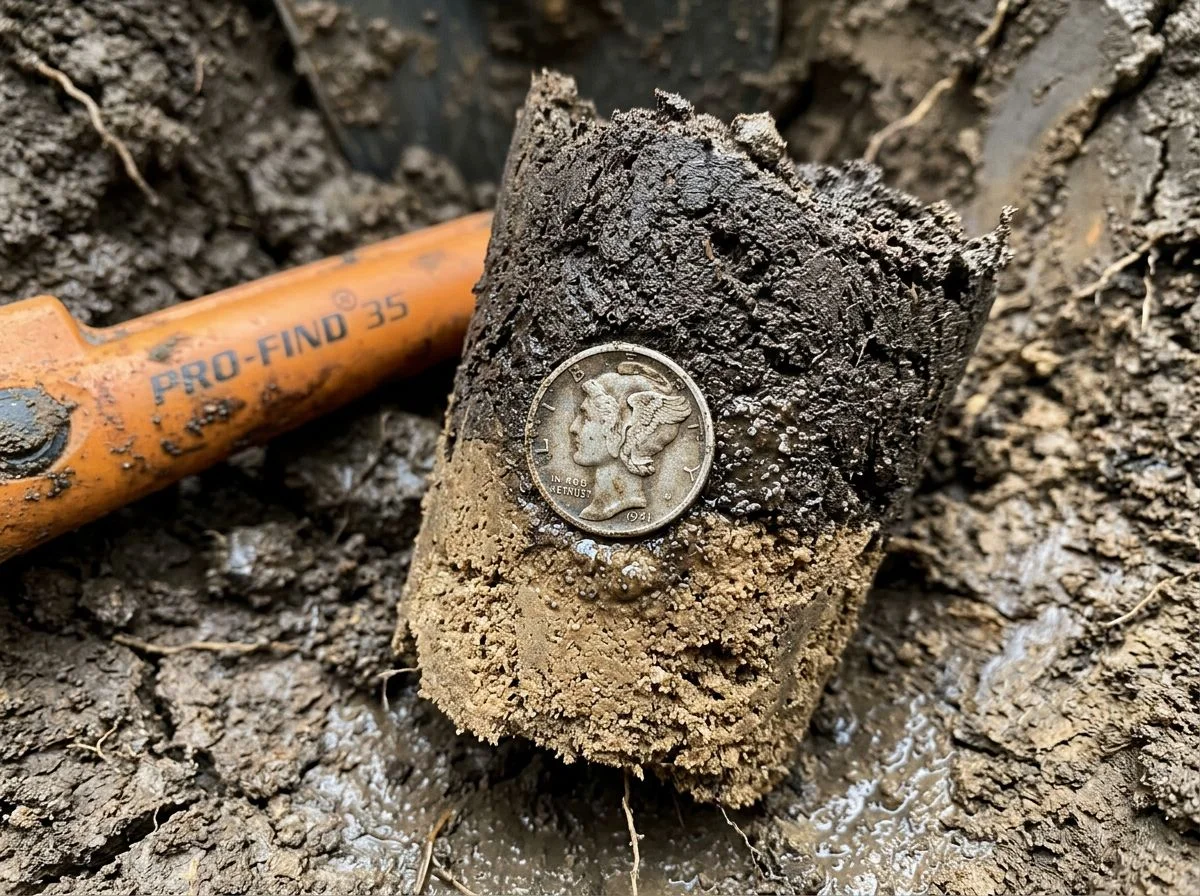
When soil gets wet, VDI numbers don’t just get fuzzy. They systematically shift upward for high conductors. Sometimes by 5-15 points. That shift can push a dime squarely into quarter territory. The screen isn’t glitching randomly. It’s misreading the target’s conductivity signature through a conductive medium.
Bucktrout, a Deus II user, tracked this carefully over several hunts. On dry days, clad and silver dimes registered 89, 90, or 91 on his screen. The next day, with the ground holding moisture, those same dimes jumped to 91, 92, or 93. That’s a three-point average shift. Enough to blur the line between a dime and a quarter on most machines.
What’s interesting is that the shift isn’t always upward. Bucktrout noticed copper Memorial pennies doing the opposite. They read 91 or 92 on dry ground, then dropped to 88, 89, or 90 once moisture soaked in. Same soil, same machine, same targets. But the water pushed different metals in different directions.
bamadigtab from Bessemer, Alabama had a simpler way of putting it: in moist ground, dimes and pennies regularly register as quarters on his detector. Not occasionally — regularly. He still digs them. That’s probably why he’s still finding silver at five inches.
The pattern here matters more than the exact numbers. High-conductivity targets like silver dimes and clad quarters get pushed toward each other when the ground’s wet. The VDI separation that normally helps you tell a dime from a quarter shrinks or disappears entirely. Your machine starts playing a guessing game, and the guesses lean high.
That’s why my Mercury dime read 93 that morning. The wet soil had inflated its conductivity signature by a solid 15 points. The machine wasn’t broken. It was just reading the coin through a lens of mineralized water. And that lens bends everything toward the top of the scale.
Ground Balance Fights Moisture-Driven False IDs
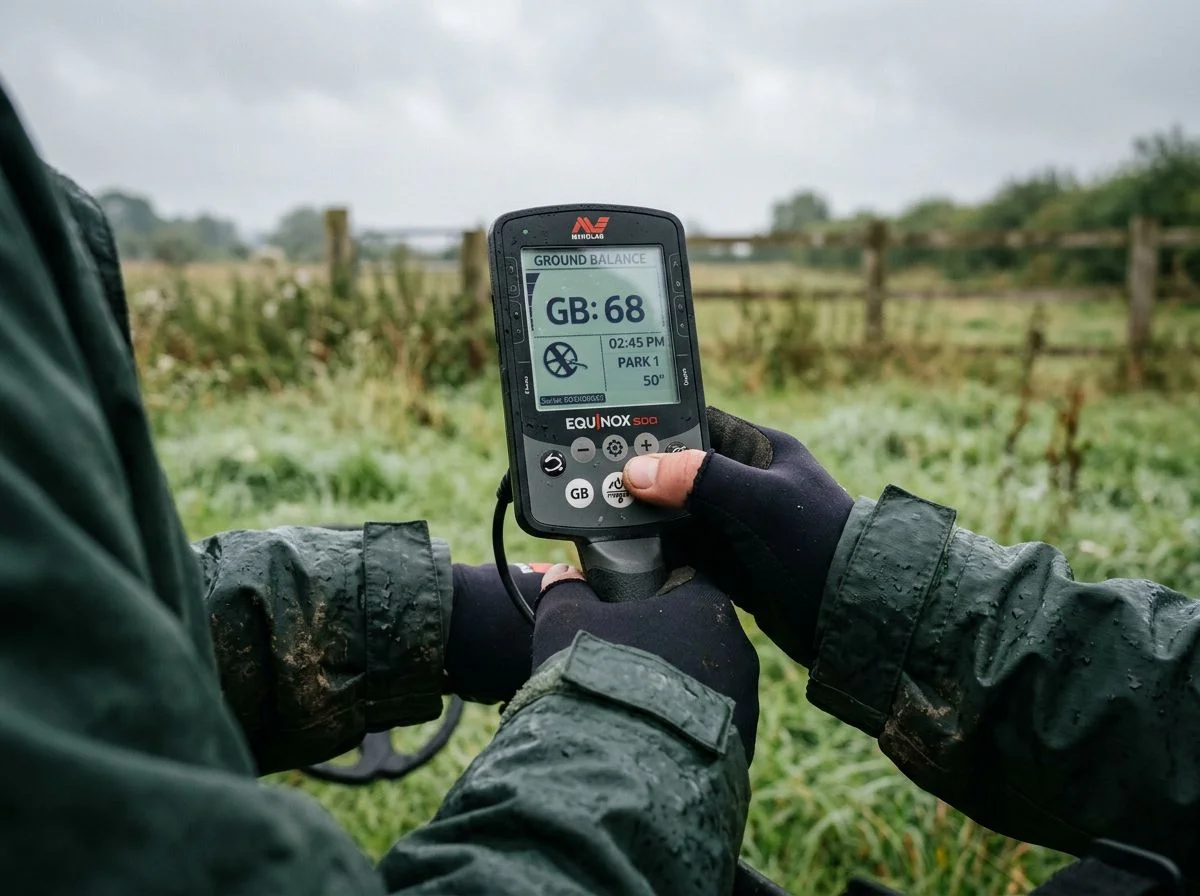
Ground balance is the most direct countermeasure you have against moisture-driven VDI drift. When soil moisture changes the ground’s mineral response, rebalancing recalibrates your detector to ignore that new baseline. The numbers you see then reflect the target, not the wet dirt around it.
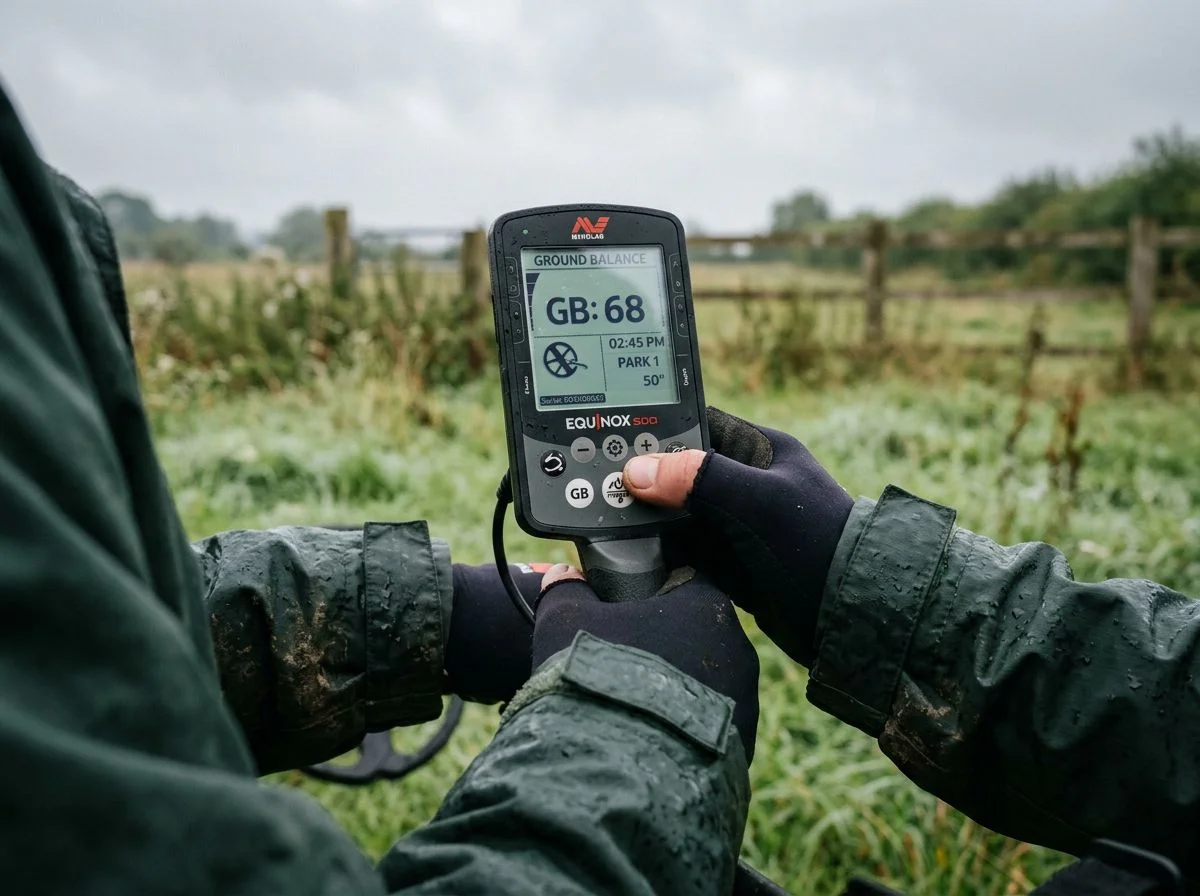
The problem is that moisture rarely distributes evenly across a single field. I ran into this last spring at an old farm field outside Dixon. The east half sat in shade most of the morning and held moisture from the previous night’s rain. The west half baked in full sun and was bone dry. I ground balanced on the dry side and got clean numbers. Then I wandered into the damp half. My Equinox 900 started chirping on ghost signals that vanished when I dug. The VDI on a solid wheat penny bounced between 72 and 81. That range usually screams “dig me.” Here it just meant the machine was fighting the soil.
Detector Warehouse recommends frequent ground balancing precisely because moisture levels vary across a single field. Not once at the start of the hunt. Every time you cross into visibly different ground conditions. Shaded versus sunny. Low spot versus ridge. Near a tree line versus open field. Each transition can mean a different moisture profile and a different mineral response.
Once you’re balanced, don’t trust a single swing. The Minelab Manticore manual explicitly advises swinging over a target multiple times from different directions to let the machine build VDI confidence. That’s not just manufacturer boilerplate. It’s the difference between digging a stable 91 and chasing a number that only appeared from one angle. The coil may have caught a wet mineral pocket on the return path.
So the routine is simple: balance often, verify from two directions, and when the numbers still look wrong, trust the tone more than the screen. The machine’s doing its best. You just have to give it better information.
The Halo Effect Makes Older Targets Easier to Find
Here’s the upside to all this moisture chaos: wet soil can instantly increase your detection depth by 20%. Rainwater activates the “Halo Effect” around decades-old coins and relics, making them highly detectable. That’s not marketing fluff. Detector Warehouse has documented this repeatedly. And I’ve seen it in the field enough times to believe it.
So what exactly is a halo? When a coin or relic sits in the ground for decades, it doesn’t just sit there inert. The metal slowly oxidizes. Tiny ionized metal particles leach into the surrounding soil. Over time, that creates a conductive “halo” around the target. It’s a zone of mineralized dirt that your detector reads as part of the object itself. A copper penny that’s been buried for 80 years effectively has a larger electromagnetic footprint than the same penny dropped last week.
The catch is that a halo only conducts when it’s wet. Dry soil is mostly air pockets, and those ionized particles sit dormant. Add rainwater and suddenly that halo becomes an active conductor. That effectively makes the target “bigger” to your machine. I’ve pulled deep silver dimes after a good soaking rain that I’d walked right over a week earlier in bone-dry conditions. The coin wasn’t deeper. The halo was just awake.
This is also why I’ll happily hunt in slightly damp soil but avoid waterlogged mud. There’s a sweet spot. Enough moisture to activate the halo, but not so much that you’re fighting false signals and a coil caked with wet dirt.
When Saturation Creates Iron Halos and False Signals
Too much water is just as bad as too little. Sometimes worse. Heavy rain doesn’t just shift your VDI numbers. It can manufacture convincing false signals from iron halos around buried nails. That turns a promising high tone into a fistful of rust.
I learned this one the hard way after a three-day downpour last winter. The ground at an old homesite outside Placerville was absolutely saturated. The kind of wet where every step squelches and your coil leaves a wake. I’d ground balanced and checked my settings. Then I hit a screaming 88 on my Equinox 900. Solid, repeatable, textbook quarter signal. I dug a clean plug and scanned the hole. The signal was still there, but now it read 91. I dug deeper. Nothing. Six inches down, I finally pulled out a completely rusted square nail. Its iron halo was bleeding into the surrounding mud like a bruise.
Dennis Wynne, a professional detectorist and field investigator, explains that heavy rain draws iron from the soil and buried nails. That raises the mineral response in the days following a storm. The dissolved iron creates a conductive cloud around the nail. Your detector reads that cloud as a big, juicy high conductor. The nail itself would normally grunt iron. The halo makes it sing like silver.
And it’s not just halos. “ohiochris” from Findlay, Ohio reported that in super-saturated soil, his target ID bounces “all over the place” on a quarter. That’s the kind of erratic behavior that could easily convince you it’s trash. I dug four false high tones that afternoon before I started trusting my ears less and my cross-sweeps more. The lesson? After heavy rain, a stable high number isn’t a promise. Swing it from three angles. If the number drifts even slightly, expect rust.
Why Silver Sometimes Reads Like Iron
Here’s the scariest trick wet mineralized soil can play: a silver dime can read as a 10 or 15 on your VDI. Right in the trash zone where pull-tabs and foil live. Ignore those numbers after a heavy rain and you might be walking over silver.
Sven Stau of the Thames Valley Metal Detectors Association explains that this “wrap-around effect” happens when highly mineralized, wet soil causes your detector to downgrade target ID numbers toward the ferrous range. A silver target that normally reads in the 80s or 90s can get dragged all the way down into the +10 to +30 bracket. Meanwhile, actual foil targets get pushed into negative numbers. So the junk you’d normally skip suddenly reads below iron. And the silver you’d normally dig reads like junk. It’s completely backwards.
I hit this exact scenario at an old fairground site near Davis after a week of rain. My Equinox 900 kept throwing solid, repeatable 14s and 15s. Normally I’d walk right past those. That’s foil territory on a good day. But something about the consistency bugged me, so I dug. Out came a 1943 Mercury dime at about six inches, reading 14. I dug three more low numbers that afternoon and pulled two more silver dimes and a buffalo nickel. All reading under 20.
The lesson isn’t to dig every low number forever. It’s that after heavy rain on mineralized ground, your VDI scale compresses and shifts. When your machine starts acting like it’s constantly identifying iron in the +98 to +65 range without you finding good targets, the wrap-around effect is in play. Dig a few of those “junk” numbers and see what the ground is actually doing to your signals.
Hunting Wet Ground Without Losing Your Mind
When the ground turns soupy, your VDI numbers become suggestions rather than promises. The fix isn’t a single setting. It’s a disciplined field workflow that treats every signal as a hypothesis to be tested, not a verdict to be trusted. Here’s the routine I’ve settled on after too many wet-ground hunts where my machine lied to my face.
Step 1: Ground balance more often than feels reasonable. Moisture levels shift across a single field. Low spots hold water. Slopes drain faster. I re-balance every 20 minutes when the ground’s saturated, not just once at the start. It takes 10 seconds and saves me from chasing phantom signals.
Step 2: Slow your swing by about 30%. Wet soil conducts better. That sounds great until you realize the detector’s processor is working harder to separate targets. A slower coil gives it time to settle on a number instead of jumping around.
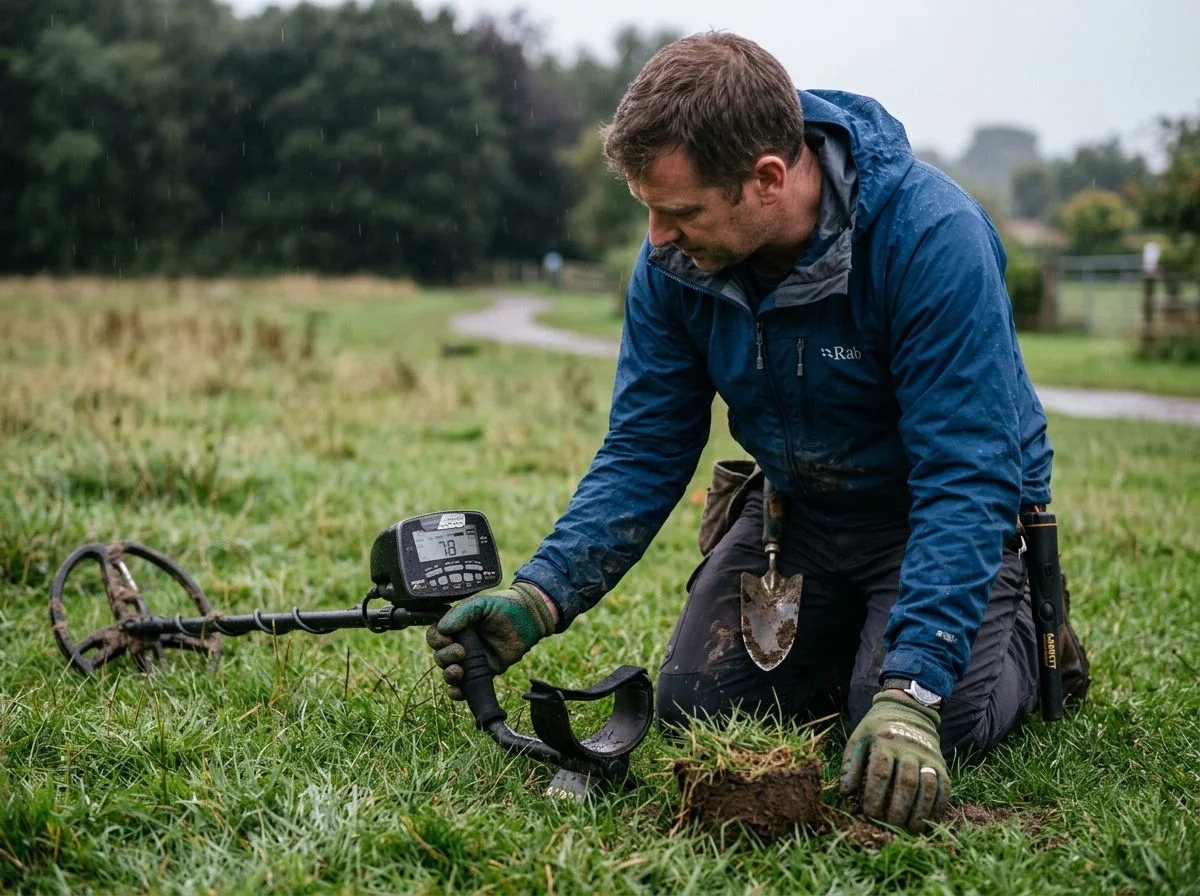
Step 3: Cross-sweep every promising target at 90 degrees. This is the big one. KSDfisher77 reported that turning 90 degrees on a target usually causes a small VDI change for irregular trash. But in challenging soil, the numbers stayed rock-solid. That repeatedly fooled him into digging shredded aluminum and bottle caps that read like clad dimes. Meanwhile, MWF Metal Detectors explains that a corroded halo nail can produce an erratic high VDI of 55 to 78. It only collapses into an iron grunt when you hit it from the side. The cross-sweep is your lie detector.
Step 4: Dig a few “wrong” numbers on purpose. When the wrap-around effect is in play, your whole VDI scale is shifted. I’ll dig three or four low-tone targets early in a wet hunt just to see what the ground is doing. If foil’s reading negative and dimes are reading 14, I adjust my dig/no-dig threshold accordingly.
Step 5: Wipe your coil. Wet soil clings to the search coil and degrades target ID accuracy. I’ve caught myself chasing signals that turned out to be a mud clump riding the coil like a passenger. Keep a rag in your pocket.
The mental shift is the hardest part. You’re not hunting by numbers anymore. You’re hunting by pattern, consistency, and the cross-sweep test. The VDI is a clue, not a conclusion.
Common Questions About Target ID Shift in Wet Soil
The short answer is yes. Wet soil changes your numbers, sometimes dramatically. But the real question isn’t whether it happens. It’s how much you should trust what your screen tells you when the ground is saturated. The honest answer: less than you think.
“Should I hunt after rain?”
Yes, with a caveat. The consensus among forum members is that rain improves conductivity and makes cutting clean plugs easier. Everything digs like butter. But over-saturation remains a primary cause of erratic VDI numbers. Slightly damp is perfect. Waterlogged is a headache.
“When is wet ground actually an advantage?”
Surfchunker from Cumberland, Maryland, swears by late winter and early spring, just after the ground thaws and remains deeply wet. He calls it the absolute best time to hunt. The moisture is consistent, the digging is easy, and the soil hasn’t baked into concrete yet. I’ve had some of my best depth days in March, right after the frost lets go.
“My numbers are jumping all over the place. Is my detector broken?”
Probably not. Ohiochris from Findlay, Ohio, reported that in super-saturated soil, his target ID bounces “all over the place” on a quarter. Enough to make it look like trash. If your machine is stable on dry ground but erratic after heavy rain, the detector’s fine. The ground is the problem.
Learn Your Soil’s Wet-Weather Personality
Here’s the bottom line: your soil has a personality that changes when it rains. The only way to hunt it well is to learn what those changes look like on your specific machine, in your specific dirt. The forum consensus holds. Rain improves conductivity and makes cutting clean plugs easier. But over-saturation remains the primary cause of erratic VDI numbers. Slightly damp is your friend. Waterlogged is a liar.
So here’s what I want you to do. Bury a test garden. I know, I know. It sounds like homework, and it is. But hear me out. Take five or six known targets — a clad dime, a silver dime, a copper penny, a pull tab, a bottle cap, maybe a wheat penny if you’ve got one to spare. Bury them at consistent depths. Mark the spots. Then scan them when the ground is bone dry and write down the VDI numbers. Wait for a good soaking rain. Scan them again. Write it down again.
What you’ll end up with is a map of your soil’s shift pattern. Maybe your silver dime reads 82 dry and 88 wet. Maybe your bottle cap stays stubbornly at 78 no matter what. That’s the kind of intel no forum post can give you. It’s specific to your dirt, your machine, your coil.
I did this two years ago in my backyard. I’d been fooled one too many times by wet-ground quarter readings. Took me an afternoon. I still reference those notes every time I hunt after a rain. My wife thinks I’m ridiculous. But she also thought that about the Sanborn map collection. And look who found the 1901 barber dime last spring.
Learn your soil’s personality. It’ll tell you when to trust the screen and when to trust the shovel.

My name is Paul and I am the founder of Detector For Metal, a dedicated resource for metal detecting enthusiasts seeking to uncover historical treasures and connect with the past using the latest technology. As a stay-at-home dad and family man, I’ve found metal detecting to be the perfect hobby that combines family adventure with historical learnings for the whole family.
As a father, I’m deeply committed to passing on this hobby to the next generation of detectorists, starting with my own children. I share advice on everything from metal detecting with kids to exploring the top 10 metal detecting sites you never thought about. My methodical approach to the hobby goes beyond the thrill of discovery—it’s about creating family traditions while preserving history and sharing the stories of those who came before us.