Table of contents
- Why Old Yards Create So Many False Signals
- What Hot Rocks Metal Detecting Actually Means
- Burnt Coal That Mimics Coins
- Why Old Yard Sites Are Uniquely Noisy
- How to Spot a Hot Rock Before You Dig
- Ground Balance Strategies for Mineralized Yards
- Notching Out Coke
- When to Dig the Garbage Anyway
- Hot Rocks Metal Detecting FAQs
Hot rocks metal detecting is a rite of passage. Hot rocks and coke both cause false signals, but they act differently. Hot rocks are mineralized stones that read as metal due to high iron or conductive mineral content. Coke is carbonized coal residue that mimics coin targets. Learn their distinct audio signatures, and you’ll stop digging them.
The quickest field test for a hot rock is lifting the coil. A real coin keeps a tight, repeatable signal as you raise the coil a few inches. A negative hot rock — the kind loaded with magnetite — gives a broader, less definite response. It often nulls or breaks as you pull away. Orient Detectors describes this as a “delayed acquisition and nulling of the audio response”. The signal sounds hesitant, almost like the detector is second-guessing itself. Positive hot rocks, which contain conductive sulfides or iron oxides, are trickier. They may read like a solid target until you dig.
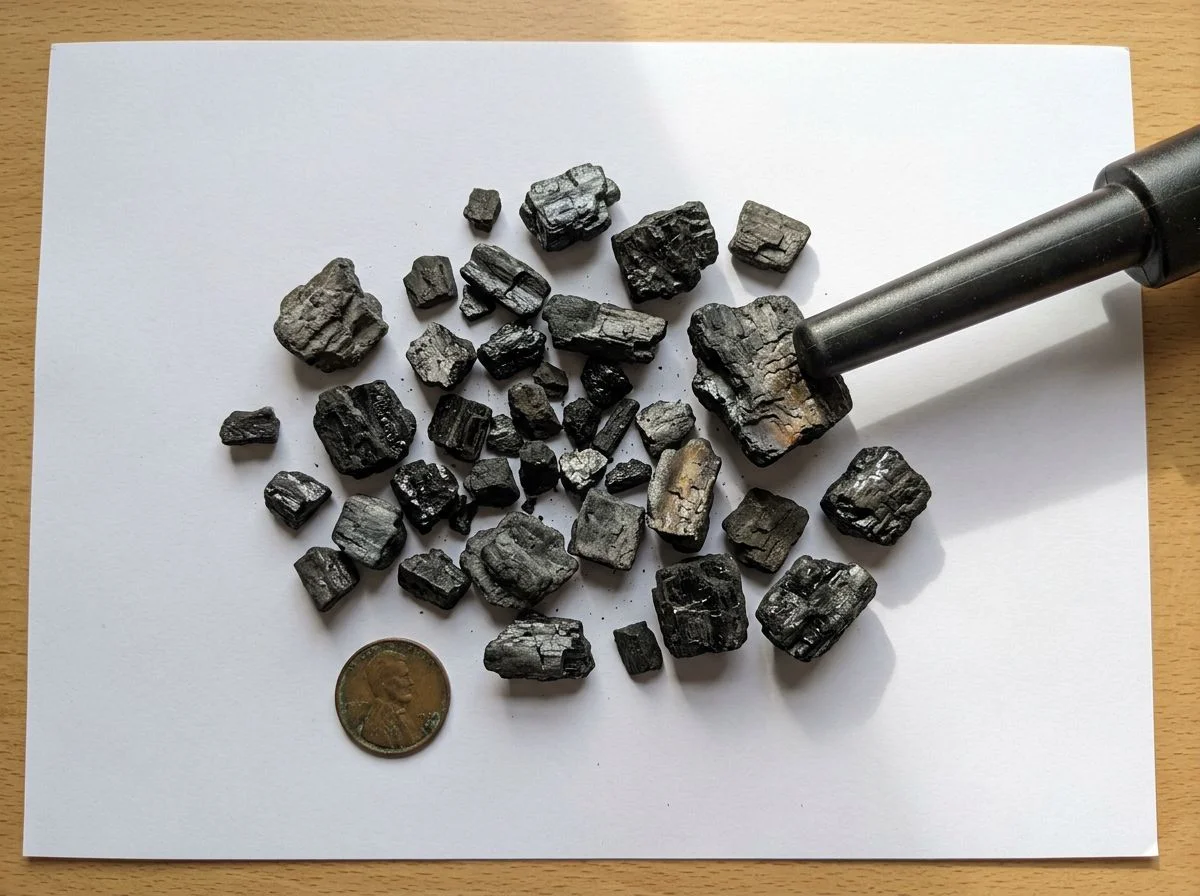
Coke is easier to spot once you know what you’re hearing. It’s highly conductive because it’s essentially carbon. So it can ring up in the coin range — often target ID 10 to 11 on many machines. The tell is instability. Coke signals jump around and break apart as you sweep from different angles. As one veteran detectorist notes, coke produces “jumpy or broken signals” that can mimic small hammered coins.
Your best defense against hot rocks metal detecting is a second ground balance pass. Nokta’s Legend has a dedicated second ground balance feature specifically for mineralized hot rocks and red bricks. It can achieve near-silence over falsing targets while still hitting real coins. On older single-frequency machines, manually ground balancing directly over a suspected hot rock will often tune it out entirely.
The practical takeaway: dig a few to confirm. Then notch them out or ground balance them away. You’ll know it worked when the same spot goes quiet on repeat sweeps but still screams on a planted test coin.
Why Old Yards Create So Many False Signals
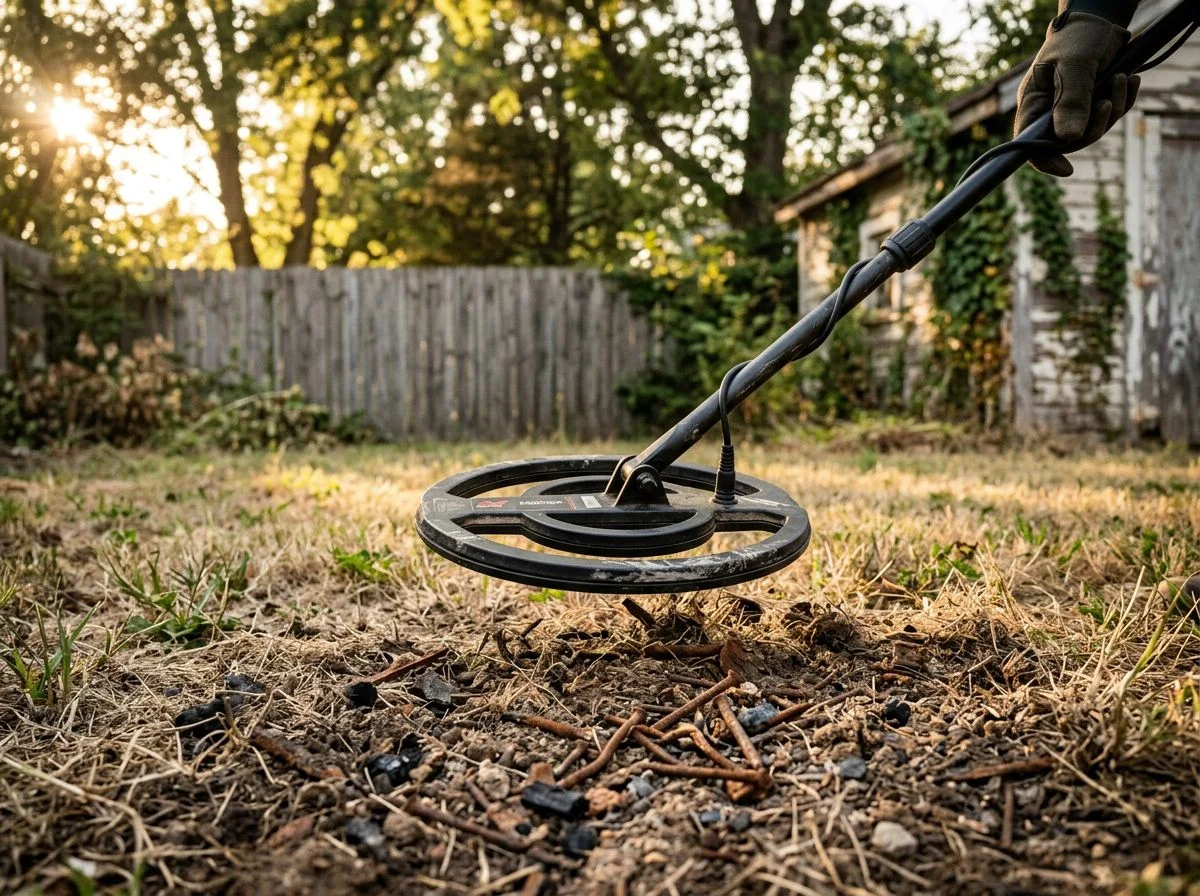
Here’s the short version. Old yard sites concentrate false signals because they were lived in during the coal-burning era. That same human activity that scattered coke and slag everywhere is exactly what makes these spots worth hunting. The trash is the treasure map.
What if the most frustrating signals on your old yard site are actually proof you’re in the right place?
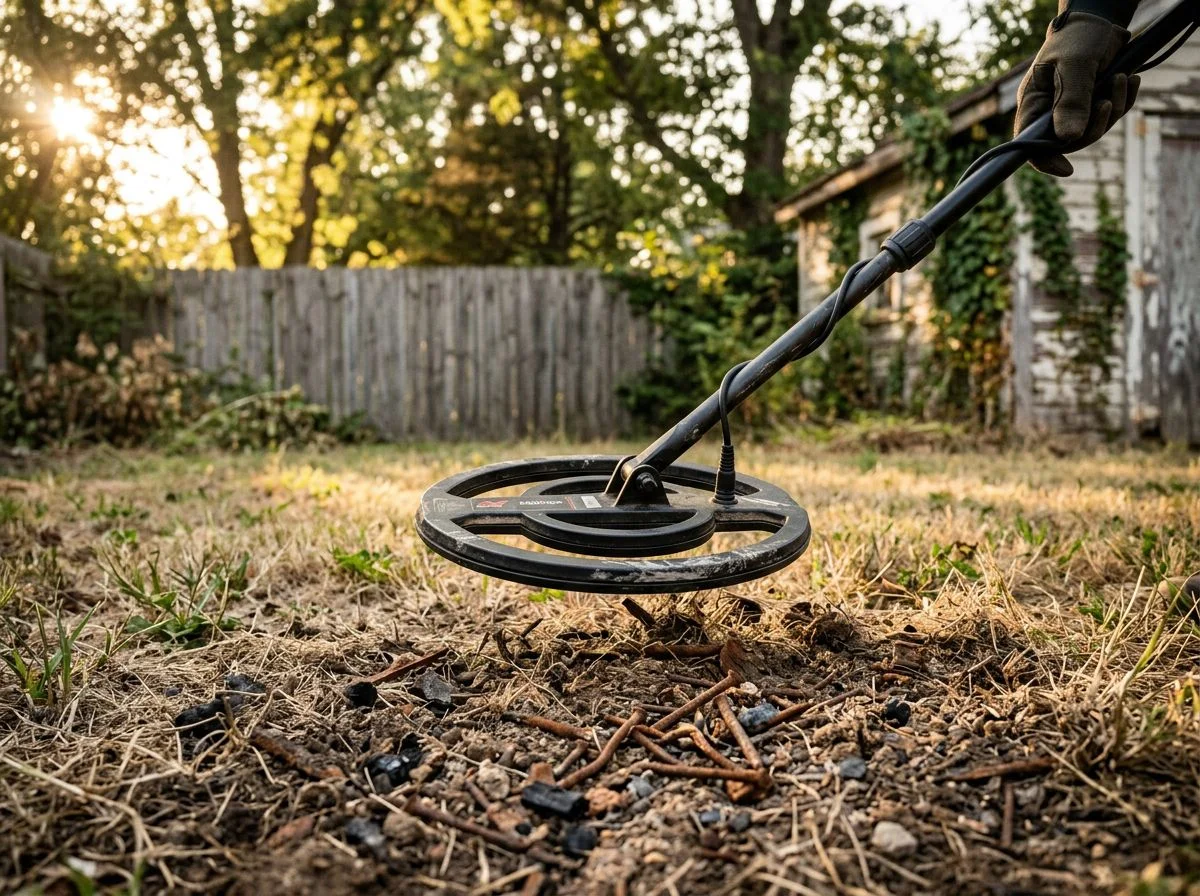
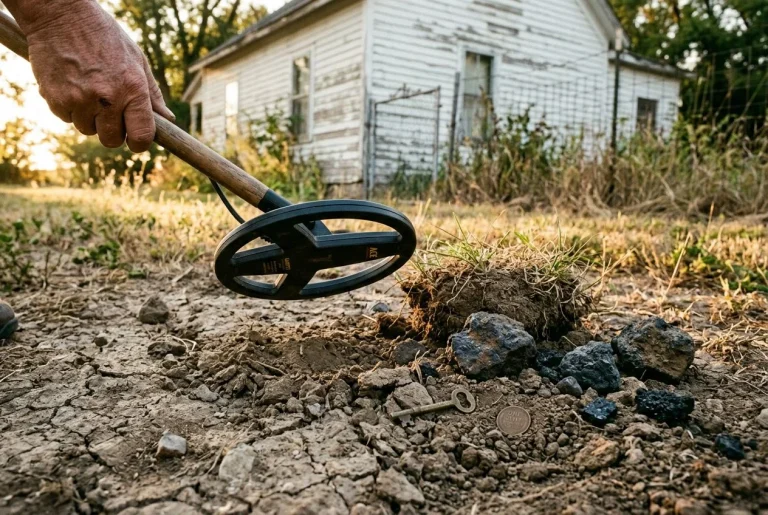
I mean it. Think about what you’re digging when you hunt a farmhouse site from the 1890s. That crumbly black coke that rings up as a coin? That means someone was burning coal there. They were heating a home, cooking meals, living a daily life for decades. The slag and clinkers that drive your detector crazy? Those aren’t natural rocks. They’re industrial byproducts: fire-brick fragments, furnace residue, the leftovers of a household that ran on coal.
Here’s the number that puts it in perspective. Old yard sites occupied during the coal-heating era — roughly 1850 to 1920 — can contain 10 to 50 coke pieces per square yard in high-traffic areas. Fifty false signals in a single square yard. That’s not a nuisance. That’s a density map of where people actually lived. The paths between the house and the outhouse. The spot by the back door where they dumped ash. The area around the coal shed. Those are the zones with the most coke. And they’re also the zones where coins fell out of pockets, where buttons popped off coats, where kids lost toys in the dirt.
The same principle applies to hot rocks metal detecting. On a natural site, a hot rock is just geology. On an old yard site, that hot rock is often slag, a clinker, or a piece of fire-brick. It’s evidence of a stove, a furnace, a blacksmith’s forge. Where there was a forge, there was a person swinging a hammer. The false signals cluster around the activity. The activity clusters around the finds.
So the next time you pull your tenth piece of coke out of a hole and want to throw your detector in the truck, remember: you’re not digging trash. You’re digging proof that someone spent decades dropping things worth finding.
What Hot Rocks Metal Detecting Actually Means
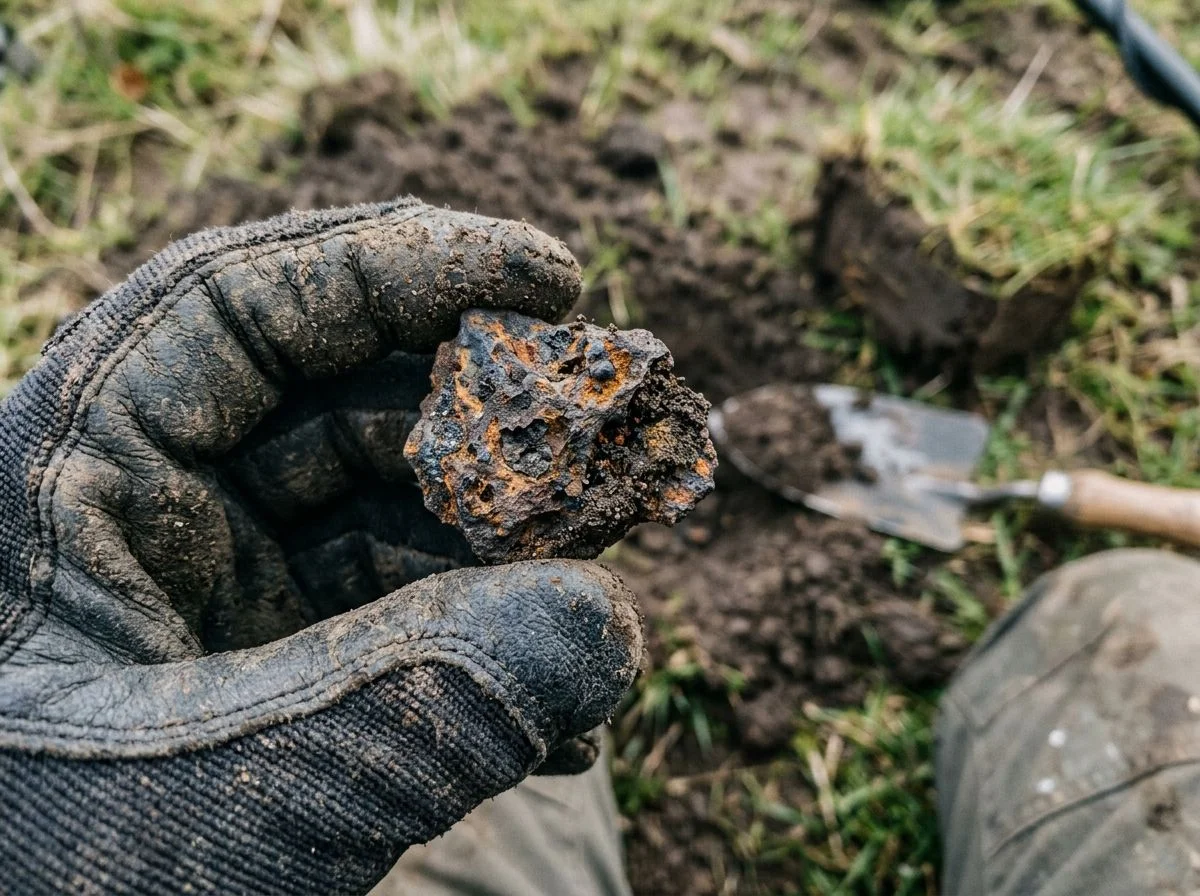
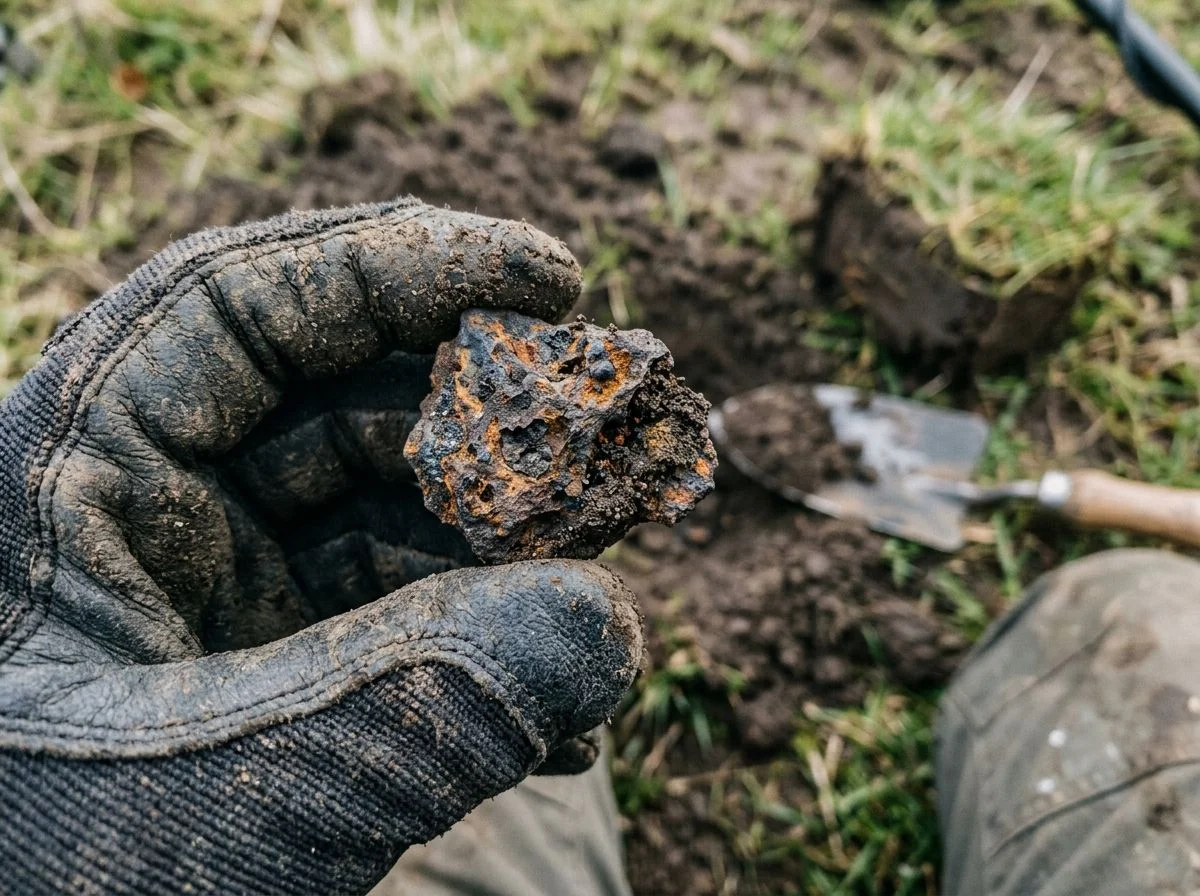
A hot rock is any rock, pebble, or chunk of sediment that contains significantly more — or less — conductive minerals than the ground around it. Your detector reads that imbalance as a metal target. Even when there’s nothing metallic there at all.
The first time I ever dug a hot rock, I was convinced I’d found a meteorite. I was at a swimming hole outside Sacramento, maybe six months into the hobby. I was swinging an old Garrett ACE 250. I got this broad, kind of fuzzy signal. Not the crisp ping of a coin, but definitely something. I dug down about eight inches and pulled out a black, heavy rock the size of a golf ball. Dark as charcoal. Dense enough that it felt wrong in my hand. I was already mentally spending the meteorite money.
It was magnetite. Pure, unremarkable magnetite. And I’d been fooled by the exact same thing that fools every detectorist at least once.
Here’s the science, stripped down. Negative hot rocks contain high concentrations of magnetite (Fe₃O₄). That’s the dark black, heavy stuff I dug up. Magnetite is an iron oxide, which means it’s magnetic. But it’s not conductive in the way a coin or a nail is. What it does instead is mess with the detector’s ground balance. Your machine is calibrated to ignore the normal mineral content of the soil. When a concentrated chunk of magnetite sits in that soil, it creates a magnetic anomaly. The detector interprets that anomaly as a target, even though there’s no metal present. The signal sounds hesitant because the machine is genuinely confused.
Positive hot rocks are the opposite problem. They contain conductive minerals — sulfides, certain iron oxides — that actually do read as metal. These are the ones that’ll fool you even after you dig them up. The rock itself conducts electricity. You’ll find yourself waving a plain-looking stone over your coil and getting a solid signal.
Here’s the part that matters for old yard sites. On natural ground, negative hot rocks loaded with magnetite often indicate gold-bearing soil, especially in streams and dry washes. Prospectors actually look for them. But in an old yard site, that black rock you just dug is more likely slag or a clinker from a coal furnace. Understanding why these rocks false is the first step to trusting your machine.
Burnt Coal That Mimics Coins
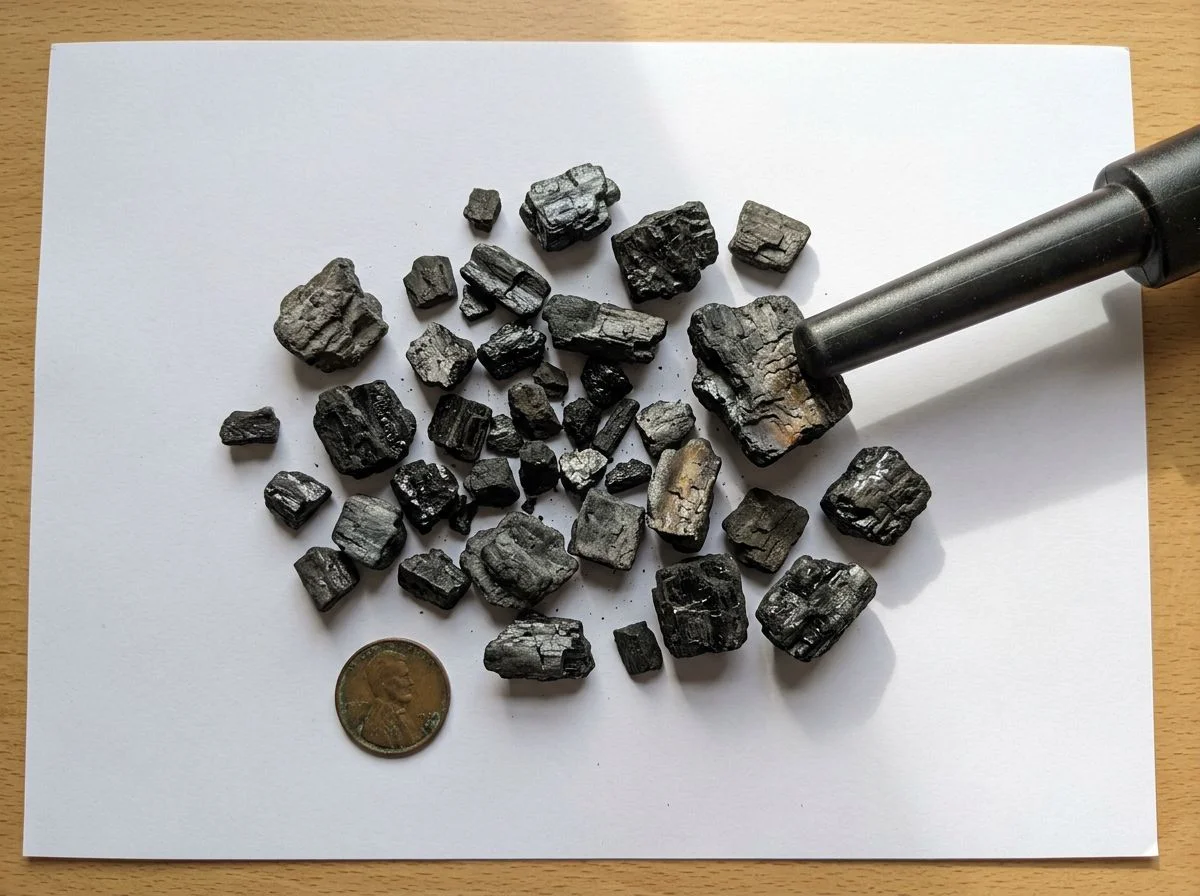
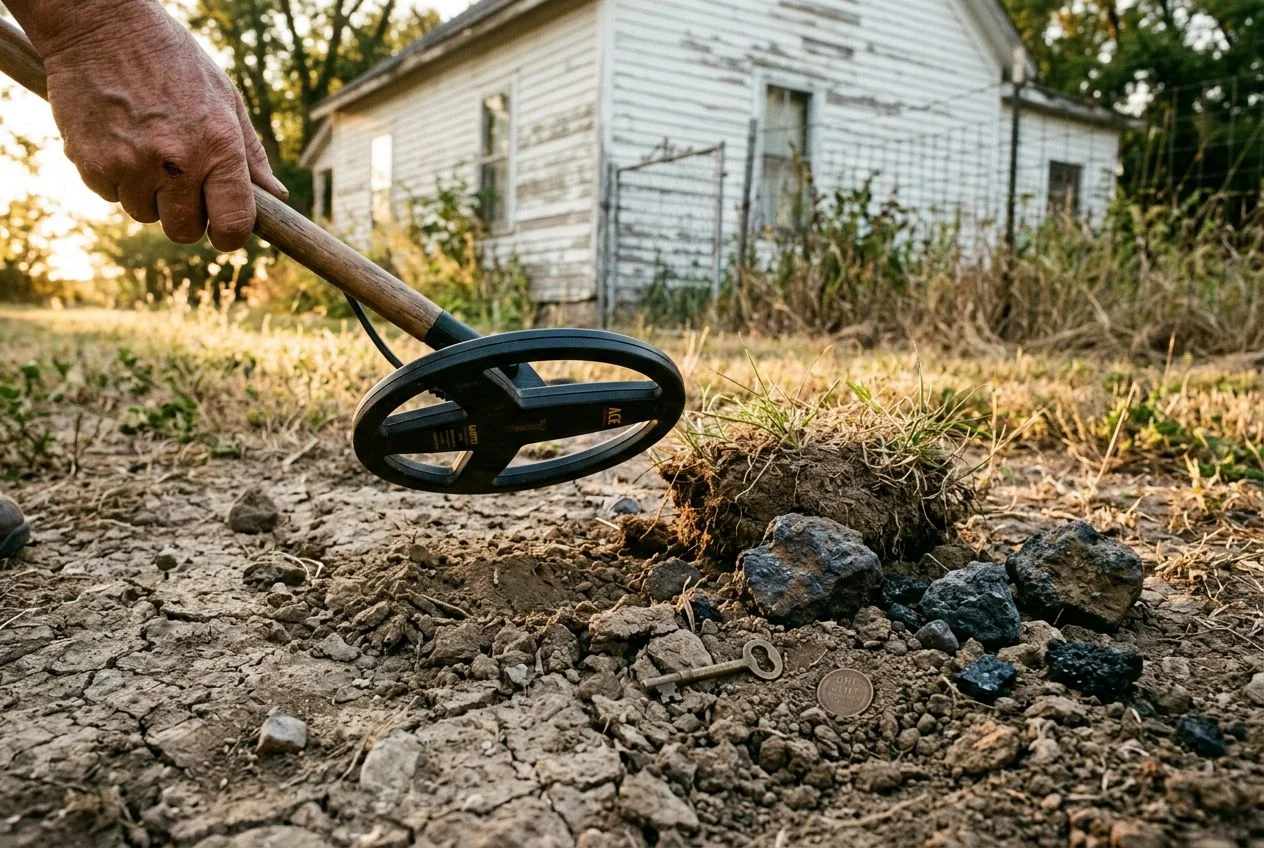
Coke is carbonized coal. It’s the burnt, crumbly black residue left behind after coal fires. Because it’s primarily carbon, it’s highly conductive. Which means your detector reads it as metal. On old yard sites, coke is the single most common false signal you’ll dig during hot rocks metal detecting.
Here’s the frustrating part. Coke can produce target IDs nearly identical to small hammered coins. That’s why relic hunters in England have such a love-hate relationship with the stuff. One minute you think you’ve got a 14th-century silver penny. The next you’re holding a chunk of burnt coal that crumbles in your fingers.
The signal itself is usually the giveaway, once you learn to listen for it. Coke tends to produce jumpy or broken signals. The numbers bounce around instead of locking in clean. A real hammered coin will usually give you a more stable reading, even at depth. Coke also often sounds “hollow” or scratchy compared to the crisp ping of a coin.
The scale of the problem is what catches beginners off guard. Old coal-burning sites can contain thousands of coke pieces scattered across the yard. Every ash dump, every path, every spot where someone carried a coal scuttle. You’re not dealing with the occasional false signal. You’re dealing with a site-wide layer of conductive clutter.
The good news? Many modern detectors let you notch out the specific target IDs where coke falls. Usually in the lower foil range. You’ll lose some small gold and thin silver in the process. But on a coke-choked yard site, that trade-off is often worth it.
Why Old Yard Sites Are Uniquely Noisy
Old yard sites combine three separate false-signal problems — hot rocks, coke, and coal clinkers — all concentrated in one small area. That’s why they frustrate detectorists more than any other site type. A beach has trash. A park has pull-tabs. But an old yard site has all of it, layered with industrial heating residue from a century of daily life.
Here’s the thing most people don’t realize. The noise isn’t random. It’s a signature. Old homesites in agricultural fields are often identifiable by compact, 100-foot-wide circular areas where gray or cream-colored foundation rocks stand out against dark soil. Those same sites frequently contain heavy concentrations of coal, coke, and hot rocks from historical heating. The very features that make a site detectable from the road are the same features that make it miserable to hunt.
The contrast between site types tells the story. Take a 1780s log cabin abandoned by 1850. You’re dealing with historical debris — hand-forged nails, dropped coins, maybe a musket ball. But no modern trash. Only a thin layer of coal residue from a few decades of occupation. Now compare that to a continuously-occupied farmhouse with 150 years of accumulated signals. Every generation added new trash, new heating methods, new construction debris. The coal era dumped thousands of coke pieces. The electrical era added copper wire and aluminum foil. The modern era added can slaw and bottle caps.
That’s the trifecta of hot rocks metal detecting. Naturally occurring hot rocks in the soil. Industrial hot rocks (slag and clinkers) from historical heating. And coke from coal fires. Three different problems, three different signal signatures, all buried in the same 100-foot circle. No wonder beginners walk away convinced their detector is broken.
How to Spot a Hot Rock Before You Dig
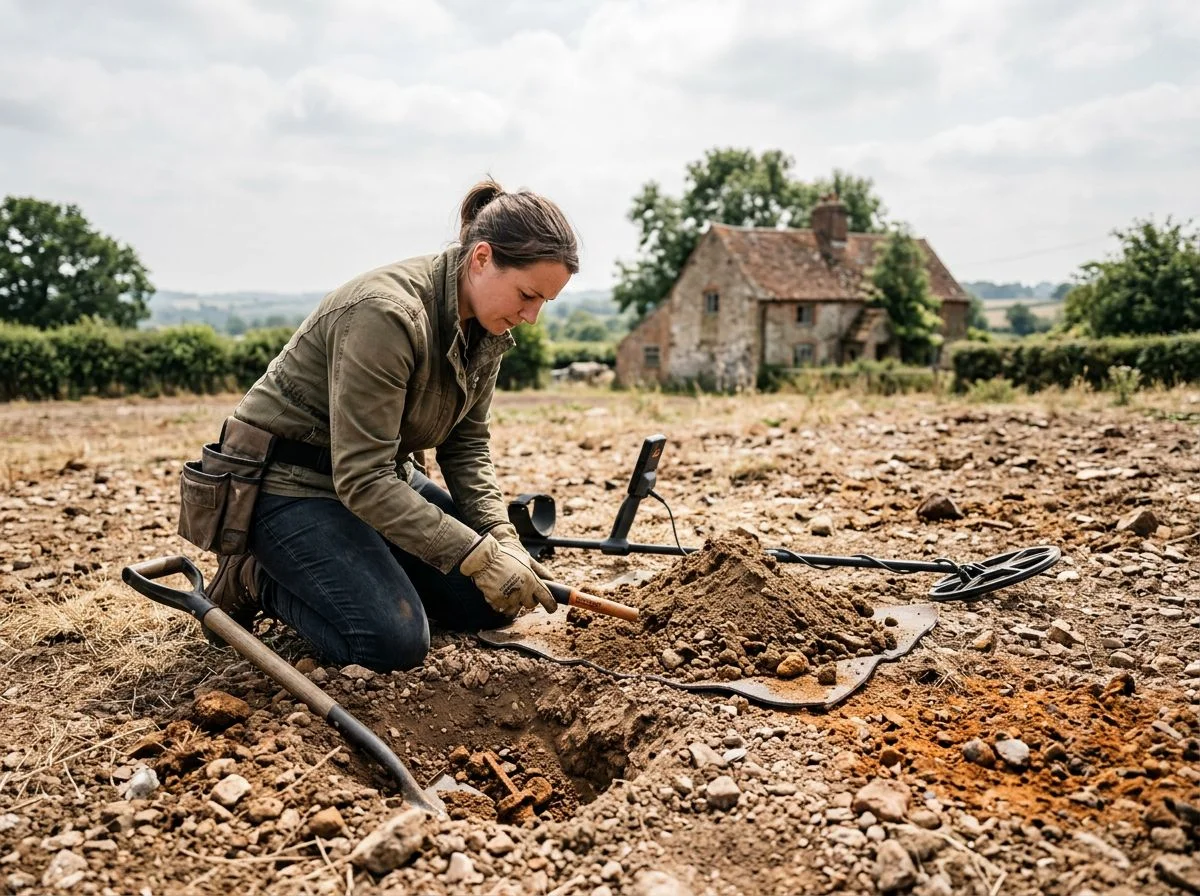
A hot rock gives a broad, broken, or one-directional signal that shifts or vanishes as you swing. A real target gives a tight, repeatable response from multiple angles. The difference is in the audio. You just have to learn to hear it.
How many times have you dug a rock that disappeared the second you broke the ground surface? It’s maddening. You get a decent signal, cut a plug, flip it over, and suddenly — nothing. The target’s gone. That’s the classic hot rock signature. Once you recognize it in the field, you’ll save yourself a hundred pointless digs.
Here’s the test that matters most. When you get a signal, swing the coil over it from at least three different angles. A real target — a coin, a button, a piece of brass — will hit consistently from every direction. The tone stays tight. The target ID locks in. The signal doesn’t wander. A hot rock won’t do that. It’ll sound off from one angle, then go quiet or broken from another. The response feels “wide” and mushy instead of crisp.
Negative hot rocks — the magnetite-heavy ones that plague old yard sites — have a telltale audio habit worth memorizing. They often produce a delayed acquisition and nulling of the audio response when the coil is moved away and back. In plain English: you swing over the spot, get a hit, swing away, then swing back. And the detector hesitates. Or the threshold blanks out for a split second before the signal returns. Real targets don’t do that. They respond instantly, every time.
Positive hot rocks are trickier because they contain conductive minerals that read like metal. But even then, the signal is usually broader and less defined than a coin. A real target produces a repeatable, tight signal from multiple angles. The same number, the same tone, the same spot on the coil. Hot rocks give you a moving target, literally and figuratively.
My rule of thumb: if the signal won’t stay put, it’s probably not worth the shovel. Two or three clean passes from different directions? Dig it. Anything else? Walk on.
Ground Balance Strategies for Mineralized Yards
The short version: use a second ground balance on multi-frequency machines. Or manual ground balance on single-frequency units. And re-balance every 20–30 feet as soil conditions shift. That’s the difference between a chatty detector and one that locks onto real targets.
I learned this the hard way on a brick-filled yard site in Sacramento. The house had burned down in the 1940s, leaving thousands of red brick fragments mixed into the topsoil. My Equinox 900 was screaming on every sweep — brick, brick, brick. I ground balanced at the edge of the property like I always do. It didn’t help. The noise was constant.
Then I remembered the second ground balance feature on the Nokta Legend. The “Beast Mode” update includes a second ground balance specifically designed to overcome false signals caused by ground changes, mineralized hot rocks, and red bricks. To activate it, you press the Ground Balance button, then the Frequency button, then perform the balance with the pinpoint button. I’d read about it but never tried it on a brick-heavy site.
The moment I ran that second balance, the noise dropped out. Not gradually. All at once, like someone flipped a switch. The constant chatter from the brick fragments went quiet. And underneath it, I started hearing the tight, repeatable signals I’d been missing all morning. I found a 1919 wheat penny about ten minutes later. It was sitting right where the brick noise had been masking everything.
Here’s the thing most detectorists miss. Old yard sites frequently contain heavy concentrations of coal, coke, and hot rocks from historical heating. And that mineralized ground shifts constantly. A single ground balance at the start of your hunt won’t hold. Re-balance every 20–30 feet. Especially when you cross from lawn into disturbed soil or near old foundation lines.
If your machine doesn’t have a second ground balance, use manual ground balance and pump the coil repeatedly until the threshold stabilizes. It’s slower, but it works. And if you’re still getting chatter, don’t fight it. Notch out the coke target IDs — typically 10–11 on most machines — and let the mineralized background fade.
Notching Out Coke
Notching out coke means programming your detector to ignore the 10–11 target ID range where burnt coal typically registers. It silences a major nuisance on old yard sites. But it also blanks out small hammered coins, thin silver, and some gold that share that exact conductivity window. Notching out coke is like closing your eyes to avoid seeing something scary. You might miss the thing you actually wanted to find.
Here’s the problem in plain terms. Coke — that crumbly black residue from coal fires and industrial waste — is highly conductive because it’s primarily carbon. On most machines, it produces jumpy, broken signals that land right in the 10–11 range. That’s the same range where small hammered coins and thin silver often read. I’ve dug a cut half penny that rang up at 11. Right next to a piece of coke that also rang up at 11. If I’d notched that range out, I’d have walked past both.
The Nokta Legend’s second ground balance feature takes a different approach. Instead of notching the range out entirely, it weakens targets in that 10–11 window. You still hear them, but they’re quieter, less confident. More like a whisper than a shout. That’s a smarter trade-off than a hard notch. You retain the option to investigate if the signal feels tight and repeatable from multiple angles.
But even that comes with a cost. The same update that weakens coke also softens the response on aluminum foil and other low conductors. On a site loaded with small silver jewelry, you might miss a thin chain or a tiny gold earring that reads in that range. My rule: if I’m hunting a coal-era yard site where coke is everywhere, I’ll run the second ground balance and accept the trade-off. If I’m on a beach or a park where small gold is the target, I want that range wide open.
The real answer isn’t a setting. It’s your ears. A notched-out coke range is a crutch that becomes a blindfold. Learn the audio difference between a crisp, repeatable 11 and a broken, wandering 11. Then you won’t need to close your eyes at all.
When to Dig the Garbage Anyway
Dig the “garbage” when the signal is repeatable from multiple angles and the site’s history says keepers should be there. On old yard sites, veteran detectorists often dig 50–100 trash targets for every keeper. The difference between a good hunter and a frustrated one is usually just tolerance for uncertainty.
I learned this at that forgotten train stop near Auburn. I’d been digging coke for two hours. Thirty-nine pieces by my count. Each one a crumbly black lump that rang up at 11 and made me curse under my breath. My pouch was heavy with garbage, my knees hurt, and I was about to call it. But the 40th signal was tight. Repeatable from three angles. Same target ID as the last 39 pieces of coke. But something about it felt… cleaner.
I dug it anyway. And about eight inches down, in the same hole as that last piece of coke, sat an 1876 seated Liberty dime.
Here’s what that taught me. Old homesites contain heavy concentrations of coal, coke, and hot rocks from historical heating. If you’re not willing to dig through them, you’re not hunting those sites. You’re just walking around them. The trash isn’t the problem. It’s the price of admission.
That doesn’t mean dig everything. It means dig everything that’s repeatable. Coke signals jump around. Coins lock in. If the tone is stable from two or three sweep directions, dig it. Even if the target ID says “coke.” Your machine is guessing. The ground is guessing. Only the dig knows for sure.
Hot Rocks Metal Detecting FAQs
The short version: hot rocks false because they’re mineralized differently than the surrounding soil. Coke falses because it’s conductive carbon. Both are nuisances, not treasures. But occasionally they’re worth a second look.
Is it ever worth keeping a hot rock?
Honestly? Rarely, but not never. I’ve thrown hundreds of hot rocks over my shoulder without a second thought. But every so often, one of them deserves a closer look before it goes back in the hole.
Some hot rocks, particularly those with visible metallic inclusions or unusual weight, may be meteorites or mineral specimens worth identifying. Meteorite hunters specifically advise not throwing away hot rocks without checking them first. A meteorite is, by definition, a rock with metal in it. So it’ll false on your detector just like any other hot rock. The difference is weight and appearance. If the rock feels heavier than it should and shows a dark fusion crust, it’s worth a magnet test and maybe a trip to a local rock shop.
Slag and clinkers can sometimes be collectible as industrial artifacts. I’ve seen glassy blue slag from old iron furnaces sell at flea markets for a few bucks a piece. People use it in gardens and aquariums. That’s not exactly treasure hunting, but it beats filling your pouch with garbage.
My rule: if a hot rock looks interesting, keep it. If it looks like every other rock in the field, let it go. The odds are against you, but the detectorists who check their “junk” occasionally get surprised.

My name is Paul and I am the founder of Detector For Metal, a dedicated resource for metal detecting enthusiasts seeking to uncover historical treasures and connect with the past using the latest technology. As a stay-at-home dad and family man, I’ve found metal detecting to be the perfect hobby that combines family adventure with historical learnings for the whole family.
As a father, I’m deeply committed to passing on this hobby to the next generation of detectorists, starting with my own children. I share advice on everything from metal detecting with kids to exploring the top 10 metal detecting sites you never thought about. My methodical approach to the hobby goes beyond the thrill of discovery—it’s about creating family traditions while preserving history and sharing the stories of those who came before us.