Table of contents
- What Belongs in a Metal Detecting Beginner Kit
- Which Detector Should a Metal Detecting Beginner Buy
- Why a Pinpointer Saves You Hours
- Digging Tools People Always Underestimate
- Accessories Worth Buying and Ones to Skip
- A Real Starter Budget for Metal Detecting Beginners
- What Starter Kits Leave Out but Should Include
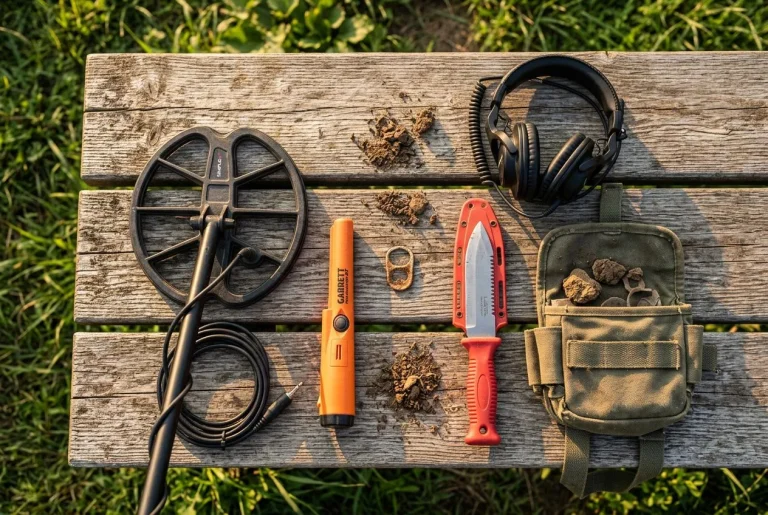
A functional starter pack needs five things: a detector, a pinpointer, a digging tool, a finds pouch, and headphones. That’s it. Everything else is optional. Budget $350–$600 total, and you’ll be properly equipped for your first hundred hours.
Let me break down the essentials. The accessory creep in this hobby is real. I’ve watched club members show up with $400 worth of gear they never touch — special scoops, fancy digging knives, three different coil covers — while their actual recovery time doubles because they skipped the one tool that matters most.
The pinpointer is non-negotiable. I’ll say it plainly: a handheld pinpointer saves you more time than any other accessory you’ll buy. The Garrett Pro-Pointer AT is submersible to 20 feet and has been the standard for years. The Nokta AccuPOINT and XP MI-4 are both excellent alternatives. Without one, you’ll spend ten minutes waving handfuls of dirt over your coil like I did my first summer. My wife still makes fun of me for that.
For digging, a Lesche or Grave Digger shovel beats the garden trowel I started with — which bent on its third plug. A basic finds pouch keeps trash separate from keepers. A decent pair of headphones catches those faint deep signals that wind and traffic swallow whole.
Gloves? Yes. Knee pads? Eventually. A $200 carbon fiber sand scoop? Not unless you live at the beach. Start lean. Add gear when a specific frustration tells you what you’re missing.
What Belongs in a Metal Detecting Beginner Kit
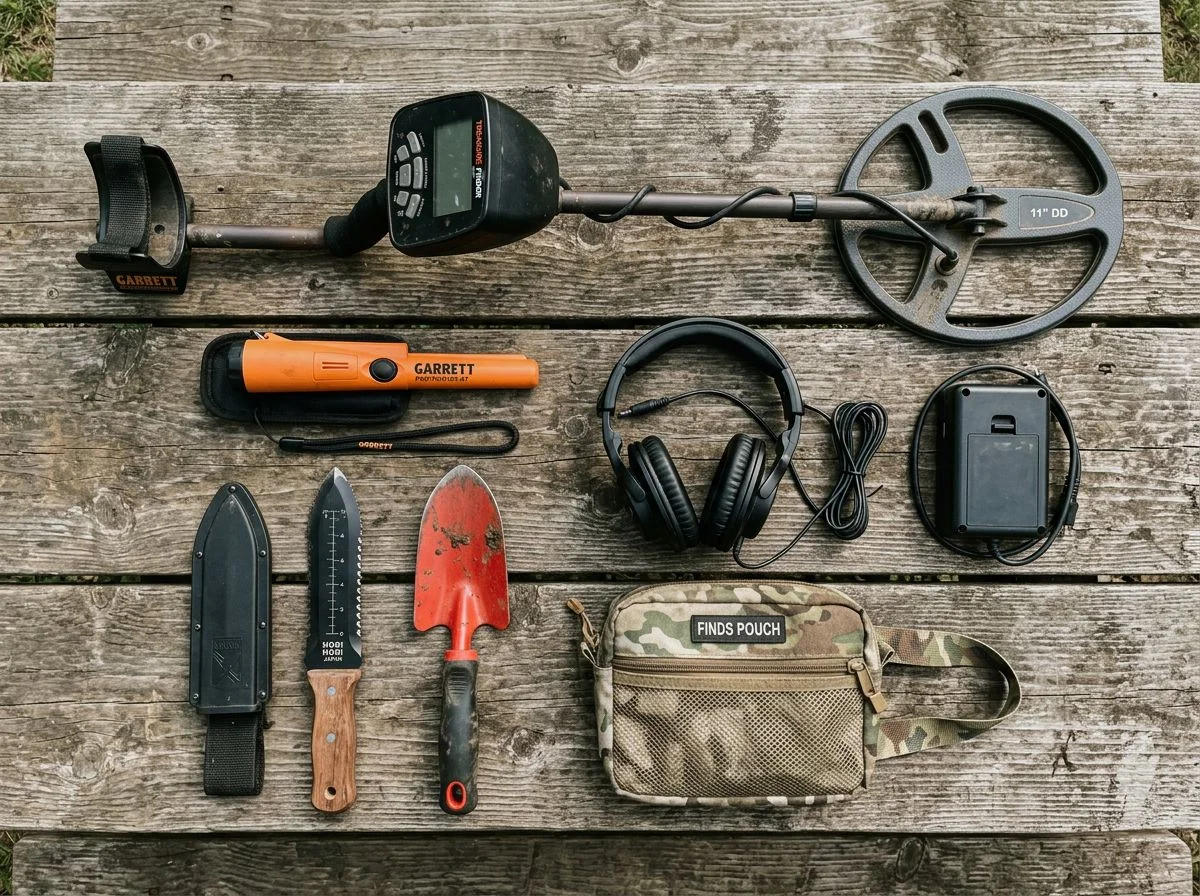
A functional starter pack needs five things: a detector, a pinpointer, a digging tool, a finds pouch, and headphones. That’s it. Everything else is optional. Budget $350–$600 total, and you’ll be properly equipped for your first hundred hours.
I learned this the hard way, like most lessons worth keeping. My first hunt was with a borrowed Garrett ACE 250 and a garden trowel my wife used for planting petunias. No pinpointer, no pouch, no headphones. Just me, a $5 trowel, and the kind of optimism that only survives about forty-five minutes of actual field time.
The detector screamed at a target near an old picnic area. I dug a plug with that trowel — which flexed alarmingly — and then spent what felt like an eternity waving handfuls of dirt over the coil. Finally, I found it: a pull-tab. A 1970s-era pull-tab, sure, but a pull-tab nonetheless. I did this eleven more times that afternoon. Eleven pull-tabs, zero coins, and a trowel bent at a forty-five-degree angle.
Here’s what that day taught me: the detector finds the target, but the recovery tools determine whether you actually retrieve it without losing your mind. A pinpointer would have cut my recovery time by three-quarters. A proper digging tool would have survived. A pouch would have kept the pull-tabs separate from the one wheatie I found at the end.
And that’s where beginners hemorrhage money. Based on what I’ve observed across years of club hunts and helping new members gear up, the average beginner spends about 40% of their total budget on accessories they never use. Fancy sand scoops for people who live three hours from a beach. Coil covers for machines that never leave manicured parks. Digging knives that look tactical but bend worse than my wife’s trowel.
A real starter pack — the kind that gets you through your first hundred hours comfortably — costs between $350 and $600. Not $1,000. Not $1,500. The people telling you otherwise are usually selling something. Start with the five essentials. Learn what frustrates you most in the field. Then let that frustration tell you what to buy next.
Which Detector Should a Metal Detecting Beginner Buy
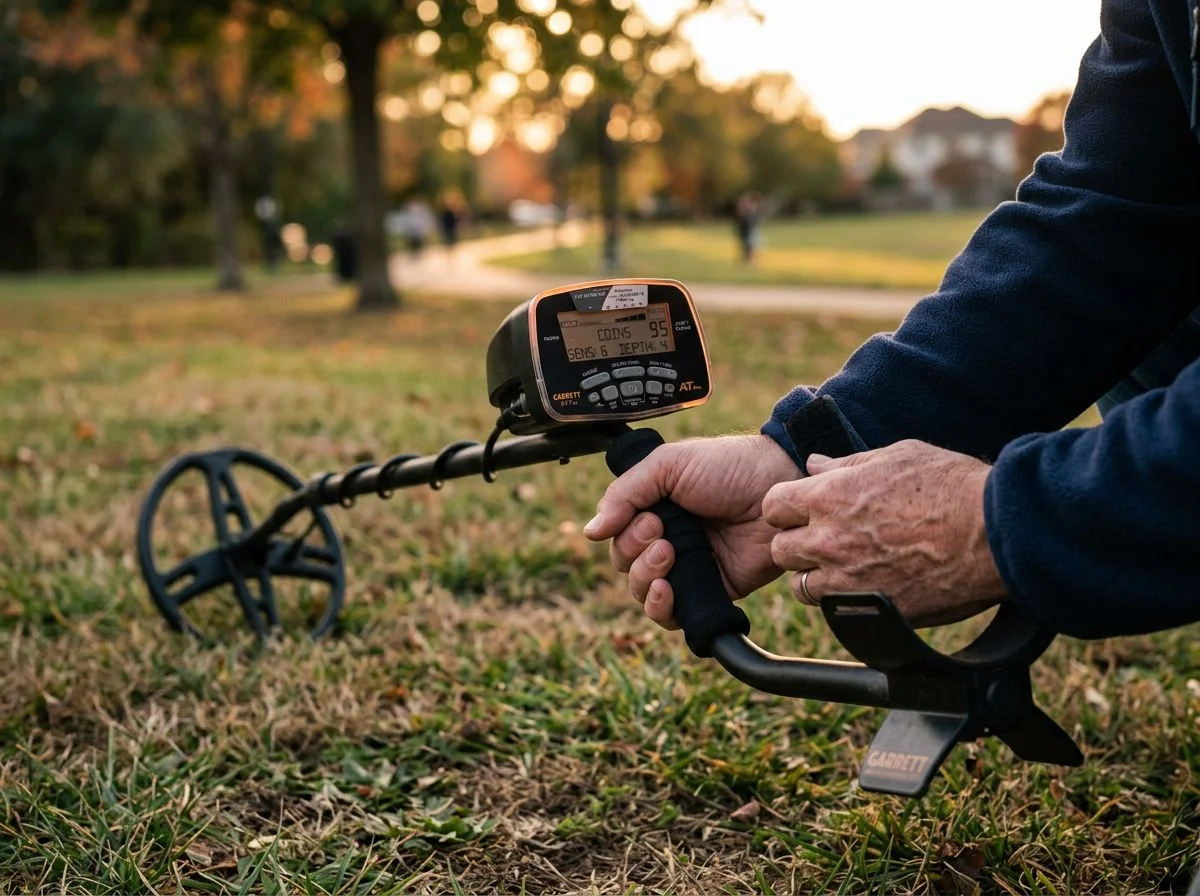
Skip the flagship. Start under $350, learn the machine, and upgrade once you know what you’re actually missing. Would you buy a $2,000 guitar before learning three chords? Same logic applies to detectors.
The Nokta FindX Pro at $219 is a legitimate starter machine. It’s waterproof, simple to operate, and sensitive enough to find coins at respectable depth. I’ve watched new club members pull silver with it on their first group hunt. That’s the point: a machine you can operate confidently beats a machine with features you don’t understand yet.
Here’s the trap I see constantly. A beginner reads forum threads and gets convinced they need Multi-IQ or multi-frequency or whatever the current buzzword is. Then they drop $800 on a machine with 40 settings they’ll never touch. Six months later, they’re frustrated because they can’t tell a pull-tab from a nickel and the detector feels like a puzzle box.
The Nokta Legend and Minelab Equinox series are excellent mid-range options. But they make sense after 6–12 months of field time. That’s when you’ve learned what the tones are telling you and you know which features would actually help your hunting style. By then, you’ll also know whether you prefer parks, beaches, or relic fields. That should drive your second purchase more than any review ever could.
Why a Pinpointer Saves You Hours
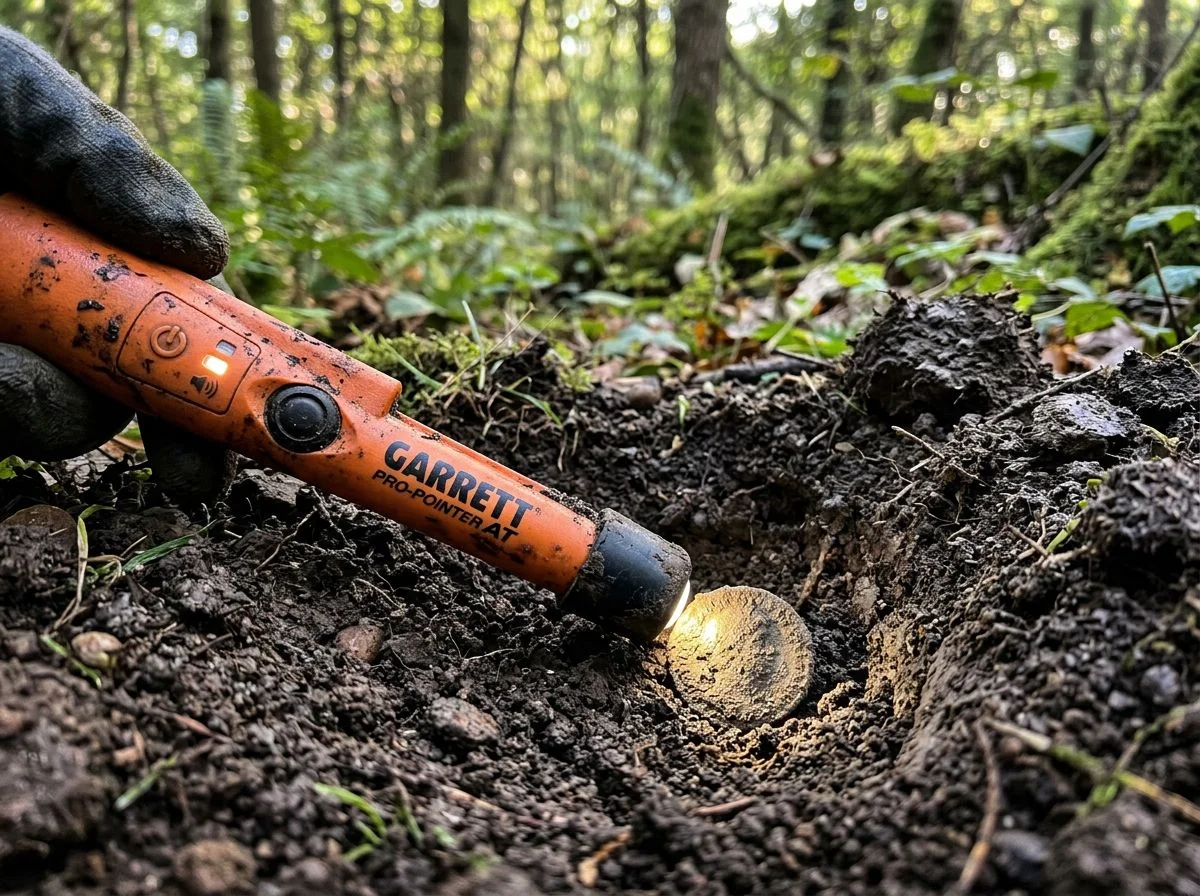
A pinpointer is the single best accessory you’ll buy as a beginner. It takes your average target recovery time from five-plus minutes of waving dirt clods over your coil to under sixty seconds of precise, targeted searching. No exaggeration.
I didn’t have one on my first hunt, and I still remember the misery. Eleven pull-tabs, each one requiring me to wave handful after handful of dirt over the coil like some kind of frustrated archaeologist. By the end, my back hurt and my patience was shot. That garden trowel was bent beyond recognition. A pinpointer would have changed everything.
Here’s how it works: your detector gets you within about a foot of the target. The pinpointer — a handheld probe about the size of a screwdriver — goes into the hole and beeps when it’s within an inch or two. You poke around, zero in, and grab the target. Done.
The Garrett Pro-Pointer AT is the gold standard. It’s submersible to 20 feet. It has an LED flashlight for those deep plugs. And it features a fast retune button that narrows the detection field when you’re hunting in mineralized soil. I’ve had mine for years. It’s survived creek crossings, rain storms, and one memorable drop into a muddy hole that I’d rather not discuss.
The XP MI-4 and Nokta AccuPOINT are both excellent alternatives. The MI-4 has a reputation for being slightly more sensitive to tiny targets — good for gold prospecting or hunting micro-relics. The AccuPOINT is the budget-friendly option that doesn’t feel like a compromise.
If you’re planning to hunt wet conditions — riverbanks, beaches, rain-soaked parks — the Nokta Makro Waterproof Pinpointer is specifically built for that. It’s fully submersible and handles wet sand without falsing. That’s more than I can say for some pricier models.
My buddy Mike hunted for two years without a pinpointer. He thought it was an unnecessary expense. Then he borrowed mine at a club hunt and bought one the same week. He called me “lucky” when he pulled a 1943 silver quarter from a hole he’d been about to give up on. It wasn’t luck. It was a $100 tool doing exactly what it’s designed to do.
Digging Tools People Always Underestimate
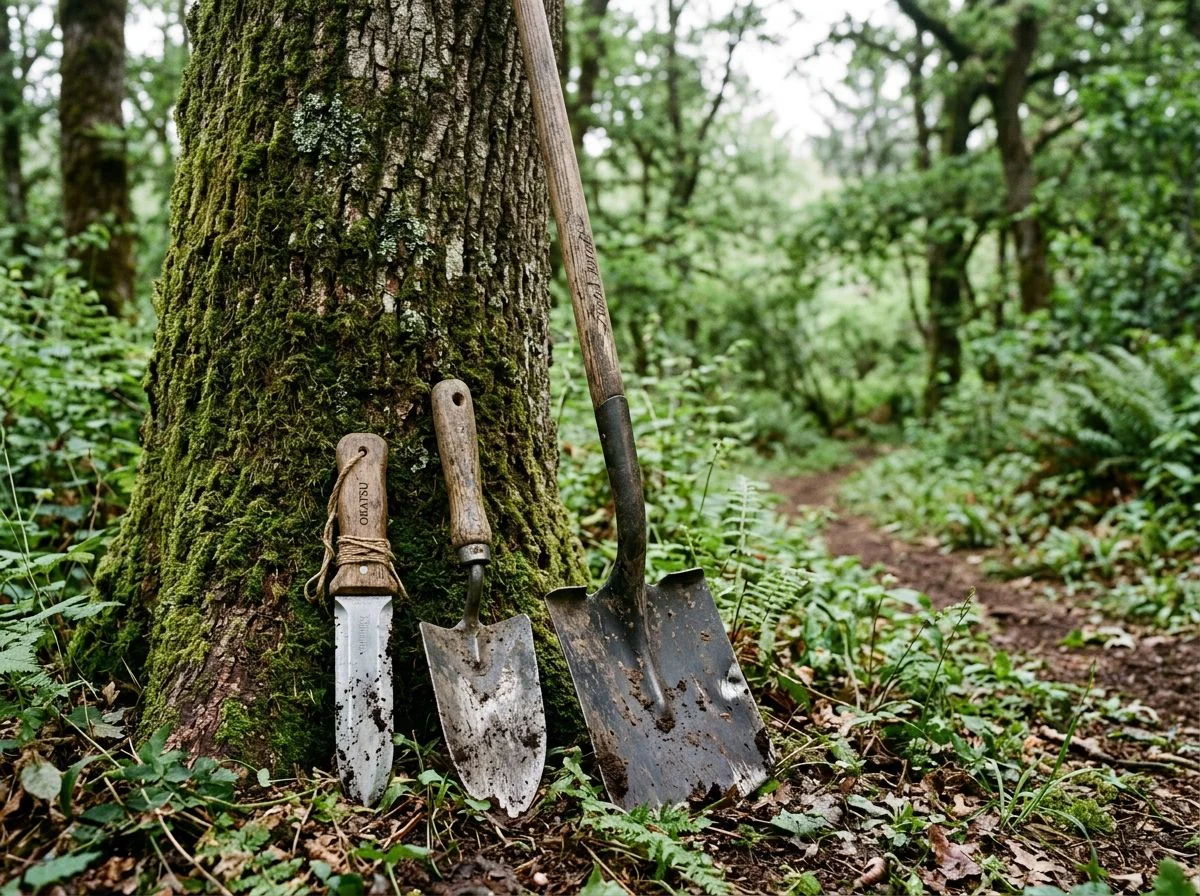
A good digging tool is the difference between a clean, leave-no-trace recovery and a hacked-up mess that gets detecting banned from your local park. Spend $40–$80 on a proper hand digger and you’ll never look back.
My first hunt, I brought a garden trowel from the garage. Third plug, the blade folded like a cheap spoon. I spent the rest of the afternoon digging with my hands and a stick. That’s exactly as miserable as it sounds. The trowel went in the trash the same day, and I drove straight to a detecting shop.
Here’s what I learned: a digging tool isn’t just for moving dirt. It’s for cutting clean plugs in turf, prying through roots, and levering out rocks without snapping. A flimsy tool fails at all three.
The two brands that keep coming up among experienced detectorists are Lesche and Grave Digger. Both make serrated, heat-treated steel diggers designed specifically for cutting through grass roots without destroying the lawn. The Lesche Mini Sampson 18-inch T-Handle Shovel is a specific recommendation I’ve seen repeatedly. The T-handle gives you leverage for deeper targets. The shorter length keeps it maneuverable in wooded areas.
For beach hunting, you need a completely different tool. A shovel is useless in wet sand — the hole collapses as fast as you dig. Sand scoops are the answer. Dune and Sito are the standard names in the game. CKG Scoop offers a 9×6 inch travel scoop at $98.99 that fits in a carry-on, and an 11×7 inch all-rounder at $99.99 that handles most beach conditions without weighing you down.
The takeaway: match the tool to the terrain. A Lesche in the sand is useless. A sand scoop in a park is pointless. Buy the right digger for where you actually hunt, and skip the $12 garden trowel entirely. Your back and your local parks will thank you.
Accessories Worth Buying and Ones to Skip
Here’s the short version: headphones, a finds pouch, a coil cover, and a carry bag are the accessories worth your money. Everything else — the fancy display cases, the specialized cleaning kits, the “treasure hunting” branded gear — can wait until you’ve actually found something worth displaying. I’ve watched beginners drop $200 on accessories before their first hunt. Half of it never leaves the car.
What’s the one accessory that costs under $20 and will save you more frustration than a $200 upgrade? A finds pouch. Specifically, something like the Garrett All Terrain Dig Pouch. I spent my first six months shoving pull-tabs and bottle caps into my jeans pockets. Every hunt ended with me doing the “which pocket has the good stuff” shuffle in the parking lot. A dedicated pouch with separate compartments for trash and finds changes the entire flow of a hunt. You’re not thinking about where to put things — you’re just detecting.
Headphones are the other non-negotiable. The Garrett MS-2 Headphones block ambient noise so you can catch deep, faint signals that would otherwise get swallowed by wind, traffic, or the guy mowing his lawn three houses over. My detecting buddy Mike hunted without headphones for a year. He missed a seated dime at eight inches because a dog barked at exactly the wrong moment. He bought headphones the next day.
Coil covers are the boring accessory that saves you real money. Garrett recommends them to protect your search coil from cracking against rocks and roots. A cracked coil is a $150 mistake that takes five minutes to prevent. Same logic applies to the Pro Series Universal Standard Carry Bag for transport. I’ve seen too many detectors riding loose in truck beds, bouncing against toolboxes.
As for the Garrett Keeper Cleaner Brush? It’s nice to have — a soft brush for field-cleaning coins without scratching them. But you can use an old toothbrush and get the same result. Buy it if you want, but don’t call it essential.
The accessories that don’t matter yet? Display cases, coin flips, valuation guides, jewelry cleaning machines. You’ll know when you need them. Until then, spend that money on gas to get to better hunting spots.
A Real Starter Budget for Metal Detecting Beginners
Here’s the number that surprises most beginners: a complete, functional starter pack — detector, pinpointer, digging tool, pouch, and headphones — runs between $400 and $550 total. That’s less than what a mid-range detector alone costs. Most people assume they need $1,000+ to get into this hobby properly. That assumption keeps a lot of would-be detectorists on the sidelines.
Let me show you the math on both ends of the spectrum.
The budget-conscious route starts with the CKG Metal Detector Starter Kit at $183.99, reduced from $249.99. That gets you a functional detector plus the basics to start digging. If you want to upgrade your recovery tools without breaking the bank, the CKG Precision Digging Kit runs $63.99 — or $54.40 with code BF15 — and covers your digging and pinpointer needs. The CKG Treasure Hunter’s Pro Kit at $123.99 splits the difference with a more comprehensive accessory bundle. Add a finds pouch and you’re still under $300 all-in.
Now compare that to the piecemeal approach. A Nokta Simplex LITE at $299, plus a $130 pinpointer and an $80 digging tool, totals $509 — before you’ve bought headphones and a pouch. That’s a solid setup, don’t get me wrong. But it illustrates the point: the detector itself is only about 60% of your total spend.
The takeaway isn’t that you should cheap out. It’s that you don’t have to. A $400 starter kit gets you swinging today. You can upgrade individual pieces as you learn what actually matters for the terrain you hunt.
What Starter Kits Leave Out but Should Include
Here’s the short version: the most valuable thing in any starter pack isn’t something you can buy. It’s the knowledge of where to swing your detector. And that comes from people, not products. No kit on the market includes a local detecting club membership, a conversation with an old-timer who knows where the town picnic grounds used to be, or the research habits that turn a random field into a honey hole. Honestly, that’s the gap that matters most.
My best site ever came from a historical society meeting, not a gear purchase. I spent a Saturday afternoon listening to an 87-year-old former conductor talk about the old rail line that used to run through Auburn. He mentioned a forgotten train stop — just a widening in the road now, nothing marked, nothing special-looking. I drove out there the next weekend. From that unremarkable patch of dirt, I pulled over 30 Indian Head pennies and my first seated Liberty dime. The detector I was using at the time was mid-range at best. The research was the real tool.
Mark Dayton — you might know him as Brass Medic — explicitly advises joining a local metal detecting club as part of your starter setup. He’s right. Clubs are where you learn the unwritten rules, the local history, and the etiquette that keeps you welcome at sites. The Sports 365 guide hits the same note from a different angle: get permission before searching private property, and refill your holes completely. That’s not gear advice. That’s the difference between being a detectorist and being the guy who ruins detecting for everyone else.
And here’s the thing about knowing what you’re hunting: Kellyco’s guide emphasizes identifying your target types and terrain before you buy anything. That’s a research question, not a shopping question. Are you after coins in old parks? Relics in farm fields? Jewelry on beaches? The answer changes your gear choices, sure. But it also changes where you should be looking. And no starter pack tells you that.
So here’s my advice: buy the kit, but budget time for the stuff that doesn’t come in a box.

My name is Paul and I am the founder of Detector For Metal, a dedicated resource for metal detecting enthusiasts seeking to uncover historical treasures and connect with the past using the latest technology. As a stay-at-home dad and family man, I’ve found metal detecting to be the perfect hobby that combines family adventure with historical learnings for the whole family.
As a father, I’m deeply committed to passing on this hobby to the next generation of detectorists, starting with my own children. I share advice on everything from metal detecting with kids to exploring the top 10 metal detecting sites you never thought about. My methodical approach to the hobby goes beyond the thrill of discovery—it’s about creating family traditions while preserving history and sharing the stories of those who came before us.