Table of Contents
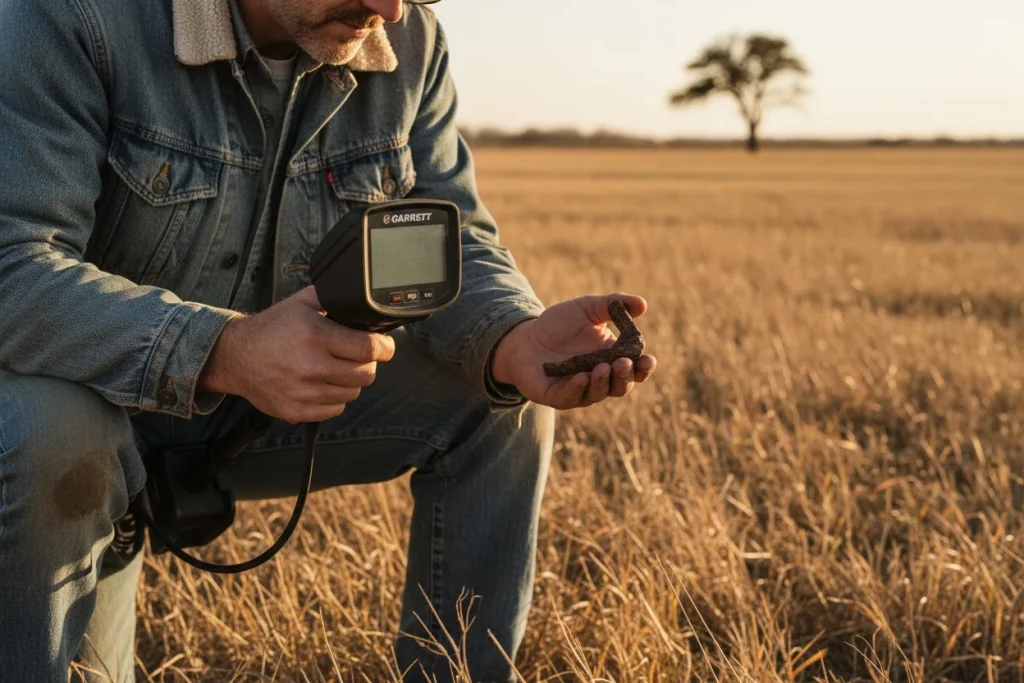
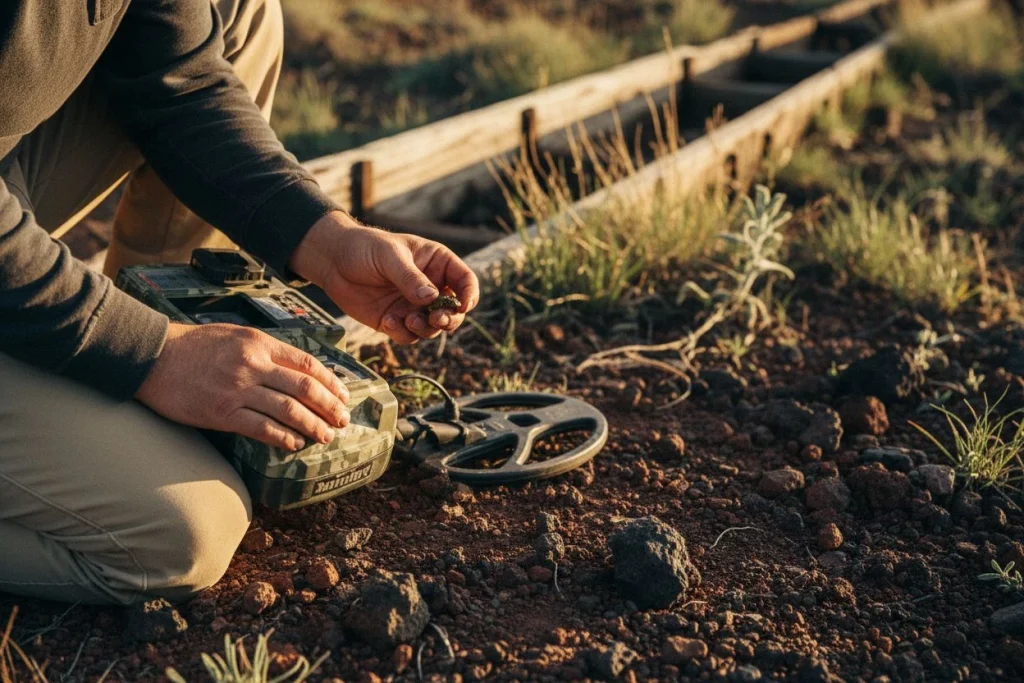
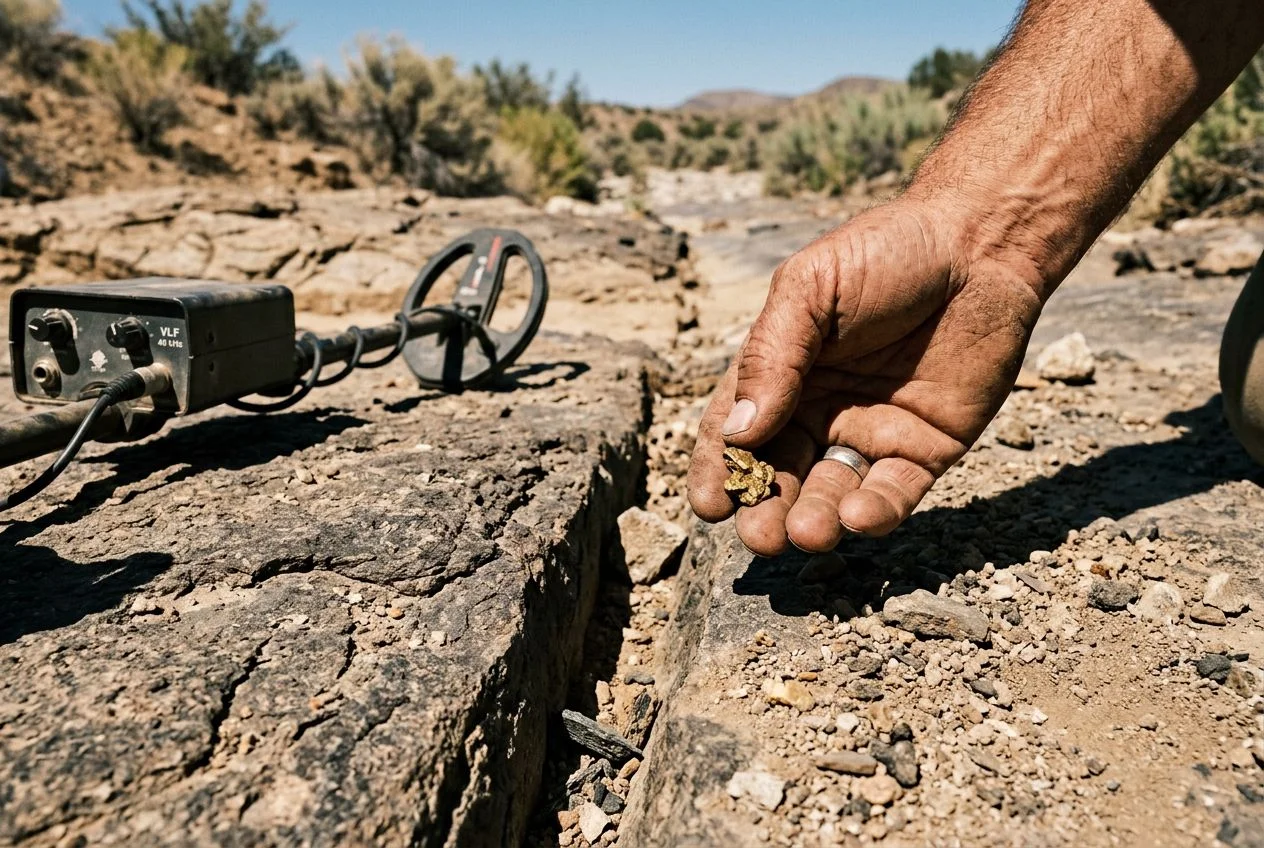
Most detectorists treat drought-scorched ground like a four-letter word. Hard soil. Weaker signals. Miserable digging. I’ve cursed it as much as anyone. But here’s the thing nobody talks about: those same conditions can hand you finds that wet-ground hunters walk right past.
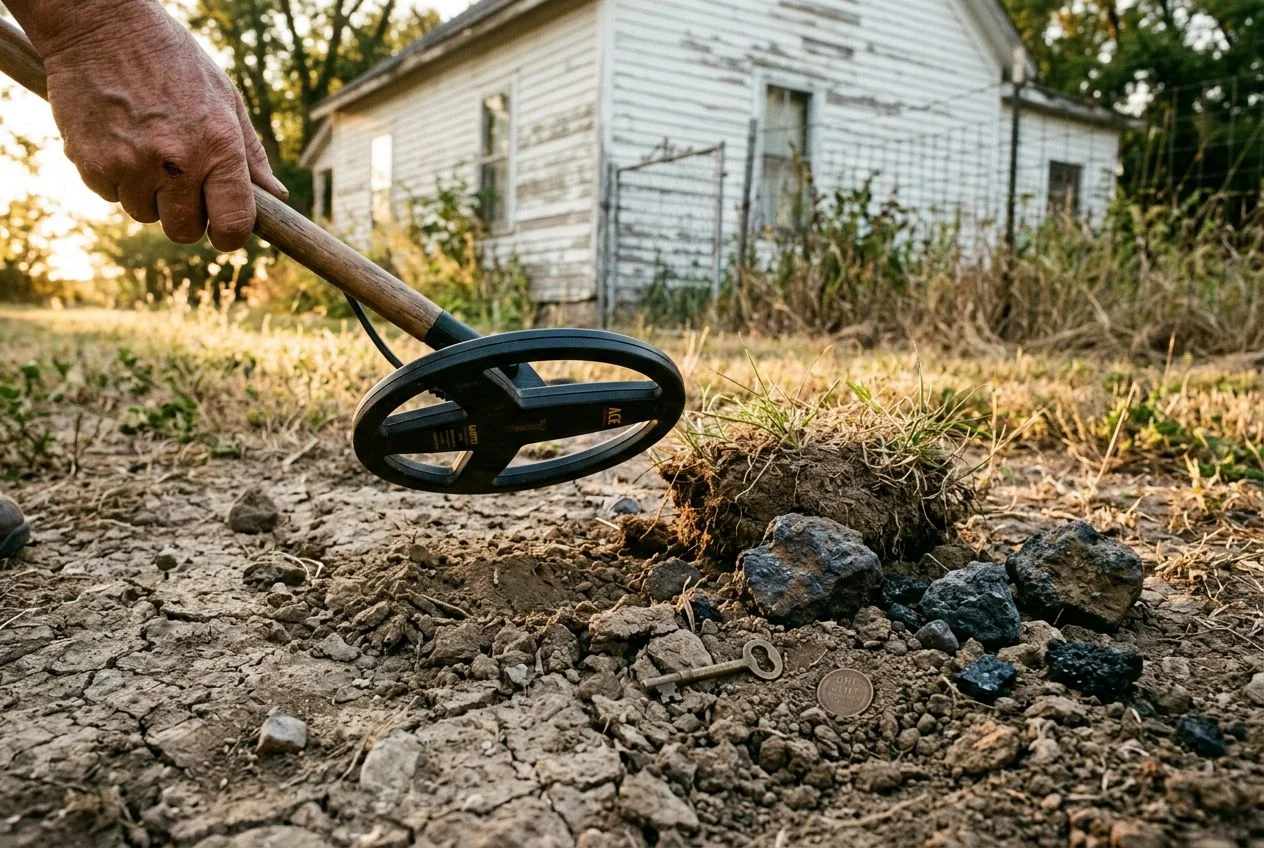
I know the feeling. You drive an hour to a promising spot, step out of the truck, and the ground crackles under your boots like broken pottery. First swing: nothing but static. Second swing: a grunt that could be a deep silver or a rusty fence staple. You dig for ten minutes, sweating through your shirt, and come up with a crusty nail. Standard drought experience, right?
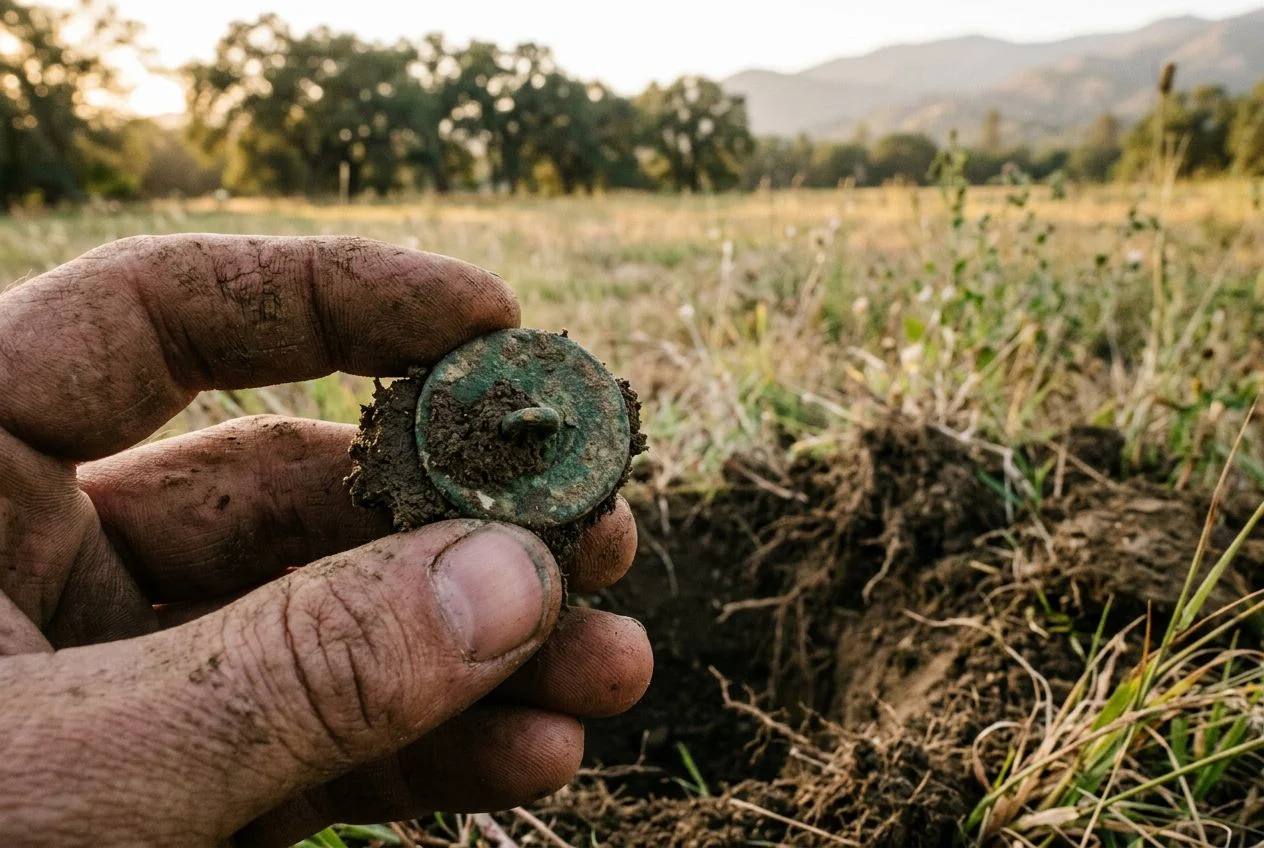
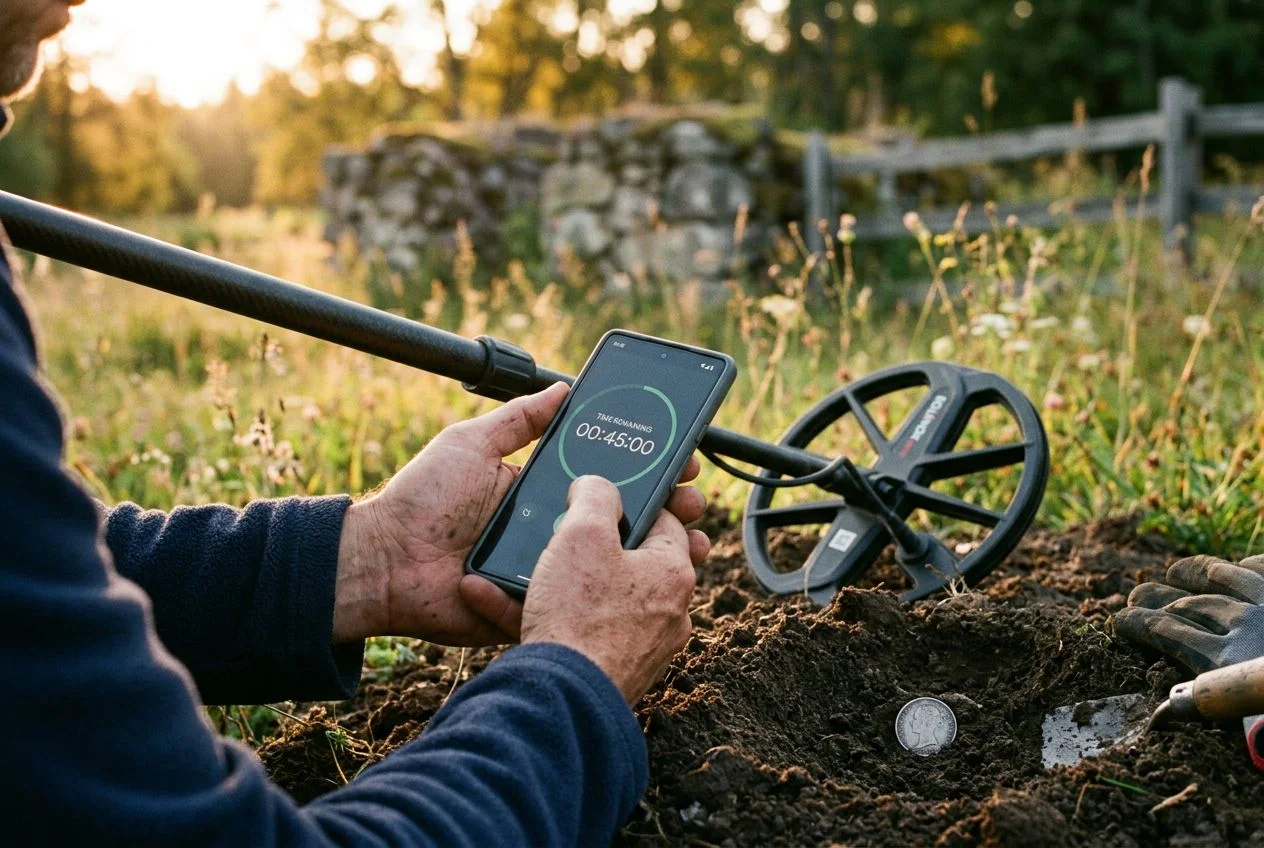
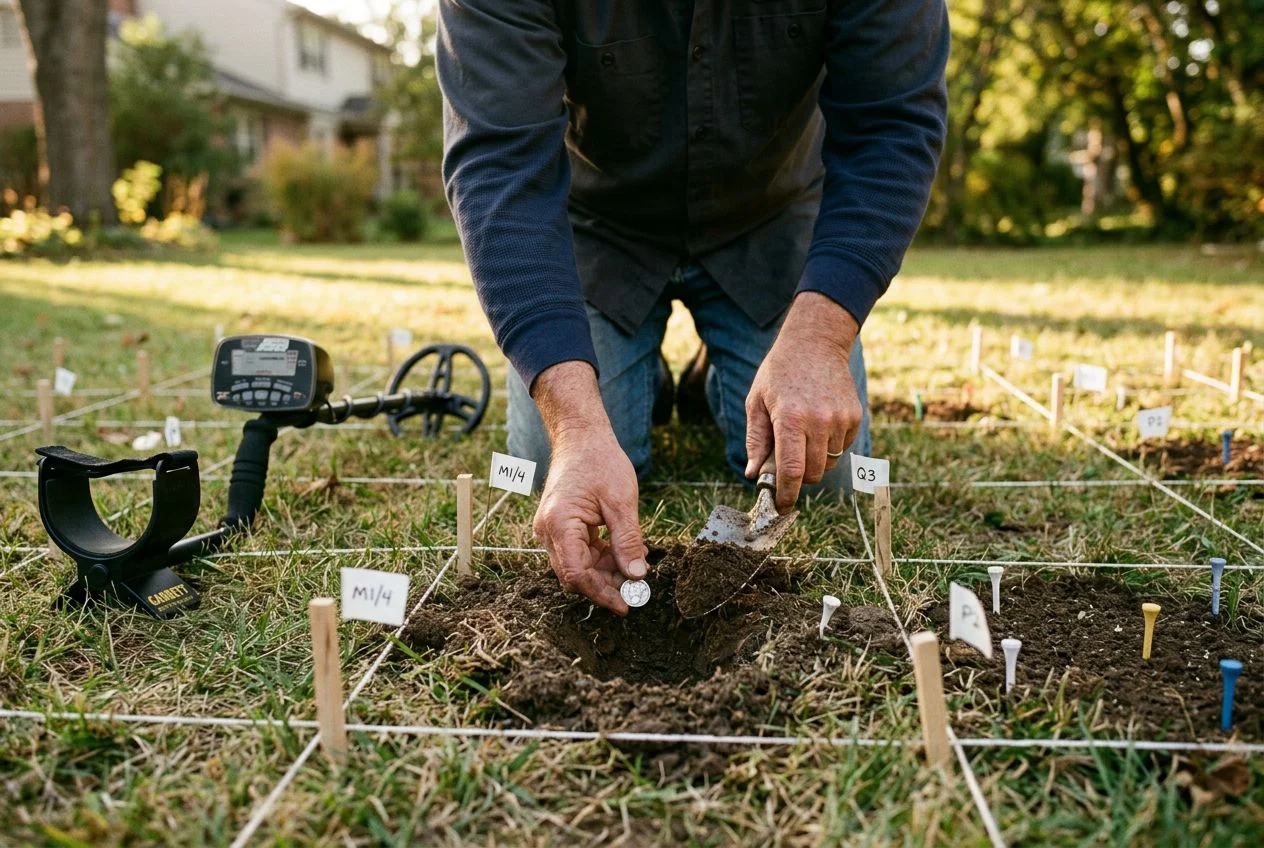
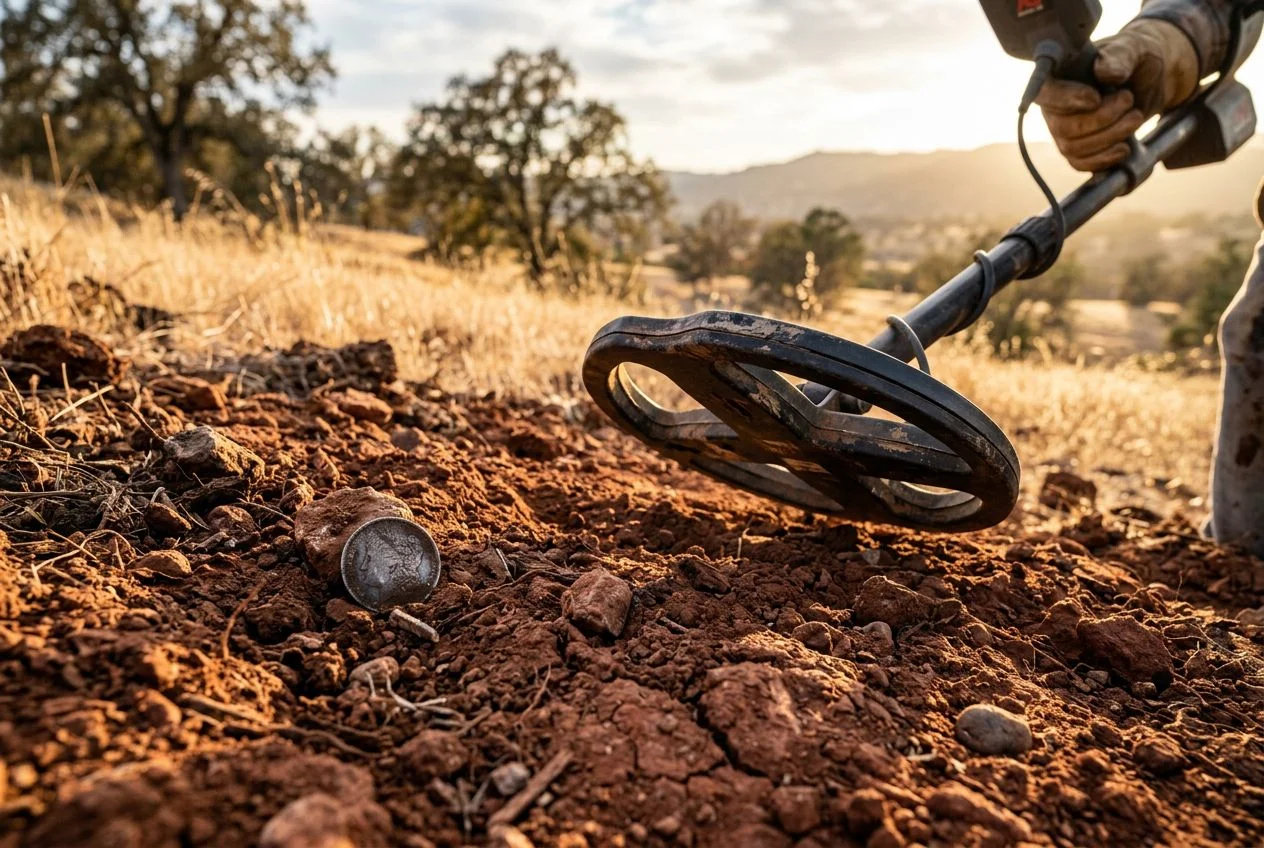
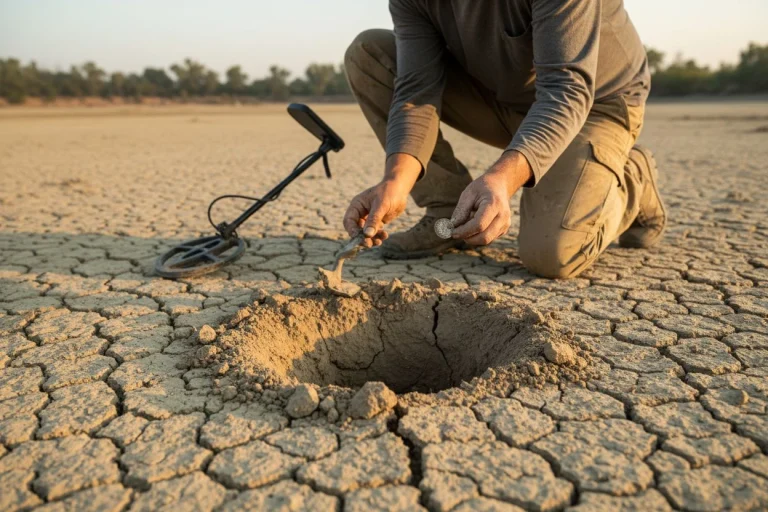
But last summer during California’s worst dry spell in years, I pulled a seated Liberty dime from a dried-out swimming hole near Auburn. A spot my buddy Mike had hammered three times during the wet spring, convinced he’d cleaned it out. I found it at six inches — a depth his Equinox should have hit easily — in soil so cracked it looked like a jigsaw puzzle. The dime was sitting in plain sight, signal-wise, once you understood what was happening underground.
That day taught me that drought isn’t the enemy of good detecting. It’s a different kind of opportunity — one that rewards patience, lower expectations about signal behavior, and a willingness to dig when the ground fights back. Most advice about dry conditions (including Source 5, which calls it “difficult digging”) focuses on the frustration and never explores the upside. I think that’s a missed target.
In this section, I’ll lay out three drought-specific advantages that changed how I hunt: the physics of compacted soil and how it actually stabilizes signals, what happens when the halo effect disappears (and why that’s not a bad thing), and why targets stay put instead of migrating in dry ground. By the time we’re done, you might start looking forward to the next dry spell. Or at least dreading it a little less.
What Drought Does to Your Detector’s Signal
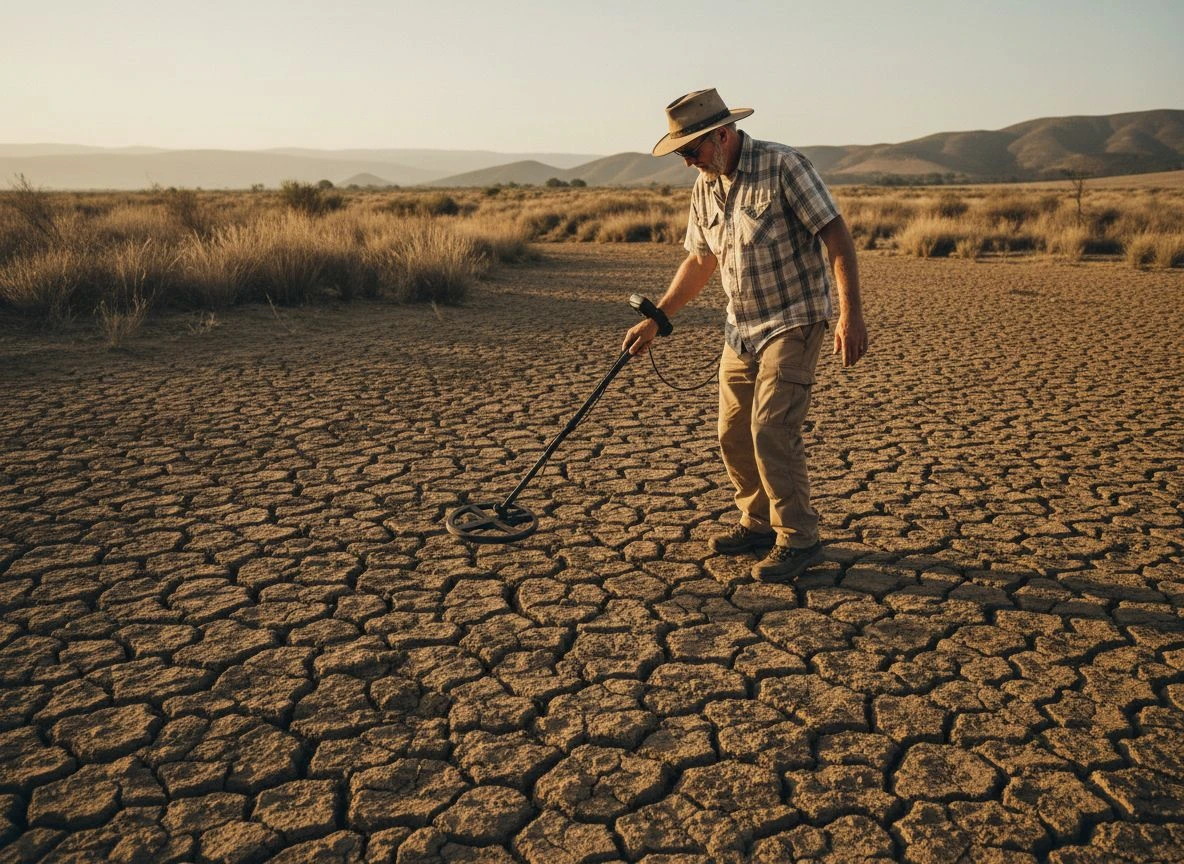
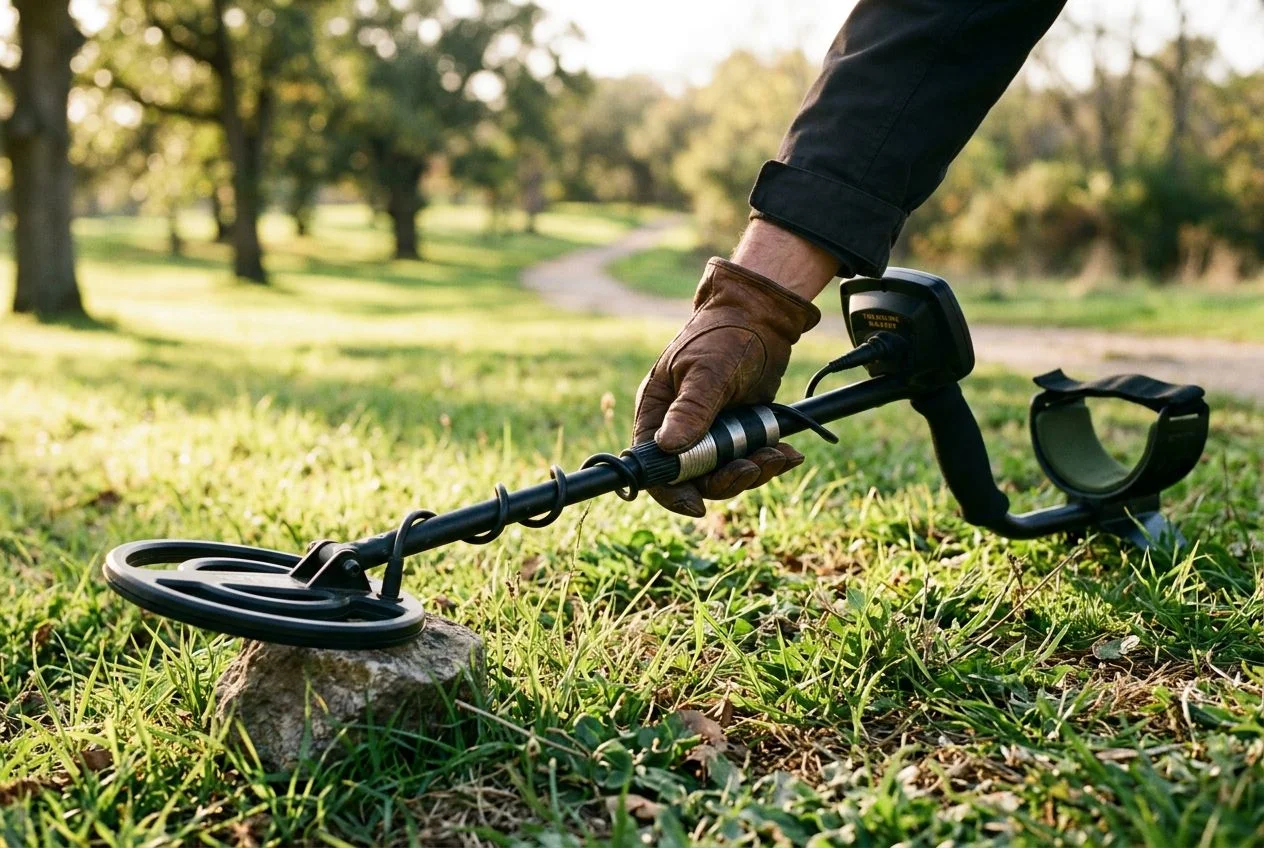
When the ground bakes and cracks, most detectorists assume the signal is dead. But here’s the counterintuitive truth: drought-induced compaction removes the very air pockets that normally scatter your electromagnetic field. It creates a denser, more uniform medium that can actually stabilize signal propagation. Not better than wet ground — but more predictable than loose, dusty soil.
Think of dry, compacted soil like a packed dirt floor versus loose gravel. The signal doesn’t scatter; it travels a more direct path. I’ve heard other hunters compare dry ground to shouting through a brick wall (Source 2’s analogy). That’s close, but I’d say compacted dry ground is closer to plywood — not ideal, but far more consistent than the erratic bounce you get through loose, crackly soil with hundreds of tiny air voids.
Here’s the physics: Source 1 explains that dry soil normally acts as a barrier, with air pockets blocking signals. But extreme drought doesn’t just dry the dirt — it compacts it. Those air gaps collapse. The ground becomes denser and more homogeneous. Instead of your EM field jumping across dozens of microscopic gaps (each one absorbing or redirecting energy), it travels through a continuous solid medium. That means less random signal attenuation, even if overall depth is slightly reduced.
I noticed this last summer on that dried-up swimming hole near Auburn. In wet conditions, that seated Liberty dime’s signal pulsed and faded with every sweep — the classic signature of a target sitting in non-uniform ground. But in bone-dry, compacted soil, the signal was steady. Steady enough that I committed to digging through eight inches of concrete-like clay. The uniformity of the ground gave me confidence that I wasn’t chasing a ghost.
The trade-off? You lose the halo effect — that chemically-conductive bloom around old metal that moisture creates (I cover that in Unmasking Rust’s Hidden Ghost Signal Trick). But for deep silver in consistent fill, drought-compacted ground can actually amplify signal reliability. Next time you’re metal detecting after a drought, don’t assume the hard ground is your enemy. It might be the most honest piece of earth you’ll swing over.
Does Drought Really Make Targets Shrink?
When soil dries out completely, the chemical halo that normally makes buried metal appear larger to your detector dissolves. Without that conductive bloom, targets read as smaller and deeper than they actually are — meaning you can walk right over a silver coin and hear nothing but static if you don’t adjust your approach.
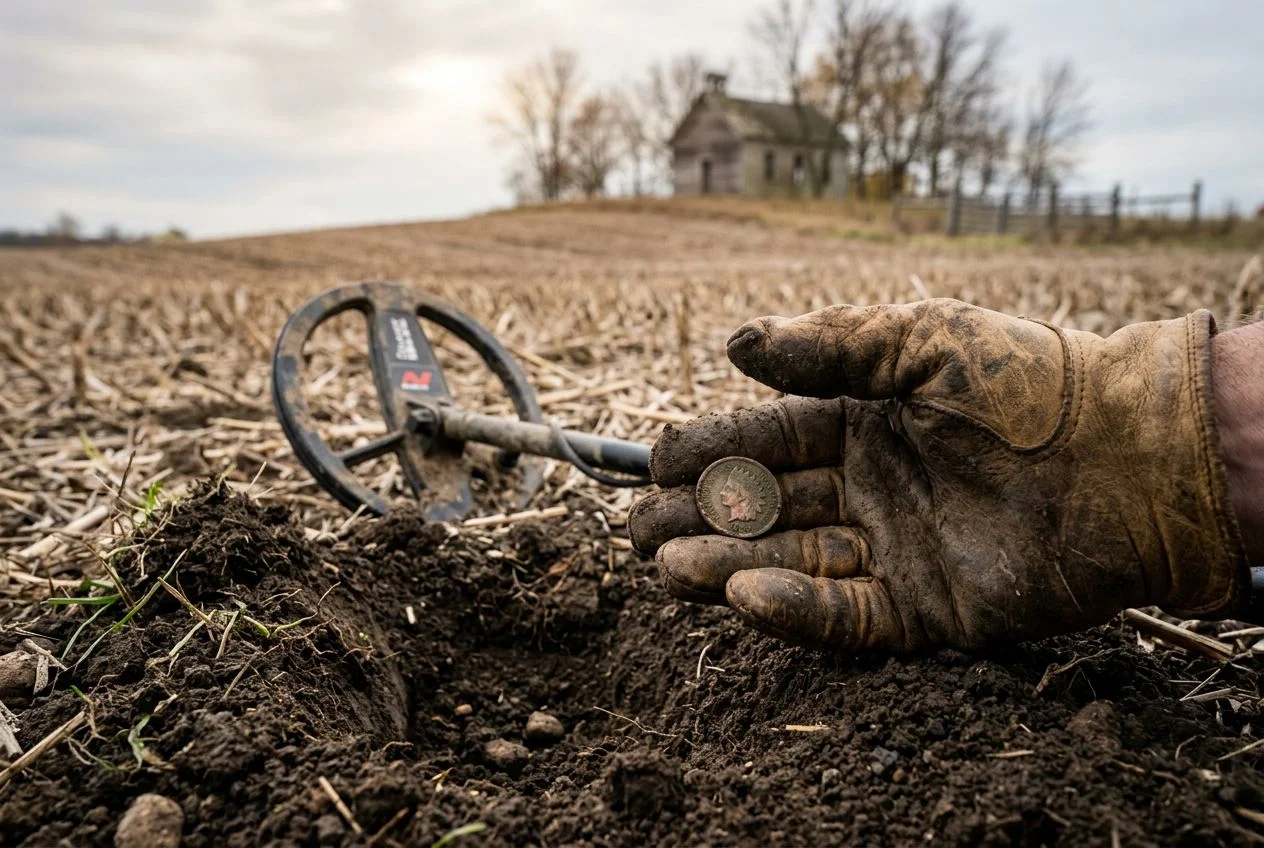
I once walked right over a 1917 Standing Liberty quarter at a dried-out swimming hole east of Sacramento. My buddy Mike was watching from the bank and said I was getting sloppy. I told him the halo was gone. He laughed and said I was making excuses. Next rain, I went back to that exact spot — same machine, same settings — and hit a solid 26 VDI at seven inches. Dug that quarter out of wet soil and held it in my hand. Mike hasn’t given me grief about halos since.
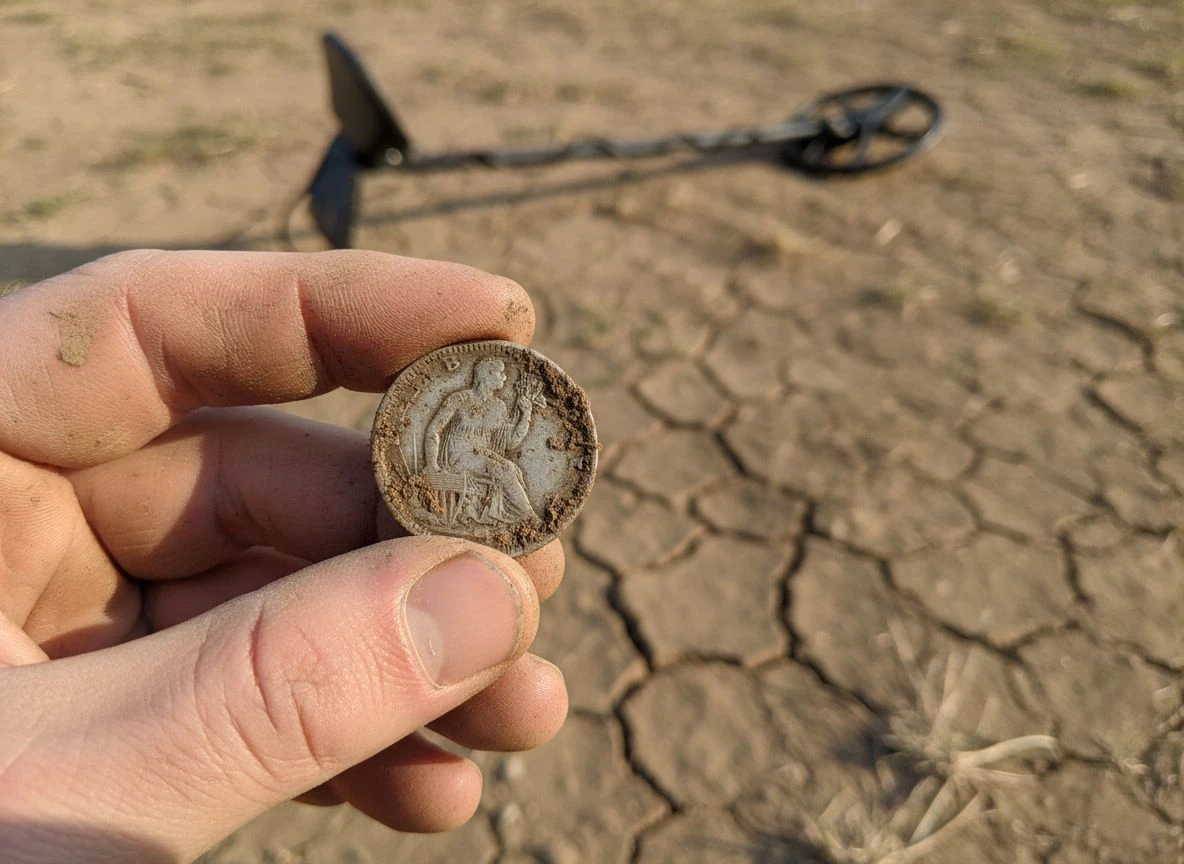
Here’s what’s happening underground. When moisture is present, it reacts with the oxidation layer on buried metal to create a conductive halo — a zone of chemically-altered soil that effectively expands the target’s electrical signature. A coin the size of a dime can read like a half dollar because the halo amplifies the signal. That’s the physics Source 1 hints at when it talks about moisture improving conductivity. But nobody explicitly connects that principle to the halo’s collapse during drought. Without moisture, the oxidation reaction stops. The halo dries up and shrinks back to the bare metal. Your detector doesn’t register the same target it would have three months earlier — it sees a smaller, deeper, weaker version of the same object.
The fix is straightforward. Cut your sensitivity by 10–15% in bone-dry conditions. Counterintuitive, I know — you want more power, not less. But lowering sensitivity reduces the noise floor so your machine can actually process those weaker, halo-less signals. Then slow your sweep speed. Source 3 recommends taking extra time in dry conditions, and they’re right: your detector needs more processing time to identify a target that’s been stripped of its chemical amplifier. I wrote a deeper breakdown of how the halo effect behaves across different soil types if you want the full geek-out.
Calibrate Your Detector for Maximum Drought Performance
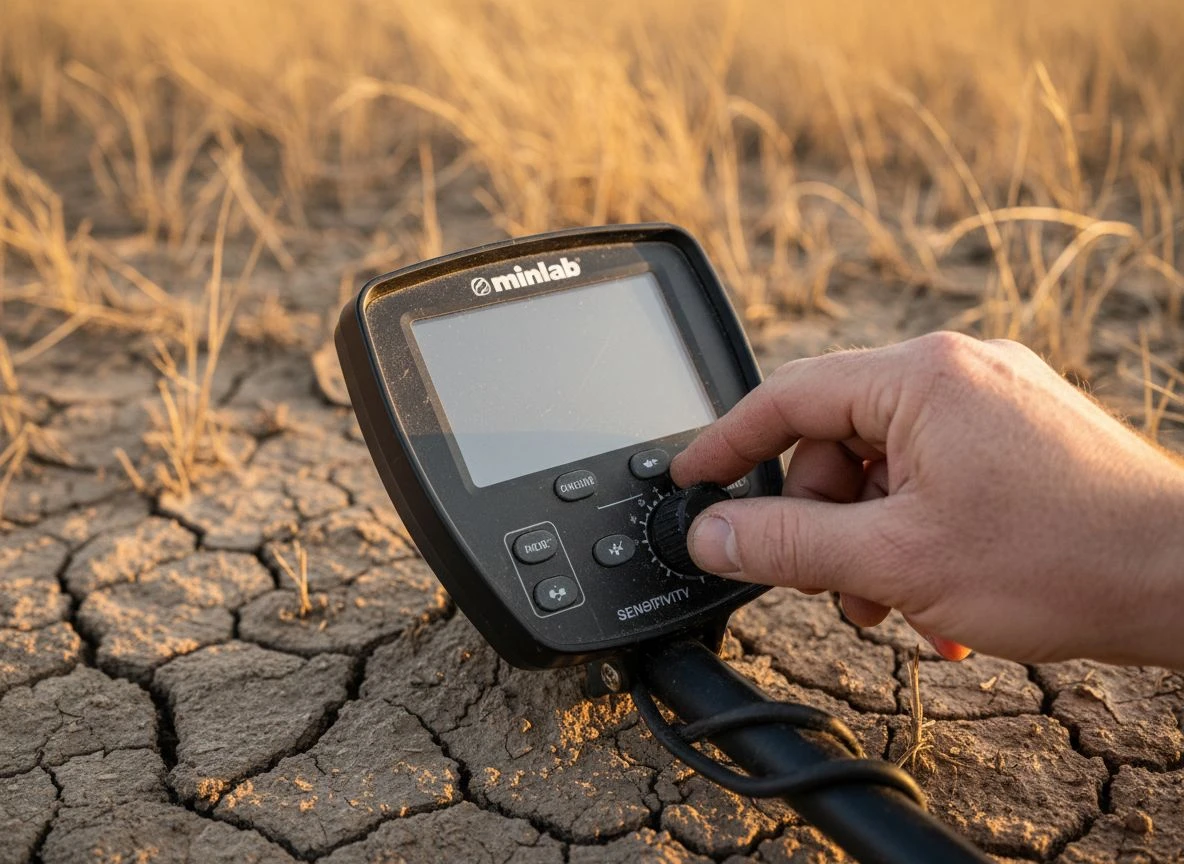
What do I actually change on my machine when the ground bakes hard? Drop sensitivity by 15–20% and re-ground balance every 10–15 minutes. The goal isn’t maximum depth — it’s steady, repeatable signals that let you trust what you’re hearing.
Here’s what I dial in on my Equinox 900 when the ground is cracking and the grass is brown. Your settings will vary, but the philosophy is the same: you’re not fighting for depth — you’re fighting for stability. Lower sensitivity reduces false positives because dry mineralized ground is electrically noisy. The minerals don’t conduct well, but they do generate erratic chatter when pushed too hard. Finding the balance means dropping sensitivity until your threshold runs smooth, then creeping it back up until it just starts to break up. Back off one notch from there — that’s your sweet spot.
I also slow my sweep speed by about 25% (as Source 3 recommends for dry conditions). Compacted ground gives weaker signals, and rushing past them means missing whispers entirely. Pair slow sweeps with frequent ground balancing — every third row or so — because surface conditions shift faster than you’d think. For more on dialing in your machine for challenging terrain, check out Unlock Park Treasures: Essential Minelab Vanquish 540 Tips.
The Truth About Target Migration in Drought Conditions
There’s a common fear that when the ground dries out, your targets sink deeper — that buried coins and relics gradually settle, making them harder to reach. In most cases, though, drought doesn’t push your finds down; it locks them in place. Compacted, desiccated clay acts like a concrete barrier, preventing the downward migration that happens in loose, wet soil.
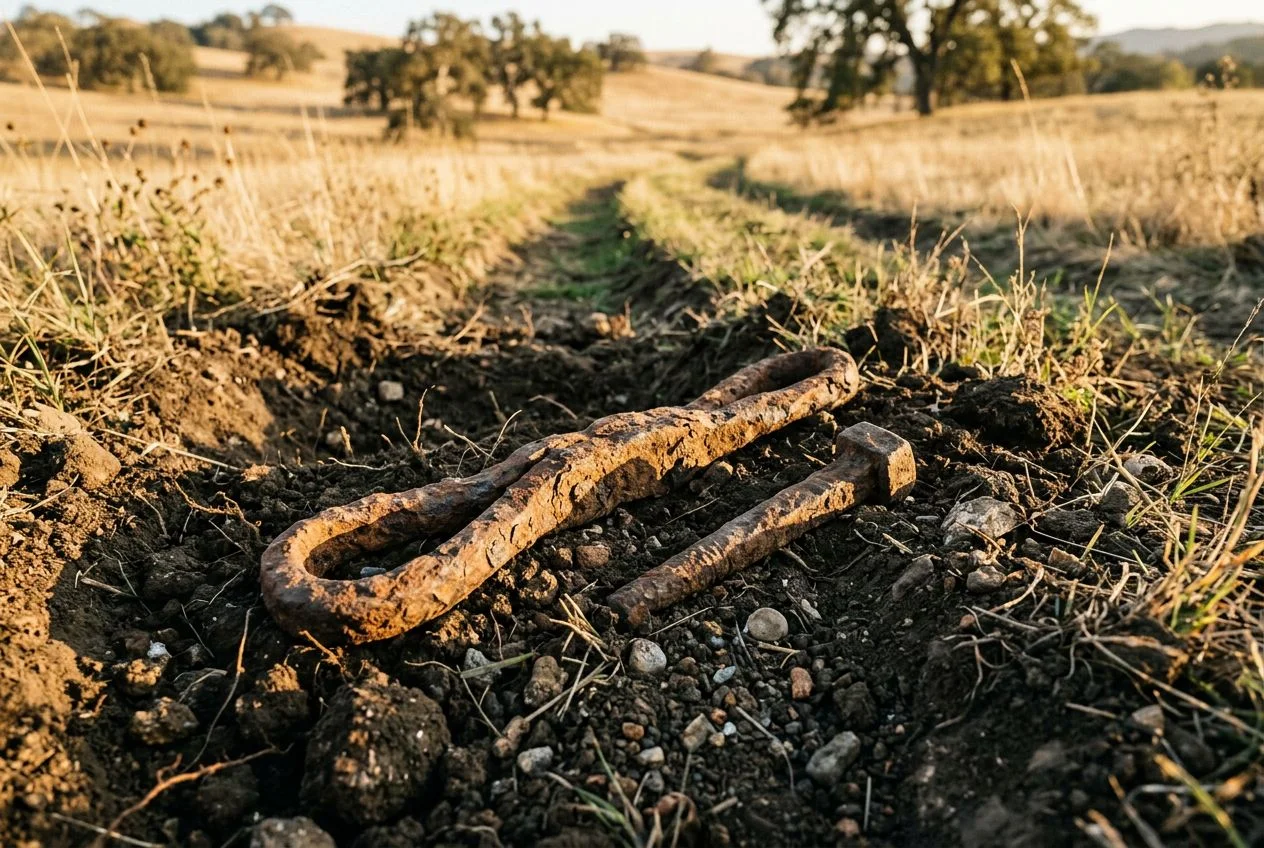
My buddy Tom swears the old drag strip near Fresno gave up more silver during the 2021 drought than in the three wet years combined. “The ground was like concrete,” he said. “Everything stayed put.” Tom’s right — and the physics explain why.
In normal, moist soil, water acts as a lubricant. Each rain, each freeze-thaw cycle, each footstep and car vibration gently nudges targets deeper. A coin that sits at 8 inches in spring can easily settle to 10 or 12 inches by fall if the ground stays loose and wet. That’s the same process source 5 describes with frost heave — but in reverse. Wet soil gives way.
Drought changes that entirely. As moisture evaporates, clay particles bind together, creating a dense, rigid matrix. The air pockets collapse. That 8-inch target has nowhere to go. It stays at 8 inches month after month, waiting for a detectorist who knows the ground isn’t hiding it deeper — it’s just making the signal quieter.
This is why post-drought hunting can actually be more productive than hunting after a big rain. Rain wakes targets up, sure — but it also starts them sinking again. Drought arrests that process. Understanding which sites hold their depth best (old fields, compacted yards, historical lots) gives you a real edge. For more on finding those overlooked spots, check out Find Hidden Detecting Sites.
So don’t let hard ground discourage you. That stubborn signal you barely hear? It hasn’t gone deeper. It’s just been waiting for you to dig.
How to Dig Drought Targets Without Ruining the Turf
When the ground bakes hard, the wrong digging technique can turn a promising site into a scarred mess. Here’s how to recover targets cleanly without wrecking the turf — and without giving your neighbors a reason to call you out.
I learned this the hard way. My first drought hunt, I tried to cut a plug in ground that was baked harder than a pizza stone. I mangled a 6-inch circle of grass that took three months to recover. My wife was less than impressed. Since then I’ve developed three go-to methods that work when the soil turns to concrete.
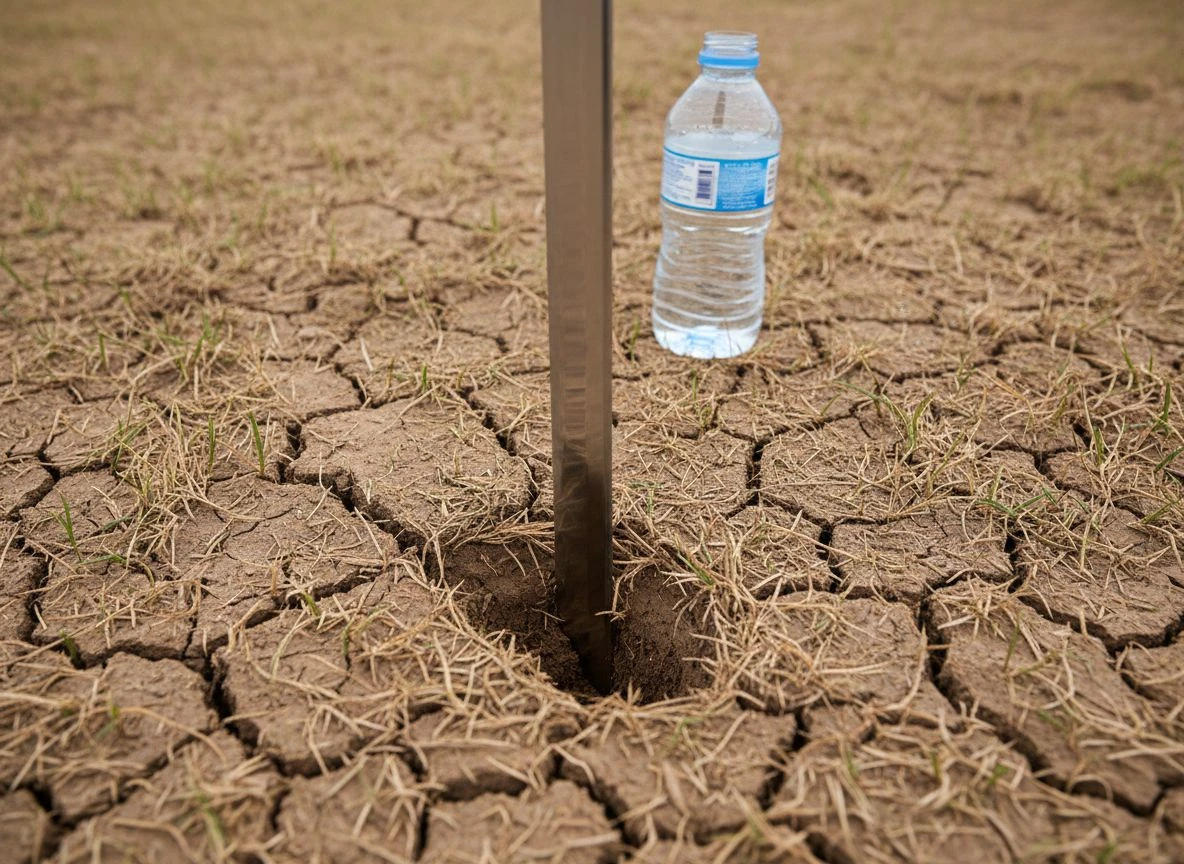
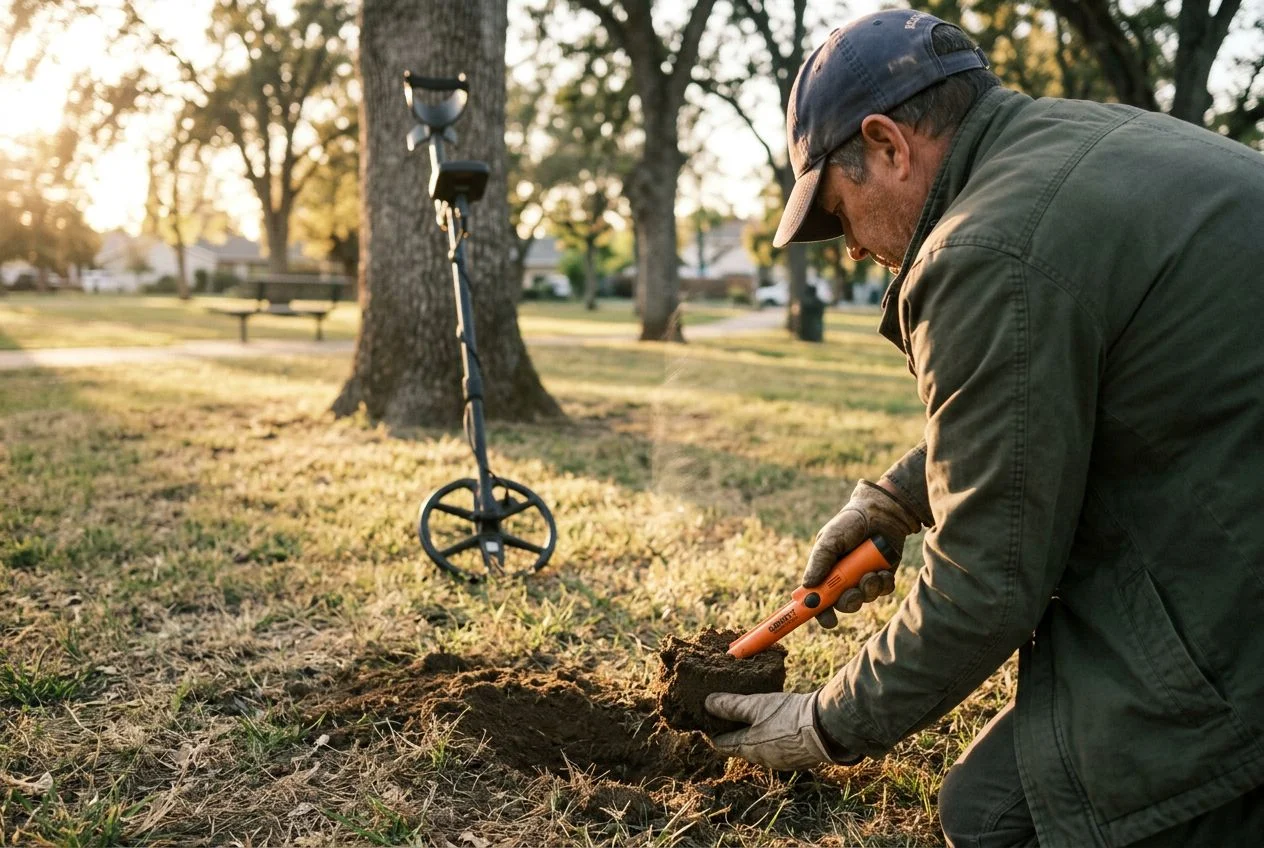
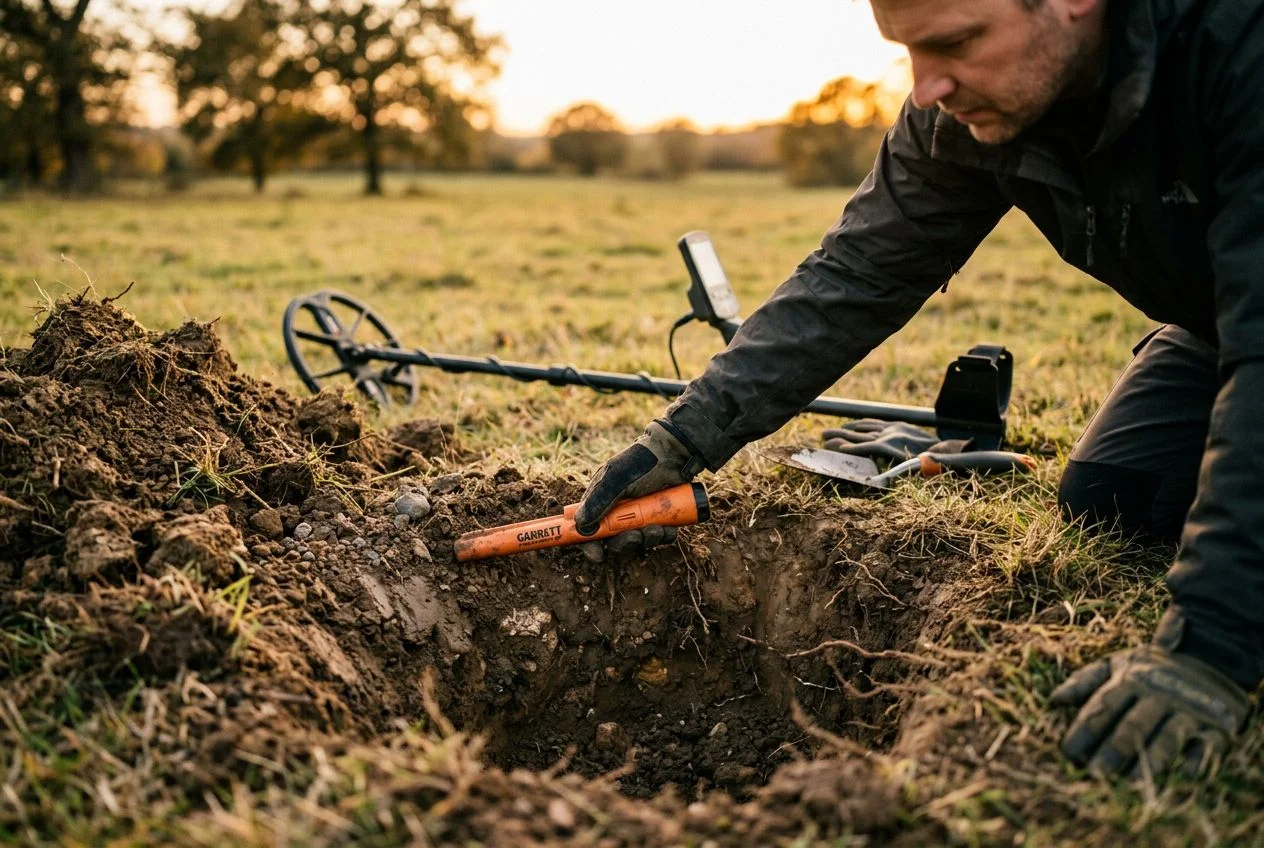
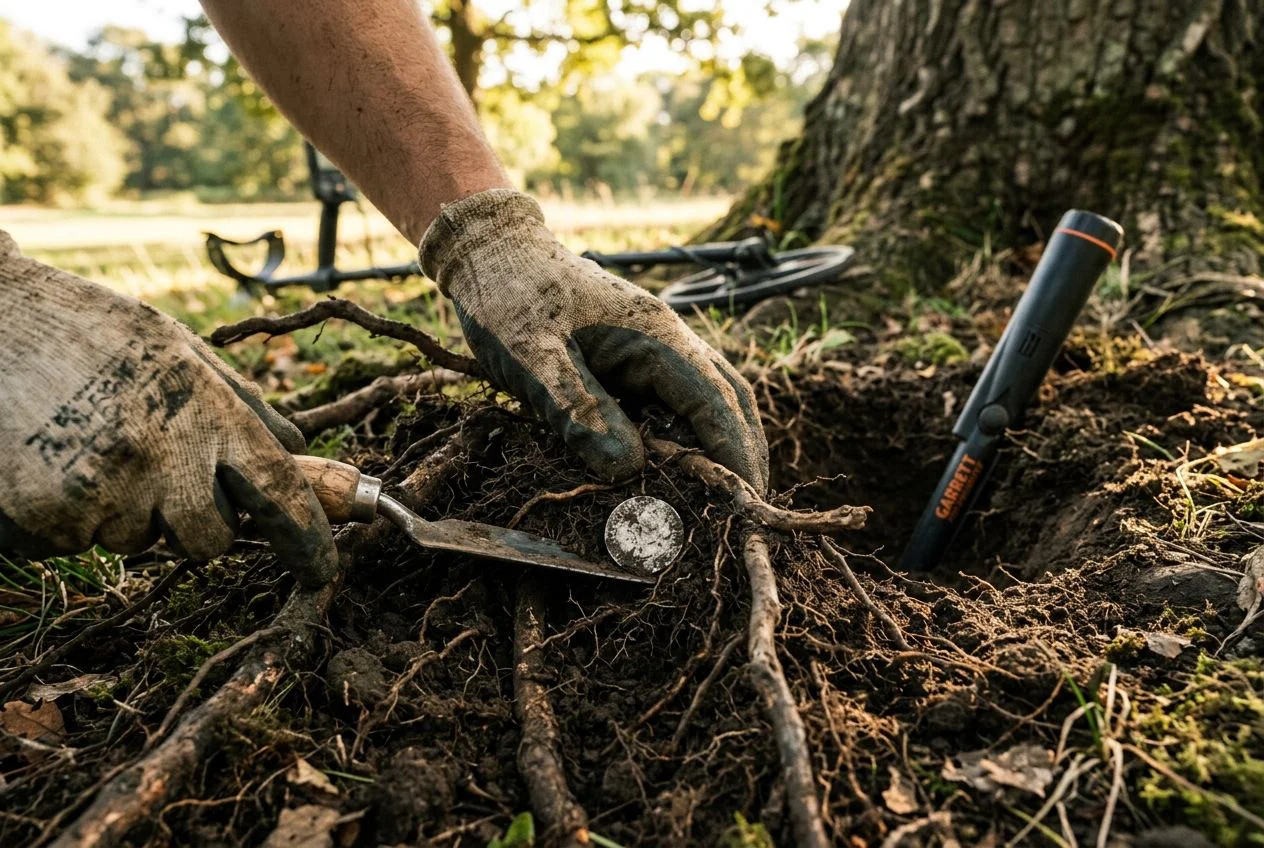
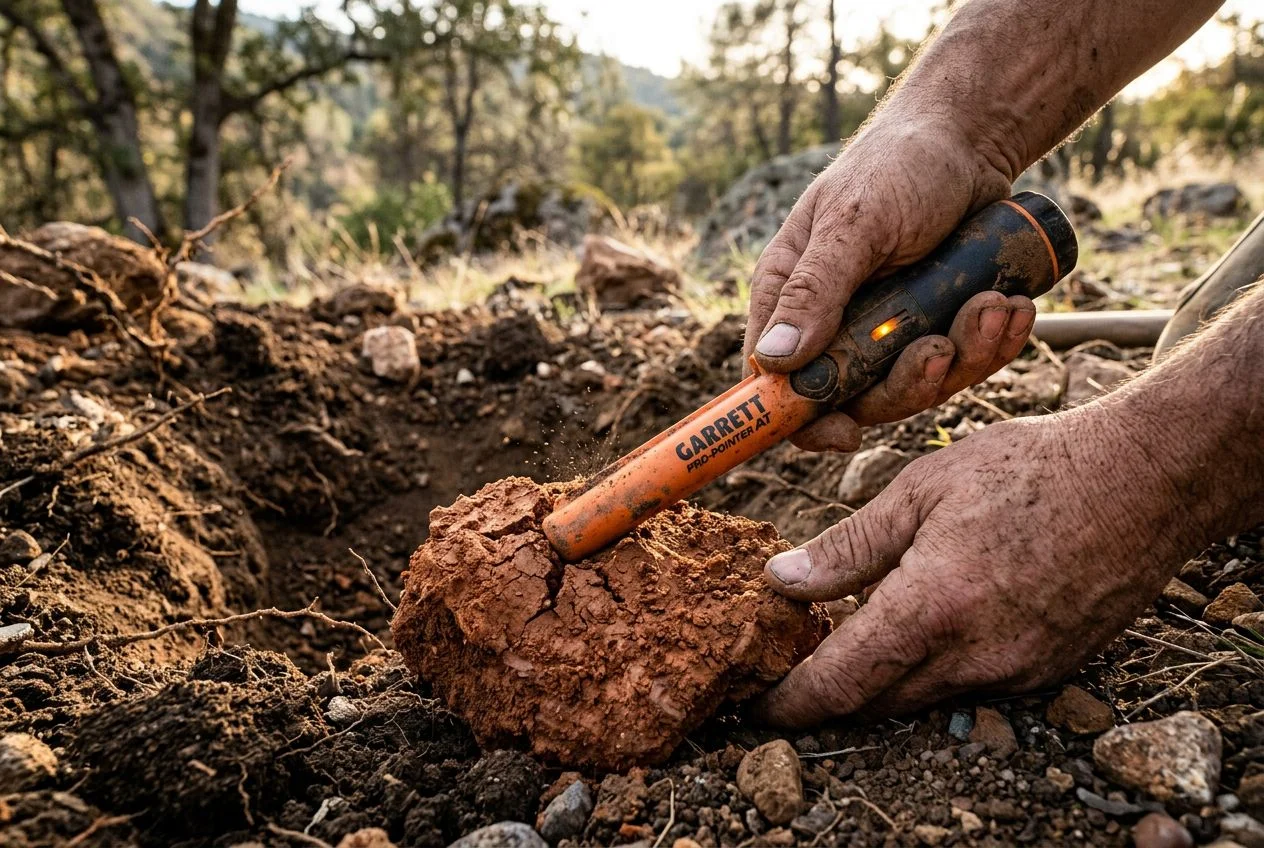
First, try the precision plug. Score a U-shape with a sharp digging knife — a straight blade, not a serrated one — cutting about three inches deep. Then use a large flathead screwdriver or your digger’s tip to gently pop the plug up from the hinge side. In dry ground, the grass roots are tougher than you think. They’ll hold the plug together like a flap. Pull the target, then press the flap back down. A few ounces of water from your bottle will help the edges blend back in.
Second, if the precision plug won’t budge, use the soak-and-wait method. Pour a full water bottle directly on the target spot. Wait two minutes. The water seeps into the cracks and softens the clay just enough to make cutting possible. I’ve pulled pennies from what felt like solid rock using this trick. You lose a little time, but you save the site.
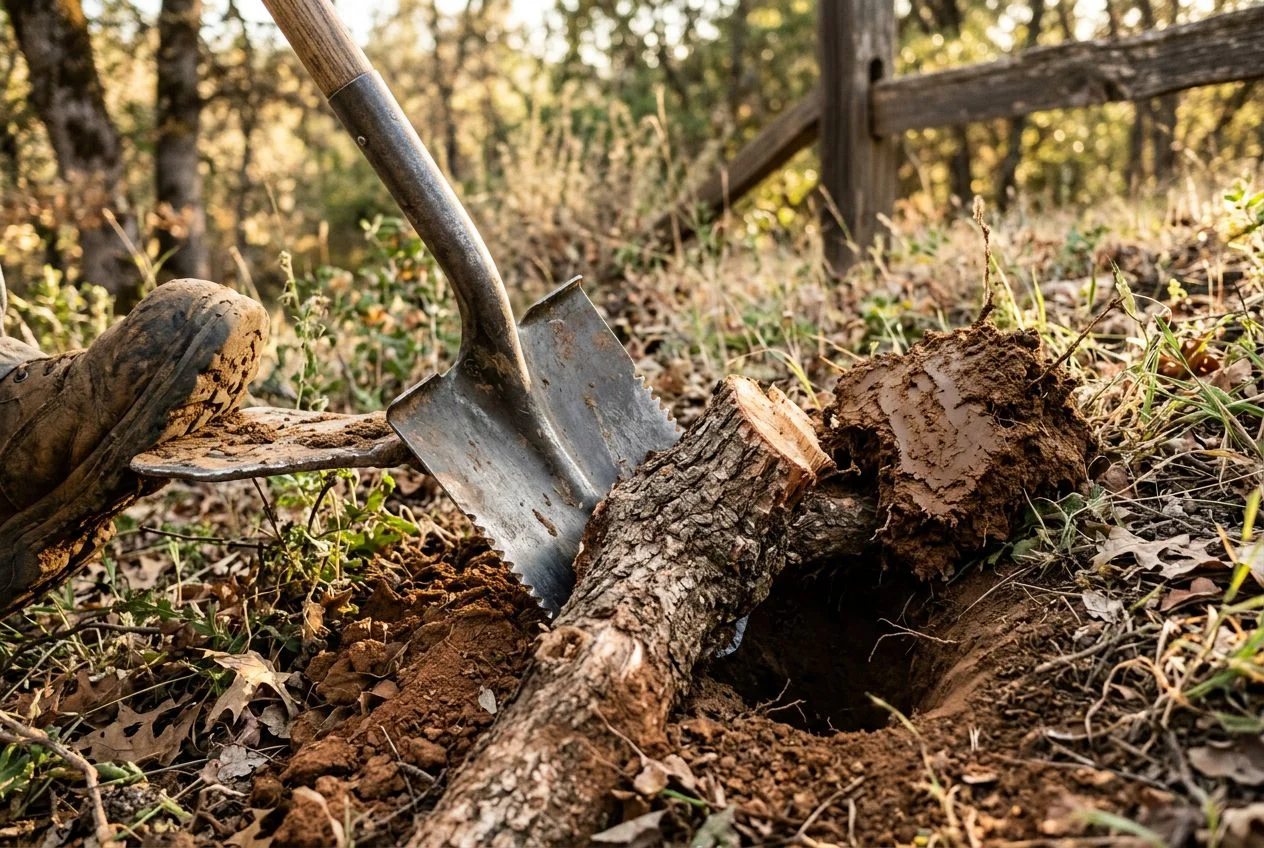
Third, for deep targets in bone-dry soil, switch to the side-scoop technique. Instead of trying to dig a plug straight down, angle your handheld digger and carve from the side. Slice a narrow trench beside the signal, then lever the target out from underneath. This leaves a slit instead of a crater. It’s slower, but it’s the only way to reach 8-inch coins without turning the ground into a moonscape.
Source 5 recommends hunting early morning or evening during summer to avoid the hardest ground — I’d add that those cooler hours also make the soak-and-wait method work faster, since the water doesn’t evaporate instantly. For more on recovering targets without leaving a trace, check out Secret Clues in Abandoned Sites: Proper Metal Detecting Recovery Techniques.
Is Drought Followed by Rain a Detecting Goldmine?
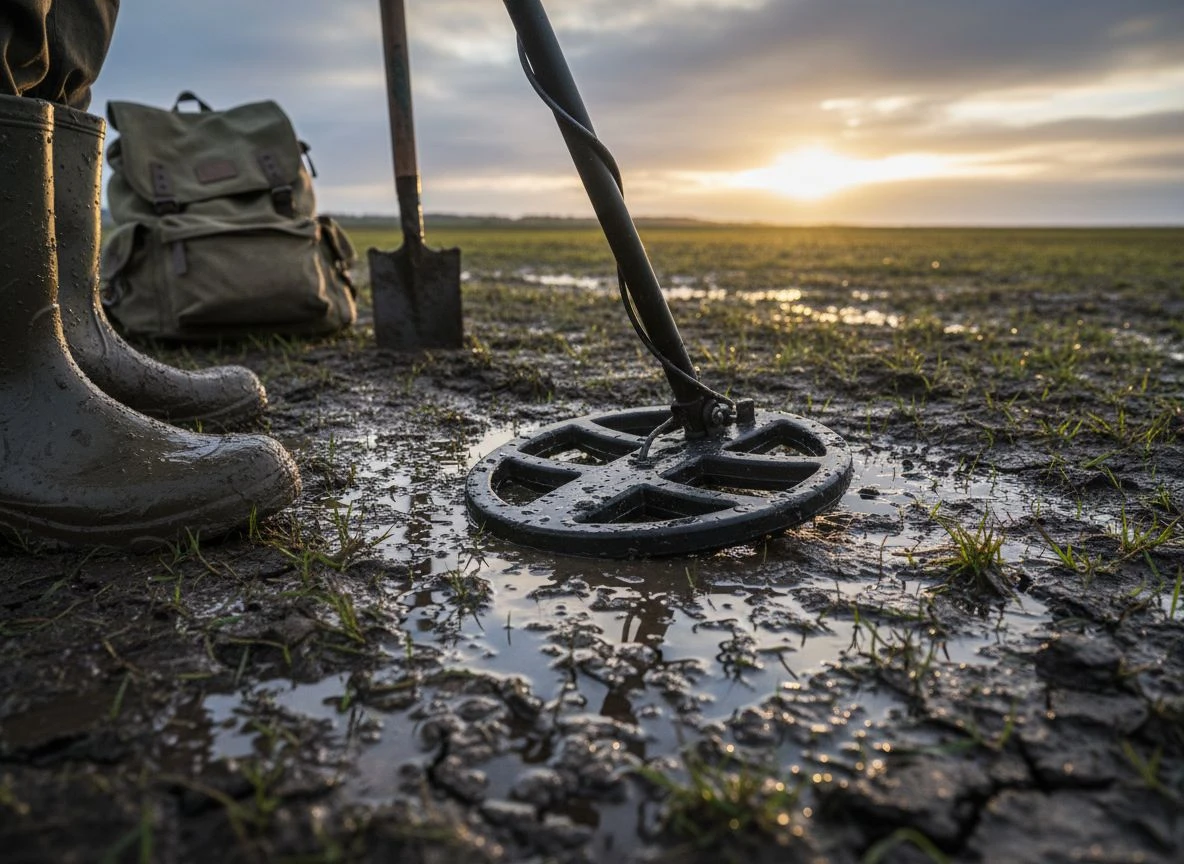
The window after the first hard rain following a prolonged drought offers temporary “superconductive” conditions. Drought cracks the ground; rain fills those cracks, creating channels of high conductivity that can boost detection depth by 20-30%. Hunt within 24 hours for maximum advantage — before the soil re-compacts and the magic fades.
The science is almost too elegant to be real. When a drought drags on for weeks, the top few inches of soil shrink and split, forming a network of thin, deep cracks — like a dry lake bed, but fine enough that you might not see them without kneeling. Then the first soaking rain arrives. Water doesn’t just sit on the surface; it pours into every crack, turning those fissures into continuous, ion-rich pathways. Your detector’s electromagnetic field can now travel through these wet veins far deeper than it could through dry, compacted soil. I’ve seen depth jump from 6 inches to nearly 9 inches on the same target after a single storm.
Source 2 describes this perfectly: the difference between dry and wet soil is “shouting through a brick wall” versus a “screen door.” But the drought-to-rain transition is even better — it’s like the brick wall suddenly develops thousands of tiny open windows. The walking liberty half at 8 inches that eluded hunters all summer? The first rain after a dry spell turned that target from invisible to obvious.
This effect mirrors what Source 5 calls “frost heave” in spring — but instead of frost pushing targets up, the rain pushes your signal down. The composite effect is a temporary “superconductive” window where everything within the first foot of soil reads louder and deeper. You have about 12 to 24 hours after the rain stops before the cracks begin to close, the soil re-compacts, and the extra conductivity settles back to normal.
For a deeper dive into how moisture and mineral halos affect signals, check out Unmasking Secret Deep Coin Ghosts. But the takeaway here is simple: watch the forecast, mark the first heavy rain after a dry spell, and be in the field before the sun bakes that advantage away.
Top Drought Detecting Hotspots for Summer Hunts
The three best post-drought locations share one thing: they’re places where compacted, mineralized soil normally masks targets, but drought and cracked ground reverse the physics in your favor. While everyone else is waiting for the rain, I’m heading to three specific places that get better in a drought.
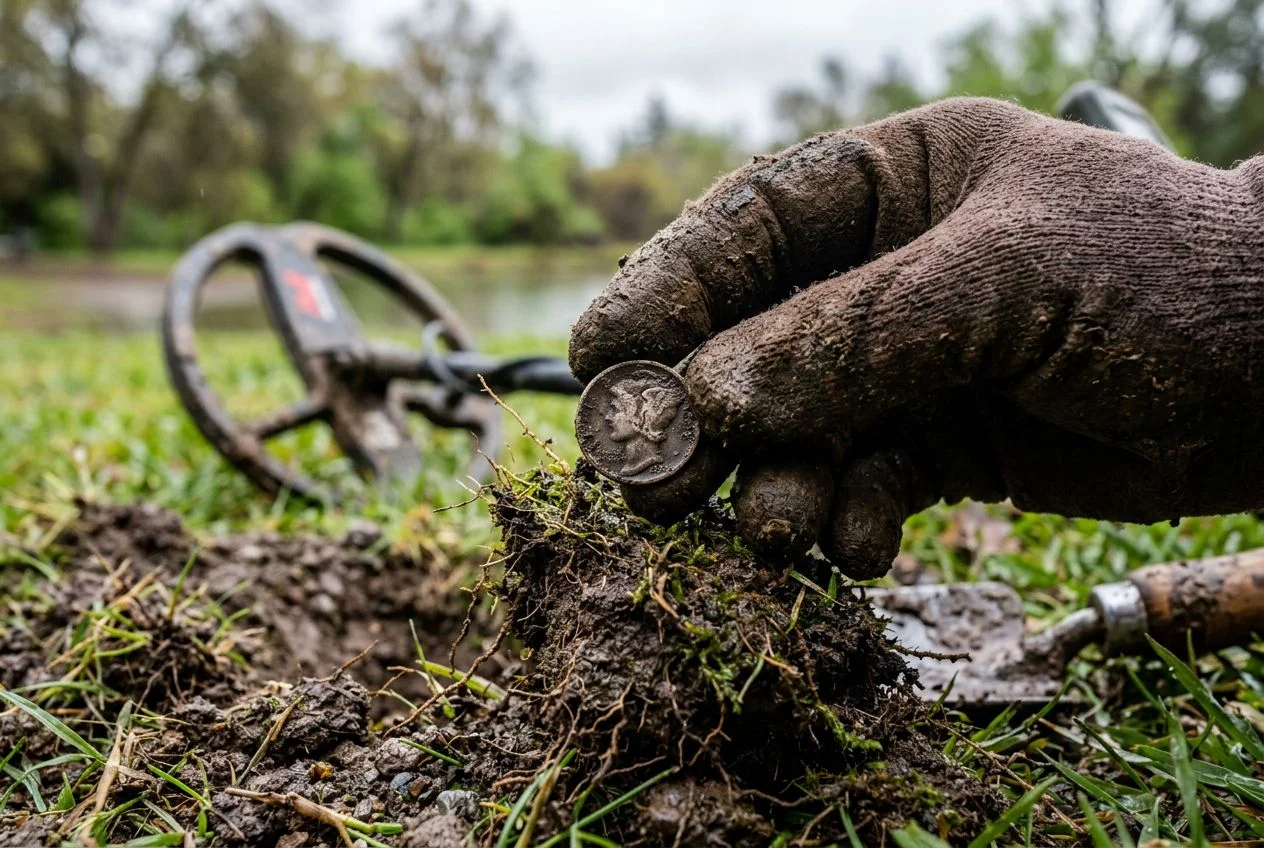
My buddy Mike thinks I’m insane. “You’re going to dig in that?” he asked last summer, staring at a patch of cracked, sunbaked dirt. I pulled a 1917 Mercury dime from twelve inches that same afternoon. The trick is knowing which drought-baked ground to hunt.
1. Old fairgrounds and carnival sites. During droughts, the packed-down clay that’s taken decades of foot traffic shrinks and fractures. Those hairline cracks let your signal reach targets that normally sit in a dead zone of uniform compaction. I hit a county fair lot that had been hunted flat for years — pulled three silver Rosies in two hours. The soil had been too dense for VLF signals to penetrate moisture-free; drought cracked it open.
2. Dried-out creek beds and swimming holes. As Source 6 explains, salt and mineralized ground behave differently when dry — the conductive bridge that creates noise in wet conditions collapses. That swimming hole that screams false signals all summer? Hunt it bone-dry. The mineralization quiets down, and your detector only reacts to actual metal, not the water’s ion load. I’ve pulled pocket spills from dry creek beds that were undetectable during wet months.
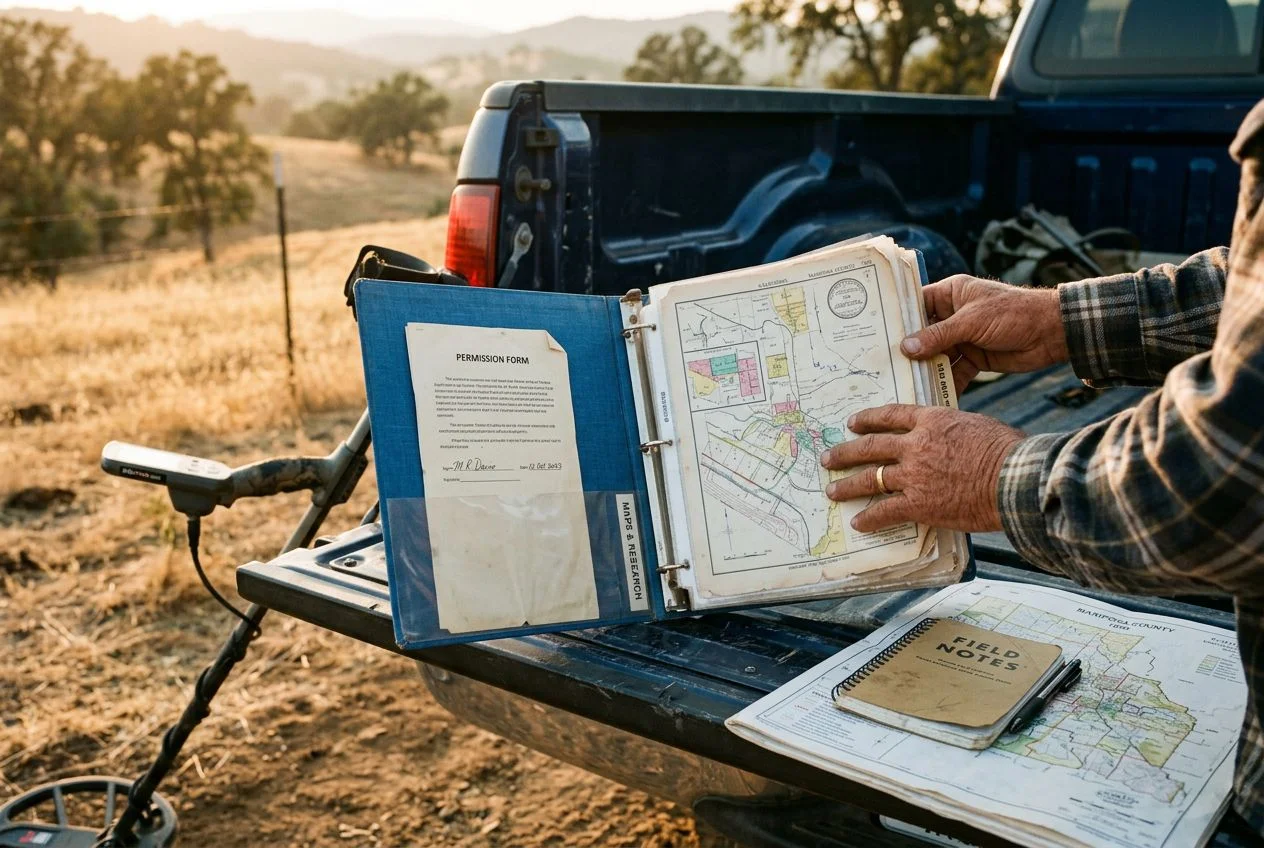
3. Old homestead foundations in mineralized soil. In normal conditions, mineralized ground near 19th-century foundations can eat half your depth. Drought reduces that mineral reactivity. Pair this with old maps — my Using Sanborn Maps for Metal Detecting: Unearth Hidden History guide covers how — and you’ll be digging flat buttons and coins from spots other detectorists wrote off as “too noisy.”
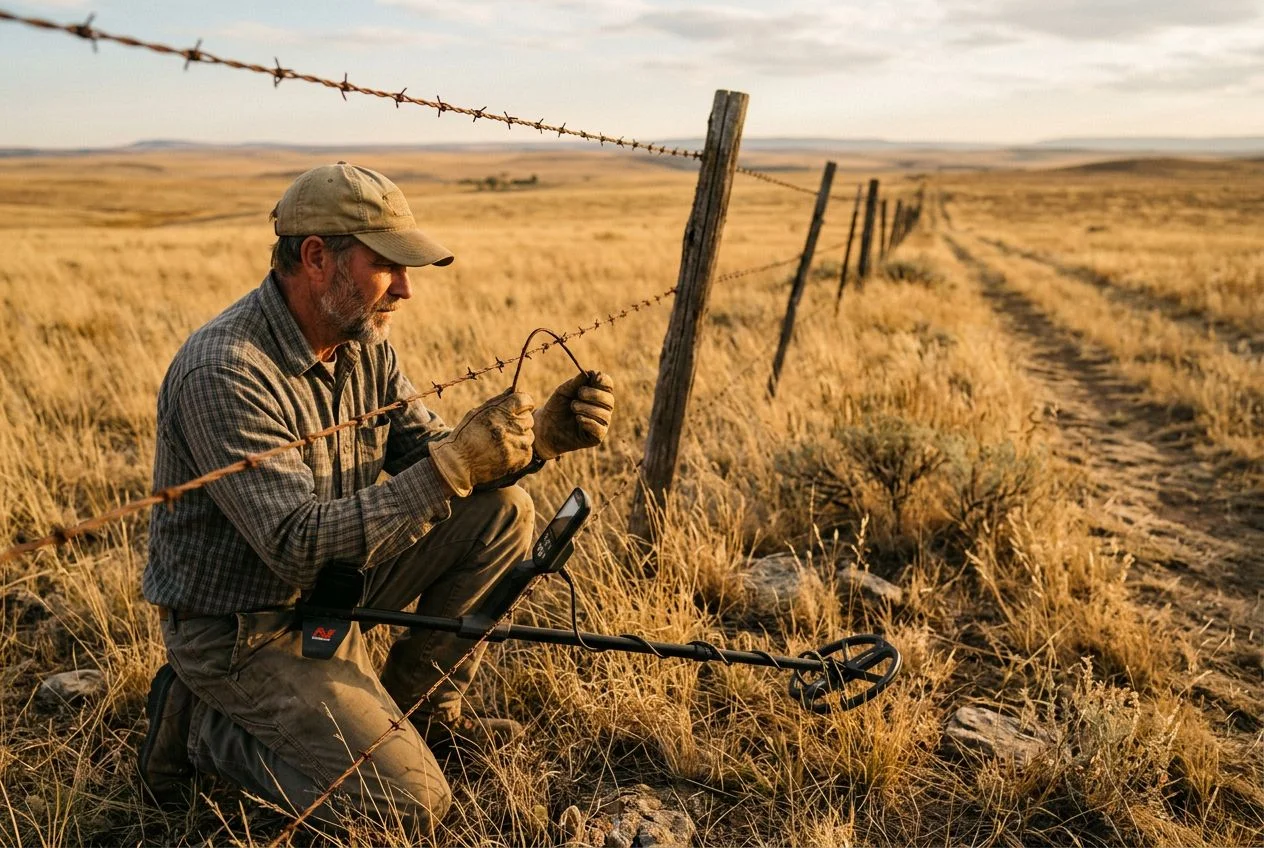
One caveat: dry riverbeds in California require permits. Check Hidden Tools for Metal Detecting in California Public Land Success before you go. But if you pick the right spot, drought isn’t a setback — it’s a filter that keeps the uncommitted at home.
Adopting the Drought Hunter’s Mindset
Drought conditions don’t punish indiscriminately. They filter for the detectorists who understand the physics — who know that compacted soil can stabilize signals, that the vanished halo means slowing down, and that the rain window is temporary but potent.
The drought hunter’s mindset is different from casual detecting. When the ground bakes hard and everyone else stays home, you recognize an opportunity that’s invisible to most. You check the forecast, watch for the first storm, and have your sites queued up based on historical research — not random luck. The spots you’ve been saving? Old fairgrounds. Dried creek beds. Homestead foundations on mineralized soil. Places where drought flips the physics in your favor.
My wife tells me I have a gift for rationalizing poor timing. But after a decade of this, I know the pattern holds. The most productive hunts I’ve had came from understanding that “bad” conditions aren’t always bad — they just demand different tactics. Lower sensitivity. Slower sweep. Patience for the rain to come and turn those signal channels into highways.
So next time the forecast says “hot and dry” for the third straight week, don’t pack your detector away. Load up your shovel, check your ground balance, and head to a spot you’ve been saving — ideally one you found through library research and local archives. The drought didn’t ruin your hunting. It just changed the rules.
Frequently Asked Questions About Drought Detecting
Here’s a quick rundown of the most common questions I see in detecting forums about hunting in bone‑dry conditions. I’ll cover what happens to your signals, whether you need to switch detectors, and why those cracked, sun‑baked fields can still pay off.
- “Is it even worth bothering with metal detecting after a drought?” I get this one constantly. Short answer: yes, but with caveats. The soil compaction from drought actually stabilizes signals in some ways — fewer air pockets means less scatter. But the halo effect collapses without moisture. That means targets read smaller and deeper than they are. I’ve walked right over silver coins in dried‑out creek beds because the conductive halo that normally makes them sing was gone. So it’s worth it — but lower your sensitivity 10–15% and slow your sweep to compensate. Come back after the first rain and those same targets will be loud again.
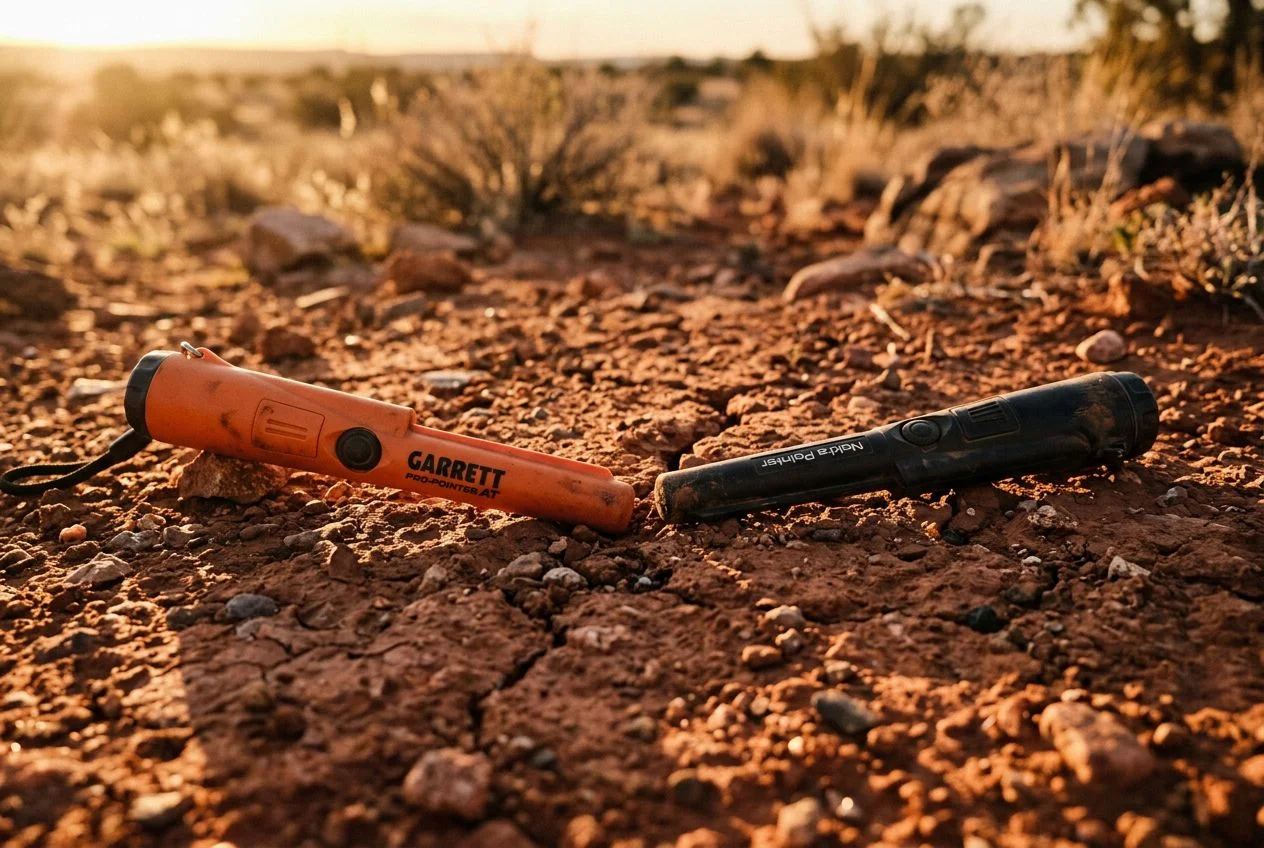
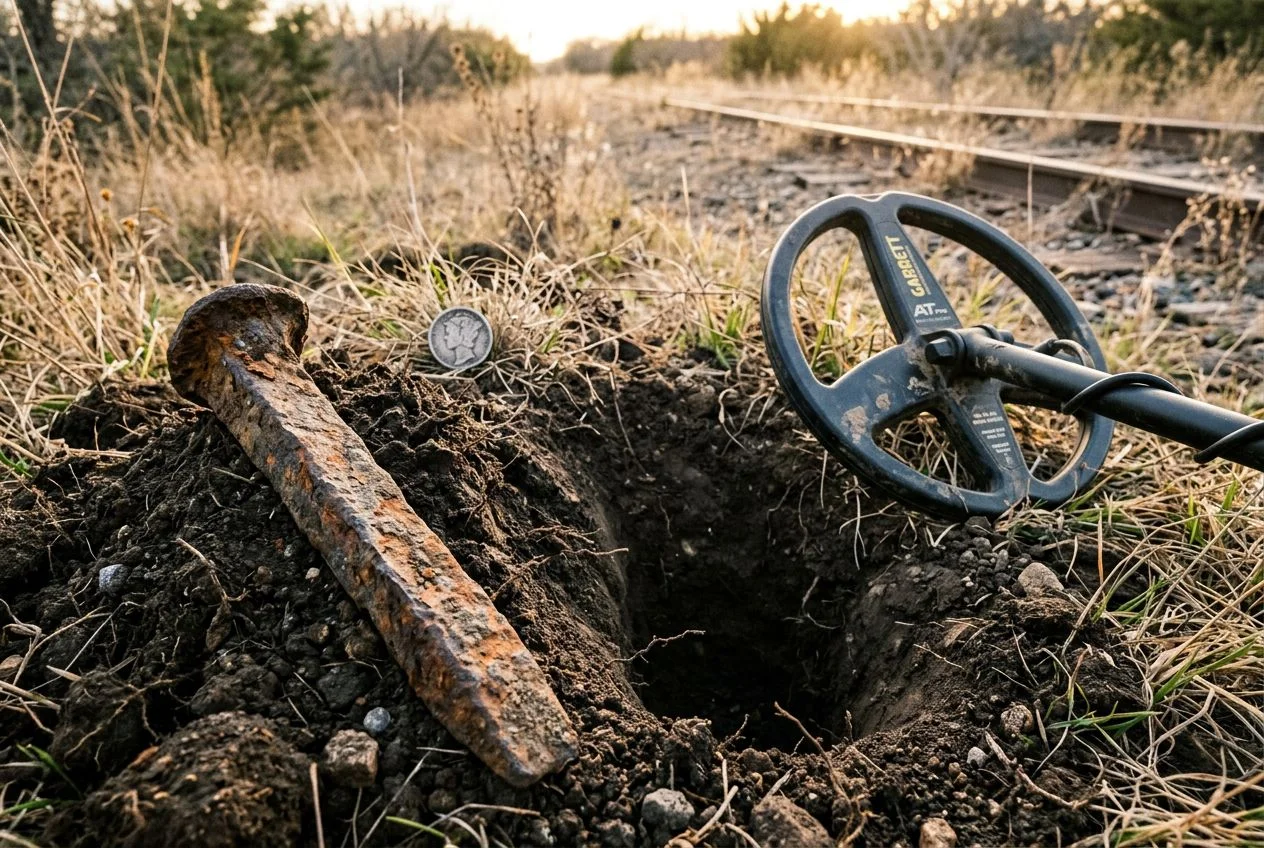
- “Should I use a PI or VLF detector in dry, mineralized ground?” This is where the numbers matter. Source 4 shows that highly mineralized soil can produce an X signal of 600,000 compared to just 800 in neutral soil. That’s an enormous noise floor. In drought, those minerals are still there — but without moisture they’re less reactive. A VLF can work if you ground balance every ten minutes and run a small coil. But for hunting old foundations in known hot ground, a pulse induction (PI) detector handles that 600,000 X signal far better. I keep an old Garrett AT Pro for drought hunts, but my buddy Mike switches to his PI and swears by it. Your choice should depend on how mineralized your target site is — check local geology before you go.

My name is Paul and I am the founder of Detector For Metal, a dedicated resource for metal detecting enthusiasts seeking to uncover historical treasures and connect with the past using the latest technology. As a stay-at-home dad and family man, I’ve found metal detecting to be the perfect hobby that combines family adventure with historical learnings for the whole family.
As a father, I’m deeply committed to passing on this hobby to the next generation of detectorists, starting with my own children. I share advice on everything from metal detecting with kids to exploring the top 10 metal detecting sites you never thought about. My methodical approach to the hobby goes beyond the thrill of discovery—it’s about creating family traditions while preserving history and sharing the stories of those who came before us.